Skip to content

✍️ Write-ups706

What you seeeverything
microsoft.comwriteup

Inside a malicious Claude Code-branded extension and its persistent SSH backdoor

Microsoft Threat Intelligence analyzes a tampered anthropic.claude-code extension (versions 2.1.312 and 2.1.313) served on the Cursor marketplace on 29 October 2026. The injected JavaScript loader adds an SSH key labeled svc-telemetry, opens a reverse SSH tunnel and sets up persistence on macOS, Linux and Windows. The post gives cleanup steps, IOCs and Defender XDR hunting queries. VS Code Marketplace and npm were not affected.

CursorClaude CodeSSH+3
Protocol Tunneling (T1572)reverse SSH tunnelMicrosoft Threat Intelligence+2

Supply Chain, Blue Team & Detection, Malware & RE· Published and added 31 Oct 2026
wiz.iowriteup

“Black October” for AI Developer Platforms

Wiz Research links October 2026 breaches at AI developer platforms (Fireworks, OpenCode, Warp, Zeabur, Railway and others) to stolen environment-variable credentials for AI access. It details two enterprise AWS Bedrock keys abused after vendor breaches: about 800k and 1.7 million calls, over $100k in list-price usage. It profiles two LLM resale operations, "momo" and "Xingjiabi", that tested the keys.

AWS BedrockOpenCodeClaude+3
LLMjackingdistillationWiz Research+13

Threat Intel, AI Security, Cloud & Infra· Added 31 Oct 2026, published 30 Oct 2026

blog.cloudflare.comwriteup

4 real? Tracking exploitation and patching of eMudhra’s weak keys

Cloudflare's follow-up on eMudhra's eight trivially recoverable intermediate CA keys (such as 4, 56 and 66), disclosed 19 October 2026. Pingora logging showed about 22,000 handshakes with the weak keys, including about 160 forged certificates made within hours of disclosure. Probes on 50 million challenge pages show many bots, old browsers and Android WebView still trust the chain.

CloudflarePingoraAndroid WebView+2
eMudhraMozillaDennis Jackson+6

Threat Intel, Blue Team & Detection· Published and added 30 Oct 2026
microsoft.comwriteup

From help desk impersonation to AD CS abuse: Investigating ESC1 and ESC8 intrusion paths

Microsoft Threat Intelligence analysis of two human-operated intrusions that began with Teams help desk impersonation and Quick Assist sessions, then diverged at AD CS. Case 1 abused an ESC1 template for privileged certificates and DCSync, with an excluded account later used for Rclone exfiltration. Case 2 used PetitPotam and ESC8 relay to get a domain controller certificate and PKINIT. Includes investigation steps, AD CS hardening and KQL hunting queries.

Active Directory Certificate ServicesMicrosoft TeamsQuick Assist+3
ESC1ESC8PetitPotam+12

Blue Team & Detection, Threat Intel, Offensive Security· Published and added 30 Oct 2026

opensourcemalware.comwriteup

Trojanized Claude Code Extension Plants an SSH Backdoor

Analysis of a trojanized anthropic.claude-code 2.1.313 extension (darwin-arm64), found on Open VSX, with a 66-line loader prepended to extension.js. It adds an svc-telemetry key to authorized_keys, opens a reverse SSH tunnel to 134.209.82.225, sets persistence (LaunchAgent, cron, scheduled task) and sends host recon over HTTP port 8099. Includes IOCs, hashes and response steps; no further payload download was found.

Claude CodeVS CodeOpen VSX+3
anthropic.claude-code 2.1.313134.209.82.225svc-telemetry+3

Supply Chain, Malware & RE, AI Security· Published and added 30 Oct 2026

stepsecurity.iowriteup

Trojanized Claude Code Extension Delivered Persistent SSH Backdoor to Developer Machines

The Claude Code VS Code extension anthropic.claude-code 2.1.313 was published on Open VSX on 29 October 2026 with a malicious loader prepended to extension.js. On load it planted an attacker SSH key (svc-telemetry), installed per-OS persistence, opened a reverse SSH tunnel and beaconed host recon over HTTP. Cursor reports at most 5,000 users received it in an 11-hour window. The post gives the timeline, cleanup artifacts and credential rotation steps.

Claude CodeVS CodeOpen VSX+3
anthropic.claude-code 2.1.313svc-telemetryT1195.002+1

Supply Chain, Blue Team & Detection, Threat Intel· Published and added 30 Oct 2026

phorion.iowriteup

Backdoor in Claude Code for VS Code extension on the Cursor Marketplace

Phorion analyzes a backdoor injected into versions 2.1.312 and 2.1.313 of the official Claude Code for VS Code extension on the Cursor Marketplace. An IIFE prepended to extension.js plants an SSH key, opens a reverse SSH tunnel to 134.209.82[.]225, persists via a fake com.apple.sysmond LaunchAgent and beacons host recon. A macOS systemsetup check bug usually stops SSH from being enabled. The post lists detections and remediation.

Claude CodeCursorVS Code+3
Phorionsvc-telemetrycom.apple.sysmond+1

Supply Chain, Malware & RE, Blue Team & Detection· Added 31 Oct 2026, published 30 Oct 2026
opensourcemalware.comwriteup

Earliest Known PolinRider Malware Found in 2025 npm Packages

OpenSourceMalware traces nine itsa-* npm package versions published on 4 May 2025 from a hijacked maintainer account to the PolinRider campaign, eight months before documented victims. It decodes the EtherHiding chain (BNB Smart Chain and Ethereum calldata, JADESNOW, INVISIBLEFERRET bootstrapper, Socket.IO RAT, Python stealer) and links the 2025 sample to 2026 force-push infections. It lists IOCs, hashes, a timeline and hunting guidance.

npmNode.jsPython+3
PolinRiderEtherHidingJADESNOW+9

Supply Chain, Malware & RE, Threat Intel· Published and added 30 Oct 2026

rekt.newswriteup

Rekt - SingularityNET - Rekt

SingularityNET exploit (19 September 2026): attackers with signing authority exposed through a cloud infrastructure breach drained 8.72M FET from the Ethereum bridge converter, then minted about 2.3 billion AGIX, NTX, WMTX and CGV. Rekt's transaction-level reconstruction puts gross liquid proceeds near $2.29M, not the $16.77M headline, and traces laundering via Chainflip, Baltex and THORChain. It notes conversionIn() skipped checkLimits() and trusted a single EOA signature.

EthereumCardanoUniswap+2
SingularityNETASI AllianceFetch.ai+19

Blockchain, Cloud & Infra· Added 29 Oct 2026

rekt.newswriteup

Rekt - Duelbits - Rekt

Duelbits is a crypto casino that lost an estimated $6.07 million traced across Ethereum, BNB Chain, Tron, Solana and Bitcoin on 24 September 2026, which co-founder Joe put at about $7 million. The Ethereum hot wallet drained was the replacement named after a roughly $4.6 million theft in February 2024. Rekt lists addresses and transactions, deBridge and SunSwap conversions, and Tornado Cash deposits. Duelbits has not published a root cause.

EthereumBitcoinSolana+3
Duelbitsprivate key compromiseScam Sniffer+8

Blockchain, Threat Intel· Added 29 Oct 2026

oversecured.comwriteup

Discovering vendor-specific vulnerabilities in Android | Oversecured Blog

Oversecured describes extending its Android scanner to system APIs and to Samsung's Android build, after comparing Google and Samsung framework JARs and about 400 system services. It explains AIDL service permission checks and new control-flow analyses. Examples include Samsung's unchecked semIsBackupEnabled(), a broadcast that reboots the device, and a LaunchAnyWhere in Settings. Samsung had fixed over 60 reported issues.

AndroidSamsungOversecured
LaunchAnyWhereAIDLsystem_server+1

Mobile Security, AppSec· Added 29 Oct 2026

oversecured.comwriteup

Introducing MavenGate: a supply chain attack method for Java and Android applications | Oversecured Blog

MavenGate is Oversecured's research on hijacking Maven dependencies by buying expired domains behind groupIds on Maven Central and JitPack. It found 6,170 of 33,938 checked domains (18.18%) vulnerable, and tested the attack with its own com.oversecured:hello-world library. It lists defenses (Gradle verification-metadata.xml, PGP signatures) and proposes changes to repository signing.

MavenGradleMaven Central+3
MavenGateOversecuredSonatype+2

Supply Chain, Mobile Security, AppSec· Added 29 Oct 2026

oversecured.comwriteup

20 security issues found in Xiaomi devices

Oversecured's write-up of 20 vulnerabilities in Xiaomi apps and system components, reported to Xiaomi between 25 and 30 April 2023. Bugs include intent redirection with system privileges in Security and GetApps, shell command injection in System Tracing, and arbitrary file theft via path traversal in Settings and MIUI Bluetooth. Each has a PoC. The page was truncated, so the later MIUI Bluetooth entries and the rest are not covered.

AndroidGson
OversecuredXiaomiMIUI+9

Mobile Security, AppSec· Added 29 Oct 2026

oversecured.comwriteup

Disclosure of 7 Android and Google Pixel vulnerabilities

Oversecured discloses seven Android vulnerabilities, two of them Pixel-specific, all reported to Google and fixed except one low-severity WebView case. They are the Camera geolocation leak (CVE-2024-0017), a VPN bypass list change (CVE-2023-21383), a Bluetooth permission check flaw (CVE-2024-34719), the WorkSource parcel mismatch (CVE-2023-20963, exploited in the wild by the Pinduoduo app), Device Admin HTML injection (CVE-2021-0600) and a ContentProvider.openFile() caller-context bypass (CVE-2023-21292). Each has root cause and PoC code.

AndroidGoogle PixelWebView+2
CVE-2024-0017CVE-2023-21383CVE-2024-34719+9

Mobile Security, Offensive Security· Added 29 Oct 2026

wiz.iowriteup

The Rise of Agentic Attacks: What They Look Like, and Where They're Headed

Wiz research on intrusions where AI agents do the hands-on attacker work. It reviews public cases (ARTEX against South Korean banks and the ConnectWise compromise, Hermes at Thailand's Ministry of Finance, JPCERT/CC, CrowdStrike, DIVD) and three Wiz-investigated attacks. It distills fingerprints: machine-paced iteration, embedded natural-language reasoning, self-correcting scripts, checklist enumeration, noisy lateral movement, probe-before-payload habits and self-named scratch files. It also covers attribution, scale and defense implications.

WizKubernetesAWS+2
ARTEXHermesStorm-0940+12

Threat Intel, Blue Team & Detection, AI Security, Cloud & Infra· Published and added 29 Oct 2026

blog.talosintelligence.comwriteup

NIK C2: The new AI-enabled command-and-control framework

NIK C2 is a newly observed C2 framework with a Go-based 64-bit Windows implant that embeds an OpenAI Chat Completions client (ai_generate command), falling back to the victim's OPENAI_API_KEY. Talos details its 52+ commands, AES-256-GCM over WebSocket with HTTP fallback, credential, wallet and keystroke theft, screen-lock ransomware, AMSI bypass and anti-debug. It also lists a live C2 at 87.120.196[.]120 and total-sitevv[.]lol.

GoOpenAIWindows+3
NIK C2nik_panel87.120.196[.]120+9

Malware & RE, Threat Intel, AI Security· Published and added 29 Oct 2026

socket.devwriteup

Searchjacked: Hidden Browser Extensions Hijack Searches for 13 Million Users

Searchjacked is Socket's research on 319 browser extensions (about 13.44M users over a decade) that hijack searches to earn ad revenue. The fetched text attributes 200 extensions to named operators such as Intango, System1, Perion, Mutual Media and Kinner Lake, and 119 to unknown operators like "SecuryBrowse" and "Bing-Search". It lists the Yahoo and Bing monetization IDs used to link them. The narrative and technical mechanics are not in the fetched text.

Chrome Web StoreChrome
SearchjackedIntangoLumio+20

Threat Intel, Supply Chain· Published and added 29 Oct 2026

securitylabs.datadoghq.comwriteup

Node2Shell: Reproducing CVE-2026-111497 in the Node.js Brotli decoder

Node2Shell is Datadog Security Labs' analysis of CVE-2026-111497, an out-of-bounds write in the Google Brotli 1.2.0 decoder, fixed in Node.js 22.23.4, 24.22.1 and 26.12.1 on 21 October 2026. It explains the unchecked return value in DecodeBlockTypeAndLength(), the read and write primitives, and why code execution is still engineering effort. It lists inbound and outbound exposure paths, behavioral detections and what WAFs miss.

BrotliNode.jsBun+3
CVE-2026-111497Node2ShellCISA KEV+3

AppSec, Blue Team & Detection, Offensive Security· Published and added 29 Oct 2026

alpinelinux.orgwriteup

GitLab Security Incident: Attempted Exploitation of CVE-2026-97229

Alpine Linux incident report on attempted exploitation of CVE-2026-97229 (CVSS 10.0), a regex-evaluation bug in Ruby's Onigmo engine reachable through GitLab CI configuration. An attacker crashed workers 8 times on 20 and 21 October 2026. Upgrading to GitLab 19.3.6 did not fix it because the patch sits in GitLab's bundled Ruby. Alpine rebuilt the instance and found no tampering with aports or releases.

GitLabRubyDocker+1
CVE-2026-97229Onigmoaports

Blue Team & Detection, Supply Chain, AppSec· Added 29 Oct 2026, published 28 Oct 2026

blog.talosintelligence.comwriteup

Inside KeyDrift: Analyzing historical UAT-11473 activity on Cisco SD-WAN

KeyDrift is a custom malware framework used by UAT-11473, which exploited CVE-2026-20127 in Cisco SD-WAN Catalyst Controller to gain access. Talos analyzes PolyFlame (memory-resident vdaemon injection, recvfrom hook, TinyShell-style backdoor, intermediate C2) and LittleFilch (SSL_read hook that extracts and RSA-encrypts keying material). It reports infrastructure overlap with Volt Typhoon's Silent Train, plus patch guidance and Snort SIDs.

Cisco SD-WANLinuxrunit+1
CVE-2026-20127UAT-11473KeyDrift+7

Threat Intel, Malware & RE· Published and added 28 Oct 2026

endorlabs.comwriteup

Endor Labs AI SAST Finds Two Apache Kafka Zero-Days: Unbounded Memory Allocation from Brokers to Kafka Streams | Endor Labs

Endor Labs AI SAST found three unbounded memory allocation flaws in Apache Kafka, fixed under CVE-2026-114349 (DefaultRecord decoder, a ~90-byte compressed batch that kills consumers, brokers and the log cleaner) and CVE-2026-111551 (ListDeserializer and Kafka Streams AssignmentInfo decoding). The post gives code, reproducers and payload bytes. Remediation: upgrade to 4.2.2, 4.3.2 or 4.4.0, set max.decompressed.message.bytes, restrict write and group ACLs, and alert on DeadThreadCount.

Apache KafkaKafka StreamsJava+1
CVE-2026-114349CVE-2026-111551denial of service+4

AppSec· Published and added 28 Oct 2026

huntress.comwriteup

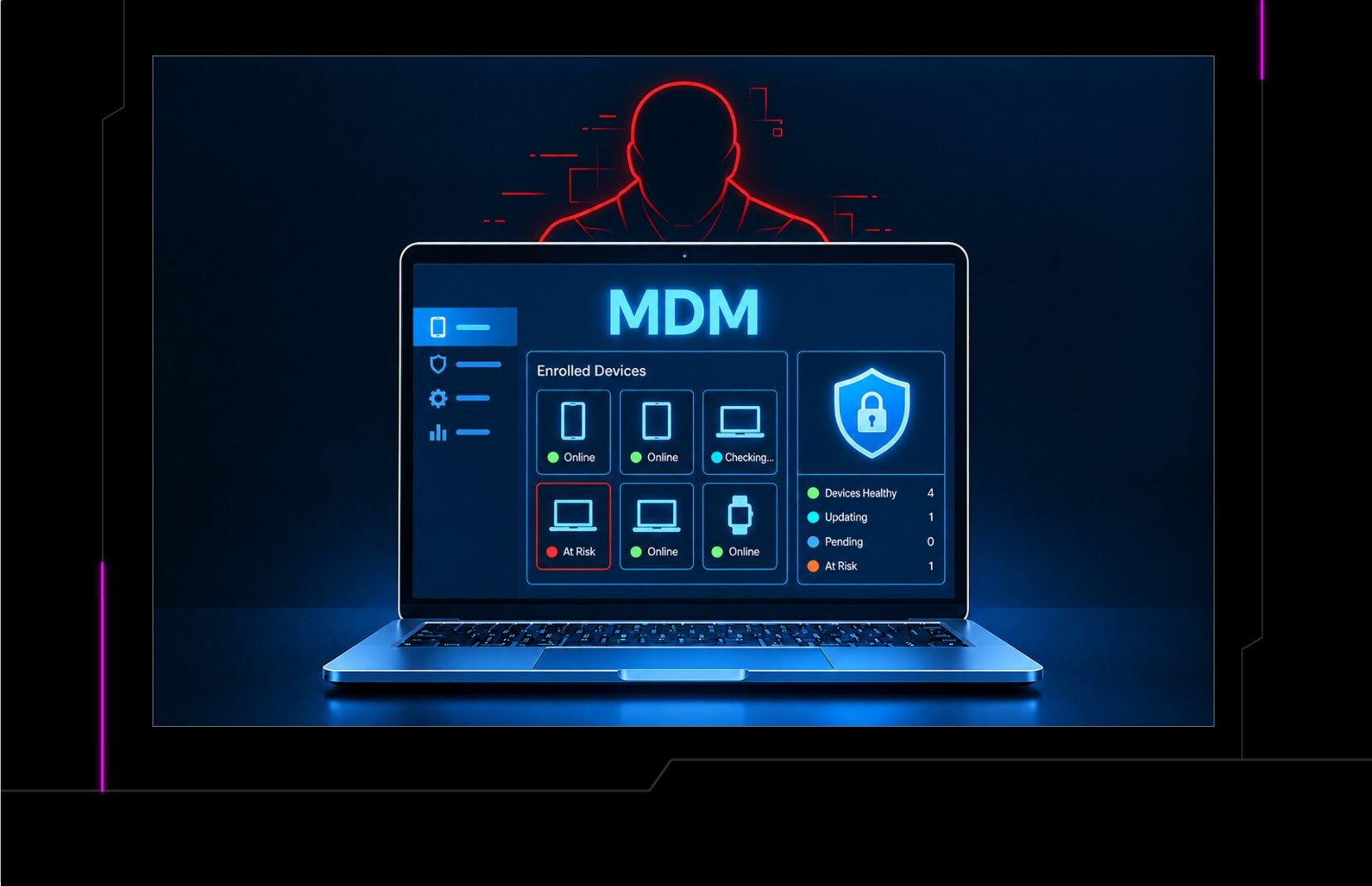
Managed for Malice: How Attackers Turn MDM into Remote Access

Huntress describes two incidents where attackers enrolled victims in attacker-controlled MDM tenants (Hexnode and Rippling) and used them to push ScreenConnect as SYSTEM. One began with a fake DocuSign MSI that bundled Hexnode; the other with a fake Teams calendar link leading to Rippling enrollment. Removing ScreenConnect did not stop reinstalls. The post lists IOCs, a detection chain and mitigations.

HexnodeRipplingScreenConnect+3
Huntressphishingsocial engineering+3

Threat Intel, Blue Team & Detection, Mobile Security· Published and added 28 Oct 2026

hackers-arise.comwriteup

Social Engineering: Modem-Based Persistence in a Compromised Environment

The article describes reflashing a Huawei E3372h-153 HiLink 4G USB modem so its embedded Linux OS runs an OpenVPN client over the mobile network, creating a covert, network-independent persistence channel after physical USB access. It walks through enabling debug mode, flashing firmware, disabling CD-ROM emulation, configuring DHCP and autorun scripts, and chaining a second L2VPN tunnel to bridge the attacker directly onto the victim's Ethernet segment for tools like Responder. Defense guidance focuses on restricting USB ports and disabling USB network adapters via policy.

OpenVPNTelnetADB+2
LAN Turtle

Hardware & RF, Offensive Security· Published and added 28 Oct 2026

socket.devwriteup

Malicious Firefox Extensions Impersonate Phantom, Jupiter, and Bitget to Steal Wallet Secrets

Socket analysis of three malicious Firefox add-ons impersonating Phantom, Jupiter and Bitget wallets, using Unicode homoglyph names. They steal seed phrases and private keys and send them to brand-named subdomains of bonto[.]io. The Phantom fake adds a runtime loader that fetches and evals a second stage, and bundles a drainer backend with Telegram forwarding. Includes IOCs, hashes and wallet addresses.

FirefoxTelegramCloudflare+3
bonto.ioPhantomJupiter+14

Threat Intel, Malware & RE, Blockchain· Published and added 27 Oct 2026

huntress.comwriteup

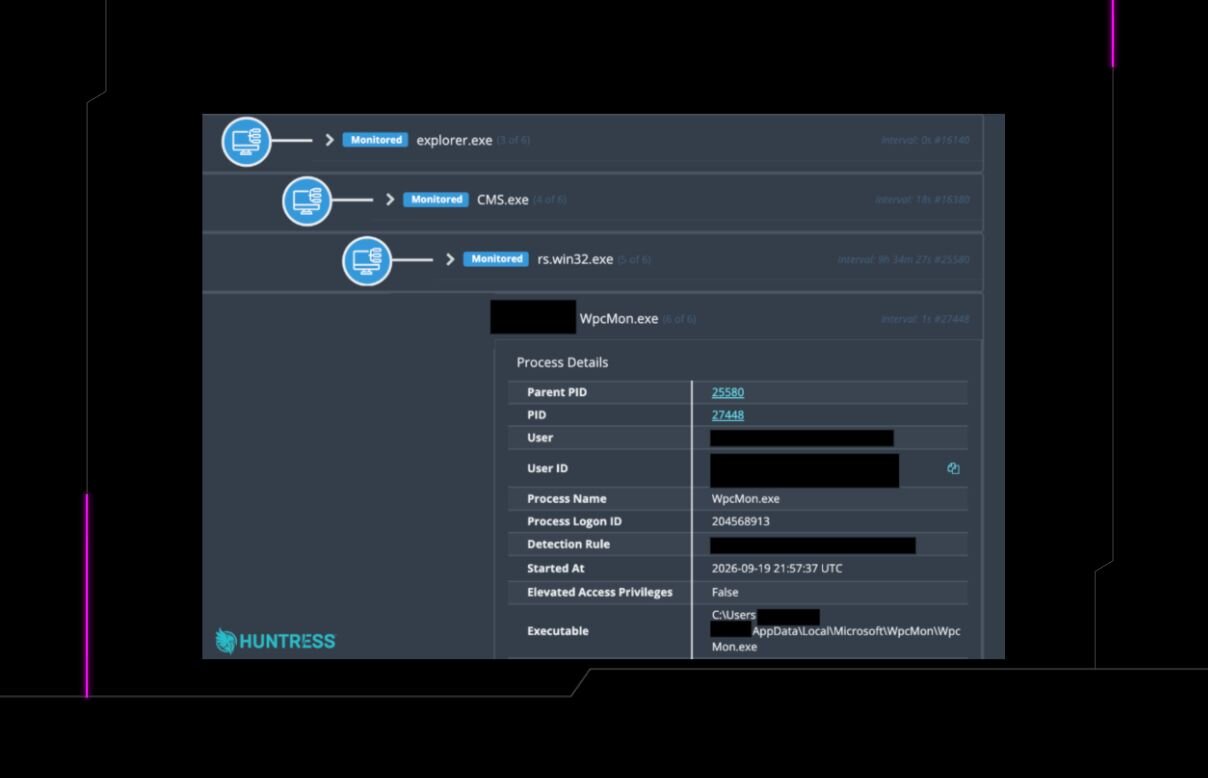
Camera Management Software Compromise Leads to Malware Deployment

Huntress investigation of incidents in September and October 2025 where a compromised camera management application (CMS.exe) was the initial access vector. Attackers dropped rs.win32.exe, a reverse shell, and sideloaded modified zlib DLLs (IPHLPAPI.DLL, samcli.dll) via the legitimate Microsoft WpcMon.exe in AppData, with Run key persistence and beaconing to 144.172.116[.]37. Includes detection pivots and hardening advice.

WindowsHuntress
DLL sideloadingCMS.exers.win32.exe+6

Threat Intel, Blue Team & Detection· Added 28 Oct 2026, published 27 Oct 2026

blog.cloudflare.comwriteup

Cross-request KV cache exposure in the GLM-5.3 Workers AI model (155 responses)

Cloudflare postmortem of a tenant isolation failure in the GLM-5.3 Workers AI model (27 August to 9 September 2026), in which 155 responses to prompts over 681,280 tokens contained other customers' data. Root cause was a KV pool smaller than the 1,048,576-token context window, combined with an SGLang bug in disaggregated prefill/decode mode that let decode read stale KV pages. It lists the fixes (SGLang v0.5.22 patches), hardening steps and operator recommendations.

SGLangCloudflareWorkers AI+3
GLM-5.3GLM-5.2Gadi Evron+6

AI Security, Cloud & Infra· Added 27 Oct 2026, published 26 Oct 2026

huntress.comwriteup

AI, Scripts, Operator: Inside the ConnectWise Attack

Huntress analyzes Entra sign-in and audit logs from the ConnectWise Cloud Backup credential abuse of 15 October 2026 to judge whether a script, a person or an LLM agent drove it. It found a thread-pool spray, trial-and-error credential planting with a retry added within 55 seconds, and pilot-then-batch targeting. Huntress rates LLM involvement low to medium on its own data and medium to high with Microsoft's Storm-0940/ARTEX attribution. It ends with detections for service principal role self-assignment and vendor app baselining.

Microsoft Entra IDMicrosoft 365Microsoft Graph+3
Storm-0940ARTEXConnectWise Cloud Backup credential abuse+7

Threat Intel, Blue Team & Detection, Identity & Access, AI Security· Published and added 26 Oct 2026

orca.securitywriteup

PHP2Shell: From the attacker’s perspective

PHP2Shell is the public exploit for CVE-2026-109618 (corrupted internal state at the memory limit, allowing hijack during cleanup) and CVE-2026-109619 (double free used to leak memory and defeat ASLR). Orca ran the GitHub tool unchanged against an unpatched PHP server and got command execution. It then built its own exploit with AI from the patch, which worked on PHP 8.4.26 and WordPress. Fixed in 8.2.35, 8.3.36, 8.4.27 and 8.5.12.

PHPWordPressGitHub
CVE-2026-109618CVE-2026-109619PHP2Shell+3

Offensive Security, AI Security, AppSec· Published and added 26 Oct 2026

ethresear.chwriteup

Lean verification of EIP-7002: system-call success and FIFO requests

Lean 4 proofs about the 504-byte EIP-7002 withdrawal-request contract on Ethereum, checked against the Jaune EVM semantics for Prague, Osaka, BPO1 and BPO2. The end-of-block system call always succeeds, using at most 210,000 gas. Requests leave in FIFO order. The post also gives counterexamples: code at the system address drains the queue, and the bytecode's 256-bit fee can undercut the EIP's fee.

LeanEthereumJaune+2
EIP-7002EIP-7251EIP-4788+9

Blockchain· Published and added 26 Oct 2026

wiz.iowriteup

Gheist: Attempted Scaled Abuse of Stolen GitHub Tokens Stumbles

Gheist is a campaign tracked by Wiz Research since 15 September 2026 that uses stolen GitHub tokens to push a sync-check workflow on ci-sync-* branches in every reachable repository. The workflow prints base32-encoded secrets into logs, which the tool downloads through the GitHub API and then deletes. Over 13,500 branches from 850+ accounts were recovered. The post covers the two tool variants, a buggy self-hosted runner payload, GitHub's approval hold (which does not cover private repositories), overlaps with other campaigns, hunting queries, IOCs and hardening steps.

GitHubGitHub ActionsAWS+3
GheistGhostActionPolinRider+6

Threat Intel, DevSecOps, Blue Team & Detection· Published and added 25 Oct 2026

Showing 30 of 706

Show more