
 blog.talosintelligence.comwriteup
NIK C2: The new AI-enabled command-and-control framework
NIK C2 is a newly observed C2 framework with a Go-based 64-bit Windows implant that embeds an OpenAI Chat Completions client (ai_generate command), falling back to the victim's OPENAI_API_KEY. Talos details its 52+ commands, AES-256-GCM over WebSocket with HTTP fallback, credential, wallet and keystroke theft, screen-lock ransomware, AMSI bypass and anti-debug. It also lists a live C2 at 87.120.196[.]120 and total-sitevv[.]lol.
What it is
NIK C2 is a command-and-control framework seen in the wild by Cisco Talos. Its implant is a Go 1.23.4, 64-bit Windows RAT built from a Linux host (embedded path /opt/nik_panel/data/build_52b79724a1fc4b8f/main.go). Talos found at least three implant versions. It assesses with moderate confidence that this is a working framework and not a proof of concept, based on a live server at 87.120.196[.]120 (domain total-sitevv[.]lol).
How it works
The ai_generate command takes prompt, api_key and model from the C2. It POSTs to https://api.openai.com/v1/chat/completions from the victim's IP, with a 60-second timeout. A hardcoded 68-byte system message precedes the operator's prompt. If no key is supplied, the implant reads the victim's OPENAI_API_KEY environment variable. The default model is gpt-4, and any model ID can be passed. Results return as status, code, model and usage.
Other behaviors the summary does not cover:
- Ransomware: it does not encrypt files. It backs up the MBR to
mbr_backup.binwith a PowerShell raw read of\\.\PhysicalDrive0, then writeslock_screen.htmlandlock_start.batto the temp directory. The batch file runsmshta.exein a loop that relaunches the window within 5 seconds. A Run key namedSystemLockprovides persistence. - Bootkit prep: it checks
bcdedit /enumandConfirm-SecureBootUEFI, then drops a 16-byte placeholderbootkit.bincontaining "NIK_BOOTKIT_PREP". No real bootkit was seen. - Theft: it covers Wi-Fi keys (
netsh wlan show profile name="" key=clear), browser databases with DPAPI unwrapping, Discord tokens, desktop and extension wallets, and a filesystem scan for seed and key files. Output goes tobrowserdata.zip. The keylogger polls all 256 virtual key codes and streams each keypress live. - Evasion: it sets
NtSetInformationProcessProcessBreakOnTermination (0x1D), so killing the process causes a BSOD. It uses a fodhelper.exe UAC bypass throughHKCU\Software\Classes\ms-settings\Shell\Open\command, patches AmsiInitFailed, and exits on debugger detection. - Masquerade names:
svchost.exe,simvol.exeandcsrss.exe(in temp). The implant copies itself to%appdata%/Roaming/Microsoft/Networkand sets autostart registry entries.
What to do
Hunt on these indicators from the page:
- Network: TLS to 87.120.196[.]120 or total-sitevv[.]lol, with a certificate CN of
nik-panel, serial7d16381a9de823943b5a0987dbd0f26edf22052b, and JARM28d28d28d00000000042d42d0000001f361a1bf80ed39a1e352adeb016a07b. - HTTP paths
/api/c2/update(polled about every 250 ms) and/api/c2/result. - Wire format: AES-256-GCM with a static key from a hardcoded seed. The page prints the decoded seed
d791dd0ff3228ed29a8d7333d4567be829159c5632ea347780992006f91c5295and the key4887AFC0A574E9419A9695EF083460F58E4EF9A1C40793523CE112251273BDF9. Agent IDs look likeag_<16 hex>. - Host: a Run key
SystemLock,lock_start.bat,lock_screen.html,mbr_backup.binorbootkit.binin temp, and the string[NIK] Starting. - Mutations of the fodhelper
ms-settingskey that revert within 2 seconds. - Zeroed PE timestamps and file times of Nov 29, 1979.
- ClamAV signature:
Win.Trojan.GoDiscorder-10060526-0.
The full IOC list is in Talos's GitHub repository, which this page links but does not reproduce.
Caveats
- The TLS client pins a certificate, so interception proxies will not see the traffic.
- The page gives no victim counts, attribution or delivery vector.
- The page says the
OPENAI_API_KEYfallback bills the victim and logs requests under the victim's key. Teams holding that key on endpoints should treat unexpected usage as a signal.
Organisations named here
- 87.120.196[.]120
- AMSI bypass
- bootkit preparation
- fodhelper.exe UAC bypass
- NIK C2
- nik_panel
- ProcessBreakOnTermination
- RDP session hijacking
- screen-locking ransomware
- total-sitevv[.]lol
- Win.Trojan.GoDiscorder-10060526-0
Technologies named here
- OpenAI Chat Completions API
- ClamAV signature Win.Trojan.GoDiscorder-10060526-0
- Cisco Talos IOC list on GitHub
- Windows PowerShell and System.Management.Automation.dll
- Cisco Web Security and DNS Security
- Windows fodhelper.exe
- Go
- OpenAI
- Windows
- PowerShell
- AES
- ClamAV
Techniques named here
- AI-assisted post-compromise analysis
- Keylogging
- System reconnaissance with systeminfo, wmic, and Get-Process
- Bootkit preparation
- Persistence
- Masquerading as svchost.exe, simvol.exe, and csrss.exe
- Timestamp manipulation
- Process hollowing
Threat actors named here
- Unnamed threat actor operating NIK C2
Related in Malware & RE

 huntress.comwriteup
Reverse Engineering the Six Stages of MacSync Stealer and RAT
 huntress.comwriteup
Post-DEF CON Phishing Uses Malicious Google Doc to Deliver Malware
 huntress.comwriteup
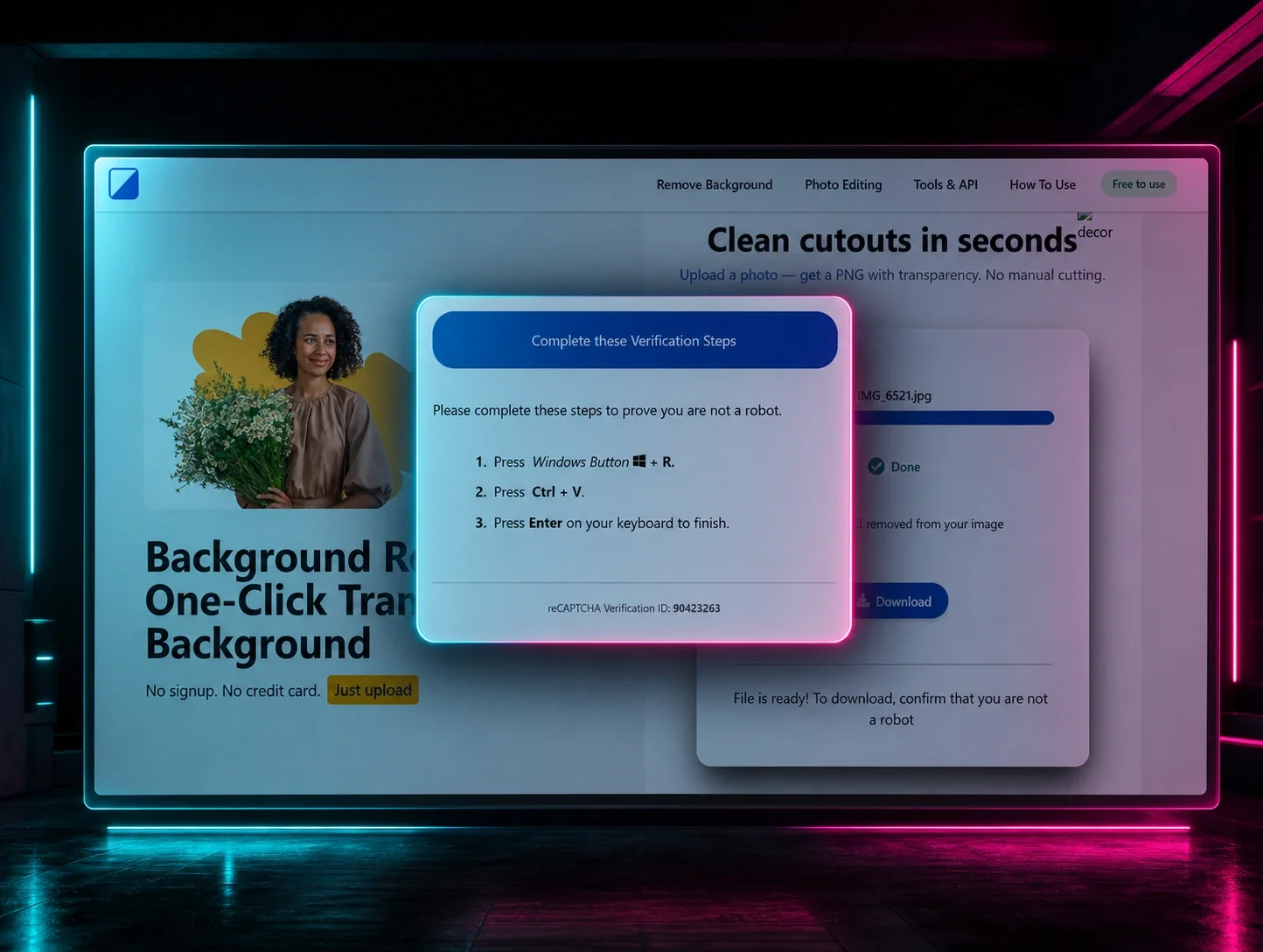
ClickFix Removes Your Background but Leaves the Malware

