Skip to content

🗂️ Other170

What you seeeverything
interconnects.aiarticle

Was I wrong about open models & cyber risks?

Interconnects post in which Nathan Lambert revisits his claim that an open-weight release of Claude Mythos in April 2026 would have been survivable. He argues GLM-5.3 already crosses that capability threshold with little visible harm. He cites Epoch AI's GLM-5.3 Firefox file-exfiltration exploit and Joshua Saxe's trend data, and says recent vulnerability waves come mostly from closed models and general AI diffusion.

GLMFirefoxGitLab+1
MythosProject GlasswingPHP2Shell+9

AI Security, other· Published and added 30 Oct 2026

rekt.newsarticle

Rekt - News or Hype?

Rekt News piece tracing three AI-security headlines back to their sources. It covers Justin Drake's October 2026 "bunker mode" warning about AI breaking ECDSA, OpenAI's report of a model spending Sepolia test ETH from a default developer mnemonic, and Wiz's "70% of the Internet" claim for PHP CVE-2026-109618 and CVE-2026-109619. It closes with four questions for checking a claim.

OpenAIPHPEthereum+3
CVE-2026-109618CVE-2026-109619Justin Drake+13

AI Security, other· Added 29 Oct 2026

socket.devarticle

OpenCode User Hit with Hostile Backlash After Reporting Free AI Loophole

Socket reports on a GitHub issue for OpenCode, opened 28 June, describing a bypass of per-IP usage limits on its free hosted models by switching VPN addresses. The reporter first proposed account-based limits, then reopened the issue in August to promote the workaround and claimed to run 130 agents. After the thread drew harassment and was deleted in October 2026, it is unclear whether OpenCode fixed the bypass.

OpenCodeVPNGitHub+1
AnomalySarah GoodingDeepSeek V4 Flash+1

other· Published and added 29 Oct 2026

securityweek.comarticle

Adobe, Veeam, Juniper Networks Patch Critical Vulnerabilities

SecurityWeek roundup of patches from Adobe, Veeam and Juniper Networks covering over three dozen vulnerabilities. Adobe fixed 12 flaws (eight critical in Campaign Classic), Veeam fixed nine (including a cross-tenant RCE in Backup for Microsoft 365), and Juniper fixed 18 in Session Smart Router and Conductor. None were reported exploited. Juniper said CVE-2026-109618 (PHP2Shell) affects Junos OS but is not exploitable there.

Adobe Campaign ClassicVeeam Backup & ReplicationVeeam Backup for Microsoft 365+2
CVE-2026-109618PHP2Shell

other· Published and added 29 Oct 2026

securityweek.comarticle

Chrome and Firefox Updates Patch Over 200 Vulnerabilities

Chrome 156 and Firefox 159 security updates fix over 200 vulnerabilities. Chrome 156 patches 52 flaws, four critical, including CVE-2026-118306, a FileSystem memory corruption bug that allows code execution outside the sandbox via a crafted HTML page. Firefox 159 fixes 167 flaws, 108 high severity, mostly use-after-free, plus Thunderbird and ESR releases. No in-the-wild exploitation is reported.

ChromeFirefoxThunderbird+1
CVE-2026-118306use-after-freesandbox escape

AppSec, other· Published and added 28 Oct 2026

eprint.iacr.orgpaper

Shor's algorithm compiled on cat qubits: 22 593 qubits for RSA-2048 in 3.14 days

Shor's algorithm compiled on cat qubits is an IACR ePrint (2026/2665) giving an end-to-end resource estimate on superconducting cat qubits, using repetition and LDPC cat codes. Factoring RSA-2048 needs about 23,000 cat qubits and 3.14 days, assuming phase-flip noise p_Z = 5e-4 and no bit-flips. secp256k1 ECDLP needs at most 30,000 qubits and 1 hour. A space-for-time trade runs RSA-2048 in 1.25 hours on about 611,000 qubits.

Bitcoin
Shor's algorithmRSA-2048secp256k1+5

other· Published and added 28 Oct 2026

eprint.iacr.orgpaper

Beyond the Event Horizon of Keccak, Extending the Observation from 2011 and applications

Beyond the Event Horizon of Keccak extends a 2011 observation that a path in the Keccak sponge from a zero-capacity state back to one yields infinite second-preimage families. Three theorems cover loops from any capacity value x, k-block loops and cycles, and Joux-style multicollisions with search cost independent of k. Verified examples run on Keccak-f[200] and Keccak-f[1600] with c=32; it also proposes bridge-based protocols.

KeccakSHA-3Lean
Danilo GligoroskiJoux multicollisionssecond preimages+2

other· Published and added 28 Oct 2026

akamai.comarticle

TLP Is Not a Suggestion

Akamai SIG argues that vendors and researchers broke embargo norms during the October 2026 PHP2Shell leak, when the PHP fix shipped a day early on 21 October. It explains the four TLP 2.0 labels, tabulates past embargo breaks (Heartbleed, a collapsed six-month kernel-era embargo, the Alibaba Cloud and MIIT case), and lists seven practices, such as no proofs of concept or CVE numbers before the fix.

PHP
CVE-2026-111497PHP2ShellTraffic Light Protocol+11

other· Added 30 Oct 2026, published 28 Oct 2026

eprint.iacr.orgpaper

Radical isogenies on every model

Radical isogenies on every model is an IACR ePrint paper by Thomas Decru (October 2026). It gives radical isogeny steps of every odd degree N directly on short Weierstrass, Montgomery, twisted Edwards, Huff, Jacobi quartic, twisted Hessian, Legendre and Jacobi intersection curves, plus Kummer lines. In Tate normal form a step drops from 12.5N to 10N multiplications. Montgomery and twisted Edwards curves cost 10.5N+O(1) per step and 2N to push a point. All algorithms are inversion-free, with exact operation counts.

CSIDH
Thomas Decruradical isogeniesVélu's formulae+1

other· Added 28 Oct 2026, published 27 Oct 2026

blog.cloudflare.comarticle

What took the Internet offline in Q3 2026

Cloudflare's Q3 2026 review of the 49 Internet disruptions seen by Cloudflare Radar between July and September 2026. Government-directed shutdowns led with 19 (18 exam shutdowns in Iraq), followed by 14 power outages and 5 natural disasters. It gives traffic-drop figures and durations for Cuba, Honduras, Ukraine, Guam, Colombia, Ethiopia's Tigray region and others, including a Honduran interconnection facility power failure that cut HTTP traffic 63%.

Cloudflare
Iraq exam shutdownsTigray shutdownSuper Typhoon Bavi+10

other· Added 29 Oct 2026, published 27 Oct 2026

securityweek.comarticle

iOS, macOS 27.2 Patch 286 Bugs; Fix for Exploited Flaw Backported to iOS 18

Apple's 27.2 releases fix 286 vulnerabilities across iOS/iPadOS (163) and macOS Golden Gate (263), with memory corruption in WebKit and the kernel, sandbox escapes, Gatekeeper bypasses and a remote code execution bug in Remote Management. iOS and iPadOS 18.7.11 backport the fix for CVE-2026-86950, an exploited zero-day found by Meta's product security team and first patched in 26.7.1. Patch counts for tvOS, watchOS, visionOS, Safari and the 26.7.2 and Sequoia 15.8.2 releases are also listed.

iOSmacOSSafari+2
CVE-2026-86950Metasandbox escape+2

Mobile Security, other· Published and added 27 Oct 2026

securityweek.comarticle

This is Fine: What NetScaler Zero-Days Tell Us About the New Normal

This SecurityWeek commentary covers the September 2026 Citrix NetScaler ADC and Gateway zero-days, exploited from mid-month and patched on 27 September as unauthenticated RCE flaws CVE-2026-88771 through CVE-2026-88778. The author argues the fast response shows stronger defence. Cited evidence: Citrix disclosure time fell from about 40 days to 17 in 2026 after it set up a NetScaler CNA, and CISA made a rare Sunday KEV addition.

Citrix NetScaler
CVE-2026-88771CVE-2026-88772CVE-2026-88773+9

other, Threat Intel· Published and added 27 Oct 2026

eprint.iacr.orgpaper

Alg\{Ossa\}: Decentralized Secure Aggregation with Rotating Committees and Eventual Delivery

AlgOssa is a decentralized secure aggregation protocol built on Ossa, a generic committee-aided, single-server construction for one-shot clients (following OPA and Willow, CRYPTO 2025). Ossa realizes secure aggregation with non-selective abort against a malicious server. AlgOssa adds Algorand-style sortition to rotate leaders and committees, bounds the chance of an honest server, and gives eventual delivery. Classical and post-quantum routes are evaluated.

Algorand
OssaAlgOssaOPA+2

other· Added 28 Oct 2026, published 27 Oct 2026

coindesk.comarticle

Solana bug reports now cost 1 SOL as AI floods security teams with spam

Firedancer, the Solana validator client built by Jump Crypto, now requires researchers to burn 1 SOL (about $100) per bug report, nonrefundable. A $1 million audit contest from 9 April to 9 May 2026 drew 809 reports from 162 researchers but only 127 unique findings, and nearly half of valid reports were duplicates. Rewards are doubled through 20 November, with Alpenglow criticals up to $300,000.

FiredancerSolanaAgave
Jump CryptoAlpenglowIshan Bhatt+2

other· Published and added 27 Oct 2026

ethresear.charticle

Inventory of PQ P2P Migrations in the Consensus Layer

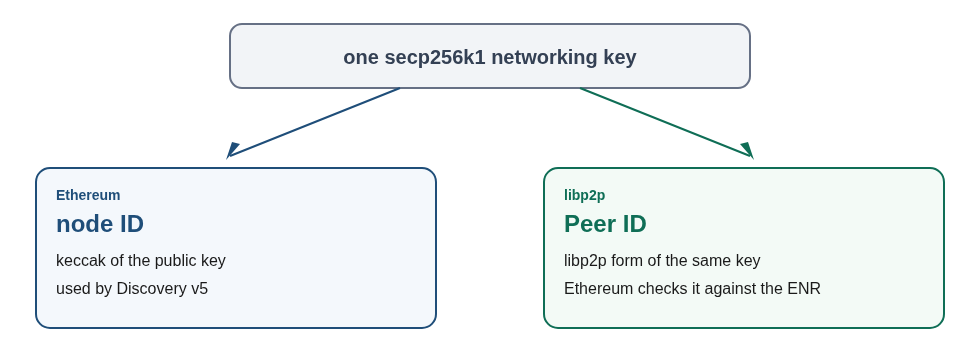
Inventory of post-quantum migration work for Ethereum consensus-layer networking, by adust09 of Nyx Foundation. It maps three targets: Discovery v5/ENR signatures and key exchange, TLS 1.3 key agreement in QUIC, and libp2p TLS identity binding and CertificateVerify. It covers the 300-byte ENR and 1,280-byte packet limits, why hybrid KEMs do not authenticate peers, and downgrade and DoS concerns. It selects no algorithm or schedule.

Ethereumlibp2pQUIC+3
ML-KEMECDSAFIPS 203+8

other· Published and added 27 Oct 2026

securityweek.comarticle

Maritime Coalition Launches Free Vulnerability Database for Ship and Port Systems

Blue Initiative is a free public vulnerability database for maritime IT and OT, built by Cydome, ClassNK, Bureau Veritas, MTS-ISAC and Rakuten Maritime. It holds nearly 30,000 entries, over 2,000 rated critical by CVSS and more than 580 known exploited. Only 37 affect ship and port products. Most entries are pulled from CISA ICS advisories and the KEV catalog and mapped to maritime systems.

CISA KEVCVSS
Blue InitiativeCydomeClassNK+5

other· Published and added 27 Oct 2026

arxiv.orgpaper

Measuring Users' Security and Privacy Concerns About Third-Party Community Bots on Discord

Measurement study of 23,102 third-party Discord bots and 183,142 user reviews (2021-2026, 49 languages). A fine-tuned DeBERTa classifier plus manual validation yields 8,832 security and privacy reviews, mapped to a 31-theme taxonomy; Data Sharing (30.5%) and Data Collection (16.2%) dominate. Permission count and admin status correlate only weakly with user concerns. The authors build BotLens, an MCP-server auditing framework with six tools.

DiscordModel Context ProtocolLLM
BotLensDeBERTa

other, AI Security· Added 28 Oct 2026, published 27 Oct 2026

eprint.iacr.orgpaper

Revisiting ZMAC+: Birthday-Bound Attacks and a Beyond-Birthday-Bound Repair

ZMAC+ is a tweakable-block-cipher MAC (List and Nandi, ToSC 2017) with claimed beyond-birthday-bound security. This ePrint paper (2026/2647) shows a tag-swap attack: for two-block tags, a distinguisher and a fresh-message forgery with constant success probability using O(2^{n/2}) queries in the ideal-TBC model. It also corrects a counting error in the published Lemma 4 and proposes a repaired variant with an adaptive PRF bound of order q^2/2^{n+min(n,t)}.

ZMAC+
DoveMACZHashZAE+4

other· Published and added 26 Oct 2026

eprint.iacr.orgpaper

Cryptanalysis and Repair of "Decentralized Multi-authority ABE for NC$^1$ from BDH"

Cryptology ePrint 2026/2642 presents a plaintext-recovery attack on the DBDH and CBDH variants of the Datta, Komargodski and Waters multi-authority ABE for NC1 (Journal of Cryptology, 2023). It needs one corrupt authority and two users, and succeeds with probability one in the static model. The flaw is an invalid extension of the Rouselakis-Waters LSSS matrix-normalization lemma. The paper also attacks two Datta-Pal (PKC 2023) attribute-based inner-product schemes and proves repaired versions secure in the random oracle model.

Datta-Komargodski-Waters multi-authority ABEDatta-Pal attribute-based inner-product functional encryptionRouselakis-Waters LSSS matrix-normalization lemma+3

other· Published and added 26 Oct 2026

eprint.iacr.orgpaper

A Memory-efficient Implementation of Wiedemann XL

A Memory-efficient Implementation of Wiedemann XL is an ePrint paper (2026/2641) giving the first efficient on-the-fly implementation of XL with block Wiedemann for the multivariate quadratic problem. It builds on the CCNY SSE implementation, removes column-index tables, and computes column indices with O(n^2) instead of O(n^3) look-ups. It runs in comparable BW1 time with up to five times less memory, and an AVX2 port covers F256, the main field of UOV.

MQOMSNOVAMAYO+7

other· Published and added 26 Oct 2026

eprint.iacr.orgpaper

Subexponential Algorithms for LWE via Rejection Sampling on Superlattices

Subexponential Algorithms for LWE via Rejection Sampling on Superlattices is an ePrint paper by Ligeng Fan, Changpeng Shao, Hongbo Li and Dingkang Wang. It extends the Ducas, Engelberts and Loyer superlattice framework to give a provable classical search-LWE algorithm for prime q in [n^2, 2n^2], using m=4n samples and time and space exp(O(n/ln ln n)). A second variant runs in 2^((1/2+o(1))n/ln R) for general parameters. It resolves a gap left by Kirchner and Fouque.

Ducas, Engelberts and LoyerKirchner and FouqueBKW algorithm+1

other· Published and added 26 Oct 2026

eprint.iacr.orgpaper

Private Information Retrieval with Accountability at Erasure-Optimal Server Redundancy

SynTrace is a single-round compiler that adds accountability to linear private information retrieval (PIR). The client mixes the retrieval query with m audit queries, so audit syndromes identify up to d deviating servers among t colluding ones before reconstruction. The paper proves perfect query privacy and zero false identification within the threshold. For Shamir-based PIR it needs k=t+d+1 servers. For a 32 KiB record from a 1 GiB database it uses 2.25 MiB, against 8.96 MiB for the Eriguchi, Kurosawa and Nuida (TCC 2022) homomorphic-MAC construction.

SynTraceEriguchi-Kurosawa-Nuida homomorphic MACTCC 2022

other· Published and added 26 Oct 2026

eprint.iacr.orgpaper

Decision Attacks on Known-Covariance Ring-LWE via Public Gram Determinants

Anis Bkakria's ePrint 2026/2638 gives polynomial-time decision attacks on Known-Covariance Ring-LWE (KCov-RLWE), the assumption Micciancio and Suhl introduced for simulation-secure threshold encryption. The public sample and covariance hint form a bordered Gram matrix whose determinant leaks a residual that differs between real and uniform samples. The attacks cover broad prime-modulus families at ring rank one and transfer to composite moduli with an odd prime divisor. Power-of-two moduli are not covered, and the paper does not break the full threshold-encryption scheme.

Ring-LWE
Known-Covariance Ring-LWEMicciancio and SuhlGram determinant+2

other· Added 26 Oct 2026, published 25 Oct 2026

eprint.iacr.orgpaper

Maximum-Likelihood Decoding of Gabidulin Codes Is NP-Hard Even in Dimension One

Philippe Gaborit proves that maximum-likelihood decoding of Gabidulin codes is NP-hard even for dimension one: deciding rank distance at most n-2 from the code {λg} is NP-complete. The reduction is deterministic, so Rank Syndrome Decoding and Rank Minimum Distance for F_{q^m}-linear codes are NP-complete under deterministic reductions, where the earlier reduction was randomized. It goes through a new pivot problem, Twisted Square Membership.

Gabidulin codes
Philippe GaboritGuruswami-Vardy theoremTwisted Square Membership+2

other· Added 26 Oct 2026, published 25 Oct 2026

eprint.iacr.orgpaper

Revisiting AES Key Wrap: Forgery Bounds, Structural Observations, and Recommendations for the Revision of NIST SP 800-38F

Revisiting AES Key Wrap is an ePrint paper (2026/2636) by John Preuß Mattsson, expanded from technical comments to NIST on the SP 800-38F revision. It shows the stated forgery probabilities ignore adaptive attacks and gives corrected bounds for KW, KWP and TKW. It also shows KW lacks beyond-birthday-bound security, since a forgery leaks a plaintext prefix and an encryption-only distinguisher exists.

AES Key WrapAES
NISTNIST SP 800-38FKW+4

other, GRC· Added 26 Oct 2026, published 25 Oct 2026

eprint.iacr.orgpaper

A Kelsey–Kohno Attack Variant against SHA-2 Message Digests in HSS/LMS and XMSS

Falko Strenzke's ePrint 2026/2635 presents a multi-target second-preimage attack on message hashing in HSS/LMS and XMSS with SHA-256 and SHA-256/192. It herds chaining states from many collected signatures into one state, defeating the key and leaf-index prefix. With 2^64 signatures, SHA-256 cost falls from 2^256 to about 2^166 (2^156 at maximal message length). SHAKE256 parameter sets are unaffected.

HSS/LMSXMSSSHA-256+2
Kelsey–Kohno herding attackKelsey–Schneier expandable messagemulti-target second-preimage attack+2

other· Added 26 Oct 2026, published 25 Oct 2026

interconnects.aitalk

Podcast: Kimi K3.1 Pro, the new cyber reality, and Muse musings

Interconnects podcast with Nathan Lambert and Florian Brand on Kimi K3.1 Pro and the AI cyber landscape. Kimi says it down-weighted cyber data in mid-training so its open weights do not extend offensive capability. They discuss the PHP2Shell remote code execution bug, the repeat LiteLLM compromise from an API key left in GitHub for five months, abliterated model APIs, and trusted-access programs from OpenAI and Anthropic. The transcript was truncated at the very end.

Kimi K3.1 ProLiteLLMPHP+3
PHP2ShellPatch the PlanetPHP Foundation+10

AI Security, other· Published and added 25 Oct 2026

eprint.iacr.orgpaper

On the Inapplicability of Residue-Confined Error Attacks to CRT-FHE with Non-Degenerate Error Distributions

Anil Kumar Pradhan's October 2026 ePrint rebuts the Olejnik and Naskrecki (2026) key-recovery and plaintext-recovery attack on the Pradhan CRT-RLWE fully homomorphic encryption scheme. It argues the attack works only because the chosen error distribution lies in the kernel of the CRT encoding, which makes the effective error zero. It also argues that the intended centered-binomial errors make that event negligible at the reported parameters. This is the author's own response, not independent verification.

CRT-FHERLWE
Olejnik and NaskreckiAnil Kumar PradhanKey Recovery from Residue-Confined Errors in the Pradhan CRT-RLWE Construction+1

other· Added 26 Oct 2026, published 24 Oct 2026

eprint.iacr.orgpaper

Chosen Commitments and Certified Decoding Regions in the Adaptive Threshold Schnorr Attack

This IACR ePrint 2026/2632 paper by Demirtaş and Yayla analyses the Crites–Stewart adaptive forgery attack on threshold Schnorr signatures, which needs one call to a sparse linear search oracle (bounded distance decoding of a scaled Reed–Solomon code). It shows that choosing the commitment coefficient vector does not help much: a wrapper adversary with Q challenges succeeds with probability at most QM/p, even if its solvers decode every witness for free. For the six original (N, τ) pairs, M stays below 2^24, so the bound is under 2^-100 after 2^128 challenges at p = 2^252.

Schnorr signaturesReed–Solomon codesfolded Reed–Solomon codes
Crites and Stewart attackGuruswami–WangAshvinkumar–Habib–Srivastava+2

other· Added 26 Oct 2026, published 24 Oct 2026

eprint.iacr.orgpaper

VeilDNS: Post-Quantum DNS Privacy from the First UDP Packet

VeilDNS is a DNS-native protocol that uses a post-quantum KEM and AEAD to encrypt DNS questions and answers and authenticate the resolver in one UDP exchange on port 53, preserving the DNS wire format. It has stateless and stateful modes plus optional forward secrecy from the second query. Against ML-DSA-authenticated DoT/DoH/DoQ it reports up to 3.5x higher cold-session throughput and 13.7x fewer bytes; Tamarin proves query confidentiality, response authentication and forward secrecy.

DNSML-DSATLS+1
VeilDNSTamarinDoT+3

other· Added 26 Oct 2026, published 24 Oct 2026

Showing 30 of 170

Show more