 interconnects.aitalk
Podcast: Kimi K3.1 Pro, the new cyber reality, and Muse musings
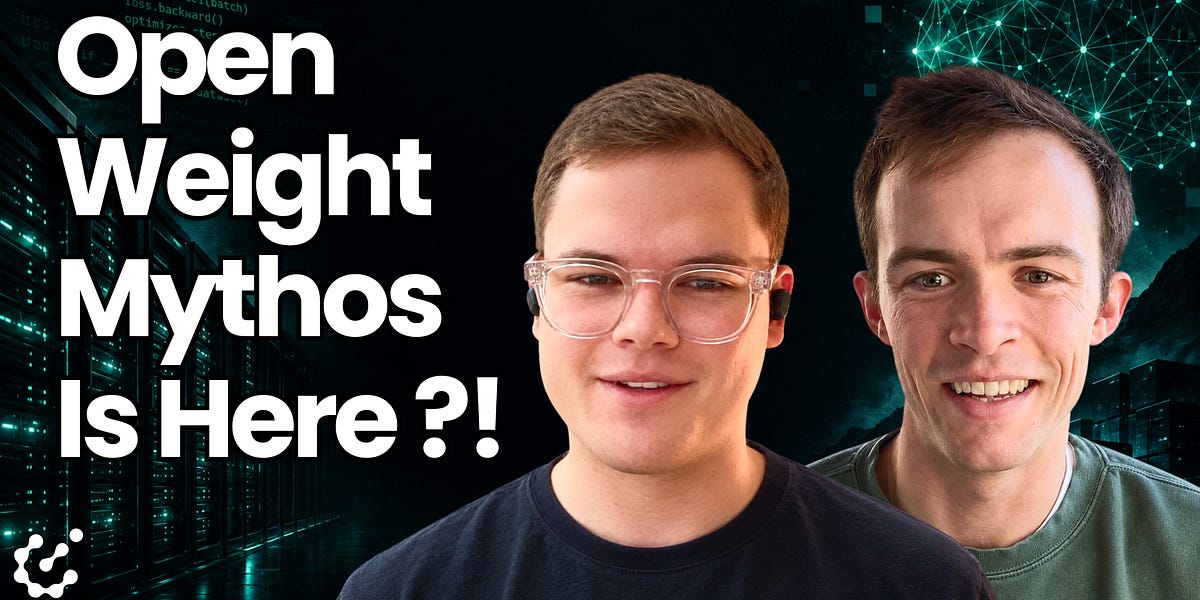
Interconnects podcast with Nathan Lambert and Florian Brand on Kimi K3.1 Pro and the AI cyber landscape. Kimi says it down-weighted cyber data in mid-training so its open weights do not extend offensive capability. They discuss the PHP2Shell remote code execution bug, the repeat LiteLLM compromise from an API key left in GitHub for five months, abliterated model APIs, and trusted-access programs from OpenAI and Anthropic. The transcript was truncated at the very end.
What it is
Interconnects podcast (Nathan Lambert and Florian Brand, transcript to 00:46) on Kimi K3.1 Pro and whether open-weight models change the cyber picture. Neither host is a cyber expert, and they say so. The value is in a few concrete details and their stated positions.
Kimi K3.1 Pro
- It is about 3 trillion parameters. Brand says fitting one replica needs a B300 node, whereas a roughly 700 billion parameter model fits on H200s.
- Weights are due by 4 November, after about two weeks of exclusive access for the launch partners.
- It ranks in the top four on the Artificial Analysis Intelligence Index, behind the two latest Claude 5.5 models and Muse Wonder Full, and ahead of GPT-6 Astra. Lambert says Terminal-Bench Science is about 20 points behind GPT-6 Astra, and community reaction is mixed.
- Lambert reads the Kimi blog's open-weight principles: it will not release weights that extend the absolute frontier of cyber capability, and K3.1 Pro's offensive capability is "by design" below what its pipeline can produce.
- Brand's view is that real intrusion needs long-horizon persistence, where closed models such as GPT-5.6 Sol are far ahead, and that fixing bugs does not. He therefore sees dropping CTF-style data as a reasonable trade.
- A screenshot of press instructions saying "Don't say this is a paid promotion" circulated. Lambert notes nobody has corroborated it.
Incidents discussed
- PHP2Shell: a long-standing remote code execution bug in PHP. OpenAI's Patch the Planet program and outside researchers found it, reported it to the PHP Foundation and coordinated one patch release. Some sites went offline to patch. Reports say mass exploitation has not happened. Brand says small businesses running end-of-life PHP get no security patches at all.
- LiteLLM: compromised a second time. The preliminary report says an API key sat readable in GitHub for five months before someone used it to spread malware.
- Both hosts say the trend is ecosystem-driven rather than open versus closed. They expect a vulnerability backlog plus much more agent-written code to mean more vulnerabilities for years.
Access and safeguards
- OpenAI's defensive trusted-access program, per Brand, requires an ID and securing a system with hardware keys. OpenAI can identify and refer abusers. The offensive tier is still hard to enter. Brand has heard Anthropic is broadening access.
- OpenAI and Anthropic have reportedly updated safeguards to block requests aimed at the real PHP2Shell exploit. Lambert also cites researchers locked out of agents since Opus 4.8, and reports of Claude Code used to hack OpenAI.
- Abliteration.ai and Morph serve abliterated models over an API. Lambert calls hosting them poor judgment. Brand says it is unclear whether abliteration helps or is just marketing.
Caveats
- Hosts' opinions and secondhand reports, with no data. The "DeepSeek swarm" mass-fixing tweet is described as a coin flip on authenticity.
- Lambert says an open-weight cyber incident would bring political fallout, and that evidence on open-model misuse will only appear after a disaster.
- The Muse, Anthropic junior hiring and job-market segments are off topic for security.
Organisations named here
- PHP Foundation
- Abliteration.ai
- Azeem Azhar
- Dean Ball
- Morph
Technologies named here
- OpenAI Patch the Planet program
- Daybreak programs and Mythos
- OpenAI trusted access defensive cyber program
- Anthropic cyber program
- Abliteration.ai
- Kimi K3.1 Pro
- Morph
- Muse
- Artificial Analysis defensive cyber benchmarks
- ProgramBench and Terminal-Bench Science
- Closed-model safeguards at OpenAI and Anthropic
- Stripe one-time credit card links
- Pangram
- LiteLLM
- PHP
- DeepSeek
- Anthropic
- OpenAI
- Patch the Planet
- Mythos
- Daybreak
Techniques named here
- Remote code execution in PHP
- Long-horizon persistence across intrusion stages
- CAPTCHA circumvention by the Muse agent
- Abliteration
Threat actors named here
- Nation-state actors
- ransomware
- PHP2Shell
Also named here
- GPT-6 Astra
- GPT-5.6 Sol
- Joshua Saxe
Related in AI Security

 blog.talosintelligence.comtool
Introducing CAIRN: Frontier tracking for AI-integrated malware (Cisco Talos)
 github.comadvisory
Flowise MCP Security Bypass Enables RCE
github.comrepoYesWeHack Claude Kit

 jfrog.comarticle