- Chainalysis security breach exposed customer data and raised phishing risk
Chainalysis confirmed on 30 October 2026 that an external actor accessed its systems and internal tools earlier in October, using what it called "offensive agentic techniques". Exposed data covers some customers' names, emails, job titles, user IDs and role labels. Chainalysis says it has found no access to passwords, session tokens or investigation content so far, and customers should expect targeted phishing. Affected-customer counts and the exploited vulnerabilities are not disclosed.
 en.cryptonomist.charticlePublished and added 31 Oct 2026
 Northflank security breach leads to abuse of customers' AI API keys
Northflank, a cloud application hosting platform, disclosed a breach on 30 October 2026 after a Wiz threat alert and told customers to assume all environment variables were decrypted and to rotate secrets. Customers reported unauthorized use of AI API keys. Wiz's "Black October for AI Developer Platforms" report counts at least nine incidents, including Railway, OpenCode, Warp and Lightning AI, and describes LLMJacking, with about 2.5 million Amazon Bedrock calls costing roughly $100,000 in two cases. Northflank has not said how attackers got in.
 bleepingcomputer.comarticlePublished and added 31 Oct 2026
- Hackers hijack a dozen DeFi websites, all registered with Name.com, and steal about $138,000
Twelve DeFi websites, including Flap, Kintsu, Pickle Finance and Origami Finance, were hijacked on 30 October 2026 and served the Step Drainer kit. All 12 domains use Name.com as registrar, and 10 were suspended. The Block traced about $138,000 stolen to three EVM wallets, excluding Solana and Aptos losses. Kintsu and Origami blame Vercel. Projects say their onchain contracts were untouched.
 theblock.coarticlePublished and added 31 Oct 2026
 Binance Hack: Everything You Need to Know About the Biggest Crypto Heist in History
Decrypt's explainer on the roughly $6.4 billion theft from Binance hot wallets across about 10 blockchains. Binance traced it to a compromised DevOps engineer laptop plus further breach points, and on Ethereum the attacker used 50 pre-signed EIP-7702 authorizations to turn a hot wallet into a sweeper. Chainalysis and TRM Labs attribute it to TraderTraitor; Tether and Circle froze about $2.3 billion.
 decrypt.coarticlePublished and added 31 Oct 2026
- Chainalysis says hacker using ‘offensive agentic techniques’ accessed its customers’ names and emails
Chainalysis disclosed on 30 October 2026 that an attacker using "offensive agentic techniques" accessed customer names, emails, user IDs and role labels, but no investigation content, passwords or session tokens. The report also covers the Binance hack (about $6.3-6.4 billion, attributed to North Korea), where funds loop through addresses and JustLend lending on Tron is used to dodge stablecoin freezes. About $2.8 billion is frozen.
theblock.coarticlePublished and added 31 Oct 2026  Chainalysis discloses data breach from "offensive agentic techniques"
Chainalysis disclosed a security incident in which an external actor used "offensive agentic techniques" to access internal systems and tools earlier in the month. Exposed customer data includes user IDs, names, email addresses and organizational role labels. The company reports no evidence of access to investigation content, credentials or session tokens, and has shared no details on the vulnerabilities, tools or dwell time. The article also lists other incidents from the same week.
bleepingcomputer.comarticlePublished and added 31 Oct 2026 Appraisal by AI: Model-driven victim prioritization in the VOLTA infostealer
VOLTA (VOLTA-AUTODOXER) is a self-deleting Windows infostealer that, after theft and live session-based enrichment, POSTs an evidence bundle to OpenRouter so an LLM can rank the victim's assets by monetization value. It falls back across a Claude, Kimi and Gemini chain when a model refuses. Talos covers the builder model, the Chrome App-Bound Encryption bypass, the volta_debug.txt artifact and countermeasures such as blocking Chrome --headless.
 blog.talosintelligence.comwriteupPublished and added 31 Oct 2026
 Syrian Hacker Gets Prison Time in US After Over a Decade on the Run
Ahmad Umar Agha (Th3Pr0), a Syrian Electronic Army member, received a 42-month US sentence in the Eastern District of Virginia, over 12 years after he was first charged in June 2014. He compromised about 47 Western media, company, NGO and government targets, including the 2013 Associated Press Twitter takeover that caused a flash crash. Accomplice Firas Dardar remains at large.
 securityweek.comarticlePublished and added 31 Oct 2026
 “Black October” for AI Developer Platforms
Wiz Research links October 2026 breaches at AI developer platforms (Fireworks, OpenCode, Warp, Zeabur, Railway and others) to stolen environment-variable credentials for AI access. It details two enterprise AWS Bedrock keys abused after vendor breaches: about 800k and 1.7 million calls, over $100k in list-price usage. It profiles two LLM resale operations, "momo" and "Xingjiabi", that tested the keys.
 wiz.iowriteupAdded 31 Oct 2026, published 30 Oct 2026
- Inside the largest crypto hack on record: How attackers breached Binance for $6.3 billion
The Block reports on the Binance hack of 30 October 2026, in which investigators estimate more than $6 billion was stolen from hot wallets and attribute the theft to North Korean groups. Binance says it holds about $5 billion of the affected assets and is buying $1.3 billion more to cover losses. The piece covers an EIP-7702 sweeper, laundering through Aave and DEXs, and analyst comments. The available text does not detail the intrusion path.
theblock.coarticlePublished and added 30 Oct 2026 - President Trump says they’re looking into Binance hack as calls grow for crypto rules
The Block reports that Binance lost about $6.3 billion in a hack on 29 October 2026. Co-CEO Richard Teng said a compromised DevOps engineer's laptop gave access to a service container used to submit unauthorized withdrawals, and TRM Labs attributed the theft to North Korea's TraderTraitor. The rest covers reactions: President Trump said on 30 October he was looking into it, CFTC Chair Michael Selig and The Digital Chamber urged federal exchange rules, and senators disputed whether the Clarity Act would have allowed freezes.
theblock.coarticlePublished and added 30 Oct 2026  Weekly Research Brief: Binance Hacked; Hyperliquid on Wall Street; Prediction Markets’ Brazil ‘Miss’
Galaxy Research's weekly brief of 30 October 2026 opens with the Binance hack: about $6.3b drained across 10 blockchains, attributed by TRM Labs and Chainalysis to TraderTraitor (Lazarus-linked). The attacker used EIP-7702 with 50 pre-signed authorizations on Ethereum, and Binance's preliminary finding is a compromised DevOps laptop reaching a service container. Tether and Circle froze about $2.6b. The other sections cover Hyperliquid and prediction markets.
 galaxy.comarticleAdded 30 Oct 2026
 Here We Go Again: Binance Loses $6.3b in Largest Robbery in History
Galaxy Research newsletter on the roughly $6.3b drained from Binance across 10 blockchains, which TRM Labs and Chainalysis attribute to TraderTraitor. On Ethereum the attacker used EIP-7702 to turn a hot wallet into a sweeper contract backed by 50 pre-signed authorizations. Binance's preliminary finding is a compromised DevOps laptop, with no wallet key leak. Tether, Circle, Ripple and World Liberty froze about $2.7b; Galaxy also assesses Binance's ability to cover losses.
galaxy.comarticleAdded 30 Oct 2026- Bunny CDN Security Incident
Bunny CDN status-page notice, posted 28 October 2026, about unauthorized access at an infrastructure provider that hosted one bunny.net CDN node in Armenia. Traffic was stopped within 20 minutes and the server wiped. No access to the node was found, but cached content, Pull Zone configs and TLS certificates could have been exposed, so all platform certificates were reissued. Customers with their own certificates should rotate them with new private keys.
 status.bunny.netadvisoryAdded 31 Oct 2026, published 30 Oct 2026
 Binance Just Suffered the Biggest Hack in Crypto History. What Now?
Bankless report on the Binance hack of $6.3 billion, which Binance's preliminary investigation traced to a compromised DevOps engineer's laptop with access to withdrawal-authorizing systems. TRM Labs found valid EIP-7702 authorizations on Ethereum, and nine other chains were drained through normally signed transactions. TRM and Chainalysis link it to North Korea's TraderTraitor. Tether and Circle froze about $3 billion, and Binance says SAFU and corporate cash will cover the losses.
 bankless.comarticlePublished and added 30 Oct 2026
 Secret Service, FBI Join Binance Hack Probe as Circle Freezes $823 Million
Decrypt reports that Binance is working with the FBI and U.S. Secret Service after a theft of about $6.4 billion, which TRM Labs and Chainalysis attribute to North Korea's TraderTraitor group, also linked to the February 2025 Bybit hack. Circle froze about $823 million in USDC and Tether froze USDT, though the page gives differing Tether totals. Binance first suspected a compromised DevOps engineer laptop, found more breach points, and saw no evidence of leaked wallet private keys.
decrypt.coarticlePublished and added 30 Oct 2026 4 real? Tracking exploitation and patching of eMudhra’s weak keys
Cloudflare's follow-up on eMudhra's eight trivially recoverable intermediate CA keys (such as 4, 56 and 66), disclosed 19 October 2026. Pingora logging showed about 22,000 handshakes with the weak keys, including about 160 forged certificates made within hours of disclosure. Probes on 50 million challenge pages show many bots, old browsers and Android WebView still trust the chain.
 blog.cloudflare.comwriteupPublished and added 30 Oct 2026
- CISA Adds Two Known Exploited Vulnerabilities to Catalog
CISA added two Ivanti Connect Secure vulnerabilities to its Known Exploited Vulnerabilities (KEV) Catalog on 30 October 2026, citing evidence of active exploitation: CVE-2026-111357 (missing authentication for a critical function) and CVE-2026-118527 (generation of predictable numbers or identifiers). The alert restates BOD 26-04, which requires federal civilian agencies to remediate KEV-listed flaws on exposed assets and check for prior compromise. It also links the KEV nomination form.
 cisa.govadvisoryPublished and added 30 Oct 2026
 Binance Sets Aside $6.34B to Cover Hack Losses, CEO Says 'Your Assets Are Safe'
Decrypt reports on the October 2026 Binance hot-wallet hack, about $6.3 billion, which Binance CEO Richard Teng says the company will cover with over $6.34 billion of its own funds. Teng says the attacker used an EIP-7702 delegation that skipped Binance's approval controls, a self-destruct mechanism to wipe tooling, and more than one breach point beyond a compromised laptop. TRM Labs and Chainalysis attribute the theft to TraderTraitor, and the attacker is still moving funds on Tron.
decrypt.coarticlePublished and added 30 Oct 2026 From help desk impersonation to AD CS abuse: Investigating ESC1 and ESC8 intrusion paths
Microsoft Threat Intelligence analysis of two human-operated intrusions that began with Teams help desk impersonation and Quick Assist sessions, then diverged at AD CS. Case 1 abused an ESC1 template for privileged certificates and DCSync, with an excluded account later used for Rclone exfiltration. Case 2 used PetitPotam and ESC8 relay to get a domain controller certificate and PKINIT. Includes investigation steps, AD CS hardening and KQL hunting queries.
 microsoft.comwriteupPublished and added 30 Oct 2026
 Binance Attacker Used EIP-7702 to Bypass Wallet Controls, Teng Says
The Defiant reports that Binance co-CEO Yi He's colleague Teng says the attacker in a breach Binance estimates at $6.3 billion used EIP-7702 to bypass wallet controls. Binance is rebuilding its withdrawal service, and attackers destroyed tools and traces during the intrusion. Only the teaser loaded, so the technical detail of the EIP-7702 abuse is not in the available text.
 thedefiant.ioarticlePublished and added 30 Oct 2026
 Trezor reveals Malaysian reseller sold wallet with spyware
Trezor says a user reported a Safe 5 wallet bought from Malaysian reseller CryptoBilis in August 2026 with a hidden board between the main board and screen, carrying a cellular module and antenna. The implant allegedly reads the screen, including the wallet backup, and sends it over a mobile network when plugged in. Trezor has not yet examined the device, has dropped CryptoBilis (9 October), and is replacing wallets bought since March 2026.
 protos.comarticlePublished and added 30 Oct 2026
- PHP2Shell Attacks Root Palo Alto Firewalls but Fail Against WordPress
PHP2Shell (CVE-2026-109618 and CVE-2026-109619) has been exploited for over a week. A China-linked group chained it with the Fragnesia Linux kernel privilege escalation to root at least 25 Palo Alto Networks PAN-OS firewalls with exposed management interfaces. Defiant had seen no confirmed WordPress compromise by 28 October 2026 despite 77,000 requests, and Cato and watchTowr report few successful attackers.
securityweek.comarticlePublished and added 30 Oct 2026  In Other News: Anthropic Breach Dispute, UEFI Flaw Hits Most Servers, Cloudflare AI Data Leak
SecurityWeek's weekly roundup of 30 October 2026 covers CVE-2026-97631, a 16-year-old buffer overflow in TianoCore EDK II that affects PXE network boot on most servers. It also covers a Cloudflare Workers AI cross-tenant leak caused by an SGLang bug, Anthropic's dispute with Cathedral over a bug bounty intrusion, and fake AI bots probing for secrets. Other items include AI-assisted ransomware (Gold Ogre, Aur0ra), the NIK C2 framework, and North Korean IT worker sanctions.
securityweek.comarticlePublished and added 30 Oct 2026 Binance hack: the largest robbery in financial history
Binance hack analysis from 21shares on the 29 October 2026 theft of about $6.3 billion from Binance. Binance's initial finding points to a compromised DevOps engineer's laptop with no sign of a leaked wallet key. Chainalysis attributes it to North Korea with high confidence, and about $3 billion was frozen by Tether, Circle and the Arbitrum Security Council. The attacker also borrowed about $44.6 million of WETH on Aave. Binance says SAFU and company funds will cover all losses.
 21shares.comarticlePublished and added 30 Oct 2026
 Malicious Claude Code extension on Cursor planted SSH backdoors
A malicious version 2.1.313 of Anthropic's Claude Code extension was served from Cursor's marketplace for about 11 hours on 29 October 2026, reaching up to 5,000 developers. A JavaScript loader prepended to extension.js added an attacker SSH key, a reverse tunnel and macOS/Windows persistence, and reported to 134.209.82[.]225. Coding errors likely blocked SSH access on many hosts. Cursor removed it and rotated keys; victims should look for an 'svc-telemetry' SSH key.
bleepingcomputer.comarticlePublished and added 30 Oct 2026 What is EIP-7702? The Ethereum Upgrade Behind the $6.4B Binance Hack
EIP-7702 ("Set Code for EOAs") is the Ethereum change, live since the Pectra upgrade on 7 May 2025, that lets ordinary wallets delegate to smart contract code. The guide covers set-code transactions, delegation indicators, batching, sponsorship and sweeper-contract scams. It then describes the 29 October 2026 Binance theft of about $6.4B, which TRM Labs and Chainalysis attributed to TraderTraitor, where 50 pre-signed authorizations turned a hot wallet into a sweeper.
decrypt.coarticlePublished and added 30 Oct 2026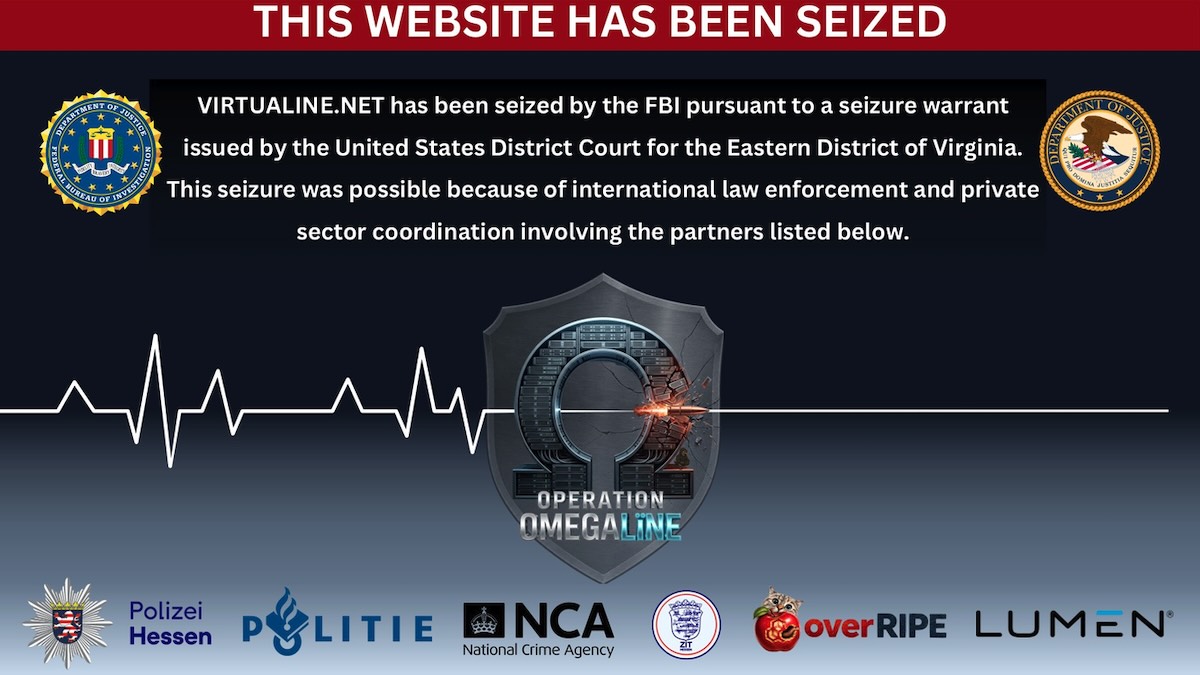 Bulletproof Host Virtualine Loses Its Domain to FBI Seizure
Virtualine is a Russian-speaking bulletproof hosting provider whose domain virtualine.net the FBI seized. Court documents say it hosted phishing, spam, carding and illicit content, and ignored abuse reports. TRM Labs says it received more illicit-attributed cryptocurrency than any other labeled bulletproof host, mostly from a Russian drug marketplace (44%) and a sextortion scheme (17%), and later from StealC operators in 2026.
securityweek.comarticlePublished and added 30 Oct 2026- Binance says it has $6.34 billion ready to cover hack losses
The Block reports that Binance says it has set aside $6.34 billion of its own funds to cover a hack it puts at about $6.3 billion. Co-CEO Richard Teng says the entry point was a compromised DevOps laptop and no private key leak was found. About $3 billion was frozen by Tether, Circle, Ripple and others, withdrawals are suspended, and TRM Labs sees parallels with North Korean attacks. Technical detail is thin.
theblock.coarticlePublished and added 30 Oct 2026  Binance hack: how a compromised developer laptop can lead to a $6.3 billion breach
Aikido Security's analysis of the roughly $6.3 billion Binance incident, which Binance says may have started with a compromised DevOps engineer's laptop. It sets out what is known (no private key leak, TraderTraitor attribution by TRM Labs and Chainalysis, additional breach points) and a plausible chain from laptop credentials to a withdrawal service. It compares the 2025 Bybit theft and lists mitigations.
 aikido.devarticlePublished and added 30 Oct 2026
 CISA says max severity GitLab flaw now exploited in the wild
CVE-2026-97229 is a maximum-severity GitLab flaw in the CI/CD Regular Expression Compiler, caused by an integer overflow, that lets unauthenticated attackers run code via a crafted regular expression. CISA added it to the KEV Catalog and ordered federal agencies to patch under BOD 26-04. GitLab fixed it in CE/EE 19.4.2, 19.3.5 and 19.2.8, and Shadowserver tracks about 2,800 exposed CE instances.
bleepingcomputer.comarticlePublished and added 30 Oct 2026 Israel Extradites Alleged Nomad Bridge Exploiter to US Over $2.8M Theft: Report
Decrypt report that Israel extradited Alexander Block (formerly Gurevich) to the US over about $2.8 million taken from the Nomad bridge in August 2022. A June 2022 update flaw let tokens be received without locking assets, and copycats then drained more than $186 million. Israel's Supreme Court held that exploiting a flaw the software permitted can still be unlawful intrusion. The FTC proposed a settlement with Illusory Systems in December 2025.
decrypt.coarticlePublished and added 30 Oct 2026 TRM and Chainalysis Tie $6.4B Binance Hack to North Korea's TraderTraitor
TRM Labs and Chainalysis attribute the October 2026 Binance theft, about $6.4 billion across 10 blockchains, to North Korea's TraderTraitor. On Ethereum the attacker used EIP-7702 delegation with 50 pre-signed authorizations to turn a hot wallet into a sweeper, pointing to compromised signing infrastructure. The attacker funded wallets via Tornado Cash, laundered through automation and Aave borrowing, and about $3 billion was frozen.
decrypt.coarticlePublished and added 30 Oct 2026 Fresh WordPress Vulnerability in Attackers’ Crosshairs
A WordPress core race condition in the update process, patched in WordPress 7.1.4 on 28 October 2026, allows unauthenticated remote code execution with high attack complexity. New files unpack into a predictable, web-accessible staging directory. Defiant's Wordfence logged over 18,500 requests for staged setup-config.php paths in 21 hours, with no confirmed compromises. No CVE is assigned yet. The release fixes 22 flaws in total.
securityweek.comarticlePublished and added 30 Oct 2026 TRM says Binance crypto hack stole $6.36B across 10 chains, mostly in 20 minutes
Report on the 29 October 2026 Binance theft, which TRM Labs valued at USD 6.36 billion across ten chains, mostly within 20 minutes. TRM attributes it with high confidence to North Korea's TraderTraitor. The attacker used pre-signed EIP-7702 delegations to turn a Binance Ethereum hot wallet into a sweeper. About USD 3 billion was frozen; TRM advises monitoring for unexpected delegations and separating signing infrastructure.
en.cryptonomist.charticlePublished and added 30 Oct 2026- Backdoors in official Claude Code extensions
GossiTheDog's Mastodon post reports that the Anthropic Claude Code Visual Studio extension, as installed in Cursor, contains malware that creates a remote access Trojan on desktops. It links to a phorion.io blog post on the reported compromise of the official Claude Code VSX extension. The post gives no technical detail, indicators or dates itself.
 cyberplace.socialthreadAdded 31 Oct 2026, published 30 Oct 2026
 Drupal warns of critical Commerce Core flaw exploited in attacks
Drupal Commerce Core has a critical missing-authorization flaw, CVE-2026-118539, that unauthenticated attackers exploit in the wild. It affects versions 0.0.0 to 2.41 and 3.0.0 to 3.3.13. Drupal urges upgrading to 3.3.13 (or 8.x-2.41 on the older branch) and auditing orders for inconsistencies. The article also recalls CVE-2026-9082, exploited in May and added to CISA KEV, and two RCE patches (CVE-2026-108097, CVE-2026-108099).
bleepingcomputer.comarticlePublished and added 30 Oct 2026 $2 Million+ Drained From Polymarket Traders in New Supply Chain Attack
Polymarket halted trading on 29 October after users reported unauthorized withdrawals traced to malicious JavaScript served from DebugBear's real user monitoring snippet. Hudson Rock's sample abused the authenticated session to sell positions or send tokens to a hard-coded address, without exfiltrating credentials. Loss estimates range from $2.19 million to $2.71 million (GoPlus), and Polymarket pledged reimbursement.
securityweek.comarticlePublished and added 30 Oct 2026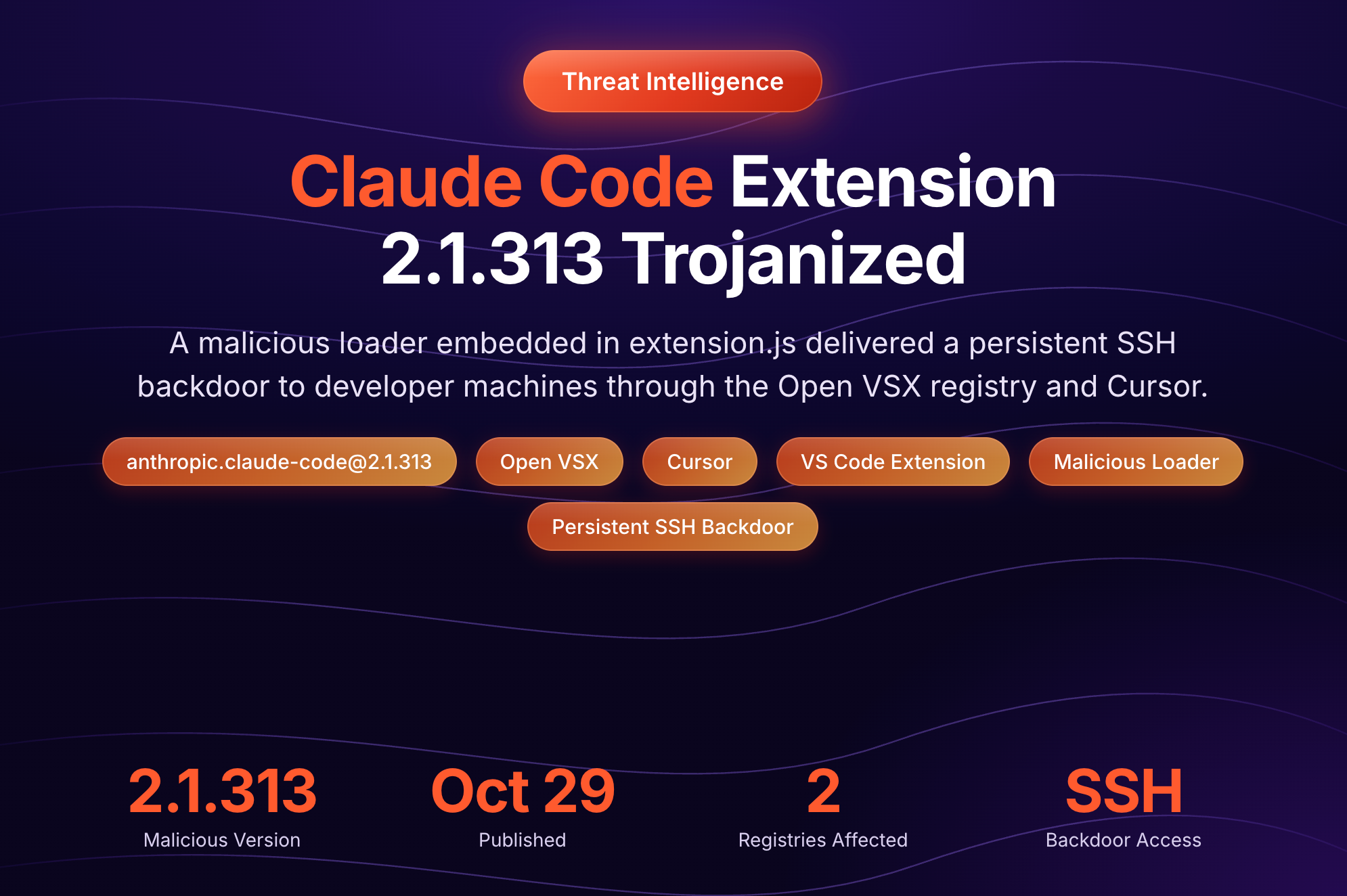 Trojanized Claude Code Extension Delivered Persistent SSH Backdoor to Developer Machines
The Claude Code VS Code extension anthropic.claude-code 2.1.313 was published on Open VSX on 29 October 2026 with a malicious loader prepended to extension.js. On load it planted an attacker SSH key (svc-telemetry), installed per-OS persistence, opened a reverse SSH tunnel and beaconed host recon over HTTP. Cursor reports at most 5,000 users received it in an 11-hour window. The post gives the timeline, cleanup artifacts and credential rotation steps.
 stepsecurity.iowriteupPublished and added 30 Oct 2026
 Binance Exploit: Latest Findings and Response
Chainalysis assesses the 29 October 2026 theft of about $6.4 billion from Binance hot wallets as the work of North Korean group TraderTraitor. Attribution rests on on-chain behavior, including real-time commingling with funds from the Bitget exploit, a Tornado Cash-funded operator wallet and signed authorizations that let a hot wallet run attacker code. About $2.8 billion was frozen. Laundering shows automation, with addresses receiving exactly 1 TRX before forwarding funds.
 chainalysis.comarticlePublished and added 30 Oct 2026
 Max-Severity GitLab Vulnerability Exploited Against Alpine Linux
CVE-2026-97229 is a CVSS 10 code execution flaw in Onigmo, Ruby's regular expression engine, reachable through crafted CI/CD configuration in GitLab. Attackers used it against Alpine Linux's GitLab on 20 and 21 October 2026 and failed; Alpine rebuilt the instance and found no tampering with aports or packages. Self-managed installs with their own Ruby need Ruby 3.3.13, 3.4.12 or 4.0.9, not just GitLab 19.3.6. CISA added it to KEV.
securityweek.comarticlePublished and added 30 Oct 2026 Binance Finds 'Additional Points of Breach' in $6.3B Hack
Binance estimated the October 2026 security incident at about $6.3 billion and said it found "additional points of breach" beyond the compromised DevOps engineer laptop it first named. The attacker reached a service container and submitted unauthorized withdrawals, with no wallet private key leak found. Arkham counted $6.01 billion taken from hot wallets on nine chains; Tether and Circle froze about $1.8 billion in stablecoins. About $3 billion is frozen onchain; withdrawals stay suspended.
decrypt.coarticlePublished and added 30 Oct 2026 Cursor Removes Malicious Claude Code 2.1.313 Extension From Its Marketplace
Socket's analysis of the reported malicious Claude Code extension 2.1.313, which Cursor confirmed was served from its own marketplace on 29 October 2026 to up to 5,000 users. Open VSX's change feed (3,392 events) and npm metadata hold no publication or removal record for that version, contradicting the initial OpenSourceMalware claim. Cursor published hashes, IOCs and remediation scripts.
 socket.devarticlePublished and added 30 Oct 2026
 Binance links $6.3 billion crypto theft to compromised DevOps laptop
Binance linked the theft of about $6.3 billion in crypto to a compromised DevOps engineer's laptop, which let attackers reach a service container and submit unauthorized withdrawals. TRM Labs and Chainalysis attribute the 29 October 2026 attack to North Korea's TraderTraitor. About $2.7 billion was frozen, and the attackers hold about $2.4 billion. Binance has found no evidence of a leaked wallet private key.
bleepingcomputer.comarticlePublished and added 30 Oct 2026- ESET Research (@ESETresearch) on X
ESET Research thread summarising its APT Activity Report for April to September 2026 on Russia-aligned groups targeting Ukrainian defense, government and infrastructure. Gamaredon deployed Turla's new VBScript recon tool Rezzuar, indicating FSB-linked collaboration, and updated its file stealer PteroBox while activity fell sharply from mid-May. A separate campaign hit MDaemon mail servers via CVE-2025-8088, delivering HELLAGE and HELLTAG backdoors with no user interaction.
 x.comthreadAdded 31 Oct 2026, published 30 Oct 2026
 Anthropic security breach exposed salaries and messages, not model weights
Anthropic security incident in which researchers from the startup Cathedral reached Anthropic's commercial, HR and IT systems through vulnerable third-party administrative applications. Exposed data included salaries, job offers, meeting transcripts and Slack messages; Anthropic says customer prompts, source code and model weights were not accessed. Anthropic cut access the same day and kept the apps disabled until vendors patched. The companies dispute whether Cathedral reported all its activity.
en.cryptonomist.charticlePublished and added 30 Oct 2026 $6 Billion Binance Hack Bears Hallmarks of North Korea’s TraderTraitor
The Binance hack of 29 October 2026 drained about $6.36 billion across ten blockchains in roughly 20 minutes, according to TRM Labs. TRM attributes it with high confidence to North Korea's TraderTraitor, citing a mixer-funded operator wallet, pre-signed transactions and overlap with the Bybit and KelpDAO hacks. Binance's early findings point to a compromised DevOps engineer laptop. Stablecoin issuers froze about $2.7 billion.
securityweek.comarticlePublished and added 30 Oct 2026 Binance probes a suspected cryptocurrency breach: $6.3B affected, about $3B frozen
Binance disclosed a suspected security incident on 29 October 2026, estimating $6.3 billion affected and about $3 billion frozen. Binance's early finding is that a compromised DevOps engineer's laptop let an attacker reach a service container and submit unauthorized withdrawals, with no evidence of wallet private-key leakage. TRM Labs suspects TraderTraitor, the group tied to the February 2025 Bybit theft. Tether, Circle and Ripple froze funds.
en.cryptonomist.charticlePublished and added 30 Oct 2026 Earliest Known PolinRider Malware Found in 2025 npm Packages
OpenSourceMalware traces nine itsa-* npm package versions published on 4 May 2025 from a hijacked maintainer account to the PolinRider campaign, eight months before documented victims. It decodes the EtherHiding chain (BNB Smart Chain and Ethereum calldata, JADESNOW, INVISIBLEFERRET bootstrapper, Socket.IO RAT, Python stealer) and links the 2025 sample to 2026 force-push infections. It lists IOCs, hashes, a timeline and hunting guidance.
 opensourcemalware.comwriteupPublished and added 30 Oct 2026
 Trail of Bits (@trailofbits) on X
Trail of Bits post on X summarising Binance's initial investigation into a security incident. Binance suggests a compromised DevOps engineer's laptop let an attacker reach a service container and submit unauthorized withdrawal transactions. The text says no evidence has been found of wallet private key compromise. The fetched text is truncated and gives no further detail.
x.comthreadPublished and added 30 Oct 2026 Binance Hacker Hunts for Exit Ramps as DeFi Exchanges Pause Markets
Decrypt reports on wallets linked to the suspected Binance hack (at least $5.5 billion drained, 29 October 2026) that swap freezable stablecoins for ETH via Uniswap and borrow 19,762 ETH on Aave. About 253,000 ETH (roughly $570 million) sits idle in two wallets. Tether, Circle and Ripple froze over $2 billion plus about $200 million RLUSD, and Aave and Kamino paused markets. Tornado Cash appears only as funding for the attack address.
decrypt.coarticlePublished and added 29 Oct 2026 Binance probes potential $5.8 billion crypto-theft hack
Binance is investigating a possible breach involving up to $5.8 billion in assets, which would exceed the $1.5 billion Bybit theft of February 2025. Tether froze over $1.567 billion in USDT and Circle over $800 million in USDC. Arkham tracks 55 addresses labelled "binance-hacker-1029" holding about $5.78 billion, but that is wallet holdings, not a confirmed theft amount. The cause is not yet known.
bleepingcomputer.comarticleAdded 30 Oct 2026, published 29 Oct 2026 Polymarket stolen funds: One account withdrew at least $2.7M across 710 wallets
Polymarket's international exchange suffered unauthorized withdrawals on 29 October 2026 after a compromised third-party provider, reportedly the website monitoring service DebugBear. Betting Intelligence and Polysights found one account withdrew at least $2.7 million across 710 wallets. Polymarket paused trading, referred the case to law enforcement, promised reimbursement, and had a June 2026 vendor breach that cost about $3 million. The attack mechanism is not described.
en.cryptonomist.charticlePublished and added 29 Oct 2026 Hugging Face malware campaign returns to hijack GPUs for crypto mining
A campaign of 31 malicious Hugging Face repositories across seven accounts, found by Pluto Security, posed as small Qwen2 checkpoints and used trust_remote_code to run a cryptominer and reverse shell on GPU inference hosts. The top model reached 28,412 downloads and scanned clean, and a second wave returned within days of takedown. The article also covers a fake Solana starter kit on GitHub that installs NetSupport Manager via a PowerShell one-liner aimed at AI coding agents.
bleepingcomputer.comarticleAdded 30 Oct 2026, published 29 Oct 2026 Japan Airlines suffers third-party data breach exposing passenger info
Japan Airlines disclosed that unauthorized access to Amadeus's Passenger Service System, between 10 August 2023 and 23 September 2026, exposed data on about 92,000 customers. Roughly 2,000 also had emails, phone and passport numbers exposed. ANA, Asiana Airlines and Korean Air are also reported as affected. Amadeus had announced a booking display vulnerability on 1 October 2026 and has not given the full scope.
bleepingcomputer.comarticleAdded 30 Oct 2026, published 29 Oct 2026 Polymarket halts trading after crypto-draining script breach, $2.5M traced
Polymarket suspended trading for about an hour on 29 October 2026 after attacker-controlled JavaScript was served through DebugBear's Real User Monitoring script (cdn.debugbear[.]com/C7xcKKrjUnXK.js). The script hijacked logged-in trading sessions, sold positions and moved assets to an attacker wallet, with about $2.5M traced. The article gives the wallet address, the data.debugbear.com C2 endpoint and Hudson Rock's findings.
bleepingcomputer.comarticleAdded 30 Oct 2026, published 29 Oct 2026- Binance Drained of $5.5 Billion in Suspected Hack, Tether and Circle Freeze $1.8 Billion
Decrypt reports that at least $5.57 billion left Binance-linked hot wallets on Ethereum, Bitcoin and Tron on 29 October 2026, which would be the largest crypto hack on record. On-chain analysts point to an EIP-7702 delegation, installed from a Tornado Cash-funded address minutes before the first sweep. Tether and Circle froze about $1.8 billion. Binance has not confirmed the hack, and how the attacker obtained the signature is unknown.
decrypt.coarticlePublished and added 29 Oct 2026  Rekt - Duelbits - Rekt
Duelbits is a crypto casino that lost an estimated $6.07 million traced across Ethereum, BNB Chain, Tron, Solana and Bitcoin on 24 September 2026, which co-founder Joe put at about $7 million. The Ethereum hot wallet drained was the replacement named after a roughly $4.6 million theft in February 2024. Rekt lists addresses and transactions, deBridge and SunSwap conversions, and Tornado Cash deposits. Duelbits has not published a root cause.
 rekt.newswriteupAdded 29 Oct 2026
 Rekt - NEAR Intents - Rekt
Rekt News analysis of the 30 September to 1 October 2026 theft of 3.865 million USDT from the NEAR Intents HOT Bridge treasury on BNB Chain, paid out in five signed withdrawals after a 10 USDT deposit. It uses Bitquery's trace of laundering via Chainflip, THORChain, KuCoin and Hyperliquid, and a NEAR regression test showing an oversized refund log made mt_resolve_deposit fail. NEAR said the funds were returned but published no report.
rekt.newsarticleAdded 29 Oct 2026- CISA Adds Two Known Exploited Vulnerabilities to Catalog
CISA alert of 29 October 2026 adding two vulnerabilities to the Known Exploited Vulnerabilities catalog on evidence of active exploitation: CVE-2026-97229, an integer overflow in GitLab CE/EE, and CVE-2026-76418, a NULL pointer dereference from an unchecked return value in Cisco Secure Firewall ASA and FTD. It restates BOD 26-04 remediation duties for federal civilian agencies and links the KEV nomination form.
cisa.govadvisoryPublished and added 29 Oct 2026  Fake crypto app on Apple App Store linked to $23K wallet theft
Padre Terminal, a fake Solana meme-coin trading app on the Apple App Store, drained about $23,000 from 27 Solana wallets after users imported private keys, per blockchain investigator Iris. The app has been removed, but the drainer stayed active; Iris traced funds to two attacker wallets holding 229.66 SOL. Iris also flagged four other suspected impersonator apps (Axiom Pro: Focus, GMGN AI, HyperTerminal-HyperliquidTools, Pump Fun Tokens & Analitycs).
bleepingcomputer.comarticleAdded 30 Oct 2026, published 29 Oct 2026 Polymarket Pauses Trading as Prediction Market Investigates Security Incident
Polymarket put its exchange in cancel-only mode and paused relayer actions on 29 October 2026 after users reported funds withdrawn without permission. Hudson Rock says a DebugBear-hosted script holds wallet-draining code that sells a logged-in user's positions and hard-codes the suspected attacker's wallet (about $2.65 million in POL, per Arkham) as fallback recipient. Polymarket blames a compromised third-party provider and promises to make users whole. Root cause and victim count are unconfirmed.
decrypt.coarticlePublished and added 29 Oct 2026 Hackers Publish Work Details of 41,000 Homeland Security Employees
Icepick is a dataset published on 28 October 2026 by Distributed Denial of Secrets. It lists 41,191 DHS employees and contractors with names, titles, offices, phones, managers and 55,000+ permission groups. The hacktivist group Department of Peace says it took the data from DHS's Okta SSO; Okta denies compromise. DHS has filed a takedown notice via ZeroFox, and the full archive is unverified.
decrypt.coarticlePublished and added 29 Oct 2026 Hackers exploit Cisco SD-WAN flaw to deploy custom KeyDrift malware
UAT-11473, a newly tracked APT cluster, exploits CVE-2026-20127, a max-severity authentication bypass in Cisco Catalyst SD-WAN Controllers (patched February 2026), to deploy the KeyDrift malware framework. KeyDrift's PolyFlame runs inside vdaemon processes, and LittleFilch hooks SSL_read to extract AES-256 IPsec keying material, saved to /var/tmp/vdaemon.bin and sent over UDP. Targets include space, defense and policy organizations. Talos sees overlap with Volt Typhoon's Silent Train network but makes no definitive link.
bleepingcomputer.comarticleAdded 30 Oct 2026, published 29 Oct 2026 Threat Brief: Critical Vulnerabilities in PHP: CVE-2026-109618, CVE-2026-109619 (Updated October 29)
Unit 42 threat brief on PHP2Shell, two PHP remote code execution flaws, CVE-2026-109618 and CVE-2026-109619 (CVSS 4.0 9.2), both caused by longjmp() error handling that leaves memory uninitialized or freed. Cortex Xpanse counted over 22.6 million exposed instances. The 29 October 2026 update says attackers chained PHP2Shell with a Linux kernel privilege escalation against internet-exposed PAN-OS management interfaces. An earlier 23 October claim of post-compromise activity was retracted on 25 October.
 unit42.paloaltonetworks.comadvisoryAdded 30 Oct 2026, published 29 Oct 2026
 A quiet week in infosec <.<
Cisco Talos Threat Source newsletter for the week of the PHP and Node.js vulnerability news cycle. It summarises NIK C2, a Go-based Windows implant that dumps credentials, streams keystrokes, deploys screen-locking ransomware and uses a victim's hijacked OpenAI API keys to analyse stolen data. It also lists weekly headlines (CISA KEV PHP bugs, Brotli flaw, Gheist GitHub token theft), Talos links and top malware hashes.
blog.talosintelligence.comarticlePublished and added 29 Oct 2026 Chrome extensions with 13.4 million installs caught hijacking searches
BleepingComputer reports Socket researcher John Tuckner's findings on 319 Chrome extensions with 13.4 million installs that hijack the default search engine. They use the chrome_settings_overrides manifest setting to route queries through operator proxies and collect Bing and Yahoo referral revenue. The proxy can later redirect to phishing or malware. Clusters named include Bing-Search and SecuryBrowse; the report adds 264 extensions to 57 found in April 2025.
bleepingcomputer.comarticleAdded 30 Oct 2026, published 29 Oct 2026 Tracking AI adoption in North Korean threat actor tradecraft
Microsoft Threat Intelligence report on how North Korean actors use AI, ranking Jade Sleet, Coral Sleet and Jasper Sleet as operationalized, Diamond Sleet, Onyx Sleet, Pearl Sleet and Sapphire Sleet as accelerating, and Emerald Sleet as expanding. It documents AI-generated lures (100+ Onyx Sleet PDFs, August and September 2026), AI-built tooling such as Coral Sleet's private GitHub repository trojanizing, and Onyx Sleet and Pearl Sleet use of the ARTEX agentic pentest framework. It ends with mitigation and Defender guidance.
microsoft.comarticlePublished and added 29 Oct 2026 How Secure Are US Elections? Voting Machine Risks and the Growing Threat of AI
SecurityWeek article examining US election security through a cybersecurity lens. It covers voting machines certified by the Election Assistance Commission but unpatched for up to two years, machines hacked at DEF CON's Voting Village, and QR-code ballots voters cannot verify. Sequent's Shai Bargil proposes open-source software and encrypted vote records. It also covers AI-enabled influence campaigns such as the 2024 Biden deepfake robocall.
securityweek.comarticlePublished and added 29 Oct 2026 The Rise of Agentic Attacks: What They Look Like, and Where They're Headed
Wiz Research reviews agentic attacks seen in its incident response work and in public reports (ARTEX, Hermes, JPCERT/CC, CrowdStrike, DIVD). It derives fingerprints of AI-agent activity from three intrusions: machine-paced iteration, natural-language reasoning in scripts, self-correcting script versions, checklist enumeration, noisy lateral spraying, probe-before-payload and self-labeled scratch files. It also covers effects on attribution, attack scale and defense.
wiz.ioarticlePublished and added 29 Oct 2026 The Rise of Agentic Attacks: What They Look Like, and Where They're Headed
Wiz research on intrusions where AI agents do the hands-on attacker work. It reviews public cases (ARTEX against South Korean banks and the ConnectWise compromise, Hermes at Thailand's Ministry of Finance, JPCERT/CC, CrowdStrike, DIVD) and three Wiz-investigated attacks. It distills fingerprints: machine-paced iteration, embedded natural-language reasoning, self-correcting scripts, checklist enumeration, noisy lateral movement, probe-before-payload habits and self-named scratch files. It also covers attribution, scale and defense implications.
wiz.iowriteupPublished and added 29 Oct 2026 IR trends Q3 2026: Actors impersonate IT help desks in vishing attacks as ransomware activity increases
Cisco Talos Incident Response Q3 2026 trends report. Phishing led initial access at 37 percent, with vishing and IT help desk impersonation to get RMM access; public-facing exploitation followed at 33 percent. Ransomware reached 27 percent of engagements (Qilin, Rhysida, Interlock, new VYPR), with EDR killers via BYOVD and WDAC. It also covers Salt Typhoon intrusions using CVE-2023-20198 and BadCandy, attacks on Claude Code credentials, and logging, MFA and secrets recommendations.
blog.talosintelligence.comarticlePublished and added 29 Oct 2026 CISA warns of Fragnesia Linux flaw chained in PHP2Shell attacks
Fragnesia (CVE-2026-46300) is a Linux kernel XFRM ESP-in-TCP logic bug in the Dirty Frag class that gives local attackers root, with a public PoC. CISA added it to the KEV catalog and ordered federal patching under BOD 26-04. Attackers chain it with PHP2Shell (CVE-2026-109618, CVE-2026-109619) to implant PHP webshells. Dream Security tied the chain to 25 rooted servers in the US, Japan, Taiwan and South Korea.
bleepingcomputer.comarticleAdded 30 Oct 2026, published 29 Oct 2026 BAE Says No Data Extracted in Incident Hitting Bankruptcy Courts
The Bankruptcy Noticing Center (BNC), operated by BAE Systems for the US federal judiciary, was restored after an incident that took it offline for more than two weeks from around 9 October 2026. BAE says no data was extracted and no PII was breached. It does not say what caused the incident or whether it was a cyberattack. The Judicial Conference declared a "Bankruptcy Rules emergency" on 22 October, and no group has claimed responsibility.
securityweek.comarticlePublished and added 29 Oct 2026 Cloudflare DDoS Threat Report 2026 Q3: More swarms, fewer giants
Cloudflare DDoS Threat Report 2026 Q3 covers July to September 2026, with 18.2 million network-layer attacks and 14.4 trillion HTTP DDoS requests mitigated. Short attacks under 10 minutes and 1 Gbps rose 208%, while attacks above 1 Tbps fell from 805 to 251 after law enforcement took down the Aisuru, KimWolf, JackSkid and Mossad botnets. CLDAP floods collapsed 99.5% as DNS amplification rose 215%. The United States became the most-attacked country again.
blog.cloudflare.comarticlePublished and added 29 Oct 2026 Over 41,000 DHS Employee Records Leaked Online
A hacker using the handle Department of Peace leaked more than 41,000 US Department of Homeland Security employee records, which the hacker says came from an Okta single sign-on system. The data covers names, work emails, phone numbers, job titles, office locations and per-account system access, mostly for CBP, ICE and HSI staff plus about 1,000 CISA employees. Okta says it has no evidence of compromise. Distributed Denial of Secrets calls the dataset 'Icepick'.
securityweek.comarticlePublished and added 29 Oct 2026- Treasury Sanctions 11 Over North Korean IT Worker Scheme That Moved Millions in Crypto
Decrypt reports that OFAC sanctioned 10 individuals and one entity on 28 October 2026 over North Korean IT worker schemes. Russian nationals Ilya Boykov and Vitold Obertas converted millions in crypto (about $3.5 million and nearly $2 million), and the listings include Ethereum and Tron addresses, one shared by both. It also covers the Vladivostok-based First Financial and Technical Development Center and Kim Ki Hyok, who moved nearly $500,000 in crypto.
decrypt.coarticlePublished and added 29 Oct 2026  New Cisco firewall zero-day exploited to crash SSL VPN devices
CVE-2026-76418 is a high-severity denial-of-service zero-day in Cisco ASA and Threat Defense (FTD) software, exploited in the wild in October 2026. Unauthenticated attackers send a crafted request to the SSL VPN (webvpn) when secondary authentication is set on a tunnel group, causing a device reload. Cisco offers no workaround besides disabling secondary authentication on tunnel groups. Shadowserver sees over 51,000 exposed ASA SSL VPN devices.
bleepingcomputer.comarticleAdded 30 Oct 2026, published 29 Oct 2026 Hackers Steal 2.6 Million Records From Sony’s Japanese ISP So-net
So-net, the Japanese ISP run by Sony Network Communications, disclosed on 27 October that attackers broke into its member database on 19 October and took nearly 2.6 million records of So-net and Plala subscribers. Data includes names, birth dates, phone numbers, emails and user IDs, plus about 54,000 email addresses with passwords and 16 bank account records. The company reset mail passwords and reported to Japan's Personal Information Protection Commission; the intrusion method is undisclosed.
securityweek.comarticlePublished and added 29 Oct 2026 Cisco SD-WAN Zero-Day Exploitation Tied to Volt Typhoon’s ‘Silent Train’ Network
Cisco Talos reported that UAT-11473 exploited CVE-2026-20127 (CVSS 10, Cisco SD-WAN peering authentication bypass) to deploy KeyDrift, a framework with PolyFlame (backdoor, relay C2) and LittleFilch (key harvesting) modules. Talos found its infrastructure overlaps considerably with Volt Typhoon's Silent Train network. Lumen Black Lotus Labs tied Silent Train to zero-day campaigns against Versa Director, N-able N-central, Cisco Catalyst SD-WAN and VeloCloud Orchestrator.
securityweek.comarticlePublished and added 29 Oct 2026 NIK C2: The new AI-enabled command-and-control framework
NIK C2 is a newly observed C2 framework with a Go-based 64-bit Windows implant that embeds an OpenAI Chat Completions client (ai_generate command), falling back to the victim's OPENAI_API_KEY. Talos details its 52+ commands, AES-256-GCM over WebSocket with HTTP fallback, credential, wallet and keystroke theft, screen-lock ransomware, AMSI bypass and anti-debug. It also lists a live C2 at 87.120.196[.]120 and total-sitevv[.]lol.
blog.talosintelligence.comwriteupPublished and added 29 Oct 2026 Attackers Exploit Second Cisco Firewall VPN Zero-Day Since August
CVE-2026-76418 (CVSS 8.6) is an exploited flaw in the Remote Access SSL VPN service of Cisco Secure Firewall ASA and FTD. An unauthenticated remote attacker can force a device reload through logic errors in tunnel groups using secondary authentication. Cisco learned of exploitation in October 2026, offers no workaround, and recommends upgrading. It is the second ASA/FTD DoS zero-day after CVE-2026-20349 in August.
securityweek.comarticlePublished and added 29 Oct 2026 HHS Filing Puts iRhythm Data Breach Toll at 8.2 Million
The June 2026 iRhythm data breach is now listed on the HHS breach portal as affecting 8,179,772 people, the same figure given to the Oregon Attorney General. Attackers took data from third-party-hosted business applications, including names, addresses, birth dates, contact details, and account, serial and insurance numbers, and tried to extort a ransom. iRhythm reports no impact on its products or clinical systems and offers no free credit monitoring.
securityweek.comarticlePublished and added 29 Oct 2026- Chinese Hackers Quietly Used Low-Severity ESXi Logging Flaw as Zero-Day
CVE-2026-41709 is a low-severity insufficient-logging flaw in VMware ESXi that lets a logged-in administrator perform operations without audit entries. CISA added it to the KEV catalog, and CrowdStrike reported that China-nexus actor Warp Panda used it as a zero-day against US organizations, including law firms, to cut audit visibility. The article also covers exploitation of vCenter bugs CVE-2026-59309 and CVE-2026-59310 and lists the fixed ESXi builds.
securityweek.comarticlePublished and added 29 Oct 2026  Wagyu Confirms Data Leak Exposing Monero Swap Records
Wagyu, a Monero swap service, confirmed a data leak after Hudson Rock found 4,580 orders in exposed records. The records link public-chain deposit transactions to Monero destination addresses and client IP addresses, which undoes the privacy a swap into Monero is meant to give. The fetched page held only the headline and subhead, so the cause, timeline and remediation are not covered.
thedefiant.ioarticlePublished and added 29 Oct 2026 The OpenSourceMalware Show #27
 (28 October 2026) is a podcast episode with transcript. It covers the Brotli decoder bug (CVE-2026-111497) vendored in C code across Python, Rust and PHP, and how to find copies via decode.c. It also covers the LiteLLM v1.107.0 compromise from an unrevoked admin key and a relaxed release control, and the MALFEX npm campaign hiding payloads in PNG-header files, plus an AGENTS.md lure and DPRK fake fonts in TTF/OTF.
opensourcemalware.comtalkPublished and added 29 Oct 2026 Searchjacked: Hidden Browser Extensions Hijack Searches for 13 Million Users
Searchjacked is Socket's research on 319 browser extensions (about 13.44M users over a decade) that hijack searches to earn ad revenue. The fetched text attributes 200 extensions to named operators such as Intango, System1, Perion, Mutual Media and Kinner Lake, and 119 to unknown operators like "SecuryBrowse" and "Bing-Search". It lists the Yahoo and Bing monetization IDs used to link them. The narrative and technical mechanics are not in the fetched text.
socket.devwriteupPublished and added 29 Oct 2026 Inside KeyDrift: Analyzing historical UAT-11473 activity on Cisco SD-WAN
KeyDrift is a custom malware framework used by UAT-11473, which exploited CVE-2026-20127 in Cisco SD-WAN Catalyst Controller to gain access. Talos analyzes PolyFlame (memory-resident vdaemon injection, recvfrom hook, TinyShell-style backdoor, intermediate C2) and LittleFilch (SSL_read hook that extracts and RSA-encrypts keying material). It reports infrastructure overlap with Volt Typhoon's Silent Train, plus patch guidance and Snort SIDs.
blog.talosintelligence.comwriteupPublished and added 28 Oct 2026 Leak Exposes 41,000 Homeland Security Workers–Including Undercover ICE Agents
Icepick is a leaked archive of records on more than 41,000 Department of Homeland Security employees and contractors, published by Distributed Denial of Secrets in 2026 and said to come from DHS's Okta login system. WIRED's analysis covers CBP, ICE, HSI, USCIS and CISA staff, plus over 55,000 permission groups that reference undercover programs, Palantir Falcon, PenLink, Signal and Mobile Fortify. Okta says it has no evidence of compromise.
 wired.comarticleAdded 29 Oct 2026, published 28 Oct 2026
 CVE-2026-101767: Critical Oracle EBS SQL Injection Actively Probed in the Wild
CVE-2026-101767 is a CVSS 9.8 unauthenticated SQL injection in Oracle E-Business Suite's Application Object Library, reachable through the /OA_HTML/AppsTCFServer servlet (GanttDataServer) and chainable to OS command execution. It affects versions 12.2.3 to 12.2.15 and was fixed in the October 2026 Critical Patch Update. Horizon3.ai found it, and Defused saw probing on honeypots on 27 October 2026. Interim mitigation is removing the servlet from the URL firewall allowlist.
 orca.securityadvisoryPublished and added 28 Oct 2026

Showing 90 of 742
Show more