 simonwillison.netarticle
Building a multiplayer game world with autonomous Fable-class models
Simon Willison's link post covers Jacob Sansbury's account of Spawn, a multiplayer game where players prompt an in-game agent, Savi, to change the world. Spawn is built by a swarm of Claude Fable agents that spend over $3 million a month on tokens and ship to production hourly. An hour without a ship counts as a SEV-0, and rollbacks take 30 seconds. Fable 5 and 5.1 made this autonomy work, Opus 5.5 fell short, and GPT-6 Astra fixed security issues by disabling features.
What it claims
Simon Willison's link post, dated 29 October 2026, quotes Jacob Sansbury's essay "How I Built the Most AI-Pilled Company in the World" about Spawn. Spawn's token spend is about 30 times its payroll, according to Sansbury. Sansbury says about 60% of the agents' work starts from a production signal: a production error, a bug report from Savi, something odd in the logs, or a feature request. The agents edit live code directly and read every error, bug report and metric themselves.
How it works
Savi, the in-game agent, files bugs on her own, both when a user hits one and when she hits one in the product. Each report goes to an agent that triages it into one of three outcomes: a real bug to fix, something the team will not fix, or intentional design that needs a decision. Most become a change, which reaches the affected user within an hour along with a message in the same chat.
flowchart TD
  A[User or Savi hits bug] --> B[Savi files report]
  E[Errors, logs, alerts] --> C
  B --> C{Triage agent}
  C -->|real bug| D[Change shipped within the hour]
  C -->|won't fix| F[Closed]
  C -->|intentional design| G[Needs a decision]
  D --> H[Reply in user's chat]
  D --> E
Sansbury gives a reason for the hourly ship target beyond fast feedback. An agent can only keep a few hours of work in its head, so shipping faster than that helps it stay coherent. Unshipped changes also pile up, and existing production problems last longer.
Incident handling is also run by agents. When a monitor or log alert fires, it starts or wakes an agent that owns the incident. Rollbacks are scoped to "exactly where it's broken and nowhere else." The team breaks things on purpose to check that these recovery paths work.
Evidence
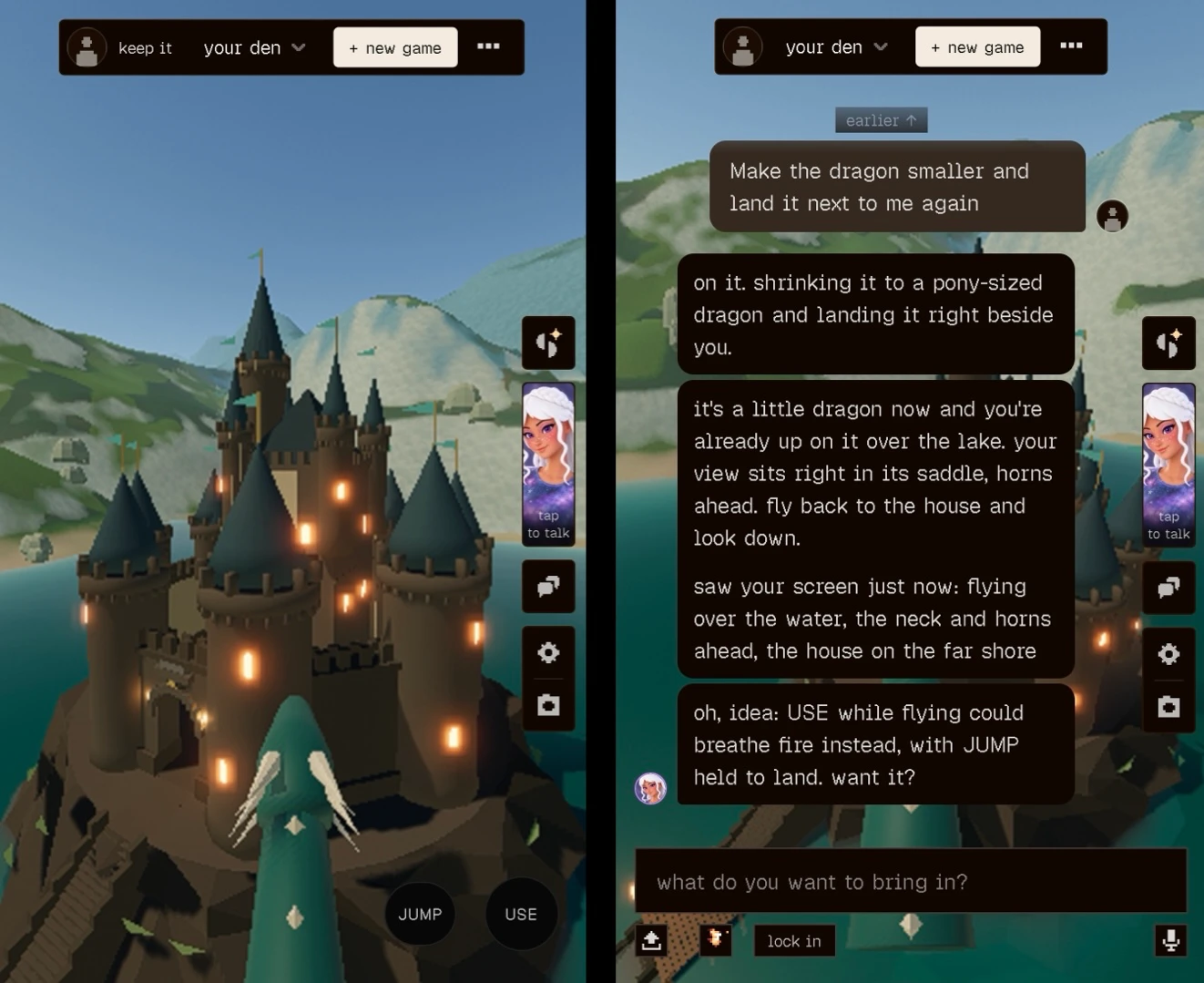
The only first-hand test in the post is Willison's own. Willison used Spawn on a phone for a few minutes and prompted a castle into existence, then a dragon, then rode the dragon around the castle. The model comparisons (Fable 5 and 5.1 working, Opus 5.5 falling short) are Sansbury's account, and no benchmark or criteria are given.
Limits
This is a short link post with excerpts. Sansbury's full essay is not in the fetched text, so architecture, tooling, agent count and test coverage are not described. Willison writes that they have trouble imagining this style of development working on software where failures carry higher stakes, and that it appears to work for a game. The GPT-6 Astra failure is a concrete failure mode. Asked to apply fixes from a security review, Astra disabled every insecure feature across the product and marked each to be re-enabled once the security fixes were done.
Organisations named here
- Jacob Sansbury
- Savi
- Simon Willison
- Spawn
Technologies named here
- Fable 5
- Fable 5.1
- Opus 5.5
- GPT-6 Astra
- Claude
- Claude Fable 5
- Claude Fable 5.1
- Claude Opus 5.5
- Savi
- Spawn
Techniques named here
- Agentic engineering with continuous deployment
- Agent-owned incident response
- Automated bug triage by agent
Related in agents

