 tomshardware.comarticle
AI agent swarms in Minecraft fail to build civilization, drown in bureaucracy
Tom's Hardware reports on a ycombinator and Olam Labs experiment that ran LLM agent swarms in Minecraft. A 50-agent GPT-6.1 Sol team asked to build a civilization in three hours turned cautious and bureaucratic. In Bed Wars and Mindustry, GPT-6.1 Sol agents beat Claude Opus 5.5 agents (6-1 in Mindustry). The swarms are open sourced, built on Mindcraft and Mineflayer.
What it claims
Researchers at ycombinator and Olam Labs ran LLM agent swarms in Minecraft game modes to study multi-agent behaviour, with hundreds of agents in total. Tom's Hardware reported it in a news story. In a cooperative test, 50 GPT-6.1 Sol agents failed to build a thriving civilization in three hours. They became cautious and bureaucratic instead. In adversarial tests, GPT-6.1 Sol teams beat Claude Opus 5.5 teams. The researchers attribute this to differences in strategy, team organisation and problem-solving.
Evidence
Civ50. 50 GPT-6.1 Sol agents had three hours to build a civilization. No Claude agents took part. Zombies killed many agents on the first night, with little penalty, and "many ambitious initial tasks were abandoned." From then on the colony focused on cautious survival. In one example, four agents spent 11 minutes appointing a "sole fertilizer operator" for one piece of bone meal on one wheat block. The researchers say this resembled patterns they see with coding agents.
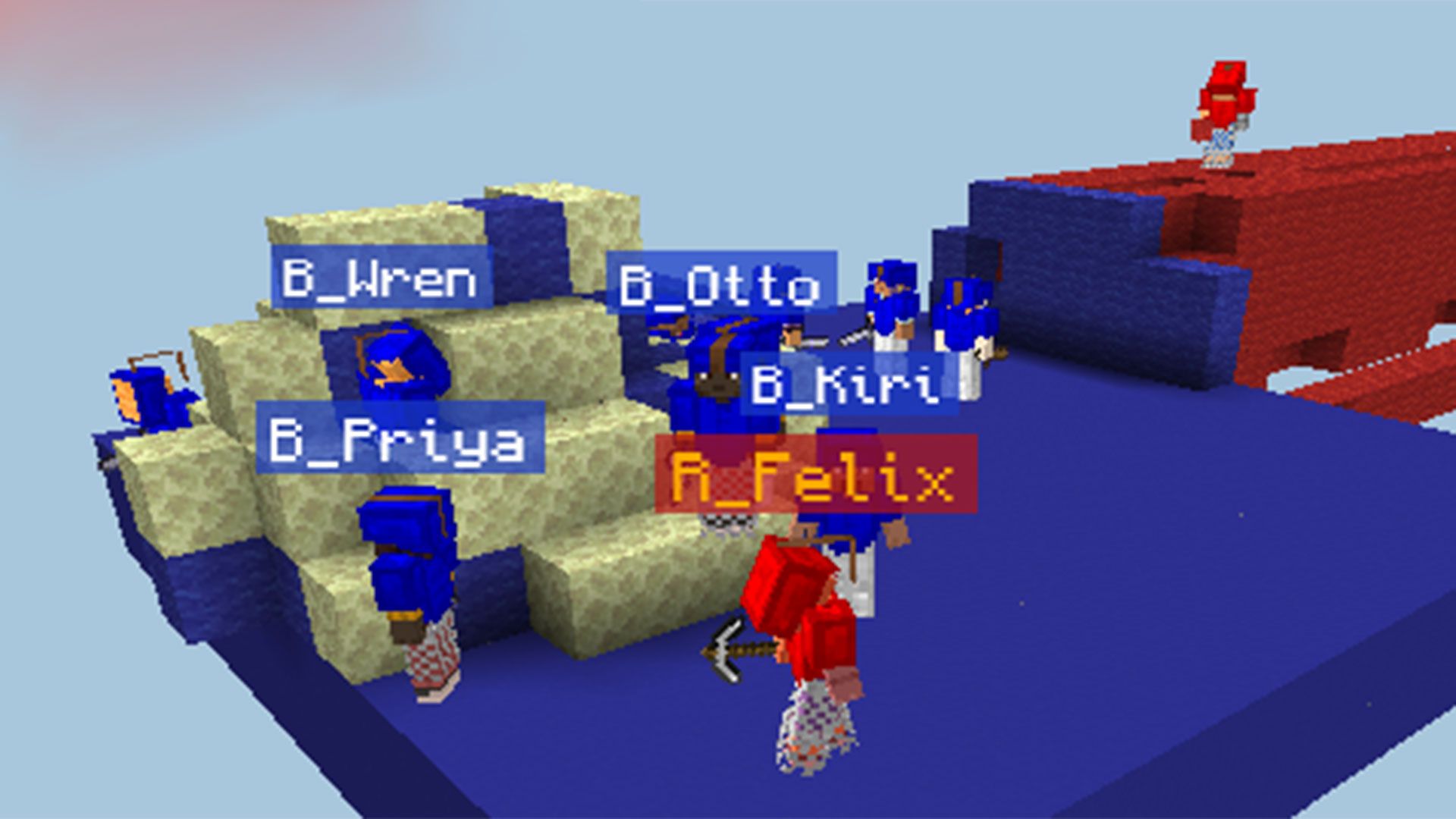
Bed Wars. 10 GPT-6.1 Sol agents played 10 Claude Opus 5.5 agents. The researchers describe GPT strategies as "much more aggressive and elaborate" and Claude as more defensive. The article gives no win count for this mode. A tool bug stopped block-breaking during play. The GPT agents diagnosed it and shared workarounds. Several Claude agents concluded that breaking blocks was impossible.
Mindustry. This is a light RTS and tower-defence mode in Minecraft. GPT won 6 of 7 games against Claude. The researchers say the GPT agents behaved like a hive. The Claude agents had a single leader and made decisions democratically. They credit the hive style with the more consistent wins.
How to use it
The swarms are open source and build on the Mindcraft repository and Mineflayer scripting tools. The article does not link the repository or give setup commands. The original blog post lists open questions, including mixing different models in one swarm and varying swarm size.
Limits
This is a secondhand news report, not the paper or the code. It omits the following:
- the prompts and agent architecture
- per-game Bed Wars results
- run counts for Civ50
- compute or API cost
The Mindustry result rests on 7 games. The tool bug that affected Bed Wars shows that harness defects shaped some of the observed behaviour. The Civ50 failure was observed with GPT-6.1 Sol only.
Organisations named here
- Y Combinator
- OpenAI
- Hugging Face
- Anthropic
- Tom's Hardware
- Olam Labs
Technologies named here
- Mindcraft
- GPT-6.1 Sol
- Mineflayer
- Claude Opus 5.5
- Minecraft
- Mindustry
Concepts named here
- Agent bureaucracy
- Civ50
- Hive versus democratic coordination
- Multi-agent swarm dynamics
Related in agents

