- dbreunig/nesformer
nesformer is a project by Drew Breunig that bakes a working Nintendo Entertainment System 6502 CPU emulator into the weights of Qwen3.5-4B, so NES ROMs such as Super Mario Bros run (very slowly) inside the model. It follows Divyansh Agrawal's qwenputer. Simon Willison relays the Opus 5.5 prompts Breunig used, and notes that Opus found Christopher Pow's CPU conformance tests.
 simonwillison.netarticlePublished and added 30 Oct 2026
- Anthropic Cracking Down on Video Game Rewrites
A tweet from chasmmmmmmmmmmm says Claude Code received a new rule around 27 October 2026, delivered from Anthropic's servers under the flag "tengu_heron_brook", with no setting to disable it. The quoted rule allows original games, genre games and games from the user's own designs and assets, but forbids recreating a specific existing game, even if renamed. The post asks whether this ends game rewrites and modding, and gives no verification beyond the quoted text.
 twitter.comthreadAdded 31 Oct 2026, published 30 Oct 2026
 [AINews] Building AIE CODE: The top Coding Agent Conference
AINews issue for 28 to 29 October 2026 from Latent Space. It opens with a preview of the AIE CODE summit (themes: Scaling without Slop, System One models, Increasing Ambition, with Jarred Sumner on Bun in Rust). It then recaps Twitter and Reddit news: Mistral Large 4 open weights (1.05T total, 52B active), Artificial Analysis benchmarks, Gemini 4 Carbon, Qwen4 rumours, Claude Code quota complaints and OpenAI frontier-run monitoring. Text was cut before the end.
 latent.spacearticlePublished and added 30 Oct 2026
- rikugan: LLM reverse-engineering agent for IDA Pro and Binary Ninja
Rikugan is a reverse-engineering agent that runs inside IDA Pro and Binary Ninja. It has its own generator-based agent loop, context management, plan mode and 60+ tools, and does not depend on an external MCP server. An orchestrator spawns parallel subagents to analyze a binary. It supports Anthropic, Gemini, MiniMax, Kimi, OpenAI-compatible endpoints and Ollama, with per-model notes.
 github.comrepoAdded 30 Oct 2026
- Ritik Shukla (@Retik_S) on X
kanzo is a local kanban board that coding agents can update. It ships as one 4 MB binary that starts in 2 ms and runs on localhost. It also works as an MCP server, so Claude Code and Codex see the same tasks as the user. The board is stored as a folder that can sync through a private git repo. The post is brief and gives no further detail.
 x.comtoolPublished and added 30 Oct 2026
- aiproduck (@aiproduck) on X
Ruflo is an MIT-licensed wrapper for Claude Code and Codex that adds agent swarms, vector memory and an MCP server. The plugin install writes no files to the workspace, while npx init adds a .claude/ directory, CLAUDE.md and hooks. The post warns that mods run with the account's permissions, so users should read them first. It gives no benchmarks or architecture detail.
x.comthreadPublished and added 30 Oct 2026 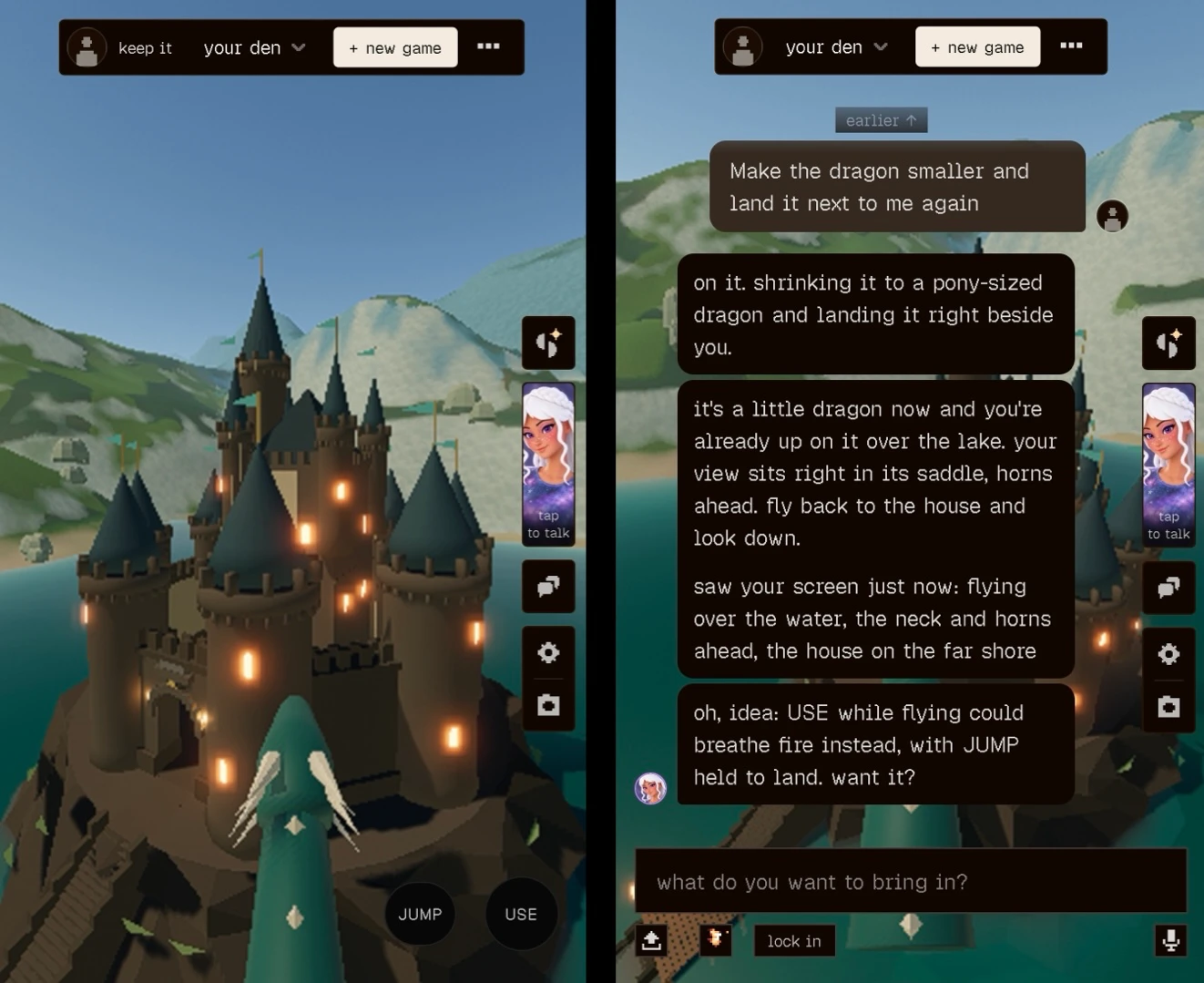 Building a multiplayer game world with autonomous Fable-class models
Simon Willison's link post covers Jacob Sansbury's account of Spawn, a multiplayer game where players prompt an in-game agent, Savi, to change the world. Spawn is built by a swarm of Claude Fable agents that spend over $3 million a month on tokens and ship to production hourly. An hour without a ship counts as a SEV-0, and rollbacks take 30 seconds. Fable 5 and 5.1 made this autonomy work, Opus 5.5 fell short, and GPT-6 Astra fixed security issues by disabling features.
simonwillison.netarticlePublished and added 29 Oct 2026 OpenCode User Hit with Hostile Backlash After Reporting Free AI Loophole
Socket reports on a GitHub issue in the OpenCode tracker describing a bypass of per-IP usage limits on free hosted models, using a VPN to switch addresses. The reporter first urged account-based limits, then claimed to run 130 concurrent agents through the loophole. After the issue drew harassment it was deleted. Whether OpenCode fixed the bypass in October 2026 stays unclear.
 socket.devarticlePublished and added 29 Oct 2026
- 🚨 AI News | TestingCatalog (@testingcatalog) on X
Mistral Large 4 ("Le Chonk") is an open-weights model from Mistral, now on Hugging Face. Per Mistral's announcement quoted in the post, it ranks #1 among open models on Cognition's FrontierCode benchmark, is aimed at agentic coding and cybersecurity, and claims better reasoning efficiency and lower inference costs. The post does not give parameter counts, license or benchmark scores.
x.comthreadAdded 30 Oct 2026, published 29 Oct 2026 - Damir I on X: "Two developers, four agents, one repo: a setup for pairs" / X
A guide to avoiding merge conflicts when two developers each run Claude Code and Codex on one repo. It cites Brun, Holmes, Ernst and Notkin: 16% of merges had textual conflicts, and 93% grew from unshared commits. It gives four steps (person/agent/task branch names, push at first commit, a partner-files script, a git merge-tree pre-push hook), then pitches the agentmash live-warning tool.
x.comarticleAdded 30 Oct 2026, published 29 Oct 2026  Gemini 4 Carbon is the new #1 on the Artificial Analysis Intelligence Index v5
Gemini 4 Carbon scores 59 on Artificial Analysis Intelligence Index v5 (published 28 October 2026), the top score, with #1 on 4 of 9 evaluations including HLE-Diamond and AA-Omniscience. On the Coding Agent Index it scores 59 with Antigravity CLI, 3 points behind Claude Code with Claude Opus 5.5 (62). Cost is $7.76 per task, versus $10.04 for Opus 5.5. Rollout is limited to selected users.
 artificialanalysis.aiarticleAdded 30 Oct 2026, published 29 Oct 2026
- Jurly (@jurlycat) on X
Chums is a free, open-source Apple Watch app that turns Claude Code and Codex sessions running on a Mac into animated characters, in the spirit of Muse Charm. Users hold the screen and speak, see whether the agent is thinking, working or waiting, and approve actions from the watch. Each character has its own session, personality and voice. The iPhone companion app adds photos, files and interactive results. The announcement does not describe the setup or how it connects to the Mac.
x.comtoolAdded 30 Oct 2026, published 29 Oct 2026 - Zyon ⚗️ (@zyonbuilds) on X
Orca is an open-source (MIT) desktop app from stablyai for running a fleet of coding agents, including Claude Code, Codex and OpenCode, each in its own git worktree using the user's own subscriptions. Features include fanning one prompt across five agents and merging the winner, commenting on diffs and sending them back, SSH worktrees on remote machines, and a phone app for steering agents. The post reports 103k stars.
x.comtoolAdded 30 Oct 2026, published 29 Oct 2026  [AINews] Gemini 4 Carbon tops leaderboards, launches for cyber defenders
AINews issue for 27-28 October 2026, a Latent Space digest of Twitter and Reddit. It leads with Google DeepMind's Gemini 4 Carbon: claimed cyber scores (SEC-bench Pro 88.2%, ExploitGym 54.8%, CWE-bench 71.0%), #1 on Artificial Analysis Intelligence Index v5 at 59, and access limited to cyber defenders through the Fairwind Program. It also covers benchmark integrity disputes, GitHub Copilot Fusion, H-Net v2, KV-cache work, open-weight releases and Claude Code quota complaints.
latent.spacearticlePublished and added 29 Oct 2026 Claude Code regularly sends each background agent’s transcript to its model
no-agent-summary.js is a roughly 70-line Bun preload by Flamerix AI that stops Claude Code from re-sending each background agent's full transcript to its model every ~30 seconds for a status-line summary. The write-up cites OpenTelemetry measurements of 18 to 26 percent of spend (since version 2.1.232), explains the setTimeout hook, and gives install and verify steps. It was tested on Linux with Claude Code 2.1.257 to 2.1.312.
 gist.github.comwriteupAdded 30 Oct 2026, published 29 Oct 2026
 ADLC metrics: How to measure agentic development security | Endor Labs
ADLC metrics is an Endor Labs guide to measuring security in the agentic development lifecycle, where AI coding agents write code. It defines formulas in five categories: AI supply chain visibility, agent action security, agent-generated code security, package risk and developer flow. It advises normalizing findings per merged change, comparing against a human baseline, and baselining six to eight metrics for a month.
 endorlabs.comarticlePublished and added 29 Oct 2026
- Big Bull (@BIGBULLapp) on X
clauth is a Rust terminal UI for Claude Code that combines multi-account switching with a live 5h / 7d usage monitor. A fallback chain moves the user off an exhausted account before Claude Code blocks. It supports Pro, Max, Team and Enterprise OAuth accounts and custom API endpoints on Linux, macOS and Windows. The post notes that auto-switching means the tool decides when accounts change.
x.comtoolAdded 30 Oct 2026, published 28 Oct 2026  Eddy (@ieddysun) on X
Expo's official skills package gives AI coding agents scoped instructions for building Expo apps. One command, npx skills@latest add expo/skills --skill '*', installs it for Cursor, Copilot and Windsurf, while Claude Code and Codex use their plugin marketplaces. Skills include expo-router, expo-animation, expo-upgrade and eas-update. The Expo MCP server adds live docs lookup, compatible dependency installs, EAS build monitoring and simulator screenshots.
x.comthreadAdded 29 Oct 2026, published 28 Oct 2026 Why Agents Love Supabase
Latent Space podcast episode with Supabase founders Paul Copplestone and Ant Wilson on why frontier models pick Supabase first for app backends. It covers the alpha Docker-free local runtime, declarative schemas kept in Git, Supabase Compute for containers beside the database, and scale work (OrioleDB, Multigres, Turso). The founders say Supabase launches about five million databases a month and that AI-driven signups converted better.
latent.spacetalkPublished and added 28 Oct 2026 GitHub saw 7.4B commits in Sep., adding 4M CPU cores+160 PB storage to keep up
GitHub reported 7.4 billion commits per month in September 2026, up from 2.9 billion in August and 1.4 billion in April, which it attributes mostly to agentic demand. It has added 4 million CPU cores, 160 PB of storage and 50 Tb/s of network capacity this year, mostly on Azure. It is also rearchitecting to separate compute and storage, with internal benchmarks showing up to 35x higher write throughput.
 thenewstack.ioarticleAdded 30 Oct 2026, published 28 Oct 2026
 TENSA Engineering (@TENSAEng) on X
A post by TENSAEng describing a workflow for staying within coding-tool usage limits. ChatGPT chat sits outside those limits, while Claude and Grok chats share a pool with Claude Code, Codex and Grok Build. Architecture, file layout, step order and acceptance checks are planned in ChatGPT and saved as repo docs. Claude Code or Codex then implements one small chunk per fresh session.
x.comthreadAdded 29 Oct 2026, published 28 Oct 2026- Laban (@lunkertw) on X
An X post summarising five AI items: Google DeepMind's Gemini 4 Carbon (88.2% SEC-bench Pro, 54.8% ExploitGym, 71.0% CWE-bench, 59 on Artificial Analysis Intelligence Index v5.0), Ed Zitron's critique of Anthropic's S-1, a Utah Claude Code pilot, and the repos beenuar/AiSOC and expo/skills. In the Utah pilot, 34 developers in 10 agencies took part over four weeks, 80% had a working setup within 30 minutes, and 71% saved over 20 hours. It gives short summaries and links, not primary analysis.
x.comthreadAdded 29 Oct 2026, published 28 Oct 2026 - GitHub Octoverse 2026
Simon Willison's link post on GitHub Octoverse 2026, announced by GitHub EVP Jay Parikh at GitHub Universe on 28 October 2026. Merged pull requests tripled in under a year to 220 million per month, commits passed 7.38 billion per month, and new repositories doubled to 30.3 million per month. It quotes the methodology for country, industry (NAICS) and "interoperability or reverse engineering" repository counts. The post does not analyse the report beyond these figures.
simonwillison.netarticlePublished and added 28 Oct 2026  GitHub Universe 2026: Evolving every layer of the stack
GitHub Universe 2026 recap in which GitHub presents its agentic software delivery vision and new Copilot products: the Copilot app, Copilot Fusion multi-model routing, Copilot projects, session continuity, automations that learn from outcomes, and code review Max. GitHub Enterprise customers can use all Copilot features without a separate subscription. GitHub also reports added capacity, a multi-region Azure migration and a redesigned Git architecture.
 github.blogarticleAdded 29 Oct 2026, published 28 Oct 2026
 Octoverse: Commits, pushes, reach new highs in 2026 as developers build with agents
The GitHub Octoverse 2026 report says developers pushed code 17.9 billion times in 12 months, and that 40% of pull requests in September 2026 began with an agent's first draft, up from 17% in March. It covers Copilot model-selection patterns, TypeScript's lead, AI use across industries, and developer growth forecasts to 2031.
github.blogarticleAdded 29 Oct 2026, published 28 Oct 2026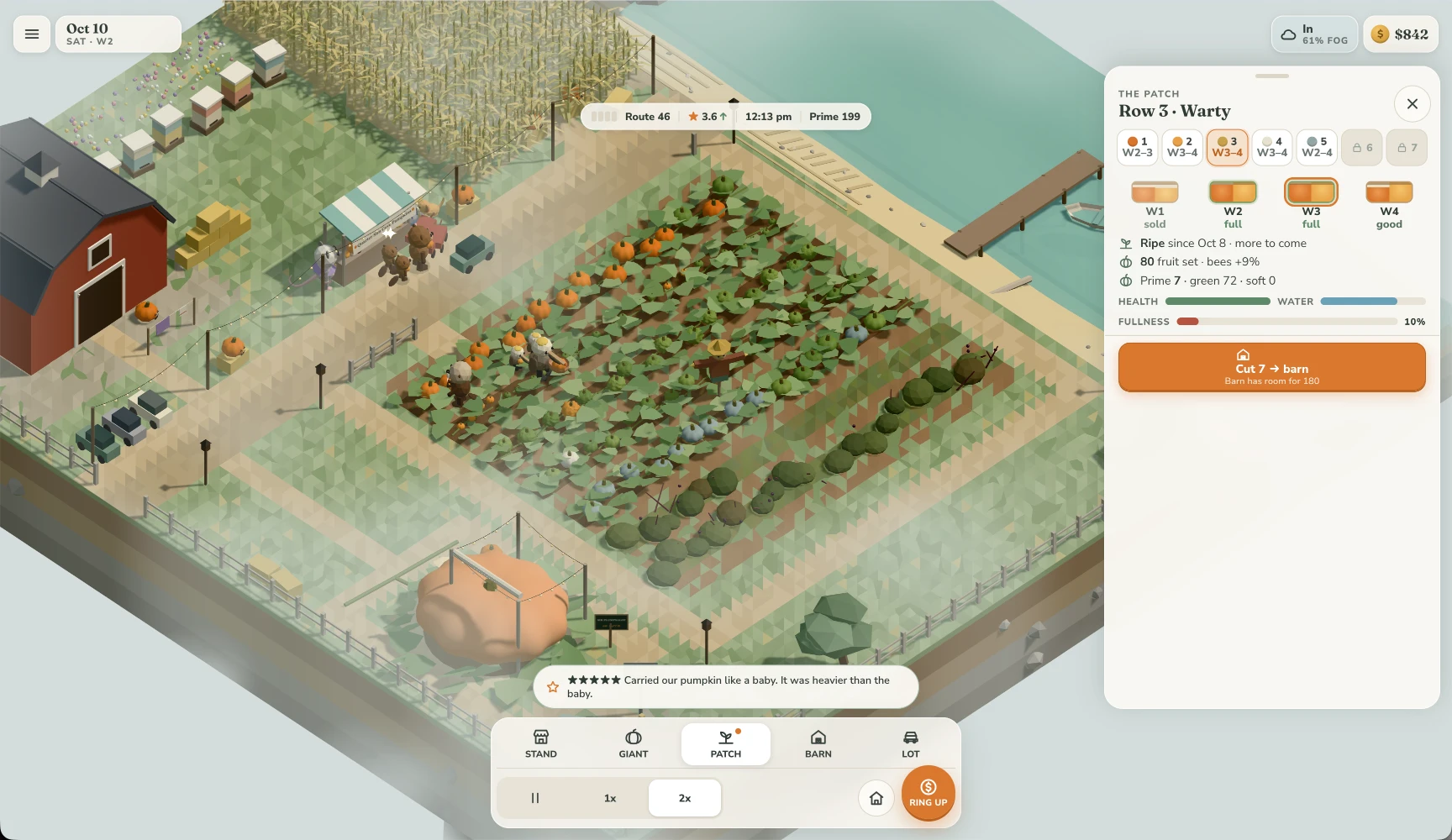 The October inflection point for vibe game development
Simon Willison argues October 2026 is an inflection point for vibe coding games, because Claude Opus 5.5 can now handle 3D modeling, music and game design. He describes four browser games built with three.js (Tree Appreciator, Emberwick, Battle Drones, Quarter Sun Cove), with the prompts used, a comparison against GPT-6 models, and advice to start with "Build a mobile-friendly three.js game where...".
simonwillison.netwriteupPublished and added 28 Oct 2026- Hakimi Eiqbal (@hakimieiqbal) on X
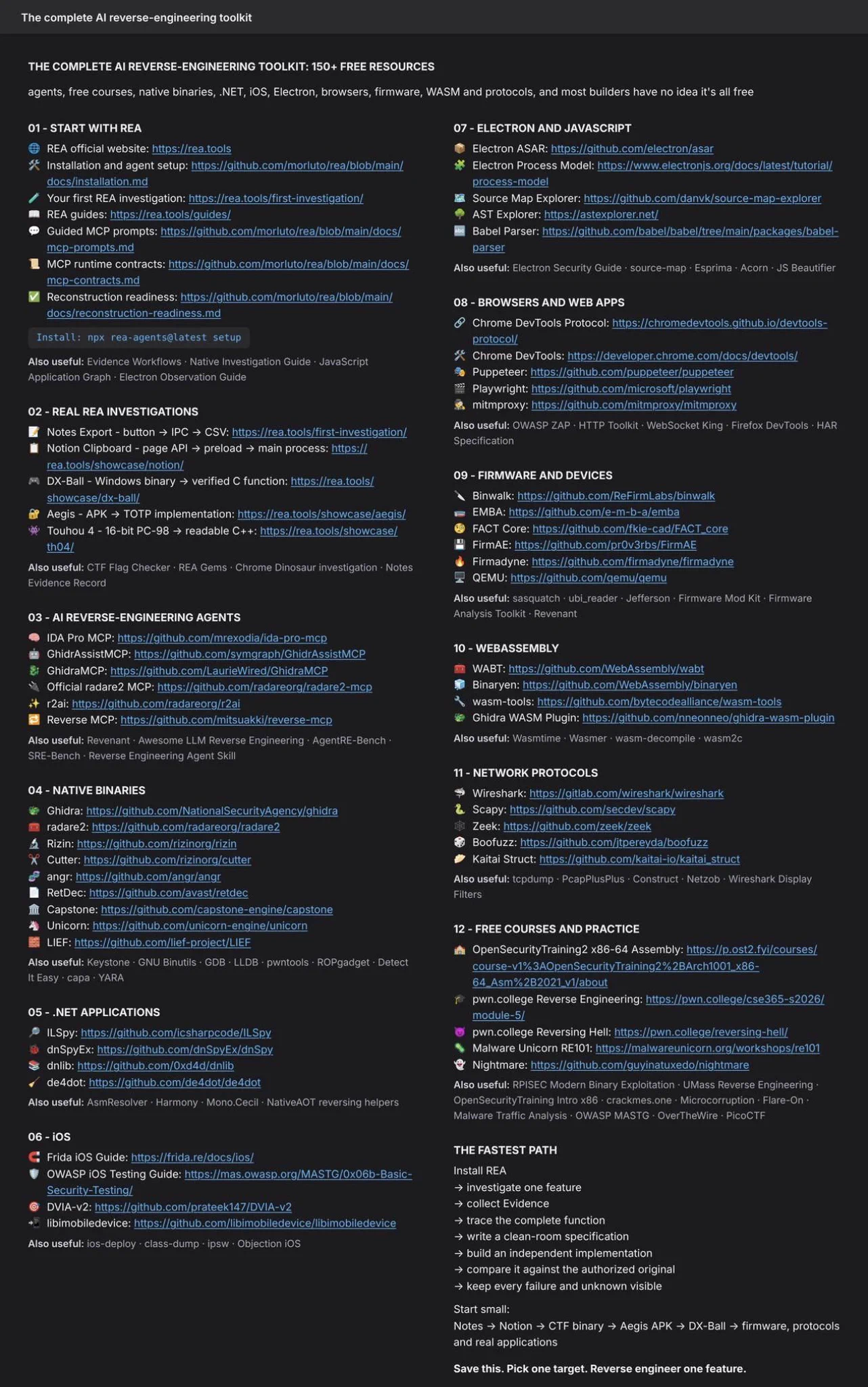
A thread by Hakimi Eiqbal that maps reverse-engineering tools by target type: native binaries, Electron, .NET, iOS, firmware, WebAssembly and network protocols. Its AI sections cover REA (an open-source layer connecting coding agents to analysis tools) and MCP bridges for IDA Pro, Ghidra and radare2. It argues for an evidence-first workflow and gives a prompt that separates verified facts from hypotheses.
x.comthreadAdded 29 Oct 2026, published 28 Oct 2026  ADLC compliance: Mapping agentic development to NIST SSDF, OWASP, and the EU AI Act | Endor Labs
ADLC compliance is Endor Labs' interpretation of how NIST SSDF (SP 800-218), the OWASP LLM and Agentic Top 10 lists, and the EU AI Act apply to software built with coding agents. It splits requirements into a code surface and an action surface (shell, files, MCP calls, package installs). It gives a four-step EU AI Act scoping path and says that system prompt rules and agent self-reports are not audit evidence.
endorlabs.comarticlePublished and added 28 Oct 2026- alex shapalov (@alxshp) on X
PGX is a free, open-source Postgres runtime written in Rust that hosts thousands of isolated databases in one process, aimed at AI agents. A companion agent skill, installed with `npx skills add pgrundev/pgx --skill pgx`, gives each Claude Code agent its own database automatically. The author claims 1,000 databases in 659 MB RAM, about 0.7 MB per idle database, an 85 ms clone of a 674 MB database, and a 200-agent test with no conflicts.
x.comtoolAdded 28 Oct 2026, published 27 Oct 2026 - FeatureArc: Benchmarking Coding Agents on Evolving Features
FeatureArc is a benchmark for coding agents on evolving features, built by a pipeline that mines repository histories into multi-stage tasks across four programming languages. It has 73 manually reviewed tasks of 2 to 10 stages, validated with fail-to-pass and pass-to-pass tests. Across 10 agents, pooled success drops from 62.7% at the first stage to 28.5% for the whole feature. Inherited defects appear in 72.9% of failed later stages.
 arxiv.orgpaperAdded 28 Oct 2026, published 27 Oct 2026
 Coding From the Himalayas With an Offline AI Agent
Walkthrough of running OpenCode against Qwen3.5 9B served by Ollama on a Mac, with Wi-Fi switched off. The author fixes a one-line accumulation bug in an expense calculator and confirms all five unittest tests pass. It covers the opencode.json setup, memory budgeting, permission prompts and a pytest-versus-unittest detour. Two further exercises (CSV report, log analyzer) were not yet run offline.
latent.spacewriteupPublished and added 27 Oct 2026- Manoj | The AI Dude (@Manojkumar2257) on X
heditor is an open-source (MIT) agent skill from pycodebr that has Claude Code, Codex, Cursor or OpenCode edit talking-head videos. It transcribes with faster-whisper, picks a 30-70s segment, cuts frame-accurately, builds HTML + GSAP motion graphics, mixes audio at -14 LUFS, and runs QA with vision-reviewed previews. It offers 42 named styles and a long-form mode with chapters, SRT/VTT and lower thirds. Install: npx skills add pycodebr/heditor -g.
x.comthreadAdded 28 Oct 2026, published 27 Oct 2026 - Mauro Ubeda (@mauroubeda) on X
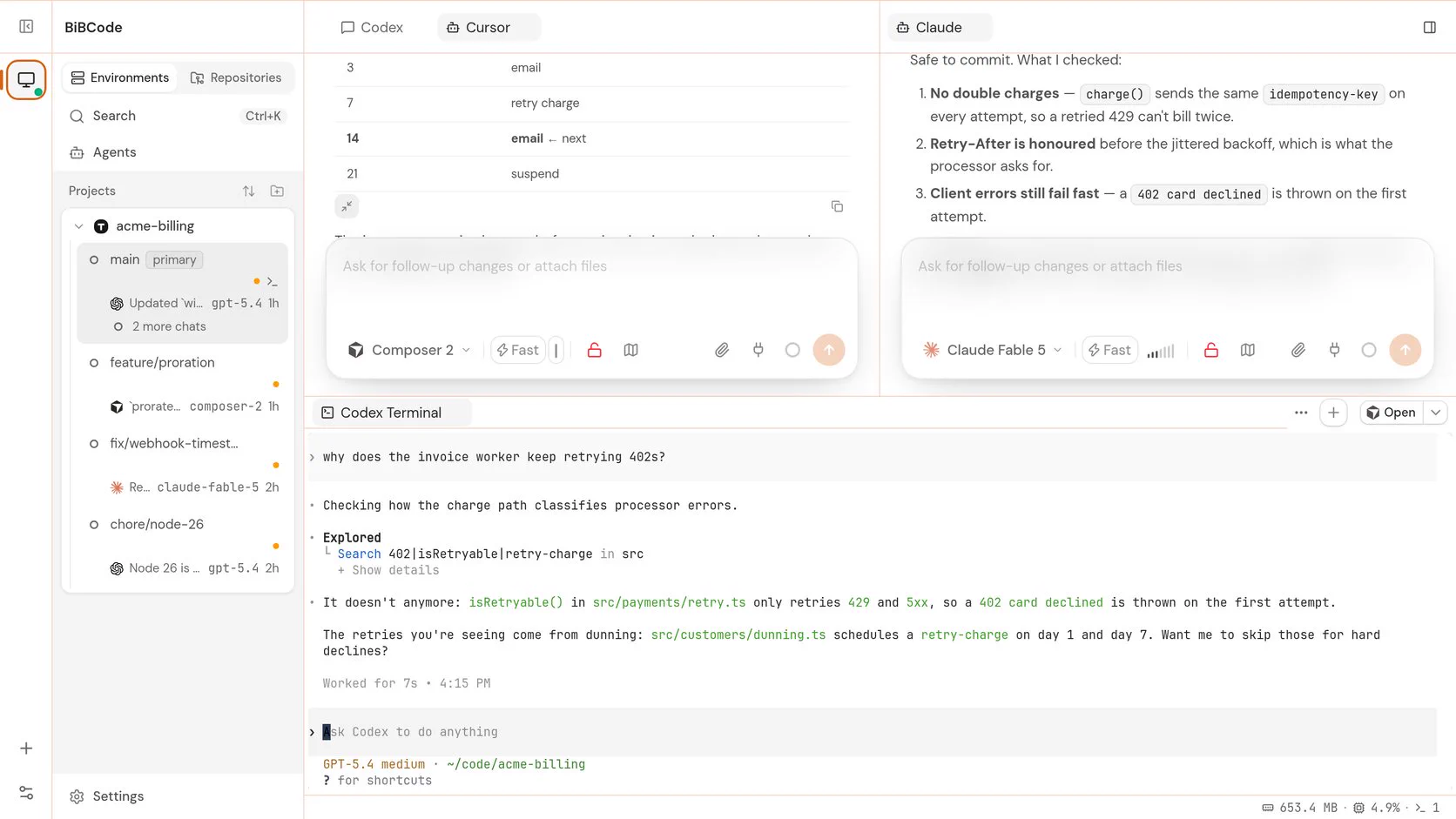
BibCode is an open-source desktop app, now in beta, for running coding agents side by side. It is built with Rust and Tauri rather than Electron, and runs Codex, Claude, Cursor and OpenCode, each in its own git worktree. It can also connect to remote BibCode Servers. The author, Mauro Ubeda, says it mixes ideas from T3 Code and Orca. The post gives no feature detail beyond this.
x.comtoolAdded 28 Oct 2026, published 27 Oct 2026 - Prasenjit Sarkar (@stretchcloud) on X
Campfire is a self-hosted workspace by Prasenjit Sarkar that runs Claude Code, Codex, Goose, Aider and OpenHands side by side in one tab. Risky actions go through permission voting: a majority approves, any single deny blocks, and a 30 second timer ends the wait. Session replay shows which file or tool call triggered an action. The post cites Forever Security's report of a planted AGENTS.md. Codex followed it first time over 90% of the time and Claude Code about half the time. Try it with "bunx the-campfire".
x.comthreadAdded 28 Oct 2026, published 27 Oct 2026  Abdullah (@abdullah0094) on X
An X thread by Abdullah on GPT-6.1 Terra versus Sol in Codex. Abdullah says Terra gives twice the Codex usage of Sol and asks whether the quality drop is obvious. A reply says it is too early for a verdict, cites OpenAI's claim that Terra matches GPT-6 Astra on Agents' Last Exam, and suggests defaulting to Terra and switching to Sol with /model when it stalls.
x.comthreadPublished and added 27 Oct 2026 Your Wish Is My Commit: Over-Compliant Refactoring in AI Coding Agents
Your Wish Is My Commit is a controlled study of over-compliant refactoring in Codex and Claude Code, run across five models, 50 algorithmic tasks and 10 object-oriented tasks. Over 3,000 turns of repeated "refactor further" prompts, no model stopped on its own: each rewrote up to 31x the original codebase before first stopping and resumed edits after declaring the task complete. The paper defines six behavioral signals for detecting over-compliance.
arxiv.orgpaperAdded 28 Oct 2026, published 26 Oct 2026 Akash Rajagopal (@akashsairaja) on X
Ollama overview thread by Akash Rajagopal on X. It lists six steps: install on macOS, Linux, Windows or Docker; run `ollama run gemma4`; use the REST API on localhost:11434 (/api/chat); call it from ollama-python and ollama-js; llama.cpp as the README's supported backend; and `ollama launch claude` to connect Claude Code. Codex, OpenCode, Copilot CLI and Droid also work. The thread cites 184k GitHub stars and an MIT licence.
x.comthreadAdded 27 Oct 2026, published 26 Oct 2026- Reva: Real-Time Vulnerability Detection through Contextual Probing of Large Language Models
REVA (REal-time Vulnerability Analysis) is a vulnerability detector that puts a module threat model, lightweight static analysis findings and call-graph information into one LLM forward pass. A trained probe reads the model's internal representations of the new function. On PrimeVul's held-out test set, REVA on GLM-5.3-Flash reaches 60.0% accuracy in about one second per function, matching the agentic VulTriage (59.2%) at over 250 times the speed and under a tenth of the cost. The probe is 14% to 17% more accurate than the LLM's own verdict.
arxiv.orgpaperAdded 28 Oct 2026, published 26 Oct 2026  Code security for new coders
 is a Datadog Security Labs primer for vibe coders building with coding agents. It lists setup and follow-up security questions to ask the agent, such as OWASP top 10 reviews, hardcoded secrets and outdated packages. It also explains first-party versus third-party code, supply chain risk, and SCA, SAST, IAST, DAST, IaC and secret scanning tools.
 securitylabs.datadoghq.comarticleAdded 29 Oct 2026, published 26 Oct 2026
 OpenAI and Anthropic cut their LLM prices by up to 80% within a few months. Why?
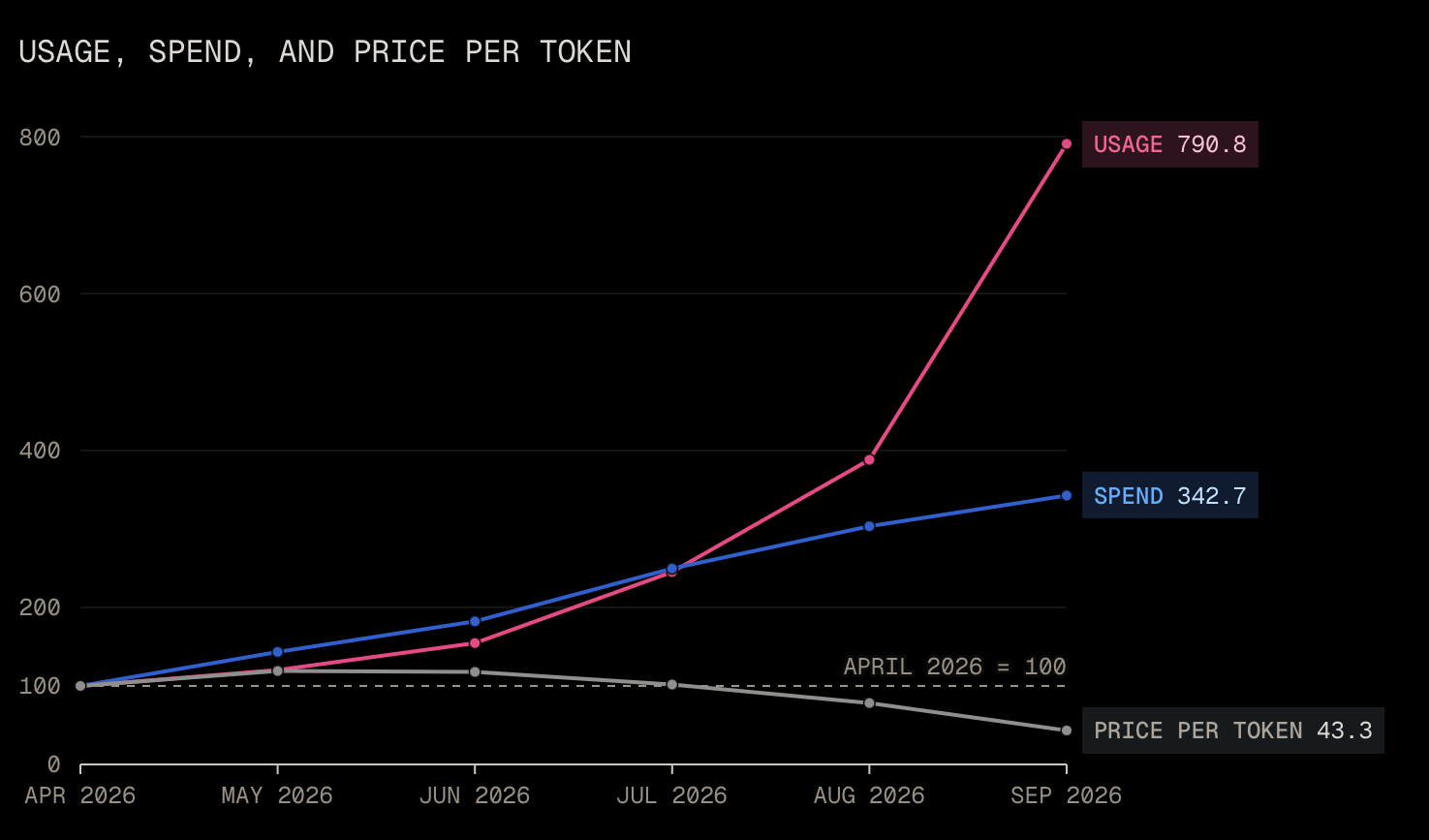
Max Woolf's post (minimaxir.com, October 2026) gives a dated timeline of OpenAI and Anthropic price cuts from June to September 2026, including GPT-5.6 Luna down 80%, Opus 5.5 at $4 / $20 / $0.20 and GPT-6.1 Sol at $2 / $10 / $0.10. It argues the cuts come from commodity models, open-weight competition (DeepSeek V4.1 Flash, Kimi K3.1 Pro, 29 OpenRouter providers) and possibly IPO positioning. It notes cache reads make up 96-99% of coding-agent token spend.
 minimaxir.comarticleAdded 26 Oct 2026, published 25 Oct 2026
- Syb (@DegenOfWallSt) on X
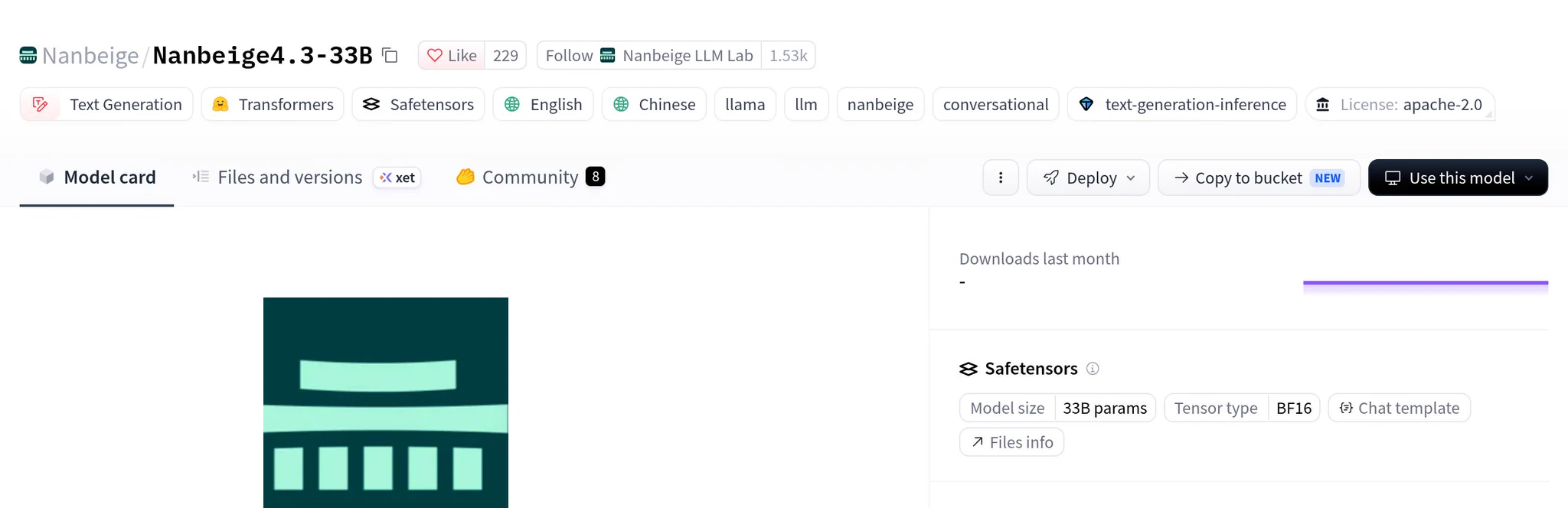
Nanbeige4.3-33B is a 33.1B dense, Llama-style open model under Apache-2.0, released with a base model on Hugging Face. In Nanbeige's own table it beats Qwen3.8-27B on Terminal-Bench 2.1 (80.9 vs 73.0), DeepSWE (65.5 vs 42.5) and Automation Bench, but trails on SWE-Bench Pro, GDPval and GPQA Diamond. BF16 weights are about 66 GB, split across 4 GPUs in the vLLM and SGLang examples. No independent evals exist yet.
x.comthreadAdded 26 Oct 2026, published 25 Oct 2026  What Adobe v ArtCraft teaches us
The essay argues that OpenAI and Anthropic undermine their own business by selling cheap AI software engineers. Cheap coding models let hobbyists clone commercial software such as Photoshop, which removes the revenue of the companies that were meant to pay for the models. The author says open-weight models, including Llama and Chinese releases, rule out price increases, and compares the situation to Spanish silver and De Beers. The claims are opinion and carry no cited data.
 techbronerd.substack.comarticleAdded 26 Oct 2026, published 25 Oct 2026
- Show HN: Farol – A risk map of a pull request for the person who approves it
farol is a free, MIT-licensed CLI and GitHub Action that runs after an AI code review and gives the human approver a risk verdict (fast track, quick review, careful review) and a 0-100 score for a pull request. It uses the TypeScript type checker, go/types and Python ast to trace which pages, APIs and jobs a change reaches, and it adds diff coverage, security findings and contract breaks. It never executes or sends code.
github.comrepoAdded 26 Oct 2026, published 25 Oct 2026 - alirezarezvani/claude-skills
claude-skills is an MIT-licensed library of about 398 Claude Code skills, agents, personas and plugins across 20 domains, including engineering, marketing, compliance and C-level advisory. Each skill is a SKILL.md with stdlib-only Python CLI tools and reference docs. Install scripts and convert.sh adapt it to Codex, Gemini CLI, Cursor, Aider, Windsurf and other coding agents, and it includes a skill-security-auditor scanner.
github.comrepoAdded 25 Oct 2026 - Dan Kornas (@DanKornas) on X
HiRoute is an open-source (Apache-2.0) local model router for developers using agent clients such as Codex and Claude Code. Routing plans judge each new message and send routine work to economical models, while harder design decisions and fixes stay on the primary model. It supports custom task branches, ordered failover candidates with explicit exhaustion, per-session cost and usage records, and runs as a macOS desktop app or a Linux CLI and daemon.
x.comtoolAdded 25 Oct 2026, published 24 Oct 2026  ReignSwords (@ReignSwords) on X
A reviewer tests GenOffice, an open-source Office suite (10.7k GitHub stars), through its CLI only. Markdown to .docx took 3.8s, JSON to .xlsx took 0.9s with a live SUM formula, and .docx to PDF failed twice until Xvfb supplied a display. It has byte-preserving edits, a skill file for Claude Code and Codex, and 29 MCP tools. Downsides: a 188MB download that filled a 512MB /tmp, Electron in the PDF path, and unproven trust in tracked changes and rollback.
x.comthreadAdded 25 Oct 2026, published 24 Oct 2026- Gökdeniz Gülmez (@ActuallyIsaak) on X
An X post showing how to have Codex train a small model on Apple silicon through the mlx-lm-lora MCP server and skill. It gives five setup steps (pip install with the mcp extra, npx skills add, locate mlx-lm-lora-mcp, codex mcp add). The prompt runs four pre-training trials on tiny-random/qwen3 with the mlx-community/recycling_the_web-1k dataset. Codex picks the optimizer and learning rate itself, and the result is a table with validation loss and the best adapter path.
x.comthreadAdded 25 Oct 2026, published 24 Oct 2026  affaan-m/ECC | RepoDir
ECC (affaan-m/ECC) is an open-source performance optimization system for AI coding agents. It packages 261+ skills, 64+ agents and 84+ commands that tune Claude Code, Codex, Cursor and other agent harnesses for speed, memory and security. Practitioners can use it as a ready-made skills and harness configuration set. The RepoDir page gives only this short description, with no install steps or benchmarks.
 repodir.comrepoAdded 24 Oct 2026
 battledrones v14: Compass Rose, a four player map
Battledrones v14 adds "Compass Rose", a four-player map with four-way rotational symmetry, to Simon Willison's vibe-coded RTS game, dated 24 October 2026. A single prompt to Claude Opus 4.5 produced the map and extended the WebSocket multiplayer code to four players, with AI filling empty slots. Players join by share link or QR code. New teams are purple and green. The post gives no code or diff.
simonwillison.netarticlePublished and added 24 Oct 2026 IQuest-Q1: Advancing Foundation Capabilities for Agentic CLI Systems
IQuest-Q1 is an open-source sparse Mixture-of-Experts model with 320B total and 15B activated parameters, built for agentic coding in CLI systems. Pre-training combines Stable SplitNorm, Muon and muP with a two-stage curriculum that raises the coding-data share in stage two. Mid-training extends context, and post-training mixes SFT, domain-specialized RL and MOPD across scaffolds, followed by model merging.
 huggingface.copaperAdded 24 Oct 2026
- Show HN: Corgi, a helpful {agent, terminal} multiplexer
Corgi is a terminal multiplexer for humans and AI coding agents, installed with a curl script. It shows each agent's state (working, needs you, finished, idle), keeps agents running in the background like tmux, and tracks token usage, per-workspace resource use and every file an agent changed. It also supports git worktrees, SSH image paste (needs Ghostty Nightly) and a corgi --skill command that teaches agents to drive it.
 corgi.computertoolAdded 24 Oct 2026, published 23 Oct 2026
 How I Vibe Coded My Smart TV—And Claude Killed It
A Decrypt writer asked Claude to install Free My TV, an open-source launcher for LG webOS, on a TV rooted since 2023. Claude reviewed the install code and built the package. It then had the user enable Developer Mode, which wiped the Homebrew Channel and ad-free YouTube. Claude restored both apps but not root. Its safeguards then flagged the re-rooting research and offered a switch from Opus 5.5 to Opus 4.8.
 decrypt.coarticlePublished and added 23 Oct 2026
 What is the AI-Native SDLC? AI SDLC, AI-DLC, and ADLC Explained | Endor Labs
The AI-native SDLC is a software lifecycle redesigned around AI and coding-agent participation, as opposed to the AI-assisted SDLC, which adds AI tools to unchanged stages. The Endor Labs guide separates AI-DLC (the AWS methodology), AI SDLC and the two meanings of ADLC (Agentic vs Agent Development Lifecycle). It also covers stage-by-stage changes and AppSec implications: AI-generated code flaws, dependency choice, reachability analysis and governing agent actions.
endorlabs.comarticlePublished and added 23 Oct 2026- Yash Patil (@yvshpvtil) on X
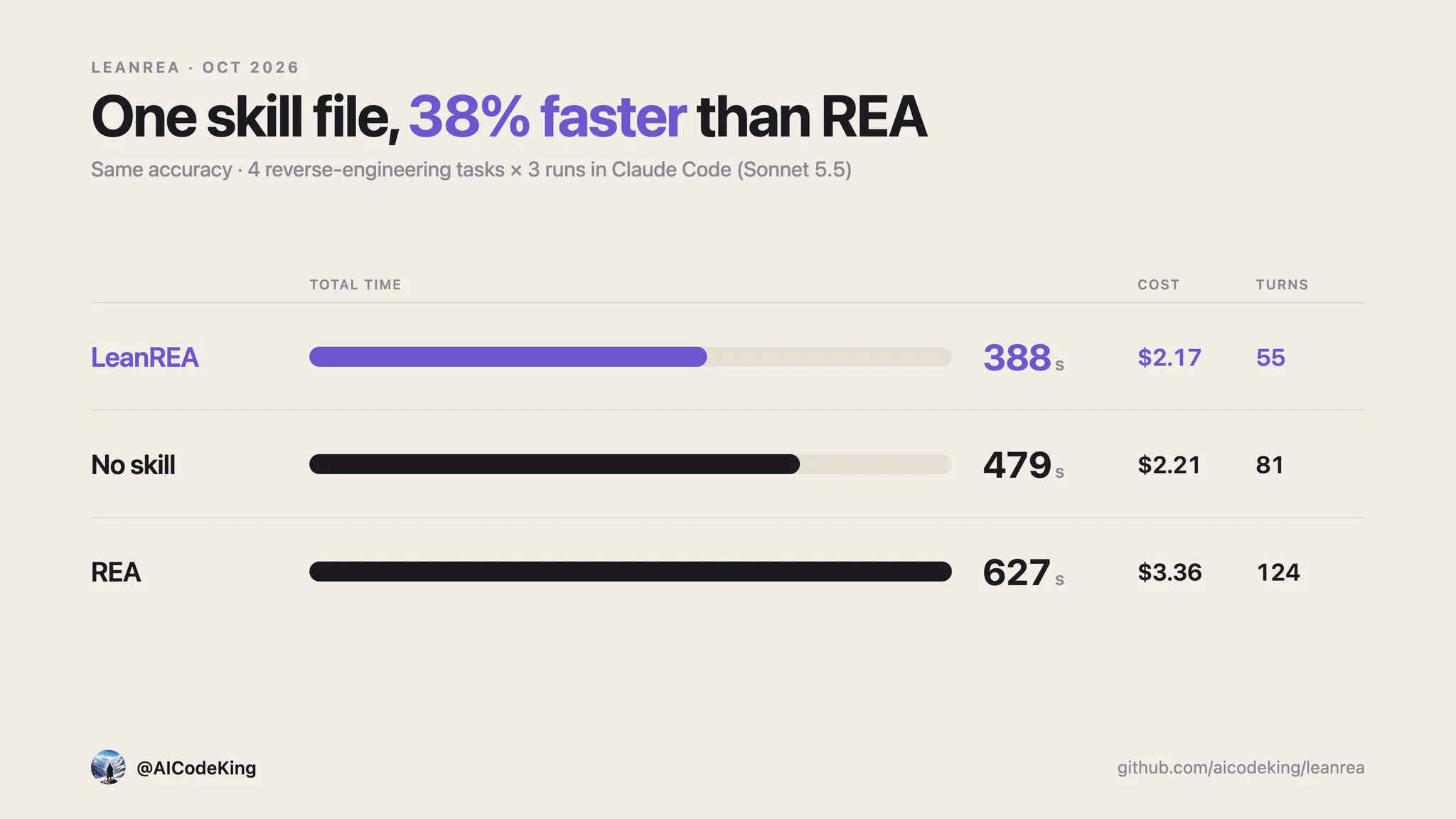
leanrea is an 8 KB skill file that tells a coding agent which plain CLI tools to use for reverse engineering, replacing REA, a 207-tool MCP server. In the author's test it ran 38% faster and 35% cheaper, scoring 74/75 against 75/75. The author lists caveats: 3 runs per task, one model, one machine, and Claude with no skill was already decent.
x.comthreadAdded 25 Oct 2026, published 23 Oct 2026  LLMs are making formal software verification feasible at a much larger scale
Anthropic and Theorem report that Claude wrote Rocq proofs of crash-freedom for 239 OSS-Fuzz entry points across 123 open-source libraries, working on compiled RISC-V binaries for inputs up to 64 MB. Proofs total about 180 million lines, and Claude found and patched bugs along the way. The post covers proof reuse (17% fewer tokens), Opus 5.5 using about 40% fewer tokens than Opus 5, and limitations.
 anthropic.comarticleAdded 23 Oct 2026, published 22 Oct 2026
 Daily Vibe Casting (@vibecastingapp) on X
Daily Vibe Casting is an X thread dated 24 October 2026 that summarises ten tech news items from the previous 24 hours. The AI items are Cloudflare's model-independent agent security audit skill, Recursive SI's Apache 2.0 Flint local coding model (125+ tokens/s on an M4 Pro), Anthropic's Claude Duet preview and Claude API version 2026-10-21, which drops temperature, top_p and top_k. It also covers HeyGen Voice Turbo and Gemini in Google Maps on CarPlay.
x.comthreadAdded 24 Oct 2026, published 22 Oct 2026- Donating Agent Skills to the Agentic AI Foundation
Simon Willison's link post covers Anthropic's 22 October 2026 announcement that it is donating the Agent Skills standard to the Agentic AI Foundation (AAIF) under the Linux Foundation. Anthropic co-founded the AAIF with Block and OpenAI and earlier donated MCP to it. Willison notes he predicted this in December 2025 and found his old post by querying his blog through datasette-mcp in Claude.
simonwillison.netarticlePublished and added 22 Oct 2026 - SnailSploit/Claude-Red
claude-red is an MIT-licensed library of offensive security skills for the Claude Skills system, planned at about 130 skills across 23+ categories (web, Active Directory, cloud, exploit development, EDR evasion and others). Each skill is a SKILL.md file that loads on conversational triggers, so unused skills cost no context. It installs by git clone, sparse checkout per category, install.sh or pasting into a system prompt.
github.comrepoAdded 22 Oct 2026 - Sadra Majidi (@SadraMajidi04) on X
Impeccable is an open-source skill for AI coding agents that steers them away from generic UI output such as purple gradients and nested cards. It provides 24 commands (critique, audit, polish, typeset) and 61 detector rules that run without an LLM. It works with Claude Code, Cursor and Codex, and the repo is pbakaus/impeccable on GitHub. The source is a short tweet and gives no further detail.
x.comrepoAdded 23 Oct 2026, published 22 Oct 2026 - What FDE means at OpenAI
Colin Jarvis, Head of Forward Deployed Engineering at OpenAI, describes how the FDE team works with enterprise customers to close the "deployment gap". Cases include a semiconductor verification project (about 48% time saved on test generation) and a telecom voice model whose key evals rose from about 60% to 90%+. Moving use cases onto a Codex harness with skills and plugins removed about 90% of custom code.
 openai.comarticlePublished and added 22 Oct 2026








Showing 60 of 331
Show more