 Rekt - News or Hype?
Rekt's "News or Hype?" compares four October 2026 AI headlines with their sources. These are Justin Drake's "bunker mode" ECDSA warning, Anthropic's Claude tracing NIST curve seeds to lrand48, OpenAI's agent spending Sepolia ETH from a default-mnemonic account, and Wiz's "AI uncovers" PHP RCE claim of 70% reach. It ends with four questions for checking claims.
 rekt.newsarticleAdded 30 Oct 2026🧠 AI
- Rekt - News or Hype?
Rekt News piece tracing three AI-security headlines back to their sources. It covers Justin Drake's October 2026 "bunker mode" warning about AI breaking ECDSA, OpenAI's report of a model spending Sepolia test ETH from a default developer mnemonic, and Wiz's "70% of the Internet" claim for PHP CVE-2026-109618 and CVE-2026-109619. It closes with four questions for checking a claim.
rekt.newsarticleAdded 29 Oct 2026🛡️ Security  A hash-only rollup: OP Stack L2 accounts as Lamport-style hash chains, no ECDSA inside the L2
Hash-only rollup: an OP Stack L2 (chain ID 42069000, live since 30 September 2026) where accounts are keccak-256 hash chains and transactions carry no signatures. Spending uses a commit-reveal step through two new transaction types in op-geth. The post describes a flaw the authors found: unauthenticated commits could be overwritten, which allowed preimage front-running. It was fixed with a first-commit-wins rule on 21 October 2026. It lists the remaining limits: L1 ECDSA, no fault proofs, a centralized sequencer, 160-bit addresses and wallet desync.
 ethresear.charticlePublished and added 24 Oct 2026🛡️ Security
 Faster and Smaller Anonymous Credentials from Standardized Signatures
GordieHowe is a language, certifying compiler and zero-knowledge proof system for building anonymous credentials on standardized signatures (ECDSA, RSA, ML-DSA). It proves an ECDSA-signed mobile driving license presentation in 64.8 ms with a 276 KiB proof, 10.1x faster than Google's Longfellow, and an ML-DSA-44 signature in 87.3 ms with at least 116 bits of quantum security. Compiler output and security theorems are checked in Lean. It introduces series-parallel IOPs and extends the BCS transformation in the QROM.
 eprint.iacr.orgpaperAdded 24 Oct 2026, published 23 Oct 2026🛡️ Security
- A Note on the Security of ECDSA with Presignatures or Biased Nonces
A Note on the Security of ECDSA with Presignatures or Biased Nonces (Couteau and Makriyannis, ePrint 2026/2545) examines alternative ECDSA modes built for faster distributed signing. It shows that the security of some variants used in deployed libraries is equivalent, in the generic group and random oracle model, to the average-case hardness of k-SUM. It also proves fine-grained lower bounds on generic group attacks against modes analyzed by Groth and Shoup (Eurocrypt 2022).
eprint.iacr.orgpaperAdded 20 Oct 2026, published 19 Oct 2026🛡️ Security  Satoshi-era bitcoin faces a bigger quantum threat after Google’s new Willow breakthrough
CoinDesk reports Google's Science paper showing its Willow chip prepares "magic states" with about 40x fewer errors (about 99.99% fidelity, but only about 8% of attempts survive post-selection) using a method called cultivation. It explains why this lowers one hardware bottleneck for a Shor's-algorithm attack on Bitcoin's ECDSA keys, but does not make an attack 40x cheaper. It also separates coins with permanently exposed public keys (early Satoshi-era outputs, which an offline attacker can target) from hash-hidden keys, where the attacker must race the spend. The article cites Google's March estimate of under 500,000 physical qubits and about 500,000 reliable magic states per second for a roughly nine-minute attack.
 coindesk.comarticlePublished and added 17 Oct 2026🛡️ Security
 Claude reveals ECDSA curve origins
Anthropic's Frontier Red Team reports that Claude recovered how the NIST P-192/224/256/384/521 and ANSI X9.62 curve seeds were generated. They are outputs of the C library's lrand48 LCG seeded with 1997–98 Unix timestamps, not hashes of a passphrase. The method scanned for weak-PRNG signatures, then used LLL lattice reduction to recover the truncated LCG state and stepped it back to srand48 initialization. Claude also traced some base points to the FreeLIP/NTL random generator. Reproducible Python is included. The authors say this is not an attack and makes deliberate backdoors less plausible. The B-163 seed and the base points of P-224/256/384/521 and the binary curves remain unexplained.
 anthropic.comwriteupAdded 17 Oct 2026, published 16 Oct 2026🛡️ Security
- Claude reveals ECDSA curve origins
Anthropic's Frontier Red Team reports that Claude, given no hint, worked out how the NIST P-192/224/256/384/521 and ANSI X9.62 curve seeds were generated. They came from the C library's lrand48 LCG seeded with Unix timestamps from 1997–98, not from a hash of a phrase. Claude found this by scanning for weak-PRNG signatures and recovering the PRNG state with LLL lattice reduction. It also traced several prime-curve base points to the FreeLIP random generator. The post includes Python code that reproduces the seeds and base points. It says this is not an attack and makes backdoor claims less plausible. B-163 and the other base points remain unexplained.
anthropic.comwriteupAdded 17 Oct 2026, published 16 Oct 2026🧠 AI - Robust ECDSA Threshold Signing at Scale
Presents a robust threshold ECDSA signing protocol for t ≤ (n-1)/3 corrupted signers. It batch-computes pre-processing material for fast online signing and scales to many signers, for uses such as bridging consensus between blockchains. It combines batched verifiable secret sharing (Fitzi & Hirt), randomness extraction (Beerliova-Trubiniova & Hirt), efficient share opening (Damgård & Nielsen) and Attema–Cramer zero-knowledge proofs. The authors implement it and show it is practical for large n.
eprint.iacr.orgpaperPublished and added 15 Oct 2026🛡️ Security  Crypto's Quantum Defense Is Being Built in the Open
Bankless article on Eigen Labs' Yukon, a platform for open-research challenges where developers and AI agents try to improve a technical problem. Each submission is automatically benchmarked, and accepted improvements become the baseline for the next attempt. Results include an ~88% cut in the ECDSA.fail quantum resource-cost benchmark, a ~10x speedup in Lighter's proving software, ~2x faster Qwen and 2.6x faster Laguna on Apple hardware via MLX.fast, and cheaper Quantum Safe Bitcoin proofs ($320 down to $59). Newer challenges (HashSmash, sig.golf, better.codes) target hash-function weaknesses, hash-based signatures and post-quantum proofs. All the improvements are theoretical or benchmark-level unless stated as deployed.
 bankless.comarticlePublished and added 14 Oct 2026🧠 AI
- Crypto's Quantum Defense Is Being Built in the Open
Bankless article on Eigen Labs' Yukon platform, which runs open challenges where researchers and AI agents attack and improve cryptography. It covers ECDSA.fail (quantum circuit cost for attacking Bitcoin/Ethereum ECDSA, cut about 88% from baseline), HashSmash (SHA-256 weakness hunting, so far only on reduced versions), sig.golf (hash-based signatures), StarkWare's Quantum Safe Bitcoin (cost down from about $320 to $59) and better.codes (provable security raised from 64 to about 68 bits). The argument is that public, measurable attack-cost data helps defenders prepare better than withholding circuits does. All gains are theoretical and no quantum computer has run an attack at this scale.
bankless.comarticlePublished and added 14 Oct 2026🛡️ Security  ERC-8443: Quantum Bridge Shield
Draft ERC from Quantova Inc proposing a "Quantum Bridge Shield" for Ethereum bridges. A committee signs the Merkle root of each message batch with RFC 8554 LMS hash-based signatures instead of ECDSA/BLS keys that Shor's algorithm can break. The guard contract requires a strict majority of distinct unfrozen keys, records used leaves, freezes any key that signs a leaf twice, binds digests to domain, chain, guard and epoch, and applies a 60-second delay. The post gives gas costs (LMS W4 height-10 verification about 205k gas, a LayerZero packet 128,683 gas, worst-case rotation 12.44M gas under the EIP-7825 cap) and cites a NioLabs assessment with no critical or high findings. It is relevant as a worked post-quantum migration design for bridge key custody, including hybrid ECDSA+LMS mode and stateful-signature pitfalls such as leaf reuse and rollback.
 ethereum-magicians.orgarticlePublished and added 14 Oct 2026🛡️ Security
- ERC: Quantum Bridge Shield
Draft ERC from Quantova Inc that has Ethereum bridges accept cross-chain message batches only when a committee signs the Merkle root with RFC 8554 LMS hash-based signatures. The guard contract requires a strict majority of distinct unfrozen keys, records used leaves, freezes any key that signs a leaf twice, binds digests to domain tag, chain ID, guard address and epoch, and enforces a 60-second delay. It reports gas benchmarks (about 205k per LMS W4 height-10 verify, 12.44M worst-case rotation under EIP-7825), a hybrid LMS+ECDSA migration mode, and a NioLabs assessment with no critical or high findings. It argues that Shor's algorithm makes secp256k1 and BLS committee keys a quantum theft target.
ethereum-magicians.orgpaperPublished and added 14 Oct 2026🛡️ Security  Coinbase, which holds 5% of all bitcoin, wants the quantum fix started now
CoinDesk summarizes Coinbase's recommendations for making Bitcoin quantum-resistant before a cryptographically relevant quantum computer (CRQC) can derive private keys from public keys. The proposals are: a transaction format that can carry new signature types (P2MR/BIP-360, P2TRv2), staged hybrid "1-of-2" spends with ECDSA/Schnorr or a post-quantum key, and stateless options alongside stateful schemes to avoid key-reuse forgery. They also ask that evaluation favor constant-time, RNG-failure-safe implementations, require MPC compatibility, and handle dormant or late-migrating coins as a separate debate. It is a useful overview of the defensive migration design space, but it is secondary reporting and not the primary Coinbase paper.
coindesk.comarticlePublished and added 14 Oct 2026🛡️ Security How Zcash Plans to Hide Your Keys From AI and Quantum Attacks
Decrypt reports that Zakura, which builds a Zcash full node, expects post-quantum signature opcodes in Zcash in January, to enable hash-based signatures for transparent pools. The plan rotates to a fresh transparent address after every transaction so public keys stay hidden, and adds a WOTS hash-based backup signature. Private information retrieval, shipping this week in the Vizor wallet, stops servers from linking the rotated addresses. It follows Justin Drake's "bunker mode" warning that AI-driven math could break ECDSA. The plan covers only transparent payments, and no activation date has been confirmed.
 decrypt.coarticlePublished and added 11 Oct 2026🛡️ Security
 Coinbase Cryptographer Calls Drake's 'Bunker Mode' Warning 'The Very Definition of FUD'
News piece reporting that a Coinbase cryptographer dismissed Justin Drake's proposal for Ethereum validators/users to adopt a 'bunker mode' against AI-accelerated cryptanalysis as unfounded FUD. Vitalik Buterin weighed in that AI-accelerated math risk is real but should be pointed at lattice-based cryptography rather than elliptic-curve schemes like ECDSA used by Ethereum, while a former Ethereum Foundation researcher argued bunker mode would not help if the curves actually broke.
 thedefiant.ioarticlePublished and added 8 Oct 2026🛡️ Security
 Vitalik Buterin backs crypto ‘bunker mode’ amid rapid AI math advances
Ethereum researcher Justin Drake, backed by Vitalik Buterin, warns that rapid AI progress in mathematics (citing OpenAI's recent batch of math findings and a 10,000-agent solve of Navier-Stokes) could break ECDSA-based wallet signatures before quantum computers ever do, and that lattice-based post-quantum schemes may not be safe either. They recommend a controlled 'bunker mode' migration of crypto holdings to fresh addresses whose public keys have never been exposed on-chain, while cautioning that botched migrations carry their own risk.
 cointelegraph.comarticlePublished and added 8 Oct 2026🛡️ Security
 Vitalik Flags AI Risk to Crypto, Warns Against Rushed Wallet Moves
Vitalik Buterin responds to Ethereum Foundation researcher Justin Drake's bunker mode proposal, agreeing AI-accelerated cryptanalysis could break ECDSA, the signature scheme behind most crypto wallets, in months not years, and that lattice-based schemes like ML-DSA billed as quantum-safe could also take serious hits within two years. Buterin gives practical key-hygiene advice such as keeping funds in addresses that never exposed a public key and rotating multisig signer keys after every operation with offchain signature collection, while warning that botched migrations cost more than hacks.
bankless.comarticlePublished and added 8 Oct 2026🛡️ Security Morning Minute: Ethereum Researcher Says AI May Break Crypto Encryption Before Quantum
A daily crypto-market newsletter segment reporting Ethereum Foundation researcher Justin Drake's warning that AI, not quantum computing, may be the first to break ECDSA — the elliptic-curve signature scheme securing Bitcoin and Ethereum — potentially within months by recovering private keys from exposed public keys using large GPU clusters. Drake calls for industry-wide "bunker mode": migrating self-custodied funds to fresh addresses whose public keys remain hashed/hidden, and names exchanges (Binance, Bitbank, Robinhood, Bitfinex, Tether) he wants to harden cold storage. The article also notes a concurrent Europol report flagging crypto wallets with already-revealed public keys as the main weak point for future quantum/AI attacks, since those cannot be retroactively protected.
decrypt.coarticlePublished and added 8 Oct 2026🛡️ Security AI risk to crypto wallets: Ethereum researcher warns keys could be cracked in months
Ethereum Foundation researcher Justin Drake warned on October 7, 2026 that advances in AI and mathematics could break ECDSA — the signature scheme securing blockchain transactions — within months, potentially letting an attacker recover a private key in about a week using a large GPU cluster. He urged gradual "bunker mode" preparation rather than panic: rotating funds into fresh addresses whose public keys have never been exposed on-chain, strengthening cold storage, and accelerating Ethereum's move toward hash-based signature schemes such as SPHINCS for critical signers like oracles and L2 security councils.
 en.cryptonomist.charticlePublished and added 8 Oct 2026🛡️ Security
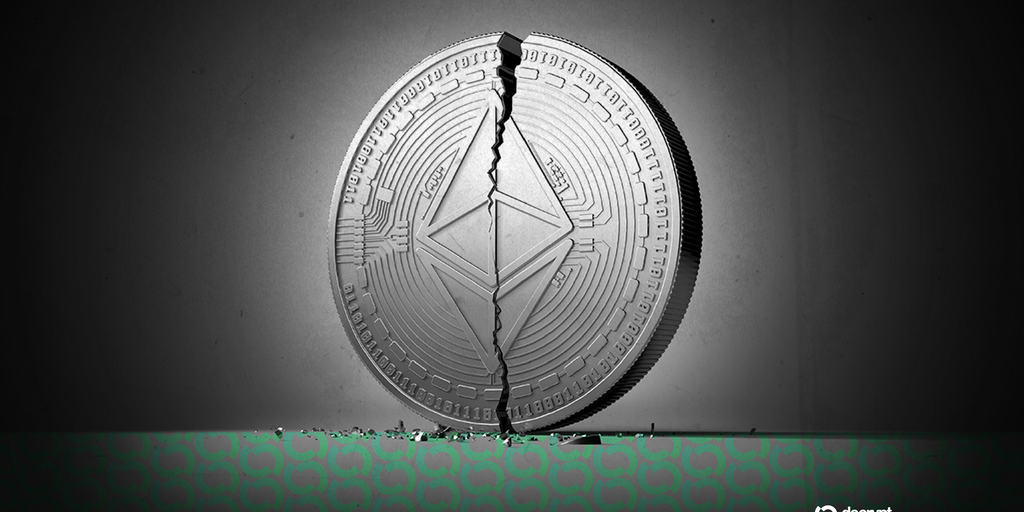 Ethereum Researcher Says AI May Break Encryption Before Quantum Does
Ethereum Foundation researcher Justin Drake warns that AI-driven mathematical advances could break ECDSA — the signature scheme securing Bitcoin and Ethereum — before quantum computers do, potentially recovering a private key from an exposed public key in about a week using a large GPU cluster. He calls for "bunker mode": a controlled mass migration of funds to fresh addresses whose public keys have never been exposed, urges major custodians (Binance, Bitbank, Robinhood, Bitfinex, Tether) to harden cold storage, and pushes Ethereum to accelerate its move to hash-based (post-quantum) cryptography.
decrypt.coarticlePublished and added 7 Oct 2026🛡️ Security Quantum computers threaten exposed private keys rather than blockchains, Europol warns
Europol's European Cybercrime Center published a "Quantum Computing and Cryptocurrencies" report arguing that Bitcoin's hash-based blockchain history is far more quantum-resistant than the ECDSA public-key cryptography used to control wallets. It estimates roughly 6.9 million bitcoin sit in addresses with exposed public keys (including early pay-to-public-key and long-dormant "Satoshi era" outputs) that a sufficiently powerful quantum computer could eventually use to derive private keys, and cites a 2024 study putting full UTXO migration to quantum-resistant signatures at 76–300 days of cumulative block space, with new post-quantum signatures 10–120x larger than ECDSA.
coindesk.comarticleAdded 8 Oct 2026, published 7 Oct 2026🛡️ Security- Post-Quantum Command Authentication for Unmanned Systems: A KpqC Feasibility Study under Real-Time and Bandwidth Constraints
This paper evaluates whether Korean post-quantum crypto candidates (HAETAE, AIMer, SMAUG-T, NTRU+) and NIST PQC standards (ML-KEM, ML-DSA, SLH-DSA) can replace classical ECDSA/ECDH in the authentication and key-establishment path of ROS2/DDS-Security for UAV/UGV command channels. The authors build a feasibility envelope mapping each algorithm's key/signature size and handshake latency against real command-link constraints (message rate, MTU, latency deadline, bandwidth), then validate it with authentication-handshake measurements over emulated constrained links on a two-node testbed, producing a classical→NIST→KpqC comparison and per-channel-budget application guidance.
eprint.iacr.orgpaperAdded 8 Oct 2026, published 5 Oct 2026🛡️ Security  A Clever RSA Attack Fooled a Hardware Vault—Here's What It Means for Crypto
Researchers at UC San Diego and INRIA demonstrated a chosen-message oracle attack that forges RSA signatures on a 1,024-bit key held inside a hardware security module (HSM) without ever extracting the key, by disabling the HSM's FIPS mode to get it to sign unpadded/unformatted values roughly 4 billion times and then computing the private-key operation from the responses (1,380 CPU core-years of work). The attack only applies to unpadded RSA signing oracles — standard PKCS#1 v1.5/PSS padding blocks it — so it doesn't threaten Bitcoin/Ethereum (which use ECDSA) but is relevant to anyone auditing HSM key-custody assumptions or RSA-based blind-signature schemes like Privacy Pass. The authors frame it as further classical evidence to accelerate migration away from RSA ahead of the post-quantum transition.
decrypt.coarticleAdded 30 Sep 2026, published 28 Sep 2026🛡️ Security- PQ spending for Stealth Address Protocol
Third in a series on post-quantum upgrades to the Stealth Address Protocol (ERC-5564/ERC-6538), this ethresear.ch post proposes a new schemeId=6 that replaces ECDH with ML-KEM for quantum-safe payment discovery and replaces ECDSA with either a lattice-based signature (SPIRIT, an ML-DSA/Dilithium variant) or a novel construction called HSAP that uses ML-KEM key delivery plus a ZK proof over hash-preimages for spending authorization. It works through the exact key-generation/derivation math for both schemes, discusses on-chain verification costs (citing ETHDILITHIUM benchmarks and draft EIP-8051's ~4500-gas ML-DSA-44 precompile), and sketches how the extended ERC-5564 announcer/registry interface and smart-account spending path would look under quantum attack assumptions.
ethresear.charticleAdded 29 Sep 2026, published 28 Sep 2026🛡️ Security - EIP-8425: Quantum Freeze and Account Recovery
A detailed reply on the Ethereum Magicians forum thread for EIP-8425 ("Quantum Freeze and Account Recovery"), which specifies how Ethereum accounts should transition authority when their legacy ECDSA key could be broken by a quantum adversary. The author formalizes a FROZEN/CLAIMED/RESOLVED-CONTESTED-UNRESOLVED/SUCCESSOR recovery state machine, replay-resistant claim hashes bound to a per-account recoveryEpoch, and two core invariants preventing a compromised ECDSA key from unilaterally establishing successor authority, closing an attack case where a quantum adversary obtains the key before the protocol's SAFE_RECOVERY_TIME cutoff. It also references related EIPs on signature-algorithm agility (EIP-7932) and PQ/STARK signature aggregation (EIP-8288).
ethereum-magicians.orgthreadAdded 29 Sep 2026, published 24 Sep 2026🛡️ Security  From Algebra to Noise: Why Post-Quantum Cryptography Looks Different
OpenZeppelin Security's technical explainer on why post-quantum cryptography looks so different from classical crypto: Shor's algorithm exploits the abelian hidden-subgroup structure underlying RSA, Diffie-Hellman, ECDSA, EdDSA and pairing-based schemes, while Grover's algorithm only halves the effective security of hashes and symmetric keys (256-bit hashes stay at a comfortable 128-bit level). It then walks through NIST's finalized lattice/hash-based PQC standards — ML-KEM (Kyber) for key establishment, ML-DSA (Dilithium) for general signatures, SLH-DSA (SPHINCS+) as a conservative hash-based backup, plus future Falcon/FN-DSA and code-based HQC — mapping each to blockchain use cases and covering real deployment (Starknet's Falcon-512 Cairo account contracts), Ethereum account-abstraction/hybrid-signature migration paths, Bitcoin's UTXO/consensus constraints, Ethereum's LeanSig consensus-signature research, and a concrete institutional crypto-asset-inventory and PQC audit checklist.
 openzeppelin.comarticleAdded 29 Sep 2026, published 14 Sep 2026🛡️ Security
 Raising machine-checked security benchmarks to advance hash-based SNARKs through agentic collaboration
better.codes is a public "autoresearch" challenge from the Ethereum Foundation Formal Verification team, Yukon, and zkSecurity, where anyone can point AI agents at raising the machine-checked soundness bound of koalaIRS12, a Reed-Solomon proximity problem formalized in Lean 4 (ArkLib) that underpins hash-based SNARKs used in zkrollups, zkVMs, and Ethereum's post-quantum roadmap. Submissions are checked by the Lean kernel against a pinned theorem statement, and accepted proofs are upstreamed toward the fixed 128-bit target, aiming to close the gap between the conjectured and formally proven security bounds these production proof systems rely on. It follows the same open-challenge model as prior efforts ecdsa.fail, zk.golf, and snark.fast.
 blog.ethereum.orgarticleAdded 30 Sep 2026, published 20 Aug 2026🛡️ Security
- Raising machine-checked security benchmarks to advance hash-based SNARKs through agentic collaboration
The Ethereum Foundation Formal Verification team, with Yukon and zkSecurity, launched better.codes, an "autoresearch challenge" where solvers point their own AI agents at raising the machine-checked soundness bound of koalaIRS12, a Reed–Solomon proximity problem formalized in Lean via ArkLib. A Lean kernel verifies every submitted proof against a pinned theorem statement, promoted proofs (new lemmas, techniques, impossibility results) are upstreamed publicly so all solvers/agents build on prior progress, and the goal is to close the gap between the conjectured and formally proven 128-bit security of hash-based SNARKs used in zkrollups, zkVMs, and Ethereum's post-quantum roadmap. It follows the same open-benchmark model as prior challenges ecdsa.fail, zk.golf, and snark.fast.
blog.ethereum.orgwriteupAdded 29 Sep 2026, published 20 Aug 2026🧠 AI - FoxGuard
FoxGuard is a fast local/CI security scanner offering 200+ built-in rules across 12 languages, cross-file taint tracking for 14 languages, secrets scanning, OSV-backed dependency (SCA) scanning, and a post-quantum crypto (PQC) audit that flags quantum-vulnerable primitives (RSA, ECDSA/DSA, ECDH/DH) against CNSA 2.0 deadlines while also inventorying already-adopted PQC algorithms (ML-KEM, ML-DSA, SLH-DSA, FN-DSA, HQC). It ships a Semgrep/OpenGrep-compatible YAML rule bridge covering ~98% of the public Semgrep registry, outputs to SARIF/CycloneDX 1.6 CBOM/Semgrep-JSON, and integrates via GitHub Action, pre-commit, VS Code, Claude Code plugin, and MCP server, plus an interactive TUI for reviewing findings and baselines. It's part of the "0sec" open cybersecurity harness project.
 github.comrepoAdded 3 Sep 2026, published 16 May 2026🛡️ Security