 Kizuno18 (@Kizuno18) on X
Thread by Kizuno18 on the move from local stdio/Docker Model Context Protocol servers to remote HTTP/SSE endpoints in enterprise infrastructure. It names three trade-offs: credential boundary inversion (short-lived OAuth/JWT tokens instead of long-lived admin tokens on workstations), tool schema bloat solved by deferred discovery, and governance via HCP Terraform policy-as-code (Sentinel/OPA), audit trails and approvals. It is opinion, with no data or implementation detail.
 x.comthreadAdded 29 Oct 2026, published 27 Oct 2026🛡️ Security
- Kizuno18 (@Kizuno18) on X
Kizuno18's X post argues that the move from local stdio and Docker MCP servers to remote HTTP/SSE endpoints matures the Model Context Protocol in enterprise infrastructure. It lists three trade-offs: short-lived OAuth/JWT bearer tokens replace mounted admin credentials, deferred tool discovery avoids roughly 20k tokens of eager schema loading, and HCP Terraform enforces Sentinel/OPA policy, audit trails and approvals server-side. Opinion post with no benchmarks or code.
x.comthreadAdded 29 Oct 2026, published 27 Oct 2026🧠 AI  ARTEX in the Wild: Storm-0940 Expands Targeting of IT and Software Vendors
Wiz Research reports an actor overlapping with Storm-0940 that used ARTEX, an open-source autonomous AI penetration-testing agent, against IT and software vendors in October 2026. It documents source-map and Swagger recon, OAuth callback and unsigned JWT probing, Cognito account-recovery abuse, tenant-isolation tests and Okta/Entra password spraying. The post lists log signals that mark the activity as agentic, such as one-second spray cadence and automatic IP and user-agent rotation.
 wiz.ioarticlePublished and added 22 Oct 2026🛡️ Security
 Beyond the patch: Protecting your NetScaler gateway against future vulnerabilities
Cloudflare's guidance on protecting Citrix NetScaler Gateway after the actively exploited CVE-2026-88771 (unauthenticated command execution) and CVE-2026-88772 (DTLS). It recommends putting Zero Trust access policies in front of the login page, locking the origin down with Tunnel, dedicated egress IPs, authenticated origin pulls or Access JWT validation, and adding WAF inspection. It ends with a four-step test list to confirm the boundary holds.
 blog.cloudflare.comarticleAdded 29 Oct 2026, published 19 Oct 2026🛡️ Security
 Putting models to the secure coding test: Security rules
Second post in a Datadog Security Labs series testing whether Project CodeGuard (v1.4.0) security rules improve code written by coding agents. Sonnet 5 (Claude Code), Composer 2.5 (Cursor) and GPT 5.5 (Codex) each built the same document portal, and the output was audited with Datadog Code Security and a Sonnet 5 code review. Only GPT 5.5 closed the cross-user IDOR; Sonnet 5 and Composer 2.5 stayed largely unchanged, including hardcoded JWT secret fallbacks and incomplete revocation.
 securitylabs.datadoghq.comwriteupAdded 29 Oct 2026, published 19 Oct 2026🛡️ Security
 A fully programmable secure web gateway
Cloudflare announces a programmable secure web gateway: a Forward action (public beta) that routes matched HTTP traffic to a Worker acting as inline middleware, and Custom Functions that return typed values used as policy selectors. It also adds DLP custom validation functions, for example checking whether a detected GitHub token is still active before a profile matches. Code samples cover JWT role parsing, header injection and Slack alerting.
blog.cloudflare.comarticleAdded 29 Oct 2026, published 15 Oct 2026🛡️ Security- lee1981 (@lee1981b) on X
CyberForge's CVE of the Day #075 covers CVE-2026-108860, a critical (CVSS 9.1 v3.1 / 9.3 v4.0) authentication bypass in SciSharp BotSharp through 5.2.0. WebStarter ships a published default HMAC JWT signing secret (CWE-321), so anyone holding it can forge bearer tokens that impersonate known users, including administrators. The post sets out how to confirm the effective key and serving build, a six-step SOC investigation trail, and remediation by rotating the secret. No verified fixed release, KEV entry or EPSS data existed at cutoff, and the linked research is static-only.
x.comadvisoryAdded 13 Oct 2026, published 12 Oct 2026🛡️ Security  Solving the Identity Crisis for AI Agents (Uber)
Uber's engineering team describes how it extended its Zero Trust stack to give AI agents verifiable identities. Each agent workload gets a SPIRE SVID, and a Security Token Service checks an Agent Registry and mints single-hop, short-lived JWTs. Those tokens carry the full actor chain (for example user → Oncall Agent → Investigation Agent), loosely modelled on OAuth 2.0 Token Exchange (RFC 8693). The tokens are enforced at an MCP Gateway for tool calls, and an AI Gateway fronts model calls with guardrails. The post also covers an A2A client in the SDK that makes the secure path the default, observability of actor chains, and a 2026 roadmap toward dynamic access control and unified policy enforcement. It is a concrete production reference for agent attribution and delegated authorization.
 uber.comwriteupAdded 10 Oct 2026🧠 AI
 Frontier models found the vulnerabilities. Only the attacker found the chains.
Snyk benchmarks its Evo Continuous Offensive Security (COS) agent against Claude Security running Mythos on TaintedPort, a public deliberately vulnerable web app with 57 known vulnerabilities and 15 known exploit chains. Evo COS, run gray-box against the live URL plus source, confirmed 10 of 15 exploit chains with runnable proofs of concept — for example chaining an SSRF flaw with a hardcoded JWT signing secret into full admin account takeover — while Claude Security, reasoning over source code alone (white-box), found one additional critical bug but could not prove the vulnerabilities were actually reachable and chainable at runtime. The post argues that proving exploitability requires exercising the live application, not just reading code, and frames SAST-style code review and DAST-style live attack as complementary.
 snyk.ioarticlePublished and added 7 Oct 2026🛡️ Security
 Compromise Is Not Consequence: Evaluating Task-Scoped Authorization in LLM Agents with Paired Replay
This paper introduces a paired-replay testbed that samples a single LLM agent request and replays the identical malicious action, resource, and arguments under four authorization conditions: broad bearer tokens, scoped JWTs, sender-constrained tokens, and Open Policy Agent policies. Across 128 scenarios in four tool domains and five local model configurations, broad-bearer tokens let roughly 9 to 38 percent of attacked, post-exposure decisions execute harmful actions, while all three scoped conditions recorded zero harmful executions; a supplementary AgentDojo extension found 11 of 24 injected attacks succeeded under broad policy versus 0 of 24 under scoping. The authors frame this as evidence that scoping contains cross-action and cross-resource consequences of prompt injection, not that it prevents the injection itself.
 arxiv.orgpaperAdded 6 Oct 2026, published 5 Oct 2026🛡️ Security
- MCP TypeScript SDK v2.2.0
Release notes for v2.2.0 of the official Model Context Protocol TypeScript SDK. Upgrade notes: machine-to-machine OAuth providers (ClientCredentialsProvider, PrivateKeyJwtProvider, StaticPrivateKeyJwtProvider, CrossAppAccessProvider) should now be given expectedIssuer, and fetchToken() throws AuthorizationServerMismatchError when client information is bound to a different authorization server. listTools/listPrompts/listResources/listResourceTemplates now follow nextCursor automatically, capped by listMaxPages. Fixes include CommonJS type-checking of the DPoP jose types, unhandled rejections in Client.listen(), createMcpHandler stack overflow and subscriptions/listen handling, .localhost loopback for OAuth token endpoints, and v1-to-v2 codemod comment preservation.
 github.comadvisoryAdded 1 Oct 2026🧠 AI
 Sara Adams (@psycyber13nv) on X
An X thread breaking down what zero-knowledge proofs actually guarantee versus a simple hash-and-publish approach, covering the three required properties (completeness, soundness, zero-knowledge), the Fiat-Shamir transform for non-interactive proofs, and a practical comparison of zk-SNARK vs zk-STARK tradeoffs (proof size, trusted setup, post-quantum outlook). It ties the theory to real-world privacy use cases — W3C Verifiable Credentials, Microsoft's Vega mobile driver's license work, BBS/SD-JWT selective disclosure, and Bulletproofs range proofs — and flags limits like circuit bugs and leftover trusted-setup "toxic waste" that can produce valid-looking but false proofs.
x.comthreadAdded 1 Oct 2026, published 30 Sep 2026🛡️ Security- Unauthenticated Administrator takeover exfiltrated via the MCP
GHSA advisory for SiYuan v3.7.1 (CVE-2026-66012) describing how the kernel's POST /mcp route registers 31 MCP tools — including a file tool with full read/write/delete/rename/copy over the workspace — gated only by CheckAuth with no admin or read-only check. When the Publish server runs in anonymous mode (a documented configuration for public docs sites), the Publish reverse proxy attaches an anonymous RoleReader JWT to every proxied request, letting an unauthenticated attacker reach /mcp, exfiltrate accessAuthCode/api.token/cookieKey from conf.json, escalate to Administrator, and plant a malicious Electron plugin (nodeIntegration:true, contextIsolation:false) for RCE on the desktop client. Includes a full working PoC and remediation (CheckAdminRole gate, proxy path allowlist, restricting the file tool).
github.comadvisoryAdded 26 Sep 2026🛡️ Security - Google Service Account Private Key Exposed in JWT Header
n8n GitHub advisory GHSA-9r8p-h6cc-6qhm: when configured with a Google Service Account key, n8n put the full PEM private key into the JWT header's kid field. Because JWT headers are only Base64-encoded, anything that logged or inspected the JWT (proxies, load balancers, app logs) could recover the key and impersonate the service account in Google Cloud. Fixed in 1.123.64, 2.29.8 and 2.30.1; rated Moderate (CVSS v4 5.1), with workarounds to rotate keys and review logs for exposed JWT headers.
github.comadvisoryAdded 26 Sep 2026🛡️ Security - Chocapikk/CVE-2026-21858
A GitHub PoC chaining two n8n CVEs into unauthenticated RCE: CVE-2026-21858 abuses a Content-Type confusion in the Form Trigger/Respond-to-Webhook nodes to read arbitrary files (e.g. /proc/self/environ, the SQLite database, and the config file), from which the attacker derives the JWT secret from n8n's encryptionKey and forges an admin session cookie. That admin access is then used to create a workflow exploiting CVE-2025-68613, an expression-injection sandbox bypass (`this.process.mainModule.require`) that yields command execution, all demonstrated with a working Python exploit script and Docker lab against n8n 1.65.0. It notes the exploit was developed independently of a prior Cyera/Dor Attias write-up on a related n8n chain and details the specific vulnerable workflow pattern (file-upload form + binary Respond node) required for exploitation.
github.comrepoAdded 26 Sep 2026🛡️ Security - https://github.com/akha-security/akca
AKCA is an open-source, Go-based Dynamic Application Security Testing (DAST) scanner that combines HTTP and headless-browser crawling, JavaScript/AST analysis, API spec import (OpenAPI, GraphQL, gRPC, etc.), and adaptive active testing across a very broad set of vulnerability classes including SQL injection, XSS, SSRF, IDOR/BOLA, SSTI, JWT/OAuth flaws, race conditions, and cloud/CI exposure. It emphasizes evidence-oriented verification — replaying promising signals against baselines, negative controls, and OAST callbacks before promoting them to findings — and exports Burp-style HTTP evidence in HTML, JSON, CSV, Markdown, and SARIF reports. Positioned as a transparent, single-developer alternative inspired by but not claiming parity with Acunetix, Invicti/Netsparker, or Burp Suite Professional.
github.comrepoAdded 2 Oct 2026, published 23 Sep 2026🛡️ Security - Shor
Shor is a source-available, multi-tenant autonomous pentesting platform where a ~17-agent LLM pipeline (discovery, hypothesis, adversarial screening jury, exploitation, proof replay) attacks a target URL and optionally its connected source repo. It wields 30+ real offensive tools (sqlmap, dalfox, nuclei, jwt_tool, hydra, ffuf, etc.) plus SAST/secret/SCA tools (Semgrep, Gitleaks, TruffleHog, OSV-Scanner, Trivy) in white-box mode, and only reports findings whose PoC is deterministically re-executed and confirmed by a code-enforced safety layer under a signed Rules of Engagement, with scan authorization gated behind single-use human-minted tokens on its MCP/automation surface.
github.comrepoAdded 22 Sep 2026, published 19 Sep 2026🛡️ Security - Solving the Identity Crisis for AI Agents (Uber)
Uber describes how it extended its Zero Trust stack to give AI agents verifiable identities: workloads get SPIRE SVIDs, an Agent Registry validates agent-to-workload binding, and a Security Token Service mints single-hop, short-lived JWTs (based on OAuth 2.0 Token Exchange, RFC 8693) that embed the full actor chain from human to agents. An MCP Gateway enforces tool-level policy and an SDK-integrated A2A client makes secure propagation the default. It addresses delegation, provenance loss across agent hops, and auditability, and notes alignment with IETF WIMSE drafts.
uber.comarticleAdded 18 Sep 2026🛡️ Security - Maskit
Maskit is a local privacy gateway that sits between AI coding tools (Cursor, Claude Code, Codex, ChatGPT, Claude, DeepSeek) and the model provider, automatically redacting sensitive data — API keys, database connection strings, private IPs, PEM keys, JWTs, PII like phone numbers/ID numbers — into placeholders before requests leave the machine, then streams responses back with the placeholders transparently restored. It works as a local reverse proxy (per-protocol ports for OpenAI/Anthropic/DeepSeek) plus a browser extension (Chrome/Edge MV3) that intercepts Fetch/XHR traffic on ChatGPT, Claude and DeepSeek web UIs, including redaction of uploaded Office documents. It also includes a lightweight local ONNX NER model for names/orgs/addresses, placeholder consistency across multi-turn conversations, and passive prompt-injection detection on model replies.
github.comrepoAdded 22 Sep 2026, published 15 Sep 2026🛡️ Security - MassPIIFinder v2
MassPIIFinder v2 is a Python recon tool that automates crawling a target's in-scope JavaScript (multi-hop HTML crawl, dynamic imports, chunk manifests, sourcemaps, plus optional passive CT-log subdomain discovery) and mines it for API keys, tokens, credentials, internal endpoints, and PII using ~90 named patterns plus a high-entropy freeform heuristic. Findings are validated offline (Luhn checks, JWT decode, AWS key-shape) and via scope-checked, rate-limited reachability probes, then triaged by severity and exported as JSON/HTML/SARIF/Markdown/CSV. It enforces authorization with a required --confirm-authorized flag and a ScopeGuard that blocks any out-of-scope requests, and explicitly avoids testing leaked keys against third-party providers or exploiting findings.
github.comrepoAdded 22 Sep 2026, published 15 Sep 2026🛡️ Security  SETTRA RANSOMWARE
A continuously-updated threat-intel profile of the Settra ransomware group, which emerged June 2026 and has listed 64+ victims across the US, Germany, UK and Canada while avoiding healthcare targets. The analysis covers Settra's Tor-hosted data leak site (protected by Techaro's Anubis anti-bot proof-of-work with EdDSA-signed JWT challenge cookies), its use of multiple rotating onion file servers for leak distribution, extensive AI-assisted victim profiling (bank details, termination letters, financials), likely use of RClone for TB-scale exfiltration, and a walkthrough of its TOX-based and web-based negotiation panel including observed ransom demand negotiation from $900k down to $500k.
 theravenfile.comwriteupPublished and added 14 Sep 2026🛡️ Security
 Artifactory Under Attack: In-the-Wild Exploitation of CVE-2026-42016, CVE-2026-42018 & CVE-2026-82329
Wiz Research documents active in-the-wild exploitation of three JFrog Artifactory vulnerabilities: CVE-2026-42018 (exposes an internal anonymous-user JWT via POST /access/api/v1/aws/token/), CVE-2026-42016 (token scope validation flaw allowing that JWT to be escalated to admin via POST /access/api/v1/tokens), and CVE-2026-82329 (unauthenticated admin access via POST /access/api/v1/registry/join, added to CISA KEV). Attackers chained the first two to create persistent admin accounts, deploy malicious Groovy plugins for RCE, and drop Rust-based C2 backdoors, while CVE-2026-82329 was exploited independently for configuration exfiltration, cluster join-key theft, and credential/SSH-key persistence. The post includes exact request sequences, detection signatures, affected/fixed version ranges, and remediation guidance.
wiz.ioadvisoryPublished and added 10 Sep 2026🛡️ Security- GhostJS
GhostJS is an open-source Burp Suite extension by TrinetLayer that passively scans JavaScript, HTML, and JSON responses flowing through Burp for hardcoded secrets (AWS/GCP/Azure keys, Stripe/PayPal/GitHub tokens, JWTs, private keys, etc.) and hidden API endpoints, surfacing findings in a dedicated tab with severity, confidence scoring, remediation guidance, and Markdown export. It also actively fetches referenced <script> bundles using the tester's live session cookies and applies a false-positive filter to suppress doc-sample and placeholder keys, making it a practical recon aid during authorized web app pentests and bug bounty work.
github.comrepoPublished and added 7 Sep 2026🛡️ Security - eldarshiraliyev/BugScanner
BugScanner is an asyncio/httpx Python framework for recon and automated web vulnerability scanning, with a React and FastAPI dashboard. It covers subdomain enumeration (crt.sh, DNS brute force), TCP port scanning, fingerprinting, and modules for XSS, SQLi, CORS, SSRF, open redirect, JWT, IDOR and business logic, plus a Nuclei wrapper. A 5-rule false-positive filter with SPA detection, adaptive rate limiting, WAF detection and SARIF export are included.
github.comrepoAdded 20 Oct 2026, published 5 Sep 2026🛡️ Security 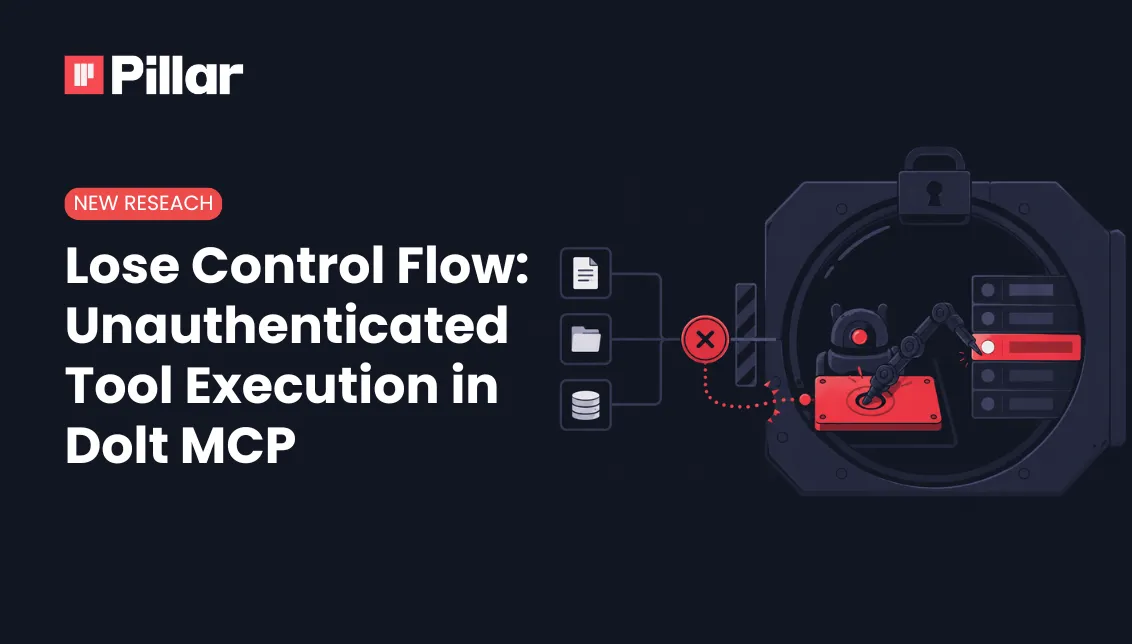 Lose Control Flow: Unauthenticated Tool Execution in Dolt MCP
Pillar Security details CVE-2026-73554, a critical authentication bypass in DoltHub's remote Dolt MCP server (versions 0.3.1–0.3.6) that let unauthenticated attackers reach tool dispatch and execute database operations under the server's own credentials. The bug combined a JWT middleware missing a return statement (so a 401-rejected request kept processing) with the bundled mark3labs/mcp-go library's InsecureStatefulSessionIdManager, which accepted any attacker-forged mcp-session-<uuid> value without verifying server issuance. DoltHub confirmed and patched within a day, issuing GHSA-mgpq-fxxc-h49q; fixed in Dolt MCP 0.3.7.
 pillar.securityadvisoryPublished and added 1 Sep 2026🛡️ Security
 LiteLLM
 is an open-source (MIT) AI gateway that puts 140+ LLM providers, agents and MCP servers behind one OpenAI-compatible API. It adds virtual keys, per-team budgets and rate limits, SSO/JWT/RBAC with SCIM, audit logs, leaked-key protection, and guardrails for PII masking and prompt injection (Presidio, Lakera). It self-hosts via Helm, Terraform or Docker, including air-gapped, with Cosign-signed non-root images, Grype and CodeQL scanning, and secrets pulled from Vault or cloud secret managers. A new Rust gateway is benchmarked at 0.66 ms p99 overhead.
 litellm.aitoolAdded 3 Sep 2026, published 31 Aug 2026🛡️ Security
- Cybermes
Cybermes is an open-source bug bounty and pentest automation framework that pairs a native Go MCP server (cybermes-mcp) with an autonomous Hermes CLI agent, orchestrating recon tools (subfinder, httpx, katana, ffuf, Nuclei, sqlmap), 200+ offensive playbooks covering IDOR/BOLA, JWT, SSRF, XSS, SQLi and cloud misconfig, and a validation-gate workflow that writes non-destructive PoC scripts before compiling findings into Markdown/HTML/PDF reports. It exposes its tools over JSON-RPC 2.0 to AI coding assistants (Claude Desktop, Cursor, Windsurf, Cline, Gemini/Antigravity) so an external LLM can drive scoped, evidence-backed security assessments.
github.comrepoPublished and added 23 Aug 2026🛡️ Security - Deep Eye
Deep Eye is an open-source Python pentesting framework that orchestrates 11 AI providers (OpenAI, Claude, Grok, Gemini, Ollama, Groq, Mistral, OpenRouter, LiteLLM, LM Studio, and more) with automatic failover to generate context-aware attack payloads for 50+ vulnerability classes including SQLi, XSS, SSRF, IDOR, JWT and GraphQL flaws. It adds an RAG-indexed CVE intelligence DB built from NVD/MITRE/Exploit-DB, AI-based finding triage and false-positive filtering, Nuclei-style YAML templates, Playwright browser automation, CAPTCHA-solving (reCAPTCHA/hCaptcha/Turnstile/Arkose), mitmproxy interception, and auto-generated HackerOne-style bug bounty reports with PCI-DSS/SOC2/ISO 27001 compliance mapping, SARIF/JUnit export, scan diffing, and retest workflows.
github.comrepoAdded 3 Sep 2026, published 22 Aug 2026🛡️ Security - Teycir/BurpAPISecuritySuite
BurpAPISecuritySuite is a Jython-based Burp Suite extension that consolidates API reconnaissance, intelligent fuzzing (108+ payloads across 15 attack types including BOLA, IDOR, JWT exploitation, GraphQL abuse, SSTI, and WAF bypass), and passive deep-logic checks (counterfactual differentials, sequence invariants, token lineage, cross-interface parity drift) into a single tool covering the OWASP API Top 10. It auto-captures and normalizes API traffic, exports attack campaigns to Burp Intruder/Turbo Intruder/Nuclei, and generates AI-ready bundles (ChatGPT/Claude/Ollama) for LLM-assisted triage, while orchestrating external tools like ApiHunter, Katana, httpx, FFUF, Kiterunner, sqlmap, and Dalfox for verification.
github.comrepoPublished and added 21 Aug 2026🛡️ Security  Putting models to the secure coding test: Plan vs default mode
Datadog Security Labs tests Sonnet 5, Composer 2.5 and GPT 5.5 on one prompt (a JavaScript document portal with JWT, PostgreSQL, file upload), in default and plan mode, six apps in all. Datadog Code Security and a Claude code review found IDOR in every build. The worst finding was a hardcoded JWT secret fallback in Composer 2.5 plan mode. The author finds no meaningful link between plan mode and more secure code.
securitylabs.datadoghq.comarticleAdded 29 Oct 2026, published 19 Aug 2026🛡️ Security

Showing 30 of 41
Show more