Skip to content

📱 Mobile Security60

What you seeeverything
bleepingcomputer.comarticle

New Android SMS of Death exploit can remotely crash unpatched phones

CVE-2026-58882, "SMS of Death", is a zero-click Android denial-of-service flaw in WapPushOverSms.decodeWapPdu, where an unchecked header-length value becomes negative and triggers a NegativeArraySizeException that crashes com.android.phone. A malformed eight-byte WAP Push message to port 2948 can drop calls, including emergency calls, and about 20 messages caused reboot loops. A PoC is public. Google patched Android 14 through 17 in October 2026, but Android 12 and 13 remain vulnerable.

AndroidAndroid Debug BridgeGitHub
CVE-2026-58882SMS of DeathGoogle+3

Mobile Security, Offensive Security· Published and added 31 Oct 2026

oversecured.comarticle

Android security checklist: theft of arbitrary files | Oversecured Blog

Oversecured's Android security checklist on arbitrary file theft from an app's private storage. It covers implicit intents (PICK, GET_CONTENT) returning file:// or content:// URIs, SEND/SEND_MULTIPLE share activities, exported and non-exported FileProviders, path traversal via Uri.getLastPathSegment, WebView, and local NanoHTTPD servers. Each case has vulnerable code, an attacker PoC and fixes such as /proc/self/fd path checks and narrow files-path entries.

AndroidNanoHTTPDFileProvider+2
Oversecuredpath traversalFileUriExposedException+3

Mobile Security, AppSec· Added 29 Oct 2026

oversecured.comwriteup

Discovering vendor-specific vulnerabilities in Android | Oversecured Blog

Oversecured describes extending its Android scanner to system APIs and to Samsung's Android build, after comparing Google and Samsung framework JARs and about 400 system services. It explains AIDL service permission checks and new control-flow analyses. Examples include Samsung's unchecked semIsBackupEnabled(), a broadcast that reboots the device, and a LaunchAnyWhere in Settings. Samsung had fixed over 60 reported issues.

AndroidSamsungOversecured
LaunchAnyWhereAIDLsystem_server+1

Mobile Security, AppSec· Added 29 Oct 2026

oversecured.comarticle

Content Providers and the potential weak spots they can have | Oversecured Blog

Oversecured's Android security checklist for Content Providers covers insecure FileProvider path configs, path traversal via decoded Uri.getLastPathSegment(), mismatched readPermission/writePermission, proxying requests to more privileged providers, SQL injection across a shared database, and sensitive actions in providers. Each case has vulnerable manifest and Java code, an attacker PoC and remediation. Real cases from Google and Samsung devices are cited. The page text was truncated near the end.

AndroidSQLiteJava
Oversecuredpath traversalSQL injection+5

Mobile Security, AppSec· Added 29 Oct 2026

oversecured.comwriteup

Introducing MavenGate: a supply chain attack method for Java and Android applications | Oversecured Blog

MavenGate is Oversecured's research on hijacking Maven dependencies by buying expired domains behind groupIds on Maven Central and JitPack. It found 6,170 of 33,938 checked domains (18.18%) vulnerable, and tested the attack with its own com.oversecured:hello-world library. It lists defenses (Gradle verification-metadata.xml, PGP signatures) and proposes changes to repository signing.

MavenGradleMaven Central+3
MavenGateOversecuredSonatype+2

Supply Chain, Mobile Security, AppSec· Added 29 Oct 2026

oversecured.comarticle

Oversecured Apps Care. Part 1: Vulnerability disclosure of 225 Google apps | Oversecured Blog

Oversecured Apps Care, Part 1 (21 March 2024) publishes scanner results for about 224 Google Android apps, drawn from a wider scan of over 6,000 public APKs from 1,000+ companies. Tables per device image (phone, Wear OS, Android Automotive, Android TV) give package names, three finding counts and report links, including android, com.android.settings, gms and Play Store. It invites researchers to report issues to Google for rewards.

AndroidWear OSAndroid Automotive+1
OversecuredOversecured Apps Care

Mobile Security, AppSec· Added 29 Oct 2026

oversecured.comwriteup

20 security issues found in Xiaomi devices

Oversecured's write-up of 20 vulnerabilities in Xiaomi apps and system components, reported to Xiaomi between 25 and 30 April 2023. Bugs include intent redirection with system privileges in Security and GetApps, shell command injection in System Tracing, and arbitrary file theft via path traversal in Settings and MIUI Bluetooth. Each has a PoC. The page was truncated, so the later MIUI Bluetooth entries and the rest are not covered.

AndroidGson
OversecuredXiaomiMIUI+9

Mobile Security, AppSec· Added 29 Oct 2026

oversecured.comwriteup

Disclosure of 7 Android and Google Pixel vulnerabilities

Oversecured discloses seven Android vulnerabilities, two of them Pixel-specific, all reported to Google and fixed except one low-severity WebView case. They are the Camera geolocation leak (CVE-2024-0017), a VPN bypass list change (CVE-2023-21383), a Bluetooth permission check flaw (CVE-2024-34719), the WorkSource parcel mismatch (CVE-2023-20963, exploited in the wild by the Pinduoduo app), Device Admin HTML injection (CVE-2021-0600) and a ContentProvider.openFile() caller-context bypass (CVE-2023-21292). Each has root cause and PoC code.

AndroidGoogle PixelWebView+2
CVE-2024-0017CVE-2023-21383CVE-2024-34719+9

Mobile Security, Offensive Security· Added 29 Oct 2026

oversecured.comarticle

Inside mobile taint analysis: how source-to-sink tracking finds real data-leak paths | Oversecured Blog

Oversecured explains taint analysis for Android and iOS apps and contrasts it with pattern-matching SAST such as MobSF. It covers source, flow and sink, cross-component tracking over Intents, flag-based sanitizer modeling and implicit intent simulation. The case study is an unsafe Class.forName().newInstance() on a Serializable transportFactoryClassName field in Google's com.google.auth.oauth2 credential classes, which Google fixed with a $3,133.70 bounty.

AndroidiOSOversecured+3
intent redirectionpath traversalSSRF+4

Mobile Security, AppSec· Added 29 Oct 2026

oversecured.comarticle

Android deep link vulnerabilities: how intent filters lead to account takeover | Oversecured Blog

Oversecured's article on Android deep-link vulnerabilities covers five patterns: custom scheme hijacking, open redirect into WebView, limited and full intent redirection, and domain takeover via an expired whitelist entry. It shows bypass payloads, intent selector abuse, and the HierarchicalUri reflection bypass. It also compares what SAST and DAST can find and gives a checklist for pentesters.

AndroidOAuthChrome+1
deep link hijackingcustom scheme hijackingopen redirect+8

Mobile Security, AppSec· Added 29 Oct 2026

oversecured.comarticle

Vulnerabilities that lead to account takeover in banking and fintech mobile apps | Oversecured Blog

Oversecured guide to eight vulnerability categories that lead to account takeover in mobile banking and fintech apps: WebView JavaScript bridge token leakage, Intent Redirection, hardcoded tokens, deeplink hijacking, insecure token storage, localhost OAuth listeners, AIDL abuse and weak biometric auth. It includes a WebView PoC based on Samsung SmartThings CVE-2022-30746 and maps findings to OWASP MASVS, PCI DSS and PSD2. It argues taint analysis plus dynamic PoC is needed to find multi-component chains.

AndroidiOSOAuth+1
CVE-2022-30746Intent Redirectiondeeplink hijacking+9

Mobile Security, AppSec, Identity & Access· Added 29 Oct 2026

oversecured.comarticle

SDK security in mobile apps: the attack surface your team didn

Oversecured guide to SDK security in mobile apps, built around Microsoft's April 2026 disclosure of an intent redirection flaw in EngageLab's EngageSDK (50 million installs, fixed in 5.2.1). It covers SDK attack surfaces (exported components, WebViews, deep links, hardcoded secrets, payment crypto), a canhub image cropper file-overwrite example, why source-only SAST misses SDK code, and MASVS and PCI DSS expectations.

AndroidEngageSDKOversecured+3
intent redirectionEngageSDK intent redirectionMTCommonActivity+11

Mobile Security, Supply Chain, AppSec· Added 29 Oct 2026

oversecured.comarticle

What changed when mobile security stopped being theoretical

An Oversecured Head of Engineering, coming from 20 years of web work, describes four mobile security risks that became concrete after seeing real production apps. These are old vulnerable binaries that stay installed after a fix, secrets embedded in client code, Keychain/Keystore guarantees that are weaker than assumed with tokens leaking via logs, and deep links or exported components acting as public endpoints. It ends with advice: test the shipped artifact, verify the full data lifecycle, and build server-side containment.

AndroidiOSOversecured
deep linkscustom URL schemesApp Links+5

Mobile Security, AppSec· Added 29 Oct 2026

oversecured.comarticle

PCI DSS and Mobile Apps: A Simple Guide | Oversecured Blog

Guide to PCI DSS v4.0.1 scope for mobile apps, with a mapping of common Android and iOS finding types to the requirements they break (Req 2, 3, 4, 6, 7). It covers which app behaviors bring an app into scope and gives three anonymized cases: cleartext HTTP in a vendor native library, hardcoded keys in a third-party SDK, and an implicit Intent leaking data. It argues for testing the shipped binary and keeping a current component inventory.

AndroidiOS
PCI DSSPCI Security Standards CouncilQualified Security Assessor+5

Mobile Security, GRC· Added 29 Oct 2026

bleepingcomputer.comarticle

Fake crypto app on Apple App Store linked to $23K wallet theft

Padre Terminal, a fake Solana meme-coin trading app on the Apple App Store, drained about $23,000 from 27 Solana wallets after users imported private keys, per blockchain investigator Iris. The app has been removed, but the drainer stayed active; Iris traced funds to two attacker wallets holding 229.66 SOL. Iris also flagged four other suspected impersonator apps (Axiom Pro: Focus, GMGN AI, HyperTerminal-HyperliquidTools, Pump Fun Tokens & Analitycs).

iOSSolanaUSDC
Padre TerminalIrispump.fun+8

Mobile Security, Threat Intel· Added 30 Oct 2026, published 29 Oct 2026

huntress.comwriteup

Managed for Malice: How Attackers Turn MDM into Remote Access

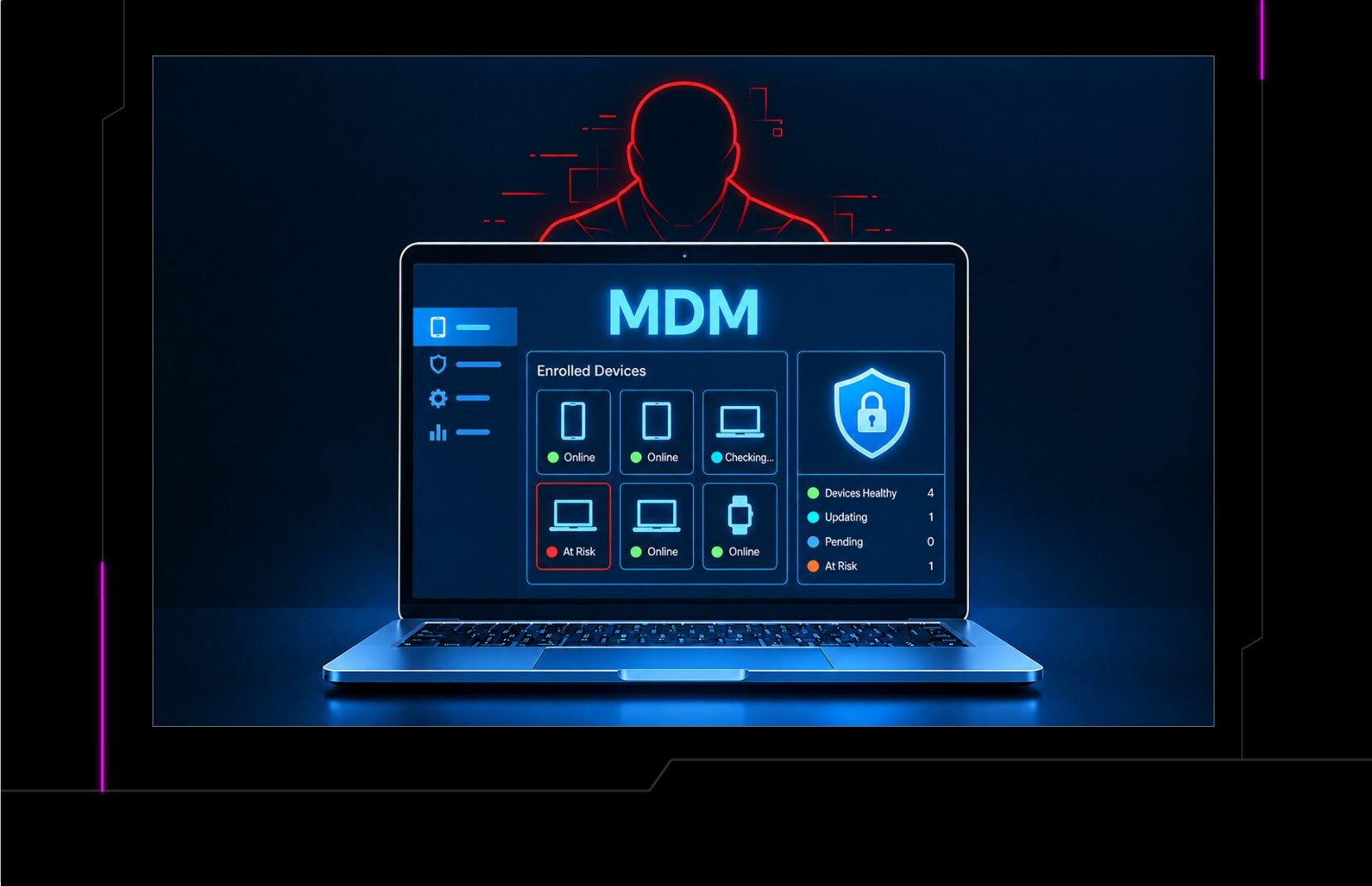
Huntress describes two incidents where attackers enrolled victims in attacker-controlled MDM tenants (Hexnode and Rippling) and used them to push ScreenConnect as SYSTEM. One began with a fake DocuSign MSI that bundled Hexnode; the other with a fake Teams calendar link leading to Rippling enrollment. Removing ScreenConnect did not stop reinstalls. The post lists IOCs, a detection chain and mitigations.

HexnodeRipplingScreenConnect+3
Huntressphishingsocial engineering+3

Threat Intel, Blue Team & Detection, Mobile Security· Published and added 28 Oct 2026

securityweek.comarticle

iOS, macOS 27.2 Patch 286 Bugs; Fix for Exploited Flaw Backported to iOS 18

Apple's 27.2 releases fix 286 vulnerabilities across iOS/iPadOS (163) and macOS Golden Gate (263), with memory corruption in WebKit and the kernel, sandbox escapes, Gatekeeper bypasses and a remote code execution bug in Remote Management. iOS and iPadOS 18.7.11 backport the fix for CVE-2026-86950, an exploited zero-day found by Meta's product security team and first patched in 26.7.1. Patch counts for tvOS, watchOS, visionOS, Safari and the 26.7.2 and Sequoia 15.8.2 releases are also listed.

iOSmacOSSafari+2
CVE-2026-86950Metasandbox escape+2

Mobile Security, other· Published and added 27 Oct 2026

eprint.iacr.orgpaper

LINE-Break: Cryptanalysis and Reverse Engineering of Letter Sealing

LINE-Break is a security analysis of Letter Sealing v2, the custom end-to-end encryption protocol in the LINE messenger. A TLS man-in-the-middle attacker or malicious server can replay, reorder and block messages undetected, and colluding users can forge message authorship in one-to-one and group chats. Stickers and URL previews leak plaintext. The attacks were verified on the real iOS app and an independent implementation.

LINEiOS
Letter SealingLetter Sealing v2Diego F. Aranha+1

Mobile Security, Offensive Security· Published and added 26 Oct 2026

securityweek.comarticle

Dutch Police Arrest Two Over NFC Relay Attacks That Drained $400,000+ From Bank Accounts

Dutch police arrested two men, aged 23 and 25 from Vaassen and Ede, on October 6 over a bank helpdesk fraud that took over €380,000 from 170 victims. Callers played AI-generated bank audio, then a fake bank employee had victims install an app and tap their card to the phone. The app read the NFC chip data and relayed it to an accomplice at an ATM. Police seized the servers.

NFC
Dutch policeNFC relay attackbank helpdesk fraud+1

Threat Intel, Hardware & RF, Mobile Security· Published and added 26 Oct 2026

security.apple.comother

Apple Security Research Device

The Apple Security Research Device (SRD) program gives vetted researchers a specially fused iPhone for iOS security research without bypassing protections. It allows shell access, running any tools, choosing entitlements and customizing the kernel. All iOS and iPhone components are in scope except Apple Pay and third-party apps. Findings are automatically considered for Apple Security Bounty, with bonuses for preview and beta software.

iOS
Security Research DeviceApple Security Bounty

Mobile Security, Offensive Security· Added 25 Oct 2026, published 24 Oct 2026

securityweek.comarticle

Signal Vulnerability Lets Malicious Callers Block Hang-Ups

CVE-2026-113380 (CVSS 9.3) is a flaw in RingRTC, the WebRTC-based library behind Signal voice and video calls. A remote peer can flood the call's finite state machine event queue, so the victim's hang-up waits behind junk and audio and video tracks stay live. Fixed in RingRTC 2.72.0 on 4 September; a researcher published details and a conceptual PoC afterward.

SignalRingRTCWebRTC+2
CVE-2026-113380NIST

Mobile Security, AppSec· Published and added 22 Oct 2026

securityweek.comarticle

Israeli Ad Firm Doubled as Candiru’s Zero-Click Spyware Delivery Channel

SecurityWeek summarizes Citizen Lab's AdFection report: Israeli ad firm Discover-Tech, via its Controlium platform, used targeted ads in RTB auctions to de-anonymize, fingerprint and zero-click infect devices with Candiru spyware. At least 45 Al Jazeera devices were targeted in 2024–2025, and an exposed server held four billion bid records spanning ~200,000 sites and apps. Google, IAB Europe, Beeswax and Eskimi cut off the firm; Citizen Lab recommends blocking targeted ads at the gateway.

AndroidiOS
CandiruDiscover-TechControlium+9

Threat Intel, Mobile Security· Published and added 17 Oct 2026

decrypt.coarticle

Hackers Jailbreak iPhone 18 Pro on Stage, and It Survives a Reboot

Reports that Calif.io demonstrated an untethered jailbreak of an iPhone 18 Pro on iOS 27.0.1 at Hexacon in Paris, showing root SSH access after a reboot and passcode unlock. The vulnerabilities are unnamed and no tool is public; Calif says it will publish later. The article notes Calif's prior use of Claude and Mythos Preview for exploit development, Apple's iOS 27 notes crediting Calif for two unrelated crash bugs, and the Apple mitigations (sandbox, PAC, secure boot chain) such a chain must defeat.

iOSiPhoneClaude+2
CalifHexaconBilly Ellis+4

Mobile Security, Offensive Security· Published and added 16 Oct 2026

securityweek.comarticle

Novel Android RAT ‘Hirudo’ Replaces Banking Apps With Trojanized Copies

SecurityWeek covers ThreatFabric's findings on Hirudo, an Android banking trojan/RAT delivered via droppers hidden in fake shopping, adult video and short drama apps. It replaces eight Indonesian banking apps with modified copies containing a hooking engine that spoofs signing certificates and hides Accessibility services, screen capture and Play Integrity checks, while providing WebRTC screen viewing, camera access and SMS theft. ThreatFabric advises banks to enforce Play Integrity server-side, use behavioral analytics, treat Accessibility signals as risk inputs, and keep backend transaction-risk controls.

Android
HirudoThreatFabricPlay Integrity+2

Mobile Security, Threat Intel, Malware & RE· Published and added 15 Oct 2026

hackers-arise.comarticle

SDR (Signals Intelligence) for Hackers: Scanning Wireless Devices Using FieldWatch

Overview of FieldWatch, a free open-source Android app that passively listens to Wi-Fi and Bluetooth with the phone's own radios and matches them against an editable catalog of about 250 device signatures (trackers, drones, cameras, body cams, mesh radios). It supports alerts, recorded sessions, path maps, Remote ID drone and pilot location, GNSS interference/spoofing detection and export to TAK/ATAK. The article also covers its limits (no direction finding, no Bluetooth Classic, cellular or full Wi-Fi traffic, pattern matches only) and sideloading from the official GitHub repo on Android 10+.

FieldWatchAndroidTAK+1
Remote IDGNSS interferenceGPS spoofing+2

Hardware & RF, Mobile Security· Published and added 13 Oct 2026

github.comrepo

morluto/awesome-reverse-engineering

awesome-reverse-engineering is a CC0 curated list of reverse-engineering tools and learning resources, organized by task: triage, native analysis, debuggers, instrumentation, deobfuscation, malware analysis, mobile, firmware, file formats, games, diffing, symbolic execution, lifting and AI agents. Each entry notes licensing, maintenance status and prerequisites. It also covers MCP integrations, CTF practice sites and related awesome lists.

GhidraIDAradare2+3
angrBinwalkFLARE-VM+4

Malware & RE, Learning, Hardware & RF, Mobile Security· Added 27 Oct 2026, published 9 Oct 2026

securityweek.comarticle

Pre-Baked Firmware Malware Hits Budget Android Devices in 150+ Countries

SecurityWeek reports on Bitdefender's analysis of 'Midnight Mimosa,' a firmware-level malware campaign preinstalled on budget MediaTek-based Android devices across 150+ countries, giving attackers system-level privileges to silently install/remove apps and run ad fraud and click fraud botnets. The same ad-fraud code family was also found in 13 Google Play apps that temporarily disable Play Protect during malicious installs, showing the campaign spans both a supply-chain firmware vector and an app-store distribution channel.

AndroidMediaTekGoogle Play
Midnight MimosaBitdefender

Mobile Security, Supply Chain, Threat Intel· Published and added 9 Oct 2026

securityweek.comarticle

Google Pixel 10 Exploits Earned Hackers $560,000 at Pwn2Own

Coverage of Pwn2Own Ireland 2026 results: contestants earned over $1.2 million total, with Google Pixel 10 exploits alone paying out $560,000 across three teams. Ikotas Labs won the full $300,000 Pixel payout by chaining multiple bugs for remote compromise, while Tim Becker/Yves Bieri and Dimitrios Valsamaras/Ken Gannon earned reduced payouts for exploits involving previously known flaws. Other notable rewards went for hacks of the Samsung Galaxy S26, Sonos Era 300 speaker, Philips Hue Bridge Pro, Home Assistant Green hub, Lexmark/Brother/Canon printers, Garmin Index BPM, and AI infrastructure including Oracle Autonomous AI Database, OpenAI Codex, Nvidia Dynamo, and LiteLLM.

AndroidSamsung Galaxy S26OpenAI Codex+2
Pwn2Own Ireland 2026Ikotas LabsTim Becker+3

Offensive Security, Mobile Security, Hardware & RF· Published and added 9 Oct 2026

exploitreversing.comarticle

Exploit Reversing #10: iOS Security Research (Part 1)

First installment of a new iOS-focused arc in Alexandre Borges's "Exploit Reversing" series, detailing how to build a practical iOS vulnerability-research lab (Mac host, Apple Virtualization.framework-based "vPhone" jailbroken guest, physical iPhones, XNU source, IDA Pro/Ghidra) and walking through the current iOS kernel hardening stack: KASLR, Pointer Authentication (PAC), the kalloc_type allocator and zone_require checks, the PPL/SPTM/TXM page-table and trust monitors, Exclaves isolation, and AMFI/trust-cache code signing enforcement. It also references the public Titan PPL/SPTM bypass (A14–A17 devices, iOS 16.1–17.4 beta 3) as the state of the art for defeating these protections. Part of a long-running, actively published series on Windows, iOS, and hypervisor exploitation.

iOSmacOSXNU+2
PACKASLRSPTM+9

Mobile Security, Offensive Security· Added 8 Oct 2026

securityweek.comarticle

Android’s October 2026 Updates Patch 25 Vulnerabilities

SecurityWeek summarizes Google's October 2026 Android Security Bulletin (2026-10-01 patch level), which fixes 25 vulnerabilities — 7 in Framework and 18 in System, including 7 critical bugs. The most severe is a critical local privilege-escalation flaw in System requiring no user interaction or extra execution privileges; the bulletin also covers a System RCE bug, Google Play system updates for Telephonycore/WiFi, and separate Pixel and Android Automotive OS fixes (including critical Bluetooth, GDMC, and GSA issues). Google reports no evidence of in-the-wild exploitation.

Android

Mobile Security· Published and added 7 Oct 2026

discuss.grapheneos.orgwriteup

Pixel 11 doesn't yet meet the GrapheneOS security standards and may be skipped

GrapheneOS reports that its partial Pixel 11 port must be abandoned because the device lacks working ARM hardware Memory Tagging Extension (MTE) support in software, firmware, and likely hardware, despite Pixel 8/9/10 supporting it since 2023. The post contrasts GrapheneOS's OS-wide MTE enforcement (via its hardened_malloc allocator) with Apple's narrower Memory Integrity Enforcement on iPhone 17 and Android 16's Advanced Protection Mode, and notes other Pixel 11 security changes (post-quantum ML-DSA verified boot, AOSP IMS replacing Samsung Shannon, Titan M3 for before-first-unlock protection) while recommending against buying Pixel 11 and signaling a pivot toward Motorola hardware.

GrapheneOSAndroidARM+2
ARM Memory Tagging Extension (MTE)Apple Memory Integrity Enforcement (MIE)Android Advanced Protection Mode (AAPM)+6

Mobile Security· Published and added 5 Oct 2026

support.apple.comadvisory

About the security content of iOS 26.7.1 and iPadOS 26.7.1

Apple's official security content page for iOS 26.7.1 and iPadOS 26.7.1, released September 28, 2026, patching a single CoreGraphics vulnerability (CVE-2026-86950), an out-of-bounds write triggered by processing a maliciously crafted file, leading to arbitrary code execution. Apple states it is aware of a report that the flaw may have been exploited in an extremely sophisticated attack against specific targeted individuals on versions of iOS before iOS 27, with the issue reported by Meta Product Security.

iOSiPadOSCoreGraphics
CVE-2026-86950Meta Product Security

Mobile Security, Threat Intel· Added 3 Oct 2026

hackers-arise.comarticle

Digital Forensics: iOS Forensics – Basics

A technical walkthrough of iOS forensic acquisition fundamentals: Apple's per-file Data Protection classes (A–D), the Before/After First Unlock (BFU/AFU) distinction and why AFU yields roughly 95% of a full dump versus almost nothing under BFU, and the iOS 18.1 72-hour auto-reboot that silently drops a seized AFU phone back to BFU. It covers extraction methods (logical backup, advanced logic, full filesystem extraction via signed agent, checkm8 bootrom exploits for iPhone X and earlier), pairing records, USB Restricted Mode's one-hour timeout, Lockdown Mode (noting it reportedly blocked FBI extraction of a seized journalist's iPhone in early 2026), Cellebrite's Inseyets/Premium/Physical Analyzer tooling and its coverage limits against A19/M5 chips with Memory Integrity Enforcement, and key forensic artifact stores (KnowledgeC, Biome, PowerLog, Photos.sqlite, chat-app SQLite/WAL/SHM files).

iOSCellebriteSQLite
checkm8Secure EnclaveLockdown Mode+9

Mobile Security, Blue Team & Detection· Added 7 Oct 2026, published 29 Sep 2026

jorgegarciaherrero.compaper

A Privacy Analysis of Web and Mobile Conversational AI Agents [pdf]

A Proceedings on Privacy Enhancing Technologies paper by IMDEA Networks researchers systematically analyzes the web (via instrumented Chrome/CDP) and Android (via Androguard static analysis plus dynamic instrumentation on a Pixel 3a) clients of nine conversational AI services — ChatGPT, Claude, Grok, DeepSeek, Gemini, Perplexity, Microsoft Copilot, Mistral's Le Chat, and Meta AI. They find every service embeds at least one third-party advertising/tracking service (44 third parties total), that 6/9 web and 3/8 Android clients leak conversation titles, prompts, or screenshots to trackers alongside persistent identifiers, and that several providers expose entire conversations via publicly accessible permalinks lacking access controls. The paper evaluates how consent choices, subscription tiers, and access-control settings shape this exposure and analyzes the practices against GDPR and the ePrivacy Directive, following responsible disclosure to providers and EU DPAs.

ChatGPTClaudeGrok+3
GDPRePrivacy DirectiveAndroid Advertising ID+2

AI Security, Mobile Security, AppSec· Added 2 Oct 2026, published 29 Sep 2026

x.comthread

Badger Signal (@BadgerSignalHQ) on X

A Twitter thread from BadgerSignalHQ summarizing a blog writeup claiming GitHub Security Lab used AI-driven audit agents to find 24 vulnerabilities across popular Android apps. It describes an OsmAnd exported-activity flaw letting any app hijack map tile URLs to leak GPS location and route data without location permissions, and a Wikipedia account-takeover chain combining a deeplink hostname-parsing bug with weak cookie-domain checks to trigger malicious WebViews that exfiltrate session tokens across Wikimedia projects.

Android
GitHub Security LabOsmAndWikipedia+1

AI Security, Mobile Security· Added 30 Sep 2026, published 29 Sep 2026

github.blogwriteup

How we found 24 Android vulnerabilities using our open source AI security agent

GitHub Security Lab describes custom "taskflow" prompts built on their open-source Taskflow Agent to hunt Android app vulnerabilities, reporting 24 findings to date. It walks through two concrete chains: an exported, unprotected MapActivity in OsmAnd that lets any app silently import settings and exfiltrate the user's exact map tile/route coordinates to an attacker server, and a hostname-parsing logic bug plus overly loose cookie-domain check in the Wikipedia Android app that lets a wikipedia:// deeplink load an attacker page (e.g. evil-wikipedia.org) and steal long-lived session cookies for account takeover. The post also candidly notes where LLMs struggle (false positives, mis-estimating severity, missing mitigating factors) versus where they excel (deep knowledge of safe/unsafe API patterns).

AndroidGitHub CopilotSQLite+1
confused deputyOsmAndWikipedia

AI Security, Mobile Security, AppSec· Added 7 Oct 2026, published 28 Sep 2026

oversecured.comwriteup

176 Vulnerabilities in Samsung Preinstalled Apps

Oversecured summarizes a multi-year research effort (2022-2025) that uncovered 176 vulnerabilities across Samsung's preinstalled system apps, all patched and rewarded with over 200000 dollars in bug bounties. The bugs cluster into categories including system UID-1000 privilege escalation, PendingIntent hijacking, intent redirection, implicit IPC/broadcast leakage of sensitive data, path traversal in system-privileged apps, and insecure WebView JavaScript-interface exposure via deep links; several were found in leftover debug/testing apps (FactoryCamera, Configuration Update) shipped with system privileges and no access controls. Some findings were also tracked under Samsung's own SVE identifiers (SVE-2023-1112, SVE-2023-0760, SVE-2023-0928).

AndroidSamsung
SVE-2023-1112SVE-2023-0760SVE-2023-0928+5

Mobile Security, AppSec· Added 26 Sep 2026

thehackernews.comarticle

OnePlus/OPPO root privilege-escalation chain (AtlasService + olc2)

Researcher Rasmus Moorats disclosed a two-stage local privilege-escalation chain on OnePlus/OPPO Android phones: OnePlus's AtlasService debugging component runs as root and passes unvalidated app input into a system command, granting root but confined to a restricted dumpstate zone; a second flaw in the olc2 hardware-helper service accepts arbitrary shell commands from any root caller, escaping the sandbox to full root with kernel-module-loading privileges. A malicious app requiring zero permissions and showing no prompts can chain both bugs on a stock OnePlus 15 or 12 Pro, and OnePlus said the same flaws affect many other OnePlus and OPPO devices sharing OxygenOS. OnePlus confirmed the bugs in May 2026 but had shipped no fix or CVE by publication (Sept 24), and separately told the researcher it claims sole authority over disclosure timing and threatened legal liability for publishing without consent — a stance he rejected before going public.

Android
Rasmus MooratsAtlasServiceolc2+4

Mobile Security, Offensive Security· Added 26 Sep 2026

nvd.nist.govadvisory

CVE-2026-19978: A flaw has been found in jiantao88 android-mcp-server up to cfb872b2446794193b58edd63f4dbf6af48a6292

CVE-2026-19978 describes an OS command injection (CWE-77/78) in jiantao88's android-mcp-server, where the child_process.exec call in build/index.js fails to sanitize the deviceId, packageName, permission, and extras[].key/value arguments used to control Android devices. The flaw allows local command execution and has a published exploit; it was fixed in commit 14e2bf27c88ba137e35cbb0c2a75f72b595bb98a. CVSS 4.0 base score is 1.9 (local attack vector only), and the project uses rolling releases so no fixed version numbers are assigned.

Model Context ProtocolAndroidNode.js
CVE-2026-19978CWE-77CWE-78

AppSec, Mobile Security· Added 26 Sep 2026

github.comrepo

The React Native Developer's Security Guide

A GitHub-hosted book focused entirely on securing the React Native developer's workstation and toolchain rather than the shipped app — covering the polyglot execution surface triggered by a single git clone/yarn/pod install (Ruby, CocoaPods, Xcode build phases/XCSSET, Gradle, gradle-wrapper.jar, keystores), CVE-2025-11953 (exposed Metro/RN dev server), ClickFix-style social engineering of developers, CI-as-extended-workstation risks, and Expo/EAS-specific supply-chain concerns. It ships alongside a separate companion repo of 119 Opengrep detection rules, each mapped to a specific chapter's attack technique, plus practical appendices like a safe-clone runbook and a file risk atlas for hardening teams.

React NativeExpoCocoaPods+3
CVE-2025-11953ClickFixXCSSET

Mobile Security, Supply Chain, DevSecOps· Published and added 5 Sep 2026

socket.devwriteup

Socket: FUNNULL iOS Spyware Campaign via 13 Malicious Packagist Themes

Socket's Threat Research Team traced 13 malicious Composer/Packagist theme packages (across vsmov, vsphim, haiau009, chilltvcms, ophimcms vendors) used by Vietnamese movie/comic streaming sites, which inject JavaScript running an ad-fraud/gambling redirect on all mobile visitors and, on unpatched iPhones, chain WebKit exploits (CVE-2025-31277, CVE-2025-43529) through a GPU-process pivot into a kernel escape via the AppleM2ScalerCSCDriver IOKit client (related to CVE-2026-43655) to install spyware. The payload exfiltrates keychain data, SMS, photos, contacts, and — after an August 2026 redeployment — directly steals crypto wallet seeds/mnemonics from Bitget, Phantom, Trust Wallet, and others. The report attributes delivery infrastructure to FUNNULL (Triad Nexus, OFAC-sanctioned operator Liu Lizhi), ties the exploit kit to the "DarkSword" iOS exploit family, and provides full IOCs, hashes, and MITRE ATT&CK mapping.

PackagistComposerPHP+4
CVE-2025-31277CVE-2025-43529CVE-2026-43655+8

Supply Chain, Mobile Security, Threat Intel· Published and added 1 Sep 2026

github.comrepo

vibecheck

vibecheck is a free, open-source, client-side scanner that checks apps built with AI code generators (Lovable, Bolt, v0, Cursor, Claude Code) for common security holes: exposed Supabase Row Level Security / Firebase rules, secrets embedded in the client bundle (Stripe/AWS/DB keys), missing security headers, exposed .env/.git/source maps, unauthenticated LLM proxy or MCP endpoints, and email/TLS misconfigurations. It also scans public repos for cross-tenant IDOR patterns, committed secrets, an OSV.dev supply-chain check, a Dockerfile lint, and generates a CycloneDX SBOM; a companion CLI (tenant-guard) adds a live Postgres cross-tenant isolation test as a CI gate. The project cites CVE-2025-48757 (170+ Lovable apps found with RLS disabled) as motivation.

SupabaseFirebaseOSV+3
CVE-2025-48757IDOR

AppSec, Supply Chain, Mobile Security· Published and added 27 Aug 2026

github.comrepo

ScreenshotDetector

ScreenshotDetector is an Android app-layer tool that detects screenshot, screen recording, screen mirroring, and casting activity using a combination of public APIs (ScreenCaptureCallback, ScreenRecordingCallback, DisplayManager, MediaProjection, ContentObserver/MediaStore, FileObserver, AccessibilityService, NotificationListenerService) and hidden APIs accessed via reflection (DisplayManagerGlobal.getDisplayInfo, WifiDisplayStatus, AppOps project_media/project_audio). It is positioned as a research counterpart to ScreenshotFaker (an LSPosed/Shizuku-based tool that forges/bypasses screenshot detection), illustrating the attacker/defender dynamic around screen-capture evasion on Android, including detection of adb shell screencap/screenrecord, freeform/mini-window attribution, and accessibility-overlay/screen-reader channel abuse detection.

Android
ScreenshotFakerLSPosedShizuku

Mobile Security, Offensive Security· Published and added 21 Aug 2026

github.comrepo

manyuegong33/r0crawl_skills

r0crawl_skills is a beginner-friendly Chinese-language skill library of 196 specialized reverse-engineering modules for Codex-style AI coding agents, with a router that asks scoping questions and directs the agent to the right workflow (web RE, Android unpacking, Frida instrumentation, native binary analysis, protocol reconstruction, malware triage, firmware analysis, CTF). It ships lightweight scripts (case init, module router, artifact hashing) and ten sanitized example playbooks covering DEX dump verification, WebCrypto hooking, native loader tracing, PCAP reconstruction, and selective emulation, plus dedicated modules for CAPTCHA/WAF/anti-bot systems, mini-programs, hybrid apps (Flutter/React Native/Electron), and IDA/Ghidra/Rizin automation.

FridaGhidraAndroid+2

Malware & RE, Mobile Security, AI Security· Added 30 Sep 2026, published 6 Aug 2026

github.comrepo

Awesome Android Reverse Engineering

A curated GitHub list covering the full Android reverse engineering toolchain: decompilers (JADX, Apktool, Ghidra, IDA Pro), dynamic instrumentation (Frida, Objection, FriDump, jnitrace), deobfuscation tools (Simplify, Obfu[DE]scate, deoptfuscator), network interception (Burp Suite, MITMProxy, SSLsplit), anti-tamper/root-detection bypass tooling, and malware analysis frameworks (MobSF, Quark Engine, Cuckoo Droid). It also links training courses (Maddie Stone's RE training, Azeria Labs ARM assembly), books (Android Hacker's Handbook, Android Security Internals), and CTF/practice targets (UnCrackable Mobile Apps, KGB Messenger, Flare-On).

AndroidFridaGhidra+3
SharkBotHouseparty

Mobile Security, Malware & RE, Learning· Published and added 5 Aug 2026

github.comrepo

Momoko-Ayase/Senbei

Senbei is a Rust-based static unpacker for binaries protected by "CrackProof," working against both Windows PE executables and Android AArch64 shared libraries. It performs a purely static, file-local transformation (no vendor code, no key extraction service) to reverse the protection wrapper for legitimate RE, interoperability, and preservation purposes; one Android packaging variant is unwrapped using an XOR keystream the authors recovered during their own analysis.

WindowsAndroidRust
CrackProof

Malware & RE, Mobile Security· Added 4 Oct 2026, published 3 Aug 2026

github.comrepo

Beetle

Beetle is an offline-first mobile application security platform that statically analyzes Android APKs and iOS IPAs (including Flutter and React Native apps), combining decompilation, taint analysis, secret/endpoint extraction, certificate and native-binary hardening checks, and CVE enrichment with explainable 'intelligence engines' (ownership, confidence, evidence selection, finding fusion) that correlate findings into evidence-backed attack chains. It maps results to OWASP MASVS/Mobile Top 10, provides source-level navigation, and exports SARIF, CycloneDX SBOM, and PDF reports, with optional (non-scanning) AI assistance via Claude, OpenAI, Gemini, DeepSeek, or local Ollama for explaining findings.

AndroidiOSDocker+3

Mobile Security, AppSec· Published and added 31 Jul 2026

github.comrepo

thomasbuilds/Spectre

Spectre is a free, open-source Android app (min API 31) for observing and interacting with the surrounding wireless environment, combining passive monitoring of Bluetooth LE, Wi-Fi, cellular (2G-5G), and GNSS with a growing set of pentesting tools. Notable features include a BLE GATT inspector that can read/write characteristics on connected devices, a local-network scanner (TCP-connect host discovery, SSDP/UPnP, mDNS/DNS-SD, banner grabbing, reverse DNS), iBeacon broadcast spoofing, and a computed aggregate RF-exposure figure derived by correctly summing per-emitter power in linear watts rather than dBm. It also documents Android platform limitations affecting wireless recon, such as invisible 5G NSA signal, Wi-Fi scan throttling, and single-carrier cell visibility.

Android
GATTSSDPUPnP+4

Mobile Security, Hardware & RF, Offensive Security· Published and added 23 Jul 2026

github.comrepo

LSPosed/LSPromise

LSPromise is a GitHub repo and detailed writeup documenting a complete Android privilege-escalation exploit chain from an untrusted local app to root/kernel, with no memory corruption required. It chains a logic bug in Telecom's InCallController.java (CVE-2026-49881) that lets arbitrary code run inside system_server, pivots via ActivityManager reflection into com.android.networkstack to reach the DirtyFrag kernel 1-day (CVE-2026-43500/CVE-2026-43284), and then uses a DirtyPipe-style binary-patching technique (crash_dump, modprobe, vendor_file labeled kernel module) to disable SELinux and launch KernelSU with root. Tested on Pixel 10 running Android 17; the first bug was fixed in the September 2026 security bulletin.

AndroidLinux kernelSELinux+1
CVE-2026-49881CVE-2026-43500CVE-2026-43284+4

Mobile Security, Offensive Security· Added 2 Oct 2026, published 23 Jul 2026

lucidbitlabs.comwriteup

Samsung Kernel UAF (CVE-2026-20971)

LucidBit Labs details CVE-2026-20971, a use-after-free race condition in Samsung's PROCA/FIVE kernel integrity subsystem, exploitable via procfs handlers (/proc/pid/integrity/*) that fetch task_integrity pointers without taking a reference before an execve() concurrently frees the old object. The bug affects Galaxy S9 through S25 and other Samsung devices on both Qualcomm and Exynos chipsets, is triggerable from any untrusted app, and yields memory corruption primitives (though not a full LPE exploit); Samsung patched it in the 01-2026 update.

Samsung KnoxAndroidLinux kernel
CVE-2026-20971PROCAFIVE+1

Mobile Security, Offensive Security· Added 3 Sep 2026, published 18 Jul 2026

github.comrepo

tiwe0/r0dump

r0dump ports the FART active-invocation dumping technique into the Android 16 / ART runtime, hooking DEX registration, class loading and method dispatch directly inside ART to force packed apps to decrypt their code at runtime. It also captures DEX loaded via InMemoryDexClassLoader, reconstructs shifted ID tables back into standard DEX files, and recomputes Adler-32/SHA-1 checksums, with a companion "R0dump Manager" app (including an ADB-driven MCP bridge) for target selection, repair and ZIP export of dumped samples for inspection in JADX/dexdump. The reference build targets a OnePlus 9 running LineageOS 23.2 with test-keys, and the project ships git-format-patch sets for porting to other Android 16 devices.

AndroidLineageOSJADX+1
FART

Mobile Security, Malware & RE· Added 2 Oct 2026, published 17 Jul 2026

github.comrepo

SyscallX-18113/Apkx-Hunter

APKX-Hunter is an open-source Android static analysis framework written in C, built for reverse engineering, malware analysis, OWASP MASVS compliance scanning, and bug bounty/pentesting work. It decompiles APK/APKM/APKS/XAPK/ZIP packages via JADX or APKTool, extracts hardcoded secrets, endpoints, permissions, exported components, and native libraries, and scores detected secrets with a lightweight offline C-based ML classifier (166 MASVS detection patterns across 15 categories). It was showcased at Black Hat Europe Arsenal and tested against the OWASP UnCrackable Level 4 app.

AndroidCLinux
OWASP MASVSOWASP UnCrackable Level 4

Mobile Security, AppSec· Added 30 Sep 2026, published 11 Jul 2026

xmcyber.comwriteup

Trust No One: Automating macOS Privilege Escalation at Scale

XM Cyber researchers detail a macOS privilege escalation technique that lets a standard user disable EDR/MDM agents without admin credentials by exploiting stale kernel CDHash trust caches combined with NIB payload injection to impersonate trusted, code-signed application components. Once inside the trusted process context, the attacker uses an AppleScript-to-JXA-to-Objective-C runtime bridge (loading OSAKit.framework, forging Block_layout/objc_msgSend structures) to call unauthenticated privileged XPC methods like runProcessWithCommand: and ceaseSystemExtensionWithReply:, forcing security products to disable or remove themselves. The authors built an open-source scanner, XPC Hunter, to find this exposure across installed macOS apps at scale and recommend fixing it via xpc_connection_set_peer_code_signing_requirement() or SecCodeCheckValidity() peer validation.

macOSEDRXM Cyber

Offensive Security, Malware & RE, Mobile Security· Added 3 Sep 2026, published 24 Jun 2026

github.comrepo

Reverse-Skill

Reverse-Skill is a GitHub repo that gives AI coding agents (Claude Code, Codex, Cursor, OpenCode) a structured routing layer for reverse engineering and offensive security work: it detects the task type (APK, ELF binary, JS obfuscation, PCAP, CTF challenge) and routes to the correct methodology and toolchain (jadx, apktool, Frida, IDA Pro, Ghidra, radare2, Burp Suite, nmap, Metasploit) instead of letting the agent guess commands. It ships a case-init/scope workflow, an evidence-to-finding-to-report pipeline, a 173-case routing regression test run in CI on Windows and Ubuntu, and platform-specific docs for Kali/Ubuntu/macOS, positioned for lawful research, CTF, and authorized pentesting.

Claude CodeCodexCursor+3

Malware & RE, Offensive Security, Mobile Security· Published and added 21 Jun 2026

hackers-arise.comwriteup

Mobile Network Hacking: Recon on Local Mobile Networks

A Hackers-Arise tutorial demonstrating use of FALCON (Fast Analysis of LTE on Control Channels), an srsRAN/srsLTE-based tool, together with DragonOS and a LimeSDR/USRP B210 to decode the PDCCH of local 4G/5G cell towers. It explains how capturing DCI, RNTIs, and resource allocation data can be abused for passive traffic interception, subscriber tracking via RNTIs, and targeted denial-of-service by identifying cell capacity limits.

DragonOSFALCONsrsRAN+3
falkenberg9cemaxecutor

Hardware & RF, Mobile Security, Offensive Security· Added 3 Sep 2026, published 5 Jun 2026

socket.devwriteup

Socket: Coruna Respawned

Socket's Threat Research team analyzed a repository takeover of the popular npm package art-template, whose versions 4.13.5 and 4.13.6 were backdoored to inject a script loader (v3.jiathis[.]com) that redirects through a watering hole to a Safari/iOS browser exploit delivery framework nearly identical to Google's previously-reported Coruna exploit kit. The writeup provides a full multi-layer deobfuscation of the implant (UTF-16 packing, base64/eval chains, per-string XOR), maps its version-gated payload flags to specific WebKit CVEs (CVE-2021-30952, CVE-2022-48503, CVE-2023-43000, CVE-2024-23222), documents WASM-based JIT fingerprinting/anti-bot probes and CPU-architecture discrimination, and links the campaign to threat actor UNC6691 via content-addressed URL scheme, YARA matches, and C2 domain patterns, ending with concrete detection recommendations and IOCs.

npmiOSJavaScript+3
CVE-2021-30952CVE-2022-48503CVE-2023-43000+5

Supply Chain, Mobile Security, Threat Intel, Malware & RE· Published and added 22 May 2026

github.comrepo

DragonJAR/Android-Pentesting-Skill

Android-Pentesting-Skill is an open-source "skill" package that turns an AI coding agent (Claude Code, OpenCode, etc.) into an Android APK security auditor. It orchestrates APKTool/JADX decompilation, MASTG-aligned Semgrep static rules, source-to-sink tracing, a Runtime Defense Analysis engine that maps detected RASP/anti-tampering protections (root detection, SSL pinning, Frida detection, SafetyNet, Approov, DexGuard, etc.) to reusable Frida bypass profiles, and CVSS 4.0/MASVS-scored professional reporting, plus smali patching/repackaging workflows for authorized lab use. It ships 37+ bundled Frida scripts, 70+ Semgrep MASTG rules, and framework-specific handling for Flutter, React Native, Cordova, and Unity apps.

AndroidFridaSemgrep+2
MASVSMASTGOWASP Mobile Top 10+1

Mobile Security, Offensive Security· Published and added 7 May 2026

youtu.bevideo

SecTor 2025 | Ghost SIM Attack: Hacking Mobile Network Authentication Policies

Security researchers from Ethon Shield introduce the Ghost SIM attack, demonstrating how extracting non-cryptographic SIM metadata without the secret key (Ki) enables cellular network impersonation across 2G, 3G, 4G, and 5G networks. The exploit takes advantage of permissive, event-based or time-based carrier authentication policies that skip cryptographic verification during network attachment. Defenses include enforcing SIM PINs on end-user devices and mandating cryptographic authentication on all initial network attachments by cellular operators.

2G GSM mobile networks3G UMTS mobile networks4G LTE mobile networks+17
CVE-2016-4030CVE-2016-4031CVE-2016-4032+16

Mobile Security· Added 12 May 2026, published 25 Apr 2026

huntress.comarticle

Why the Stryker Attack Still Matters. And Five Steps You Can Take Today

Huntress analyzes the March 2026 Stryker incident, in which attackers linked to the pro-Iran group Handala reportedly compromised Stryker's Microsoft Intune/MDM environment and issued a mass 'Remote Wipe' command factory-resetting up to 200,000 corporate and BYOD devices, while also exfiltrating 50TB of R&D data. The piece explains why this 'weaponized remote wipe' differs from ransomware (no restore key, full rebuild required), details the supply-chain/patient-safety fallout for NHS orders, and gives five concrete defenses: locking down MDM/RMM/EDR consoles as crown-jewel assets, requiring multi-admin approval for bulk device actions, moving from MDM to MAM for BYOD, building out-of-band IR comms, and rehearsing a fleet-scale 'day zero' restore.

Microsoft IntuneMicrosoft 365
HandalaStrykerNCSC+1

Threat Intel, Identity & Access, Mobile Security· Added 3 Sep 2026, published 8 Apr 2026

macrumors.comarticle

iOS 26.2 fixes 20 security vulnerabilities, 2 actively exploited

Apple's iOS 26.2, iPadOS 26.2, and macOS 26.2 updates patch over 20 security vulnerabilities, including two WebKit bugs (one enabling arbitrary code execution, one causing memory corruption) that were actively exploited in "extremely sophisticated" attacks against specific targeted individuals on pre-iOS 26 devices. Other fixed issues include an App Store bug exposing payment tokens, a malicious-image memory corruption flaw, unauthenticated access to Hidden Album photos, and passwords being unintentionally exposed during remote FaceTime control sessions.

iOSmacOSWebKit

Mobile Security· Added 3 Sep 2026, published 14 Dec 2025