 Leak Exposes 41,000 Homeland Security Workers–Including Undercover ICE Agents
Icepick is a leaked archive of records on more than 41,000 Department of Homeland Security employees and contractors, published by Distributed Denial of Secrets in 2026 and said to come from DHS's Okta login system. WIRED's analysis covers CBP, ICE, HSI, USCIS and CISA staff, plus over 55,000 permission groups that reference undercover programs, Palantir Falcon, PenLink, Signal and Mobile Fortify. Okta says it has no evidence of compromise.
 wired.comarticleAdded 29 Oct 2026, published 28 Oct 2026
 Proton Flock Camera Map
 is a ZIP-code search map of Flock license plate reader locations. Its data comes from researcher Joshua Michael, who found in November 2025 that Flock's servers exposed an access token to anyone without login, and published his map in December. His inventory lists over 170,000 cameras and 130,000 other devices, about 40% above Flock's cited 120,000 cameras. The page also covers what Flock records and cites a Washington Post review of officer misuse.
 proton.metoolAdded 26 Oct 2026, published 25 Oct 2026
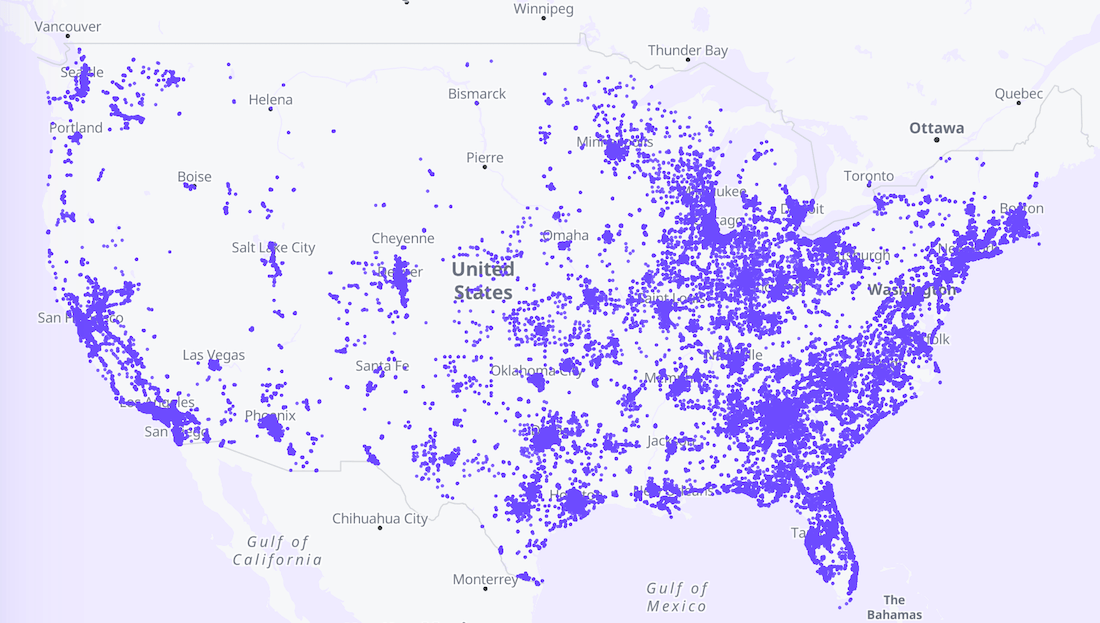 Proton hosts map of 300k Flock devices amid legal threats
Proton is hosting a public map of more than 300,000 Flock Safety surveillance devices (about 170,000 cameras and 130,000 other devices), built from an inventory researcher Joshua Michael obtained in November 2025 via an access token that could be fetched without login. Flock closed the path, later found anomalous token activity but no customer data impact, and sent Michael a cease-and-desist letter. The map is a December 2025 snapshot.
 cyberinsider.comarticleAdded 25 Oct 2026, published 23 Oct 2026
 Sizing the PHP exposure window for CVE-2026-109618 and CVE-2026-109619 with VirusTotal
VirusTotal sizes the internet-facing PHP footprint around CVE-2026-109618 and CVE-2026-109619 (CVSS v4.0 9.2, session.upload_progress) using Internet Scanning. About 5.1M IPs run PHP, roughly 4 in 5 hide their version, and ~758K disclose an end-of-life branch. It gives queries that use the SSH banner to match leaked LiteSpeed lsphp 8.2.34 builds, plus mitigations.
 blog.virustotal.comarticleAdded 22 Oct 2026
- Show HN: VoidAccess – open-source dark web OSINT, from query to a graph
VoidAccess is a self-hosted, MIT-licensed dark web OSINT platform that runs a 13-step pipeline from a research query to a relationship graph. It collects from Tor indexes, paste sites, code forges, security feeds and .onion seeds, applies content-safety filters, and exports STIX 2.1, MISP, Sigma, YARA, Snort, Suricata, CSV and JSON. It runs as a CLI with SQLite or as a Docker Compose stack with PostgreSQL, FastAPI and Next.js.
 github.comrepoAdded 21 Oct 2026, published 20 Oct 2026
 Abhinav Singwal (@yogsec) on X
GetSubDomains is an open-source tool by yogsec that enumerates subdomains by querying crt.sh certificate transparency logs. It is aimed at the reconnaissance step of penetration tests and bug bounty work. The source is a short tweet pointing to a GitHub repository, so usage details and options are not given.
 x.comrepoAdded 21 Oct 2026, published 19 Oct 2026
 Open-Source Intelligence (OSINT): Turn One Username into a Full Digital Dossier with Maigret
Hands-on walkthrough of Maigret, an open-source Python tool that checks a username against 3,000+ sites (top 500 by default) and builds a profile dossier by parsing public profile pages and recursively searching newly found usernames. Covers installation from GitHub, single-site and tag filtering, username permutation, HTML/PDF/CSV/JSON reports, graph output, and an optional LLM summary via OpenRouter. Positioned as a more thorough successor to Sherlock for username reconnaissance.
 hackers-arise.comarticlePublished and added 16 Oct 2026
- bilawalsidhu/gods-eye-view
God's Eye View is an open-source, vanilla-JavaScript CesiumJS and Vite client that puts live aircraft, ships, satellites (SGP4), earthquakes, fires, public CCTV and mapped ALPR cameras on one photorealistic 3D globe. It adds cockpit tracking, FLIR/NVG sensor shaders and a voice agent built on the OpenAI Realtime API. It works without API keys, and the docs cover server-side key brokering with SSRF protection, localhost binding and a SECURITY.md threat model. For OSINT/GEOINT practitioners it is a hackable base for fusing public signals, with an explicit rule against person-tracking features.
github.comrepoAdded 11 Oct 2026 - Dark Web Informer (@DarkWebInformer) on X
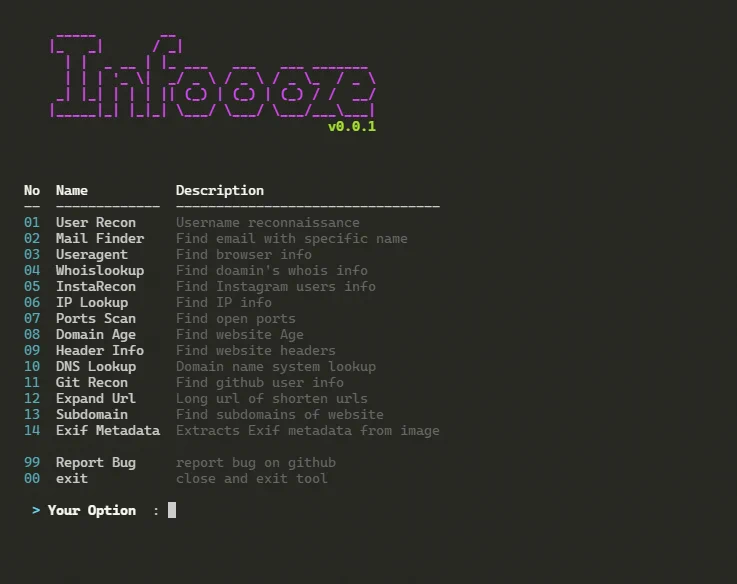
Infoooze is an open-source command-line OSINT reconnaissance toolkit (github.com/devxprite/infoooze) that consolidates common footprinting tasks into one CLI: username enumeration across platforms, email discovery, subdomain enumeration, port scanning, WHOIS/DNS lookups, IP/HTTP header analysis, EXIF metadata extraction, GitHub recon, and URL scanning/expansion. It automatically saves results, making it a lightweight all-in-one alternative to running several separate recon tools.
x.comrepoPublished and added 8 Oct 2026 - Disrupting AI-enabled “false front” operations
OpenAI reports banning ChatGPT accounts tied to two covert influence operations using "false front" entities. The Russian "Dark Clark" operation ran a think tank (Social Research Center) staffed by unwitting Latin Americans, planted fake emails, audio and documents targeting Ukraine and Argentine, Bolivian and Ecuadorian leaders, and was rated Breakout Scale Category 5. The Iranian "Bogus Bylines" operation used seven fake journalist personas to place nearly 100 articles in online outlets (Category 4) and generated batches of social media comments (Category 2), while using inflated impact metrics in internal reports.
 openai.comarticlePublished and added 8 Oct 2026
 Inside EQIBank’s $84M seizure
Protos investigative article unpacking the DOJ's $84M civil forfeiture against Capstone Limited, a payment processor used by Dominica-based EQIBank (which handles Tether reserves), for misrepresenting itself to Wells Fargo, JPMorgan Chase and Citibank as a software firm rather than a money services business. The piece uses OSINT techniques — corporate registry tracing, shared-hosting IP correlation, DNS lookups, and court filing cross-referencing — to map operator Kotaro Shimogori's decade-long history running shell payment processors (ComCopious, iCanPay, AuthPay, Pan Digital Network) for high-risk clients including gambling sites and, per the forfeiture complaint, impersonation-fraud scam proceeds funneled through Chase accounts. It also details EQIBank's EQIFi/EQX DeFi token, and links Marlin Capital Partners and Deltec Bank figures to Tether's banking history, drawing parallels to the earlier Crypto Capital Corp seizure.
 protos.comarticleAdded 8 Oct 2026, published 7 Oct 2026
 Chinese network laundered $1B+ for North Korea's Lazarus Group — ZachXBT
Blockchain investigator ZachXBT published a 12-part thread detailing how he spent months posing as a client of a Chinese money-laundering network to prove it laundered over $1 billion for North Korea's Lazarus Group, including a large share of the ~$1.5 billion Bybit hack (FBI codename TraderTraitor). He cross-referenced the operators' private messages with on-chain data — including a wallet receiving fees from Bybit-hack-linked addresses and THORChain bridge transfer timing/amounts matching what operators disclosed — turning chat screenshots into verifiable blockchain evidence. The laundering network converted BTC into ETH, Solana and Tron, used THORChain for cross-chain hops, and parked funds in low-volume Uniswap pools; the investigation led Tether to freeze 442,000 USDT, part of over $75 million ZachXBT claims to have gotten frozen from North Korea-linked hacks since 2022.
 247wallst.comarticlePublished and added 6 Oct 2026
- Show HN: MailAccess – the true Email OSINT framework
MailAccess is an open-source email OSINT framework (pip install mailaccess, MIT licensed, 1.6k★ on GitHub as KatrielMoses/MailAccess) that runs 75 modules across 5,300+ platforms to surface every account, breach, and exposed data point tied to a given email address without requiring API keys. Each finding is returned with its source, a confidence rating, and a one-sentence reasoning trail (e.g. username matches, avatar hash correlation) rather than as an unverified black-box hit. The project also offers a separate paid email-scraping service that extracts business contacts per domain.
 mailaccess.protoolPublished and added 6 Oct 2026
 ZachXBT Says He Fronted $349,700 to Infiltrate Alleged Laundering Ring
Pseudonymous on-chain investigator ZachXBT says he personally fronted $349,700 to infiltrate an alleged crypto money-laundering ring as an undercover source. He ties that operation to the freezing of 442,000 USDT after identifying a laundering cluster linked to the Bybit hack and valued at more than $12 million.
 thedefiant.ioarticlePublished and added 5 Oct 2026
 Crypto Sleuth ZachXBT Fronted $350K to Pose as a Client of Lazarus' Chinese Launderers
Decrypt reports on ZachXBT's account of infiltrating a Chinese money-laundering syndicate working for North Korea's Lazarus Group, by posing as a client ("fronted" $349.7K USDC) to a contact named "Jimmy Green" to gather intelligence on how Bybit's $1.5B hack proceeds were being laundered. The piece details the on-chain corroboration methods used (matching Telegram screenshots to Thorchain swap timing, wallet clustering across BTC/ETH/SOL/Tron) that exposed a $12M+ cluster of Bybit exploit funds, led to a 442K USDT Tether freeze, and separately traced $3M in fraud proceeds to Huione Guarantee, a Cambodian marketplace later targeted by FinCEN and shut down by Telegram.
 decrypt.coarticlePublished and added 5 Oct 2026
 ZachXBT poses as money launderer to infiltrate Lazarus network
Crypto investigator ZachXBT details how he posed as a money-laundering client (contacting a launderer known as "Jimmy Green" over Telegram/Discord) to infiltrate a Chinese organized-crime network laundering funds for North Korea's Lazarus Group. He fronted roughly 350,000 dollars across transactions, collected addresses and bridging methods via THORSwap, and used the intel to link the launderer to the 1.5 billion dollar Bybit hack, the 100 million dollar Poloniex hack, and sanctioned conglomerate Huione Guarantee; findings also contributed to freezing funds tied to the Bybit theft.
protos.comarticlePublished and added 5 Oct 2026 ZachXBT Posed as a Client to Infiltrate Chinese Syndicate Laundering Bybit Hack Funds
Crypto investigator ZachXBT describes posing undercover as a client to infiltrate a Chinese OTC laundering syndicate handling stolen Bybit hack funds linked to North Korea (DPRK). He fronted 349,700 USDC, paid a 5% fee per order, and had the broker tell him in advance where the stolen funds would move next, surfacing operational detail on how DPRK-linked actors cash out stolen crypto through OTC desks.
thedefiant.ioarticlePublished and added 5 Oct 2026- The OSINT Newsletter (@osintnewsletter) on X
The OSINT Tools Map, built by @cyb_detective, is an interactive world map letting investigators click a country to find relevant local OSINT resources such as phonebooks, business registers, cadastral maps, and court records. The same tweet announces the companion "OSINT Tools Library" at tools.osintnewsletter.com, a curated, investigator-first directory of tools used in real cases that is actively soliciting community additions.
x.comtoolAdded 5 Oct 2026, published 4 Oct 2026 - the_OSINT_rack (@the_OSINT_rack) on X
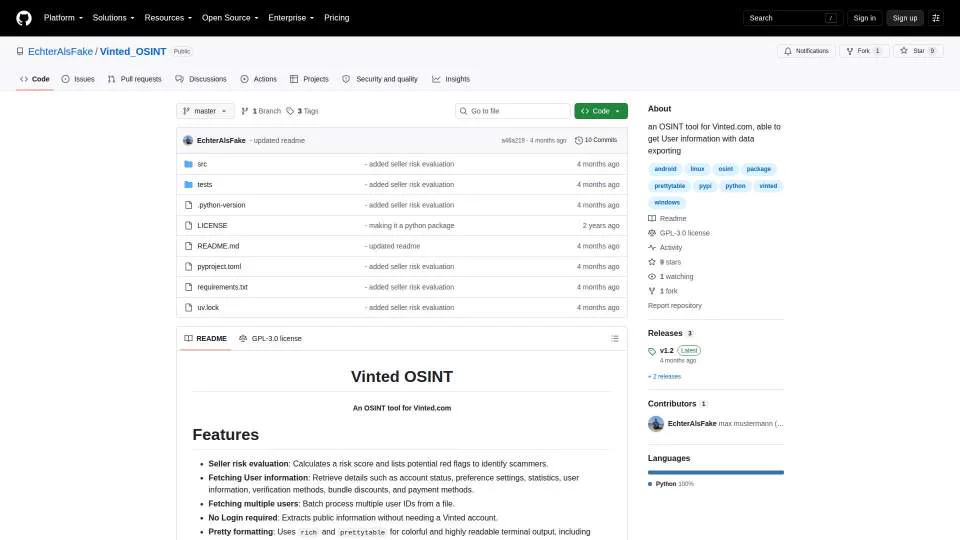
Vinted_OSINT is a GitHub tool by EchterAlsFake that performs open-source intelligence gathering against Vinted.com user profiles, pulling seller/buyer account information and computing a risk score to flag accounts likely run by scammers. It's aimed at buyers wanting to vet sellers before transacting on the second-hand marketplace.
x.comrepoPublished and added 4 Oct 2026  texas actual (@texasactualUA) on X
A tweet highlights osinteuropetracker.com, an OSINT tracker built to map known and suspected Russian sabotage operations across the European Union. The tool is shared as a practical way for analysts to monitor and visualize ongoing hybrid-threat incidents attributed to Russia in EU countries.
x.comtoolAdded 3 Oct 2026, published 1 Oct 2026- Andrea (Drego) Draghetti 👨🏻💻 🎣 (@AndreaDraghetti) on X
Tosint v1.0.0 is an open-source Telegram OSINT tool for analyzing bots and chats, exporting message history and media. The new release adds richer JSONL metadata output, optional SHA-256 hashing of exported media, bot/user authentication support, and an automatic fallback from MTProto-based history retrieval to ID-scan mode when dealing with restricted chats.
x.comrepoAdded 2 Oct 2026, published 30 Sep 2026 - Outrider Recon
Outrider Recon is an open-source, Claude-native multi-agent OSINT and external attack-surface recon platform for authorized engagements, covering web/API, identity/SSO, cloud, secrets, and people/breach intelligence. It deliberately stops short of exploitation: active enumeration is approval-gated and intrusive validation is a human hand-off, with deterministic Python controls enforcing scope, evidence integrity, workflow state, and finding promotion around Claude skills and optional MCP-based enrichment. Output is ranked, evidence-backed finding cards (confidence/severity/handoff recommendations) meant to feed proxy-assisted testing or pen-testing rather than raw scanner dumps.
github.comrepoAdded 22 Sep 2026, published 19 Sep 2026 - MassPIIFinder v2
MassPIIFinder v2 is a Python recon tool that automates crawling a target's in-scope JavaScript (multi-hop HTML crawl, dynamic imports, chunk manifests, sourcemaps, plus optional passive CT-log subdomain discovery) and mines it for API keys, tokens, credentials, internal endpoints, and PII using ~90 named patterns plus a high-entropy freeform heuristic. Findings are validated offline (Luhn checks, JWT decode, AWS key-shape) and via scope-checked, rate-limited reachability probes, then triaged by severity and exported as JSON/HTML/SARIF/Markdown/CSV. It enforces authorization with a required --confirm-authorized flag and a ScopeGuard that blocks any out-of-scope requests, and explicitly avoids testing leaked keys against third-party providers or exploiting findings.
github.comrepoAdded 22 Sep 2026, published 15 Sep 2026  Tracing Crypto in a Narcotics Investigation: FBI Charges Alleged Opioid Distributors
Chainalysis details how blockchain analytics (its Reactor tool) helped the FBI trace Bitcoin proceeds from the darknet vendor account "BarbaraWhite" — which sold nitazene-laced counterfeit pills on Nemesis, Bohemia and Abacus — through a wallet cluster to a China-based chemical supplier and, ultimately, to a mobile payment account tied to defendant Stanislav Chernyshov. The case illustrates a concrete investigative pipeline: combining on-chain clustering with marketplace data, postal records, and off-chain identifiers to deanonymize a pseudonymous crypto-paid drug operation linked to overdose deaths.
 chainalysis.comarticleAdded 30 Sep 2026, published 8 Sep 2026
- eldarshiraliyev/BugScanner
BugScanner is an asyncio/httpx Python framework for recon and automated web vulnerability scanning, with a React and FastAPI dashboard. It covers subdomain enumeration (crt.sh, DNS brute force), TCP port scanning, fingerprinting, and modules for XSS, SQLi, CORS, SSRF, open redirect, JWT, IDOR and business logic, plus a Nuclei wrapper. A 5-rule false-positive filter with SPA detection, adaptive rate limiting, WAF detection and SARIF export are included.
github.comrepoAdded 20 Oct 2026, published 5 Sep 2026  FBI Seizes $560K in Crypto From Hamas Fundraising Network
Chainalysis details five related U.S. law enforcement actions (March 2025–August 2026) that seized over $560,000 in cryptocurrency tied to Hamas and al-Qassam Brigades fundraising, plus the group's donation website domains and servers. The piece walks through the forensic methodology — using Chainalysis Reactor to cluster addresses via a shared gas-funding wallet, trace funds through consolidation wallets and a Lebanon-based OTC broker, and follow Hamas's later shift to cross-chain bridging and single-use donation wallets — showing how earlier on-chain findings compounded into a broader mapping of the group's financing network over time.
chainalysis.comarticleAdded 30 Sep 2026, published 3 Sep 2026- subScraper
subScraper is a self-contained, single-file (main.py) Python orchestrator that chains subdomain enumeration tools (Amass, Subfinder, Assetfinder, Findomain, Sublist3r) into httpx probing, screenshot capture, ffuf fuzzing, nuclei, and nikto scans, all driven from a live web UI with resumable job state, worker concurrency controls, and Docker packaging. It ships 34 custom nuclei templates for CVEs lacking official coverage and exposes a scoped, API-key-authenticated "bug bounty agent API" for programmatic recon and attack-surface queries against a target's scope.
github.comrepoPublished and added 27 Aug 2026 - Insights into Suspected DPRK Workers
Huntress details investigations into five suspected DPRK (FAMOUS CHOLLIMA) remote workers who infiltrated partner organizations in IT, sales/marketing, and healthcare roles in 2026. The writeup covers detection methodology using Microsoft 365 Unified Audit Logs, Huntress ITDR, and analysis of infrastructure (Astrill VPN, IPRoyal Proxy, WorkTitans B.V. bulletproof hosting), plus forensic evidence of fraudulent identity documents (fake Chinese passports/ID cards with matching forged details) used during onboarding.
 huntress.comwriteupAdded 3 Sep 2026, published 26 Aug 2026
- Ashmmmm/crockTail
crockTail is a passive OSINT tool that, given a domain, aggregates DNS records, IP/ASN ownership, TLS certificate details, WHOIS data, and crt.sh certificate-transparency history into a single report. It layers analysis on top of the raw data: plain-language warning/info observations (near-expiry or expired certs, recently registered domains, unusual reissuance, historical subdomains from CT logs), multi-resolver (Google vs Cloudflare) DNS cross-verification to flag possible tampering, and a 0-100 confidence score per scan based on module success and cross-check agreement. It supports batch domain queries and query logging, and is explicitly limited to passive lookups and a standard TLS handshake, no port scanning or active probing.
github.comrepoAdded 30 Sep 2026, published 25 Aug 2026  Submap
SubMap is an enterprise-facing subdomain discovery and attack-surface-mapping SaaS that aggregates multiple reconnaissance data sources, streams results live via SSE, and exports to TXT/CSV/JSON for integration into a security workflow. It also runs 49 service fingerprints to detect subdomain-takeover conditions (dangling CNAMEs pointing at AWS, Azure, GitHub, Heroku, etc.) and layers in CVE monitors/alerting for tracked assets. The public page gates full scan output behind account creation, showing only the first 110 results in the free preview.
 submap.nettoolAdded 3 Sep 2026, published 25 Aug 2026
 crt.name
 is a free subdomain index and API that returns every subdomain on file for a given apex domain plus first-seen dates, built by continuously parsing SAN hostnames from Certificate Transparency logs (Static CT sources like Let's Encrypt Sunlight, Geomys, Cloudflare Raio, plus legacy RFC 6962 logs like Google Argon, Sectigo, DigiCert), supplemented by Internet Archive CT replays, Common Crawl, ICANN CZDS zone files, ProjectDiscovery Chaos, HaGeZi DNS blocklists, and an active hostname prober. It offers a no-token REST API (100 req/IP/day), a Streamable HTTP MCP server exposing a single search tool for agent clients, and is the default crt source in the subfaster CLI subdomain enumerator.
 crt.nametoolAdded 3 Sep 2026, published 21 Aug 2026
- Cariddi
Cariddi is a Go-based CLI tool that crawls a list of domains/URLs to discover endpoints, secrets, API keys, tokens, and juicy file extensions. It supports proxying through Burp Suite, custom headers, secret/endpoint regex files, JSON/HTML/TXT output, and configurable crawl depth and concurrency, making it a common recon tool in bug bounty and pentest workflows.
github.comrepoAdded 3 Sep 2026, published 12 Aug 2026  CRPX0 — SCAMMER TURNED RANSOMWARE OPERATOR
In-depth OSINT/threat-intel investigation into CRPX0, a ransomware group that emerged in July 2026 with 47 listed victims (mostly healthcare, mainly US/Turkey targets), tracing its origins to a prior "Flash Token" crypto/USDT money-laundering scam service run by the same operators. The piece covers domain registration analysis (REGRU-SU abuse, reused 2021 domain), dark web/clear web leak sites, RaaS/HaaS/affiliate program offerings, ClickFix-based payload delivery targeting Windows via EXE/DLL, YouTube affiliate-panel promotion analysis (voice/locale clues suggesting China), TOX/Session ID and Bitcoin address correlation, and real IP address deanonymization, concluding with IOCs and MITRE ATT&CK mapping.
 theravenfile.comwriteupAdded 3 Sep 2026, published 3 Aug 2026
- UseOSINT/Skills
Collection of 28 skill files for coding agents to run OSINT investigations covering domains, emails, usernames, photos, and companies, using techniques like WHOIS, certificate transparency, reverse image search, and breach lookups.
github.comrepoAdded 30 Sep 2026, published 2 Aug 2026 - thewhiteh4t/FinalRecon
FinalRecon is a Python-based OSINT/reconnaissance tool for web targets, gathering header info, whois data, SSL certificate details, crawling, DNS enumeration, subdomain discovery, port scanning, and directory search in a single utility. It's commonly used during the recon phase of web application pentests to consolidate multiple footprinting techniques into one CLI tool.
github.comrepoPublished and added 31 Jul 2026  FOFA
FOFA (fofa.info) is a Chinese cyberspace search engine that indexes internet-facing hosts, services, and devices by banner, header, certificate, and icon fingerprints, letting researchers query for exposed assets much like Shodan or Censys. It supports a custom query syntax, icon/favicon-hash search, batch search, and an API for programmatic recon, making it a common tool for attack-surface discovery, threat hunting, and OSINT investigations.
 en.fofa.infotoolAdded 3 Sep 2026, published 31 Jul 2026
- Dark Web OSINT Tools
A curated GitHub list of tools for dark web OSINT and investigation, including onion search engines (Ahmia, OnionSearch, Darkdump, Onion Search Engine), crawlers/scanners (TorBot, TorCrawl, OnionScan, Onioff, Onion-nmap), CTI feed aggregators (DeepDarkCTI), and directories like The Hidden Wiki. Also links the author's own Robin tool and IACA's dark web investigation support resources, making it a one-stop reference for researchers and investigators scoping Tor hidden services.
github.comrepoAdded 3 Sep 2026, published 31 Jul 2026 - Python OSINT Toolkit for Telegram
A Hackers-Arise walkthrough for building a custom Telegram OSINT toolkit in Python using Telethon's MTProto API instead of the limited Bot API, enabling full message-history access, group member enumeration (up to 200/request), and message/engagement metadata collection. The toolkit also extracts EXIF/GPS metadata from downloaded media (via Pillow/piexif) to geolocate targets, persists results in SQLite via aiosqlite, and exposes everything through a Click CLI with modules for profile, members, messages, and media lookups.
hackers-arise.comarticleAdded 3 Sep 2026, published 31 Jul 2026 - Flowsint - OSINT Framework
Flowsint is an open-source, self-hosted OSINT investigation platform that lets analysts visually explore relationships between entities (domains, IPs, ASNs, individuals, organizations, crypto wallets, emails, phones) via a graph interface backed by automated enrichers. It integrates recon modules like reverse/forward DNS resolution, WHOIS, subdomain discovery, ASN/CIDR mapping, breach-database checks, Maigret username search, and crypto wallet transaction/NFT lookups, storing all data locally for investigation privacy. The deployment docs also cover hardening steps for network exposure, including rotating AUTH_SECRET and MASTER_VAULT_KEY, binding backend services (PostgreSQL, Redis, Neo4j, API) to localhost, and a host-header allowlist to defend against DNS rebinding.
github.comrepoAdded 3 Sep 2026, published 31 Jul 2026 - IntelTechniques OSINT Tools Hub
IntelTechniques Search Tools is Michael Bazzell and Jason Edison's free companion toolset to their OSINT Techniques book, offering a collection of browser-based query generators and lookup tools for open-source intelligence investigations. Queries run client-side in the user's browser with no data collected or stored by the site, covering username/email/phone lookups, social media search, and other recon categories referenced in the book's 11th edition.
 inteltechniques.comtoolAdded 3 Sep 2026, published 31 Jul 2026
- ShadowHodks
ShadowDorks is a free browser-based tool that generates over 1000 advanced Google dork queries for a target domain, covering categories like exposed admin panels, subdomain enumeration, and API key/credential leaks. It's built for pentest recon and OSINT reconnaissance workflows, letting a user paste a domain and copy ready-to-search dork strings.
 shadohdorks.vercel.apptoolAdded 3 Sep 2026, published 31 Jul 2026
- hackingtool
hackingtool is a console launcher that bundles 215 curated security tools across 21 categories (recon, OSINT, wireless, phishing, forensics, post-exploitation) so users can install and run them without hunting down individual Git repos. Its newer AI layer maps plain-English goals to the right tool and exact command, plans multi-step objectives with confirmation gates, and drafts engagement reports, while emphasizing safe installs (pinned/SHA-256-verified downloads, no curl|bash, list-form subprocess calls, signed releases with SBOM) and refusing out-of-scope asks like DoS or mass-targeting. It also ships a non-interactive orchestrator (`--engagement`/`--pipeline`) that normalizes tool output into findings.json for red team, blue team, OSINT, bug bounty, and DFIR workflows.
github.comrepoAdded 3 Sep 2026, published 31 Jul 2026 - OSINT TikTok Extraction
A hands-on OSINT tutorial demonstrating three tools for TikTok reconnaissance: Unfurl (dfir.blog/unfurl) for decoding video IDs, usernames, and timestamps embedded in TikTok URLs; Bellingcat's tiktok-timestamp tool for extracting exact upload date/time from video links; and omar-thing.site for pulling account-level intelligence such as user ID, creation date, location, language, bio, and follower/following lists. It walks through each tool with example queries to show how public TikTok data can be turned into investigative leads.
hackers-arise.comwriteupAdded 3 Sep 2026, published 31 Jul 2026 - OSINT WhatsApp Intelligence
Hackers-Arise walks through installing and using the WhatsApp-OSINT Python tool (from kinghacker0's GitHub repo), which queries the RapidAPI 'WhatsApp OSINT API' by phone number to extract metadata such as profile status, business verification info, connected device count, and privacy settings. The article covers cloning the repo, setting up a Python venv, configuring a RapidAPI key via .env, and interpreting the six API endpoints' output for investigations.
hackers-arise.comarticleAdded 3 Sep 2026, published 31 Jul 2026 - OSINT Wiretapper
Hackers-Arise walks through WireTapper, an open-source wireless OSINT tool (github.com/h9zdev/WireTapper) that passively discovers and maps nearby Wi-Fi, Bluetooth, and cellular devices by correlating data from Wigle, Shodan, and OpenCelliD APIs. It also checks for leaked Wi-Fi credentials via a k-Anonymity query scheme to avoid exposing the user's own search, and offers a web dashboard (localhost:8080/map-w) with Wi-Fi/Bluetooth toggles and JSON export of discovered device locations.
hackers-arise.comarticleAdded 3 Sep 2026, published 31 Jul 2026 - lockfale/OSINT-Framework
OSINT Framework is a curated, categorized index of free (mostly) open-source intelligence tools and resources, organized by data type (username, domain, IP, email, social media, etc.) and rendered as an interactive tree at osintframework.com. Each entry in the underlying arf.json is tagged with metadata like whether it requires local install (T), a Google dork (D), registration (R), or manual URL editing (M), plus richer fields such as input/output type, pricing, and opsec notes. It's a long-standing community reference for recon and investigation tradecraft across infosec and other fields.
github.comrepoPublished and added 31 Jul 2026 - OSINT Framework
OSINT Framework is a free, browsable web-based directory that organizes hundreds of open-source intelligence (OSINT) tools and resources into a category tree covering usernames, email addresses, domains, social media, public records, and more. Each entry is tagged to indicate whether it requires local installation (T), is a Google Dork (D), requires registration (R), or needs manual URL editing (M), helping practitioners quickly find the right recon tool for a given task.
 osintframework.comtoolPublished and added 31 Jul 2026
- Sherlock
Sherlock is a command-line OSINT tool that checks over 400 social networks for the existence of a given username, outputting results to text, CSV, or XLSX files. It supports proxying, JSON-based site definitions, NSFW site inclusion, and browsing found accounts directly, making it a staple recon tool for investigators, red teamers, and social engineering research.
github.comrepoPublished and added 31 Jul 2026 - OpenOSINT
OpenOSINT is a Python OSINT agent that wraps 20 investigation tools (holehe for email enumeration, sherlock for username lookup, sublist3r for subdomain enumeration, phoneinfoga for phone intel, plus HaveIBeenPwned, Shodan, VirusTotal, Censys, AbuseIPDB, IP2Location, DNS/SPF/DMARC checks, GitHub, and Bright Data-powered dorking/scraping) behind a natural-language AI interface that issues deterministic tool calls so findings can't be hallucinated. It ships as a REPL, CLI, MCP server (usable from Claude Code/Desktop, Cursor, Windsurf), or browser web UI, with an optional additive FollowTheMoney entity graph for correlating findings and pivoting between investigation results, plus documented reverse-proxy/credential-handling behavior for remote deployments.
github.comrepoPublished and added 31 Jul 2026 - awesome-osint-arsenal
An awesome-list repo that claims 753+ OSINT and security tools across 50 categories. Sections cover username, email, phone, domain/IP, geolocation, image, breach-search, dark web, web scanning and password-cracking tools, plus red team, blue team, DFIR, hardware and training sections. It ships multi-distro installer scripts (install.sh, osint.sh, redteam.sh, blueteam.sh, forensics.sh, hardware.sh, labs.sh, termux.sh) for Kali, Debian and Ubuntu, with partial Arch/Fedora support and a Termux subset. It also gives short usage walkthroughs such as a subfinder + amass + httpx recon chain. Some entries are dual-use (people search, face recognition, phone exploitation, IP camera dorking), and the README says the repo is for authorized research only.
github.comrepoPublished and added 31 Jul 2026 - elementalsouls/Claude-OSINT
Claude-OSINT is a library of 8 drop-in Claude Skills (SKILL.md files, ~10,000 lines) that turn Claude/Claude Code into a structured external-recon operator for authorized red-team and bug-bounty engagements. The core pair (osint-methodology, offensive-osint) covers a 6-stage recon pipeline, an 80-pattern secret scanner, 80+ dorks, and read-only credential validators, while six organization-grade skills add legal-entity-to-footprint mapping, SPF/email-spoofability analysis, FAIR-based dollar risk scoring, continuous exposure re-scan/diff monitoring, cloud/SaaS and dependency-confusion checks, and identity-provider tenant/user-enumeration with explicit hard scope boundaries (no password spraying, no active exploitation).
github.comrepoPublished and added 31 Jul 2026 - Recon-Skills
Recon-Skills is a curated collection of SKILL.md playbooks for external web security assessments, organized into auth (SSO/OAuth/SAML/MFA), chains (multi-step attack-path analysis), infra, recon (subdomain/DNS/port/tech discovery, route/parameter/API mapping), and redteam (vulnerability-class and platform-specific validation) categories. Each skill documents prerequisites, procedure, pitfalls, and verification criteria, and the skills are designed to be followed manually or loaded as task context by an automation system for authorized penetration testing engagements. It includes a validator script (validate_skills.py) and style/contribution guides to maintain a consistent quality baseline across skills.
github.comrepoPublished and added 29 Jul 2026 - DevCop95/shodan_reconsx
recons101x (shodan_reconsx) is a passive-by-default Python CLI that enumerates hostnames published to certificate transparency logs via ctl.shodan.io, requiring no Shodan API key. It supports optional active features — DNS resolution, TCP/HTTP reachability probing on ports 443/80, bounded live scans, and certificate metadata enrichment — with status states (DNS_ONLY, TCP_REACHABLE, HTTP_REACHABLE, STALE), JSON/TXT output, and safeguards like --max-time, --active-only, and explicit warnings to only scan authorized domains.
github.comrepoAdded 30 Sep 2026, published 29 Jul 2026 - 1N3/Sn1per
Sn1per is an open-source Community Edition offensive-security platform that automates reconnaissance, vulnerability scanning, and exploitation by orchestrating 90+ third-party tools such as Nmap, Metasploit, Burp Suite, and Nessus into unified scan modes (normal, stealth, discover, airstrike, nuke). It ships with 600+ exploits and 10,000+ detections, supports Docker deployment, workspace-based loot management, and scheduled scans for external attack surface management. Paid Professional and Enterprise tiers add a web UI, reporting exports, and a JSON API on top of the same source-available CLI scanning engine.
github.comrepoPublished and added 26 Jul 2026 - ShortDot Zone Abuse Evidence
PhishDestroy's shortdot-evidence is a daily-updated GitHub investigation into ShortDot SA, the Luxembourg registry operator behind the .icu, .bond, .cyou, .sbs, .cfd, .buzz and .qpon gTLDs, documenting that 51,985+ tracked domains impersonate brands like Chase, Binance, MetaMask and Ledger and that ~70% of registered domains in these zones carry no DNS records (metric-padding rather than legitimate use). It publishes machine-generated IOC/blocklist files and analytics built from a per-TLD zone-file pull cross-referenced against Spamhaus DBL, SURBL, OpenPhish, URLhaus, PhishTank and AlienVault OTX, and ties the zones to concrete criminal cases (FBI's LabHost domain list, Google v. DOES/Yucheng Chang RICO suits, the Revolver Rabbit XLoader/Formbook C2 campaign using 500k+ .bond domains). It also details structural conflicts of interest between ShortDot, its registry infrastructure provider Team Internet Group/CentralNic, registrar partner NameSilo, and the brand-protection vendor NameBlock, backed by Interisle Consulting Group phishing-volume statistics.
github.comrepoPublished and added 25 Jul 2026  INC RANSOMWARE: THREAT INTELLIGENCE
A researcher deanonymizes INC ransomware's Tor negotiation panel (incpaykabjqc2mtdxq6c23nqh4x6m5dkps5fr6vgdkgzp5njssx6qkid.onion) to a real IP (178.20.41.208, Russia, nginx/Yii PHP backend) running on unusual port 1002, then reverse-engineers the panel's bundled React/Redux/Socket.io JavaScript to map its API endpoints, socket events, JWT-based auth, and leak/ransom-tracking features. The piece also correlates nine clearweb domains and ~170 IPs used by the group over 2023–2025 (65% Russia-hosted, CDN rotation patterns, Cloudflare fronting on one domain) and analyzes 108 ransomware builder samples to infer RaaS versioning, a 2024 forum sale, and links to spin-off groups Lynx and Sinobi.
theravenfile.comwriteupAdded 3 Sep 2026, published 24 Jul 2026- gowitness
gowitness is a Golang website screenshot utility that drives Chrome Headless to capture screenshots of web interfaces at scale from the command line, ingesting targets from URL lists, CIDRs, Nmap, or Nessus results. It can also capture request/console logs, headers, and cookies, writing results to SQLite, JSONL, or CSV, with a bundled web-based report viewer and API for triaging large recon datasets.
github.comrepoAdded 3 Sep 2026, published 23 Jul 2026  Master Urlscan.io Dorking for Bug Bounty Hunting
This guide covers advanced reconnaissance and dorking techniques using Urlscan.io for bug bounty hunting and attack surface management. It details headless sandbox data extraction, ElasticSearch-based search operators, and specific queries to locate exposed admin panels, cloud storage leaks, origin IP addresses, and sensitive tokens.
 youtu.bevideoAdded 30 Jul 2026, published 23 Jul 2026
 KUDANKULAM NUCLEAR POWER PLANT LEAK: AN ACCIDENTAL DISCLOSURE
An OSINT investigator analyzes a WorldLeaks ransomware group data leak of Reliance Infrastructure (hosted by third-party vendor Yotta), which exposed 14.3GB / ~19,000 files related to India's Kudankulam Nuclear Power Plant (KNPP) — including RFC drawings, PPS fencing designs, HVAC/fire specs, and vendor/employee records. The piece profiles WorldLeaks (a Hive/Hunters International spin-off), lists MD5/SHA-256 hashes for its RustyRocket exfiltration tool, and discusses supply-chain vendor risk, industrial espionage by nation-state actors (Lazarus/DPRK, China), and insider credential trading as threats to critical nuclear infrastructure.
theravenfile.comwriteupAdded 3 Sep 2026, published 17 Jul 2026- The Hacker's 2026 Playbook: Dark Web Tactics Targeting You
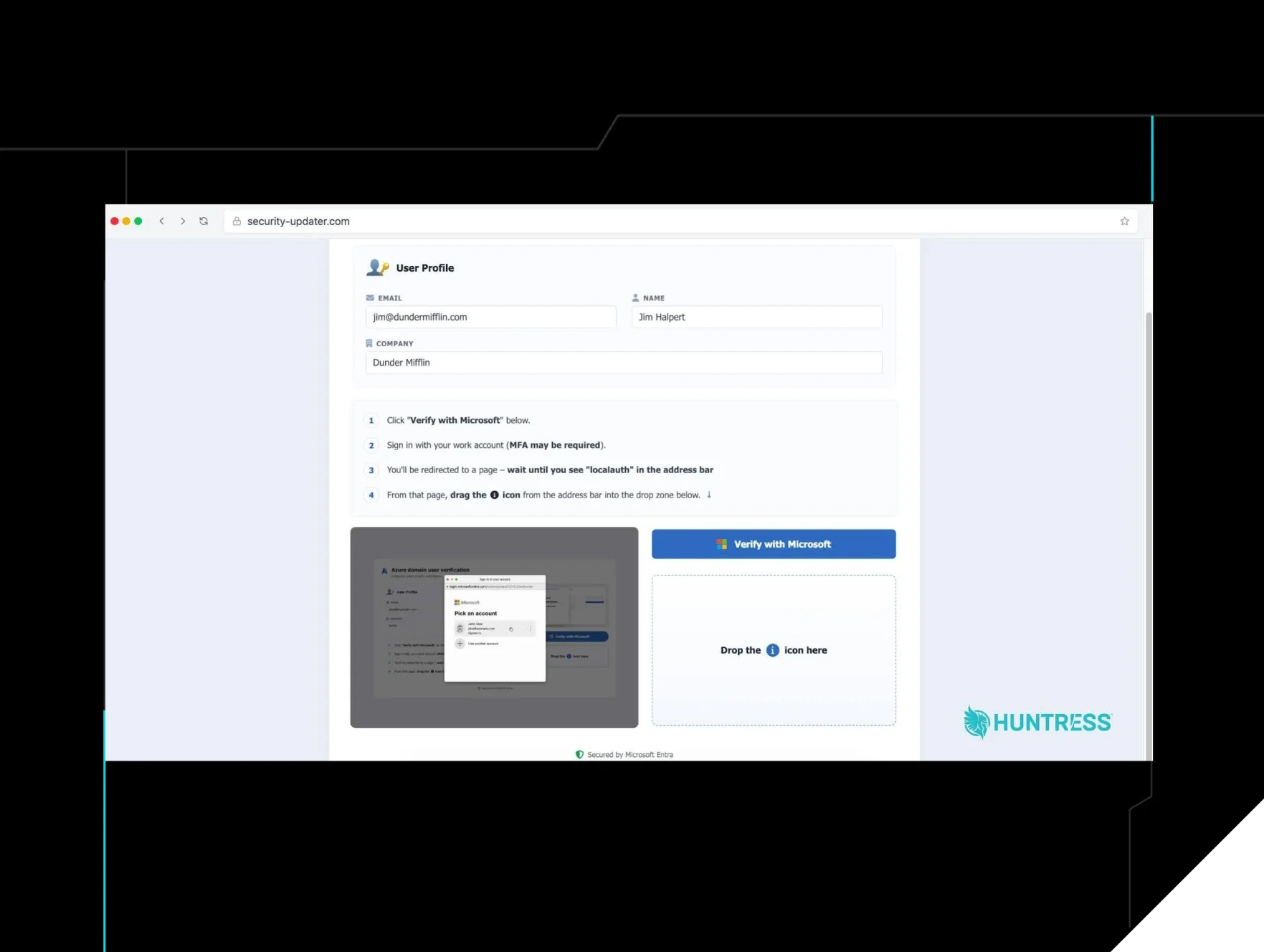
Huntress details ConsentFix, an evolution of ClickFix that abuses Microsoft 365 OAuth sign-in flows: victims are phished via password-protected Dropbox or DocSend lures, shown a fake Microsoft sign-in page, and tricked into dragging a localhost callback link into their browser, which exfiltrates OAuth tokens and hijacks the session without needing a password or triggering MFA. A cybercrime forum post published the full technique with working code and infrastructure such as Cloudflare Pages, workers.dev, and Pipedream webhooks, and showed attackers using LinkedIn, ZoomInfo, and Hunter.io to profile victims before sending lures.
huntress.comarticleAdded 3 Sep 2026, published 29 Jun 2026



Showing 60 of 67
Show more