
 rapid7.comwriteup
SMTP is the key: BPFDoor and AVERAT hitting the network edge
Rapid7 details a new BPFDoor campaign targeting telecom and network-edge appliances (ShareTech, SpamSniper mail gateways) and a six-sample Linux RAT family dubbed AVERAT found on compromised Taiwanese CPE (Synology NAS, a NetKlass device, a Dahua DVR). The writeup reconstructs the Rapid7 BPFDoor controller's HTTP-tunneled trigger mechanism, a fileless ShareTech dropper that stages binaries as ntpdate/udevds and deletes them while processes keep running, a BPF Rekoobe variant that hides inside SMTP port-25 traffic, and AVERAT's RC4-derived config/C2 scheme — tying the infrastructure to the broader China-nexus ORB (Operational Relay Box) device pattern described in CISA/NCSC-UK advisory AA26-113A. It closes with detection guidance for unlinked/deleted process execution, dropper staging artifacts, and port-25 C2 callbacks, plus full IOC and ATT&CK tables.
What it is
BPF Rekoobe variant embedded in a BPFDoor campaign targeting SpamSniper (Korean anti-spam) mail gateways, plus the ShareTech dropper installer and AVERAT RAT configuration internals — three mechanisms the existing summary names but doesn't explain.
How it works
The Rekoobe sample attaches a 26-instruction BPF filter that sniffs TCP/UDP/SCTP IPv4 and UDP IPv6 traffic where both source and destination port equal 25. It authenticates magic packets against a hardcoded 32-byte sequence and uses a repeating-key XOR (uvTIgh47,@#R) to decrypt strings and command tokens. The C2 handshake begins with a 12-byte sequence that decrypts to %wGvo4GL62p*. The reverse shell spoofs the process name /sniper/autorun/rblsmtpd --start -n 9 (a real qmail RBL daemon name) and connects back on port 25.
The src=25/dst=25 choice is deliberate: firewalls in front of mail appliances commonly allow ACCEPT tcp --sport 25 --dport 25 for MTA relay, so the magic packet reaches the raw socket before stateful inspection ever sees it.
The dropper's install branch is gated on a precondition: it only fires if /tmp/flag already exists AND the target .php script does not. It writes a shell script to /HDD/ms6x2xTo64/updIptable.php, chmods it 0777, and runs it via system() — which requires /HDD to be both writable and exec-capable (a noexec mount causes EACCES with no fallback). The script stages ntpdate and udevds into /sbin, runs them, and deletes them after 10 seconds. One of the two re-launched binaries is the dropper itself; on re-exec it finds the .php already present, fails the gate, and becomes a 2-second watchdog that recreates the script and marker file execProcEnd if either vanishes — explaining the apparent lack of persistence code (the appliance's own /addpkg/sbin/ startup relaunches it at boot).
AVERAT's 276-byte config blob derives an RC4 key from its own first 16 bytes folded with a reverse XOR cascade; the resulting S-box is used directly as keystream, with each field's byte-parity selecting bitwise-inversion or nibble-rotation before XOR. Across all six samples, the MAC key and aux key are byte-identical; only one stream key is shared between a pair — indicating shared build infrastructure but per-deployment key rotation.
Preconditions / Affected
SpamSniper appliances with firewall rules permitting port-25 MTA relay traffic (src=25/dst=25) bypass stateful inspection entirely. ShareTech dropper requires /HDD mounted exec-capable; a noexec mount blocks installation outright.
What to do
- Alert on
.dbstate files and on/HDD/ms6x2xTo64/, any.php-named file starting with#!/bin/sh, or a file literally namedexecProcEndcontaining the stringend. - Detect the staging sequence as a process-tree pattern:
sh -con a.phppath →cp/chmodinto/sbin→rm -rfof the same path within ~10 seconds. - Review firewall rules permitting
tcp --sport 25 --dport 25; this specific rule is the bypass path for the Rekoobe magic packet. - Flag outbound SMTP from an appliance to mail-role hostnames resolving to consumer/embedded devices.
Caveats
Rapid7 states this is a reconstruction of source code/behavior from samples, not a vendor-confirmed account; attribution to the China-nexus ORB pattern is explicitly a device-class similarity, not confirmed membership in any named ORB network (LapDogs/UAT-7810, SPACEHOP, FLORAHOX).
Organisations named here
- AA26-113A
- AS3462
- Chunghwa Telecom
- FLORAHOX
- LapDogs/UAT-7810
- Rekoobe
- ShareTech
- SPACEHOP
- Synology DSM
- Tinyshell
Technologies named here
- Rapid7 BPFDoor controller
- SpamSniper
- ShareTech appliances
- Suricata/Snort
- AVERAT extractor
- Synology NAS
- Rapid7 Intelligence Hub
- MariaDB 5.5.62
- NetKlass Technology appliance
- Dahua DH-XVR5116HS-I3
- Linux
- eBPF
- YARA
- MITRE ATT&CK
- PHP
Techniques named here
- Raw packet socket / BPF filter magic-packet trigger
- Process masquerading / argv spoofing
- Fileless / unlinked process execution
- HTTP/HTTPS tunneling of C2 trigger
- Protocol mimicry / C2 over SMTP
- Custom/hand-built TLS handshake
- String/config obfuscation
- Anti-forensics / history suppression
- Dispatcher self-termination on invalid command
- Compromised edge devices as operational relays
- Gated local installation / watchdog re-execution
Threat actors named here
- BPFDoor
- AVERAT
- BPF Rekoobe
- Tiny Shell
- ShareTech dropper
- China-nexus ORB networks
Related in Malware & RE

 huntress.comwriteup
Reverse Engineering the Six Stages of MacSync Stealer and RAT
 huntress.comwriteup
Post-DEF CON Phishing Uses Malicious Google Doc to Deliver Malware
 huntress.comwriteup
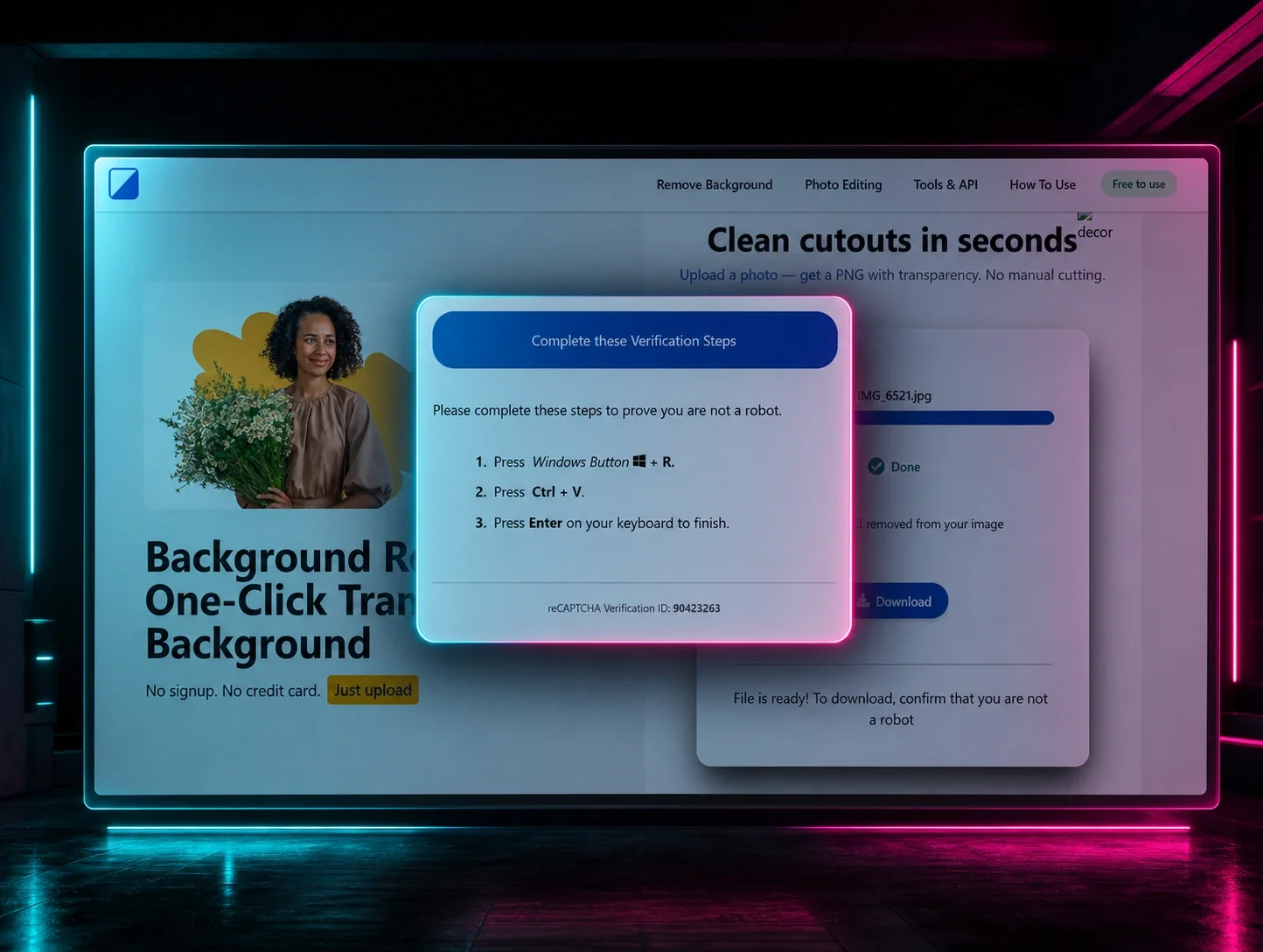
ClickFix Removes Your Background but Leaves the Malware

