 Android security checklist: theft of arbitrary files | Oversecured Blog
Oversecured's Android security checklist on arbitrary file theft from an app's private storage. It covers implicit intents (PICK, GET_CONTENT) returning file:// or content:// URIs, SEND/SEND_MULTIPLE share activities, exported and non-exported FileProviders, path traversal via Uri.getLastPathSegment, WebView, and local NanoHTTPD servers. Each case has vulnerable code, an attacker PoC and fixes such as /proc/self/fd path checks and narrow files-path entries.
 oversecured.comarticleAdded 29 Oct 2026
 Discovering vendor-specific vulnerabilities in Android | Oversecured Blog
Oversecured describes extending its Android scanner to system APIs and to Samsung's Android build, after comparing Google and Samsung framework JARs and about 400 system services. It explains AIDL service permission checks and new control-flow analyses. Examples include Samsung's unchecked semIsBackupEnabled(), a broadcast that reboots the device, and a LaunchAnyWhere in Settings. Samsung had fixed over 60 reported issues.
oversecured.comwriteupAdded 29 Oct 2026 Content Providers and the potential weak spots they can have | Oversecured Blog
Oversecured's Android security checklist for Content Providers covers insecure FileProvider path configs, path traversal via decoded Uri.getLastPathSegment(), mismatched readPermission/writePermission, proxying requests to more privileged providers, SQL injection across a shared database, and sensitive actions in providers. Each case has vulnerable manifest and Java code, an attacker PoC and remediation. Real cases from Google and Samsung devices are cited. The page text was truncated near the end.
oversecured.comarticleAdded 29 Oct 2026 Introducing MavenGate: a supply chain attack method for Java and Android applications | Oversecured Blog
MavenGate is Oversecured's research on hijacking Maven dependencies by buying expired domains behind groupIds on Maven Central and JitPack. It found 6,170 of 33,938 checked domains (18.18%) vulnerable, and tested the attack with its own com.oversecured:hello-world library. It lists defenses (Gradle verification-metadata.xml, PGP signatures) and proposes changes to repository signing.
oversecured.comwriteupAdded 29 Oct 2026 Oversecured Apps Care. Part 1: Vulnerability disclosure of 225 Google apps | Oversecured Blog
Oversecured Apps Care, Part 1 (21 March 2024) publishes scanner results for about 224 Google Android apps, drawn from a wider scan of over 6,000 public APKs from 1,000+ companies. Tables per device image (phone, Wear OS, Android Automotive, Android TV) give package names, three finding counts and report links, including android, com.android.settings, gms and Play Store. It invites researchers to report issues to Google for rewards.
oversecured.comarticleAdded 29 Oct 2026 20 security issues found in Xiaomi devices
Oversecured's write-up of 20 vulnerabilities in Xiaomi apps and system components, reported to Xiaomi between 25 and 30 April 2023. Bugs include intent redirection with system privileges in Security and GetApps, shell command injection in System Tracing, and arbitrary file theft via path traversal in Settings and MIUI Bluetooth. Each has a PoC. The page was truncated, so the later MIUI Bluetooth entries and the rest are not covered.
oversecured.comwriteupAdded 29 Oct 2026 Disclosure of 7 Android and Google Pixel vulnerabilities
Oversecured discloses seven Android vulnerabilities, two of them Pixel-specific, all reported to Google and fixed except one low-severity WebView case. They are the Camera geolocation leak (CVE-2024-0017), a VPN bypass list change (CVE-2023-21383), a Bluetooth permission check flaw (CVE-2024-34719), the WorkSource parcel mismatch (CVE-2023-20963, exploited in the wild by the Pinduoduo app), Device Admin HTML injection (CVE-2021-0600) and a ContentProvider.openFile() caller-context bypass (CVE-2023-21292). Each has root cause and PoC code.
oversecured.comwriteupAdded 29 Oct 2026 Inside mobile taint analysis: how source-to-sink tracking finds real data-leak paths | Oversecured Blog
Oversecured explains taint analysis for Android and iOS apps and contrasts it with pattern-matching SAST such as MobSF. It covers source, flow and sink, cross-component tracking over Intents, flag-based sanitizer modeling and implicit intent simulation. The case study is an unsafe Class.forName().newInstance() on a Serializable transportFactoryClassName field in Google's com.google.auth.oauth2 credential classes, which Google fixed with a $3,133.70 bounty.
oversecured.comarticleAdded 29 Oct 2026 Android deep link vulnerabilities: how intent filters lead to account takeover | Oversecured Blog
Oversecured's article on Android deep-link vulnerabilities covers five patterns: custom scheme hijacking, open redirect into WebView, limited and full intent redirection, and domain takeover via an expired whitelist entry. It shows bypass payloads, intent selector abuse, and the HierarchicalUri reflection bypass. It also compares what SAST and DAST can find and gives a checklist for pentesters.
oversecured.comarticleAdded 29 Oct 2026 Vulnerabilities that lead to account takeover in banking and fintech mobile apps | Oversecured Blog
Oversecured guide to eight vulnerability categories that lead to account takeover in mobile banking and fintech apps: WebView JavaScript bridge token leakage, Intent Redirection, hardcoded tokens, deeplink hijacking, insecure token storage, localhost OAuth listeners, AIDL abuse and weak biometric auth. It includes a WebView PoC based on Samsung SmartThings CVE-2022-30746 and maps findings to OWASP MASVS, PCI DSS and PSD2. It argues taint analysis plus dynamic PoC is needed to find multi-component chains.
oversecured.comarticleAdded 29 Oct 2026 SDK security in mobile apps: the attack surface your team didn
Oversecured guide to SDK security in mobile apps, built around Microsoft's April 2026 disclosure of an intent redirection flaw in EngageLab's EngageSDK (50 million installs, fixed in 5.2.1). It covers SDK attack surfaces (exported components, WebViews, deep links, hardcoded secrets, payment crypto), a canhub image cropper file-overwrite example, why source-only SAST misses SDK code, and MASVS and PCI DSS expectations.
oversecured.comarticleAdded 29 Oct 2026 What changed when mobile security stopped being theoretical
An Oversecured Head of Engineering, coming from 20 years of web work, describes four mobile security risks that became concrete after seeing real production apps. These are old vulnerable binaries that stay installed after a fix, secrets embedded in client code, Keychain/Keystore guarantees that are weaker than assumed with tokens leaking via logs, and deep links or exported components acting as public endpoints. It ends with advice: test the shipped artifact, verify the full data lifecycle, and build server-side containment.
oversecured.comarticleAdded 29 Oct 2026 PCI DSS and Mobile Apps: A Simple Guide | Oversecured Blog
Guide to PCI DSS v4.0.1 scope for mobile apps, with a mapping of common Android and iOS finding types to the requirements they break (Req 2, 3, 4, 6, 7). It covers which app behaviors bring an app into scope and gives three anonymized cases: cleartext HTTP in a vendor native library, hardcoded keys in a third-party SDK, and an implicit Intent leaking data. It argues for testing the shipped binary and keeping a current component inventory.
oversecured.comarticleAdded 29 Oct 2026 Fake crypto app on Apple App Store linked to $23K wallet theft
Padre Terminal, a fake Solana meme-coin trading app on the Apple App Store, drained about $23,000 from 27 Solana wallets after users imported private keys, per blockchain investigator Iris. The app has been removed, but the drainer stayed active; Iris traced funds to two attacker wallets holding 229.66 SOL. Iris also flagged four other suspected impersonator apps (Axiom Pro: Focus, GMGN AI, HyperTerminal-HyperliquidTools, Pump Fun Tokens & Analitycs).
 bleepingcomputer.comarticleAdded 30 Oct 2026, published 29 Oct 2026
- Managed for Malice: How Attackers Turn MDM into Remote Access
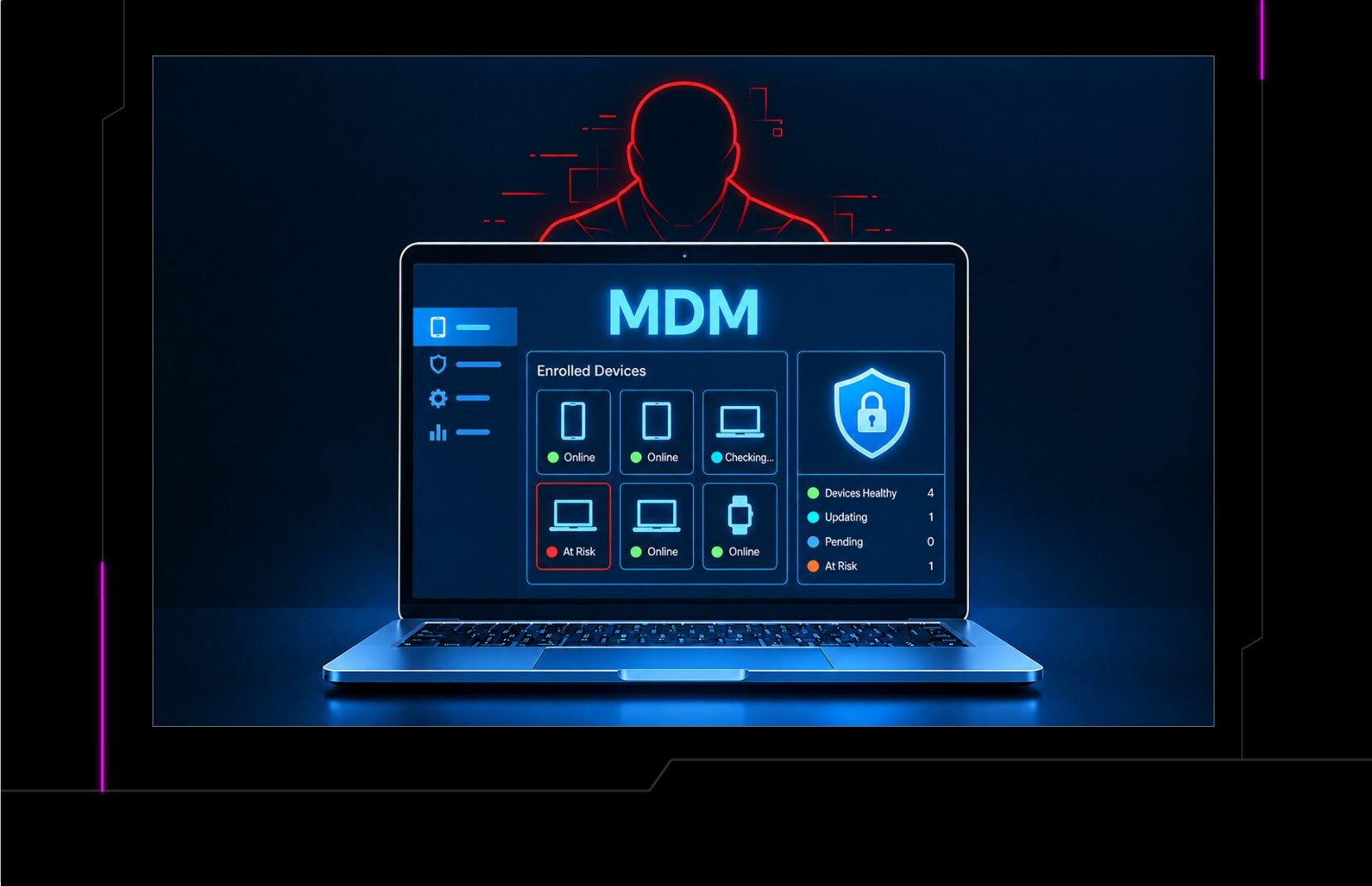
Huntress describes two incidents where attackers enrolled victims in attacker-controlled MDM tenants (Hexnode and Rippling) and used them to push ScreenConnect as SYSTEM. One began with a fake DocuSign MSI that bundled Hexnode; the other with a fake Teams calendar link leading to Rippling enrollment. Removing ScreenConnect did not stop reinstalls. The post lists IOCs, a detection chain and mitigations.
 huntress.comwriteupPublished and added 28 Oct 2026
 iOS, macOS 27.2 Patch 286 Bugs; Fix for Exploited Flaw Backported to iOS 18
Apple's 27.2 releases fix 286 vulnerabilities across iOS/iPadOS (163) and macOS Golden Gate (263), with memory corruption in WebKit and the kernel, sandbox escapes, Gatekeeper bypasses and a remote code execution bug in Remote Management. iOS and iPadOS 18.7.11 backport the fix for CVE-2026-86950, an exploited zero-day found by Meta's product security team and first patched in 26.7.1. Patch counts for tvOS, watchOS, visionOS, Safari and the 26.7.2 and Sequoia 15.8.2 releases are also listed.
 securityweek.comarticlePublished and added 27 Oct 2026
 LINE-Break: Cryptanalysis and Reverse Engineering of Letter Sealing
LINE-Break is a security analysis of Letter Sealing v2, the custom end-to-end encryption protocol in the LINE messenger. A TLS man-in-the-middle attacker or malicious server can replay, reorder and block messages undetected, and colluding users can forge message authorship in one-to-one and group chats. Stickers and URL previews leak plaintext. The attacks were verified on the real iOS app and an independent implementation.
 eprint.iacr.orgpaperPublished and added 26 Oct 2026
 Dutch Police Arrest Two Over NFC Relay Attacks That Drained $400,000+ From Bank Accounts
Dutch police arrested two men, aged 23 and 25 from Vaassen and Ede, on October 6 over a bank helpdesk fraud that took over €380,000 from 170 victims. Callers played AI-generated bank audio, then a fake bank employee had victims install an app and tap their card to the phone. The app read the NFC chip data and relayed it to an accomplice at an ATM. Police seized the servers.
securityweek.comarticlePublished and added 26 Oct 2026 Apple Security Research Device
The Apple Security Research Device (SRD) program gives vetted researchers a specially fused iPhone for iOS security research without bypassing protections. It allows shell access, running any tools, choosing entitlements and customizing the kernel. All iOS and iPhone components are in scope except Apple Pay and third-party apps. Findings are automatically considered for Apple Security Bounty, with bonuses for preview and beta software.
 security.apple.comotherAdded 25 Oct 2026, published 24 Oct 2026
 Signal Vulnerability Lets Malicious Callers Block Hang-Ups
CVE-2026-113380 (CVSS 9.3) is a flaw in RingRTC, the WebRTC-based library behind Signal voice and video calls. A remote peer can flood the call's finite state machine event queue, so the victim's hang-up waits behind junk and audio and video tracks stay live. Fixed in RingRTC 2.72.0 on 4 September; a researcher published details and a conceptual PoC afterward.
securityweek.comarticlePublished and added 22 Oct 2026 Israeli Ad Firm Doubled as Candiru’s Zero-Click Spyware Delivery Channel
SecurityWeek summarizes Citizen Lab's AdFection report: Israeli ad firm Discover-Tech, via its Controlium platform, used targeted ads in RTB auctions to de-anonymize, fingerprint and zero-click infect devices with Candiru spyware. At least 45 Al Jazeera devices were targeted in 2024–2025, and an exposed server held four billion bid records spanning ~200,000 sites and apps. Google, IAB Europe, Beeswax and Eskimi cut off the firm; Citizen Lab recommends blocking targeted ads at the gateway.
securityweek.comarticlePublished and added 17 Oct 2026 Hackers Jailbreak iPhone 18 Pro on Stage, and It Survives a Reboot
Reports that Calif.io demonstrated an untethered jailbreak of an iPhone 18 Pro on iOS 27.0.1 at Hexacon in Paris, showing root SSH access after a reboot and passcode unlock. The vulnerabilities are unnamed and no tool is public; Calif says it will publish later. The article notes Calif's prior use of Claude and Mythos Preview for exploit development, Apple's iOS 27 notes crediting Calif for two unrelated crash bugs, and the Apple mitigations (sandbox, PAC, secure boot chain) such a chain must defeat.
 decrypt.coarticlePublished and added 16 Oct 2026
 Novel Android RAT ‘Hirudo’ Replaces Banking Apps With Trojanized Copies
SecurityWeek covers ThreatFabric's findings on Hirudo, an Android banking trojan/RAT delivered via droppers hidden in fake shopping, adult video and short drama apps. It replaces eight Indonesian banking apps with modified copies containing a hooking engine that spoofs signing certificates and hides Accessibility services, screen capture and Play Integrity checks, while providing WebRTC screen viewing, camera access and SMS theft. ThreatFabric advises banks to enforce Play Integrity server-side, use behavioral analytics, treat Accessibility signals as risk inputs, and keep backend transaction-risk controls.
securityweek.comarticlePublished and added 15 Oct 2026 SDR (Signals Intelligence) for Hackers: Scanning Wireless Devices Using FieldWatch
Overview of FieldWatch, a free open-source Android app that passively listens to Wi-Fi and Bluetooth with the phone's own radios and matches them against an editable catalog of about 250 device signatures (trackers, drones, cameras, body cams, mesh radios). It supports alerts, recorded sessions, path maps, Remote ID drone and pilot location, GNSS interference/spoofing detection and export to TAK/ATAK. The article also covers its limits (no direction finding, no Bluetooth Classic, cellular or full Wi-Fi traffic, pattern matches only) and sideloading from the official GitHub repo on Android 10+.
 hackers-arise.comarticlePublished and added 13 Oct 2026
- morluto/awesome-reverse-engineering
awesome-reverse-engineering is a CC0 curated list of reverse-engineering tools and learning resources, organized by task: triage, native analysis, debuggers, instrumentation, deobfuscation, malware analysis, mobile, firmware, file formats, games, diffing, symbolic execution, lifting and AI agents. Each entry notes licensing, maintenance status and prerequisites. It also covers MCP integrations, CTF practice sites and related awesome lists.
 github.comrepoAdded 27 Oct 2026, published 9 Oct 2026
- Pre-Baked Firmware Malware Hits Budget Android Devices in 150+ Countries
SecurityWeek reports on Bitdefender's analysis of 'Midnight Mimosa,' a firmware-level malware campaign preinstalled on budget MediaTek-based Android devices across 150+ countries, giving attackers system-level privileges to silently install/remove apps and run ad fraud and click fraud botnets. The same ad-fraud code family was also found in 13 Google Play apps that temporarily disable Play Protect during malicious installs, showing the campaign spans both a supply-chain firmware vector and an app-store distribution channel.
securityweek.comarticlePublished and added 9 Oct 2026  Google Pixel 10 Exploits Earned Hackers $560,000 at Pwn2Own
Coverage of Pwn2Own Ireland 2026 results: contestants earned over $1.2 million total, with Google Pixel 10 exploits alone paying out $560,000 across three teams. Ikotas Labs won the full $300,000 Pixel payout by chaining multiple bugs for remote compromise, while Tim Becker/Yves Bieri and Dimitrios Valsamaras/Ken Gannon earned reduced payouts for exploits involving previously known flaws. Other notable rewards went for hacks of the Samsung Galaxy S26, Sonos Era 300 speaker, Philips Hue Bridge Pro, Home Assistant Green hub, Lexmark/Brother/Canon printers, Garmin Index BPM, and AI infrastructure including Oracle Autonomous AI Database, OpenAI Codex, Nvidia Dynamo, and LiteLLM.
securityweek.comarticlePublished and added 9 Oct 2026- Exploit Reversing #10: iOS Security Research (Part 1)
First installment of a new iOS-focused arc in Alexandre Borges's "Exploit Reversing" series, detailing how to build a practical iOS vulnerability-research lab (Mac host, Apple Virtualization.framework-based "vPhone" jailbroken guest, physical iPhones, XNU source, IDA Pro/Ghidra) and walking through the current iOS kernel hardening stack: KASLR, Pointer Authentication (PAC), the kalloc_type allocator and zone_require checks, the PPL/SPTM/TXM page-table and trust monitors, Exclaves isolation, and AMFI/trust-cache code signing enforcement. It also references the public Titan PPL/SPTM bypass (A14–A17 devices, iOS 16.1–17.4 beta 3) as the state of the art for defeating these protections. Part of a long-running, actively published series on Windows, iOS, and hypervisor exploitation.
 exploitreversing.comarticleAdded 8 Oct 2026
 Android’s October 2026 Updates Patch 25 Vulnerabilities
SecurityWeek summarizes Google's October 2026 Android Security Bulletin (2026-10-01 patch level), which fixes 25 vulnerabilities — 7 in Framework and 18 in System, including 7 critical bugs. The most severe is a critical local privilege-escalation flaw in System requiring no user interaction or extra execution privileges; the bulletin also covers a System RCE bug, Google Play system updates for Telephonycore/WiFi, and separate Pixel and Android Automotive OS fixes (including critical Bluetooth, GDMC, and GSA issues). Google reports no evidence of in-the-wild exploitation.
securityweek.comarticlePublished and added 7 Oct 2026 Pixel 11 doesn't yet meet the GrapheneOS security standards and may be skipped
GrapheneOS reports that its partial Pixel 11 port must be abandoned because the device lacks working ARM hardware Memory Tagging Extension (MTE) support in software, firmware, and likely hardware, despite Pixel 8/9/10 supporting it since 2023. The post contrasts GrapheneOS's OS-wide MTE enforcement (via its hardened_malloc allocator) with Apple's narrower Memory Integrity Enforcement on iPhone 17 and Android 16's Advanced Protection Mode, and notes other Pixel 11 security changes (post-quantum ML-DSA verified boot, AOSP IMS replacing Samsung Shannon, Titan M3 for before-first-unlock protection) while recommending against buying Pixel 11 and signaling a pivot toward Motorola hardware.
 discuss.grapheneos.orgwriteupPublished and added 5 Oct 2026
Showing 30 of 59
Show more