 socket.devwriteup
Socket: Fake Braintree NuGet Package Skims Credit Cards
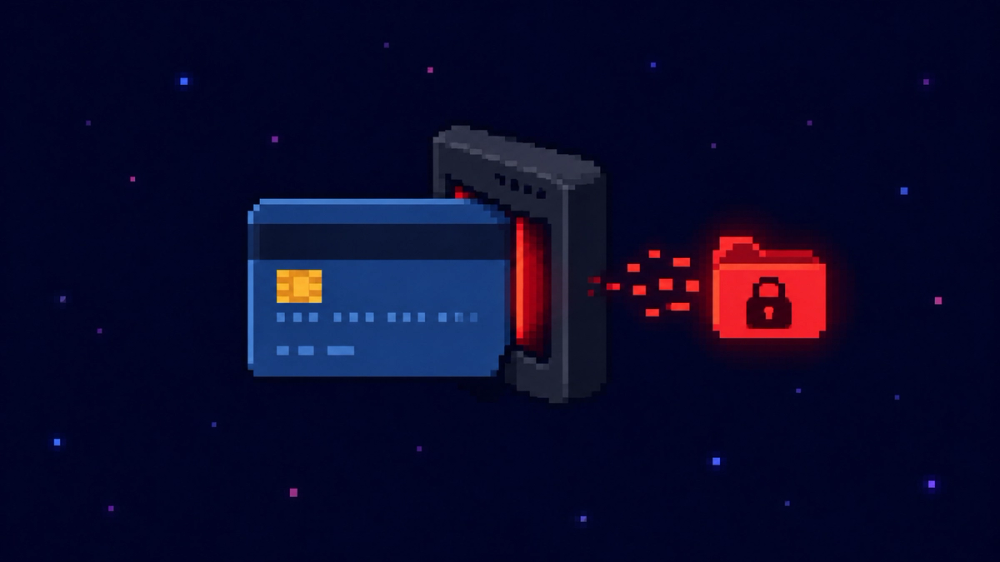
Socket's Threat Research team dissects Braintree.Net, a typosquatted NuGet package impersonating PayPal's official Braintree .NET SDK, which hooks credit card creation/transaction methods to exfiltrate PAN, CVV and merchant API keys (merchantId/publicKey/privateKey) to api.348672-shakepay[.]com. A companion package, DependencyInjector.Core, adds a .NET module-initializer-based harvester that unconditionally steals environment variables, appsettings.json/connection strings, and cloud/container metadata, and is also pulled in transitively by sibling typosquats SipNet and SipNet.OpenAI.Realtime. The writeup details the download-count inflation via 120 empty placeholder versions, production-only exfiltration gating, XOR-obfuscated C2 endpoint, and provides full IOCs, file hashes, and remediation steps.
What it is
Braintree.Net, a malicious NuGet package typosquatting PayPal/Braintree's official Braintree .NET SDK (legit package is on the 5.x line, published under braintreepayments). The typosquat uses a mismatched 3.x version scheme; the genuinely malicious releases are 3.35.8–3.36.1, with the first malicious version published July 3, 2026 (Socket flagged it ~10 minutes after publication). It exfiltrates live card data, Braintree merchant API keys, and host secrets to api.348672-shakepay[.]com.
How it works
Three independent exfiltration paths fire at different lifecycle points:
flowchart TD
    A[Assembly load] -->|Module init| B[DependencyInjectorLoader.Load / DependencyInjector.Core.AutoInitializer]
    B --> C[POST env/config/cloud metadata → /api/analytics/report]
    D[gateway.PrivateKey = ...] -->|only if Environment == PRODUCTION| E[POST merchantId, publicKey, privateKey → /api/account]
    F[gateway.CreditCard.Create] --> G[card data skim]
The package ships real-looking Braintree.dll assemblies (net452, netstandard2.0, net8.0, net9.0, net10.0) mirroring the real API surface, so gateways instantiate and return plausible Result<T> objects with no runtime errors. The bundled README is copied from official docs and even says Install-Package Braintree (not Braintree.Net). The private-key theft path only triggers when Environment == PRODUCTION.
Preconditions / Affected
Any app that references Braintree.Net (rather than Braintree). The companion package DependencyInjector.Core ≥ 1.4.1 (pulled in by Braintree.Net 3.36.0+) carries a follow-on token-harvester payload. Transitively compromised downstream packages:
sipnet@12.8.4,12.8.5,12.8.6,12.8.7sipnet.openai.realtime@12.8.3(indirect, viasipnet)
What to do
- Remove
Braintree.NetandDependencyInjector.Corefrom any project; use the officialBraintreepackage (Install-Package Braintree/dotnet add package Braintree). - Audit for the affected
sipnet/sipnet.openai.realtimeversions above. - Hunt for the malicious class names absent from the legitimate assembly:
CardOperationLogger,DependencyInjectorLoader, and any reference toDependencyInjector.Core. - Block/alert on outbound traffic to
api.348672-shakepay[.]comand paths/api/analytics/report,/api/account. - Treat any merchant
privateKey/publicKey/merchantIdand host secrets touched by an affected build as compromised — rotate them.
Caveats
The headline reach is heavily inflated: of ~14M reported downloads, ~11M is padding across 120 empty 0.0.x placeholder versions (~93,300 each, all published 2025-10-09) containing only a .nuspec and no DLL. The genuinely malicious releases (3.35.8–3.36.1) have only ~334 real installs — a ~32,900x gap between the download count and the actual blast radius. Socket reported the package and requested removal/publisher suspension, but the page does not confirm takedown.
Organisations named here
- api.348672-shakepay.com
- Shakepay
Technologies named here
- Braintree.Net
- Socket AI scanner
- Socket Threat Research team analysis
- Braintree
- DependencyInjector.Core
- SipNet
- SipNet.OpenAI.Realtime
- NuGet
- .NET
- Socket
- Cloudflare
Techniques named here
- Typosquatting
- Metadata/author impersonation
- Namespace pre-squatting / download count inflation
- Module initializer auto-execution
- Payment gateway method hooking
- Credential exfiltration via property setter
- Environment/configuration/secret harvesting
- Environment-based execution gating
- Silent failure / error suppression
- String/endpoint obfuscation
- Transitive/companion dependency payload delivery
- Hardcoded C2 infrastructure with API key auth
Threat actors named here
- braintree nuget.org account
Related in Supply Chain






