 huntress.comarticle
From Cookies to Keys: The Threat of Session Hijacking
Huntress breaks down how session hijacking has overtaken password theft, with infostealer malware (e.g. RedLine) harvesting browser cookies/tokens for Google Workspace, Microsoft 365, Slack, GitHub, and AWS. It details the dark-web economy for these tokens (pricing from $5 logs up to $1,000+ "Developer Access Bundles" resold by initial access brokers), the replay tooling used (OpenBullet, StealyBot), and defensive measures like short-lived sessions, Secure/HttpOnly cookies, and canary credentials.
What it is
A Huntress explainer on session hijacking as the successor to password theft (2020–2025 trend). Beyond the price data the summary already captures, the page gives two things the summary does not: the concrete attacker workflow and the specific defensive posture Huntress recommends.
How it works
A stolen session cookie/token is replayed to a service that treats it as valid proof of identity. Because the session is already authenticated, MFA is not re-prompted and no login alert fires. Critically, many session tokens stay valid even after the user resets their password — unless the session is explicitly revoked or expired by policy — giving attackers a persistence window a password change does not close.
The stated attack path, requiring no phishing or exploit:
flowchart LR
  A[Buy stealer log<br/>$5-$25] --> B[Replay session<br/>via automation]
  B --> C{MFA bypassed?}
  C -->|token treated<br/>as valid| D[Browse internal<br/>systems / drop malware]
  D --> E[Ransomware /<br/>extortion / IP theft]
Preconditions / Affected
Any service that accepts a long-lived session cookie as sufficient identity proof — Google Workspace, M365, Slack, Okta, AWS, GitHub, CI/CD. The higher-value targets called out: valid M365 sessions, Slack tokens (dedicated marketplaces after 2023 breaches), AWS IAM session tokens, Okta/Cloudflare/PingIdentity session keys.
What to do
The page's stated mitigations:
- Treat session data as privileged access — protect and monitor tokens as you would credentials.
- Implement short-lived tokens so a stolen session expires quickly.
- Explicitly revoke sessions on password reset — resetting the password alone does not invalidate active tokens.
- Monitor for anomalous authentication behavior (session replays) rather than relying on brute-force / credential-stuffing / malware-signature detection.
Caveats
The page itself notes the detection blind spot: EDR tools are typically tuned for brute force, credential stuffing, or known malware signatures — not session replays using valid tokens, which is why this technique evades them. It also hedges its own attack path, marking "Bypass MFA" as "most likely not" a true bypass but a consequence of how applications treat existing sessions. No CVE, tool version, or reproduction is provided; this is a conceptual/market overview, not an advisory.
Technologies named here
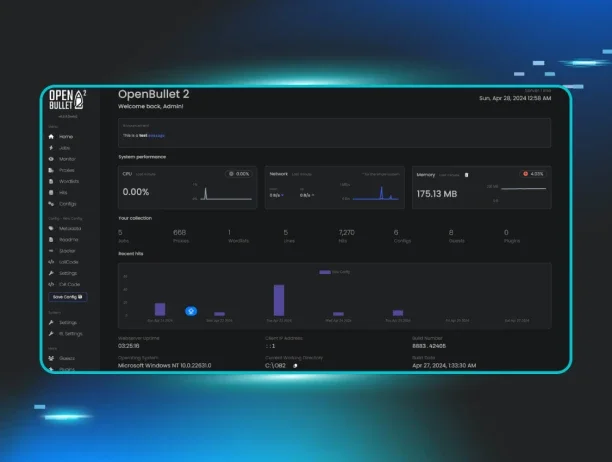
- OpenBullet / OpenBullet2
- Google Workspace
- Microsoft 365
- StealyBot
- Slack
- RDP Scanner Bots
- Stealer deployment panels + crypting services
- GitHub
- AWS
- Telegram bots
- Company Lookups
- CI/CD systems
- Geo-IP Enrichment tools
- Password managers
- Browser vault exports
- Credential Health Check tools
- Discord
- Dark Web Cross-Reference Tools
- Mattermost
- Huntress
- Cloudflare / Okta / PingIdentity
- Node.js / React apps
- Jenkins
- npm / PyPI
- git
- SSH private keys
- PostgreSQL, Stripe
- HubSpot
- SFTP servers
- Jira
- Redline
- OpenBullet
Techniques named here
- Session hijacking / session replay
- Infostealer malware deployment
- Credential stuffing / automated login replay
- Credential/log resale and upselling
Threat actors named here
- Redline
- Initial Access Brokers
- Ransomware affiliates
- Phishing-as-a-service groups
Related in Threat Intel
 huntress.comwriteup
Reverse Engineering the Six Stages of MacSync Stealer and RAT
 huntress.comwriteup
AI-Coded Malware | Analyzing Vibe-Coded AD Enumeration | Huntress

 blog.talosintelligence.comtool
Introducing CAIRN: Frontier tracking for AI-integrated malware (Cisco Talos)
 huntress.comwriteup