 huntress.comwriteup
The Crypto Wallet That Never Opened: Tampered Exodus Installer Hides a Modular RAT
Huntress dissects a trojanized Exodus crypto wallet installer (v24.33.4, unsigned MSI built with WiX) that installs a genuine wallet but patches Electron's show()/focus()/center() methods so no window ever appears, then loads a modular RAT via a hand-written reflective PE loader implemented in JavaScript using the Node.js koffi FFI library. The RAT (VNC, SOCKS proxy, browser-credential stealer, recon module) beacons over WebSockets and uses Azure Table Storage as a dead-drop C2 channel to blend into legitimate cloud traffic, while delivery abuses double-extension .pdf.js phishing, ZIP-staged JS files, and an unused search-ms/WebDAV technique; the writeup also covers multi-layer string-array/arithmetic deobfuscation and includes full IOCs and mitigation guidance.
What it is
A Huntress investigation into a trojanized Exodus Wallet 24.33.4 installer that compromised four unrelated Huntress-protected organizations between late July and mid-August 2026 (three hit on August 18 within 85 minutes, using an installer built the day before). The installer drops the real wallet but takes care that the victim never opens it, while deploying a modular RAT that targets browser credentials.
How it works / IR fingerprints
The summary covers the three delivery vectors and msiexec MSI staging. What the page adds is hunt-and-response specificity:
- The dropper MSI stays on disk. The JavaScript tries to delete the MSI after 5 seconds via
setTimeout, but that function does not exist in Windows Script Host — the call throws, an emptycatchswallows it, and cleanup never happens. During IR the MSI is very likely still in%TEMP%. - MSI filenames are labels, not indicators. Observed
jn0101.msiandjg0384.msi— two letters plus four digits, different per campaign. Do not treat the name as an IOC. - ZIP-in-Explorer fingerprint. When a JS file is run from Explorer's compressed-folder view without extraction, Explorer stages it under
%LOCALAPPDATA%\Temp\, leaving a path fragment like...Update_GS_7G0N-254V38L2350.zip.116\...js. The.zip.116\fragment is the tell. - Browser as parent process. On two
.pdf.jsendpoints the parent waschrome.exe— the file was opened straight from the browser's download bar. - The July scheduled task. An earlier July 24 intrusion had no document: a scheduled task named INetHealth launched
conhost.exe --headless powershell -ewith a Base64 blob. Huntress initially misread this as ClickFix —conhost.exe --headlessis a legitimate developer function and says nothing about how the command arrived. The decoded PowerShell downloaded nothing; the page flags this as the investigation's most useful clue but does not (in this excerpt) say what it did.
Infrastructure
- IP
35.212.159.20served the first installer and the unused third vector. - The search-ms vector redirected (HTTP 302) to
search-ms:...\\us05.org@8080\update; the@8080suffix forces the WebClient service to mount over WebDAV so listed files live on the attacker's server.us05.orgwas offline at last check. - Legitimate CDNs/domains hosted the real decoy PDFs (Storyblok;
law.georgetown.edu), so decoy-host reputation is not a useful signal.
Caveats
The page states the observed delivery methods "should not be read as a complete list of what this actor has available." The third (search-ms/WebDAV) vector was found on the infrastructure but no victim took it. One user grew suspicious when a legal brief arrived in place of an expected software update, searching "are JavaScript files spam or Trojan horses" — the lure mismatch, not the tooling, was what got noticed.
Organisations named here
- ClickFix
Technologies named here
- Exodus Wallet
- Huntress
- VirusTotal
- Windows
- Electron
- WiX Toolset 6.0
- koffi
- Task Scheduler COM API
- fs-extra
- WebClient service
- Exodus
- PowerShell
- Azure
- JavaScript
Techniques named here
- Double file extension masquerading
- Windows Script Host execution
- Decoy document display
- Silent MSI installation
- search-ms
- Trojanized/tampered legitimate installer
- MSI Custom Action masquerading via explorer.exe
- GUI hiding via Electron API overriding
- String array obfuscation with arithmetic-derived indices
- Multi-layer nested string arrays with rotation
- Reflective/manual PE loading in JavaScript
- AES-256-CBC payload decryption
- Named mutex single-instance check
- C2 over WebSockets via WinHTTP with domain-list fallback
- Dead-drop C2 via Azure Table Storage
- Host reconnaissance
- Scheduled Task persistence via COM API
- Proxy configuration tampering for exfiltration
Threat actors named here
- Unattributed threat actor
- Tampered Exodus Wallet installer / modular RAT
Related in Malware & RE
 huntress.comwriteup
Reverse Engineering the Six Stages of MacSync Stealer and RAT
 huntress.comwriteup
Post-DEF CON Phishing Uses Malicious Google Doc to Deliver Malware
 huntress.comwriteup
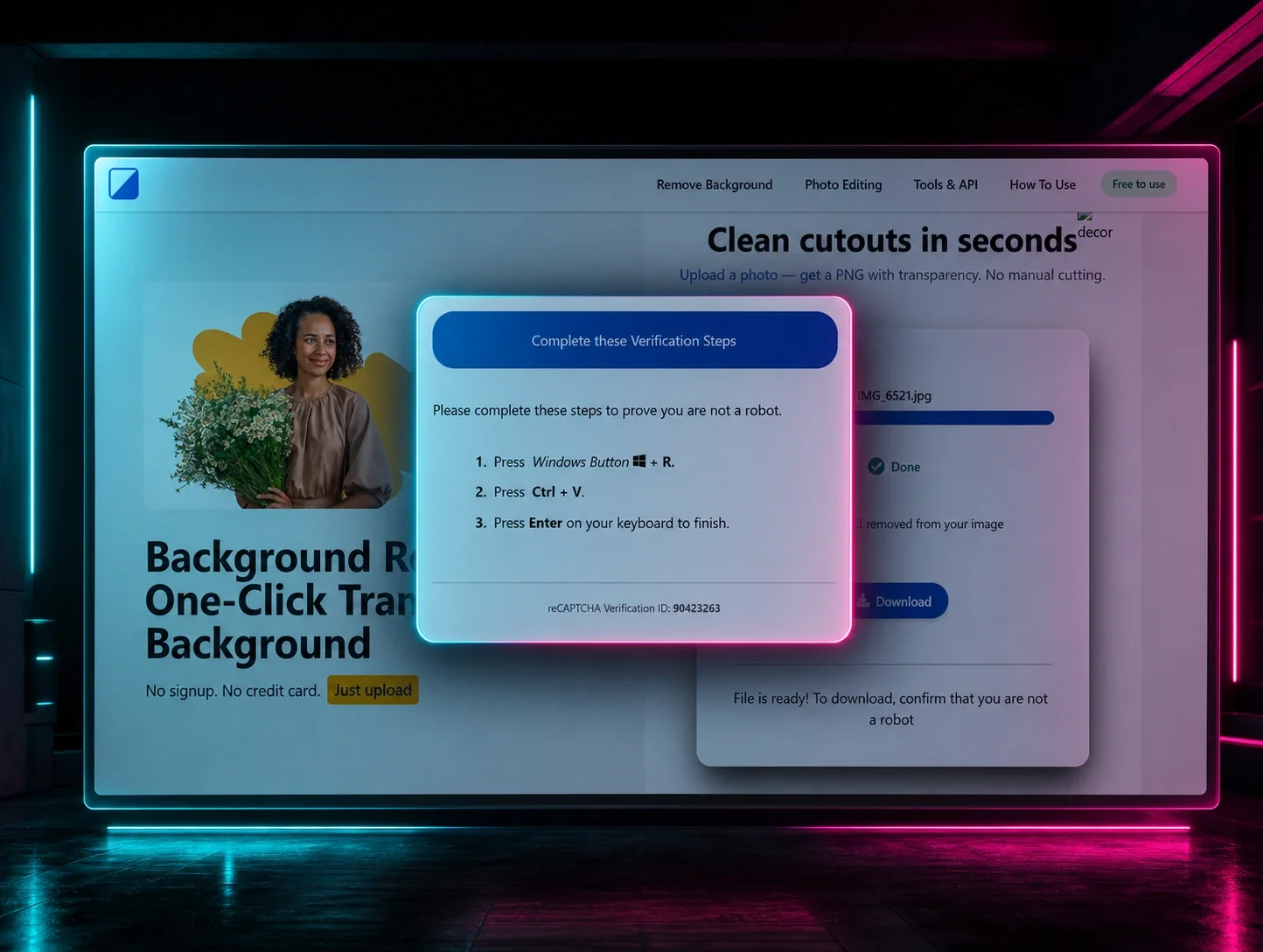
ClickFix Removes Your Background but Leaves the Malware

