 horizon3.aiadvisory
CVE-2026-20362 | Cisco Finesse Server-Side Request Forgery Vulnerability
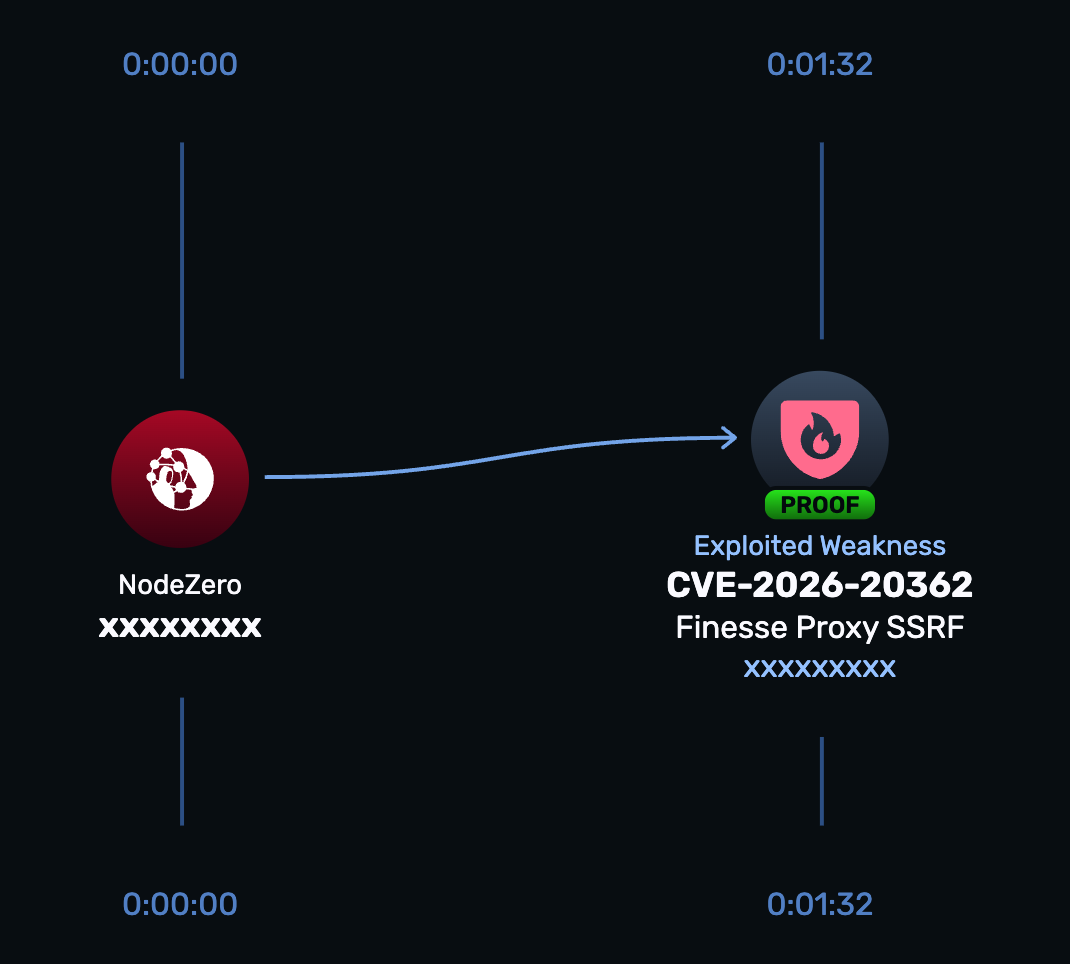
CVE-2026-20362 is an unauthenticated server-side request forgery in Cisco Finesse (CVSS 3.1 score 7.2), found by Horizon3 researchers Noah King and Brandon Peterson. The embedded Apache Shindig content proxy fetches attacker-supplied URLs, including loopback services such as the Finesse REST API at 127.0.0.1:8082, which returns SystemInfo with node hostnames and the XMPP domain. Cisco published its advisory on 7 October 2026. Fixes are planned for January and February 2027, and no workaround exists.
What it is
CVE-2026-20362 is an unauthenticated server-side request forgery in the Cisco Finesse web interface, rated CVSS 3.1 7.2 (High). Horizon3 researchers Noah King and Brandon Peterson found it. The page says it affects Finesse regardless of configuration. Cisco Unified Intelligence Center is not affected.
How it works
The cause is improper input validation in the embedded Apache Shindig content proxy. The proxy fetches an attacker-supplied URL and returns the response to the unauthenticated caller. Requests can target loopback-only or internal services. The example given is the Finesse REST API at 127.0.0.1:8082, whose SystemInfo response lists the deployment type, primary and secondary node hostnames, and the XMPP domain. The page describes the impact as infrastructure enumeration and limited sensitive information from services not reachable from outside.
Preconditions / Affected
The attacker needs network access to the Finesse web interface. No authentication or user interaction is required.
What to do
Cisco lists no workaround, and no fixed release existed as of 27 October 2026. Cisco's planned fixes are scheduled for January and February 2027. The page's version table did not come through, so check Cisco's advisory for the exact releases.
Until then, Horizon3 recommends:
- Restrict the Finesse web interface to trusted networks or authenticated VPN connections.
- Monitor for unexpected requests from Finesse servers to internal services.
- Optionally, run the NodeZero Rapid Response test Horizon3 released on 27 October 2026 to check exploitability. Re-run it after restricting access, and again after patching.
Caveats
Older branches must migrate to a fixed release. Upgrading to an affected 15.0 release does not resolve the flaw. Access restrictions and monitoring reduce exposure but do not correct the flaw. Cisco PSIRT reports no known malicious use as of 27 October 2026. Cisco published its advisory and NVD published the record on 7 October 2026.
Organisations named here
- Brandon Peterson
- CWE-918
- Noah King
CVEs named here
- CVE-2026-20362
Technologies named here
- NodeZero
- Cisco Finesse
- NVD
- CVSS
- Horizon3.ai
- Apache Shindig
- Cisco Finesse 15.0 releases (upgrading to an affected 15.0 release does not resolve the vulnerability)
- Cisco Finesse older branches (require migration to a fixed release)
- Cisco PSIRT
- CVSS v3.1
- NodeZero Proactive Security Platform
Techniques named here
- SSRF
- Egress monitoring
- Infrastructure enumeration
- Network access restriction
Related in AppSec
 github.comadvisory
Flowise MCP Security Bypass Enables RCE

 huntress.comwriteup
Inside an Oracle Database SQL Injection Attack | Huntress
github.comrepoOASIS

 blog.trailofbits.comwriteup