
 interconnects.aiarticle
The Cyber Risk Discourse is Broken
Nathan Lambert's Interconnects essay argues the Western discourse on open-weight model cyber risk is one-sided and poorly reasoned, critiquing Anthropic's report framing GLM-5.3 as an offensive cyber tool while ignoring the trade-offs of banning open weights. He contends public evidence shows closed-model APIs (e.g. OpenAI's) have caused more documented cyber incidents than open weights so far, argues banning open models without also restricting closed-model APIs would widen the offense-defense gap, and offers an account of how Chinese labs (and government registration/evaluation requirements) weigh AI risk differently than U.S. labs.
What it claims
This is an opinion essay, not research. Its operative claim is a falsifiable prediction: GLM-5.3 is the open-weight model that crosses the cyber-capability threshold Claude Mythos was previewed as representing. More than a month after its weights were released, the author sees "little public evidence that much has changed." From this they infer that even an accidental open-weight release of Mythos would have looked like "an acceleration rather than a step change in risk." The author frames the open-weight-risk camp as having made a testable prediction of "substantial, not seen before" harm to cyber infrastructure, and expects it to be proven wrong.
The essay also proposes reframing the policy question. Instead of asking whether to release open weights, ask: "what is the correct minimum amount of compute a lab should spend on safety testing before releasing each model?" The author concedes Chinese labs probably spend less than they should, or should at least be more transparent. They reject the idea that the floor should match what Anthropic or OpenAI spend. Their reference point is that comprehensive safety evaluations on a frontier model like Kimi K3 "could cost tens of millions of dollars in compute," which the labs would rather spend on training.
Evidence
The empirical basis is thin, and the author says so. The only data cited is the public record of attacks using OpenAI models, plus "FelonyBench" more broadly. The author offers three competing readings of why closed models dominate documented incidents:
- Both open and closed models are easy to misuse ("Open Unsafe, Closed Unsafe").
- Few actors attempt "loud" attacks, so closed models' stronger capabilities outweigh their porous safeguards.
- Open weights may be the best near-term diffusion tool for defense. Some sensitive government agencies can only deploy models on air-gapped networks, and open weights are the only option there.
Institutional distrust of the closed labs is supported by the HuggingFace–OpenAI incident and the Hacktron hacking of OpenAI. Neither incident is described in any detail.
On China, the author says major model releases must be registered with the government, along with evaluations. Those evaluations originated in information control. It is "unclear" whether they have expanded to cover cyber or bio risk.
Limits
- The author says they have "a lot more to learn about how the cybersecurity ecosystem works." They decline to fully endorse the defense-diffusion argument as a recommendation.
- The account of Chinese regulation is labeled "my understanding" and is unsourced.
- The essay does not engage with the technical content of Anthropic's GLM-5.3 report. It calls that work "largely reasonable" and objects only to its framing.
- The "no step change" observation covers roughly one month of public evidence. Classified-briefing counterclaims are acknowledged but cannot be checked.
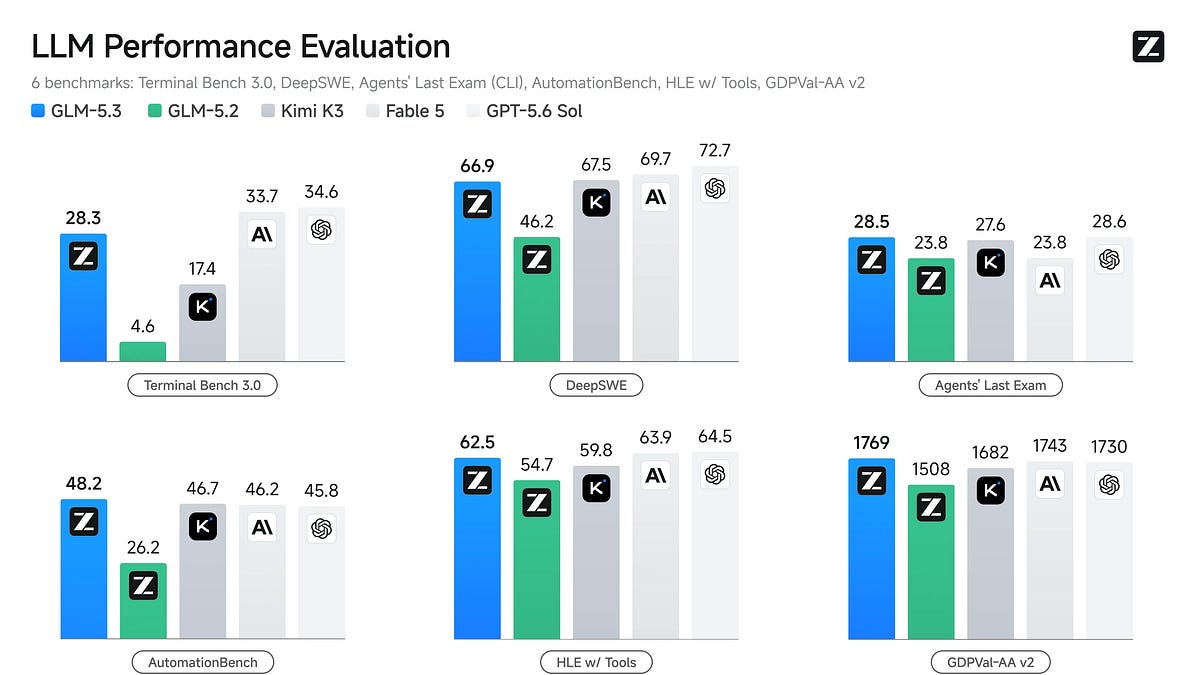
- There are no benchmarks, incident counts or compute figures beyond the Kimi K3 estimate.
Organisations named here
- Anthropic
- OpenAI
- Hugging Face
- White House
- China
- Hacktron
- Rohit Krishnan
Technologies named here
- FelonyBench
- GLM-5.3
- Claude Mythos
- Kimi K3
Also named here
- Joshua Saxe
Related in ai-policy



 futureoflife.orgarticle
Future of Life Institute AI Safety Index — Summer 2026
 interconnects.aiarticle
Lessons from the hacks
 interconnects.aiarticle