 huntress.comwriteup
Defence Impairment Olympics
Huntress SOC incident writeup detailing a threat actor who exploited Adobe ColdFusion vulnerabilities (CVE-2023-26360, CVE-2023-29298, CVE-2023-29300) to drop a steganographic webshell hidden inside an image, then returned with a full defense-impairment batch script (i.bat) that disabled IIS logging, tampered with Windows Defender, killed/deleted security services (Sysmon, filebeat, SentinelOne, DrWeb, ImmunetProtect), used Image File Execution Options to freeze logging tools, deleted ModSecurity WAF module, enumerated FileZilla and multilingual local admin groups, weakened WDigest to force plaintext credentials in memory, dumped credentials via a Mimikatz kernel driver (mimidrv.sys), deleted CLSID/WScript registry keys, and cleared Windows event logs. The piece walks through each command block with attacker rationale and closes with concrete mitigation guidance for defenders.
What it is
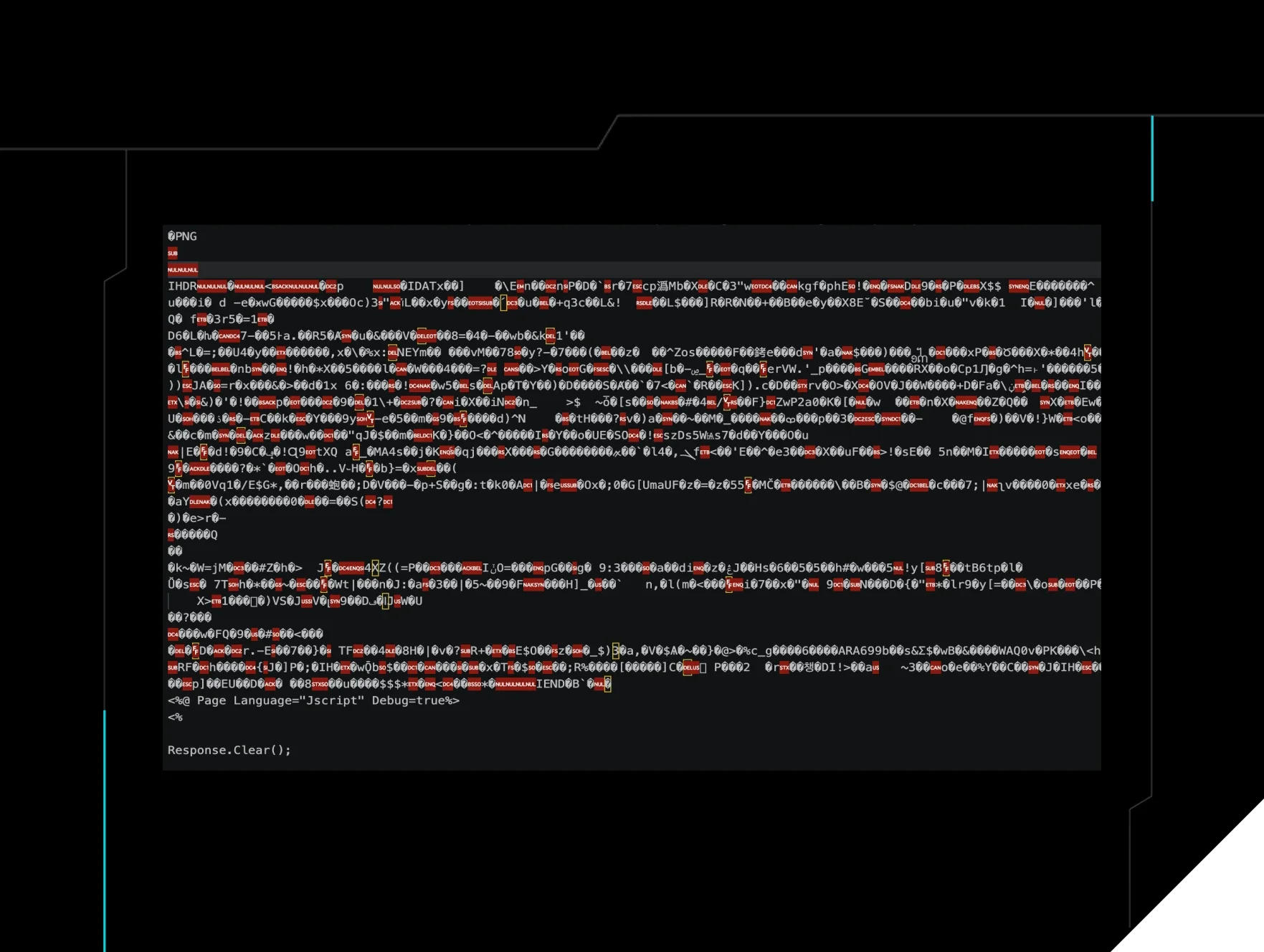
A Huntress IR case study (incident starting June 7) of a webserver compromise via Adobe ColdFusion flaws — RCE CVE-2023-26360, access-control bug CVE-2023-29298, and deserialization flaw CVE-2023-29300 — where the actor planted steganographic ASPX webshells in an IIS wwwroot\Images directory. The summary names the techniques; this page carries the concrete IoCs and the detection heuristic.
How it works
The webshell is hidden inside an image file: the .aspx renders as a normal picture in an image viewer but contains human-legible JavaScript appended at the end (visible in a text editor). Two hex-encoded strings act as operational beacons — 4F 4E 45 50 49 45 43 45 decodes to ONEPIECE (returned when the shell receives a command) and another string decodes to x_best_911 (returned when it executes one). ONEPIECE appeared in every webshell across the attack, making it a reliable cross-sample IoC.
The key detection: reconnaissance commands like whoami spawning from parent process w3wp.exe (the IIS worker process), with the webshell's directory (wwwroot\Images) in the command line. A legitimate web app serves content; it does not run OS recon, so this parent-child relationship flags a live webshell.
Preconditions / Affected
An internet-facing IIS server running vulnerable Adobe ColdFusion. CVE-2023-29298 defeats the access control that normally blocks external requests to /CFIDE/adminapi/ paths — historical logs showed hits on endpoints including setdsn.cfm, formatjdbcurl.cfm, serverinstance.cfc, and servermonitoring.cfc.
What to do
- Hunt for OS recon processes (e.g.
whoami,net) with w3wp.exe as the parent process. - Grep webshell/response traffic and files for the strings ONEPIECE and x_best_911, and for the hex sequence above.
- Review IIS logs for requests to the
/CFIDE/adminapi/_datasource/andserverinstance.cfc/servermonitoring.cfcendpoints listed on the page. - Named webshells seen:
UA4fp7R.aspx,WRBYTR5750images.aspx— inspectwwwroot\Images(or any image directory) for recently created.aspxfiles. - Do not return the server to production until remediation is fully complete and the ColdFusion vulnerabilities are patched. The reason this incident recurred is the operational failure below.
Caveats
Insufficient logging meant Huntress could not confirm the exact initial-access mechanism — the ColdFusion exploitation is inferred from historical log evidence, not directly observed. Timestomped MAC metadata means file timestamps on recovered webshells cannot be trusted for the forensic timeline.
flowchart TD
    A[Webshell detected & deleted] --> B{Remediation completed<br/>before server back online?}
    B -->|No — server restored early| C[Actor re-uploads webshell<br/>Jun 10, Jun 11]
    B -->|Yes| D[Chain broken]
    C --> A
The loop is the whole story: the server was put back online twice before remediation finished, letting the actor return on June 10 and June 11, each time adding evasion (enumeration, then timestomping).
Organisations named here
- CLSID
- Image File Execution Options
- ONEPIECE
- WDigest
CVEs named here
- CVE-2023-26360
- CVE-2023-29298
- CVE-2023-29300
Technologies named here
- Mimikatz
- Adobe ColdFusion
- Microsoft IIS
- g.com / hs.com / dump.com
- Windows
- WMIC
- appcmd.exe
- Microsoft Defender
- FileZilla 3
- ModSecurity IIS
- net1
- Sysmon
- wevtutil
- Elastic filebeat
- taskkill
- Cortex XDR
- sc.exe
- cacls / takeown
- Dr.Web
- Immunet
- WMI Event Consumer
- SentinelOne
- McAfee
- SetACL.exe
- IIS
- Windows Defender
- PowerShell
Techniques named here
- Webshell via steganography
- OS enumeration via webshell
- Timestomping
- Registry enumeration
- IIS logging impairment
- Microsoft Defender impairment
- Defender exclusion creation
- Security tool/process termination
- Localized account enumeration
- Credential protection weakening
- Registry credential extraction
- Credential Dumping
- WAF/security module removal
- Image File Execution Options abuse
- WMI Event Consumer persistence for log clearing
- ACL/ownership tampering
- Anti-forensic file cleanup
- CLSID/WScript/Shell.Application Registry deletion
- Event log clearing
Threat actors named here
- Unnamed threat actor
- Mimikatz
Related in Blue Team & Detection
 huntress.comwriteup
AI-Coded Malware | Analyzing Vibe-Coded AD Enumeration | Huntress

 blog.talosintelligence.comtool
Introducing CAIRN: Frontier tracking for AI-integrated malware (Cisco Talos)
 huntress.comwriteup
Inside an Oracle Database SQL Injection Attack | Huntress
 huntress.comwriteup