 stepsecurity.ioarticle
Dev Machine Guard Now Inventories Where Developer Credentials Live
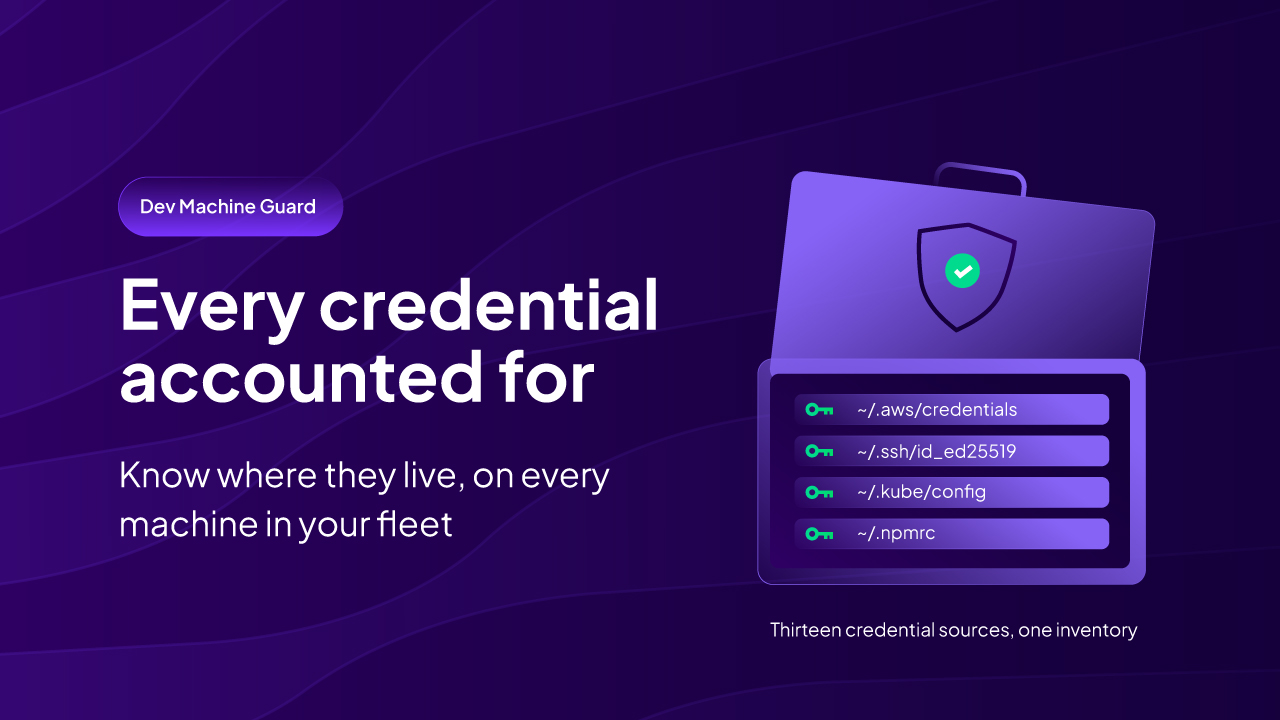
StepSecurity describes a new Credentials inventory page in Dev Machine Guard that scans developer machines for thirteen well-known credential source types (npm, PyPI, Docker, AWS, GCP, Kubernetes, Vault, GitHub, SSH keys, etc.) across five categories and reports how many devices hold each, how many entries exist, and whether the material is stored in plaintext or protected. It frames the feature against real attacker behavior - the TeamPCP stealer in the xinference PyPI package and the hijacked Bitwarden CLI npm package both enumerated this exact list of well-known dotfile paths - arguing defenders need the same enumeration attackers already have to scope incidents and plan rotations.
What it is
StepSecurity's Dev Machine Guard adds a Credentials page to its dashboard that inventories developer-credential sources across a fleet. It covers thirteen source types across five categories — Cloud, Source control, Package registries, Containers, and Infrastructure — at their supported default and relocated locations. The framing: attackers already have this list (hardcoded path enumerations in the TeamPCP/xinference and hijacked Bitwarden CLI payloads); defenders historically did not.
How it works
The page aggregates by credential source across the whole fleet, not per-machine. Each row shows: the source, how many devices hold it, how many hold plaintext material, how many credential files were found (Locations), and how many individual credentials those files contain (Entries). Filter by category, search by source, or export as CSV. Ordering by fleet spread is deliberate — a source on 11 of 12 machines is a fleet-wide problem; the same on 2 is a two-developer conversation.
Preconditions / Affected
The exposure it surfaces is inherent to how dev tools work, not misconfiguration: most tools (Docker, npm, GitHub CLI, Vault tokens) store credentials in directly-readable form so they can authenticate without prompting. Anything running as the developer's account — install scripts, IDE extensions, AI agents with shell access — can read them. SSH private keys are the main Protected case because they support passphrase/hardware encryption, though many are created without one.
What to do
For rotation planning, start from Entries (how much material to investigate); Devices tells you how many machines to visit. Treat everything listed as plaintext on a compromised machine as potentially exposed. The page positions install-time controls (package configs) as the cheaper fix — stopping hostile code from running beside the files rather than protecting the files themselves. SSH keys are where a concrete hygiene action (adding a passphrase) is most readily available today.
Caveats
Read these before acting on the numbers:
- Coverage is partial. Keychains, credential helpers, environment variables, browser stores, and password managers are all outside the inventory. Absence of a finding is not absence of credentials.
- Entries are counted as found — not deduplicated across devices and not validated against the provider. The same material stored twice counts twice; expired or incomplete entries still count.
- Findings reflect each device's most recent scan only and show where material was found, not whether a credential is still active or valid.
- Where Entries exceed Locations, some files hold several credentials (normal for multi-profile AWS
credentialsor a multi-host.netrc); where Locations exceed Devices, some machines hold multiple files (normal for SSH keys).
Organisations named here
- Shai-Hulud
- xinference
Technologies named here
- Dev Machine Guard
- Developer machines / fleet
- xinference PyPI package
- Credentials page
- Bitwarden CLI package on npm
- Suspicious Files
- ~/.npmrc
- ~/.pypirc
- ~/.vault-token
- ~/.netrc
- ~/.aws/credentials
- ~/.aws/config
- ~/.docker/config.json
- gcloud application default credentials file
- kubeconfig
- ~/.ssh/id_rsa, id_ed25519, id_ecdsa
- ~/.git-credentials
- macOS
- SSH
- npm
- PyPI
- Docker
- AWS
- Kubernetes
- Bitwarden CLI
Techniques named here
- Well-known credential path enumeration
- Postinstall hook credential harvesting
- GitHub token abuse for CI/CD compromise
- Credential-funded supply chain propagation
Threat actors named here
- TeamPCP
- Hijacked Bitwarden CLI package
- Shai-Hulud
Related in DevSecOps

 jfrog.comarticle
JFrog: The Governance Gap Between Your Policy and Your Pipeline
 stepsecurity.ioarticle
Dev Machine Guard Now Supports Windows - StepSecurity
 socket.devwriteup
Socket: TanStack npm Packages Compromised
 securitylab.github.comadvisory