 github.comrepo
sexyiam/VMPLift
VMPLift is a handler walker and VIP tracer for unpacked VMProtect 3.8-3.10+ x64 binaries. It walks from a real vmenter under Unicorn emulation, records VIP reads, VSP and ALU operations, and writes lifted IR (lifted.ll/lifted.c), a bytecode trace, devirtualized stack C, and a closed-form devirt_l4.c for pure functions (the adder sample becomes a+b). It targets merged handlers, rolling-key immediates and randomized registers and section names.
What it is
VMPLift is a handler walker and VIP tracer for unpacked VMProtect 3.8 to 3.10+ x64 binaries. It is built on Unicorn emulation. The author argues that tools aimed at about VMProtect 3.5 (NoVmp is named) assume a stable dispatch model that no longer holds from 3.7 onward.
How it works
The page lists four changes in 3.8 to 3.10 that break older per-opcode maps:
- Merged handlers: one native chunk often performs several VM ops plus the next-handler computation.
- Rolling key: VIP immediates are encrypted. Decryption is
enc ^ key, then a per-handler mix (add, neg, rol and others), thenkey ^= decrypted. - Randomized registers and sections: VIP, VSP and the key sit in random GPRs, and sections are named like
.kbB0or.WhW0instead of.vmp0. - Unusual entries: many research samples use
push enc; call enter_stub, sometimes through a.textjmp, so the PE entry point is not the vmenter.
The tool therefore starts from a real vmenter and records what Unicorn executes: VIP reads, VSP changes and ALU operations. If the target is a simple pure function (rcx, rdx to rax), it tries to synthesize a closed form in devirt_l4.c. Static mnemonic classification is only a fallback.
What to do
Commands from the page (Windows build output path):
build\Release\vmp-lift.exe scan ..\samples\adder.vmp.exe
build\Release\vmp-lift.exe lift ..\samples\adder.vmp.exe
build\Release\vmp-lift.exe lift ..\samples\WaveUIAuth_static_unpacked.dll --vmenter 0x18101da77
Use --vmenter <address> when the vmenter is known and the scan does not find it. Files written to the --out-dir directory:
report.txt: quick summarylifted.llandlifted.c: handler IRvip_trace.*: emulated bytecode streamdevirt.vasmanddevirt_native.c: peeled ops as stack-style Cdevirt_l4.c: closed form when probing succeeds (the adder sample becomes a+b)summary.json: counts and flags
Caveats
The input must already be unpacked. The closed-form output is only attempted for pure functions, so anything with side effects or memory dependence should be expected to yield only the trace and stack C. The page gives no build instructions, no success rates and no tested-version matrix. It credits the Recon 2024 VMP 3.8 talk, vxcall and r0da posts, and mzakocs samples as background.
Technologies named here
- Unicorn
- IDA
- Ghidra
- VMProtect
- NoVmp
- VMPLift
- VMProtect 3.8-3.10+ x64 (unpacked)
Techniques named here
- Bytecode immediate decryption (rolling key)
- Devirtualization
- Emulation-based VM handler tracing
Concepts named here
- Merged handlers
- Recon 2024
- Register randomization
- Rolling key
- VIP (virtual instruction pointer)
- VM entry (vmenter)
Related in Malware & RE

 huntress.comwriteup
Reverse Engineering the Six Stages of MacSync Stealer and RAT
 huntress.comwriteup
Post-DEF CON Phishing Uses Malicious Google Doc to Deliver Malware
 huntress.comwriteup
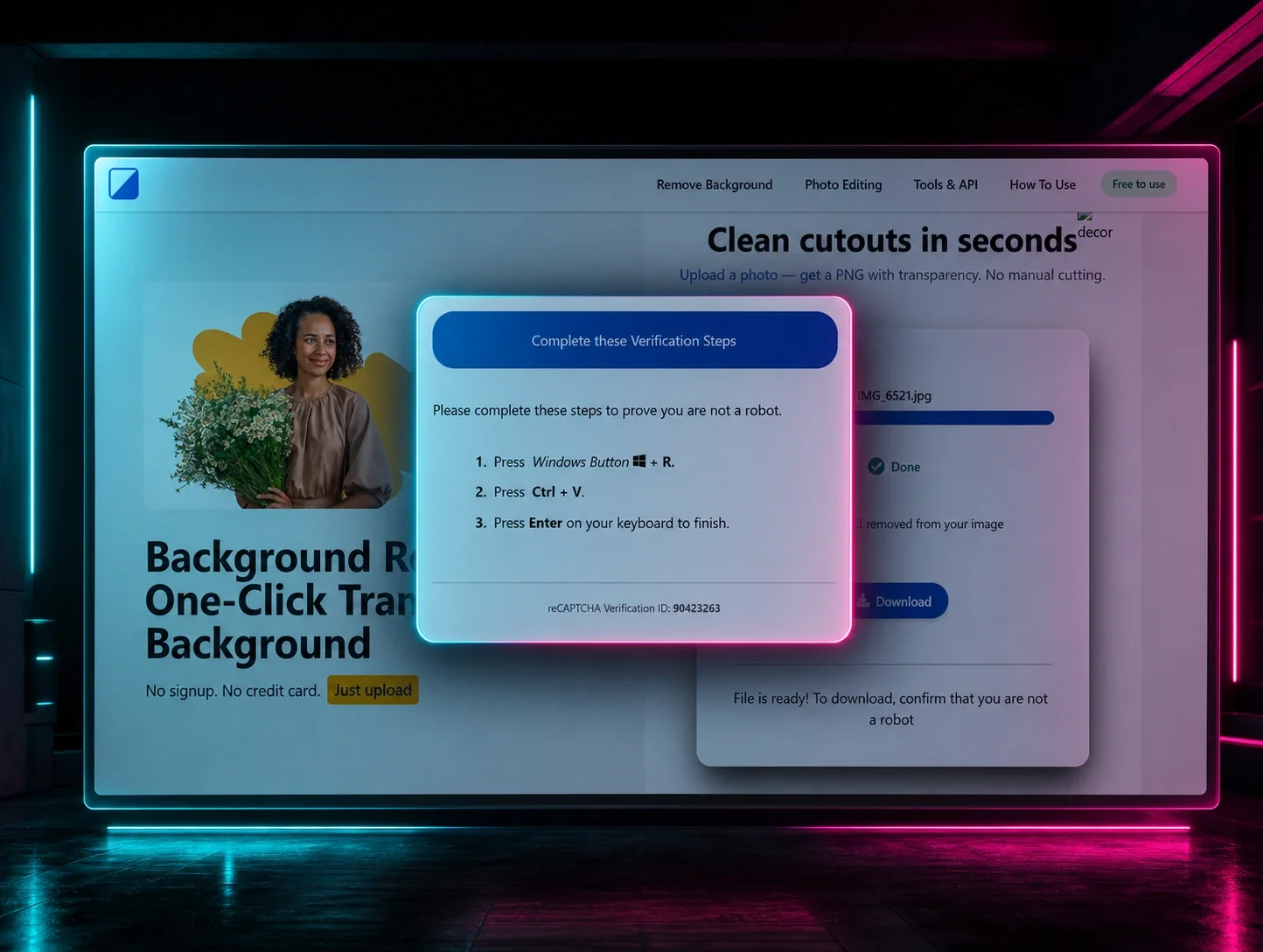
ClickFix Removes Your Background but Leaves the Malware

