 huntress.comwriteup
ESXi Exploitation in the Wild
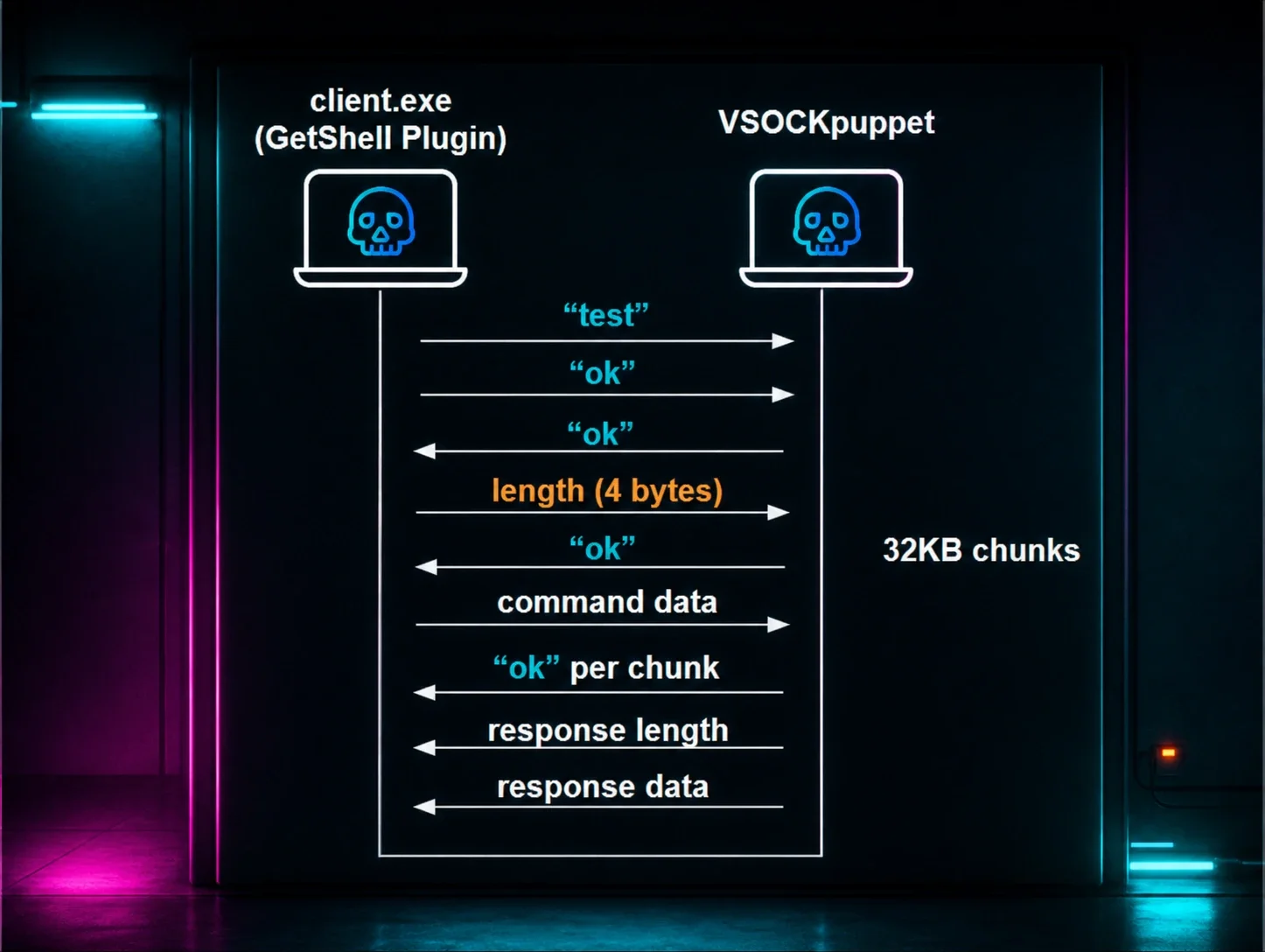
Huntress details a December 2025 intrusion where a threat actor, after gaining initial access via a compromised SonicWall VPN and Domain Admin credentials, deployed a full ESXi VM-escape toolkit against a domain controller's ESXi host. The toolkit — orchestrator "MAESTRO" (exploit.exe), kernel driver "MyDriver.sys" loaded via KDU (BYOVD), and VSOCK-based backdoor "VSOCKpuppet" — chains CVE-2025-22226 (HGFS out-of-bounds read info leak), CVE-2025-22224 (VMCI TOCTOU out-of-bounds write, VMX code execution) and CVE-2025-22225 (arbitrary write sandbox escape) to defeat ASLR and pivot from a guest VM to full hypervisor compromise, supporting 155 ESXi builds (5.1–8.0). Simplified-Chinese PDB paths dated over a year before VMware's public disclosure point to a well-resourced developer, likely Chinese-speaking, possibly building this as a sellable zero-day toolkit; Huntress provides YARA/Sigma detections and hardening recommendations.
What it is
A December 2025 Huntress-observed intrusion deploying a VMware ESXi VM-escape toolkit ("MAESTRO"). The summary covers the CVE chain; what it does not carry is the operator's on-host command sequence, the detection guidance, and the attribution evidence. Development paths contain simplified Chinese strings — including a folder named 全版本逃逸--交付 ("All version escape - delivery") — and Huntress assesses the toolkit was likely built as a zero-day over a year before VMware's March 4, 2025 disclosure (VMSA-2025-0004), pointing to a well-resourced Chinese-speaking developer. Confidence on the specific CVE mapping is only moderate.
How it works
The exploit runs from the Windows host managing ESXi, in this order:
devcon.exe disable "PCI\VEN_15AD&DEV_0740"
devcon.exe disable "ROOT\VMWVMCIHOSTDEV"
kdu.exe -prv 1 -map MyDriver.sys
exploit.exe    (MAESTRO)
The two devcon calls disable the VMware VMCI PCI device and host driver for direct hardware access; kdu (Kernel Driver Utility) bypasses Driver Signature Enforcement to map the unsigned MyDriver.sys; then exploit.exe chains HGFS memory leak → VMCI corruption → kernel escape and installs a backdoor on the hypervisor. VMX is the initial target because it processes untrusted guest input (clipboard, drag-and-drop, VMware Tools), but runs sandboxed — hence the second step to reach kernel.
Preconditions / Affected
155 ESXi builds, versions 5.1 through 8.0 — end-of-life versions have no fix. The attackers reached the hypervisor manager via a compromised Domain Admin account over RDP, having first entered through a compromised SonicWall VPN. So this requires prior domain compromise, not remote-unauthenticated exploitation.
What to do
Beyond patching per VMSA-2025-0004, the page gives host-level detection because VSOCK traffic between guest and hypervisor is invisible to firewalls and IDS:
- Monitor ESXi hosts directly for unusual processes using
lsof -a. - Monitor for known-vulnerable drivers being loaded (the KDU BYOVD technique).
- Watch for the attacker's containment/staging moves — netsh firewall rules that block external outbound while permitting internal ranges, and WinRAR staging:
netsh advfirewall firewall add rule "name=Block External Outbound" dir=out action=block remoteip=0.0.0.0-255.255.255.255 profile=any
"C:\Program Files\WinRAR\WinRAR.exe" a -ep1 -scul -r0 -iext -imon1 -- . "Mapped Network Share"
Also note: MDE blocked an Impacket attempt to reset the DA password to Password01$, and recon used Advanced Port Scanner, SoftPerfect netscan, and ShareFinder (output to C:\ProgramData\shares.txt).
Caveats
The CVE mapping is Huntress's moderate-confidence assessment from behavior, not confirmed. Initial-access-via-SonicWall is high confidence but inferred from workstation name and TTPs. The intrusion was stopped before any ransomware payload, so the assessed end goal is inference, not observed.
Organisations named here
- MAESTRO
- VMSA-2025-0004
CVEs named here
- CVE-2025-22226
- CVE-2025-22224
- CVE-2025-22225
Technologies named here
- VMware ESXi
- Advanced_Port_Scanner
- VMware ESXi 8.0
- SoftPerfect Network Scanner
- SonicWall VPN
- ShareFinder
- Impacket
- WinRAR
- devcon.exe
- KDU
- MyDriver.sys
- exploit.exe
- client.exe / GetShell Plugin
- InfDefaultInstall.exe
- Microsoft Defender for Endpoint
- lsof
- YARA rules
- Sigma rules
- RDP
- Microsoft Defender
- YARA
- Sigma
- Windows
- SonicWall
Techniques named here
- Firewall modification to isolate host from external networks
- Data staging for exfiltration via WinRAR
- BYOD
- Disabling VMCI drivers for exclusive hardware access
- VM escape via VMX process exploitation
- ASLR bypass via memory leak
- VMware backdoor I/O port communication
- Function pointer overwrite for code execution
- Kernel-level reconnaissance via VMkernel syscalls
- Backdoor persistence via inetd.conf hijack
- Anti-forensic cleanup
- VSOCK-based covert command and control
- Operational security via driver restoration
- BYOVD
Threat actors named here
- Unnamed threat actor
- MAESTRO
- VSOCKpuppet
- XLab
Related in Malware & RE
 huntress.comwriteup
Reverse Engineering the Six Stages of MacSync Stealer and RAT
 huntress.comwriteup
Post-DEF CON Phishing Uses Malicious Google Doc to Deliver Malware
 huntress.comwriteup
ClickFix Removes Your Background but Leaves the Malware

