 pgj11.comwriteup
pgj11: Analysis of Bincrypter and gsocket (gs-netcat)
Deep-dive reverse engineering of a real-world incident where a WordPress site compromised via CVE-2026-18322 was used to drop a bincrypter-obfuscated, statically-linked gs-netcat (gsocket) 1.4.42beta5 binary as a reverse-shell tunnel, persisted via crontab and masquerading as "netd"/"[kthreadd]". The author fully unravels bincrypter's multi-stage shell obfuscation (character-separator tricks, AES-256-CBC/openssl decryption, memfd_create fileless ELF execution via a Perl one-liner) and reveals a custom THC UPX build with zeroed magic bytes/PackHeader used to hide payload identification, along with gsocket's self-embedded XOR-encoded operator configuration. Releases two open-source tools (Bincrypter-Extract, Gsocket-Config-Extract), YARA rules, and an ImHex pattern file, plus full IOCs (C2 IP, GSRN secret, process/memfd artifacts).
What it is
A forensic teardown of a real Linux compromise where the attacker dropped a bincrypter-obfuscated shell script that unpacks a statically-linked gs-netcat 1.4.42beta5 (built with -stealth) reverse-shell tunnel. Initial access came via a WordPress site affected by CVE-2026-18322; the binary was placed in the site root and executed via crontab persistence. The implant was renamed netd on disk and beaconed to a private GSRN relay.
Indicators
- Relay: 103.253.27.96:443, gsocket secret
4jkuTMcyat7L6eAGJCn93t. - On-disk name
netd(arbitrary; not meaningful). - Payload sizes noted during unpack: 1,082,290 → 1,069,776 bytes after de-escaping.
- Delivery: three-line loader script — sh shebang, Stage 0, then the AES-encrypted+gzipped ELF appended as the third line.
How it works
The loader hides its eval using a character-separator trick: in sh, : is true and ! : is false, so ! : && and : || guard statements that never run, acting as do-nothing separators splitting the real characters apart between junk. Stage 0 strips non-printable bytes (perl -pe 's/[^[:print:]]//g'), base64-decodes, and OpenSSL-decrypts to reveal bincrypter's standard _bc_dec hook.
Decryption keys off whether the script is run or sourced: $0 gives the path when executed but the shell name when sourced, so fn is empty-when-executed / set-when-sourced — the invariant driving branch selection. The final routine reads the ciphertext back from the script file, discards the first two lines and a # separator byte, reverses the packer's escaping, then AES-256-CBC decrypts and gunzips:
zf='read(STDIN,\$_,1);while(<>){s/B3/\n/g;s/B1/\\x00/g;s/B2/B/g;print}'prg="perl -e '<>;<>;$zf'<'${0}'|openssl enc -d -aes-256-cbc -md sha256 -nosalt -k '${S}-${_P}' 2>/dev/null|perl -e 'read(STDIN,\\\$_, ${R:-0});print(<>)'|gunzip"Decode order matters: the packer encoded B→B2, NUL→B1, LF→B3; on decode you must apply B3/B1 first and B2→B last. Encryption uses -md sha256 -nosalt (legacy KDF) with key material ${S}-${_P}, where P/S are 16 random alphanumerics from /dev/urandom, and R is a random padding length skipped after decryption.
What to do
Patch WordPress against CVE-2026-18322 and check site roots and crontabs for dropped binaries (esp. named netd). Use the author's released tooling to statically pull payloads and operator config without executing anything: Bincrypter-Extract, Gsocket-Config-Extract, plus the published YARA rules and ImHex pattern file for bincrypter-packed gsocket implants.
Caveats
The linked CVE-2026-18322 writeup is marked "coming soon," so the initial-access mechanism is not detailed here — only that WordPress was the entry point. The fetched analysis cuts off mid-sentence at the AES key description.
Organisations named here
- GSRN
- hackerschoice
- memfd_create
- netd
CVEs named here
- CVE-2026-18322
Technologies named here
- gsocket / gs-netcat
- WordPress
- Linux Server
- Bincrypter
- Bincrypter-Extract
- Gsocket-Config-Extract
- YARA rules
- imhex pattern file
- UPX
- Ghidra
- Perl
- openssl
- MalwareBazaar
- YARA
- gs-netcat
- gsocket
Techniques named here
- Character separator / null-statement obfuscation
- Fileless execution via memfd_create
- argv[0] spoofing / process masquerading
- UPX header stripping/magic zeroing
- Multi-stage encrypted/compressed payload delivery
- Byte re-encoding to avoid NUL/newline in shell payload
- Embedded configuration obfuscation
- Process name masquerading via GS_PROC_HIDDENNAME
- Fallback execution to /dev/shm
- Crontab persistence
Threat actors named here
- TA
- THC
Related in Malware & RE

 huntress.comwriteup
Reverse Engineering the Six Stages of MacSync Stealer and RAT
 huntress.comwriteup
Post-DEF CON Phishing Uses Malicious Google Doc to Deliver Malware
 huntress.comwriteup
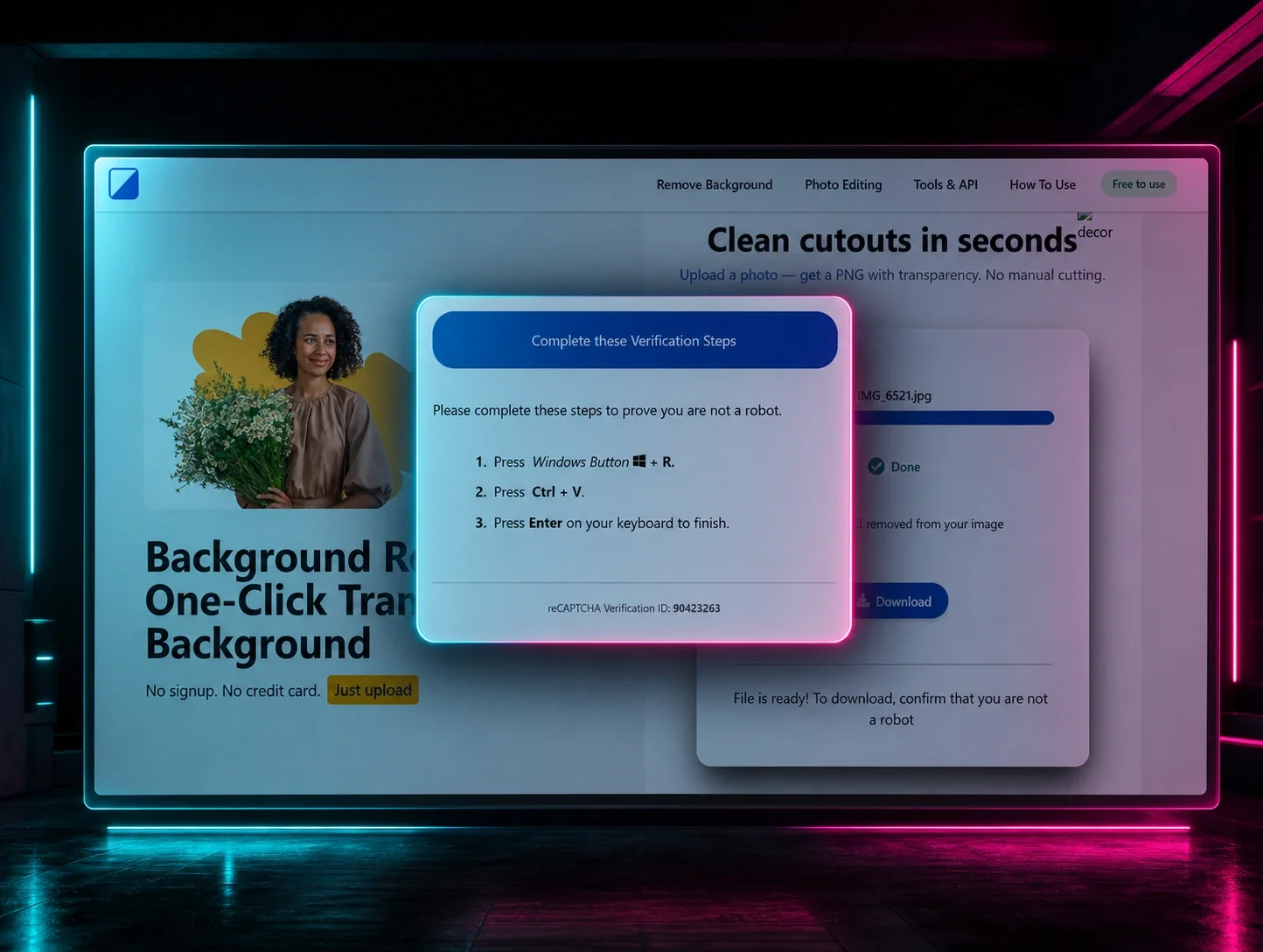
ClickFix Removes Your Background but Leaves the Malware

