 unchained.comarticle
How multisig protected thousands of bitcoin during the Coldcard incident
Unchained's writeup on a 2026 Coinkite Coldcard advisory in which a flawed RNG produced insecure entropy for most Coldcard devices over five years, letting attackers brute-force private keys and drain singlesig wallets. It explains why multisig wallets (e.g. 2-of-3) were largely spared: a quorum of keys is needed to spend, the final public key in an un-spent multisig address stays unknown to attackers, and address reuse plus broadcasting via public mempools can leak that protection via an RBF-style attack window.
What it is
Unchained's analysis of why multisig wallets resisted the July 30, 2026 Coinkite Coldcard RNG advisory, breaking down four distinct protective mechanisms beyond simple key redundancy.
How it works
The page lays out a layered defense, each layer independent of the others:
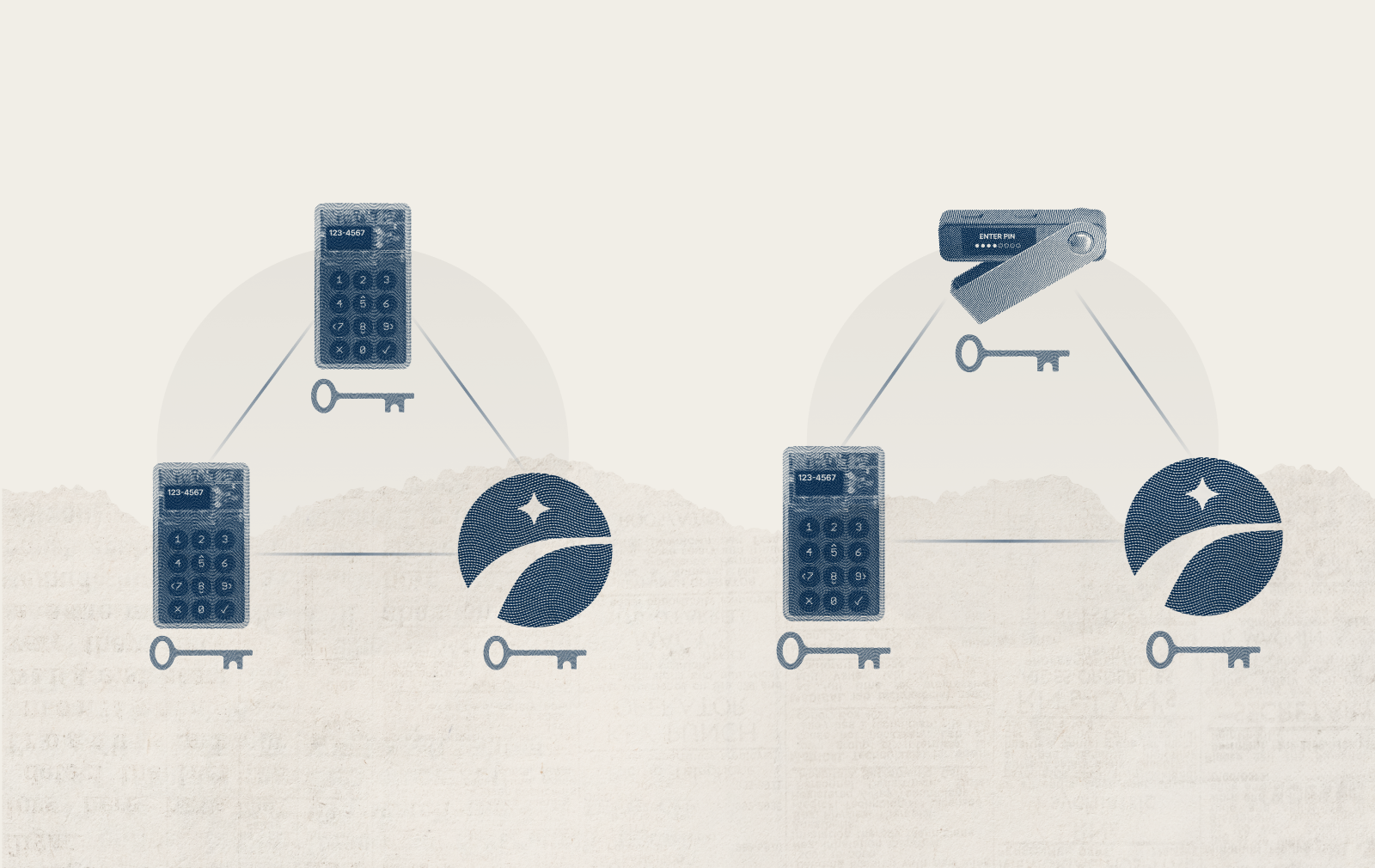
- Quorum requirement: a 2-of-3 setup needs two private keys to spend; if an attacker recovers only one compromised Coldcard key, they're still short.
- Missing public key: spending from a multisig address requires knowing all public keys in that address (not just the threshold private keys). Even with two compromised private keys, the attacker still needs the third key's public key, which may not be derivable from anything exposed by the RNG bug.
- Public keys aren't actually public: they're only exposed via the wallet's configuration/descriptor file (if leaked) or by broadcasting a spending transaction, which reveals all of that address's public keys.
- Combinatorial cost: even if an attacker holds a full list of compromised key pairs (e.g., all-Coldcard 2-of-3 wallets), they must correctly match 2-3 keys together to a specific address — a search problem that scales against them if the candidate pool is large.
flowchart TD
    A[Attacker has compromised private key] --> B{How many keys compromised?}
    B -->|0 or 1 of 3| C[Cannot meet quorum - safe]
    B -->|2 or 3 of 3| D{Address ever spent from?}
    D -->|No, never spent| E{Config file leaked?}
    E -->|No| F[Final pubkey unknown - safe]
    E -->|Yes| G[All pubkeys known - vulnerable]
    D -->|Yes, broadcast to mempool| G
    D -->|Yes, broadcast direct to miner| H[Pubkeys hidden until confirmation]
Preconditions / Affected
The RBF-style exposure window applies specifically to multisig addresses where: (a) 2 or 3 of the signing keys were generated by an affected Coldcard, and (b) the address has been spent from (revealing all its public keys on-chain) or its wallet descriptor/config file has leaked. Address reuse after a spend compounds the risk since the exposed public keys remain tied to that address.
What to do
The page states two concrete mitigations Unchained took: broadcasting transactions directly to a trusted miner instead of the public mempool (closing the pending-transaction exposure window), and defaulting to full-address sweeps with change sent to a fresh, unused address rather than reusing spent-from addresses. It also recommends keeping wallet descriptor/configuration files private, since those alone reveal all public keys for a wallet.
Caveats
The page doesn't specify how Unchained validates whether a transaction destined for a trusted miner avoids re-exposure risk entirely, nor does it give a time bound on the mempool exposure window. It also doesn't quantify the "orders of magnitude" claim for the combinatorial key-matching difficulty — this is stated qualitatively only.
Organisations named here
- Coinkite
Technologies named here
- Coldcard hardware wallet
- Bitcoin
- Coldcard
Techniques named here
- RBF attack
Related in Blockchain

 blog.thorchain.orgwriteup
THORChain Exploit Report #2 — GG20 root-cause disclosure

 protos.comarticle
Black Thursday revisited: MakerDAO keeper exploited for $500K

 aikido.devwriteup
Graphalgo campaign spreads to Terraform providers and Go Modules
 sundaytimes.lkarticle