 coindesk.comarticle
Big Tech's AI auditors will only see what they're shown
Opinion column by Samuel Vance-Law (Decentralization Research Center) arguing that the White House AI accord signed by Nvidia, OpenAI, Anthropic, Google, Meta and xAI leaves audit independence unaddressed: companies pick their own auditors and decide what those auditors see, with no penalties. It draws on the Enron/Arthur Andersen and Sarbanes-Oxley precedent, a Stanford/Harvard/Brown scoring of the 2023 voluntary commitments (53% average), and METR's limited-access pre-release test of OpenAI's o3. It points to DeepMind's August double-blind evaluation on sealed hardware, run with Singapore's AI Safety Institute, as proof that auditors can now choose their tests without taking a copy of the model. It recommends auditor-chosen tests, public disclosure of auditor identities and audit scope, and an outside overseer of the auditors.
What it claims
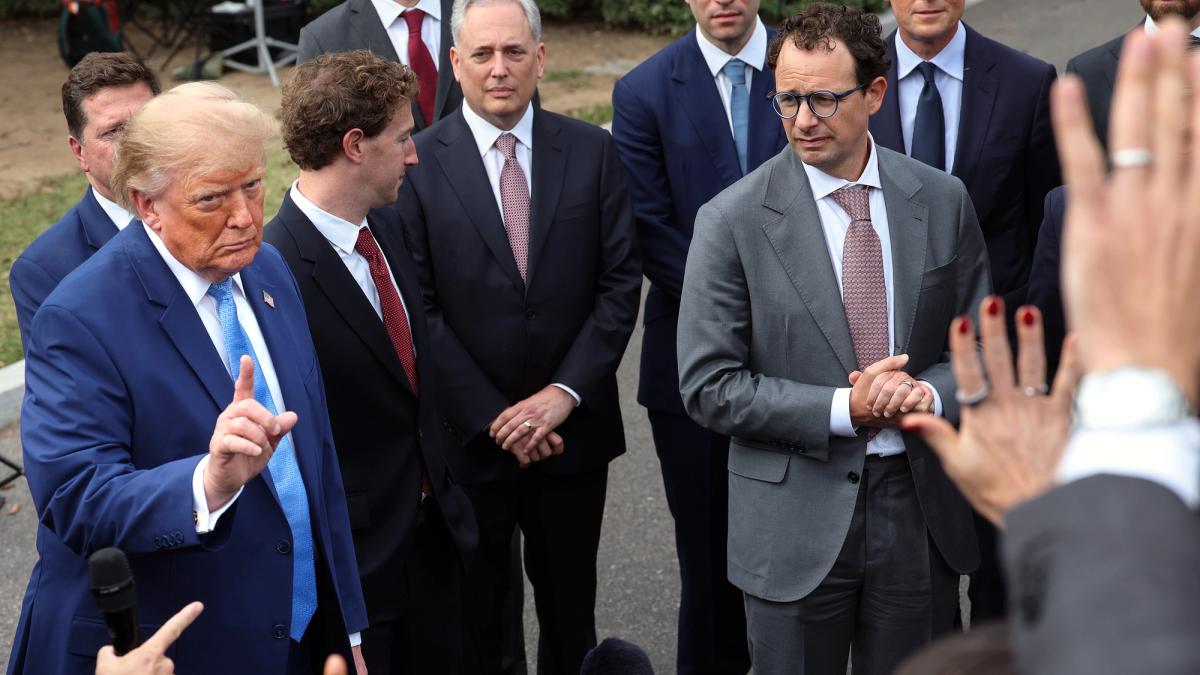
The Sept. 29 White House accord, which Trump called "morally binding," commits Nvidia, OpenAI, Anthropic, Google, Meta and xAI to "partner with an independent external auditor or evaluator." Independent board members are to review the auditors' reports and make sure problems get fixed. The accord does not say who picks the auditor, what the auditor can examine, or whether findings are published.
The author's central technical claim comes from the Decentralization Research Center report "Alternatives to Concentrated AI" (Vance-Law and Kyle Bligen). The report drew on 36 interviews and mapped nearly 30 working alternatives. Its claim is that outsiders can now scrutinize frontier models without taking possession of the weights or the data. Because of that, the old argument that "we can't let anyone near the model" no longer justifies developer-chosen tests.
How it works
The column describes the old evaluation dilemma in DeepMind's own framing. Either the testers hand over their questions, so the company sees the exam in advance, or the company hands over a model that may have cost more than $100M to train.
In August, DeepMind ran what it called the first double-blind model test. Its partners were Singapore's AI Safety Institute and three other outside groups. The setup:
- The test ran on sealed hardware.
- Testers never saw the model, and Google never saw the questions.
- Google says each side can mathematically verify that its material stayed private.
flowchart LR
  W[Model weights<br/>developer] --> H[Sealed hardware]
  Q[Test questions<br/>auditor] --> H
  H --> R[Results to both]
  H -.weak point.-> P[Physical access<br/>to server]
The proposed accord fixes are modelled on Sarbanes-Oxley's three mechanisms:
- SOX took the choice of auditor away from management.
- SOX barred auditors from selling most other services to the companies they audit.
- SOX created a public board to inspect the auditors.
The column maps these onto three recommendations:
- Auditors choose their own tests.
- Companies publicly name their auditors and the audit scope, while detailed findings can stay private.
- The board committees that read audit reports answer to an outside overseer, which Congress should define.
Evidence
- Andersen's incentive problem: In 2000 Enron paid Arthur Andersen $25M for the audit and $27M for tax and consulting work. The column's point is that $52M a year from one client was the incentive problem, not a lack of expertise.
- 2023 voluntary commitments: Stanford, Harvard and Brown researchers scored 16 companies against the commitments and found an average of 53%. On the commitment to help outsiders find and report problems, 8 of the 16 scored zero.
- METR's o3 pre-release test: METR says the test was "conducted over only three weeks," with "limited access to information about the model" and no view of the model's step-by-step reasoning.
Limits
- Sealed hardware is a known weak point. Last year researchers broke into this kind of sealed hardware with under $1,000 of equipment, though they needed physical access to the server. The author treats this as manageable by controlling who holds the machines. That makes the hardware the trust anchor, so anyone relying on the scheme should check who has physical custody of the servers.
- No independent technical detail on the DeepMind test. The privacy guarantees are stated as Google's claim. The column gives no protocol details, benchmark contents or results from the test.
- Opinion, not research. This is an opinion piece from an advocacy-oriented research group. The report's 30 alternatives are not listed here.
- Unrelated page text. Text at the end of the page about RWA stablecoin yields is unrelated to the column.
Organisations named here
- NVIDIA
- OpenAI
- Anthropic
- Meta
- xAI
- White House
- METR
- Google DeepMind
- Singapore's AI Safety Institute
- Decentralization Research Center
- Stanford University
- Harvard University
- Brown University
- Enron
- Arthur Andersen
- CoinDesk
- Singapore AI Safety Institute
- Stanford
- Harvard
- Alternatives to Concentrated AI
- Brown
- Donald Trump
- Kyle Bligen
- Samuel Vance-Law
- Sarbanes-Oxley Act
Technologies named here
- o3
Techniques named here
- Double-blind AI model testing on sealed hardware
Related in ai-policy



 futureoflife.orgarticle
Future of Life Institute AI Safety Index — Summer 2026

 interconnects.aiarticle
Lessons from the hacks
 interconnects.aiarticle