 huntress.comarticle
Attackers Love Your VPN To-Do List
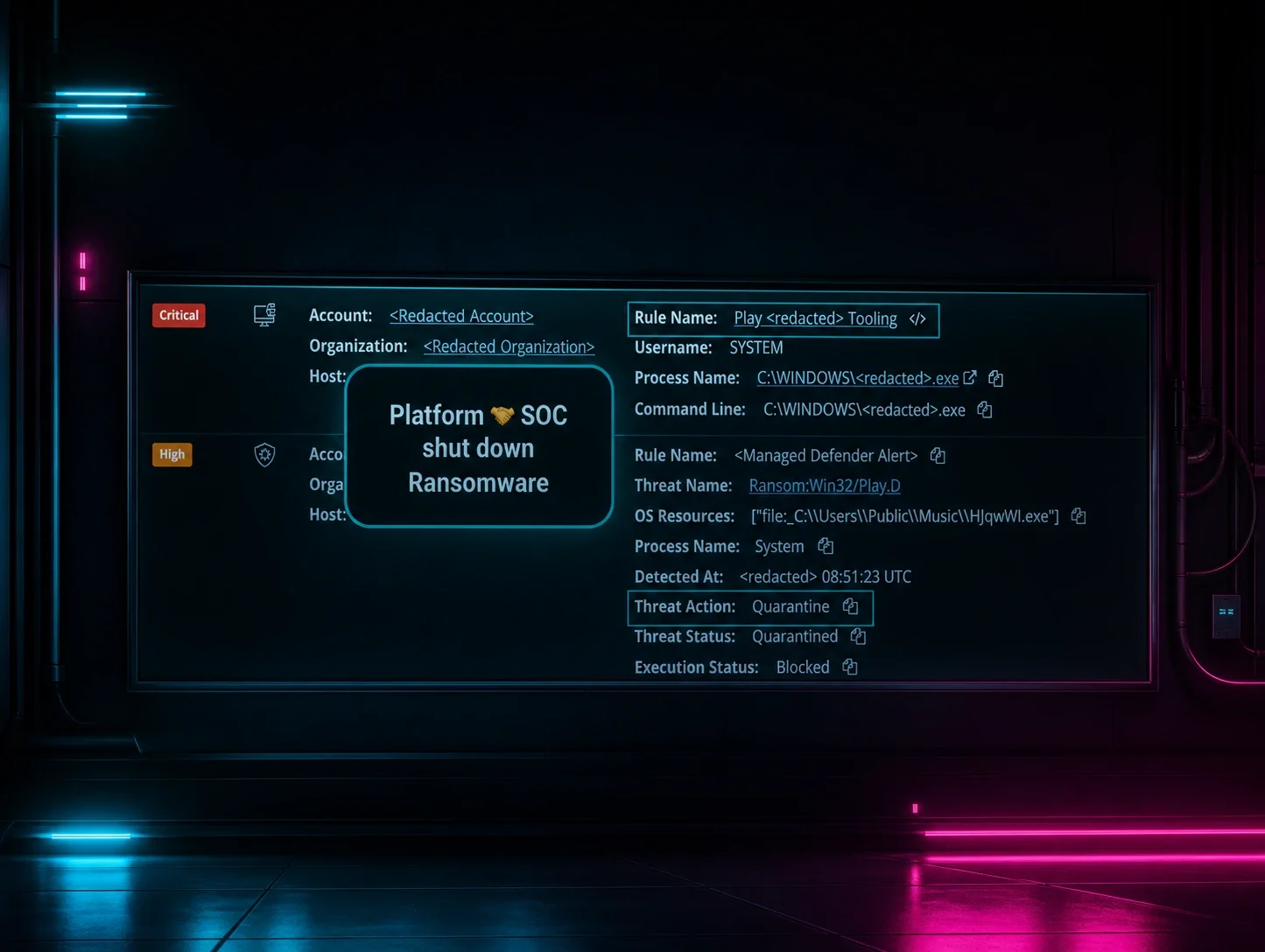
Huntress SOC writeup on VPN compromise as the dominant initial-access vector, citing that ~70% of intrusions their SOC catches begin with attacker authentication through VPN. It walks through real incidents: a compromised FortiGate VPN leading to deployment of publicly available GitHub tools BlueHammer, RedSun, and UnDefend (attributed to threat actor Nightmare-Eclipse); a VPN-originated Play ransomware attempt stopped by EDR; missing VPN logs hampering investigation; and a SonicWall SSLVPN credential compromise that led to BYOVD-based defense evasion due to missing MFA and account segmentation. It closes with a prioritized remediation checklist (enforce MFA, audit privileged accounts, disable legacy accounts, centralize logging).
What it is
A Huntress SOC awareness blog (updated April 17) on VPN-initiated intrusions. Beyond the headline statistics the summary covers, the page gives concrete host-based artifacts from one FortiGate-VPN incident involving Nightmare-Eclipse's GitHub tools, and names the specific defensive gap that repeatedly breaks investigations.
How it works
Attackers authenticate through VPN as a legitimate user rather than exploiting a zero-day (Huntress notes they often find no evidence of appliance exploitation). Once inside, they run hands-on-keyboard enumeration, then stage and execute tooling from unusual user directories. In the observed case Windows Defender caught BlueHammer first; RedSun activity followed several days later — the attacker was betting on enough dwell time to escalate before the disparate alerts were connected.
Preconditions / Affected
VPN access reachable and authenticating without MFA (the post frames MFA as commonly deferred among small/underfunded orgs — medical, legal, construction, veterinary). Detection depends on EDR plus analysts correlating alerts; Defender alone blocked individual binaries but would not have told the full story.
What to do
The page offers hunt/detection artifacts rather than patches:
- Enumeration sequence run before tool execution: ``
whoami /priv cmdkey /list net group`` - Staging locations — binaries in places they don't belong: a low-privilege user's
Picturesfolder, and a two-letter subfolder insideDownloads. - Filenames flagged as tells:
FunnyApp.exe,RedSun.exe,z.exe(BlueHammer / RedSun / UnDefend, attributed to Nightmare-Eclipse). - Preserve VPN logs centrally. Huntress repeatedly responds to VPN intrusions where the earliest evidence is already gone due to storage/rotation, forcing them to reconstruct a timeline "that starts halfway through." A SIEM (or equivalent centralized logging) is named as the fix so the intrusion's opening authentication event survives.
- Close the underlying gap: enable MFA on VPN authentication.
Caveats
This is a vendor SOC blog, not an advisory — no CVE, no product version, no FortiGate patch. The tool names and paths are incident observations, not a formal IOC list, and filenames like z.exe are trivially changed. The 70% figure is a webinar quote from one vendor's SOC telemetry. The remediation content is generic (MFA, SIEM) and the concrete value here is the detection/hunt artifacts above.
Organisations named here
- Nightmare-Eclipse
- Play ransomware
Technologies named here
- VPN
- FortiGate
- SIEM
- EDR
- Windows Defender
- BlueHammer
- RedSun
- UnDefend
- SonicWall
Techniques named here
- BYOVD
Related in Threat Intel
 huntress.comwriteup
Reverse Engineering the Six Stages of MacSync Stealer and RAT
 huntress.comwriteup
AI-Coded Malware | Analyzing Vibe-Coded AD Enumeration | Huntress

 blog.talosintelligence.comtool
Introducing CAIRN: Frontier tracking for AI-integrated malware (Cisco Talos)
 huntress.comwriteup