 huntress.comwriteup
Employee Monitoring and SimpleHelp Software Abused in | Huntress
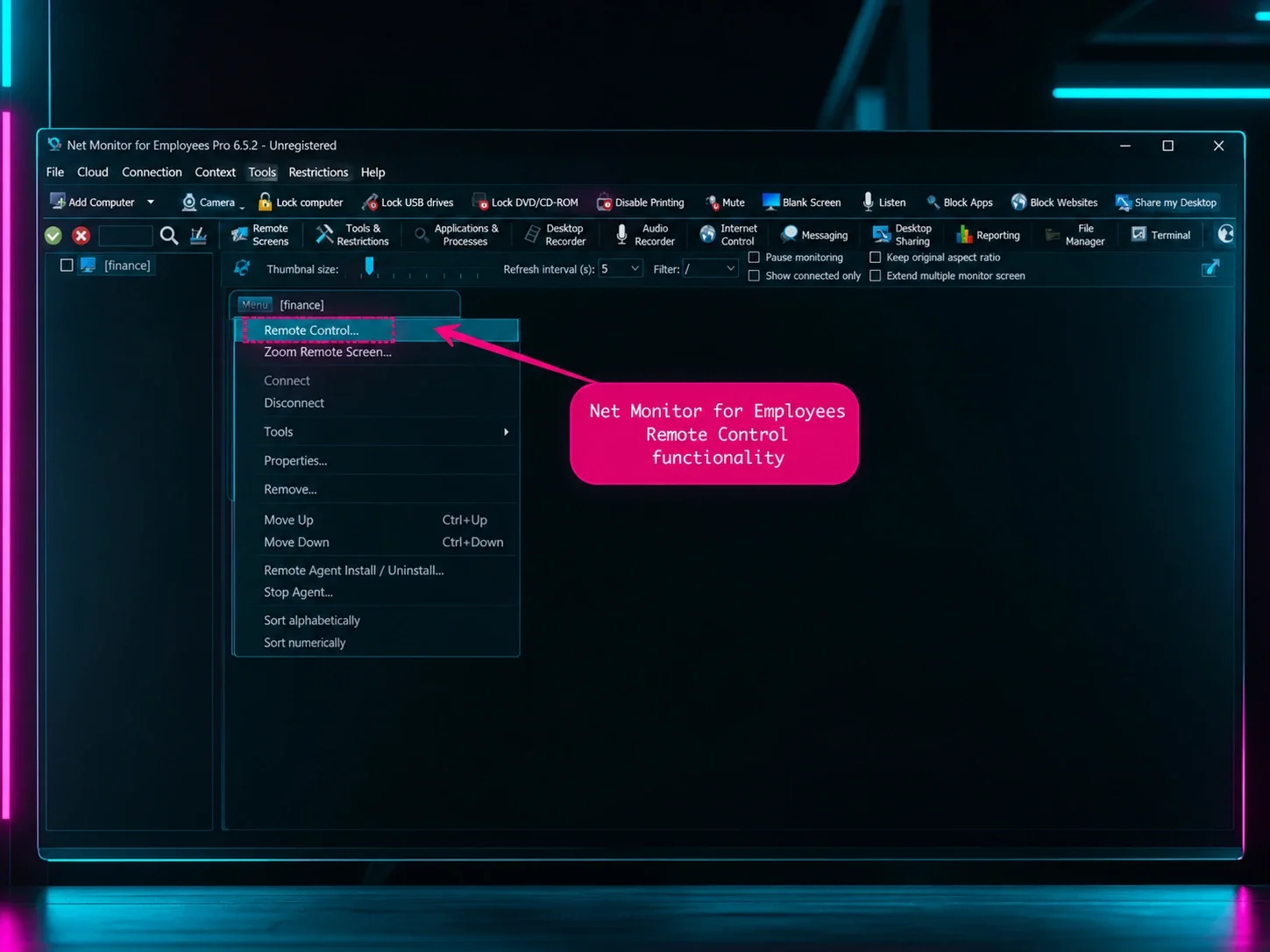
Huntress Tactical Response details two January-February 2026 intrusions where threat actors abused Net Monitor for Employees Professional (a commercial workforce-monitoring tool with a bundled pseudo-terminal, winpty-agent.exe) as a covert RAT, chained with a renamed SimpleHelp binary (vhost.exe) for redundant persistence. The attacker masqueraded the Net Monitor service as OneDrive (OneDriveSvc/svchost.exe), configured SimpleHelp with keyword triggers for cryptocurrency wallets/exchanges, and attempted to deploy Crazy ransomware (a VoidCrypt variant); shared infrastructure (dronemaker[.]org) and filenames across both cases point to a single operator. The writeup includes attack-chain timelines, IOCs, and hardening recommendations around MFA, RMM auditing, and process monitoring.
What it is
Two intrusions (late January–early February 2026) triaged by Huntress Tactical Response in which a single actor abused Net Monitor for Employees Professional (NetworkLookout) as a covert RAT, paired with a renamed SimpleHelp RMM agent, ending in an attempted Crazy ransomware deployment. The value the summary omits is the concrete host-level and network IOCs for hunting.
How it works
The Net Monitor install supports customizing service and process names, letting the actor blend in. The tool's main binary lsa.exe spawns the bundled pseudo-terminal winpty-agent.exe, which gives full command execution. From that terminal the actor ran net commands (user enumeration, password resets, new account creation), attempted to enable the built-in Administrator, and disabled the Guest account. The same terminal used PowerShell to pull vhost.exe — a renamed SimpleHelp binary — from 160.191.182[.]41; that agent then beaconed to a SimpleHelp server at 192.144.34[.]42 and was used to run further commands including Windows Defender registry tampering.
flowchart TD
    A[Net Monitor lsa.exe] --> B[winpty-agent.exe pseudo-terminal]
    B --> C[net commands: enum, reset, create, enable Admin]
    B --> D[PowerShell downloads vhost.exe]
    D --> E[SimpleHelp agent - redundant persistence]
    E --> F[Defender registry tampering]
    F --> G[Attempted Crazy ransomware]
Preconditions / Affected
Windows hosts where Net Monitor for Employees or SimpleHelp can be installed and run without administrator scrutiny. Neither tool is malware, so the risk is legitimate remote-access software present without a matching admin/rollout record (GPO, Intune).
What to do
Hunt for the specifics the summary lacks:
- Network IOCs:
160.191.182[.]41(payload host),192.144.34[.]42(SimpleHelp C2). - Process lineage:
winpty-agent.exespawned fromlsa.exe;netcommands spawned from a remote-monitoring tool; PowerShell downloadingvhost.exe. - Masquerade artifacts: Net Monitor agent disguised as OneDrive — service
OneDriveSvc, processOneDriver.exe, running binary renamed tosvchost.exe. - Persistence filename:
vhost.exe(renamed SimpleHelp) reused across both cases. - Treat any Net Monitor / SimpleHelp install without a documented administrative origin as suspect; check for Defender registry modifications and multiple dropped copies of a ransomware binary (indicating repeated failed execution).
The SimpleHelp agent in case #2 also carried keyword triggers for crypto wallets, exchanges, blockchain explorers, payment platforms, and remote-access tools (RDP, AnyDesk, TeamViewer, VNC) — useful as an attribution/scope signal if you find a SimpleHelp config.
Caveats
The single-actor attribution rests on shared infrastructure, the reused vhost.exe filename, and overlapping tradecraft — Huntress states this "strongly suggests" one operator, not confirmed. The fetched text cuts off after case #1's Defender tampering, so later-stage details and any full IOC table are not captured here.
Organisations named here
- dronemaker[.]org
- OneDriveSvc
- vhost.exe
- VoidCrypt
Technologies named here
- Net Monitor for Employees Professional
- SimpleHelp
- Windows
- winpty-agent.exe
- Windows Defender
- nmep_agtconfig.exe
- msiexec
- PowerShell
- Huntress EDR
- Huntress Tactical Response team
- Huntress
- RDP
- VPN
Techniques named here
- Account manipulation
- Process/service masquerading
- Binary renaming to evade detection
- Defense evasion via Windows Defender tampering
- PowerShell-based payload download
- Silent software installation via msiexec
- Redundant persistence via multiple remote access tools
- Network reconnaissance
- Ransomware deployment attempt
- Initial access via compromised vendor SSL VPN account
- C2 reconfiguration via native agent config utility
Threat actors named here
- Unnamed threat actor/group
- Crazy ransomware
Related in Threat Intel
 huntress.comwriteup
Reverse Engineering the Six Stages of MacSync Stealer and RAT
 huntress.comwriteup
AI-Coded Malware | Analyzing Vibe-Coded AD Enumeration | Huntress

 blog.talosintelligence.comtool
Introducing CAIRN: Frontier tracking for AI-integrated malware (Cisco Talos)
 huntress.comwriteup