 huntress.comwriteup
Inside Knight Office, a New M365 AiTM Phishing Kit
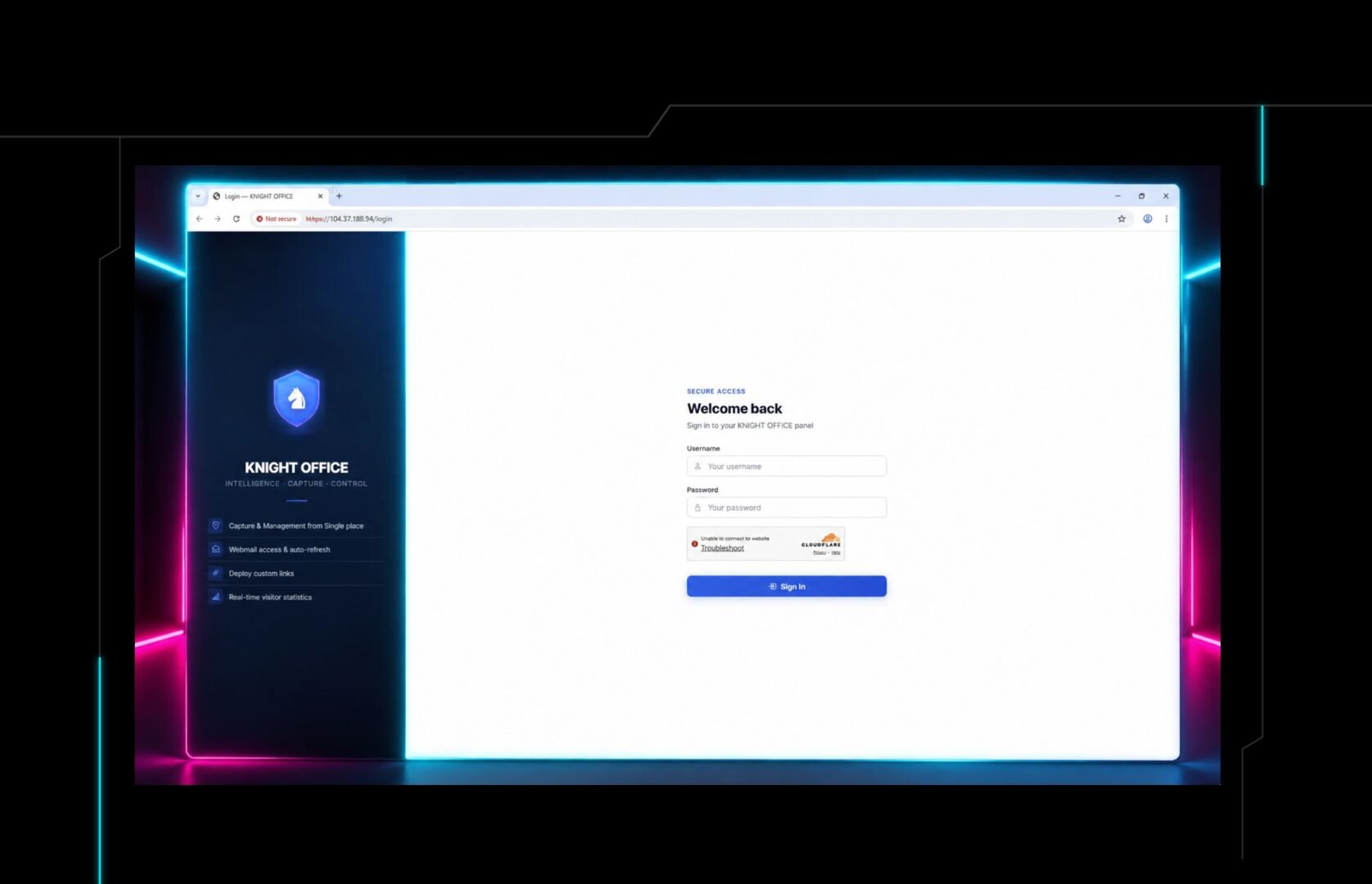
Huntress researchers uncovered the operator console for "Knight Office," a Flask-based adversary-in-the-middle (AiTM) phishing kit used to steal Microsoft 365 session tokens via a DocuSign-themed, self-spoofed lure that routes victims through Monday.com redirects and a compromised Joomla site to a fake Microsoft device-code authentication page. After capturing tokens, the attacker registered a rogue device in Microsoft Entra ID and bound a Windows Hello for Business key credential to the compromised account to maintain persistent, MFA-bypassing access even after token revocation. The writeup details IOCs (IPs, .vu domains, User-Agent strings), links the campaign to hundreds of reported phishing emails since April, and gives defenders concrete hunting/response steps around callback-proxy sign-ins and newly registered WHfB credentials.
What it is
Detailed IR writeup of an August 18, 2026 M365 AiTM incident tied to the Knight Office phishing kit (Flask + Flask-WTF, fronted by Cloudflare Turnstile). Beyond the summary, the page gives the specific fingerprints and the exact failure-then-success persistence sequence a defender can hunt on.
How it works
The lure is a device-code phishing flow, not a classic credential-relay page. The victim is handed a nine-letter deviceauth code, told to "Sign In With Microsoft," and pushed to Microsoft's real deviceauth screen where they paste the code and complete an MFA push against Microsoft Authentication Broker / OfficeHome. That hands the operator a valid session token.
Persistence sequence (the actionable part):
- Attacker registers a rogue device from
104.37.188[.]94. - Two OAuth 2.0 token-auth attempts fail because the required NGC key (used by WHfB) isn't yet present.
- Attacker enrolls an unauthorized host into Entra ID and binds a WHfB key credential — observed via User-Agent
Dsreg/10.0 (Windows 10.0.19044.1826). - Attacker signs in successfully via WHfB passwordless — surviving token revocation.
Token replays came from datacenter ranges with User-Agent python-requests/2.34.2, OAuth2:Token. Auth logs showed zero bad-password attempts; failures were only expired tokens or missing device keys — so password-based alerting sees nothing.
Preconditions / Affected
M365 / Entra ID tenants where users can complete device-code auth and where device registration + WHfB enrollment aren't tightly gated. The post-MFA callback arrived from 73.125.13[.]x (Comcast, but flagged by Spur as a callback proxy) — the tell that a reverse proxy sat between user and IdP.
What to do
- Hunt post-MFA authentications from callback-proxy IPs where sign-in and token-callback IPs diverge.
- Alert on User-Agents
python-requests/2.34.2, OAuth2:TokenandDsreg/10.0device registrations. - Review newly registered Entra devices and WHfB/NGC key credentials; remove unauthorized auth methods.
- Disable synchronized accounts in on-prem identity systems.
- Lure detection: subject lines using
l→isubstitution (lmportant,Slgnature,VERlVIED), self-spoofed From/To/Return-Path headers, and DocuSign/SharePoint/Teams voicemail themes. Sender IP154.127.53[.]78; ~25.vuphishing domains on the console IP.
Caveats
The captured artifact is the operator console (login dashboard), not the kit source — victim-facing templates and capture scripts weren't obtained. The original Joomla redirect and Monday.com killchain were already dead; the landing-page reconstruction is inferred from VirusTotal-collected sibling emails, not the live incident page.
Technologies named here
- Microsoft 365
- Validin
- VirusTotal
- Microsoft Entra ID
- Spur
- Windows Hello for Business
- Joomla
- Huntress Security Awareness Training platform
- Python Flask
- Microsoft SharePoint
- Cloudflare Turnstile
- Microsoft Teams
- Microsoft OfficeHome / Authentication Broker
- Flask
- OAuth
- Huntress
Techniques named here
- Adversary-in-the-Middle phishing
- Session token theft / replay
- Self-spoofing lure
- Multi-hop redirect chain to conceal phishing landing page
- Device Code Authentication Phishing
- Rogue device registration / Entra ID enrollment
- Rogue WHfB key credential binding
- Callback proxy use for AiTM relay
- Homoglyph/character substitution in phishing subject lines
Threat actors named here
- Knight Office
- EvilTokens
- Kali365
Related in Threat Intel
 huntress.comwriteup
Reverse Engineering the Six Stages of MacSync Stealer and RAT
 huntress.comwriteup
AI-Coded Malware | Analyzing Vibe-Coded AD Enumeration | Huntress

 blog.talosintelligence.comtool
Introducing CAIRN: Frontier tracking for AI-integrated malware (Cisco Talos)
 huntress.comwriteup