 github.comrepo
x86rc/unthemidator
Unthemidator is an automated unpacker for binaries protected with Themida, Code Virtualizer and WinLicense (v3.0 to v3.2.6.0, experimental v4.0). It works without executing the target, handles x86 and x64 exe, dll and sys files, decrypts imports, restores the IAT, rebuilds the PE and identifies VM versions and entry points. It does not devirtualize or unmutate code. Releases cover Windows x64 and macOS Apple Silicon.
What it is
Unthemidator (x86rc/unthemidator) is a static unpacker for Themida, Code Virtualizer and WinLicense binaries. The page says it does not run the target or call its APIs or syscalls on the host. After unpacking it rebuilds the PE so the result can run and be debugged. The page lists these features: resource unpacking, VM decompression, import decryption with IAT restoration, VM version identification, and location of all Themida/CV entry points.
Preconditions / Affected
Supported protections are Themida, WinLicense and Code Virtualizer (compressed VMs) v3.0 to v3.2.6.0. Code Virtualizer v4.0 support is marked experimental. Precompiled builds exist for Windows x64 and macOS on Apple Silicon.
WinLicense targets need a license file, or unpacking will not succeed. Binaries that depend on custom modules need those modules placed in a modules directory beforehand. The same directory can hold missing system modules, which the page recommends for Unix hosts.
What to do
Run it by drag and drop, or from the command line:
unthemidator.exe [options] {path_to_bin.exe|.dll|.sys|.bin}
./unthemidator [options] {path_to_bin.exe|.dll|.sys|.bin}
Options that change the outcome:
--license-file: required for WinLicense binaries.--out-file: defaults to{program_name}.unpacked.{program_extension}.--imports-file: JSON import report, defaults to{program_name}.imports.json.--vms-file: JSON list of VM entry points, defaults to{program_name}.vms.json.--vm-depth: number of virtualization layers to single-step for VM research and instruction tracing. The default is 0, so no VM exploration.--no-imp: skip import lookup.--no-vm-lookup: skip VM lookup.--no-startup: skip runtime startup processing. This prevents all unpacking except the initial boot stage.--no-loader: skip generating the anti-dump fixer loader.
The .imports.json and .vms.json outputs are the useful artifacts if the goal is analysis rather than just a runnable dump.
Caveats
- It does not devirtualize or unmutate code. Virtualized routines stay virtualized after unpacking.
- A file is treated as a kernel driver only if its extension is
.sys. Everything else is parsed as a usermode binary, so a driver with another extension needs renaming. --no-loadermay leave the binary unrunnable if the original entry point is virtualized or there are per-macro security checks.- The page gives no success rates, tested sample counts or known failing versions. Problems are reported through repository issues.
- The page links three write-ups on Themida internals: the FALCON VM devirtualization article and a two-part LION VM analysis. These are the route for the devirtualization work the tool leaves undone.
Organisations named here
- FALCON VM
- LION VM
Technologies named here
- Themida v3.0 - v3.2.6.0
- WinLicense v3.0 - v3.2.6.0
- Unthemidator option --out-file
- Unthemidator option --license-file
- Code Virtualizer v3.0 - v3.2.6.0
- Unthemidator option --imports-file
- Code Virtualizer v4.0
- Windows binaries, x86 and x86_64 / amd64
- Unthemidator option --vms-file
- Unthemidator option --vm-depth
- Windows
- macOS
- Code Virtualizer
- Themida
- WinLicense
Techniques named here
- Import decryption and IAT restoration
- Virtual machine decompression
- Anti-dump fixer loader generation
- Referenced research
Related in Malware & RE

 huntress.comwriteup
Reverse Engineering the Six Stages of MacSync Stealer and RAT
 huntress.comwriteup
Post-DEF CON Phishing Uses Malicious Google Doc to Deliver Malware
 huntress.comwriteup
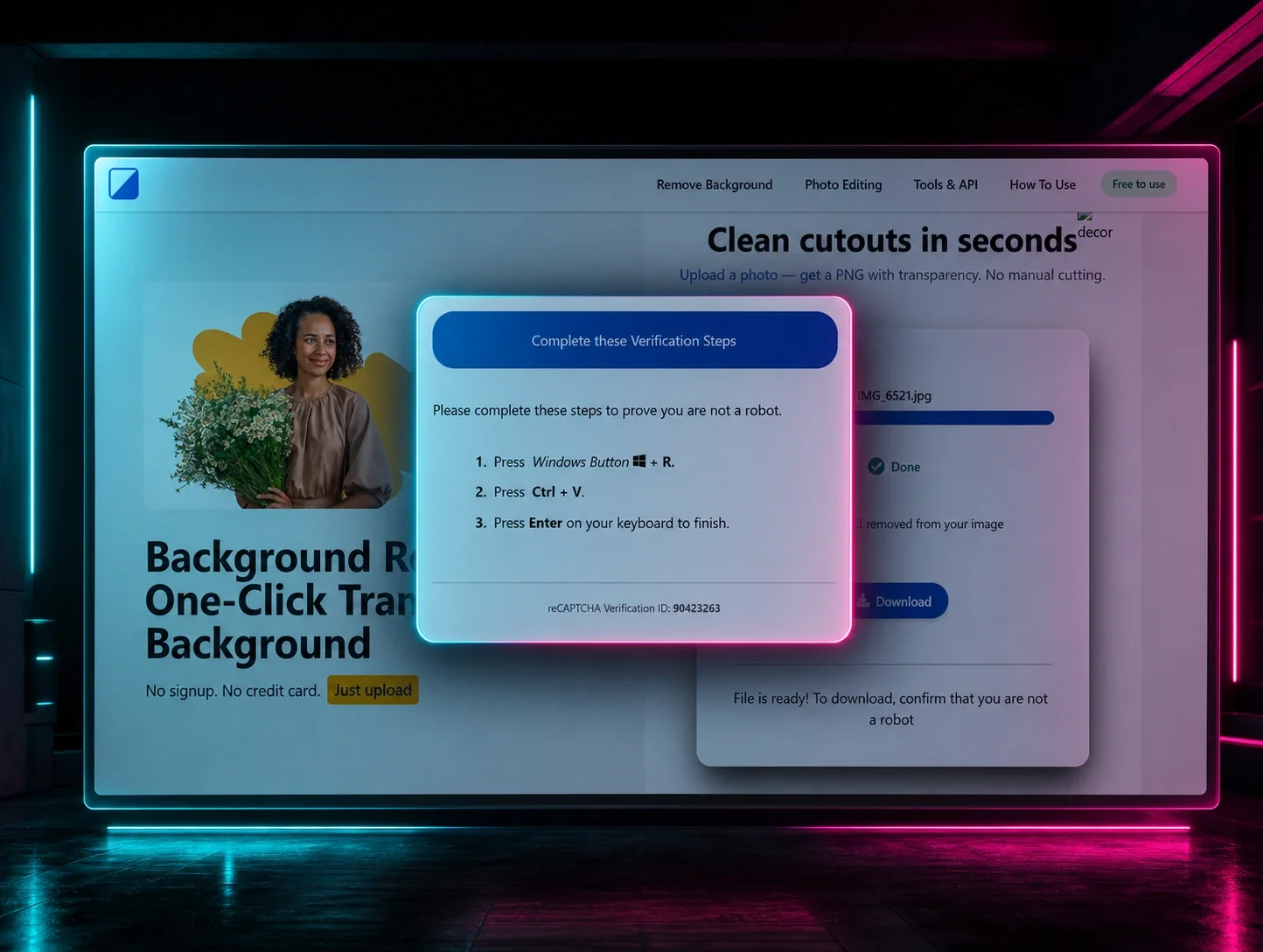
ClickFix Removes Your Background but Leaves the Malware

