 huntress.comwriteup
Inside FakeAgent: How a Claude Desktop Malvertising Campaign Hit 29 Organizations with SectopRAT
Huntress details 'FakeAgent', a malvertising campaign that hit 29 organizations by hosting a fake Claude Desktop installer as a public Claude.ai Artifact, which led via DLL-sideloaded loaders (masquerading as JetBrains jcef_helper.exe and IBM SPSS) to a SectopRAT-family .NET RAT. The malware used VMProtect packing, a GPU/DXGI-based anti-VM gate, a DirectX-shader AES-256-CTR decryption routine, and 'EtherHiding' — storing/rotating C2 addresses via Ethereum/BSC transactions — while Huntress used Claude Opus 4.8 to help reimplement the shader crypto and deobfuscate the .NET payload.
What it is
Huntress' technical breakdown of FakeAgent, a July 21–22 2026 malvertising campaign delivering SectopRAT (initially attributed differently; reattributed to SectopRAT after HVNC was found in the .NET payload and C2 was traced through Ethereum BSC transactions). The summary states the vector; this page carries the concrete IOCs, the persistence mechanism, and the full delivery chain a defender needs to hunt.
How it works
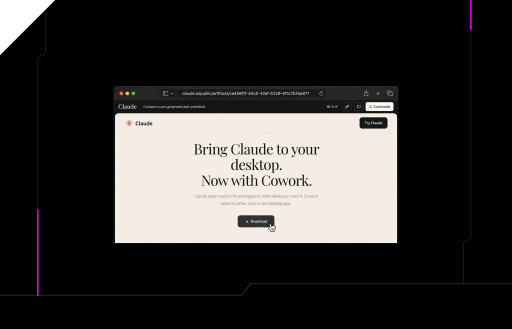
The lure was a Bing sponsored ad pointing not to a fake domain but to a legitimate claude.ai public artifact (claude[.]ai/public/artifacts/ca456f1f-44c0-42af-b329-4f1c7534a877), which had 7,100 page views before Anthropic removed it. The artifact's "Download" button redirected off-domain to claude.ai.download-app[.]us (registered May 9 2026) → downloading-api.it[.]com/html/claude/win, serving ClaudeDesktop.exe.
ClaudeDesktop.exe is a renamed JetBrains jcef_helper.exe, sideloading a tampered libcef.dll (hash mismatches public records; packed with VMProtect). The DLL references Ethereum contract 0xc1907d7be91f95903ad66d775c397302e7dd9228, whose function calls resolve to a payload at cache.dat, which installs the RAT.
flowchart TD
  A[Bing ad → legit claude.ai artifact] --> B[Download button redirect]
  B --> C[download-app.us → downloading-api.it.com]
  C --> D[ClaudeDesktop.exe<br/>renamed jcef_helper.exe]
  D --> E[sideloads tampered libcef.dll]
  E --> F[Ethereum contract → cache.dat]
  F --> G[SectopRAT]
  D --> H[DockerDesktop.exe<br/>scheduled task reinfect]
Preconditions / Affected
User searches for "Claude Desktop app," trusts the result because it sits on the real claude.ai domain, and executes the download. Trust is "disarmed" precisely because the origin domain is legitimate — the standard "check the URL bar" advice fails here.
What to do
Hunt for these specific artifacts the page names:
- Persistence:
DockerDesktop.exe— an identical copy of the loader written to disk as a scheduled task that repeatedly reinfects the host. This is distinct from the initialClaudeDesktop.exeand is the reinfection mechanism. - Files: a
libcef.dllwhose hash does not match public CEF records, co-located with ajcef_helper.exe-derived binary. - Network/IOCs:
claude.ai.download-app[.]us,downloading-api.it[.]com, Ethereum contract0xc1907d7be91f95903ad66d775c397302e7dd9228, staged payloadcache.dat. - Watch for the campaign's observed footprint: unexpected Defender exclusions and anomalous persistence alongside the executables above.
Caveats
Attribution was revised mid-analysis (updated to SectopRAT after HVNC discovery). VMProtect packing on libcef.dll makes deeper static analysis slow. Huntress notes some reimplementation work (AES and "SM5" emulation) was done with Claude Opus 4.8 — disclosed for transparency, not independently reproduced here.
Organisations named here
- EtherHiding
- Operation Endgame
Technologies named here
- ClaudeDesktop.exe
- Huntress SOC platform
- Claude Desktop app
- Claude Opus 4.8
- VMProtect
- Claude.ai public Artifacts
- ILSpy
- JetBrains jcef_helper.exe
- libcef.dll
- Validin
- IBM SPSS binary
- openssl
- tempdir.dll
- DockerDesktop.exe
- Docker Desktop
- Claude Desktop
- Claude
- Ethereum
- .NET
Techniques named here
- Malvertising / SEO poisoning
- Abuse of legitimate AI platform hosting
- DLL sideloading
- EtherHiding
- Packing/obfuscation with VMProtect
- GPU/DirectX shader-based anti-analysis and decryption
- Persistence via scheduled task
- Data theft / credential and financial data exfiltration
- AI-assisted reverse engineering / cryptanalysis
Threat actors named here
- FakeAgent
- SectopRAT
- StealC
- Unnamed threat actor
Related in Malware & RE
 huntress.comwriteup
Reverse Engineering the Six Stages of MacSync Stealer and RAT
 huntress.comwriteup
Post-DEF CON Phishing Uses Malicious Google Doc to Deliver Malware
 huntress.comwriteup
ClickFix Removes Your Background but Leaves the Malware

