
 interconnects.aiarticle
Was I wrong about open models & cyber risks?
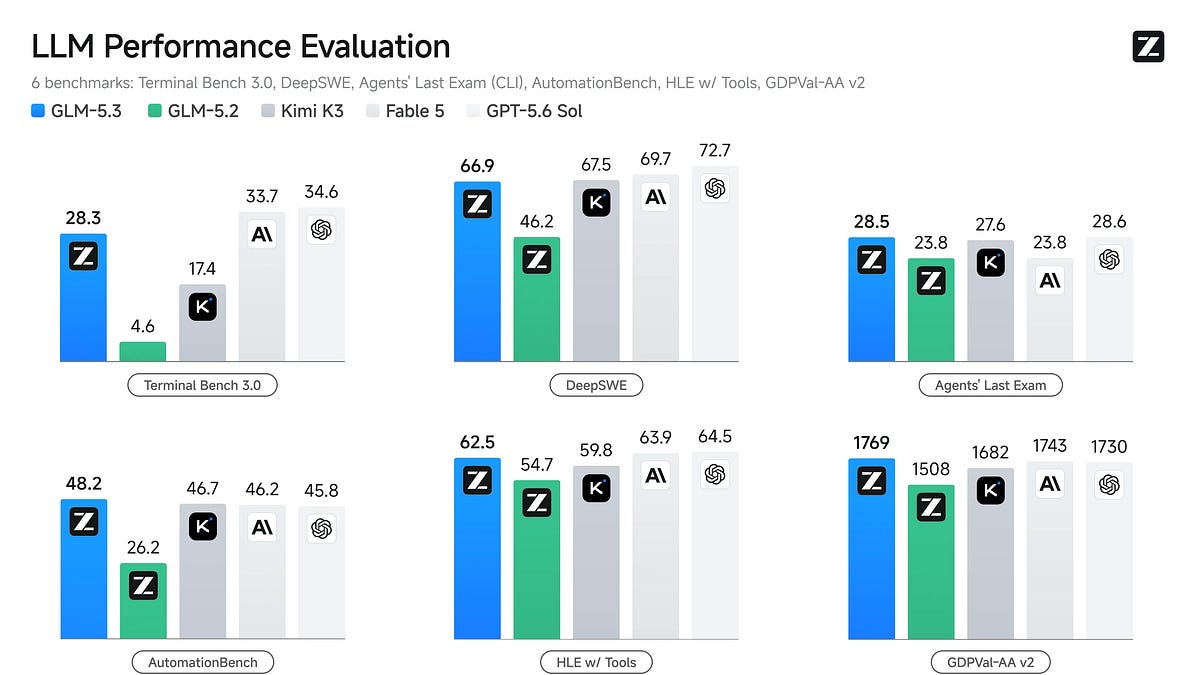
Interconnects post in which Nathan Lambert revisits his claim that an open-weight Claude Mythos would have been survivable. He argues GLM-5.3 already crosses the capability threshold with little visible societal change, and quotes Rob Wiblin, Anthropic and Zvi Mowshowitz as examples of exaggerated warnings. He cites Epoch AI's Firefox exploit built with GLM-5.3, and treats the recent vulnerability surge as an ecosystem trend driven by AI capability and diffusion, not open versus closed models.
What it claims
Nathan Lambert's October 2026 Interconnects post partly revises his earlier claim that an accidentally open-weighted Claude Mythos "would've been fine." He now says "fine" needed a definition. A leak would have brought "a clear increase in cybersecurity incidents," which he describes as an acceleration, not a step change. He still holds that position but says he is "nervous about it" and is "not a cyber expert." He gives some credit to AI safety writers who described a new era of cyber instability.
The post is written during what it calls "Black October," a run of critical disclosures that includes PHP2Shell and GitLab, followed by a Binance crypto security incident. Lambert reads the Wall Street Journal's report of strained cyber first responders as "the system working."
Evidence
The post offers no data of its own. It relies on quotes, one external exploit, and an ecosystem argument:
- Dated warnings he calls exaggerated. Anthropic's Project Glasswing post (April 7, 2026) said the fallout "could be severe." Zvi Mowshowitz (April 9) predicted "a cornucopia of zero-day exploits" and "chaos." Rob Wiblin (April 10) said misuse "would be an actual disaster." Lambert singles out Mowshowitz's version as the more reasonable one.
- Epoch AI's Firefox exploit. Epoch used GLM-5.3 to build a website that let an attacker exfiltrate files from a Firefox user's computer on visit, with no further interaction. Lambert's point is that harm still needs a planted site and other steps beyond finding the bug.
- Threat-actor economics. He quotes a tweet arguing that phishing and ClickFix actors will not switch to writing exploits. Only actors who already exploit software are doing so.
- Long-run trend. He cites a plot from Joshua Saxe and commentary from Chris Hughes showing cyber damages growing exponentially since before ChatGPT. On his reading, the recent events sit on that trend rather than forming a step change.
Limits
Lambert expects most current vulnerabilities to come from closed models, but he says he has "very high error bars." His reasons are that large open models are expensive to serve and serving compute is sold out. He predicts that any near-term open-model hack will likely run through a poorly secured open-model API. He also says adversaries have likely used these models for clandestine data extraction at scale. The open question he names is whether any party will push the models at public institutions to cause physical harm in the U.S. or its allies.
Organisations named here
- Anthropic
- Epoch AI
- Wall Street Journal
- Binance
- GitLab
- Interconnects
- 80,000 Hours
- Chris Hughes
- Joshua Saxe
- Mozilla Firefox
- Rob Wiblin
- Seb Krier
- Zvi Mowshowitz
Technologies named here
- Claude Mythos
- GLM-5.3
- GLM
- Firefox
Concepts named here
- Exponential trend in vulnerabilities
- Nathan Lambert
- Offense-defense balance
- Open-weight model risk
- Project Glasswing
- Threat actor business processes
Threat actors named here
- PHP2Shell
Related in ai-policy



 futureoflife.orgarticle
Future of Life Institute AI Safety Index — Summer 2026
 interconnects.aiarticle
Lessons from the hacks
 interconnects.aiarticle