45 results for “North Korea”
🔗
 en.cryptonomist.charticle🛡️ Security
Report on the $6.3 billion Binance hack of October 2026, which the FBI attributed to North Korea's TraderTraitor unit. Co-CEO Richard Teng said attackers used EIP-7702 to gain execution approval over a hot wallet, after a compromised laptop and further breach points, and used self-destructing malware. Binance replaced 90% of the assets, and the FBI expects further laundering through Ethereum. No IOCs or mitigations are given.
Ethereum
TraderTraitorBinanceFBI+5
Blockchain, Threat Intel· Added 1 Nov 2026, published 31 Oct 2026
 thedefiant.ioarticle🛡️ Security
The Defiant reports that the FBI attributed a Binance hack of more than $6 billion to North Korea and named TraderTraitor as the actor. The bureau also sought blocks on the laundering trail, and Binance kept 1 November as its target for restarting withdrawals. The article body did not load, so technical details of the intrusion are not available.
TraderTraitorDPRKFBI+1
Threat Intel, Blockchain· Published and added 31 Oct 2026
🔍
 theblock.coarticle🛡️ Security
Chainalysis disclosed on 30 October 2026 that an attacker using "offensive agentic techniques" accessed customer names, emails, user IDs and role labels, but no investigation content, passwords or session tokens. The report also covers the Binance hack (about $6.3-6.4 billion, attributed to North Korea), where funds loop through addresses and JustLend lending on Tron is used to dodge stablecoin freezes. About $2.8 billion is frozen.
TronJustLend
ChainalysisBinanceDPRK
Threat Intel, Blockchain, AI Security· Published and added 31 Oct 2026
🔗
theblock.coarticle🛡️ Security The Block reports on the Binance hack of 30 October 2026, in which investigators estimate more than $6 billion was stolen from hot wallets and attribute the theft to North Korean groups. Binance says it holds about $5 billion of the affected assets and is buying $1.3 billion more to cover losses. The piece covers an EIP-7702 sweeper, laundering through Aave and DEXs, and analyst comments. The available text does not detail the intrusion path.
Aave
BinanceDPRKEIP-7702+1
Blockchain, Threat Intel· Published and added 30 Oct 2026
🔍
theblock.coarticle🛡️ Security The Block reports that Binance lost about $6.3 billion in a hack on 29 October 2026. Co-CEO Richard Teng said a compromised DevOps engineer's laptop gave access to a service container used to submit unauthorized withdrawals, and TRM Labs attributed the theft to North Korea's TraderTraitor. The rest covers reactions: President Trump said on 30 October he was looking into it, CFTC Chair Michael Selig and The Digital Chamber urged federal exchange rules, and senators disputed whether the Clarity Act would have allowed freezes.
BinanceTraderTraitorTRM Labs+5
Threat Intel, Blockchain· Published and added 30 Oct 2026

 bankless.comarticle🛡️ Security
Bankless report on the Binance hack of $6.3 billion, which Binance's preliminary investigation traced to a compromised DevOps engineer's laptop with access to withdrawal-authorizing systems. TRM Labs found valid EIP-7702 authorizations on Ethereum, and nine other chains were drained through normally signed transactions. TRM and Chainalysis link it to North Korea's TraderTraitor. Tether and Circle froze about $3 billion, and Binance says SAFU and corporate cash will cover the losses.
EthereumBitcoinSolana+1
BinanceTraderTraitorDPRK+9
Blockchain, Threat Intel· Published and added 30 Oct 2026

 decrypt.coarticle🛡️ Security
Decrypt reports that Binance is working with the FBI and U.S. Secret Service after a theft of about $6.4 billion, which TRM Labs and Chainalysis attribute to North Korea's TraderTraitor group, also linked to the February 2025 Bybit hack. Circle froze about $823 million in USDC and Tether froze USDT, though the page gives differing Tether totals. Binance first suspected a compromised DevOps engineer laptop, found more breach points, and saw no evidence of leaked wallet private keys.
USDCTether
TraderTraitorBinanceBybit+10
Blockchain, Threat Intel· Published and added 30 Oct 2026

 securityweek.comarticle🛡️ Security
SecurityWeek's weekly roundup of 30 October 2026 covers CVE-2026-97631, a 16-year-old buffer overflow in TianoCore EDK II that affects PXE network boot on most servers. It also covers a Cloudflare Workers AI cross-tenant leak caused by an SGLang bug, Anthropic's dispute with Cathedral over a bug bounty intrusion, and fake AI bots probing for secrets. Other items include AI-assisted ransomware (Gold Ogre, Aur0ra), the NIK C2 framework, and North Korean IT worker sanctions.
TianoCore EDK IISGLangCloudflare Workers+3
CVE-2026-97631CathedralCequence+9
Threat Intel, AI Security, Hardware & RF· Published and added 30 Oct 2026

 21shares.comarticle🛡️ Security
Binance hack analysis from 21shares on the 29 October 2026 theft of about $6.3 billion from Binance. Binance's initial finding points to a compromised DevOps engineer's laptop with no sign of a leaked wallet key. Chainalysis attributes it to North Korea with high confidence, and about $3 billion was frozen by Tether, Circle and the Arbitrum Security Council. The attacker also borrowed about $44.6 million of WETH on Aave. Binance says SAFU and company funds will cover all losses.
AaveTetherUSDC+2
BinanceLazarus GroupDPRK+7
Threat Intel, Blockchain· Published and added 30 Oct 2026
🔗
theblock.coarticle🛡️ Security The Block reports that Binance says it has set aside $6.34 billion of its own funds to cover a hack it puts at about $6.3 billion. Co-CEO Richard Teng says the entry point was a compromised DevOps laptop and no private key leak was found. About $3 billion was frozen by Tether, Circle, Ripple and others, withdrawals are suspended, and TRM Labs sees parallels with North Korean attacks. Technical detail is thin.
BinanceTRM LabsTether+4
Blockchain, Threat Intel· Published and added 30 Oct 2026

decrypt.coarticle🛡️ Security TRM Labs and Chainalysis attribute the October 2026 Binance theft, about $6.4 billion across 10 blockchains, to North Korea's TraderTraitor. On Ethereum the attacker used EIP-7702 delegation with 50 pre-signed authorizations to turn a hot wallet into a sweeper, pointing to compromised signing infrastructure. The attacker funded wallets via Tornado Cash, laundered through automation and Aave borrowing, and about $3 billion was frozen.
EthereumEIP-7702Tornado Cash+2
TraderTraitorDPRKBinance+9
Blockchain, Threat Intel· Published and added 30 Oct 2026

en.cryptonomist.charticle🛡️ Security Report on the 29 October 2026 Binance theft, which TRM Labs valued at USD 6.36 billion across ten chains, mostly within 20 minutes. TRM attributes it with high confidence to North Korea's TraderTraitor. The attacker used pre-signed EIP-7702 delegations to turn a Binance Ethereum hot wallet into a sweeper. About USD 3 billion was frozen; TRM advises monitoring for unexpected delegations and separating signing infrastructure.
EthereumBitcoinTron+3
TraderTraitorEIP-7702Binance+11
Blockchain, Threat Intel· Published and added 30 Oct 2026

 chainalysis.comarticle🛡️ Security
Chainalysis assesses the 29 October 2026 theft of about $6.4 billion from Binance hot wallets as the work of North Korean group TraderTraitor. Attribution rests on on-chain behavior, including real-time commingling with funds from the Bitget exploit, a Tornado Cash-funded operator wallet and signed authorizations that let a hot wallet run attacker code. About $2.8 billion was frozen. Laundering shows automation, with addresses receiving exactly 1 TRX before forwarding funds.
EthereumTornado CashTron+3
TraderTraitorDPRKBinance+3
Blockchain, Threat Intel· Published and added 30 Oct 2026
 bleepingcomputer.comarticle🛡️ Security
Binance linked the theft of about $6.3 billion in crypto to a compromised DevOps engineer's laptop, which let attackers reach a service container and submit unauthorized withdrawals. TRM Labs and Chainalysis attribute the 29 October 2026 attack to North Korea's TraderTraitor. About $2.7 billion was frozen, and the attackers hold about $2.4 billion. Binance has found no evidence of a leaked wallet private key.
BinanceTetherCircle+3
TraderTraitorLazarus GroupAPT38+5
Blockchain, Threat Intel· Published and added 30 Oct 2026
securityweek.comarticle🛡️ Security The Binance hack of 29 October 2026 drained about $6.36 billion across ten blockchains in roughly 20 minutes, according to TRM Labs. TRM attributes it with high confidence to North Korea's TraderTraitor, citing a mixer-funded operator wallet, pre-signed transactions and overlap with the Bybit and KelpDAO hacks. Binance's early findings point to a compromised DevOps engineer laptop. Stablecoin issuers froze about $2.7 billion.
EthereumTornado CashTether+2
TraderTraitorLazarus GroupDPRK+11
Blockchain, Threat Intel· Published and added 30 Oct 2026

 microsoft.comarticle🛡️ Security
Microsoft Threat Intelligence report on how North Korean actors use AI, ranking Jade Sleet, Coral Sleet and Jasper Sleet as operationalized, Diamond Sleet, Onyx Sleet, Pearl Sleet and Sapphire Sleet as accelerating, and Emerald Sleet as expanding. It documents AI-generated lures (100+ Onyx Sleet PDFs, August and September 2026), AI-built tooling such as Coral Sleet's private GitHub repository trojanizing, and Onyx Sleet and Pearl Sleet use of the ARTEX agentic pentest framework. It ends with mitigation and Defender guidance.
CursorGitHubRust+2
Jade SleetOnyx SleetCoral Sleet+9
Threat Intel, AI Security· Published and added 29 Oct 2026
decrypt.coarticle🛡️ Security Decrypt reports that OFAC sanctioned 10 individuals and one entity on 28 October 2026 over North Korean IT worker schemes. Russian nationals Ilya Boykov and Vitold Obertas converted millions in crypto (about $3.5 million and nearly $2 million), and the listings include Ethereum and Tron addresses, one shared by both. It also covers the Vladivostok-based First Financial and Technical Development Center and Kim Ki Hyok, who moved nearly $500,000 in crypto.
EthereumTron
OFACDPRKIlya Boykov+7
Threat Intel, Blockchain· Published and added 29 Oct 2026

chainalysis.comarticle🛡️ Security Chainalysis analysis of the 28 October 2026 OFAC designation of 10 individuals and one entity (FFTDC) supporting DPRK IT worker schemes. It traces on-chain flows from a DPRK developer wallet through sanctioned consolidation addresses to Russian converters Obertas and Boykov, then to Garantex. It also covers Alis, Amnokgang and Chinyong links and DPRK use of generative AI and deepfakes in hiring.
Chainalysis ReactorChainalysis KYT
DPRKOFACChainalysis+11
Threat Intel, Blockchain· Published and added 28 Oct 2026

decrypt.coarticle🛡️ Security Wallets tied to the April 1, 2026 Drift Protocol exploit ($295.7 million, Solana) deposited 25,700 ETH (about $61.56 million) into Tornado Cash over two hours, in 100 ETH and 10 ETH batches matching the mixer's fixed pools. Arkham tracks 71 attacker addresses still holding 81,454 ETH. Mandiant attributed the attack to North Korean group UNC6862, and Drift's DFX recovery pool paid early claims about a penny per dollar.
Tornado CashEthereumSolana
Drift Protocol exploitUNC6862DPRK+5
Blockchain, Threat Intel· Published and added 20 Oct 2026

securityweek.comarticle🛡️ Security SecurityWeek reports on the arrest of two US nationals (Michael James Bostelle, Juan Cecilio Pena Carrillo) for running laptop farms that helped North Korean IT workers get remote jobs at over 70 US companies, generating more than $3M between 2019 and July 2025. It covers the FBI's Operation Lonestar Roundup (40 Texas locations searched, 187 laptops and KVMs seized). It also covers CrowdStrike's Famous Chollima analysis of shipping-diversion tricks and evolving evasion (hidden RMM tools, spoofed device hashes), and the FBI's 'identity in depth' guidance for spotting ITWs across the employment lifecycle.
CrowdStrikeVPN
Famous ChollimaDPRKOperation Lonestar Roundup+5
Threat Intel, Blue Team & Detection· Published and added 14 Oct 2026

 galaxy.comarticle🛡️ Security
Galaxy Research's weekly brief includes a detailed postmortem of the $387.5M Bitget hack: attackers exploited a zero-day in two unnamed third-party security products ("Product A"/"Product B") to obtain high-level internal credentials, inserted forged withdrawal commands into Bitget's wallet backend across 11 chains, then deleted the fraudulent commands — with Bitget attributing the attack to North Korean actors based on IP behavior and wallet overlaps found by Elliptic and TRM. The piece draws a direct parallel to the $1.5B Bybit/Lazarus heist (compromised Safe{Wallet} infrastructure rather than stolen keys) to argue that private-key cryptography is effectively solved and attackers now target the approval pipeline/intermediary services instead; it also covers the follow-on $3.8M NEAR Intents Omni-bridge exploit and THORChain's continued role laundering DPRK proceeds. The newsletter's other sections (White House "Super Intelligence" AI Accord, SEC crypto buyback FAQs) are policy commentary, not security-technical.
THORChainGnosis Safe
BitgetLazarus GroupDPRK+8
Blockchain, Threat Intel· Added 8 Oct 2026

 247wallst.comarticle🛡️ Security
Blockchain investigator ZachXBT published a 12-part thread detailing how he spent months posing as a client of a Chinese money-laundering network to prove it laundered over $1 billion for North Korea's Lazarus Group, including a large share of the ~$1.5 billion Bybit hack (FBI codename TraderTraitor). He cross-referenced the operators' private messages with on-chain data — including a wallet receiving fees from Bybit-hack-linked addresses and THORChain bridge transfer timing/amounts matching what operators disclosed — turning chat screenshots into verifiable blockchain evidence. The laundering network converted BTC into ETH, Solana and Tron, used THORChain for cross-chain hops, and parked funds in low-volume Uniswap pools; the investigation led Tether to freeze 442,000 USDT, part of over $75 million ZachXBT claims to have gotten frozen from North Korea-linked hacks since 2022.
EthereumBitcoinSolana+3
ZachXBTLazarus GroupBybit+2
Threat Intel, Blockchain, OSINT· Published and added 6 Oct 2026

decrypt.coarticle🛡️ Security A study by Tim Hall (University of Winchester) and Remo Stieger published in the Journal of Financial Crime analyzed 254 successful DeFi attacks between February 2020 and July 2024, finding that 72 flash loan attacks caused $1.211 billion in losses (18.44% of the $6.568B total), with over 80% occurring on Ethereum. The researchers categorized flash loan attacks into 14 types across two groups — price-feed manipulation and protocol-logic exploits (price oracle attacks, donate-function logic exploits, reentrancy, and a single $181M governance exploit) — and found logic exploits grew from 28% to 55% of losses over the period as platforms patched known weaknesses. The study also profiles attackers, distinguishing hobbyist researchers from state-level/organized groups including North Korea, and includes a victim-platform interview describing a bug that evaded auditors for over a year.
Ethereum
DPRKBunni
Blockchain· Published and added 6 Oct 2026
decrypt.coarticle🛡️ Security Decrypt reports on ZachXBT's account of infiltrating a Chinese money-laundering syndicate working for North Korea's Lazarus Group, by posing as a client ("fronted" $349.7K USDC) to a contact named "Jimmy Green" to gather intelligence on how Bybit's $1.5B hack proceeds were being laundered. The piece details the on-chain corroboration methods used (matching Telegram screenshots to Thorchain swap timing, wallet clustering across BTC/ETH/SOL/Tron) that exposed a $12M+ cluster of Bybit exploit funds, led to a 442K USDT Tether freeze, and separately traced $3M in fraud proceeds to Huione Guarantee, a Cambodian marketplace later targeted by FinCEN and shut down by Telegram.
EthereumSolanaTron+3
ZachXBTLazarus GroupDPRK+12
Threat Intel, OSINT, Blockchain· Published and added 5 Oct 2026
 protos.comarticle🛡️ Security
Crypto investigator ZachXBT details how he posed as a money-laundering client (contacting a launderer known as "Jimmy Green" over Telegram/Discord) to infiltrate a Chinese organized-crime network laundering funds for North Korea's Lazarus Group. He fronted roughly 350,000 dollars across transactions, collected addresses and bridging methods via THORSwap, and used the intel to link the launderer to the 1.5 billion dollar Bybit hack, the 100 million dollar Poloniex hack, and sanctioned conglomerate Huione Guarantee; findings also contributed to freezing funds tied to the Bybit theft.
Telegram
ZachXBTLazarus GroupBitget+5
Threat Intel, OSINT, Blockchain· Published and added 5 Oct 2026
thedefiant.ioarticle🛡️ Security Crypto investigator ZachXBT describes posing undercover as a client to infiltrate a Chinese OTC laundering syndicate handling stolen Bybit hack funds linked to North Korea (DPRK). He fronted 349,700 USDC, paid a 5% fee per order, and had the broker tell him in advance where the stolen funds would move next, surfacing operational detail on how DPRK-linked actors cash out stolen crypto through OTC desks.
Bybit
ZachXBTDPRK
Threat Intel, OSINT, Blockchain· Published and added 5 Oct 2026

 rekt.newswriteup🛡️ Security
A rekt.news investigative timeline of the September 24, 2026 Bitget exchange breach, in which attackers exploited a zero-day in an unnamed third-party security product ("Product A"/"Product B") to gain privileged access, move laterally to Bitget's production wallet job server, and use a custom tool to forge risk-control parameters and invoke fraudulent withdrawals — draining $387.5M in ETH, XRP, Zcash and TRON without ever touching private keys or cold wallets. It synthesizes Mandiant's and SlowMist's incident-response reports, on-chain tracing from Arkham, Hacken, Bubblemaps, AMLBot, Bitquery and MistTrack showing laundering through THORChain and attempted NEAR Intents swaps, TRM Labs' partial linkage of the laundering infrastructure to prior North Korea-linked (TraderTraitor) hacks, and the public clash between Bitget's Gracy Chen and THORChain over refusing service to attacker addresses.
EthereumBitcoinXRP+3
BitgetMandiantSlowMist+8
Blockchain, Threat Intel· Added 3 Oct 2026

decrypt.coarticle🛡️ Security Chainalysis published an attribution report tying the September 24 $387M Bitget exchange hack to North Korea-linked actors, pushing DPRK's 2026 crypto theft total past $1 billion. The report details the attackers' laundering path: $387M moved in 23 transfers within three hours across Ethereum (49.7%), XRP (40.8%), Zcash (7.6%) and Tron (1.8%), with stolen XRP routed through a cross-chain liquidity protocol into Bitcoin rather than an exchange. Chainalysis also disclosed it used in-house AI automation to compress over 20 hours of manual bridge-transaction reconciliation into under 10 minutes, with humans still directing the investigation.
ChainalysisEthereumBitcoin+1
Gracy ChenNear IntentsElliptic
Blockchain, Threat Intel, AI Security· Published and added 3 Oct 2026

galaxy.comarticle🛡️ Security Galaxy Research post-mortem on the $387.5m Bitget hot/warm wallet theft across 11 chains, attributed to North Korean (Lazarus/DPRK) actors via IP behavior and onchain wallet-overlap analysis by Elliptic and TRM. SlowMist traced the intrusion to a zero-day exploit against two unnamed third-party security vendors ("Product A"/"Product B") that let attackers insert and then delete fraudulent withdrawal commands in Bitget's wallet backend, rather than compromising private keys or cold storage. The piece draws a direct parallel to the February 2025 Bybit/Safe{Wallet} $1.5B theft (doctored signing interface) and the same-week NEAR Intents $3.8m hot-wallet exploit, arguing that private-key cryptography is now reliably secure so attackers instead target the intermediary infrastructure/pipeline that authorizes transactions, with stolen funds repeatedly laundered through THORChain.
THORChainNEAR IntentsGnosis Safe+1
Lazarus GroupDPRKBitget+6
Blockchain, Threat Intel· Added 2 Oct 2026

 thehackernews.comarticle🛡️ Security
The Hacker News reports Bitget's confirmation that attackers exploited a zero-day vulnerability in unnamed third-party security products ("Product A" and "Product B") to steal $387.5 million in cryptocurrency across 11 blockchains in September 2026. SlowMist's investigation traced the intrusion back to August 31, showing attackers read database credentials via a hidden script, later hijacked an employee identity to inject commands into Product B's management platform, and deployed a web shell with C2 access; Mandiant found the attackers pivoted from the compromised security appliances into Bitget's production wallet job server to deploy a custom withdrawal-draining tool that bypassed risk controls. Bitget, citing IP patterns and on-chain analysis corroborated by Elliptic and TRM Labs, attributes the heist to North Korean threat actors with wallet overlaps linking it to prior laundering operations.
Ethereum
BitgetDPRKSlowMist+6
Blockchain, Threat Intel· Added 2 Oct 2026

thedefiant.ioarticle🛡️ Security Chainalysis attributes the $387 million Bitget exchange hack to North Korea, pushing DPRK-linked crypto theft totals above $1 billion for 2026. Onchain records show the stolen XRP being laundered by swapping it through the THORChain cross-chain protocol.
THORChainXRPChainalysis
DPRKBitget
Blockchain, Threat Intel· Published and added 2 Oct 2026
decrypt.coarticle🛡️ Security OFAC designated Russia's A7 Network a transnational criminal organization and FinCEN proposed a rule under the Combating Russian Money Laundering Act (section 9714) barring US institutions, including crypto exchanges, from transfers tied to its "Sub-Agent" front companies. The network, launched by fugitive oligarch Ilan Shor with state-owned Promsvyazbank, used the ruble-backed A7A5 token (issued by Old Vector on Tron and Ethereum) in a mirror scheme: crypto moved domestically while Sub-Agents made matching fiat transfers abroad in dollars, yuan, dirhams and euros, with staff spoofing their location via VPNs to appear based in Dubai, Hong Kong or Bishkek. FinCEN found over 180 entities moved at least $179.1 billion in A7A5 (mostly via sanctioned exchanges Garantex and Grinex) and ties the network to Iranian sanctions evasion, Nobitex, and laundering of North Korean exchange-hack proceeds.
EthereumTronUSDT+1
A7 NetworkA7A5OFAC+11
Threat Intel, Blockchain· Published and added 2 Oct 2026
 opensourcemalware.comtalk🛡️ Security
Episode 23 of the OpenSourceMalware Show covers the arrest of ShinyHunters figure Pepijn van der Stap (Umbreon) and three KillSec ransomware suspects, a suspected North Korean theft of $351.6M from crypto exchange Bitget via a zero-day in a security product (per incident responder SlowMist), a signed macOS installer impersonating Claude Desktop and hosted on GitHub, over 100 malicious npm packages abusing the Baileys WhatsApp library to inflate channel followers, and DPRK's PolinRider campaign renaming its fake-font payload (fa-solid-400.woff2 variants, now using a .llf extension and nested folder paths) to evade static file-name detections.
npmGitHubClaude Desktop+2
ShinyHuntersKillSecPepijn van der Stap+14
Threat Intel, Blockchain, Supply Chain· Added 1 Oct 2026, published 2 Oct 2026
🔗
 cryptoslate.comarticle🛡️ Security
CryptoSlate aggregates CertiK and Elliptic data showing crypto firms and users lost nearly $2.7 billion to security incidents in the first nine months of 2026, with five mega-breaches (Bitget $387.5M, Liquid Network $318.7M, KelpDAO $291.3M, Drift Protocol $285.3M, and one unidentified $284.8M victim) accounting for 59% of total losses. Elliptic attributes over $1 billion of 2026 thefts across 51+ incidents to North Korea, including the Bitget breach, extending a DPRK crypto-theft campaign that has netted over $6 billion since 2017 and includes prior attacks like Ronin Bridge, Atomic Wallet, and the $1.46 billion Bybit theft. The piece also notes a rise in physical "wrench attacks" (52 incidents, $124.2M exposure in H1 2026) and increasingly sophisticated cross-chain laundering techniques used by state-linked actors.
EthereumBitget
CertiKEllipticLiquid Network+8
Blockchain, Threat Intel· Added 3 Oct 2026, published 2 Oct 2026

chainalysis.comwriteup🛡️ Security Chainalysis describes its investigation into the September 24, 2026 DPRK-attributed theft of $387 million from exchange Bitget, which within three hours moved across Ethereum (49.7%), XRP (40.8%), Zcash (7.6%), and Tron (1.8%). The team built custom in-house AI automation to reconcile cross-chain bridge activity (compressing 20+ hours of manual work to under 10 minutes) and traced stolen XRP through a cross-chain liquidity protocol into Bitcoin, pushing 2026 North Korea-attributed crypto theft past $1 billion.
EthereumBitcoinTron+2
BitgetDPRK
Blockchain, Threat Intel, AI Security· Added 7 Oct 2026, published 1 Oct 2026
decrypt.coarticle🛡️ Security Decrypt reports that the attacker behind Bitget's $387.5M hot-wallet theft (Sept. 24) began shielding ~2,700 ZEC (~$3.8M) in Zcash's new Ironwood privacy pool, per on-chain investigator ZachXBT. Bitget's CEO and Elliptic attribute the heist to North Korea, and TRM Labs traced laundering through round-number wallet splits and cross-chain swap services including Thorchain, Across, Bridgers, Chainflip, and FixedFloat. Near Intents' SHIELD screening blocked over $50M in related swaps while Thorchain refused to selectively halt the attacker's addresses, spotlighting the gap between blockchain "permissionless" design and real-time sanctions/freeze response during active exchange-hack laundering.
ZcashTHORChain
ZachXBTTRM LabsElliptic+3
Blockchain· Published and added 30 Sep 2026
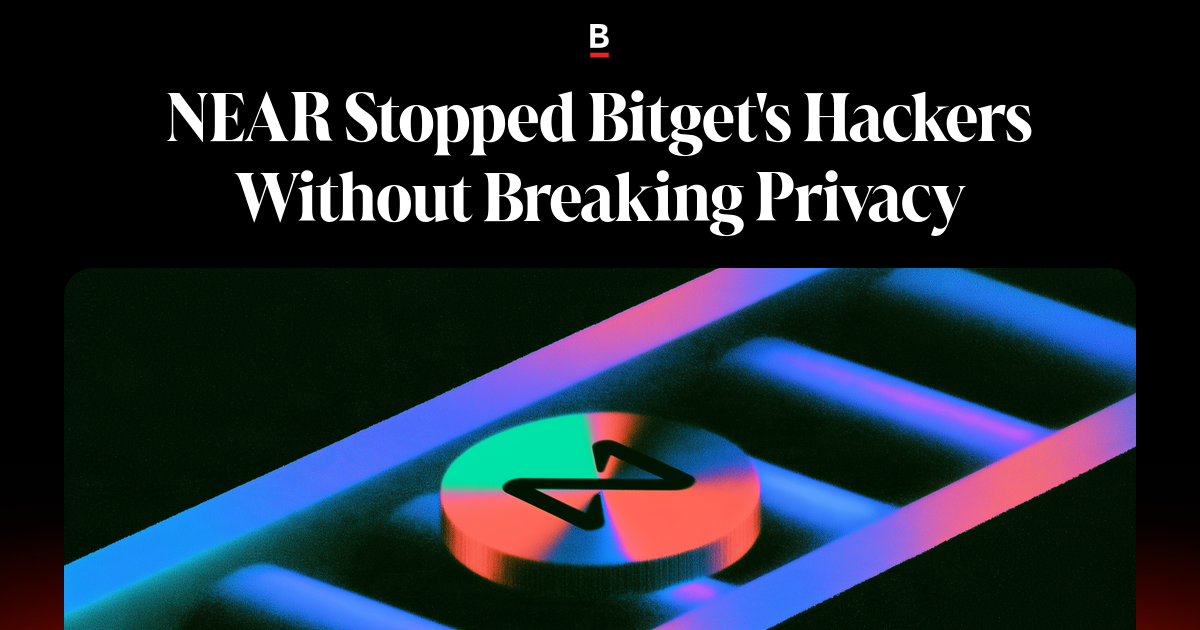
bankless.comarticle🛡️ Security Following the ~$387.5M Bitget hack on September 24th (attributed to North Korea-pattern tactics), attackers tried to launder funds via crosschain rails: THORChain refused Bitget's request to block the hacker's address and later saw $6M+ swapped through it, while NEAR Intents' SHIELD risk-intel layer rejected nearly all of a $50M+ attempted transfer, letting only $166k through. The piece explains the architecture: deposits/withdrawals are public on-chain transactions, but balances/routes/trades happen inside NEAR's Confidential Intents, and SHIELD acts as a gate checking public deposit addresses against shared stolen-funds intel before allowing Intents execution — without unmasking or freezing wallets, since Intents sits atop NEAR's consensus rather than being part of it. It also notes SHIELD's limits (funds simply got rerouted elsewhere) and NEAR co-founder Illia Polosukhin's pitch to make SHIELD shared infra other protocols can adopt.
NEAR IntentsTHORChainEthereum+1
Bitget hackBybit hackDPRK+4
Blockchain, Threat Intel· Added 30 Sep 2026, published 29 Sep 2026
🔍
theblock.coarticle🛡️ Security Bitget began phased withdrawal resumption after a 24 September 2026 exploit drained about $388M from its hot and warm wallets. The attacker used a vulnerability in a third-party security product to obtain internal credentials and send fraudulent withdrawal commands. Bitget says private keys, user balances and cold wallets were unaffected, and suspects North Korea. Mandiant and SlowMist are investigating; the report gives no technical detail on the flaw.
BitgetDPRKMandiant+1
Threat Intel, Blockchain· Added 11 Oct 2026, published 28 Sep 2026
bankless.comarticle🛡️ Security Bitget disclosed a $351.6M hot-wallet breach in which attackers did not compromise private keys but instead breached a core wallet backend and spoofed transaction data to trick Bitget's own authorization process into approving transfers. Attackers quickly converted most stolen EVM assets into 67,982 ETH (~$183M) and also took ~103M XRP to move into harder-to-freeze native assets, while Bitget's CEO and independent researcher Specter linked the attack to North Korea via VPN IP overlap and onchain infrastructure tied to the earlier AFX exploit attributed to TraderTraitor.
EthereumXRP
BitgetDPRKTraderTraitor+4
Blockchain, Threat Intel· Added 8 Oct 2026, published 25 Sep 2026

 blog.talosintelligence.comarticle🛡️ Security
Talos's weekly Threat Source newsletter opens with a first-person account of a social-engineering scam targeting security professionals: an unsolicited $300 "consultancy" offer that escalates into pressure to extract non-public insights from employers, a pattern the author links to fake-recruiter/trojanized-job-offer schemes. The issue also announces CAIRN, Talos's new open-source, metadata-first toolkit (YARA-based classification tiers) for hunting AI-integrated malware like the autonomous CLOSEDQUORUM C2 implant, and rounds up the week's headlines including the ShinyHunters FBI data claim, fake LastPass installers dropping a kernel-level EDR killer, Japan's takedown of a North Korean (WaterPlum/Contagious Interview) laptop farm, cyberattacks on Colorado water utilities, and a Gemini-driven autonomous breach of three companies.
YARAGemini
WaterPlumContagious InterviewDPRK+6
Threat Intel, AI Security· Added 7 Oct 2026, published 24 Sep 2026

 socket.devarticle🛡️ Security
Socket's Threat Research Team reports that the PolinRider campaign (linked to North Korea/DPRK operators) has spread malicious code into four dev-* branches of visanduma/nova-two-factor, a Packagist package with over 700,000 cumulative downloads, via a compromised GitHub account (LaHiRu) in the Visanduma organization. The post details the campaign's tradecraft — hiding payloads in .woff2 font files, using VS Code's "runOn": "folderOpen" task trigger, and a new technique inserting obfuscated JavaScript directly into index.php executed via PHP's shell_exec — and explains how Packagist/Go modules resolving code straight from Git repos lets planted source code reach downstream users without stolen registry credentials. It provides IOCs (package versions, wallet address, IPs, file hashes) and frames PolinRider as a slow, persistent Git-collaboration-based intrusion campaign primarily aimed at cryptocurrency theft.
PackagistGitHubPHP+2
PolinRiderDPRKvisanduma/nova-two-factor+1
Supply Chain, Threat Intel· Added 21 Sep 2026, published 17 Sep 2026

opensourcemalware.comwriteup🛡️ Security OpenSourceMalware's case study on npm packages fetch-page-assets and html-to-gutenberg, maintained by a legitimate developer (DiogoAngelim) whose GitHub account was compromised by the DPRK-linked PolinRider campaign in March 2026. The post shows GitHub server-side push timestamps proving all seven of the maintainer's repos were force-pushed with an identical NullReceiver loader in two coordinated bursts, and that after npm pulled the flagged v1.2.9 (GHSA-vxq2-vhm7-7mhq), every subsequent release (v1.2.10-v1.2.14) kept shipping the same .vscode/tasks.json auto-run trigger, with the attacker later adding a second obfuscated payload appended to babel.config.cjs. It argues npm/GitHub's per-version advisory model can't scale against thousands of PolinRider-compromised maintainers and lists specific IOCs (hashes, C2 wallet, RPC endpoints).
npmGitHubGitHub Actions+3
PolinRiderDPRKNullReceiver+8
Supply Chain, Threat Intel· Added 3 Sep 2026, published 25 Aug 2026

 wiz.iowriteup🛡️ Security
Wiz's H1 2026 cloud threat report documents a 60% jump in significant incidents driven by a doubling of supply-chain attacks (TeamPCP's npm/PyPI/GitHub Actions credential-harvesting spree, its open-sourced Shai-Hulud worm spawning Miasma/Hades/Megalodon/IronWorm follow-ons, North Korea's axios and @mastra trojanizations) and by growing attacks on AI infrastructure, including exposed unauthenticated MCP servers, LiteLLM/Dify/Langflow/n8n/Ollama vulnerabilities, and cryptominers deployed via a Langflow RCE. It also profiles JINX-0163, a cloud-native extortion group targeting non-human identities (service accounts/IAM roles) across AWS/Azure/GCP/Okta/Snowflake linked to the "FulcrumSec" extortion brand, and closes with concrete detection techniques for stolen access keys, Kubernetes VM Run Command abuse, GCP org-policy tampering, and CloudTrail user-agent/boto3 credential-provenance mismatches.
npmPyPILiteLLM+3
TeamPCPShai-HuludMiasma+11
Supply Chain, Threat Intel, AI Security, Cloud & Infra· Added 3 Sep 2026, published 6 Aug 2026

socket.devwriteup🛡️ Security Socket's Threat Research Team documents the expansion of PolinRider, a North Korea-linked (Contagious Interview / Famous Chollima) supply chain campaign, finding 162 malicious release artifacts across 108 packages and extensions spanning npm, Packagist, Go modules, and Chrome extensions. Attackers compromise GitHub maintainer accounts, hide obfuscated JavaScript loaders in fake .woff2 font files or config files, trigger execution via VS Code task files, and use force-pushed/anti-dated commits to disguise malicious changes; the loader fetches second-stage payloads (DEV#POPPER, OmniStealer) via TRON/Aptos/BNB Smart Chain RPC infrastructure for credential and wallet theft.
npmPackagistGo+3
PolinRiderContagious InterviewFamous Chollima+4
Threat Intel, Supply Chain· Published and added 2 Jul 2026

wiz.iowriteup🛡️ Security Wiz CIRT and Wiz Research detail JINX-0164, a previously untracked financially-motivated threat actor targeting cryptocurrency organizations since mid-2025. The group uses LinkedIn-based social engineering to deliver macOS malware (the Python-based AUDIOFIX infostealer/RAT and the Go-based MINIRAT backdoor), steals developer and cloud credentials, hijacks Git commits to propagate through CI/CD infrastructure, and trojanized the npm package @velora-dex/sdk in a supply-chain attack. The post includes full IOCs, C2 domains, and detection guidance (e.g., GitHub Vigilant Mode, audit log correlation) and notes tactical overlaps with North Korean clusters like UNC1069/Sapphire Sleet without confirmed attribution.
npmmacOSPython+4
JINX-0164AUDIOFIXMINIRAT+4
Threat Intel, Supply Chain, Malware & RE· Added 5 Sep 2026, published 27 May 2026