Skip to content

56 results for β€œFBI”

What you seeeverything
bleepingcomputer.comarticleπŸ›‘οΈ Security

FBI links $6.3 billion Binance crypto heist to North Korean hackers

The FBI attributed the roughly $6.3 billion Binance theft of about 29 October 2026 to North Korea's TraderTraitor (Lazarus Group, Jade Sleet, APT38). Binance traced the breach to a compromised DevOps engineer's laptop that gave access to a service container used to submit unauthorized withdrawals across ten blockchains. The FBI published 628 laundering addresses and linked the group to earlier thefts at Bybit, DMM Bitcoin, Bitget and Drift.

EthereumBitcoinSolana+3
TraderTraitorLazarus GroupDPRK+14

Threat Intel, BlockchainΒ· Published and added 1 Nov 2026

theblock.coarticleπŸ›‘οΈ Security

North Korean hackers launder $242 million of Binance loot via Tron as FBI presses THORChain: analyst

The Block reports that North Korean hackers (TraderTraitor) laundered about $242 million of funds stolen from Binance through Tron in two days, according to analyst SomaXBT. Relay, THORChain, Chainflip and Symbiosis moved about $140 million off Tron. Elliptic counts $2.85 billion frozen or seized, 44% of $6.43 billion stolen, and $3.25 billion in assets no issuer can freeze. The FBI urged THORChain and others to block listed addresses.

TronTHORChain
TraderTraitorDPRKBinance+6

Blockchain, Threat IntelΒ· Published and added 1 Nov 2026

en.cryptonomist.charticleπŸ›‘οΈ Security

Binance Replaced 90% of Assets Stolen in the $6.3B Binance Crypto Hack

Report on the $6.3 billion Binance hack of October 2026, which the FBI attributed to North Korea's TraderTraitor unit. Co-CEO Richard Teng said attackers used EIP-7702 to gain execution approval over a hot wallet, after a compromised laptop and further breach points, and used self-destructing malware. Binance replaced 90% of the assets, and the FBI expects further laundering through Ethereum. No IOCs or mitigations are given.

Ethereum
TraderTraitorBinanceFBI+5

Blockchain, Threat IntelΒ· Added 1 Nov 2026, published 31 Oct 2026

thedefiant.ioarticleπŸ›‘οΈ Security

FBI Attributes $6 Billion-Plus Binance Hack to North Korea

The Defiant reports that the FBI attributed a Binance hack of more than $6 billion to North Korea and named TraderTraitor as the actor. The bureau also sought blocks on the laundering trail, and Binance kept 1 November as its target for restarting withdrawals. The article body did not load, so technical details of the intrusion are not available.

TraderTraitorDPRKFBI+1

Threat Intel, BlockchainΒ· Published and added 31 Oct 2026

decrypt.coarticleπŸ›‘οΈ Security

Secret Service, FBI Join Binance Hack Probe as Circle Freezes $823 Million

Decrypt reports that Binance is working with the FBI and U.S. Secret Service after a theft of about $6.4 billion, which TRM Labs and Chainalysis attribute to North Korea's TraderTraitor group, also linked to the February 2025 Bybit hack. Circle froze about $823 million in USDC and Tether froze USDT, though the page gives differing Tether totals. Binance first suspected a compromised DevOps engineer laptop, found more breach points, and saw no evidence of leaked wallet private keys.

USDCTether
TraderTraitorBinanceBybit+10

Blockchain, Threat IntelΒ· Published and added 30 Oct 2026

securityweek.comarticleπŸ›‘οΈ Security

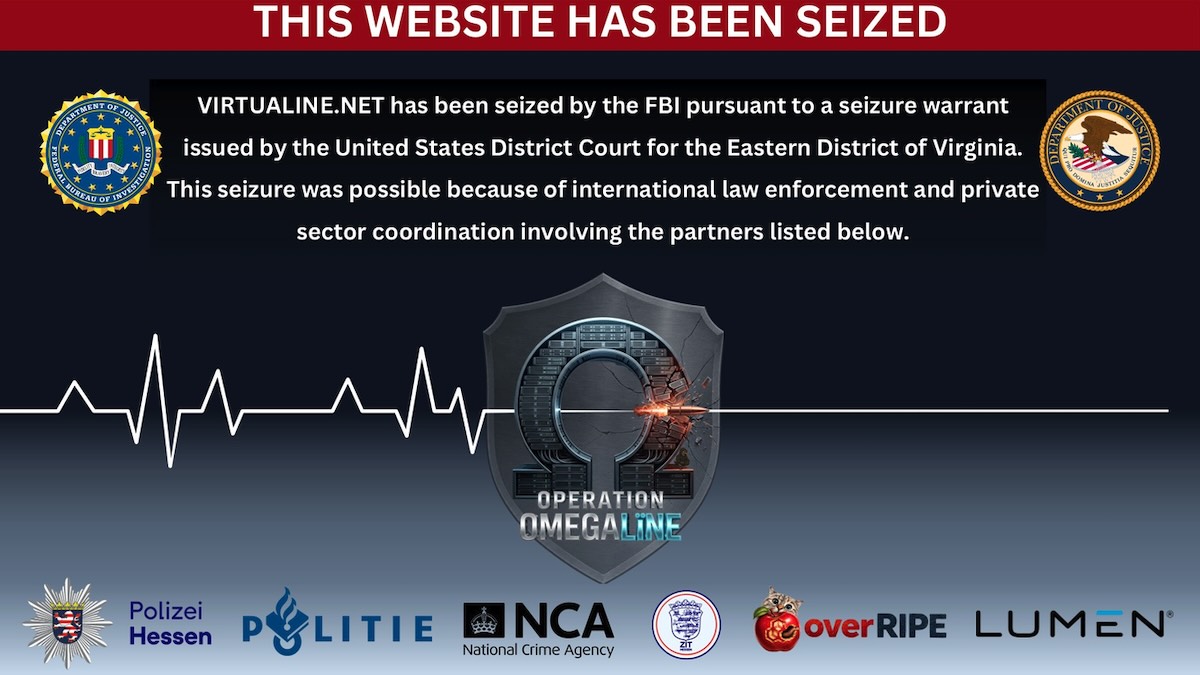
Bulletproof Host Virtualine Loses Its Domain to FBI Seizure

Virtualine is a Russian-speaking bulletproof hosting provider whose domain virtualine.net the FBI seized. Court documents say it hosted phishing, spam, carding and illicit content, and ignored abuse reports. TRM Labs says it received more illicit-attributed cryptocurrency than any other labeled bulletproof host, mostly from a Russian drug marketplace (44%) and a sextortion scheme (17%), and later from StealC operators in 2026.

Bitcoin
VirtualineStealCFBI+3

Threat IntelΒ· Published and added 30 Oct 2026

x.comthreadπŸ›‘οΈ Security

Trail of Bits (@trailofbits) on X

Trail of Bits post on X summarising Binance's initial investigation into a security incident. Binance suggests a compromised DevOps engineer's laptop let an attacker reach a service container and submit unauthorized withdrawal transactions. The text says no evidence has been found of wallet private key compromise. The fetched text is truncated and gives no further detail.

BinanceTrail of Bits

Threat Intel, BlockchainΒ· Published and added 30 Oct 2026

bleepingcomputer.comarticleπŸ›‘οΈ Security

Police seize Virtualine bulletproof service tied to ransowmare, cybercrime

Virtualine, a bulletproof hosting service also operating as Secury, Massgod, Spamhouse, Lanedo and Omegatech, had its main domain seized by the FBI with German, Dutch and UK partners. Chainalysis and TRM Labs traced its Bitcoin payments to ransomware (5% of flows), a Russian drug market (about 44%), sextortion and the StealC infostealer. Dutch police seized dozens of servers in Limburg and recovered data on over 3,000 customers.

Bitcoin
VirtualineSecuryMassgod+14

Threat IntelΒ· Added 30 Oct 2026, published 28 Oct 2026

x.comthreadπŸ›‘οΈ Security

Trail of Bits (@trailofbits) on X

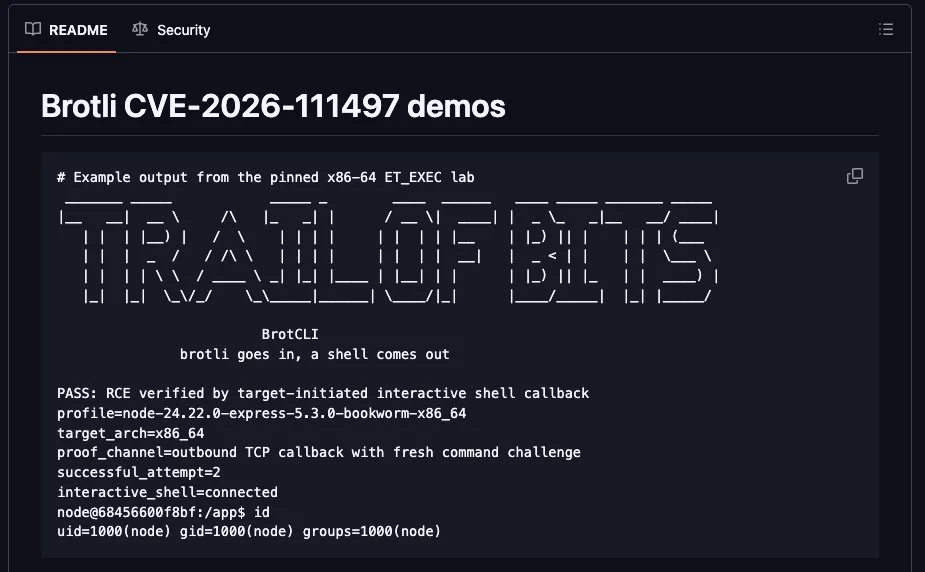
Trail of Bits post says it achieved remote code execution through a Brotli decoder bug in Linux lab setups: Node.js 24.22.0 with Express 5.3.0 via the standard JSON parser (x86-64 and ARM64), and Electron 41.10.7 (x86-64) with a custom decoding service. Exploitation needs a carefully matched setup and repeated attempts. A scanner by ToBScottA finds hidden copies of the decoder, including in stripped binaries.

BrotliNode.jsExpress+1
Trail of BitsToBScottA

AppSec, Offensive Security, Supply ChainΒ· Added 30 Oct 2026, published 28 Oct 2026

chainalysis.comarticleπŸ›‘οΈ Security

International Law Enforcement Seizes Domain of Virtualine Bulletproof Hosting Service

Virtualine is a bulletproof hosting provider whose domain virtualine.net was seized on 27 October 2026 by the FBI Washington Field Office and the Eastern District of Virginia, with German, Dutch and UK police support. Chainalysis and OverRIPE gave intelligence support. The post lists aliases (Secury, Massgod, Spamhouse, Lanedo, Omegatech), forum advertising on Exploit.in and HackForums, and unhosted bitcoin payments tied to ransomware, infostealers and scam infrastructure.

BitcoinChainalysis Reactor
VirtualineSecuryMassgod+13

Threat IntelΒ· Published and added 27 Oct 2026

thedefiant.ioarticleπŸ›‘οΈ Security

US Charges Six in Alleged Madagascar NFT Wallet-Draining Scheme

The Defiant reports US charges against six people over an alleged NFT wallet-draining scheme run from Madagascar. An FBI affidavit estimates at least $516,695 in losses across 74 victim-linked wallets. It describes unlimited USDT spending approvals as the mechanism. The fetched text holds only the subtitle, so the scheme's mechanics and the defendants are not covered here.

Tether
FBIwallet drainerunlimited token approval+1

Threat IntelΒ· Published and added 27 Oct 2026

x.comthreadπŸ›‘οΈ Security

Trail of Bits (@trailofbits) on X

Trail of Bits post on PHP2Shell, an exploit that gives a shell on MediaWiki, Symfony, Laravel and phpBB. They confirmed it on pre-patch PHP 8.2 to 8.5. An update says it is production-grade: it works with stock php.ini-production, display_errors off, multiple workers, ASLR and load, on ARM64 and x86-64, and reaches root on Apache/mod_php and nginx/php-fpm. No CVE or technical root cause is given.

PHPWordPressLaravel+3
PHP2ShellTrail of Bits

Offensive Security, AppSecΒ· Added 27 Oct 2026, published 26 Oct 2026

galaxy.comarticleπŸ›‘οΈ Security

Weekly Research Brief: PHP Vulnerability; Objections to OKX-ICE’s Stock Tokenization; Solana Alpenglow Ships

Galaxy Research's weekly brief includes a section on PHP2Shell, two decade-old PHP remote code execution bugs affecting versions back to 5.4, patched in an emergency release. It reports an Amazon honeypot exploit attempt four days before disclosure, thousands of attempts in the 10 hours before the patch per Cloudflare's Matthew Prince, and NSA and FBI offline advice. The author argues the bugs were found with GPT-5.6 Sol and that defence must become agentic. It also lists the week's other incidents, including a CVSS 10.0 GitLab bug and eMudhra's guessable private keys.

PHPWordPressOpenAI+3
PHP2ShellPatch the PlanetCalif+7

Threat Intel, AI SecurityΒ· Added 24 Oct 2026

x.comtoolπŸ›‘οΈ Security

Trail of Bits (@trailofbits) on X

Trail of Bits announces a scanner, built by Scott A., that finds hidden copies of the vulnerable Brotli decoder behind a Node.js/Brotli bug, including in stripped binaries. Exploitability of the bug is still under testing. Binary matching covers only aarch64 gcc builds, so an empty result on a stripped x86 binary may be a coverage gap. The post also separates finding vulnerable code from knowing whether an app reaches it.

Node.jsBrotli
Trail of Bits

AppSec, Supply Chain, Malware & REΒ· Added 25 Oct 2026, published 23 Oct 2026

x.comtoolπŸ›‘οΈ Security

Trail of Bits (@trailofbits) on X

patching-bugs is a Trail of Bits plugin for Codex that has an AI agent write a vulnerability fix, prove it works, and check it for regressions. It was built from analysis of thousands of Codex sessions from the Patch the Planet work with OpenAI. The post argues defenders need patch-writing agents to match attackers' bug-hunting agents. It gives no technical detail beyond that.

CodexOpenAI
Patch the PlanetTrail of Bits

AI Security, AppSecΒ· Added 24 Oct 2026, published 22 Oct 2026

x.comthreadπŸ›‘οΈ Security

Trail of Bits (@trailofbits) on X

Trail of Bits post on two unpatched critical PHP bugs that were exploited within 17 hours of details leaking. Cloudflare began blocking attacks and Patchstack reported active exploitation. The bug was reported 11 August and fixed 71 days later, with a patch touching 402 files and over 11,000 lines. Trail of Bits announces two open-source plugins, patching-bugs and regression-hunt, from its Patch the Planet work.

PHPCloudflare
Trail of BitsPatch the PlanetPatchstack

AppSec, AI SecurityΒ· Added 23 Oct 2026, published 21 Oct 2026

x.comarticle🧠 AI

Trail of Bits (@trailofbits) on X

Trail of Bits announces two open-source plugins, patching-bugs and regression-hunt, for AI coding agents that speed up bug patching. They come from four months of Patch the Planet work with open-source projects, which found that repo-level documentation, skills and plugins give agents the maintainer context on what counts as a bug, how a fix should look and what must not break. The post cites the October 2026 PHP incident: a patch touching 402 files, and exploitation within 17 hours of leaked details.

PHPCloudflare
Trail of BitsPatch the PlanetPatchstack+2

coding-agents, promptingΒ· Added 23 Oct 2026, published 21 Oct 2026

x.comthreadπŸ›‘οΈ Security

Trail of Bits (@trailofbits) on X

Trail of Bits thread on Google Quantum AI's March publication of a new Shor's algorithm version aimed at secp256k1, the curve protecting Bitcoin and Ethereum wallets. Google used zero-knowledge proofs to keep the attack details secret, and the post says the secrecy lasted 63 days. The fetched text is cut off after the qubit estimate of roughly 1,200, so later details are missing.

BitcoinEthereum
Shor's algorithmsecp256k1Google Quantum AI+2

BlockchainΒ· Added 22 Oct 2026, published 20 Oct 2026

x.comthreadπŸ›‘οΈ Security

Trail of Bits (@trailofbits) on X

Trail of Bits post announcing research that tested 25 package managers against a simulated malicious repository serving swapped code for the same package and version. Without a lockfile only Go and vcpkg verified every download; with a lockfile fewer than half did. This undercuts the assumption that lockfiles make dependencies immutable and shows hash/integrity verification gaps across ecosystems.

Govcpkg
Trail of Bits

Supply ChainΒ· Added 18 Oct 2026, published 16 Oct 2026

en.cryptonomist.charticle🧠 AI

U.S. jobs data challenges fears about the future of artificial intelligence

Reports Stephen Messer's October 2026 essay arguing that US unemployment (4.3–4.5% through 2025–2026) and studies from Anthropic economists, PwC and a Danish dataset show no mass AI job destruction. It also covers Yann LeCun's rejection of LLMs as a route to human-level intelligence and open-weight competition, notably Moonshot's Kimi K2 to K3 and Harvey's Tenet model post-trained on Kimi K3 (benchmark 11% to 19.7%, inference cost under a quarter). It closes with the September 2026 FBI/NSA/CISA advisory on Chinese distillation campaigns against US models.

LLMKimi K3Claude
Stephen MesserAnthropicYann LeCun+22

ai-policy, modelsΒ· Published and added 16 Oct 2026

x.comthreadπŸ›‘οΈ Security

Trail of Bits (@trailofbits) on X

Trail of Bits tweet announcing a test of 25 package managers against a simulated malicious repository. Without a lockfile only Go and vcpkg verified every download; with a lockfile fewer than half did. Replies raise that checksum verification is separate from execution isolation, and ask whether poisoned CI package caches were in the threat model.

Govcpkg
Trail of Bits

Supply ChainΒ· Added 17 Oct 2026, published 15 Oct 2026

coindesk.comarticleπŸ›‘οΈ Security

How Brooklyn prosecutors and the FBI took down a massive crypto fraud network targeting Russian speakers

Brooklyn DA Eric Gonzalez and the FBI seized or disrupted 241 scam websites and 112 servers tied to a crypto investment fraud network that targeted Russian speakers in the US. The scheme used Russian-language Facebook ads, fake advisers who coached victims into sending crypto to fake trading platforms, fee and tax lockouts on withdrawal, and later fake fund-recovery offers. Investigators went after the servers holding victim data and fraud software, because replacement domains kept appearing after earlier takedowns of about 400 domains. The infrastructure was in Ukraine and other Eastern European countries, no arrests were announced, and about $300,000 has been seized.

Facebook
FBIBrooklyn District Attorney's OfficeEric Gonzalez+4

Threat IntelΒ· Published and added 15 Oct 2026

securityweek.comarticleπŸ›‘οΈ Security

US Arrests Two in Crackdown on North Korean IT Worker Laptop Farms

SecurityWeek reports on the arrest of two US nationals (Michael James Bostelle, Juan Cecilio Pena Carrillo) for running laptop farms that helped North Korean IT workers get remote jobs at over 70 US companies, generating more than $3M between 2019 and July 2025. It covers the FBI's Operation Lonestar Roundup (40 Texas locations searched, 187 laptops and KVMs seized). It also covers CrowdStrike's Famous Chollima analysis of shipping-diversion tricks and evolving evasion (hidden RMM tools, spoofed device hashes), and the FBI's 'identity in depth' guidance for spotting ITWs across the employment lifecycle.

CrowdStrikeVPN
Famous ChollimaDPRKOperation Lonestar Roundup+5

Threat Intel, Blue Team & DetectionΒ· Published and added 14 Oct 2026

securityweek.comarticleπŸ›‘οΈ Security

Employee Arrested After Listening Device Found in OpenAI Conference Room, FBI and the Company Say

SecurityWeek reports that an OpenAI engineer, Abdulrahman Alfozan, was arrested by the FBI and charged with illegally intercepting oral communications. A recording device, concealed in toilet paper, had been plugged into a USB port on the back of a conference-room TV. OpenAI says it used its own models to analyse the device and identify the employee, and that it has no indication model weights, source code or customer data were accessed. The complaint cites CCTV footage, a camera later added to the room, and the employee's productivity-tool queries about meeting rooms and calendars.

OpenAI
Abdulrahman AlfozanFBI

otherΒ· Published and added 13 Oct 2026

sfstandard.comarticleπŸ›‘οΈ Security

OpenAI engineer arrested in bugging of executive conference room

Reports the federal arrest of OpenAI engineer Abdulrahman Alfozan, charged with using a device to intercept oral communications after an encrypted audio recorder was found in a San Francisco executive conference room. The recorder was hidden in toilet paper and plugged into a TV's USB port. Prosecutors say he used an internal productivity tool to scout rooms and calendars, and a chatbot account tied to his spouse asked how to build, encrypt and remotely access a recorder. OpenAI's technical surveillance countermeasures team found the device, and OpenAI says it used its own models for forensic analysis. It then restricted his access in stages, timed with the FBI, before firing him. A useful insider-threat case study that also covers physical security.

OpenAI
Abdulrahman AlfozanFBItechnical surveillance countermeasures

otherΒ· Published and added 13 Oct 2026

securityweek.comarticleπŸ›‘οΈ Security

Ransomware Response Expert Arrested in ShinyHunters FBI Hack Probe

SecurityWeek reports the US arrest of a Canadian ransomware-negotiation specialist, reportedly Edward Dubrovsky of CyberSteward, on suspicion of involvement in ShinyHunters attacks, including the hack of FBI systems. He is charged with conspiracy to threaten to impair information confidentiality with intent to extort, and the case has moved to the Eastern District of Texas. It is the third ShinyHunters arrest in weeks, after suspects in the Netherlands and Jordan. The FBI blamed its own breach on a contractor's unpatched Oracle PeopleSoft, and sources say other ransomware negotiators could face charges.

Oracle PeopleSoft
ShinyHuntersFBIEdward Dubrovsky+3

Threat IntelΒ· Published and added 12 Oct 2026

securityweek.comarticleπŸ›‘οΈ Security

Insider Cyber Extortion Plot Against Industrial Firm Lands Engineer in Prison

SecurityWeek reports that Daniel Rhyne, a core infrastructure engineer, was sentenced to 32 months for sabotaging and extorting his employer, an industrial firm in New Jersey. In November 2023 he planted scheduled tasks on the domain controller that deleted 13 domain admin accounts and reset passwords on 301 domain users, 254 servers and 3,284 workstations, mostly to 'TheFr0zenCrew!'. He then emailed a 20 bitcoin (about $750,000) ransom demand. Internal log correlation with physical access records, plus FBI work, traced the activity to his home IP address.

Active DirectoryBitcoin
Daniel RhyneTheFr0zenCrew!FBI+1

Threat IntelΒ· Published and added 10 Oct 2026

cisa.govadvisoryπŸ›‘οΈ Security

CISA AA26-281A: Chinese Government-linked Actors Combine Automated and Hands-on Hacking Tools to Steal Data

Joint FBI/CISA/NSA and allied-agency advisory on China-linked actors enabled by Integrity Technology Group (overlapping with Flax Typhoon, Ethereal Panda, Red Juliett). It details their TTPs: open-source scanners and the MicroScan exploit-script app, an XSS credential-harvesting payload dropping live700_v1.exe, EBurst password spraying against Exchange/O365, SoftEther VPN persistence, DCSync via DC.exe, and email theft via the Curlc4.txt PHP bot and the office-cli utility. It also provides IOCs, MITRE ATT&CK mappings, CVEs, incident response steps, and mitigations.

SoftEtherMicrosoft 365Active Directory+3
Integrity Technology GroupFlax TyphoonEthereal Panda+13

Threat Intel, Blue Team & DetectionΒ· Added 9 Oct 2026

x.comtoolπŸ›‘οΈ Security

Trail of Bits (@trailofbits) on X

Trail of Bits announces SequenceHash, a library for hashing several inputs without concatenation ambiguity. Plain concatenation lets different input sequences produce the same SHA-256 digest. SequenceHash appends each input's length as a fixed 128-bit integer so every sequence has a single encoding. It ships for Rust, Go and Python, and removes a recurring bug class in crypto and appsec code.

RustGoPython
Trail of BitsSequenceHash

AppSecΒ· Added 11 Oct 2026, published 9 Oct 2026

x.comthreadπŸ›‘οΈ Security

Ned Peterson (@NedPeterson99) on X

A post summarizing a joint FBI and six-country advisory on actors tied to Integrity Technology Group (the sanctioned Chinese firm linked to Flax Typhoon and the Raptor Train botnet). They password-sprayed Microsoft 365 and Exchange accounts over EWS, OWA, ActiveSync and PowerShell with EBurst. They then drained mailboxes with a PHP bot over Exchange Web Services and an office-cli utility using stored client ID, tenant ID and secret values, and exposed the stolen email to third parties through a web app, in some cases restricted to Xiamen IP addresses. Victims were in government, law enforcement, healthcare and religious organizations across Southeast Asia, Africa and North America, with activity since at least January 2021. Defensive takeaways: enforce MFA on every legacy path, retire basic auth and EWS, audit OAuth apps and service principals with mail-read rights, and alert on bulk mailbox pulls.

Microsoft 365Microsoft ExchangeEBurst+3
Integrity Technology GroupFlax TyphoonRaptor Train+3

Threat Intel, Identity & AccessΒ· Added 11 Oct 2026, published 9 Oct 2026

Showing 30 of 56

Show more