Skip to content

28 results for β€œReflection”

What you seeeverything
oversecured.comarticleπŸ›‘οΈ Security

Android deep link vulnerabilities: how intent filters lead to account takeover | Oversecured Blog

Oversecured's article on Android deep-link vulnerabilities covers five patterns: custom scheme hijacking, open redirect into WebView, limited and full intent redirection, and domain takeover via an expired whitelist entry. It shows bypass payloads, intent selector abuse, and the HierarchicalUri reflection bypass. It also compares what SAST and DAST can find and gives a checklist for pentesters.

AndroidOAuthChrome+1
deep link hijackingcustom scheme hijackingopen redirect+8

Mobile Security, AppSecΒ· Added 29 Oct 2026

arxiv.orgpaper🧠 AI

PhysCount: Do MLLMs Count Visual Appearances or Physical Entities?

PhysCount is a benchmark of 546 real-world images and 4,595 human-written questions in 651 target-specific groups. It tests whether multimodal LLMs can separate visible appearances (direct view, reflections, glass) from the physical entities behind them. Across 40 MLLMs, counting appearances is much easier than linking them to entities, and the best model answers every question correctly in only 13.36% of groups.

vision-language model
PhysCountarXiv

evals, multimodal, researchΒ· Added 31 Oct 2026, published 29 Oct 2026
alignmentforum.orgarticle🧠 AI

Notes on β€œWe’re in Triage Mode for AI Safety” by Miles Brundage

Notes on "We're in Triage Mode for AI Safety" by Miles Brundage is an AI Alignment Forum linkpost by Chris_Leong, published 27 October 2026, with a 5-minute read. It comments on Brundage's essay from the Reflections on Safety Substack about prioritising AI safety work under pressure. The fetched page shows only the header, so the specific arguments are not available.

Miles BrundageChris LeongAI Alignment Forum

ai-safety, ai-policyΒ· Published and added 27 Oct 2026

interconnects.aiarticle🧠 AI

Latest open artifacts (#25): DeepSeek V4.1 Flash 1017, American-made models, and new regulatory controls in the US & China

Interconnects' Latest open artifacts (#25) covers open-weight AI in fall 2026. Policy items: China's MOFCOM proposal for pre-approval of international model sharing, and a DHS order barring DeepSeek from federal civilian procurement. DeepSeek released its internal inference stack DeepInfer. Picks include MiMo-V2.6-Pro-RL, DeepSeek-V4.1-Flash-1017 (552B-A16B, MIT), Clef, Nemotron-3.5-Super-VL and Reflection's Beam-1.0 (Apache 2.0).

DeepSeekvLLMSGLang+8
InterconnectsDeepSeek-V4.1-FlashDeepInfer+23

models, ai-policy, inferenceΒ· Published and added 20 Oct 2026

interconnects.aiarticle🧠 AI

Meta shakes up the frontiers, open and closed

Analysis of Meta's Muse Spark Open, an 816B total/42B active parameter open-weights model with 1M context, now the strongest American open model, and its position relative to Chinese open models such as GLM-5.3, Kimi K3 and DeepSeek V4.1 Flash. It examines Meta's restrictive custom license ("Built with Muse" attribution, $20M/month revenue gate, acceptable use policy, coverage of outputs and derivatives), and ranks Meta against Anthropic, OpenAI, Gemini and xAI after the closed Muse Wonder release. It also covers tier-3 labs (Mistral Large 4, Reflection's Beam) and valuation questions.

Hugging FaceMixture of ExpertsLlama+5
MetaMuseMuse Wonder+27

models, ai-policyΒ· Published and added 17 Oct 2026

x.comthread🧠 AI

🚨 AI News | TestingCatalog (@testingcatalog) on X

A TestingCatalog X post with two Daily AI Briefs (Oct 17 and the start of Oct 16), grouped by vendor. Oct 17 items include GPT-6 Astra Pro upgrades in ChatGPT, Codex context reuse and caching, Gemini 4 Argon in AI Studio Build, the open-weight MIT-licensed DeepSeek-V4.1-Flash-1017, Claude Code Review going GA, Perplexity's open Decider v1.2 models (27B and 4B), NVIDIA's 4B looped Nemotron Labs Dory 1.0, Reflection's Apache-2.0 Beam, Cursor cloud-agent canvases and Tencent's Hy Memory 2.0. Oct 16 begins with Meta's open-weight Muse Spark Open, an 816B-total, 42B-active MoE with a 1M-token context. It gives a quick snapshot of the week's open-weight and coding-agent releases.

ChatGPTCodexGemini+7
TestingCatalogOpenAIGPT-6 Astra+15

models, coding-agentsΒ· Added 18 Oct 2026, published 17 Oct 2026

x.comthread🧠 AI

Master the captain (@mollicksoif9) on X

A social post reporting that Reflection AI released the full weights of Beam, a 501B-parameter mixture-of-experts agentic coding model (23B active, 1M-token context), on Hugging Face under Apache 2.0. It claims RL training that penalizes wasted tokens gives roughly 3-4x less inference compute than GLM-5.2, and 80.9 on SWE-bench Verified. Launch support is listed for AWS SageMaker, vLLM and SGLang. The post notes the token-efficiency claims still need independent confirmation and that self-hosting needs about 500GB of GPU memory at 8-bit.

Mixture of ExpertsHugging FacevLLM+3
Reflection AIBeamGLM-5.2+6

models, coding-agents, trainingΒ· Added 18 Oct 2026, published 17 Oct 2026

latent.spacearticle🧠 AI

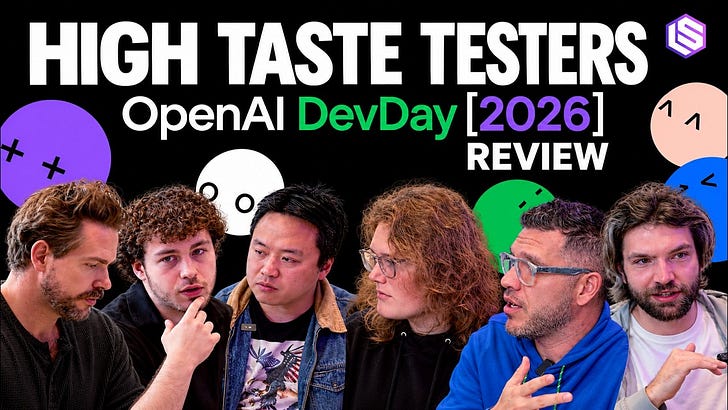
[AINews] High Taste Testers Ep. 1

AINews issue for 10/15–10/16/2026, covering Twitter and Reddit. It covers the open-weights releases Meta's Muse Spark Open (816B/42B-active MoE, AA Intelligence Index 39, custom license) and Reflection Beam 1.0 (501B/23B-active, Apache 2.0), plus NVIDIA Nemotron 3.5, StepFun Step 5 Preview and FLUX 3 Image Klein. It also covers Gemini 4 Argon, Haiku 5.5 pricing, "decision model" classifiers (Liquid d1-ultra, Perplexity pplx-decider), TPUv7/Vera Rubin/MI355X serving benchmarks, interpretability claims (Qwen3-32B neuron audit), agent research, eval-integrity and safety disclosures, and China export-control proposals. The page also announces a pilot video show, High Taste Testers Ep. 1.

Mixture of ExpertsvLLMSGLang+15
Latent SpaceMetaMuse+44

models, inference, evalsΒ· Published and added 17 Oct 2026

latent.spacearticle🧠 AI

[AINews] High Taste Testers Ep. 1

AINews issue for 15-16 October 2026, from Latent Space, summarising 12 subreddits and 544 Twitter accounts. It covers Meta's Muse Spark Open (816B MoE) and Reflection Beam 1.0 with Artificial Analysis scores and pricing. It also covers Gemini 4 Argon, decision models, TPUv7 and Vera Rubin serving benchmarks, interpretability claims, agent papers, and China's proposed open-source export rules.

vLLMSGLangMLX+13
Latent SpaceMetaMuse+43

models, inference, evalsΒ· Added 30 Oct 2026, published 17 Oct 2026

huggingface.coarticle🧠 AI

Welcome Beam: a 501B open model you can own, customize, and scale

Announces Reflection's Beam-1.0-501B-A23B, an Apache 2.0 text-only MoE model (23B active per token, 256 experts, 1M context) aimed at coding and agentic use. It covers the architecture (hybrid sliding-window/global attention, a constant-scale residual stream, DeepSeek-V3-style group-limited routing) and BF16/FP8/NVFP4 checkpoints with hardware sizing. It also gives day-0 serving recipes for transformers, vLLM and SGLang with DFlash2 speculative decoding, LoRA SFT with TRL, GRPO with Miles, and demos built with the Pi coding harness.

TransformersvLLMSGLang+12
BeamReflectionDeepSeek+15

models, inference, trainingΒ· Published and added 16 Oct 2026

arxiv.orgpaper🧠 AI

Skill-Decoupled On-Policy Expert Distillation for Unified Vision-Language Models

Proposes SCOPED (Skill-Decoupled On-Policy Expert Distillation), which trains capability-specific RL experts for vision-language models. It extracts explicit skills from them through reward-guided reflection. During on-policy distillation the skills guide expert supervision but are hidden from the unified student, so the student internalizes the procedural knowledge and needs no explicit skills at inference. Across eight multimodal benchmarks it beats the backbone and mixed-capability RL. Analyses show cross-capability gradient interference in joint RL, and that skill augmentation gives more consistent expert trajectories, more attention to task-relevant visual evidence, and better preservation of expertise.

vision-language model
SCOPEDarXiv

research, training, multimodalΒ· Added 17 Oct 2026, published 15 Oct 2026

reflection.aiarticle🧠 AI

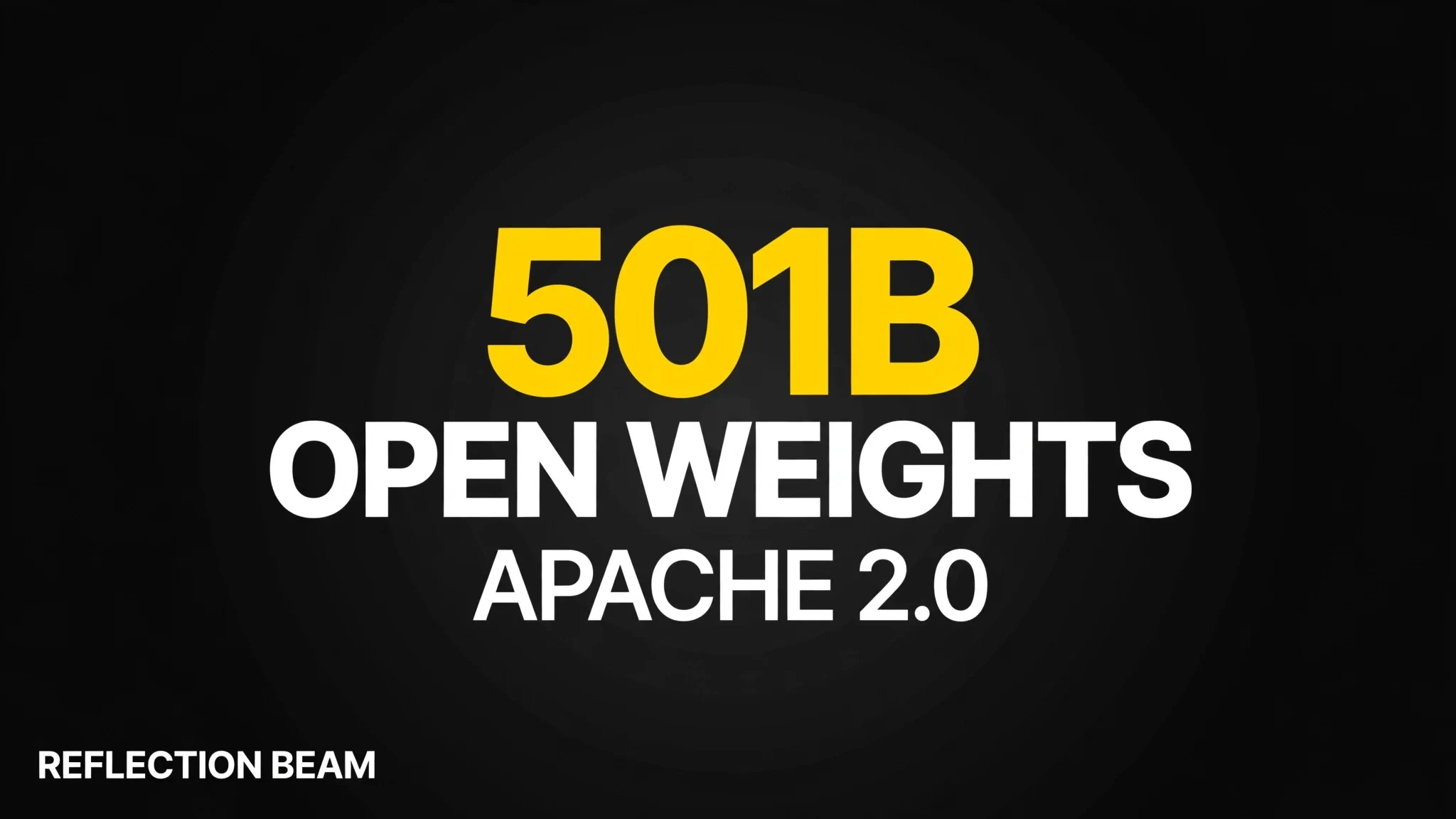
Introducing Beam: Reflection AI's 501B open-weight model

Reflection AI announces Beam, a 501B-parameter (23B active) sparse Mixture-of-Experts open-weight model built for coding, reasoning, and agentic tasks, pretrained on 23.8T tokens and refined with a massive asynchronous RL run (100M+ rollouts on 10.5K NVIDIA GB300 GPUs). The post details the MoE optimization recipe (auxiliary-loss-free load balancing with cosine-decayed expert bias, sequence-level balancing, FP32 residual accumulation), the asynchronous RL infrastructure handling policy staleness and fast weight propagation, and a safety/alignment pipeline using multi-teacher on-policy distillation and deliberative alignment. Weights will be released under Apache 2.0 with a technical report later in the month.

Mixture of ExpertsKubernetes
Reflection AIBeamGLM-5.2+5

models, trainingΒ· Added 8 Oct 2026

latent.spacearticle🧠 AI

[AINews] Reflection Beam - 501B-A23B American Open Model

Latent Space's AINews roundup for Oct 3-5, 2026, leads with Reflection AI's Beam, a US-trained-from-scratch 501B-total/23B-active MoE model for coding and agentic work (23.8T pretraining tokens, RL on ~10,500 GB300s, 80.9 on SWE-bench Verified, Apache 2.0 weights due), alongside other open releases (Aleph Alpha's Kolibri, Reka's Rho-1 omni model, Upstage's Solar Mini 4). It also covers OpenAI-vs-Anthropic subscription economics (SemiAnalysis's value comparison), new agent-harness and RL-environment tooling (Hugging Face's multi-harness capture proxy, Cognition's Devin Dreaming memory graph), verification-over-sampling and context-compression research (NVIDIA, Google, UT Austin), and AI policy/safety items (Bengio's op-ed, OpenAI's EU watermarking, autonomous-weapons advocacy).

Mixture of ExpertsvLLMTRL+4
Reflection AIBeamAleph Alpha+38

models, agents, ai-policyΒ· Published and added 6 Oct 2026

x.comthread🧠 AI

John Davis | Solar Strategies (@solarstrategies) on X

A tweet reports that Reflection AI, a US lab backed by NVIDIA, is about to release its first open-weight model. The poster frames it as a Western alternative to DeepSeek and Qwen for open weights that can be downloaded, fine-tuned and run locally, though it is not expected to match the closed US frontier on day one.

QwenDeepSeek
Reflection AINVIDIA

modelsΒ· Published and added 5 Oct 2026

arxiv.orgpaper🧠 AI

MobiAgent: Dual-Loop Recursive Policy Self-Improvement for Long-Horizon Mobile Manipulation

MobiAgent is a dual-loop agentic framework for long-horizon mobile manipulation that separates deployment execution from policy self-improvement. An Inner Loop uses vision-language models for receding-horizon planning and visual reflection to compose atomic skills executed by flow-matching experts sharing a unified VLM backbone, while an Outer Loop autonomously segments, verifies, and clusters deployment rollouts to discover new atomic skills and continuously fine-tune the skill library without human annotation. On BEHAVIOR-1K it beats pi_0.5-TA by 22.5 percentage points, and autonomous data recycling raises RoboCasa success from 7.50% to 27.50% and Astribot S1 success from 32.5% to 57.5%.

vision-language modelflow matching
RoboCasaBEHAVIOR-1KAstribot S1+1

research, multimodalΒ· Added 5 Oct 2026, published 2 Oct 2026

arxiv.orgpaper🧠 AI

AREX-2: Advancing Self-Improving Agents through Long-Horizon Reflective Tasks

AREX-2 trains an LLM agent, built on Qwen3.8-27B, to self-improve at test time by iteratively refining solutions. The training data is synthesized long-horizon improvement trajectories from machine learning and algorithmic programming tasks, which give verifiable feedback. It reports 81.8 on MLE-bench Lite and 70.7 on Frontier-CS, and transfer to deep research with 84.0 on BrowseComp, 52.6 on HLE, 92.2 on GAIA and 93.8 on DeepSearchQA. Performance keeps improving as the budget of rounds grows. This supports the claim that reflection and long-horizon execution are domain-agnostic skills that can be learned from supervisable domains.

Qwen3.8-27B
AREX-2MLE-bench LiteFrontier-CS+5

research, agents, trainingΒ· Added 1 Oct 2026

arxiv.orgpaper🧠 AI

Ranking-Aware Prompt Optimization for Multimodal Clinical Diagnosis

The paper introduces Ranking-PE, a modification to reflective prompt-optimization methods like GEPA that replaces per-instance accuracy scoring with pairwise AUROC-equivalent scoring (via the Wilcoxon-Mann-Whitney identity) across the scores matrix, reflection feedback, and candidate selection. Applied to multimodal clinical diagnosis on MIMIC with fine-tuned Qwen3-VL-8B and MedGemma-4B, it shows accuracy-based prompt evolution can degrade ranking performance under class imbalance, while Ranking-PE improves AUROC by +5.8pp and +16.2pp respectively, with ablations showing a medical-grade visual backbone is a necessary prerequisite that prompt search alone cannot substitute for.

Qwen3-VLvision-language model
GEPAMedGemma-4BMIMIC

research, prompting, multimodalΒ· Added 1 Oct 2026, published 30 Sep 2026

arxiv.orgpaper🧠 AI

Learning Native Reflection in Unified Models with Interleaved Reinforcement Learning

UMM-Reflection is a reinforcement learning method that trains a unified multimodal model to jointly learn reflection text and image revision within a single closed loop: diagnose an image's flaws, revise it, observe the result, and repeat. Sibling trajectories sharing one initial image enable a group-relative advantage that compares whole reflection strategies rather than assigning credit per round, and one trajectory-level advantage updates both the reflection tokens and the flow-based revision head jointly, unlike SFT cold-starts or RL that optimizes only the renderer. On BAGEL, it improves GenEval by 12.05 points over SFT and transfers to unseen benchmarks WISE, OneIG-Bench and T2I-CompBench++, with no external verifier needed at inference.

reinforcement learningsupervised fine-tuning
UMM-ReflectionBAGELGenEval+3

research, training, multimodalΒ· Added 29 Sep 2026, published 28 Sep 2026

arxiv.orgpaper🧠 AI

Adapting for AI: How elementary teachers adjust their practices for an AI-integrated curriculum

An arXiv HCI study following three elementary teachers over a 13-day summer camp as they implemented ToyTalk, a conversational AI toy development platform, within an AI literacy and English Language Arts curriculum. Drawing on daily reflections, group reflections, and post-camp interviews, the authors identify four adaptive practices teachers used β€” repair, differentiation, translation, and balancing β€” that sit at the intersection of tensions around technology, learners, and instruction, and derive design implications for deploying conversational AI in classrooms.

ToyTalk

ai-policy, researchΒ· Added 28 Sep 2026, published 25 Sep 2026

github.comrepoπŸ›‘οΈ Security

Lonkero β€” Rust web vulnerability scanner (v3.7, AI agent mode)

Lonkero is an open-source Rust web vulnerability scanner (v3.7) combining 125+ context-aware scanners with an AI agent mode that drives targeted scans via natural-language conversation (using Claude, GPT, or local Ollama models). Notable techniques include a browser-free "proof-based" XSS engine that mathematically proves exploitability from reflection context + escape behavior, an "OOBZero" engine for detecting blind SQLi/SSRF/XXE via Bayesian multi-channel statistical inference and Pearson-correlated timing attacks without external callback infrastructure, Next.js middleware-bypass detection (CVE-2025-29927, CVE-2024-34351), AWS Cognito user-enumeration checks, and a scanner module that detects invisible prompt-injection payloads hidden in README.md files targeting AI coding assistants.

RustClaudeOllama+3
CVE-2025-29927CVE-2024-34351CVE-2023-23752+6

AppSec, AI Security, Offensive SecurityΒ· Added 21 Sep 2026

aikido.devarticleπŸ›‘οΈ Security

Good riddance, TeamPCP. Now for the hard part.

A security researcher's personal reflection on the AFP/FBI/WAPF announcement that two men in their early 20s were arrested for allegedly running TeamPCP, a threat group behind a wave of 2025-2026 supply chain attacks. The piece clarifies that TeamPCP cloned the Shai-Hulud npm worm but was not behind the original Shai-Hulud/s1ngularity campaigns, and argues LLMs let relatively unsophisticated actors rapidly operationalize public exploits, widening the gap between attacker speed and institutional response time.

TeamPCPShai-Huluds1ngularity+3

Threat Intel, Supply ChainΒ· Added 3 Sep 2026, published 27 Aug 2026

github.comrepoπŸ›‘οΈ Security

ScreenshotDetector

ScreenshotDetector is an Android app-layer tool that detects screenshot, screen recording, screen mirroring, and casting activity using a combination of public APIs (ScreenCaptureCallback, ScreenRecordingCallback, DisplayManager, MediaProjection, ContentObserver/MediaStore, FileObserver, AccessibilityService, NotificationListenerService) and hidden APIs accessed via reflection (DisplayManagerGlobal.getDisplayInfo, WifiDisplayStatus, AppOps project_media/project_audio). It is positioned as a research counterpart to ScreenshotFaker (an LSPosed/Shizuku-based tool that forges/bypasses screenshot detection), illustrating the attacker/defender dynamic around screen-capture evasion on Android, including detection of adb shell screencap/screenrecord, freeform/mini-window attribution, and accessibility-overlay/screen-reader channel abuse detection.

Android
ScreenshotFakerLSPosedShizuku

Mobile Security, Offensive SecurityΒ· Published and added 21 Aug 2026

snyk.ioarticleπŸ›‘οΈ Security

Show, Don't Tell: What Evo Continuous Offensive Security Found in a Real Enterprise SaaS

Snyk describes a real customer engagement using its Evo Continuous Offensive Security (autonomous AI pentesting) product against a multi-tenant enterprise SaaS with hundreds of microservices behind an SPA. It details two exploitable findings: a mass assignment bug combined with broken function-level authorization (BFLA) enabling tenant-wide compromise, and a CORS origin-reflection misconfiguration, both validated as reproducible exploits.

Snyk
Evo Continuous Offensive SecuritySnyk API & Web

AppSec, Offensive SecurityΒ· Added 3 Sep 2026, published 10 Aug 2026

wiz.iowriteupπŸ›‘οΈ Security

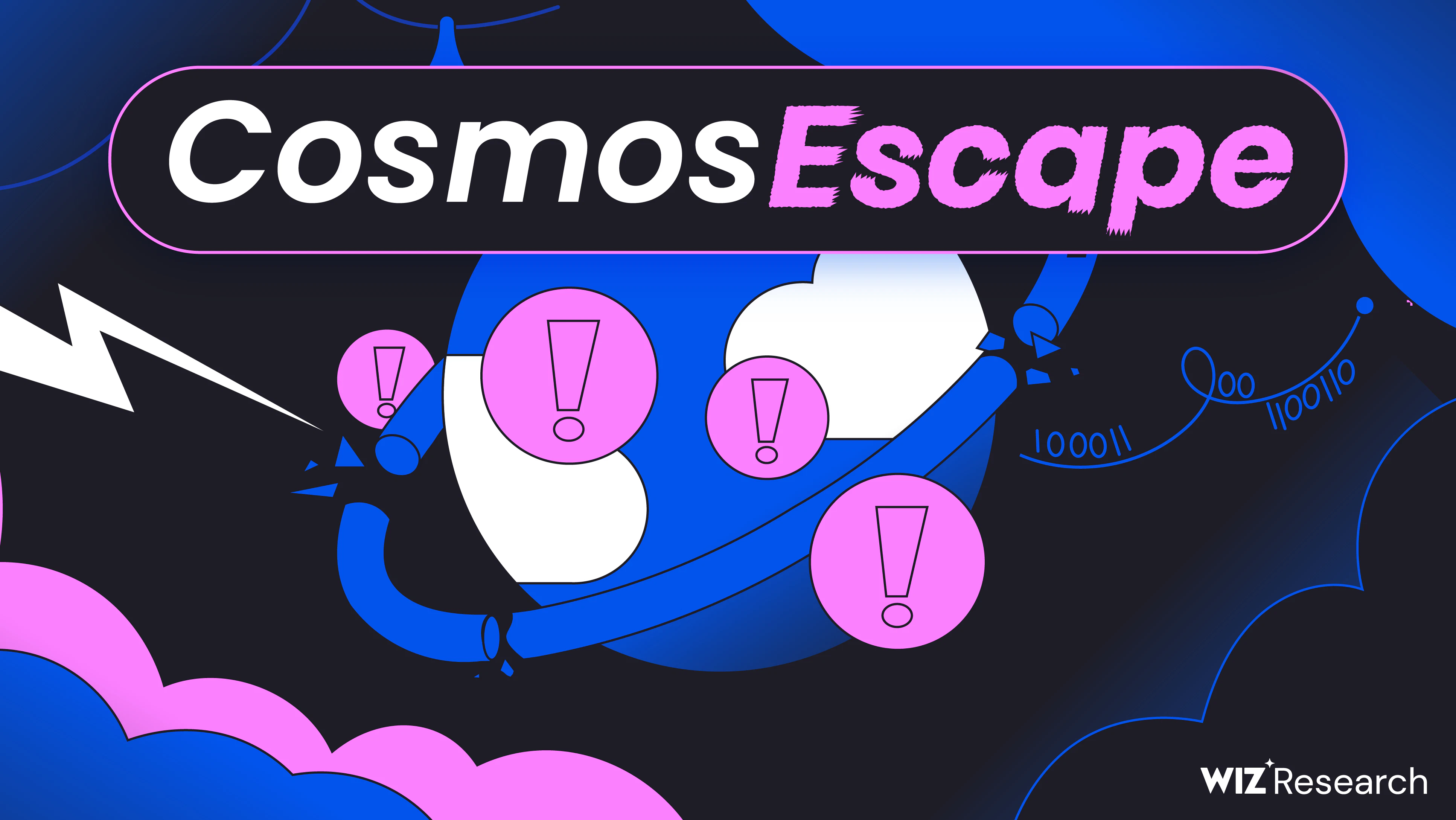
CosmosEscape: Taking Over Every Database in Azure Cosmos DB

Wiz Research found CosmosEscape, a critical Azure Cosmos DB vulnerability exploited via the Gremlin API's .NET-based query engine, whose sandbox failed to restrict .NET reflection, enabling arbitrary code execution on the DB Gateway service. This allowed retrieval of the "Cosmos Master Key," a platform-wide signing key that could fetch any Cosmos DB account's primary key and enumerate accounts via a shared Config Store, enabling attackers to compromise any customer or internal Microsoft database (including those backing Entra ID, Teams, and Copilot) from public endpoints. Microsoft fully remediated the issue and eliminated the master key architecture.

Azure Cosmos DBGremlin.NET+1
CosmosEscapeCosmos Master KeyConfig Store+1

Cloud & Infra, Offensive SecurityΒ· Added 3 Sep 2026, published 30 Jul 2026

github.comrepoπŸ›‘οΈ Security

LSPosed/LSPromise

LSPromise is a GitHub repo and detailed writeup documenting a complete Android privilege-escalation exploit chain from an untrusted local app to root/kernel, with no memory corruption required. It chains a logic bug in Telecom's InCallController.java (CVE-2026-49881) that lets arbitrary code run inside system_server, pivots via ActivityManager reflection into com.android.networkstack to reach the DirtyFrag kernel 1-day (CVE-2026-43500/CVE-2026-43284), and then uses a DirtyPipe-style binary-patching technique (crash_dump, modprobe, vendor_file labeled kernel module) to disable SELinux and launch KernelSU with root. Tested on Pixel 10 running Android 17; the first bug was fixed in the September 2026 security bulletin.

AndroidLinux kernelSELinux+1
CVE-2026-49881CVE-2026-43500CVE-2026-43284+4

Mobile Security, Offensive SecurityΒ· Added 2 Oct 2026, published 23 Jul 2026

interconnects.aitalk🧠 AI

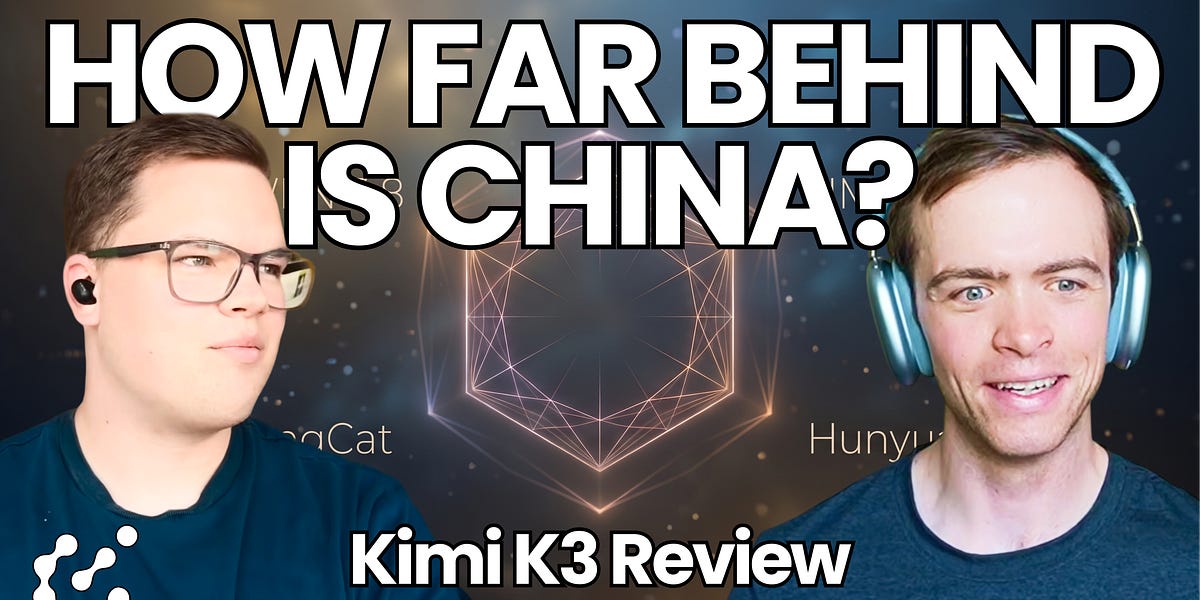
Open models recap: more on Kimi K3, Qwen 3.8, Xi's WAIC speech, distillation, the open-closed gap, and what's next

A transcribed Interconnects podcast episode where Nathan Lambert and Florian Brand do their quarterly open-model roundup, covering the Kimi K3 release (its coding/agentic performance, $200/mo plan, broken API capacity), GLM-5.2's continued developer traction, Qwen's announced pivot to open-weighting its next flagship, and Xi Jinping's WAIC speech committing China to open-source AI. They dig into why Chinese labs (Kimi/Moonshot, Zhipu/GLM, DeepSeek, MiniMax, LongCat, Ling/Meituan) keep pace with the closed frontier despite less compute β€” capital efficiency, smuggled/domestic chips, buying external data β€” then survey the smaller US open ecosystem (Thinking Machines' Inkling and Tinker, Gemma, Nemotron, Poolside, Arcee, Reflection). The back half is a detailed rebuttal of Ben Thompson's Stratechery claim that distillation grows more important as RL scales, arguing SFT-stage distillation from jailbroken Claude/GPT reasoning traces matters less as RL-stage training (which is hard to distill cheaply) dominates post-training, with a side note on a Hugging Face incident where guardrails forced defenders to use a less-restricted model (GLM) to analyze an attack.

QwenQwen3Claude+5
Kimi K3GLM-5.2Qwen 3.8+28

models, training, ai-policyΒ· Added 29 Sep 2026, published 22 Jul 2026

interconnects.aiarticle🧠 AI

6 months to live for open models

Nathan Lambert argues open-weight AI models face a real near-term threat of a US ban or licensing restriction, driven by White House executive-order discussions and a political campaign (led by Anthropic) over Chinese model distillation. He contends the distillation debate is largely regulatory capture, argues APIs aren't demonstrably more secure than open weights, and calls for a US company (Meta, Microsoft, or Reflection AI) to release a frontier-capable open model to defuse the "only China builds open models" framing before any ban solidifies in the next six months.

AnthropicDeepSeekReflection AI+11

ai-policy, modelsΒ· Added 29 Sep 2026, published 12 Jul 2026

dfir.chwriteupπŸ›‘οΈ Security

ScriptBlock Smuggling

A DFIR.ch lab writeup that tests BC-Security's ScriptBlock Smuggling technique, which abuses PowerShell's ScriptBlockAst to make malicious code execute while a spoofed benign-looking script gets written to the Script Block log (Event 4104), bypassing AMSI without reflection or memory patching. The author shows that while the 4104 log is indeed spoofed, PowerShell Module Logging (Event 4103) still captures the real executed code, and Windows Defender/AMSI flagged the test payload as Trojan:PowerShell/ScriptSmug.A, meaning defenders retain multiple detection opportunities. It also references an AtomicRedTeam test for the technique and notes in-the-wild adoption to deliver Vidar-Stealer.

PowerShellWindows DefenderSplunk
BC-SecurityVidar-StealerAtomicRedTeam+1

Blue Team & Detection, Offensive SecurityΒ· Added 3 Sep 2026, published 13 Sep 2024