Each feed is checked for new posts. Every post is read, and those that belong here join the catalog. What Trove read and did not keep stays on file, not shown.
Trail of Bits argues that stable and LTS software, such as Ubuntu 26.04 LTS, Debian 13 and stable Linux kernel branches, carries many known CVEs that were fixed upstream but never backported. It measures the gap using the kernel CVE team's vulns.git (18 September 2026) and Debian and Ubuntu CVE feeds. Using Codex with GPT-5.6, the team got 142 fixes covering 90 CVEs applied to stable kernel trees and has begun sending patches to distributions.
Trail of Bits releases patching-bugs and regression-hunt, two Codex plugins from the Patch the Planet initiative with OpenAI. A review of 130+ merged patches confirmed 21 regressions (none broke a security protection). In preliminary tests regression-hunt gave 25% fewer false positives than a baseline Codex agent. Design uses live PoCs, strict schemas, a three-arm proof, and project THREAT_MODEL.md and PATCHING_GUIDELINES.md files.
Trail of Bits tested 25 popular package managers with a Docker and mitmproxy harness that simulates a compromised package repository injecting malware into legitimate packages. Fewer than half enforce lockfile hashes by default, only two verified every download, and only Go verifies signatures by default. The post covers lockfile hash pitfalls (Pub, pnpm, Conan, CocoaPods, Composer), repository, developer and Sigstore signing, and Go's checksum database. It also proposes lockfiles that commit to a signing identity plus a transparency log.
Trail of Bits introduces SequenceHash and its keyed variant SequenceMAC, hash-agnostic multihashing constructions similar in goal to NIST's TupleHash but not tied to Keccak, working with SHA256/384/512, BLAKE, and RIPEMD. The spec, now part of the Community Cryptography Specification Project, provides unambiguous input encoding, length-extension prevention, built-in customization strings, and HMAC-style keyed MACs that avoid HMAC's key-pseudocollision issues; reference implementations ship in Rust, Go, and Python with full test vectors.
Trail of Bits explains why running threshold-signature MPC protocols inside TEEs (Intel TDX, AMD SEV-SNP, AWS Nitro Enclaves) is not automatically secure: a malicious host can roll back enclave filesystem state to force reuse of deleted pre-signature nonces, leaking a signer's private key share. The post catalogs recurring audit pitfalls — incomplete attestation measurements (citing the WhatsApp Private Inference LD_PRELOAD bypass), missing verification steps, weak hardening, stale-backup/rollback risks (including LUKS2 header manipulation in confidential VMs), and physical/side-channel attacks like TEE Fail and DDRop against DDR5 memory — and gives best practices such as binding attestation to MPC party identities and using multiple TEE vendors for defense-in-depth.
A Trail of Bits researcher (ex-Duo Security engineer) traces SAML's history from its 2002 OASIS committee origins through recurring XML signature wrapping (XSW) and canonicalization/round-trip parser-differential attacks, arguing its reliance on brittle XML signature validation (libxmlsec) makes it fundamentally unsound. The post catalogs SAML's five structural flaws — XML complexity, canonicalization, enveloped signatures, kitchen-sink design, and protocol ossification — and recommends organizations deprecate SAML in favor of OIDC, citing Fly.io and Tailscale as vendors already holding the line on OIDC-only SSO.
Trail of Bits describes preparing for a six-month audit of the Miden zkVM (a zero-knowledge VM with its own custom assembly language, MASM) by having AI agents (Claude and Codex) build an LSP server, a decompiler, an abstract-interpretation-based static analysis engine, and a Lean formal model of the VM executor, none of which previously existed for MASM. These tools surfaced a high-severity bug in the mod_12289 procedure where an underconstrained prover-supplied advice value allowed a malicious prover to forge Falcon signatures and drain Miden accounts, plus over 400 type-validation issues, while the Lean proof effort produced 95 machine-checked correctness proofs and caught two additional subtle arithmetic bugs (rotr, wrapping_mul) missed by unit tests.
Trail of Bits dissects 1Password's August 2026 report claiming AI agents (GPT-5.5, Opus 4.8) produce clean vulnerability fixes only 26% of the time, showing the figure is inflated by a hand-picked set of six hard bugs, deliberately-wrong-fix prompts (22% of trials), a no-testing mode (36% of trials), grading disagreements between automated graders and humans, and a buggy Linux upstream reference fix. Reanalyzing the same data under fair conditions (testable, non-adversarial trials) they find 86% of patches blocked the supplied exploit, and they contrast this with their own consulting data (12.5% of developer first-fixes fail) and Patch the Planet's 67.7% maintainer merge rate across 186 PRs, including a case where both a human maintainer and an agent independently introduced the same freenginx cleanup-crash regression. The post also releases two new agent skills, post-patch-validation and review-walkthrough, to improve AI-assisted patch testing and human review.
Trail of Bits found a bug in Lean's String.Pos.Raw.extract (affecting all stable versions up to 4.33.1, fixed in 4.34.0-rc1) where the logical definition and the compiled native code disagree on the result of extracting a slice at an out-of-bounds position, letting an attacker manufacture a contradiction (empty string = non-empty string) that "proves" any theorem, including a fake formalization of Fermat's Last Theorem. The exploit only works when a proof relies on the native_decide axiom, which extends trust to the compiler rather than the kernel; the researchers found the issue while using GPT-5.6 to build a code-review skill, and Lean maintainers hargoniX and Rob23oba shipped fixes within hours to days of disclosure. The post is a reminder that machine-checked proofs are only as trustworthy as the evaluator/compiler paths behind axioms like native_decide, and points to work like lean4lean and alternative kernels as mitigations.
Trail of Bits gave GPT 5.6-Cyber preview access and tasked it with escaping a QEMU/KVM VM on a Debian 12 host; the agent succeeded three separate times, first via a recently disclosed host kernel bug (Januscape, CVE-2026-53359), then by chaining CVE-2026-9539 in libslirp with an unmarked bug fix, and finally by autonomously discovering and chaining multiple 0-day vulnerabilities in the kernel/QEMU stack over roughly 12 hours of largely unsupervised operation. The author argues off-the-shelf VMs (even hardened stable distros) no longer reliably contain a sufficiently capable AI agent — treat such agents as an APT — though Firecracker's minimal attack surface withstood the same agent's attempts.
QEMUFirecrackerLinux kernel+3
CVE-2026-53359CVE-2026-9539Januscape+2
AI Security, Offensive Security· 2026-08-26T11:00:00+00:00
Trail of Bits found and reported an authorization bypass in Provenance Blockchain's marker module (Cosmos SDK) that let any user with zero tokens self-grant ACCESS_ADMIN on non-fixed-supply marker accounts, because the access check compared caller balance against a stale on-chain supply field that never diverged from zero. The bug affected 82 live mainnet markers (tokenized loans, bridged stablecoins, consortium deposits, governance escrow) and allowed two-transaction exploitation to mint arbitrary tokens or drain roughly $500,000 in escrowed nhash; it was mitigated in v1.28.0 (PR #2627) and fully fixed in v1.29.0 (PR #2734) by reading live bank-module supply with an explicit zero-guard.
Trail of Bits describes the from-scratch, open-source auditor it built and operates as one of three independent auditors (alongside Signal and Cloudflare) backing Signal's new Automatic Key Verification feature. The auditor maintains its own Merkle tree of the global phone-number-to-public-key map and periodically signs the tree head, so clients that require signatures from all three auditors can detect a malicious server maintaining a split view within at most one week. This replaces manual safety-number comparison with an automated key-transparency check for end-to-end encryption integrity.
Third in Trail of Bits' Nitro Enclaves series, this post catalogs threats to the enclave-KMS communication channel: passive attackers who can swap ciphertext/data-key pairs when encryption context is missing, active attackers who can hijack unauthenticated requests without enclave-initiated TLS, and operational risks like CMK deletion, key rotation, and IAM policy misconfiguration. It provides concrete checklists covering encryption context usage, ARN vs. alias pinning, PCR0/PCR3/PCR8-based key policy authorization, immutable key policies for end-to-end verifiability, and warns against the vulnerable aws-nitro-enclaves-sdk-c in favor of aws-nitro-enclaves-nsm-api and Boto3.
Trail of Bits distills dozens of Uniswap v4 hook audit findings into seven recurring failure patterns — missing caller checks, unvalidated PoolKey trust, custom accounting leaks, wrong-hook timing bugs, permission-bit mismatches, callback-triggered denial of service, and cross-callback state changes. The post walks through real incidents (the ~$12M Cork exploit and $8.4M Bunni rounding bug) to show how these bugs bypass PoolManager's settlement invariant, and gives developers and auditors a concrete checklist plus fuzzing guidance (Echidna, Medusa) for securing hook contracts.
Trail of Bits describes how they use Codex's /goal feature, an open-ended agentic objective mode, to hunt for bugs in heavily audited open-source codebases like Rust, curl, and zlib as part of the OpenAI-backed Patch the Planet initiative. Key techniques include letting Codex write and red-team its own goal prompts, defining precise outcomes rather than prescribing methods, running one outcome per agent to avoid competing objectives, and building an automated variant-analysis pipeline (using P-critical Rust issues, a security gate, and a two-pass false-positive judge) that produced a soundness hole and a miscompilation patched in Rust 1.98, plus privilege-escalation bugs in Keycloak's SAML component. They also built agentcov, an internal tool that tracks code coverage read by Codex to prevent it from skipping parts of the codebase.
Trail of Bits announces a new chapter of its Testing Handbook dedicated to security testing Rust programs, covering Rust's safety-guarantee gaps (unwind safety, arithmetic errors, nondeterminism), dynamic analysis with Miri and proptest, static analysis with Clippy, a gotchas/footguns checklist for manual review, memory zeroization techniques, model checking with Kani, and supply-chain dependency vetting. The post also announces rust-review, a Claude Code plugin co-built with Aptos Labs that automates detection of over a dozen Rust bug classes including memory safety, concurrency, FFI, and async cancellation issues.
Trail of Bits added DAML support to Mewt, their open-source mutation-testing engine, targeting Canton Network smart contracts. Mewt reuses the tree-sitter-haskell grammar to parse DAML and adds two contract-specific mutation operators — controller party swap (CPS) and controller party removal (CPR) — that probe whether test suites actually verify authorization rules (who must sign off on a choice) rather than just executing them. A worked example on a buyer/seller escrow contract shows a mutant that lets a seller release funds alone surviving a 100%-coverage test suite, illustrating how DAML's built-in choice-level coverage reporting can mask missing negative/unhappy-path tests; the team also ran Mewt against OpenZeppelin's canton-stablecoin reference implementation.
Trail of Bits' Patch the Planet initiative (a collaboration with OpenAI pairing engineers with 30+ open-source projects) had GPT-5.5-Cyber, driven through Codex's /goal command, autonomously build a full fuzzing lab against zlib in a single day. Without step-by-step guidance, the model wrote ASan/UBSan-instrumented harnesses across a dozen entrypoints (inflate, inflateBack, uncompress2, gzFile, MiniZip, puff, blast, infback9, gzjoin, gzappend), used compile-time variant builds to reach hidden code paths, repurposed edge-case tests as seed corpus, and applied strict reportability discipline to reject unreachable crashes while surfacing several findings now under coordinated disclosure. The report argues this collapses the expertise barrier that historically kept bespoke fuzzing campaigns out of reach for low-skill attackers while also acting as a major force multiplier for defenders/researchers.
zlibCodexOpenAI+1
Patch the PlanetGPT-5.5-Cyber
AI Security, Offensive Security, AppSec· 2026-07-02T11:00:00+00:00
Trail of Bits, funded by the Sovereign Tech Agency, implemented Rust bindings for NIST's ML-KEM (FIPS 203) key-establishment and ML-DSA (FIPS 204) digital-signature standards into pyca/cryptography, shipped in version 48 with AWS-LC backend support. The post makes them a pip install away for the Python ecosystem (pyca/cryptography sees 1.2B monthly PyPI downloads and underpins Certbot, Ansible, Airflow, and paramiko), while detailing the size/performance tradeoffs versus Ed25519/X25519 and noting SLH-DSA (FIPS 205) support and protocol-level integration are still in progress.
Trail of Bits describes the first week of Patch the Planet, a partnership with OpenAI Daybreak pairing engineers and maintainers with frontier models like GPT-5.5-Cyber and Codex to find and fix bugs in open-source projects such as curl, aiohttp, RustCrypto, PyCA, python.org, PyPI, and Sigstore. It reports concrete outcomes: GPT-5.5-Cyber autonomously building a full fuzzing lab with OS-backpressure harnesses in under a day, Codex-driven CVE variant analysis and cross-library differential testing that found an AES-GCM issue in PyCA and X.509 discrepancies, 64 pull requests and 51 issues filed, and aiohttp maintainers fixing eight privately-reported bugs within hours. It closes with maintainer guidance on deduplication, false-positive filtering, and severity correction for the flood of AI-generated reports.
GPT-5.5OpenAI Codexcurl+3
Patch the PlanetTrail of BitsOpenAI Daybreak+4
AI Security, AppSec, DevSecOps· 2026-06-22T16:50:00+00:00
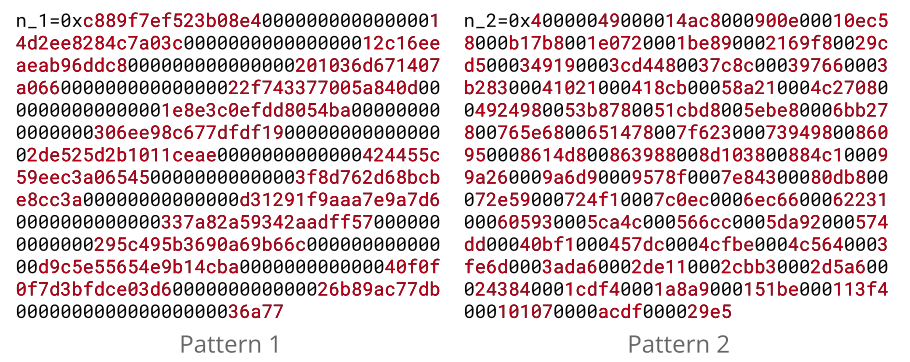
Trail of Bits, working with Hanno Böck's badkeys project, found hundreds of real-world RSA/DSA keys ("short-sleeve" keys) with regularly spaced blocks of zero bits caused by a big-integer/RNG type mismatch in CompleteFTP's key-generation code (versions 10.0.0-12.0.0 for RSA, through 23.0.4 for DSA). They developed a polynomial-factorization technique — converting the modulus to a polynomial with small coefficients via base-2^w representation and factoring the polynomial instead of the integer — to recover 603 RSA private keys and 74 DSA private keys from internet scans, and reverse-engineered the CompleteFTP binary with ILSpy to find the exact Array.Copy bug responsible. EnterpriseDT shipped patched key generation and a key-checking tool, and badkeys now detects this weakness.
Trail of Bits researchers bypassed every agent-skill security scanner they tested — ClawHub's VirusTotal/Code Insight and GPT-5.5-based guard model, and skills.sh's Gen/Socket/Snyk-backed scanning, plus Cisco's skill-scanner — using techniques like context-truncation via 100,000 newlines, malicious payloads hidden inside .docx ZIP archives, Python .pyc bytecode poisoning to steal environment variables, and rhetorically-crafted prompt injection that convinced LLM analyzers a malicious npm/yarn registry change was benign. The piece also shows a legitimate Anthropic Office skill (soffice.py) using LD_PRELOAD in ways indistinguishable from malicious behavior, arguing static/LLM skill scanning is structurally unable to guarantee safety and that organizations should instead curate trusted skill marketplaces (e.g., trailofbits/skills-curated) rather than rely on public ones. PoC skills are published at trailofbits/overtly-malicious-skills.
OpenClawskills.shCisco skill-scanner+3
ClawHubCode InsightGPT-5.5+4
AI Security, Supply Chain· 2026-06-03T11:00:00+00:00

 blog.trailofbits.comarticle