Each feed is checked for new posts. Every post is read, and those that belong here join the catalog. What Trove read and did not keep stays on file, not shown.
Part 1 of a JFrog Security Research series on how AI has changed CVE research. It shows rising CVE volumes since 2021, curl ending its bug bounty in January 2026, GNOME cutting disclosure from 90 to 30 days, and NIST narrowing NVD enrichment in April 2026. It documents severity inflation in 27 libcurl CVEs and 54 of 55 fabricated SQLite advisories.
Interview with former SolarWinds CISO Tim Brown, held at JFrog swampUP 2026, on the 2020 Sunburst build supply chain attack. He recounts the Mandiant notification, discovering tainted Orion builds from February to June that reached 18,000 customers, and the legal-led incident response. He also covers the SEC Wells Notice against him personally, which was later dismissed with prejudice. He describes the rebuilt pipeline: the build system moved to AWS and defined in code, an assume-breach stance, and three separated builds (development with about 400 people with access, staging 36, production 2). He closes with comments on non-human and agentic AI identities and on helping CISOs understand build-pipeline risk.
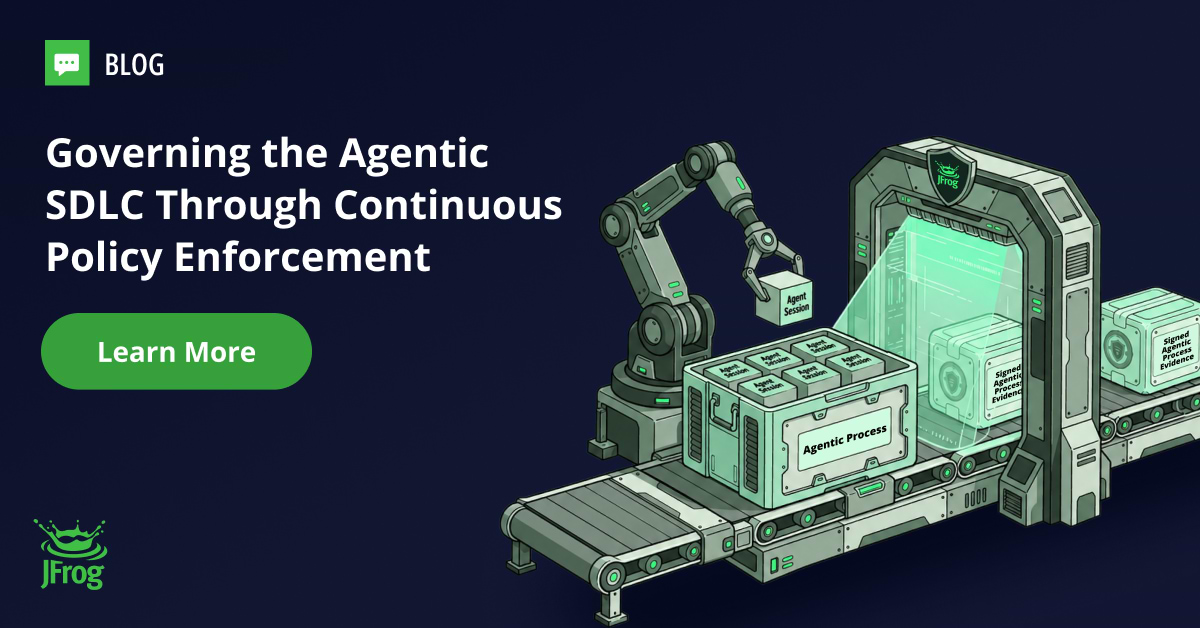
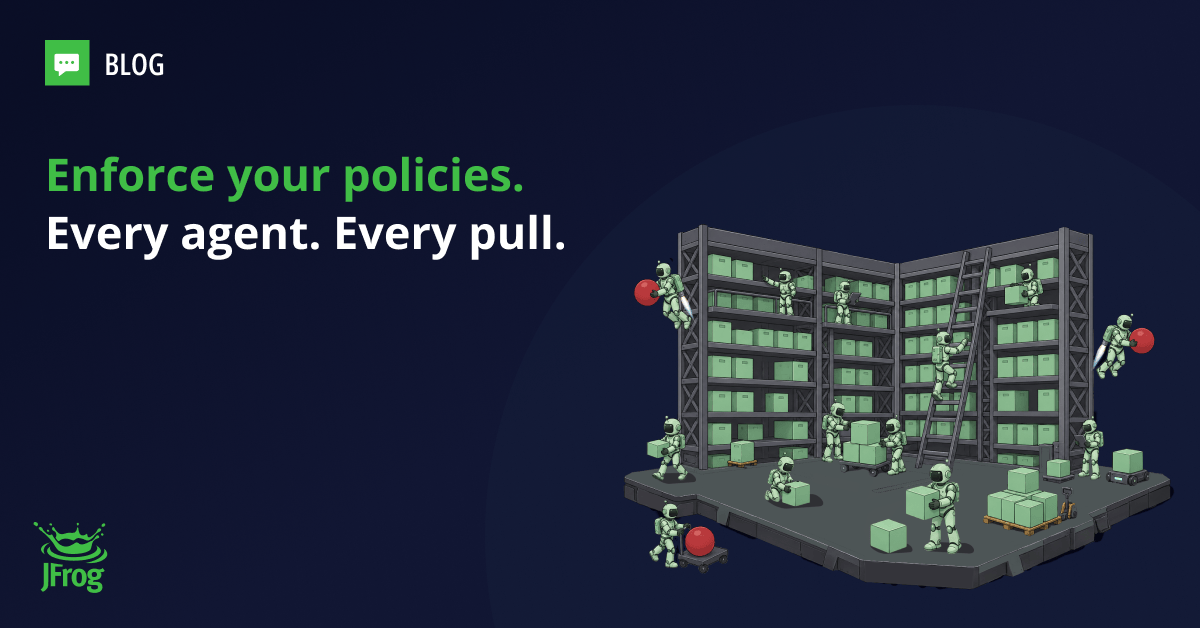
JFrog proposes Agentic Process Evidence, an open protocol that records AI coding agent sessions (harness, model ID, tool calls, MCP use, prompts, owner, human reviewer) as signed in-toto/DSSE, SLSA-compatible attestations bound to commits, artifacts and releases. Policy-as-code gates can then block releases that used unapproved LLMs or MCP tools, or that lack an accountable human. It maps the approach to EU AI Act Articles 12/14, OWASP AISVS and ISO/IEC 42001, and includes example session-log and evidence JSON. The post also promotes JFrog AppTrust's Prompt to Release Traceability.
JFrogin-totoCursor+3
Agentic Process EvidenceAppTrustPrompt to Release Traceability+8
AI Security, DevSecOps, Supply Chain· 2026-10-12T16:24:04+00:00
JFrog researchers detail ParaShells, a local privilege escalation chain in Parallels Desktop 26.4.0 (build 57513) on Apple silicon that lets an unprivileged macOS user gain root. The chain combines a world-writable Unix socket for prl_disp_service, weak peer-credential-based authentication in PrlSrv_LoginLocal, and argument injection in the InstallAppliance extraction path where a crafted sVmParentPath breaks Qt's QProcess::splitCommand quoting to inject tar's --use-compress-program= flag, causing macOS tar to execute an attacker script as uid 0.
JFrog vendor post arguing that agentic development (ADLC) introduces new unvetted supply chains — models, MCP servers, skills/plugins, hooks, and APM packages — that bypass traditional signature-based scanning. It cites real incidents: a malicious MCP server impersonating Postmark's email MCP that BCC'd all agent-sent emails to an attacker, and the 'omnicogg' malicious Claude/agent skill that hid a 22MB encoded payload and evaded all 65 VirusTotal engines for 5,000+ installs, plus references to 2026 supply-chain attacks on LiteLLM, TanStack, and Mistral AI. It then pitches JFrog AI Catalog's expanded MCP/skill/model registries as the fix.
Model Context ProtocolJFrog Artifactory
JFrog AI Catalogpostmark-mcpomnicogg+3
AI Security, Supply Chain· 2026-09-02T11:56:37+00:00
 jfrog.comarticle