 huntress.comwriteup
Device Code Phishing: OAuth 2.0 Attacks in Google & Azure
A Huntress researcher walks through Device Code Phishing, an OAuth 2.0 device authorization grant abuse technique, and shows why it is far more dangerous against Azure/Microsoft 365 than against Google Cloud. In Azure, the attacker controls the requested resource and can use Microsoft's undocumented "Family of Client IDs" (e.g. the Microsoft Authentication Broker client ID) to phish a Primary Refresh Token capable of joining rogue devices, enrolling MFA, and full account takeover; Google's device code implementation restricts the flow to a handful of narrow scopes (GDrive file access, YouTube read-only) and requires a registered/verified OAuth app, neutering the same attack. The piece includes working curl/Python requests for both providers and references prior research by Dirk-jan Mollema, Nestori Syynimaa, and Lina Lau.
What it is
A Huntress case study on device code phishing, an abuse of OAuth 2.0's device authorization grant (RFC 8628), compared across Microsoft/Azure and Google identity providers. The fetched text covers the mechanism and the Azure attack in detail; the Google comparison and any detection/mitigation guidance fall after where the capture cuts off.
How it works
The device code flow legitimately authenticates input-constrained devices (IoT, smart TVs): the device requests a code, the user enters it plus their credentials in a browser on a normal computer, and the device then retrieves the resulting token. The attack co-opts this:
sequenceDiagram
    participant A as Attacker
    participant IdP as Identity Provider API
    participant V as Victim
    A->>IdP: Request device code (no auth required)
    IdP-->>A: device_code + user_code
    A->>V: Phish: "enter this code at the login page"
    V->>IdP: Enters code + username + password + MFA
    Note over V: Victim sees "nothing happens"
    loop every 10s
        A->>IdP: "Authenticated yet?"
    end
    IdP-->>A: Access tokens
    A->>A: Pivot to initial access
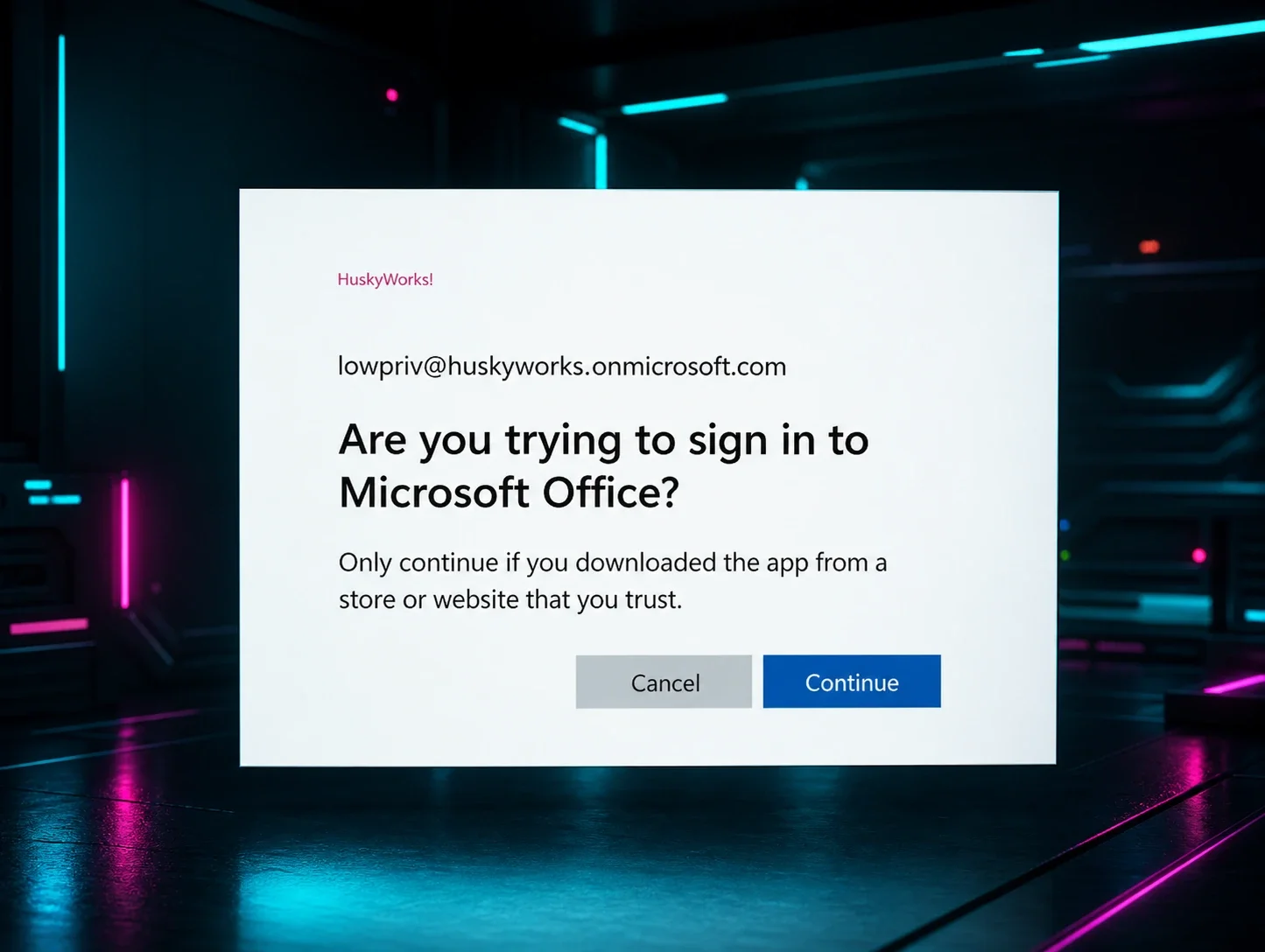
The key points from the page: requesting the initial device code requires no authentication — a correctly formatted cURL to the provider's device code endpoint returns the code. The victim signs in on the completely legitimate provider login page (https://microsoft.com/devicelogin), so the phish leads to a real, trusted URL — and MFA does not stop it, because the attacker never handles credentials, only the resulting token. For Azure the cURL specifies a client_id (the requesting client's GUID — flagged as important later) and a resource (e.g. Graph API).
Preconditions / Affected
The tenant/identity provider must permit the device code flow. The attack turns on social engineering: the victim must be convinced to enter the attacker's code and complete sign-in, including MFA.
Caveats
The captured text ends mid-Azure-example — before the Google comparison and before any detection or mitigation content. The client_id significance is teased but not shown here. If you need the defensive guidance or the Azure-vs-Google contrast that is the article's stated payoff, open the page; this capture does not contain it.
Organisations named here
- Dirk-jan Mollema
- Family of Client IDs
- Lina Lau
- Nestori Syynimaa
- Primary Refresh Token
- Secureworks
Technologies named here
- Azure AD / Microsoft 365
- curl
- Python
- Microsoft Authentication Broker
- Microsoft Office client
- OAuth
- Azure
- Google Cloud
- Google Workspace
- Microsoft 365
Techniques named here
- Device code phishing
- Primary Refresh Token theft via device code phishing
- Family of Client IDs abuse
- Rogue device join / consent grant attacks
Related in Identity & Access
 huntress.comarticle
Education Under Attack: The Pattern Behind Recent University Breaches
 huntress.comarticle
Next-Gen Phishing Tactics Users Aren’t Ready For | Huntress

 aikido.devwriteup
Google API keys keep working after you delete them

