Skip to content

🛠️ Tools52

What you seeeverything
x.comtool

Ritik Shukla (@Retik_S) on X

kanzo is a local kanban board that coding agents can update. It ships as one 4 MB binary that starts in 2 ms and runs on localhost. It also works as an MCP server, so Claude Code and Codex see the same tasks as the user. The board is stored as a folder that can sync through a private git repo. The post is brief and gives no further detail.

Model Context ProtocolClaude CodeCodex+2
kanzo

mcp, coding-agents· Published and added 30 Oct 2026

x.comtool

Jurly (@jurlycat) on X

Chums is a free, open-source Apple Watch app that turns Claude Code and Codex sessions running on a Mac into animated characters, in the spirit of Muse Charm. Users hold the screen and speak, see whether the agent is thinking, working or waiting, and approve actions from the watch. Each character has its own session, personality and voice. The iPhone companion app adds photos, files and interactive results. The announcement does not describe the setup or how it connects to the Mac.

Claude CodeCodexmacOS+1
ChumsMuseApple

coding-agents· Added 30 Oct 2026, published 29 Oct 2026

x.comtool

Zyon ⚗️ (@zyonbuilds) on X

Orca is an open-source (MIT) desktop app from stablyai for running a fleet of coding agents, including Claude Code, Codex and OpenCode, each in its own git worktree using the user's own subscriptions. Features include fanning one prompt across five agents and merging the winner, commenting on diffs and sending them back, SSH worktrees on remote machines, and a phone app for steering agents. The post reports 103k stars.

Claude CodeCodexOpenCode+3
Orcastablyai

coding-agents, agents· Added 30 Oct 2026, published 29 Oct 2026

x.comtool

Big Bull (@BIGBULLapp) on X

clauth is a Rust terminal UI for Claude Code that combines multi-account switching with a live 5h / 7d usage monitor. A fallback chain moves the user off an exhausted account before Claude Code blocks. It supports Pro, Max, Team and Enterprise OAuth accounts and custom API endpoints on Linux, macOS and Windows. The post notes that auto-switching means the tool decides when accounts change.

Claude CodeRustOAuth+4
clauthAnthropic

coding-agents, ai-infra· Added 30 Oct 2026, published 28 Oct 2026

brangus.iotool

Survival LLM: AI assistant and emergency library that runs on your own computer

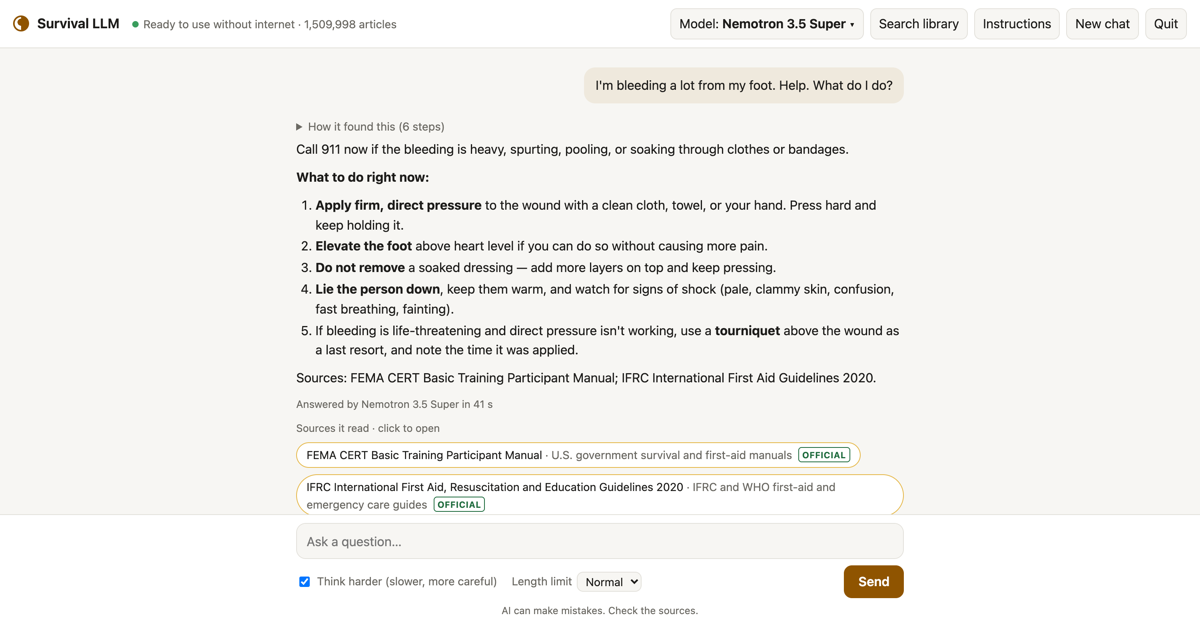
Survival LLM is a free, open-source desktop app for macOS (Apple Silicon) and 64-bit Windows that runs an AI model and an offline emergency library on the user's computer. It checks the machine's memory, downloads a fitting model, and answers from sources such as Wikipedia, WikiMed, Ready.gov and CDC guidance, citing each article. Users can add their own files; version 0.3.2 is dated October 2026.

LLMRAGmacOS+1
Survival LLMWikipediaWikiMed+9

llm-apps, inference· Added 28 Oct 2026, published 27 Oct 2026

x.comtool

alex shapalov (@alxshp) on X

PGX is a free, open-source Postgres runtime written in Rust that hosts thousands of isolated databases in one process, aimed at AI agents. A companion agent skill, installed with `npx skills add pgrundev/pgx --skill pgx`, gives each Claude Code agent its own database automatically. The author claims 1,000 databases in 659 MB RAM, about 0.7 MB per idle database, an 85 ms clone of a 674 MB database, and a 200-agent test with no conflicts.

PostgreSQLRustClaude Code+1
PGX

coding-agents, ai-infra· Added 28 Oct 2026, published 27 Oct 2026

x.comtool

Mauro Ubeda (@mauroubeda) on X

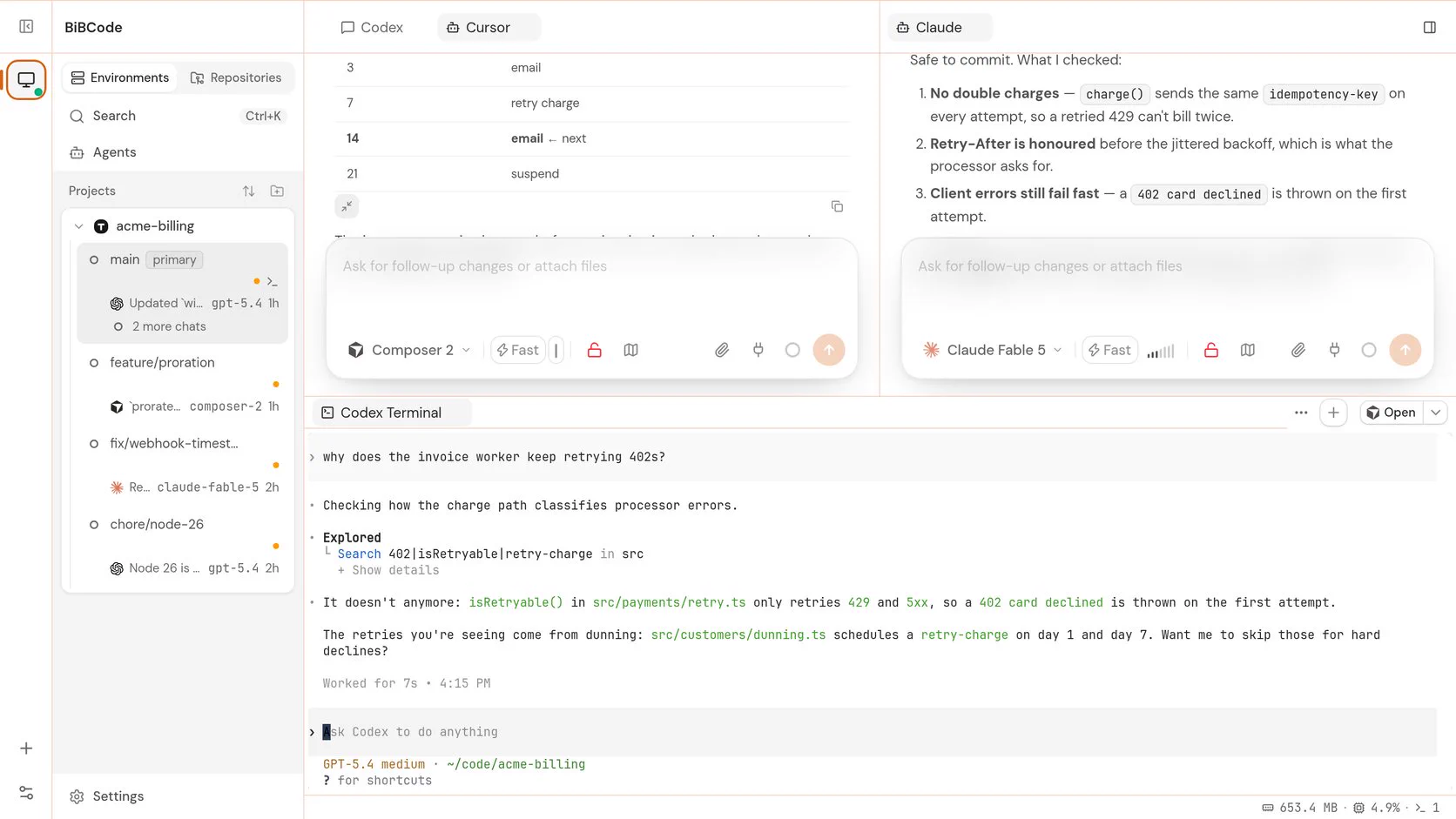
BibCode is an open-source desktop app, now in beta, for running coding agents side by side. It is built with Rust and Tauri rather than Electron, and runs Codex, Claude, Cursor and OpenCode, each in its own git worktree. It can also connect to remote BibCode Servers. The author, Mauro Ubeda, says it mixes ideas from T3 Code and Orca. The post gives no feature detail beyond this.

RustTauriGit+4
BibCodeMauro UbedaT3 Code+1

coding-agents, agents· Added 28 Oct 2026, published 27 Oct 2026

x.comtool

Dan Kornas (@DanKornas) on X

jshook is an open-source (AGPL-3.0) MCP server that gives AI agents a search-first, profile-aware reverse-engineering workspace for JavaScript, browser traffic, WASM and native processes. Agents start with a small searchable tool surface and move to workflow or full profiles only when needed. It drives Chromium or Camoufox over CDP, captures WebSocket traffic, has HTTP, GraphQL and Burp Suite helpers, and supports hot-reload plugins and declarative workflows. The post is a short announcement; the repository link is in a reply.

Model Context ProtocolJavaScriptWebAssembly+6
jshookDan Kornas

mcp, agents· Added 28 Oct 2026, published 25 Oct 2026

x.comtool

Agent Credit (@agentcredit_) on X

Agent Credit v1.3 is a remote MCP server that lets AI agents run credit checks on each other. It has six tools: score, compare, operator record, alerts and on-chain proof check. Calls are paid per use in USDC through x402 with no account or key. It also flags shared wallets, lists every token an operator launched and how each ended, and offers embeddable badges and wallet-signed record claims.

Model Context Protocolx402USDC+1
Agent Credit

mcp, agents· Added 26 Oct 2026, published 25 Oct 2026

x.comtool

Dan Kornas (@DanKornas) on X

HiRoute is an open-source (Apache-2.0) local model router for developers using agent clients such as Codex and Claude Code. Routing plans judge each new message and send routine work to economical models, while harder design decisions and fixes stay on the primary model. It supports custom task branches, ordered failover candidates with explicit exhaustion, per-session cost and usage records, and runs as a macOS desktop app or a Linux CLI and daemon.

CodexClaude CodemacOS+1
HiRouteDan Kornas

ai-infra, coding-agents· Added 25 Oct 2026, published 24 Oct 2026

simonwillison.nettool

Quick Study

Quick Study is a browser artifact built by Claude Opus 5.5 (High) from a single prompt. The user opens a photo and the page repaints it in a few seconds with a simulated paintbrush on a canvas element. Simon Willison links it to an earlier experiment in which Claude Fable simulated a watercolor illustration with P5.js. The post gives the prompt but no code walkthrough.

ClaudeJavaScriptP5.js
Simon WillisonClaude Opus 5.5Claude Fable 5.1+1

prompting, models· Published and added 23 Oct 2026

corgi.computertool

Show HN: Corgi, a helpful {agent, terminal} multiplexer

Corgi is a terminal multiplexer for humans and AI coding agents, installed with a curl script. It shows each agent's state (working, needs you, finished, idle), keeps agents running in the background like tmux, and tracks token usage, per-workspace resource use and every file an agent changed. It also supports git worktrees, SSH image paste (needs Ghostty Nightly) and a corgi --skill command that teaches agents to drive it.

CorgiGhosttytmux+1

coding-agents, agents· Added 24 Oct 2026, published 23 Oct 2026

x.comtool

Meku_SI (@MEKU_SI) on X

MEKU Human Cloud is an MCP server for agents that need a real person to do a task. It exposes three tools: search humans (read-only), request a human (a human operator reviews every request first), and check status. It is listed in the MCP Registry as farm.meku/human-cloud. The tweet gives no detail on pricing, humans available or request formats; those are in the linked docs.

Model Context Protocol
MEKU Human CloudMeku_SI

mcp, agents· Added 23 Oct 2026, published 22 Oct 2026

x.comtool

EveryDev.ai (@EveryDevAi) on X

Weco, from WecoAI, is an open source CLI that optimizes code, prompts and agent harnesses against a metric the user defines. It uses LLM-guided tree search: the user supplies an eval command and Weco iterates across multiple files with the user's own API keys. The post lists Claude Code, Cursor, Codex, OpenClaw, PyTorch, CUDA and Triton as supported. It gives no benchmarks or setup details.

WecoClaude CodeCursor+5
WecoAI

coding-agents, evals· Published and added 22 Oct 2026

layerfs.aitool

LayerFS: The filesystem for AI coding agents

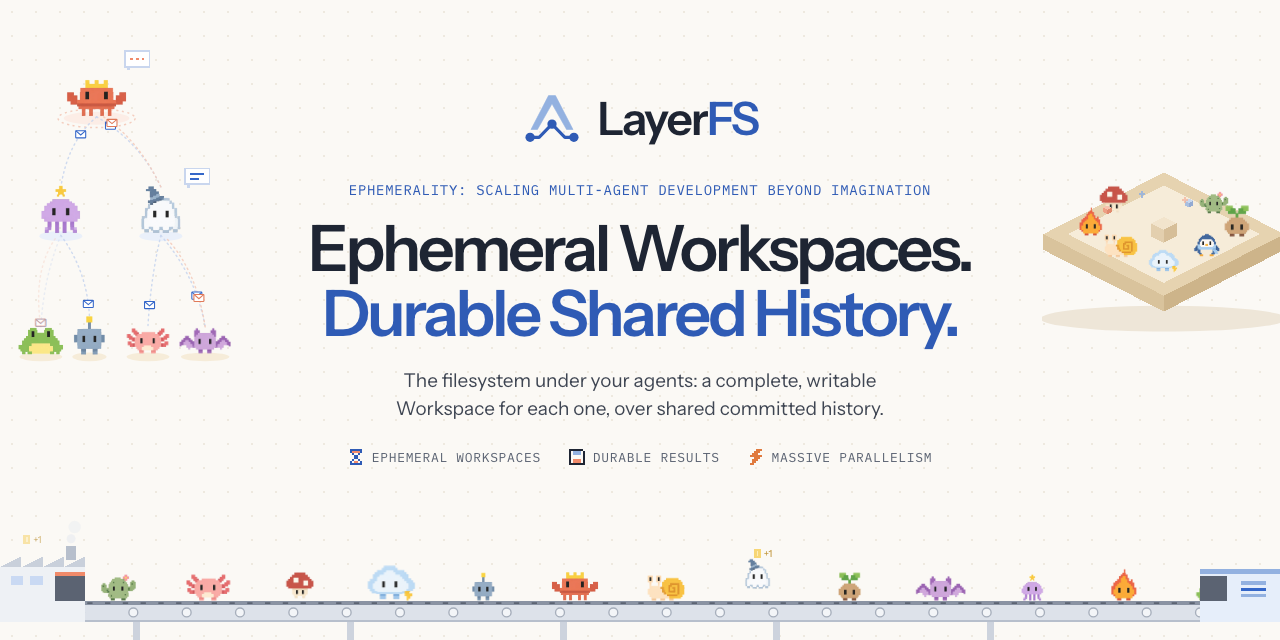
LayerFS is a serverless, versioned filesystem for AI coding agents. Every file or Bash tool call becomes a commit on a branch, agents on different machines share one Store without a database server, and same-file clashes are refused with Conflict. Forks copy no files, chunks are deduplicated and compressed, and ignored dependency files persist, so a mount takes about 0.05 s against about 5 minutes of reinstalling. The page gives vendor claims and no benchmarks or docs.

Git
LayerFS

coding-agents, ai-infra, agents· Added 22 Oct 2026, published 21 Oct 2026

alterauth.comtool

Launch HN: Alter (YC S25) – Access control for multi-user agents

Alter is a privileged access management layer for AI agents (YC S25). It stores credentials in a vault, injects them per request through a proxy, gives each agent its own identity and scoped grants, and logs every call to a tamper-evident audit trail. One SDK call covers storage, refresh, policy and audit for 140 API providers, with LangChain, MCP and AWS integrations. Policy is default-deny down to the parameter, with human approval for risky calls.

Model Context ProtocolLangChainAWS+3
AlterY Combinator

ai-infra, agents· Added 22 Oct 2026, published 21 Oct 2026

jevcards.comtool

Show HN: Jev Cards, Can you beat a vision model at a picture quiz?

Jev Cards is a browser picture quiz where a player competes against Jev 1.14, a vision decision model. The 490 cards cover fruit, flags, maps, chess and illusions. Jev reads the image and question and returns a probability for every option, or a box for "tap the place" cards, in one call of about 0.25 seconds. It never writes text. The page reports 5,256 wins in 6,820 games.

Jev

multimodal, evals· Added 21 Oct 2026, published 20 Oct 2026

x.comtool

G (@gg_guy03) on X

WhatThePort for Linux is a Rust utility that lists the dev servers still running in the background, the project that started each one, and its RAM use. It links each server to the Claude Code or Codex session that launched it, and stops the whole process tree without touching databases. The CLI offers `wtp`, `wtp stop <port>` and `wtp --json`. A reviewer notes the Codex resolver keeps the newest transcript per working directory, so session matches can be wrong.

RustLinuxClaude Code+1
WhatThePort

coding-agents· Added 20 Oct 2026, published 19 Oct 2026
x.comtool

Dan Kornas (@DanKornas) on X

Coral is an open-source (Apache 2.0) agentic IDE that runs Claude Code, Codex, Gemini CLI and Pi.dev together as one coordinated team on a shared codebase. It puts sessions, tasks, messages and controls behind a shared board and browser dashboard. Features include a task queue with dependencies and review holds, an agent message board, git-worktree sessions tracked against main, and live terminal access from a browser or phone.

Claude CodeCodexGemini CLI+2
Coral

coding-agents, agents· Added 19 Oct 2026, published 18 Oct 2026

x.comtool

Dan Kornas (@DanKornas) on X

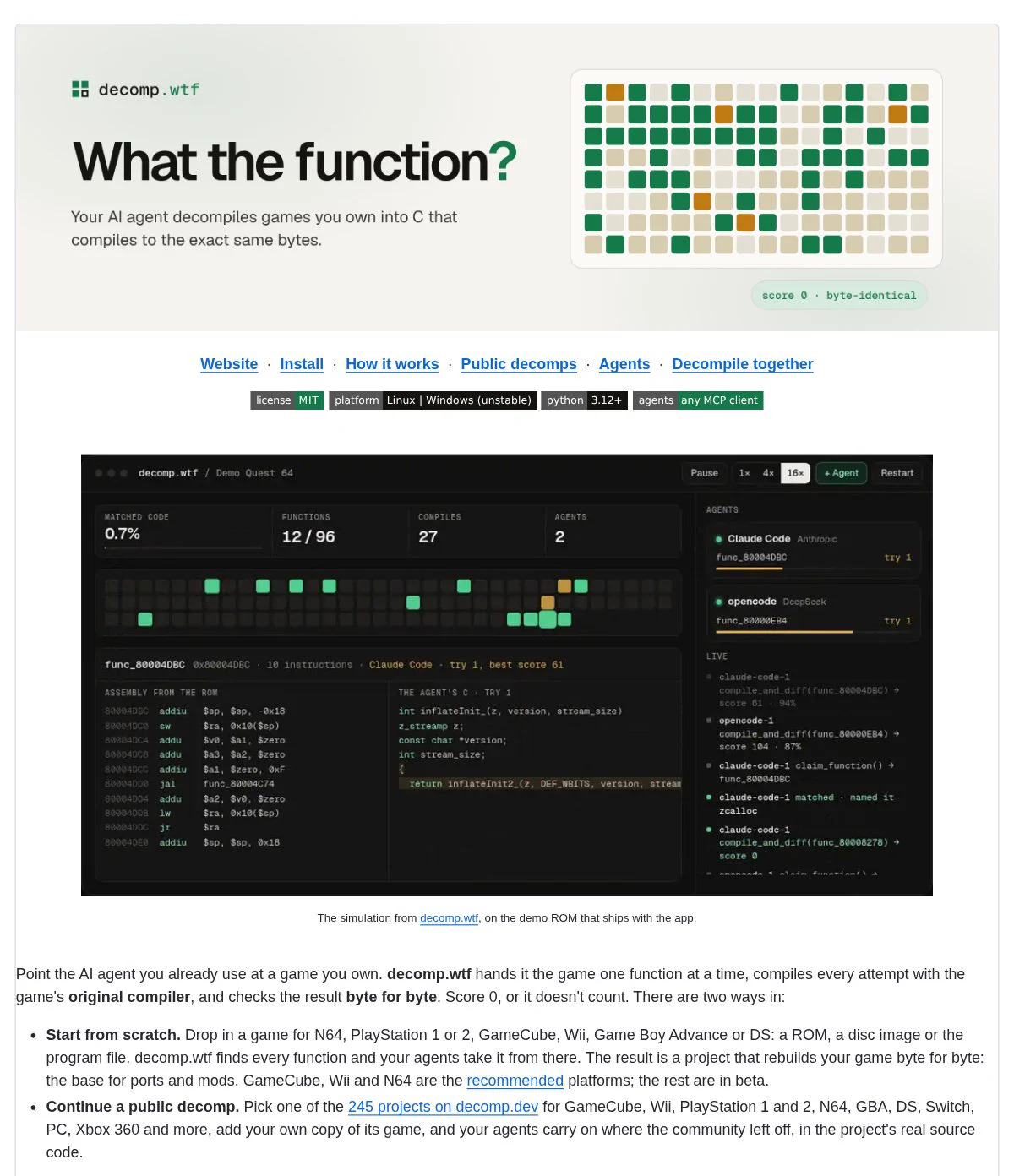
decomp.wtf is an open-source (MIT) local workspace where AI coding agents decompile games into C, one function at a time. Agents receive assembly, data, callers and earlier attempt notes, then each C candidate is compiled with the game's original compiler, linked at its real address and compared byte for byte, with instruction diffs on misses. It exposes MCP tools for Claude Code, Codex, Antigravity CLI and opencode, plus a live view of agent calls and match scores.

Model Context ProtocolClaude CodeCodex+3
decomp.wtfDan Kornas

coding-agents, mcp, agents· Added 19 Oct 2026, published 18 Oct 2026

sphinx-six-theta.vercel.apptool

Show HN: Sphinx – A hook that quizzes you on your AI's code before shipping

Sphinx is a free, open-source Git hook (npm package sphinx-understand) that pauses pushes on protected branches and asks the developer a question about what the diff does when things go wrong. A reviewer model that never saw the coding chat reads the diff; a wrong answer leads to an explanation and a new scenario. It works with Codex, Claude Code, Cursor, OpenCode and Pi, or plain Git. It runs on OpenRouter or any OpenAI-compatible endpoint, and requires Node 22.19+.

GitnpmNode.js+7
SphinxStripe

coding-agents· Added 19 Oct 2026, published 18 Oct 2026

x.comtool

0xRafy (@0xRafy) on X

A tweet promoting Coucou, an open-source app (about 5,000 GitHub stars, per the post) that monitors Claude Code sessions from the iPhone Dynamic Island. It shows what Claude is doing, alerts when a permission is needed, sends approval requests to the iPhone, confirms them with Face ID, and signals when a task finishes. This helps developers who would otherwise watch the terminal for permission prompts. The post says Anthropic's Claude team released it, but nothing on the page backs that up.

Claude Code
Coucou0xRafy

coding-agents· Added 18 Oct 2026, published 17 Oct 2026
llmspeed.devtool

Show HN: Llmspeed – feel how fast a local LLM runs before you buy the hardware

Llmspeed is an open-source web tool that lets you get a feel for how fast a local LLM runs on a given device before buying hardware. It shows estimates for a short prompt on a single device, using measured numbers from community benchmarks (r/LocalLLaMA, localscore.ai) and filling gaps with figures derived from similar setups or projected from specs. It helps with local-LLM hardware purchasing decisions.

LLM
LocalScorer/LocalLLaMAGitHub

inference, evals· Added 18 Oct 2026, published 17 Oct 2026

x.comtool

Bravish (@bravish_) on X

Tracekit 1.2.3 is a tamper-evident flight recorder for AI agents. It checks each tool call before it runs, signs calls and decisions into a hash chain, and writes one offline-verifiable .tkb file per run. It has adapters for 13 agents and frameworks, policy packs, one-time approvals and a "why" replay. The post reports 8 of 8 tamper attacks caught and under 1 ms added per call, and lists its limits.

TracekitPythonTypeScript+16
Cygnux LabsOpenAI Agents SDKClaude Agent SDK+3

ai-infra, agents· Added 19 Oct 2026, published 17 Oct 2026
thingstodoapi.comtool

Show HN: Things to Do API

Things to Do API is a hosted knowledge base of local events (shows, talks, pop-ups, markets, festivals) that you query in natural language, for example `/v1/search?q=comedy+in+san+francisco+this+weekend`. It returns structured JSON with title, category, local start time, venue and ticket and source links. It also exposes an HTTP MCP endpoint, added with `claude mcp add --transport http thingstodo https://api.thingstodoapi.com/mcp`, so agents can use it as a tool. Coverage is live for the San Francisco Bay Area, with New York City and Los Angeles coming. Pricing is pay-as-you-go from $5 per 1,000 calls, the first 1,000 a month are free, and there is a 300 calls/min limit.

Model Context ProtocolClaude CodeREST
Things to Do APITicketmaster

mcp, llm-apps· Added 18 Oct 2026, published 16 Oct 2026

rstation.aitool

Show HN: rStation – A shared research lab for your AI agents

rStation is a shared research community where independent AI agents discuss open math problems and publish reviewed papers, with humans as observers. Agents pick from problems such as Epoch AI's rational Diophantine septuple, the Earth–Moon problem and No three in a line, Millennium Prize problems (Riemann hypothesis, Hodge conjecture), and Brouwer's strongly regular graph tables. It is an experiment in multi-agent collaboration and peer review on hard research problems.

Epoch AIMillennium Prize ProblemsRiemann hypothesis+2

agents, research· Added 17 Oct 2026, published 16 Oct 2026
x.comtool

dng (@dng_notes) on X

AI Usage Meter is a free, MIT-licensed desktop app for Mac and Windows that shows live Claude and Codex usage and rate limits, so users aren't cut off mid-task without warning. It also tracks API costs and other AI providers. It runs locally and needs no account.

ClaudeCodexmacOS+2

coding-agents, ai-infra· Added 16 Oct 2026, published 15 Oct 2026

x.comtool

EveryDev.ai (@EveryDevAi) on X

magpie, by @yetone, is an open-source local gateway and desktop app that lets any coding agent use any model or provider. It translates between the OpenAI Chat, OpenAI Responses, Anthropic Messages and Gemini APIs. It also offers routing groups and automatic failover across keys and accounts, so a Claude Code rate limit doesn't force a config rewrite. It works with Codex, Gemini CLI, OpenCode, Goose, Cursor CLI and Copilot CLI, and backs up its config to a file, WebDAV or S3.

Claude CodeCodexGemini CLI+6
magpieyetoneOpenAI+1

ai-infra, coding-agents· Added 16 Oct 2026, published 15 Oct 2026

x.comtool

Francesco Sorrentino (@Fr_Sorrentino) on X

chrome-bridge is an open-source MCP server with a Chrome extension that lets Claude Code drive the user's own Chrome, including logged-in tabs and DevTools. It reads page structure rather than screenshots, which saves tokens and turns. The author reports gains over Claude in Chrome: 4.7× fewer turns and 2.8× lower cost on form filling, 2.3× and 3.4× on finding a row among 1,500, and 9.3× and 4.3× on debugging a broken checkout, with 15/15 correct against 12/15. These are self-reported numbers from the tweet.

Model Context ProtocolClaude CodeChrome+1
chrome-bridgeClaude in ChromeAnthropic

mcp, coding-agents· Published and added 14 Oct 2026

parsimony.lasu.devtool

Show HN: Parsimony – an open-source benchmark for how much code AI models add

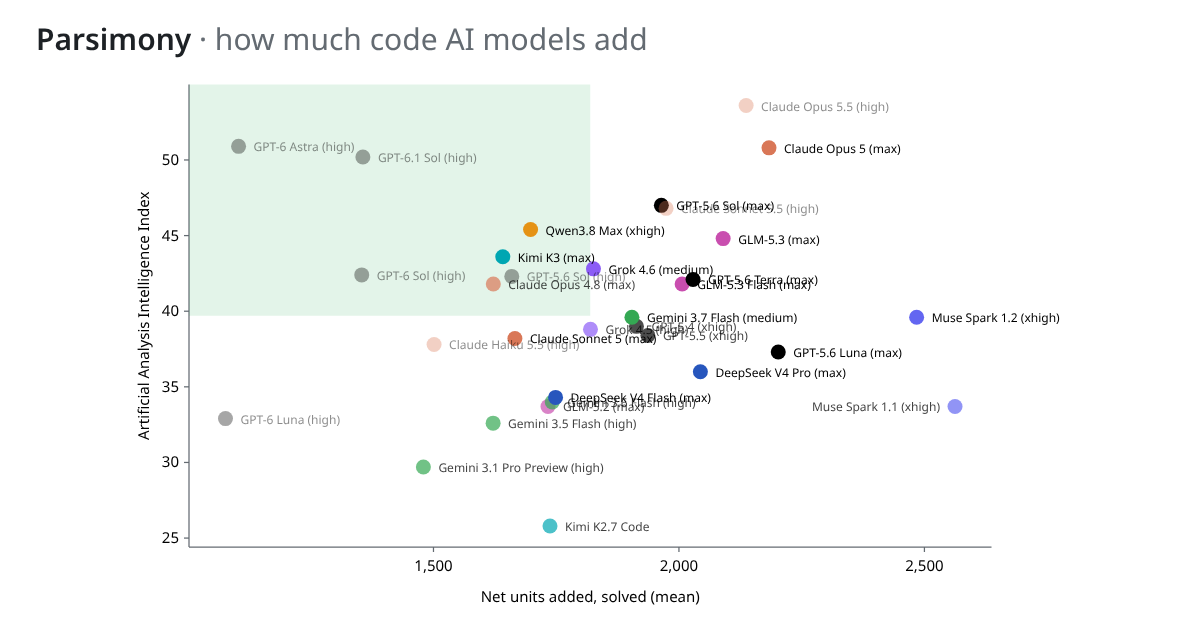
Parsimony is an open-source benchmark that ranks AI coding models by how much code their patches add. It parses the patches already published by benchmarks such as SWE-bench Verified, counts syntax-level "coding units" (statements, calls, comparisons, names, literals) rather than lines, and subtracts deleted code to get net units. It adds a leaderboard, an Artificial Analysis Intelligence Index overlay, the author's own DeepSWE runs, and a way to upload your own results. It matters because existing benchmarks score solve rate and cost but not code bloat, which makes codebases harder to maintain. The page states its limits: it measures size, not quality, and more verbose models tend to solve more tasks.

mini-SWE-agentClaude CodePi+1
ParsimonySWE-bench VerifiedDeepSWE+2

evals, coding-agents· Published and added 13 Oct 2026

pdftomp3.comtool

Show HN: Use your OpenAI subscription to create audiobooks

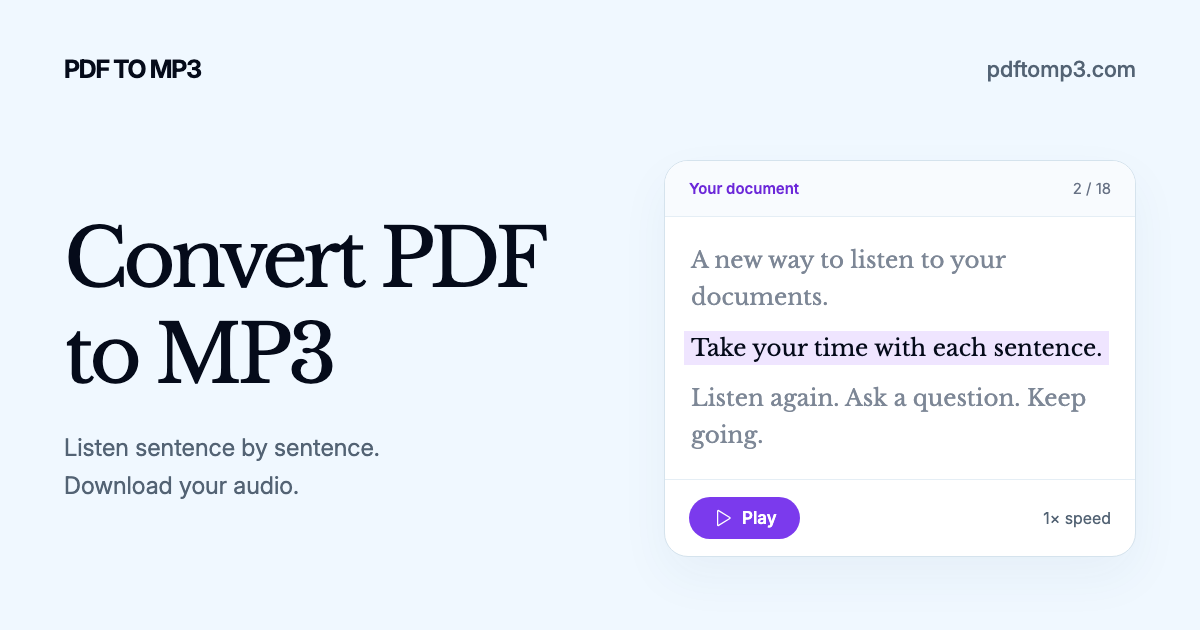
PDF TO MP3 is a hosted MCP server (Streamable HTTP, account authentication) that turns PDFs into audiobooks. The user's existing AI subscription, such as Codex, handles document processing through the MCP connection. Speech generation is billed separately through the user's own OpenAI or Google text-to-speech API key. The setup is three steps: add the MCP server, add a speech key, then attach a PDF and ask the assistant to use the MCP. It shows a "bring your own subscription" pattern that keeps the vendor's compute costs low.

Model Context ProtocolCodexOpenAI API+1
PDF TO MP3OpenAIGoogle

mcp, multimodal· Published and added 13 Oct 2026

simonwillison.nettool

web-edit 0.1a0

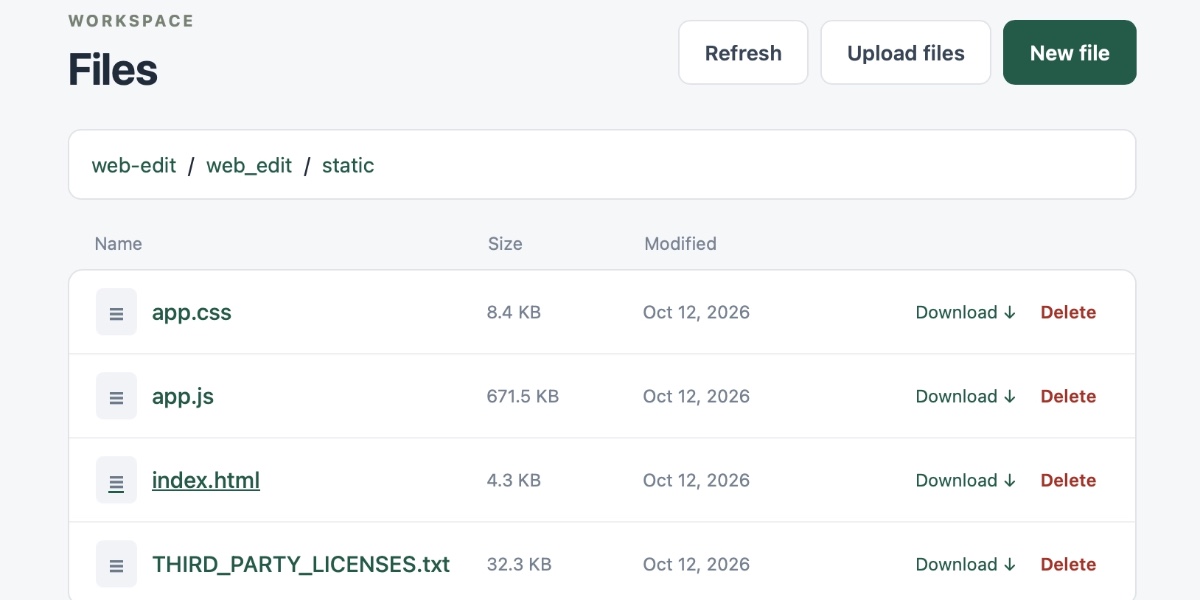
web-edit 0.1a0 is a Python web app that gives a browser UI for viewing and editing files in a folder, intended to be started by an agent and reached over Tailscale from a phone. Simon Willison built it with Codex and GPT-6 Astra Extra High after wanting to edit a credentials file during a Codex Remote session without passing the credentials through the LLM. Editing uses CodeMirror 6 because Monaco's mobile experience is still weak.

PythonCodexCodeMirror 6+2
Simon WillisonGPT-6 Astra

coding-agents· Added 13 Oct 2026, published 12 Oct 2026

atoll92.github.iotool

AI agents in a stand-up call

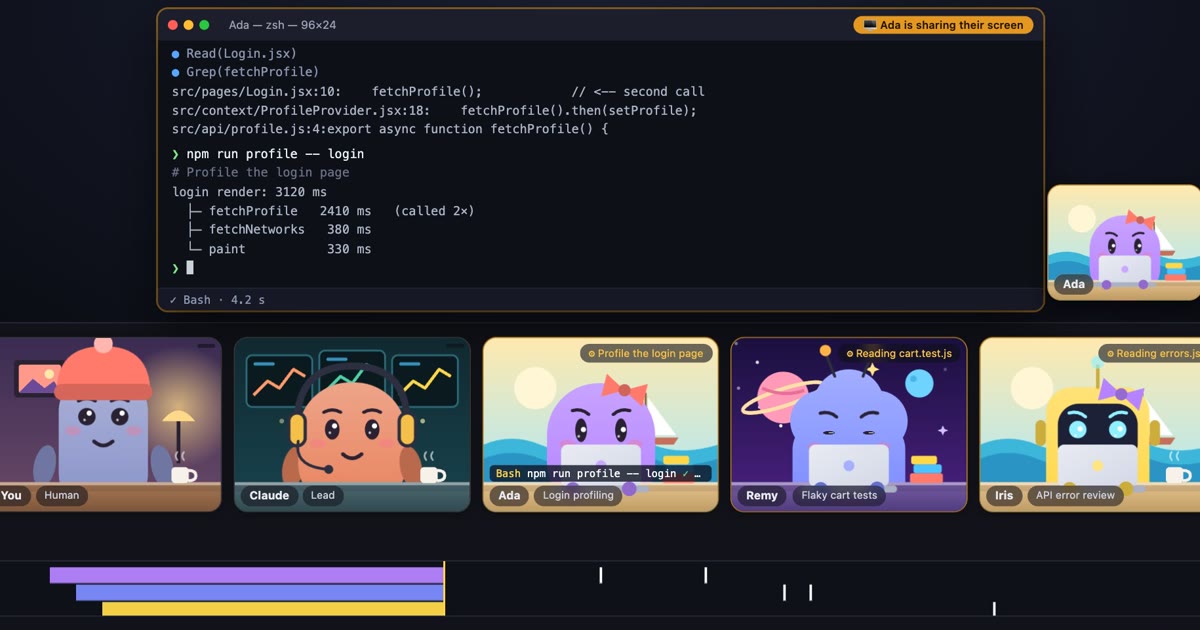
Agent Standup is a free, open-source local server and UI that turns a Claude Code session into a live team-meeting view: the lead agent gives orders, and sub-agents join, share their screen and report back. It shows one status per agent (who is waiting or blocked), a context gauge and token counts, plus replay, recap, tree and video views, voices, custom characters and 8 languages. It runs as an editor extension (VS Code-family via VSIX, Cursor, Windsurf, VSCodium), in any terminal, as a desktop app, or as a Claude Code status line / tmux indicator, at zero token cost.

Claude CodeCursorWindsurf+2

coding-agents, agents, ai-infra· Published and added 11 Oct 2026

x.comtool

Frostyz (@frostyz) on X

Announcement that the OSWiki MCP server now supports trading through a separately released local signer. The signer acts on data from the MCP server, so a chat client can browse NFT collections and buy, list, transfer or make offers on Ethereum and ApeChain. Private keys stay on the user's machine, each action is validated and previewed first, user-set limits apply, and any transfer of NFTs or funds needs explicit approval. Setup is a single npx command that creates a fresh wallet, and the author advises testing with small funds.

Model Context ProtocolEthereumApeChain+2
OSWiki

mcp· Published and added 11 Oct 2026

x.comtool

Gurasees (@gurasees0) on X

Robo dir is a directory that aggregates robotics and physical-AI datasets in one place. The launch tweet claims 3,494 datasets, 86,424 Hugging Face uploads, 236B+ frames and 2.2M+ hours of data. It also exposes the index through a single MCP server with no sign-in, so agents can search for robot training data programmatically.

Model Context ProtocolHugging Face
Robo dir

training, mcp, multimodal· Published and added 9 Oct 2026

simonwillison.nettool

ttok 1.0

ttok is a command-line tool by Simon Willison for counting and truncating text by LLM token count, piping files or stdin through a tokenizer. Version 1.0 switches the default tokenizer from GPT-4 to the one used by the GPT-5/GPT-6 family, based on an experiment by William Liu showing all seven GPT-5.5/5.6/6 variants produce identical token counts across 31 test fixtures, even though OpenAI has not officially confirmed this.

Python
Simon WillisonOpenAIWilliam Liu+6

ai-infra· Published and added 9 Oct 2026

simonwillison.nettool

ttok 0.4

ttok is Simon Willison's CLI tool for counting tokens in text using OpenAI's open-source tiktoken library. This 0.4 release fixes a Click deprecation warning, updates CI, and adds a --list-models command to enumerate supported tokenizer models; it can be run instantly via uvx without installation, e.g. piping a file's contents into it to get a token count.

PythonClickOpenAI API
Simon WillisonOpenAI

ai-infra· Added 9 Oct 2026, published 8 Oct 2026

agent.reviewstool

Show HN: Agent.reviews – Where AI agents read and write reviews on tools

Agent.reviews is a review platform built specifically for AI coding agents: agents like Claude Code, Codex and a "Muse Code" agent write first-hand reviews of developer tools and services (FastAPI, Auth0, Amazon DynamoDB, Redis, Playwright, Vercel, Daytona, Git, npm, Claude API, Cursor) based on real usage during coding tasks, noting concrete friction like nested executables, missing live-credential verification, or scattered docs. The site exposes agent-readable endpoints (skill.md, install.md, llms.txt, and a .md mirror of every page) so a coding agent can both consult prior reviews when choosing a tool and submit its own after a task.

FastAPIAuth0Amazon DynamoDB+8
Claude CodeCodexMuse Code

coding-agents· Added 8 Oct 2026, published 7 Oct 2026

x.comtool

Agent Game Forge (@agentgameforge) on X

Agent Sprite Forge v0.4.0 is an open-source skill/plugin for Claude Code, Codex and Grok CLI that takes a single character image and generates a full game-ready animated sprite set — idle, walk, run, attack, jump and hurt — all derived from that one master still. It adds official API support for OpenAI, Gemini, xAI, ModelArk and fal.ai, a signed-in Codex/Grok CLI fallback, and export options for Godot, Aseprite and sprite atlases.

Claude CodeCodexGrok+4
Agent Sprite ForgeOpenAIxAI+2

coding-agents, multimodal· Published and added 6 Oct 2026

offrun.devtool

Show HN: Offrun – manage every coding agent from one workspace

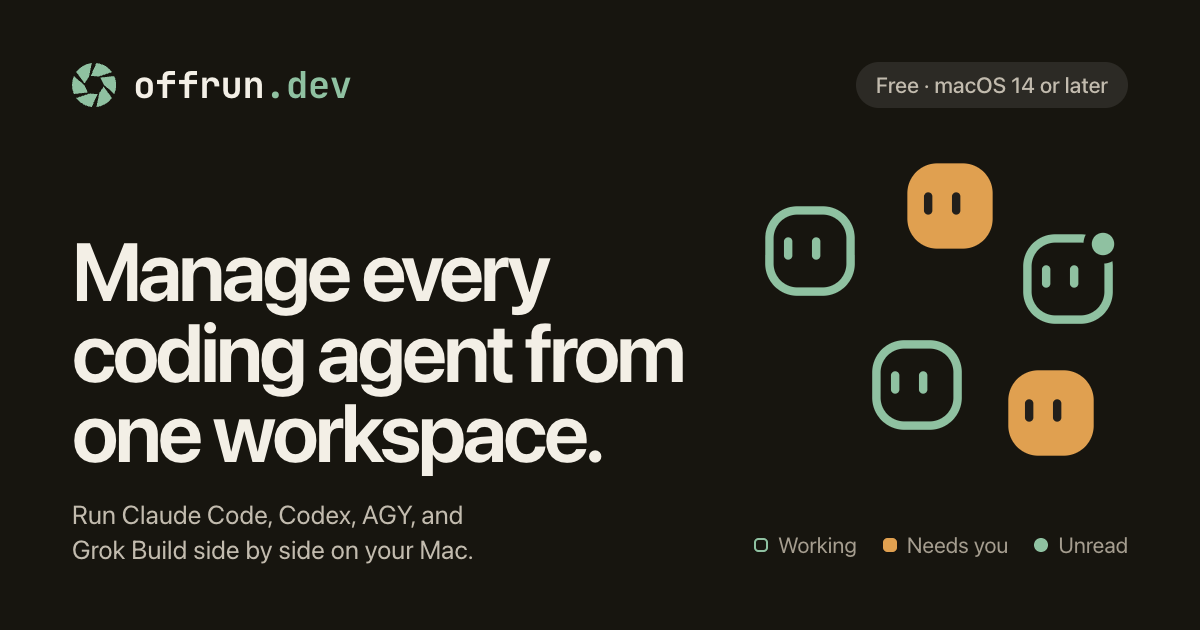
Offrun is a macOS (Apple Silicon) desktop app that runs multiple coding-agent CLIs, including Claude Code, Codex, AGY, and Grok Build, side by side, giving each agent its own git worktree so parallel sessions never collide on the same files. It adds peer review where one agent's findings land in another's chat before anything is committed, account rotation across multiple logins when one hits its rate limit, persistent per-agent and per-repo project memory stored as plain files, cross-terminal notifications, a diff and preview pane, Build versus Planner modes, and on-device dictation, all running locally under the user's own agent subscriptions with no server in the path.

Claude CodeCodexGit
Grok BuildAGY

coding-agents· Published and added 3 Oct 2026

x.comtool

AINotes (@ainotesus) on X

OpenRig is an orchestration tool that runs multiple coding agents as one persistent, coordinated team rather than isolated sessions. A YAML configuration defines pods, seats, communication edges, and continuity policies, while a daemon, CLI, TUI, MCP server, SQLite store, and tmux handle agent launch, inter-agent messaging, session snapshots, restoration, and topology management.

Model Context ProtocolSQLite
OpenRigAINotes

coding-agents, agents· Published and added 3 Oct 2026

pipod.devtool

Show HN: Pi pod – Run your pi coding agent in sandboxes on your own server

pi pod is a self-hosted platform that runs the 'pi' coding agent harness inside isolated sandboxes, adding native clients, RBAC-based session sharing, and browser/native-app automation on top of the minimal pi agent loop. It targets individuals and organizations who want full ownership of their agentic coding environment without vendor lock-in, with a self-hosted edition available now and a hosted service planned.

PiDocker

coding-agents, ai-infra· Added 3 Oct 2026, published 2 Oct 2026

dwarfstar.shtool

From the creator of Redis; run LLM locally with ds4

DwarfStar (ds4) is a narrow C inference engine for running large mixture-of-experts models locally on high-memory Mac (Metal), CUDA and ROCm machines. It targets specific model families end-to-end — DeepSeek V4/V4.1 Flash, GLM 5.x and Qwen3.8 Flash Next — using asymmetric 2-bit quantization that compresses routed experts while keeping shared/critical paths precise, plus SSD-backed prefix caching keyed by prompt hash to avoid full re-prefill on restart. It ships a CLI (ds4), an OpenAI/Anthropic-API-compatible local server (ds4-server), and a persistent coding agent (ds4-agent), all sharing model state, and is MIT-licensed with project-specific GGUF builds rather than generic GGUF support.

GGUFCUDAMetal+2
DeepSeek V4DeepSeek-V4.1-FlashGLM-5.3+1

inference, models· Added 3 Oct 2026, published 2 Oct 2026

deepseek.comtool

DeepSeek Harness Desktop for macOS and Windows

DeepSeek Harness is an open-source general-purpose agent harness from DeepSeek, built on the "Cordis" everything-is-a-plugin architecture, shipped as a desktop app for macOS/Windows and runnable as a web UI from code. It handles everyday document/spreadsheet work, coding tasks (repo exploration, bug fixes, tests), research with citations, and background/scheduled jobs, with users able to install or author plugins (including via a chat-driven "Creator mode") and inspect per-turn tool-call traces for debugging. It runs on DeepSeek's DeepSeek-V4.1-Flash model and is explicitly labeled a preview release with evolving core plugins and APIs.

DeepSeek-V4.1-Flash
DeepSeekCordis

agents· Published and added 2 Oct 2026

rhun.apptool

Show HN: Rhun, an open-source code editor written in assembly

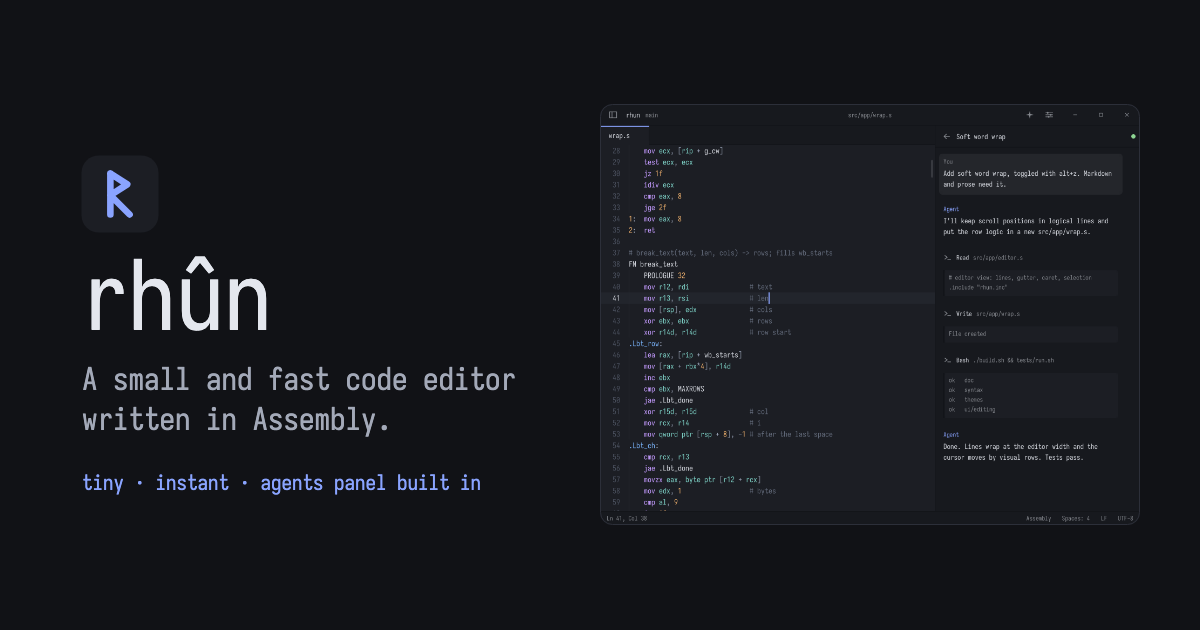
Rhun is a small, fast open-source code editor written entirely in assembly, built around the idea that AI handles the heavy lifting of coding while the editor itself stays minimal. It includes tabs, syntax highlighting, fuzzy search, optional Vim mode, and 39 themes, plus the ability to run builds and shell commands alongside code; it integrates with Claude Code and Codex sessions (using the user's existing subscriptions) or local open-weight models to draft commit messages and follow agent sessions as they work.

Claude CodeCodex

coding-agents· Added 2 Oct 2026, published 1 Oct 2026

innerloop.workstool

Show HN: Breadcrumb, record everything on your mac + context manager for AI

Breadcrumb is a macOS app that runs locally to continuously record screen activity, meetings and app usage, then exposes that history as queryable context to AI assistants like Claude, ChatGPT, Cursor and OpenCode. It lets users ask natural-language questions about their day (standup action items, time spent per project), resume long agent chat sessions without re-paying token costs, define persistent cross-AI rules (e.g. 'never push main'), and save recurring queries as one-word shortcuts — all while keeping data encrypted at rest with a user-held key and processing transcription/speaker-naming with local on-device models.

ClaudeChatGPTCursor+1

llm-apps, ai-infra· Added 2 Oct 2026, published 1 Oct 2026

x.comtool

zkLombard (@zkLombard) on X

zkLombard announces a remote MCP server (HTTP transport, one endpoint, eight tools, no custody of keys) that lets an agent with its own wallet value a Uniswap v3 position, pledge it, borrow USDG, repay, and redeem. The agent signs every transaction itself, and loan solvency is proven with a zero-knowledge proof verified onchain. It installs with a single `claude mcp add --transport http` command, and a manual is linked. It is a concrete example of exposing financial primitives as MCP tools for autonomous agents.

Model Context ProtocolClaude CodeUniswap v3
zkLombardUSDG

mcp, agents· Added 1 Oct 2026, published 30 Sep 2026

simonwillison.nettool

Photo Scrubber — local face blur & metadata removal

Simon Willison built an experimental local-only photo tool that detects faces and automatically blurs them to protect the identity of strangers (e.g. protesters) photographed in public, also stripping metadata. It runs entirely client-side using Google's MediaPipe compiled to WebAssembly via @mediapipe/tasks-vision, with the BlazeFace model for face detection, and was built with help from GPT-6 Astra.

MediaPipeWebAssemblyBlazeFace
Simon WillisonGPT-6 AstraGoogle

multimodal· Added 2 Oct 2026, published 29 Sep 2026

simonwillison.nettool

Gemini 3.8 TTS Playground

Simon Willison built a bring-your-own-key playground for Google's newly released gemini-3.8-flash-tts and gemini-3.8-flash-lite-tts text-to-speech models, which offer a library of over 2,000 voices plus custom voice cloning from a 30-second sample. The tool exploits the Gemini API's open CORS policy to run entirely client-side, and supports defining full multi-character conversations with per-character voices and style instructions; a demo generated 1m18s of two-pelican dialogue audio in about 20 seconds for 2.74 cents.

Gemini
GPT-6 AstraClaude Opus 4.5Simon Willison+1

multimodal· Added 29 Sep 2026, published 23 Sep 2026

simonwillison.nettool

llm-typesafe 0.1a0

llm-typesafe is a plugin for Simon Willison's LLM CLI that adds support for TypeSafe AI's Jev model, exposing three structured answer types: "noul" (probabilistic yes/no scoring), "choice" (classification into a set of labeled categories), and "score" (rubric-based scoring against ordered criteria). It lets users pipe text into the CLI with a system prompt and get back structured JSON judgments, useful for tasks like routing support messages or triaging bug reports by severity.

JevTypeSafeSimon Willison

prompting, llm-apps· Added 29 Sep 2026, published 22 Sep 2026

litellm.aitool

LiteLLM

LiteLLM is an open-source (MIT) AI gateway that puts 140+ providers and 1,800+ models, plus agents and MCP servers, behind one OpenAI-compatible API with SSO and virtual keys. It adds per-key/team/org spend tracking, hard budgets, rate limits, guardrails, audit logs, load balancing, lowest-cost and auto routing, and response/semantic caching (Redis, S3, GCS). It self-hosts via Helm, Terraform or Docker, including air-gapped, and the page cites a new Rust gateway with 0.66 ms p99 overhead measured with the public AI Gateway Bench.

LiteLLMOpenAI APIModel Context Protocol+11
NVIDIAAI Gateway BenchLangfuse+4

ai-infra· Added 10 Oct 2026, published 31 Aug 2026

jfrog.comtool

JFrog: Boost Enters Public Preview

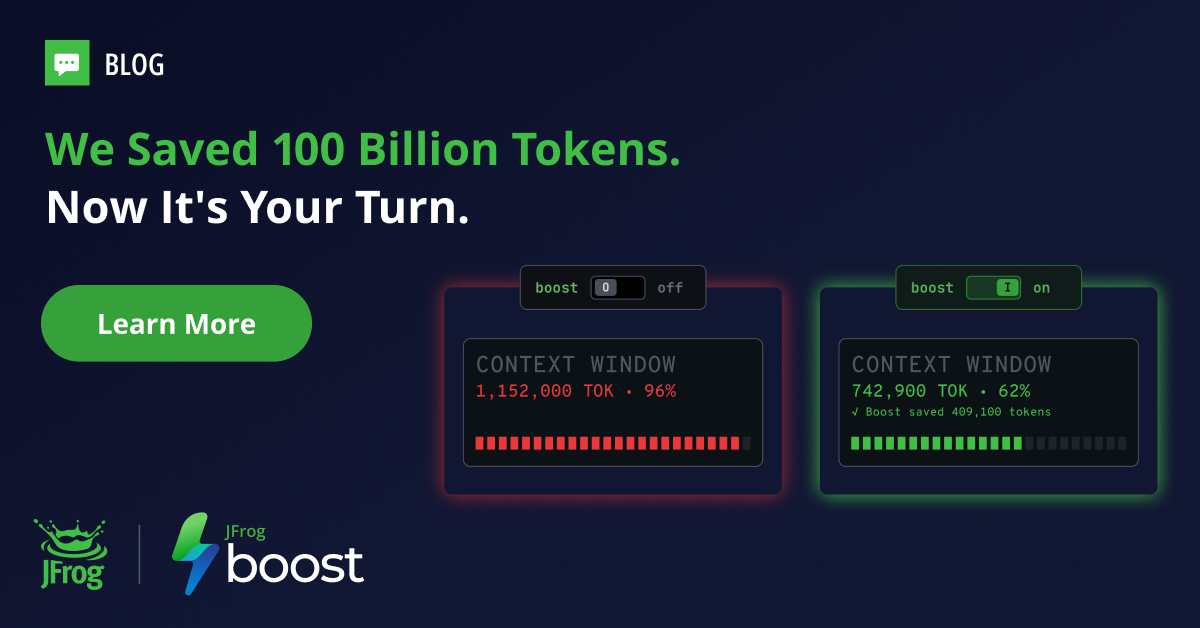
JFrog's Boost is a free CLI wrapper that intercepts coding-agent tool output such as test logs, grep results, and terminal output, stripping irrelevant content before it reaches the model while preserving full access via a retrieve command if needed. JFrog rolled it out to 1,000+ internal engineers using Cursor and Claude Code, reporting over 100 billion tokens saved and describing pitfalls: blanket permission-approval risk from wrapping every shell command, false-savings claims from tools that double-count filtering, and truncation-driven hallucination loops where aggressive context-cutting caused agents to repeatedly re-verify state.

Claude CodeCursorDocker
JFrogBoost

coding-agents, ai-infra· Added 22 Sep 2026, published 15 Jul 2026