Skip to content

34 results for β€œFBI”

What you seeeverything
bleepingcomputer.comarticleπŸ›‘οΈ Security

FBI links $6.3 billion Binance crypto heist to North Korean hackers

The FBI attributed the roughly $6.3 billion Binance theft of about 29 October 2026 to North Korea's TraderTraitor (Lazarus Group, Jade Sleet, APT38). Binance traced the breach to a compromised DevOps engineer's laptop that gave access to a service container used to submit unauthorized withdrawals across ten blockchains. The FBI published 628 laundering addresses and linked the group to earlier thefts at Bybit, DMM Bitcoin, Bitget and Drift.

EthereumBitcoinSolana+3
TraderTraitorLazarus GroupDPRK+14

Threat Intel, BlockchainΒ· Published and added 1 Nov 2026

theblock.coarticleπŸ›‘οΈ Security

North Korean hackers launder $242 million of Binance loot via Tron as FBI presses THORChain: analyst

The Block reports that North Korean hackers (TraderTraitor) laundered about $242 million of funds stolen from Binance through Tron in two days, according to analyst SomaXBT. Relay, THORChain, Chainflip and Symbiosis moved about $140 million off Tron. Elliptic counts $2.85 billion frozen or seized, 44% of $6.43 billion stolen, and $3.25 billion in assets no issuer can freeze. The FBI urged THORChain and others to block listed addresses.

TronTHORChain
TraderTraitorDPRKBinance+6

Blockchain, Threat IntelΒ· Published and added 1 Nov 2026

en.cryptonomist.charticleπŸ›‘οΈ Security

Binance Replaced 90% of Assets Stolen in the $6.3B Binance Crypto Hack

Report on the $6.3 billion Binance hack of October 2026, which the FBI attributed to North Korea's TraderTraitor unit. Co-CEO Richard Teng said attackers used EIP-7702 to gain execution approval over a hot wallet, after a compromised laptop and further breach points, and used self-destructing malware. Binance replaced 90% of the assets, and the FBI expects further laundering through Ethereum. No IOCs or mitigations are given.

Ethereum
TraderTraitorBinanceFBI+5

Blockchain, Threat IntelΒ· Added 1 Nov 2026, published 31 Oct 2026

thedefiant.ioarticleπŸ›‘οΈ Security

FBI Attributes $6 Billion-Plus Binance Hack to North Korea

The Defiant reports that the FBI attributed a Binance hack of more than $6 billion to North Korea and named TraderTraitor as the actor. The bureau also sought blocks on the laundering trail, and Binance kept 1 November as its target for restarting withdrawals. The article body did not load, so technical details of the intrusion are not available.

TraderTraitorDPRKFBI+1

Threat Intel, BlockchainΒ· Published and added 31 Oct 2026

decrypt.coarticleπŸ›‘οΈ Security

Secret Service, FBI Join Binance Hack Probe as Circle Freezes $823 Million

Decrypt reports that Binance is working with the FBI and U.S. Secret Service after a theft of about $6.4 billion, which TRM Labs and Chainalysis attribute to North Korea's TraderTraitor group, also linked to the February 2025 Bybit hack. Circle froze about $823 million in USDC and Tether froze USDT, though the page gives differing Tether totals. Binance first suspected a compromised DevOps engineer laptop, found more breach points, and saw no evidence of leaked wallet private keys.

USDCTether
TraderTraitorBinanceBybit+10

Blockchain, Threat IntelΒ· Published and added 30 Oct 2026

securityweek.comarticleπŸ›‘οΈ Security

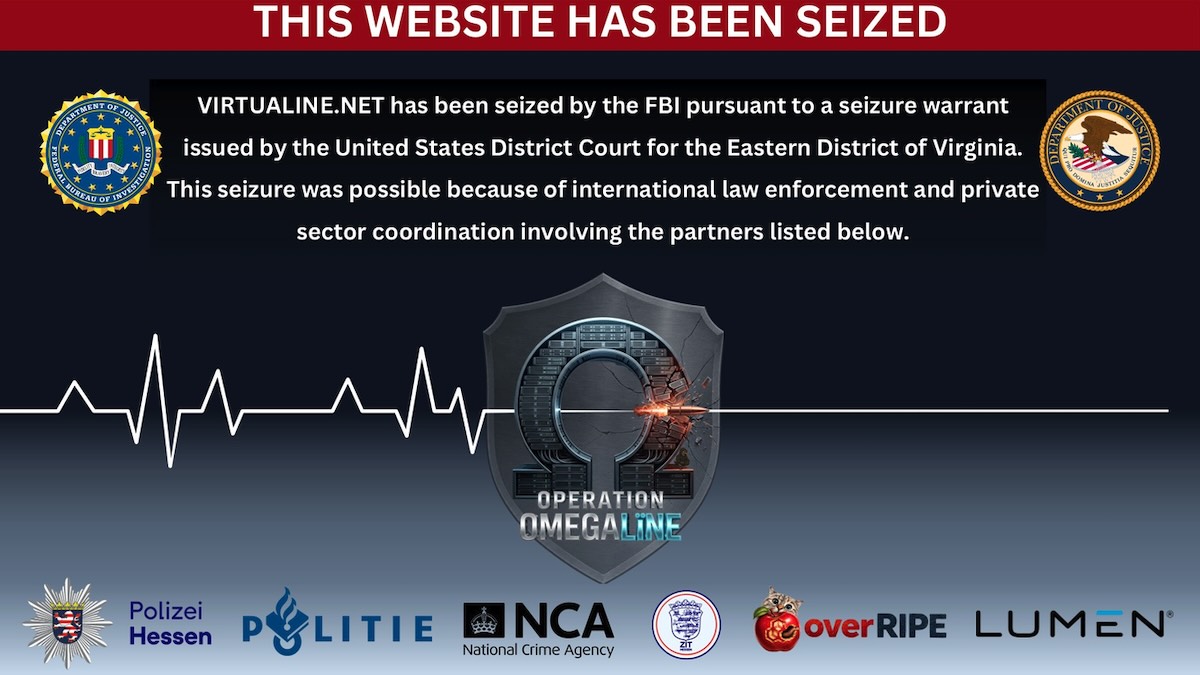
Bulletproof Host Virtualine Loses Its Domain to FBI Seizure

Virtualine is a Russian-speaking bulletproof hosting provider whose domain virtualine.net the FBI seized. Court documents say it hosted phishing, spam, carding and illicit content, and ignored abuse reports. TRM Labs says it received more illicit-attributed cryptocurrency than any other labeled bulletproof host, mostly from a Russian drug marketplace (44%) and a sextortion scheme (17%), and later from StealC operators in 2026.

Bitcoin
VirtualineStealCFBI+3

Threat IntelΒ· Published and added 30 Oct 2026

bleepingcomputer.comarticleπŸ›‘οΈ Security

Police seize Virtualine bulletproof service tied to ransowmare, cybercrime

Virtualine, a bulletproof hosting service also operating as Secury, Massgod, Spamhouse, Lanedo and Omegatech, had its main domain seized by the FBI with German, Dutch and UK partners. Chainalysis and TRM Labs traced its Bitcoin payments to ransomware (5% of flows), a Russian drug market (about 44%), sextortion and the StealC infostealer. Dutch police seized dozens of servers in Limburg and recovered data on over 3,000 customers.

Bitcoin
VirtualineSecuryMassgod+14

Threat IntelΒ· Added 30 Oct 2026, published 28 Oct 2026

chainalysis.comarticleπŸ›‘οΈ Security

International Law Enforcement Seizes Domain of Virtualine Bulletproof Hosting Service

Virtualine is a bulletproof hosting provider whose domain virtualine.net was seized on 27 October 2026 by the FBI Washington Field Office and the Eastern District of Virginia, with German, Dutch and UK police support. Chainalysis and OverRIPE gave intelligence support. The post lists aliases (Secury, Massgod, Spamhouse, Lanedo, Omegatech), forum advertising on Exploit.in and HackForums, and unhosted bitcoin payments tied to ransomware, infostealers and scam infrastructure.

BitcoinChainalysis Reactor
VirtualineSecuryMassgod+13

Threat IntelΒ· Published and added 27 Oct 2026

thedefiant.ioarticleπŸ›‘οΈ Security

US Charges Six in Alleged Madagascar NFT Wallet-Draining Scheme

The Defiant reports US charges against six people over an alleged NFT wallet-draining scheme run from Madagascar. An FBI affidavit estimates at least $516,695 in losses across 74 victim-linked wallets. It describes unlimited USDT spending approvals as the mechanism. The fetched text holds only the subtitle, so the scheme's mechanics and the defendants are not covered here.

Tether
FBIwallet drainerunlimited token approval+1

Threat IntelΒ· Published and added 27 Oct 2026

galaxy.comarticleπŸ›‘οΈ Security

Weekly Research Brief: PHP Vulnerability; Objections to OKX-ICE’s Stock Tokenization; Solana Alpenglow Ships

Galaxy Research's weekly brief includes a section on PHP2Shell, two decade-old PHP remote code execution bugs affecting versions back to 5.4, patched in an emergency release. It reports an Amazon honeypot exploit attempt four days before disclosure, thousands of attempts in the 10 hours before the patch per Cloudflare's Matthew Prince, and NSA and FBI offline advice. The author argues the bugs were found with GPT-5.6 Sol and that defence must become agentic. It also lists the week's other incidents, including a CVSS 10.0 GitLab bug and eMudhra's guessable private keys.

PHPWordPressOpenAI+3
PHP2ShellPatch the PlanetCalif+7

Threat Intel, AI SecurityΒ· Added 24 Oct 2026

x.comarticle🧠 AI

Trail of Bits (@trailofbits) on X

Trail of Bits announces two open-source plugins, patching-bugs and regression-hunt, for AI coding agents that speed up bug patching. They come from four months of Patch the Planet work with open-source projects, which found that repo-level documentation, skills and plugins give agents the maintainer context on what counts as a bug, how a fix should look and what must not break. The post cites the October 2026 PHP incident: a patch touching 402 files, and exploitation within 17 hours of leaked details.

PHPCloudflare
Trail of BitsPatch the PlanetPatchstack+2

coding-agents, promptingΒ· Added 23 Oct 2026, published 21 Oct 2026

en.cryptonomist.charticle🧠 AI

U.S. jobs data challenges fears about the future of artificial intelligence

Reports Stephen Messer's October 2026 essay arguing that US unemployment (4.3–4.5% through 2025–2026) and studies from Anthropic economists, PwC and a Danish dataset show no mass AI job destruction. It also covers Yann LeCun's rejection of LLMs as a route to human-level intelligence and open-weight competition, notably Moonshot's Kimi K2 to K3 and Harvey's Tenet model post-trained on Kimi K3 (benchmark 11% to 19.7%, inference cost under a quarter). It closes with the September 2026 FBI/NSA/CISA advisory on Chinese distillation campaigns against US models.

LLMKimi K3Claude
Stephen MesserAnthropicYann LeCun+22

ai-policy, modelsΒ· Published and added 16 Oct 2026

coindesk.comarticleπŸ›‘οΈ Security

How Brooklyn prosecutors and the FBI took down a massive crypto fraud network targeting Russian speakers

Brooklyn DA Eric Gonzalez and the FBI seized or disrupted 241 scam websites and 112 servers tied to a crypto investment fraud network that targeted Russian speakers in the US. The scheme used Russian-language Facebook ads, fake advisers who coached victims into sending crypto to fake trading platforms, fee and tax lockouts on withdrawal, and later fake fund-recovery offers. Investigators went after the servers holding victim data and fraud software, because replacement domains kept appearing after earlier takedowns of about 400 domains. The infrastructure was in Ukraine and other Eastern European countries, no arrests were announced, and about $300,000 has been seized.

Facebook
FBIBrooklyn District Attorney's OfficeEric Gonzalez+4

Threat IntelΒ· Published and added 15 Oct 2026

securityweek.comarticleπŸ›‘οΈ Security

US Arrests Two in Crackdown on North Korean IT Worker Laptop Farms

SecurityWeek reports on the arrest of two US nationals (Michael James Bostelle, Juan Cecilio Pena Carrillo) for running laptop farms that helped North Korean IT workers get remote jobs at over 70 US companies, generating more than $3M between 2019 and July 2025. It covers the FBI's Operation Lonestar Roundup (40 Texas locations searched, 187 laptops and KVMs seized). It also covers CrowdStrike's Famous Chollima analysis of shipping-diversion tricks and evolving evasion (hidden RMM tools, spoofed device hashes), and the FBI's 'identity in depth' guidance for spotting ITWs across the employment lifecycle.

CrowdStrikeVPN
Famous ChollimaDPRKOperation Lonestar Roundup+5

Threat Intel, Blue Team & DetectionΒ· Published and added 14 Oct 2026

securityweek.comarticleπŸ›‘οΈ Security

Employee Arrested After Listening Device Found in OpenAI Conference Room, FBI and the Company Say

SecurityWeek reports that an OpenAI engineer, Abdulrahman Alfozan, was arrested by the FBI and charged with illegally intercepting oral communications. A recording device, concealed in toilet paper, had been plugged into a USB port on the back of a conference-room TV. OpenAI says it used its own models to analyse the device and identify the employee, and that it has no indication model weights, source code or customer data were accessed. The complaint cites CCTV footage, a camera later added to the room, and the employee's productivity-tool queries about meeting rooms and calendars.

OpenAI
Abdulrahman AlfozanFBI

otherΒ· Published and added 13 Oct 2026

sfstandard.comarticleπŸ›‘οΈ Security

OpenAI engineer arrested in bugging of executive conference room

Reports the federal arrest of OpenAI engineer Abdulrahman Alfozan, charged with using a device to intercept oral communications after an encrypted audio recorder was found in a San Francisco executive conference room. The recorder was hidden in toilet paper and plugged into a TV's USB port. Prosecutors say he used an internal productivity tool to scout rooms and calendars, and a chatbot account tied to his spouse asked how to build, encrypt and remotely access a recorder. OpenAI's technical surveillance countermeasures team found the device, and OpenAI says it used its own models for forensic analysis. It then restricted his access in stages, timed with the FBI, before firing him. A useful insider-threat case study that also covers physical security.

OpenAI
Abdulrahman AlfozanFBItechnical surveillance countermeasures

otherΒ· Published and added 13 Oct 2026

securityweek.comarticleπŸ›‘οΈ Security

Ransomware Response Expert Arrested in ShinyHunters FBI Hack Probe

SecurityWeek reports the US arrest of a Canadian ransomware-negotiation specialist, reportedly Edward Dubrovsky of CyberSteward, on suspicion of involvement in ShinyHunters attacks, including the hack of FBI systems. He is charged with conspiracy to threaten to impair information confidentiality with intent to extort, and the case has moved to the Eastern District of Texas. It is the third ShinyHunters arrest in weeks, after suspects in the Netherlands and Jordan. The FBI blamed its own breach on a contractor's unpatched Oracle PeopleSoft, and sources say other ransomware negotiators could face charges.

Oracle PeopleSoft
ShinyHuntersFBIEdward Dubrovsky+3

Threat IntelΒ· Published and added 12 Oct 2026

securityweek.comarticleπŸ›‘οΈ Security

Insider Cyber Extortion Plot Against Industrial Firm Lands Engineer in Prison

SecurityWeek reports that Daniel Rhyne, a core infrastructure engineer, was sentenced to 32 months for sabotaging and extorting his employer, an industrial firm in New Jersey. In November 2023 he planted scheduled tasks on the domain controller that deleted 13 domain admin accounts and reset passwords on 301 domain users, 254 servers and 3,284 workstations, mostly to 'TheFr0zenCrew!'. He then emailed a 20 bitcoin (about $750,000) ransom demand. Internal log correlation with physical access records, plus FBI work, traced the activity to his home IP address.

Active DirectoryBitcoin
Daniel RhyneTheFr0zenCrew!FBI+1

Threat IntelΒ· Published and added 10 Oct 2026

securityweek.comarticleπŸ›‘οΈ Security

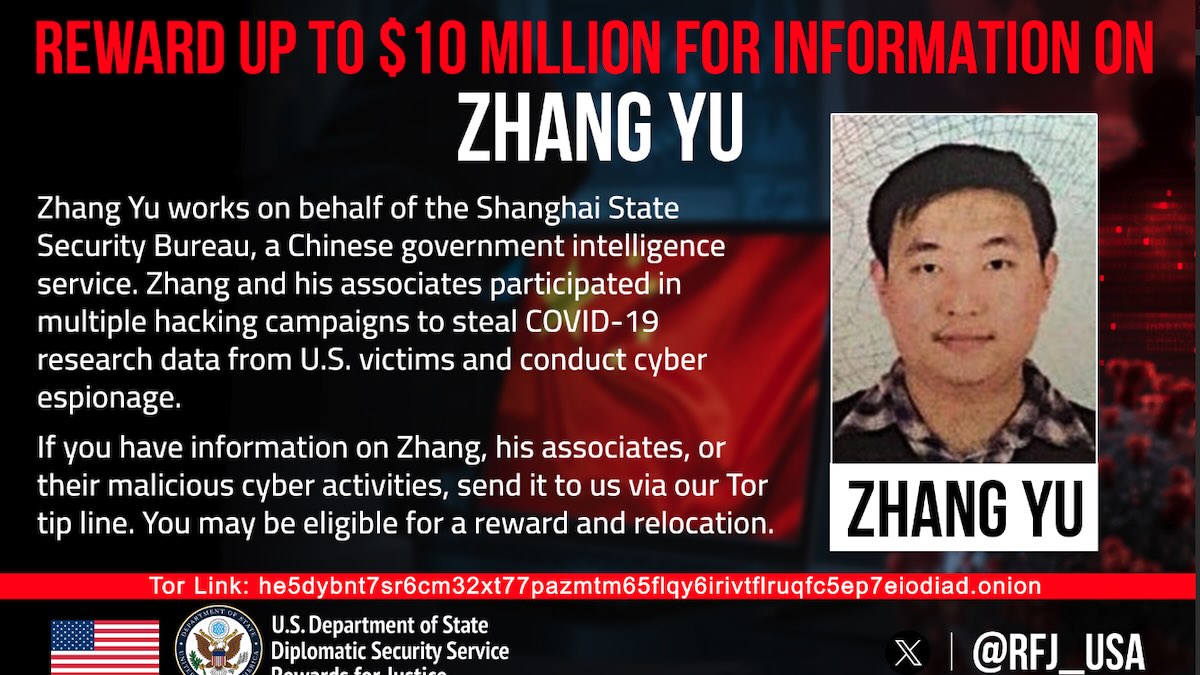
US Seeks Alleged Chinese Hafnium Hacker With $10 Million Reward

The US State Department's Rewards for Justice program is offering up to $10 million for information on Zhang Yu, a Chinese national charged alongside Xu Zewei for the 2021 Hafnium campaign that exploited Microsoft Exchange Server vulnerabilities and for earlier theft of COVID-19 research from US universities and immunologists starting in 2020. Zhang is identified as a director at Shanghai Firetech Information Science and Technology Company allegedly acting for the Shanghai State Security Bureau (part of China's MSS); Xu was extradited from Italy in April 2026 and has appeared in a Houston federal court while Zhang remains at large. Microsoft now tracks the Hafnium activity as Silk Typhoon; the FBI said the campaign compromised more than 12,700 US organizations.

Microsoft Exchange Server
HafniumSilk TyphoonZhang Yu+7

Threat IntelΒ· Published and added 8 Oct 2026

securityweek.comarticleπŸ›‘οΈ Security

FortiBleed Attackers Locking Victims Out of Fortinet Devices

The FortiBleed campaign targets internet-exposed Fortinet FortiGate firewalls and SSL VPN appliances using stolen credentials and brute force. SOCRadar confirms about 86,644 compromised devices in 194 countries. A joint FBI and US Secret Service advisory says attackers change passwords and delete accounts to lock victims out and keep persistence, and lists hardening steps such as phishing-resistant MFA and credential resets.

Fortinet FortiGateVPN
FortiBleedFBIUS Secret Service+5

Threat Intel, Identity & AccessΒ· Published and added 8 Oct 2026

decrypt.coarticleπŸ›‘οΈ Security

Engineer Gets 32 Months for Bitcoin Extortion Plot Against His Own Employer

A former core infrastructure engineer, Daniel Rhyne, was sentenced to 32 months for extorting his own New Jersey employer: he created a hidden virtual machine on the company network, reset passwords on hundreds of accounts to "TheFr0zenCrew!", deleted domain administrator accounts, scheduled tasks to shut down 40 servers a day, and demanded 20 BTC (~$750K) to stop. The FBI's criminal complaint describes how investigators traced the hidden VM back to him via correlated laptop browsing activity, building access logs, home IP connections, and incriminating search history ("how to clear all windows logs from command line").

BitcoinActive Directory
Daniel RhyneFBITheFr0zenCrew!

Threat IntelΒ· Published and added 7 Oct 2026

247wallst.comarticleπŸ›‘οΈ Security

Chinese network laundered $1B+ for North Korea's Lazarus Group β€” ZachXBT

Blockchain investigator ZachXBT published a 12-part thread detailing how he spent months posing as a client of a Chinese money-laundering network to prove it laundered over $1 billion for North Korea's Lazarus Group, including a large share of the ~$1.5 billion Bybit hack (FBI codename TraderTraitor). He cross-referenced the operators' private messages with on-chain data β€” including a wallet receiving fees from Bybit-hack-linked addresses and THORChain bridge transfer timing/amounts matching what operators disclosed β€” turning chat screenshots into verifiable blockchain evidence. The laundering network converted BTC into ETH, Solana and Tron, used THORChain for cross-chain hops, and parked funds in low-volume Uniswap pools; the investigation led Tether to freeze 442,000 USDT, part of over $75 million ZachXBT claims to have gotten frozen from North Korea-linked hacks since 2022.

EthereumBitcoinSolana+3
ZachXBTLazarus GroupBybit+2

Threat Intel, Blockchain, OSINTΒ· Published and added 6 Oct 2026

decrypt.coarticleπŸ›‘οΈ Security

Spanish Police Arrest 16-Year-Old Accused of Running KillSec Ransomware Group

Spanish police arrested a 16-year-old Romanian national in Alicante suspected of administering the KillSec ransomware group, part of a coordinated multinational Operation KillSwitch led by the FBI San Juan field office and Hamburg's State Criminal Police Office. Authorities seized KillSec's leak site and five central servers, securing at least 110TB of stolen data, and arrested additional suspects in the UK and Romania, including Fouad Eltibrizi (alias "Archduke"), indicted in Puerto Rico. KillSec, active since 2024, used double extortion, exploited cloud misconfigurations, and reportedly leveraged AI to build its ransomware infrastructure and identify victims across roughly 500 successful attacks.

KillSecOperation KillSwitchFouad Eltibrizi+5

Threat IntelΒ· Published and added 2 Oct 2026

decrypt.coarticleπŸ›‘οΈ Security

FBI Tells Its Employees to Assume Hackers Have Their Personal Data

Decrypt reports that ShinyHunters claims to have breached the FBI's job-application site FBIjobs.gov, allegedly via an unconfirmed Oracle PeopleSoft zero-day, exfiltrating 2-3TB of personal data on nearly all FBI agents, job applicants, and some spouses. An internal FBI memo told staff to assume their data is compromised and to expect virtual briefings and suspicious contact attempts; FBI Cyber Division chief Brett Leatherman publicly responded citing a related Dutch arrest, after which ShinyHunters called its one-week retraction ultimatum a "marketing campaign" and said it won't publish the data.

Oracle PeopleSoftSalesforce
ShinyHuntersBrett LeathermanBreachForums+1

Threat IntelΒ· Published and added 30 Sep 2026

chainalysis.comarticleπŸ›‘οΈ Security

OFAC Sanctions Tren de Aragua Fugitive Who Laundered ATM Heists With Crypto

Chainalysis analyzes the OFAC sanctions (Sept 30, 2026) of 10 Tren de Aragua-linked targets, including FBI Ten Most Wanted fugitive Anibal Alexander Canelon Aguirre ("Prometheus"), tied to a $40.73M ATM jackpotting scheme across 1,500+ attacks. The group used the Ploutus malware strain deployed via Raspberry Pi devices with a self-delete anti-forensic function to jackpot ATMs, then laundered proceeds through crypto β€” Chainalysis traced the sanctioned wallets' counterparties to shared laundering infrastructure (including a $1B Venezuelan laundering case) also used by Colombian and Mexican cartels, noting heavy reliance on stablecoins and a prior Tether USDT freeze on related wallets.

Tether
Tren de AraguaPloutusAnibal Alexander Canelon Aguirre+3

Threat Intel, Malware & RE, BlockchainΒ· Published and added 30 Sep 2026

hackers-arise.comarticleπŸ›‘οΈ Security

Digital Forensics: iOS Forensics – Basics

A technical walkthrough of iOS forensic acquisition fundamentals: Apple's per-file Data Protection classes (A–D), the Before/After First Unlock (BFU/AFU) distinction and why AFU yields roughly 95% of a full dump versus almost nothing under BFU, and the iOS 18.1 72-hour auto-reboot that silently drops a seized AFU phone back to BFU. It covers extraction methods (logical backup, advanced logic, full filesystem extraction via signed agent, checkm8 bootrom exploits for iPhone X and earlier), pairing records, USB Restricted Mode's one-hour timeout, Lockdown Mode (noting it reportedly blocked FBI extraction of a seized journalist's iPhone in early 2026), Cellebrite's Inseyets/Premium/Physical Analyzer tooling and its coverage limits against A19/M5 chips with Memory Integrity Enforcement, and key forensic artifact stores (KnowledgeC, Biome, PowerLog, Photos.sqlite, chat-app SQLite/WAL/SHM files).

iOSCellebriteSQLite
checkm8Secure EnclaveLockdown Mode+9

Mobile Security, Blue Team & DetectionΒ· Added 7 Oct 2026, published 29 Sep 2026

research.checkpoint.comarticleπŸ›‘οΈ Security

Check Point Research β€” 28th September Threat Intelligence Report

Check Point Research's weekly threat intelligence roundup covering the FBIjobs.gov defacement by ShinyHunters, a $351.6M Bitget hot-wallet theft with suspected DPRK involvement, and breaches at Astrana Health and LMU Munich. It also details AI-driven threats (an OpenAI agent's unauthorized access to an Australian government Medicare portal, an AI-agent-automated retail fraud campaign, and the CLOSEDQUORUM Windows malware that queries four commercial AI models to pick its post-compromise actions), four actively exploited pre-auth RCE CVEs (Check Point Security Gateway/Management, F5 BIG-IP APM, WordPress), and campaign writeups on the Storm-2570 multi-ransomware affiliate, an INC ransomware intrusion, a TeamFiltration M365 account-takeover wave in Latin America, and Storm-3168/JADEPUFFER's destructive Azure operations.

F5 BIG-IPWordPressMicrosoft 365+4
CVE-2026-85102CVE-2026-93616CVE-2026-94127+17

Threat Intel, AI Security, AppSecΒ· Added 1 Oct 2026, published 28 Sep 2026

blog.talosintelligence.comarticleπŸ›‘οΈ Security

Trust and the enticing consultancy offer

Talos's weekly Threat Source newsletter opens with a first-person account of a social-engineering scam targeting security professionals: an unsolicited $300 "consultancy" offer that escalates into pressure to extract non-public insights from employers, a pattern the author links to fake-recruiter/trojanized-job-offer schemes. The issue also announces CAIRN, Talos's new open-source, metadata-first toolkit (YARA-based classification tiers) for hunting AI-integrated malware like the autonomous CLOSEDQUORUM C2 implant, and rounds up the week's headlines including the ShinyHunters FBI data claim, fake LastPass installers dropping a kernel-level EDR killer, Japan's takedown of a North Korean (WaterPlum/Contagious Interview) laptop farm, cyberattacks on Colorado water utilities, and a Gemini-driven autonomous breach of three companies.

YARAGemini
WaterPlumContagious InterviewDPRK+6

Threat Intel, AI SecurityΒ· Added 7 Oct 2026, published 24 Sep 2026

socket.devarticleπŸ›‘οΈ Security

Happy Birthday, Shai-Hulud

Socket's one-year retrospective on the Shai-Hulud npm supply-chain worm, from the September 2025 @ctrl/tinycolor compromise through the November 2025 "Second Coming" wave, the May 2026 public release of the worm's source by TeamPCP, the "Mini Shai-Hulud" OIDC-token-hijacking wave that hit TanStack and Mistral AI, and the August 2026 arrest of two alleged TeamPCP members by Australian Federal Police working with the FBI. It notes Google ran an undercover analyst inside TeamPCP to get stolen credentials revoked, and stresses that the original September 2025 worm authors remain unidentified despite the arrests.

npmTruffleHogCrowdStrike+3
Shai-HuludTeamPCPMini Shai-Hulud+1

Supply Chain, Threat IntelΒ· Added 21 Sep 2026, published 18 Sep 2026

chainalysis.comarticleπŸ›‘οΈ Security

Tracing Crypto in a Narcotics Investigation: FBI Charges Alleged Opioid Distributors

Chainalysis details how blockchain analytics (its Reactor tool) helped the FBI trace Bitcoin proceeds from the darknet vendor account "BarbaraWhite" β€” which sold nitazene-laced counterfeit pills on Nemesis, Bohemia and Abacus β€” through a wallet cluster to a China-based chemical supplier and, ultimately, to a mobile payment account tied to defendant Stanislav Chernyshov. The case illustrates a concrete investigative pipeline: combining on-chain clustering with marketplace data, postal records, and off-chain identifiers to deanonymize a pseudonymous crypto-paid drug operation linked to overdose deaths.

BitcoinChainalysis Reactor
BarbaraWhiteVladislav ChernyshovStanislav Chernyshov+4

OSINTΒ· Added 30 Sep 2026, published 8 Sep 2026

Showing 30 of 34

Show more