- Zyon ⚗️ (@zyonbuilds) on X
Orca is an open-source (MIT) desktop app from stablyai for running a fleet of coding agents, including Claude Code, Codex and OpenCode, each in its own git worktree using the user's own subscriptions. Features include fanning one prompt across five agents and merging the winner, commenting on diffs and sending them back, SSH worktrees on remote machines, and a phone app for steering agents. The post reports 103k stars.
 x.comtoolAdded 30 Oct 2026, published 29 Oct 2026🧠 AI
 Announcing Project ProtoStar: Making Publicly Funded Science AI-Ready
Project ProtoStar is an initiative by Carnegie Mellon, Purdue, Georgia Tech, Arizona State, George Washington University, Astera Institute, ORCA and Hugging Face to release publicly funded science datasets, models and code in AI-ready formats. Hugging Face reports over 17,000 public science datasets and tripled sharing in 2026. The first challenge, run by CMU from 2 to 13 November 2026, asks teams to forecast climate indicators for 210 US cities.
 huggingface.coarticlePublished and added 29 Oct 2026🧠 AI
- Node.js Brotli Decoder Out-of-Bounds Write Threatens Remote Code Execution Across All Supported Versions
CVE-2026-111497 is a high-severity out-of-bounds write in the Node.js Brotli decoder, reported by Orca Security. It affects all supported release lines (22.x, 24.x, 26.x) and can be triggered by malformed Brotli data processed through node:zlib or fetch(). Impacts named are crashes, memory disclosure and remote code execution in cloud workloads; patching is advised. The fetched text covers only the executive summary.
 orca.securityadvisoryPublished and added 27 Oct 2026🛡️ Security
- Mauro Ubeda (@mauroubeda) on X
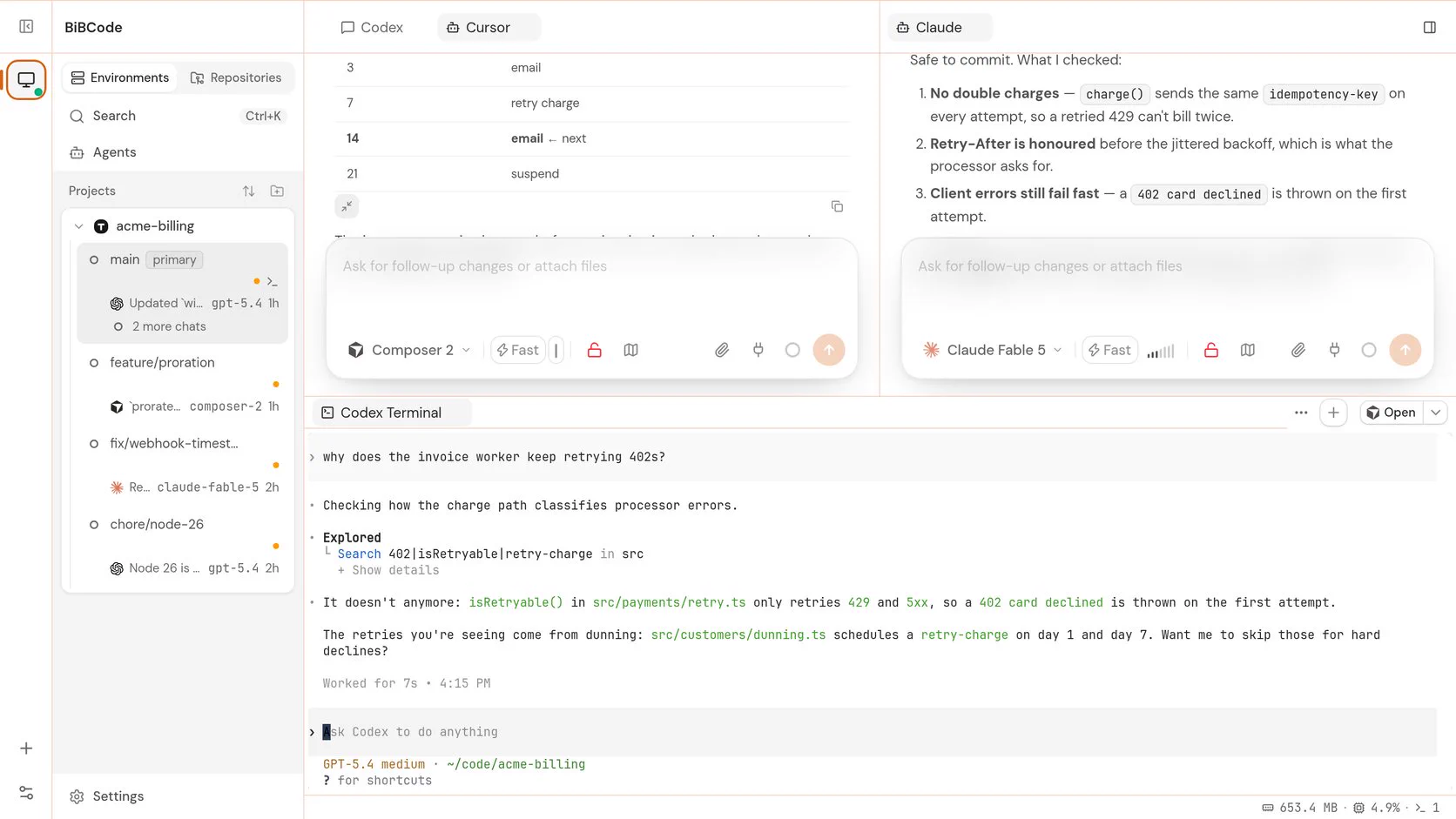
BibCode is an open-source desktop app, now in beta, for running coding agents side by side. It is built with Rust and Tauri rather than Electron, and runs Codex, Claude, Cursor and OpenCode, each in its own git worktree. It can also connect to remote BibCode Servers. The author, Mauro Ubeda, says it mixes ideas from T3 Code and Orca. The post gives no feature detail beyond this.
x.comtoolAdded 28 Oct 2026, published 27 Oct 2026🧠 AI  PHP2Shell: From the attacker’s perspective
PHP2Shell is the public exploit for CVE-2026-109618 (corrupted internal state at the memory limit, allowing hijack during cleanup) and CVE-2026-109619 (double free used to leak memory and defeat ASLR). Orca ran the GitHub tool unchanged against an unpatched PHP server and got command execution. It then built its own exploit with AI from the patch, which worked on PHP 8.4.26 and WordPress. Fixed in 8.2.35, 8.3.36, 8.4.27 and 8.5.12.
orca.securitywriteupPublished and added 26 Oct 2026🛡️ Security PHP2Shell: What This Week Tells Us About the Web We Built
PHP2Shell is the name for two unauthenticated remote code execution flaws, CVE-2026-109618 and CVE-2026-109619 (CVSS v4 9.2), in the PHP engine back to version 5.4. The post covers the leaked October 2026 embargo, AI-assisted exploit building by Calif and others, patch availability by PHP version, and a 72-hour and quarterly response plan covering inventory, patching, secret rotation and edge virtual patching. It ends with a short Orca product section.
orca.securityarticlePublished and added 23 Oct 2026🛡️ Security Frontier-Level Red-Teaming From a Self-Hostable Open-Weight Model: Testing NVIDIA Nemotron 3.5 Super
Orca Security's research team built an internal prototype, Agent Piercer, that attacks AI agents by choosing probes, writing attacks and judging whether they worked. They compared NVIDIA Nemotron 3.5 Super (self-hosted on 4×L40S via SageMaker) with Opus 4.8, GPT-6 Astra and Grok 4.7 as the driving model against the same live target. Nemotron matched the frontier models on vulnerability types found (four) and was the only one to complete every simple test and judge all 57 real attack conversations. The post also notes that some proprietary models declined authorized red-team tasks under default safety settings, which makes self-hosted open-weight models attractive for offensive testing.
orca.securityarticlePublished and added 15 Oct 2026🛡️ Security Critical GitLab RCE Lets Unauthenticated Attackers Execute Code on Servers (CVE-2026-97229)
Orca Security analysis of CVE-2026-97229, a CVSS 10.0 flaw in GitLab CE/EE. An integer overflow (CWE-190) in the CI/CD regular expression compiler gives memory corruption and code execution as the git user. It is triggered by a crafted regex in .gitlab-ci.yml combined with a UTF-8 repository path, with no authentication needed on instances that allow public project creation or self-registration. Lists affected branches (19.2 before 19.2.8, 19.3 before 19.3.5, 19.4 before 19.4.2), the absence of a workaround, interim mitigations, and a Rapid7 PoC against GitLab CE 19.4.1 with ASLR on. Notes a prior max-severity GitLab bug (CVE-2026-85706) was probed in the wild within hours and later added to CISA KEV.
orca.securityadvisoryPublished and added 14 Oct 2026🛡️ Security- Igor Carron (@IgorCarron) on X
Igor Carron's tweet highlights LightOn's open-source ColGrep-Agent-2B, a 2B model released on Hugging Face for code search and retrieval that works with Claude Code. LightOn reports 34% fewer API tokens and 40% lower API costs. It matters because usage limits and token costs are a pain point for coding agents. A reply thread in the same post notes quota exhaustion across Grok, Cursor, Devin, Claude and Codex, and argues for quota dashboards.
x.comthreadPublished and added 12 Oct 2026🧠 AI  ORCAGen: Orchestrating Context-Aware Malware Deception with RAG-Guided Generative AI
ORCAGen uses RAG over a curated knowledge base of malware procedures and active-defense strategies, plus structured prompting, to have LLMs generate proof-of-concept malware and matching deception orchestration code offline. Strategies are validated against the PoC malware before being added to a runtime playbook that enforces only the verified, deterministic logic. It is evaluated on GPT-4o, GPT-5.5, Gemini 3.5 Flash, Qwen3-Coder and Claude Sonnet 4.5 over synthesized scenarios and 150 real keylogger, infostealer and ransomware samples, measuring execution success, hallucination rate, refinement effort, deception effectiveness and runtime overhead.
 arxiv.orgpaperAdded 9 Oct 2026, published 8 Oct 2026🛡️ Security
 Malicious npm Campaign “MALFEX” Delivers RAT and Stealer via Eight Packages with 40,000+ Downloads
Orca Security details "MALFEX," a supply-chain campaign active since August 2023 in which a suspected lone Brazilian threat actor published eight malicious npm packages (tlxbnhd, tldriver, mxdriver, img-to-native, native-runner, function-flag, function-color, cdn-img-fetch) that together drew over 40,767 downloads. Using postinstall lifecycle hooks, the packages deliver three malware families to Windows hosts: the Go-based Overlord RAT (with a Solana blockchain C2 resolver), the Node.js "movinlike" credential/Discord/crypto-wallet stealer, and rotating downloader payloads — with three packages (notably function-flag) still live on npm and only six of the eight carrying OSV advisories at publication time. The piece includes host IOCs (file paths, scheduled task name), affected package lists, and remediation steps (lockfile auditing, credential rotation) alongside a pitch for Orca's SCA detection of the OSV-flagged packages.
orca.securityarticlePublished and added 8 Oct 2026🛡️ Security- Critical Atlassian Path Traversal Exposes Sensitive Files Across 8 Products
Orca Security details CVE-2026-21589 (CVSS 9.3), a critical unauthenticated path traversal flaw affecting all versions of eight Atlassian Data Center and Server products: Bitbucket, Confluence, Jira Software, Jira Service Management, Bamboo, Crowd, Crucible, and Fisheye. Insufficient path validation lets remote attackers read arbitrary files within the web application root without authentication, and in Crowd SSO deployments this can expose plaintext credentials usable to create administrative accounts and take over the entire Atlassian ecosystem. The advisory lists fixed versions for each product and recommends WAF rules and log review for organizations unable to patch immediately.
orca.securityadvisoryPublished and added 7 Oct 2026🛡️ Security  Connect Orca’s ChatGPT Plugin: Cloud Risk Context in Chat and Codex
Orca Security's plugin connects ChatGPT and Codex to Orca's MCP server, letting security teams and developers query cloud alerts, attack paths, effective IAM permissions, and code-to-cloud origins directly from chat or a coding agent instead of logging into a console. The post walks through six security-team use cases (exposure discovery, CVE impact triage, alert-to-blast-radius investigation, identity permission review, CISO reporting) and three developer workflows in Codex where alerts are traced back to the Terraform/code that created the misconfiguration and fixed in place.
orca.securityarticleAdded 2 Oct 2026, published 30 Sep 2026🛡️ Security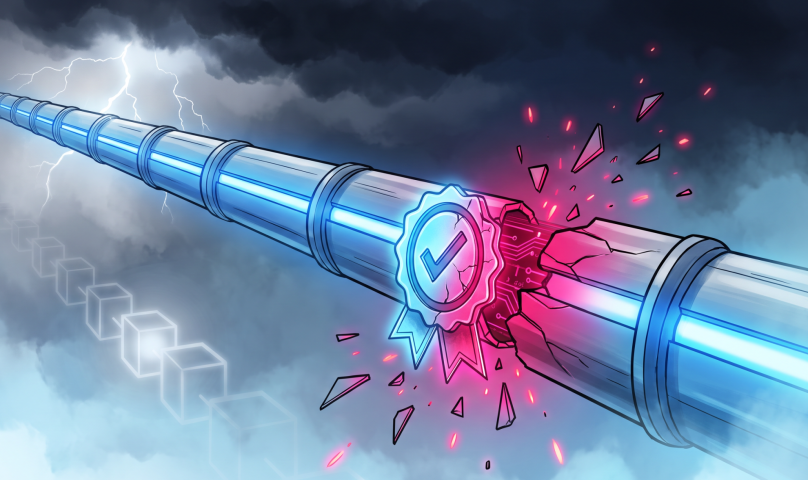 npm Supply-Chain Attack Abuses Trusted Publishing to Ship GHAPPIER Loader
Orca Security details a supply-chain attack on the npm package @dforge-core/dforge-mcp, where a compromised maintainer account modified the GitHub Actions release workflow so any push to main triggered an OIDC-based trusted publish, shipping malicious version 0.2.21 with valid Sigstore provenance. The four-stage GHAPPIER loader activated only when the MCP server launched, deployed a self-deleting remote shell, and per CloudSEK's tracing appeared across 65 repos and 22 accounts; a second payload matched PolinRider, a DPRK-linked campaign using Ethereum transactions for C2. The piece underscores that npm provenance attests build origin, not source integrity, and lists remediation steps since no CVE or advisory yet exists.
orca.securityarticlePublished and added 22 Sep 2026🛡️ Security Attack Surface Explained: Types & Reduction Tips
A long-form explainer distinguishing attack surface from attack vector and asset inventory, breaking the surface into network/perimeter, identity/permissions, application/code, and data/storage components, and covering how to map it via the OWASP Attack Surface Analysis Cheat Sheet, measure it (Relative Attack Surface Quotient, Carnegie Mellon's attack surface metric), and reduce it. It also contrasts external attack surface management with cyber asset attack surface management and closes with a pitch for Orca's agentless SideScanning and Unified Data Model.
orca.securityarticlePublished and added 21 Sep 2026🛡️ Security Incident Automation: Benefits, Tools & Best Practices
Orca Security guide distinguishing alerts, incident records, and actions in incident response automation, mapping a cloud storage-bucket-exposure incident through detection, declaration, enrichment, routing/paging, and suppression steps. Draws on AWS Well-Architected event/incident/problem management guidance, ISO/IEC 27035-3:2020 lifecycle, CISA containment guidance, and Azure alert processing rules to argue automation should be introduced step-by-step based on reversibility rather than as one switch.
orca.securityarticlePublished and added 9 Sep 2026🛡️ Security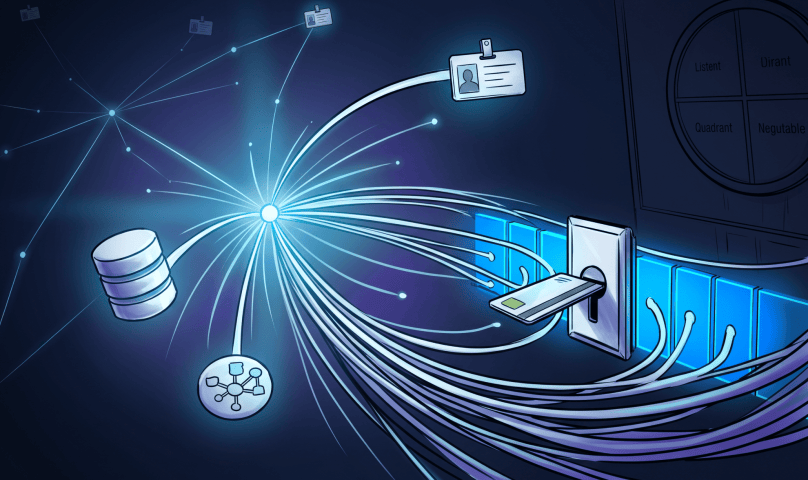 Orca Security: SOC Automation
A conceptual deep-dive into SOC automation structured as a five-stage pipeline (trigger, enrichment, decision, action, feedback), arguing that enrichment quality — not action count — determines outcomes, and that reversibility should set the bar for what runs unattended. It cites concrete platform behaviors (AWS Security Hub rule-ordering, Microsoft Sentinel's 2-minute playbook timeout) and NIST SP 800-61r3's CSF 2.0 incident-response guidance, then covers AI-driven SOC automation where model outputs serve as triggers/enrichment rather than approvals, before pitching Orca's context layer for SIEM/SOAR integrations.
orca.securityarticlePublished and added 14 Aug 2026🛡️ Security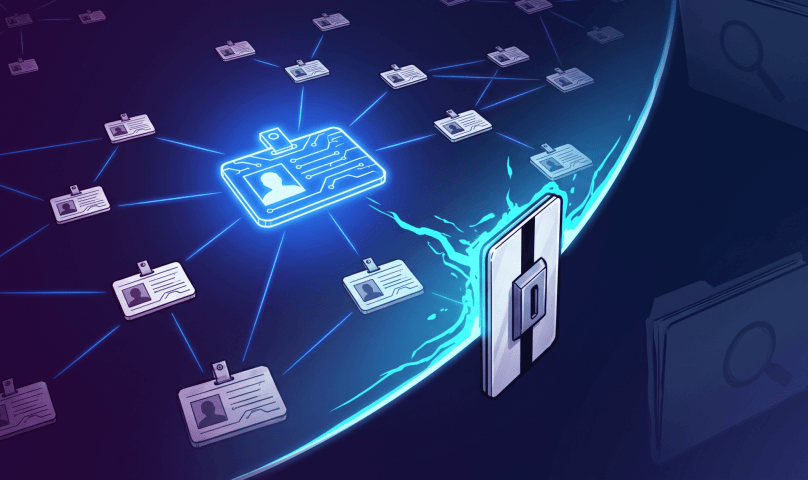 Orca Security: AI Agents Security
Orca Security lays out a framework for securing AI agents as distinct security objects, arguing an agent's permission set can't be read off its code because it picks tools at runtime, unlike a fixed service account. It details identity-layer fixes from major providers — Microsoft Entra ID's blueprint/service-principal split, Google Cloud's per-agent SPIFFE/X.509 identity with 24-hour certs, and AWS Bedrock AgentCore's token-exchange delegation via RFC 8693 — plus OWASP's AI Agent Security Cheat Sheet practices (tool least privilege, memory isolation, approval gating, attribution logging) and EU AI Act Article 12 logging obligations for high-risk systems.
orca.securityarticlePublished and added 14 Aug 2026🛡️ Security Orca Security: Agentic AI Security
Orca Security's guide to agentic AI security distinguishes it from AI-agent security by framing the unit of risk as the whole autonomous plan/sequence rather than a single agent, and walks through OWASP's Agentic Security Initiative Threats and Mitigations taxonomy (17 threats, T1-T17, v1.1) alongside CSA's MAESTRO layered framework. It details run-level controls (action-class approval thresholds, blast-radius caps, step/time/cost budgets, kill switches, egress boundaries, replayable audit logs) and identity/delegation concerns (RFC 8693 token exchange, orchestrator trust boundaries, permission inheritance across agent chains), then describes how Orca's agentless posture management maps AI services, keys, and data reachable by agentic workflows in the cloud.
orca.securityarticlePublished and added 14 Aug 2026🛡️ Security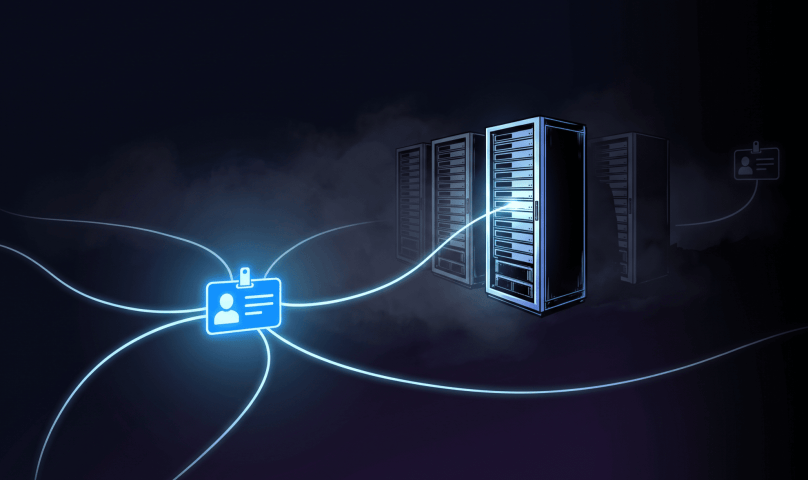 Orca Security: Shadow AI Governance
Explains how to run a shadow AI governance program: a three-question scoping test (consumption vs production, standalone vs embedded, human vs agent-initiated), and how shadow AI differs from shadow IT because a prompt cannot be retracted. It lays out inventory record fields, a four-outcome disposition model (sanction, sanction with conditions, restrict, block) with an SLA, five default-changing controls, and a seven-item policy mapped to ISO/IEC 42001 and the CSA AI Controls Matrix. It cites Microsoft's preview shadow AI detection (seven agents, blocking for one, Intune-managed Windows only) and ends with how Orca's agentless AI-SPM covers the cloud-hosted part.
orca.securityarticlePublished and added 13 Aug 2026🛡️ Security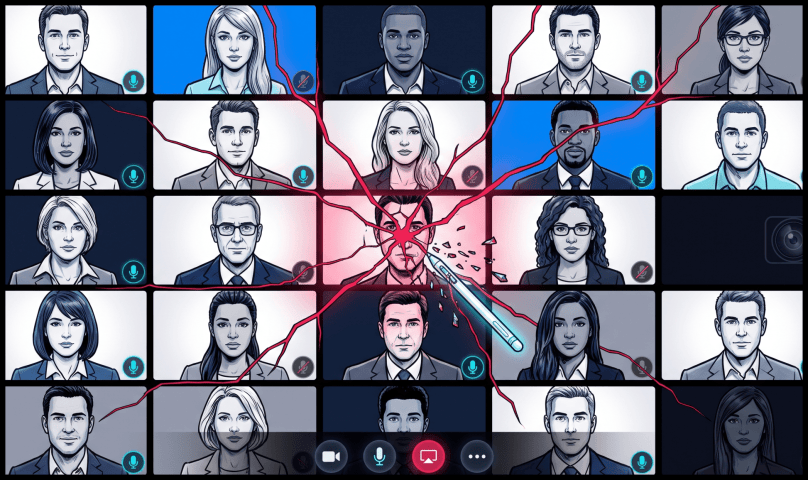 Orca Security: Zoom Zero-Click RCE Flaws Allow Any Meeting Attendee to Compromise All Participants
Orca Security details four Zoom vulnerabilities in the cross-platform annotation engine (libannotate.so): CVE-2026-53413, a stack buffer overflow in CAnnoFormatBlock::Deserialize from unchecked 32-bit character counts, and CVE-2026-53415, a use-after-free in auto-shape metadata handling giving a write-what-where primitive, both enabling zero-click RCE against every meeting participant via crafted annotation messages during screen sharing. Also disclosed are CVE-2026-53414 (heap over-read/DoS) and CVE-2026-53416 (path traversal in the Windows VDI client). The write-up notes a working exploit chain built in under 24 hours with fewer than 20 AI-model prompts, platform-specific exploitation details (macOS ARM64 ASLR bypass, Android heap spraying/vtable corruption), and that E2EE meetings bypass Zoom's server-side message filtering.
orca.securityadvisoryPublished and added 12 Aug 2026🛡️ Security Orca Security: What Is AI AppGen Security?
Orca Security defines "AI AppGen Security" as governing applications generated and deployed by AI app builders (Replit, Lovable, Base44, Vercel, Supabase) outside normal dev pipelines. It walks through documented insecure defaults — Supabase tables created via SQL editor not getting row-level security enabled automatically, Replit personal workspaces defaulting apps to Public, Vercel production domains staying publicly accessible on the Hobby/Pro plan without paid Advanced Deployment Protection — and cites security researcher Dor Zvi/RedAccess's WIRED-reported finding of 5,000+ exposed vibe-coded apps, ~40% leaking sensitive data and some allowing full admin takeover. It closes with governance recommendations (inventory, ownership, review dates) and a pitch for Orca's discovery capability across AppGen platforms.
orca.securityarticlePublished and added 7 Aug 2026🛡️ Security Orca Security: AI-BOM
Orca Security explains what an AI-BOM is (an inventory of models, datasets, prompts, embeddings, and external AI services an AI system depends on) and why discovery — not format — is the hard problem: components arrive via notebooks and managed consoles rather than dependency manifests. It surveys the two competing standards, CycloneDX's ML-BOM (v1.7, standardized as ECMA-424 2nd edition) and SPDX 3.0's AI/Dataset profiles, walks through failure modes like unrecoverable model lineage, stale embeddings outliving deleted source documents, and silent version drift on managed endpoints (e.g. Azure OpenAI's auto-update-to-default), and ties the practice to EU AI Act Annex IV technical-documentation requirements and the NIST AI RMF. It ends by describing Orca's agentless SideScanning-based AI inventory across Azure OpenAI, AWS Bedrock, SageMaker, and Vertex AI.
orca.securityarticlePublished and added 31 Jul 2026🛡️ Security Orca Security: Incident Response Tools
A vendor buyer's guide from Orca Security that breaks incident response tooling into four distinct jobs (evidence/forensics, case management, telemetry/detection, automation) and compares twelve commercial platforms across them: Magnet Axiom Cyber, Exterro FTK Enterprise, Binalyze AIR, Cortex XSOAR, IBM QRadar SOAR, Swimlane, Microsoft Sentinel, Splunk Enterprise Security, Google Security Operations, Torq, Tines, and Rapid7 InsightConnect. It frames evaluation against NIST SP 800-61 Revision 3 (April 2025), covers M&A shifts affecting the category (Darktrace/Cado Security, OpenText/EnCase, Palo Alto/IBM QRadar SaaS EOL), and closes by positioning Orca's agentless cloud context (SideScanning, Unified Data Model) as complementary to these tools rather than a replacement.
orca.securityarticlePublished and added 31 Jul 2026🛡️ Security Orca Security: Cloud Identity & Entitlement Management Series
Orca Security explainer on entitlement sprawl (a.k.a. privilege creep) in cloud environments: the gradual accumulation of unused permissions across human and non-human identities, driven largely by machine identities (service accounts, roles, keys) that outnumber human users by over 80-to-1 per CyberArk's 2025 report. It distinguishes granted vs. effective permissions, explains why static IAM exports miss real risk, walks through detection via AWS IAM Access Analyzer, Azure Entra Permissions Management, and GCP IAM Recommender, and lays out controls (least privilege, JIT access, continuous automated reviews, RBAC/ABAC, NHI governance, zero trust) before positioning Orca's agentless CIEM (SideScanning) as the automation layer.
orca.securityarticlePublished and added 31 Jul 2026🛡️ Security Orca Security: AI Threat Detection
Orca Security explainer arguing AI threat detection is not one capability but four distinct techniques — anomaly detection, behavioral/entity baselining, supervised classification, and an agentic triage layer — each with a documented failure mode (baseline poisoning during an active intrusion, cold-start on ephemeral cloud workloads, classifiers blind to novel classes, and LLM agents confidently narrating false positives). It walks the telemetry-to-baseline-to-alert pipeline (citing AWS GuardDuty's Discovery:IAMUser/AnomalousBehavior finding and Microsoft Entra ID Protection's atypical-travel baseline), argues detection quality tracks telemetry completeness rather than model sophistication, and closes by mapping the framework to Orca's Unified Data Model and Threat Investigation Agent.
orca.securityarticlePublished and added 30 Jul 2026🛡️ Security- Orca Security: Critical Ubuntu Pro Client Vulnerability Enables Root Code Execution Across Cloud Workloads
Orca Security discloses CVE-2026-11386, a critical vulnerability in the Ubuntu Pro Client that reportedly allows root code execution on affected cloud instances. The fetched page content was empty, so this assessment is based on the title/URL alone; specifics on the vulnerable component, attack vector, and exploitation path are not confirmed here.
orca.securityadvisoryPublished and added 20 Jul 2026🛡️ Security  Orca Security: Critical Heap Buffer Overflow in NGINX Allows Unauthenticated RCE
Covers CVE-2026-42533, a heap buffer overflow (CWE-122) in the NGINX map directive's regex handling. It is triggered when a string expression references unnamed captures before the map output variable. Unauthenticated crafted HTTP requests can crash workers and may give RCE where ASLR is off or bypassed. It also covers two other F5-patched NGINX flaws: CVE-2026-60005 (uninitialized memory disclosure in ngx_http_slice_module) and CVE-2026-56434 (use-after-free in ngx_http_ssi_module with proxy_pass and proxy_buffering off). It lists affected NGINX Open Source (0.9.6–1.31.2), NGINX Plus, Ingress Controller, Gateway Fabric, App Protect WAF and Instance Manager versions. It gives fixed releases (1.31.3 / 1.30.4) and the named-capture workaround, and notes no public PoC or in-the-wild exploitation.
orca.securityadvisoryPublished and added 20 Jul 2026🛡️ Security AI Security Briefing
Noma Security researchers disclosed "GitLost," a technique where a public GitHub issue containing indirect prompt-injection text tricks a GitHub Agentic Workflow (powered by Copilot, Claude, Gemini, or Codex) with org-wide read access into pasting private repository contents into a public issue comment. The attacker needs no credentials or org access; a routine issue-triggered workflow and a broad read-scoped token do the work, and Noma found that simply prefixing the injected instruction with "Additionally" bypassed GitHub's built-in threat-detection filter. The piece ties GitLost to the "lethal trifecta" (private data access + untrusted input + exfiltration channel) and to prior related disclosures (Claude Code GitHub Action flaw, Orca Security's RoguePilot, Invariant Labs' MCP finding, the "Comment and Control" study), recommending per-repo token scoping, restricted safe-outputs, and human review as mitigations.
 thehackernews.comarticlePublished and added 18 Jul 2026🛡️ Security
- Orca Security: Maximum-Severity Adobe ColdFusion RCE
Orca Security writeup covering CVE-2026-48282, a maximum-severity remote code execution vulnerability in Adobe ColdFusion. The page content could not be retrieved, so technical details (root cause, exploitation vector, affected versions) are unconfirmed beyond the title.
orca.securityadvisoryPublished and added 15 Jul 2026🛡️ Security - Orca Security: FortiBleed
Orca Security writeup on "FortiBleed," a credential-theft vulnerability affecting Fortinet products, believed to relate to an authentication/memory-disclosure flaw allowing attackers to extract admin credentials. Page content was not available for verification, so specifics (exact CVE, affected versions, exploitation details) could not be confirmed from the fetched text.
orca.securitywriteupPublished and added 3 Jul 2026🛡️ Security  Orca Security: ITDR for the Cloud
Orca Security explainer defining Identity Threat Detection and Response (ITDR) for cloud environments, distinguishing it from IAM, PAM, EDR, and CIEM as a runtime behavioral-detection layer for identity abuse rather than a preventive/posture control. It covers cloud-specific attack patterns like leaked AWS access-key abuse, AssumeRole/PassRole privilege escalation, OAuth consent phishing, and federation/token abuse, and details how ITDR baselines identity behavior (especially machine/non-human identities) using cloud audit logs like CloudTrail to detect impossible travel and anomalous role assumption, ending with Orca's agentless CIEM+ITDR platform pitch.
orca.securityarticlePublished and added 3 Jul 2026🛡️ Security Orca Security: Langflow RCE (CVE-2026-33017) Actively Exploited
Orca Security details CVE-2026-33017 (CVSS 9.8), an unauthenticated RCE in Langflow's public flow-build API (/api/v1/build_public_tmp/{flow_id}/flow) that lets attackers execute arbitrary Python via a crafted node definition, with no sandboxing. Trend Micro observed active exploitation within 20 hours of disclosure, deploying a Go-based "lambsys" binary that kills rival cryptominers, disables AppArmor/SELinux/UFW/iptables, wipes logs, harvests credentials/.env files, and installs a geo-aware XMRig miner; ~7,000 internet-exposed Langflow instances were found, the flaw is in CISA's KEV catalog, and fix guidance clarifies 1.8.2 is still vulnerable — users must upgrade to 1.9.0+ or the 1.9.0.dev18 nightly and rotate exposed secrets.
orca.securityadvisoryPublished and added 2 Jul 2026🛡️ Security Orca Security: nginx Flaw in 1.45M Tengine Servers (CVE-2026-42945 + CVE-2026-9256)
Orca Security researchers found that two critical nginx heap buffer overflow CVEs in the rewrite engine (ngx_http_script.c) — CVE-2026-42945 ("NGINX Rift") and CVE-2026-9256 ("nginx-poolslip") — also live untouched in Tengine, Alibaba's nginx fork last released in October 2023 and running on 1.45 million internet-facing servers (Aliyun, Taobao, CDN edges, reverse proxies). They compiled Tengine 3.1.0 with AddressSanitizer, built working single-request unauthenticated crash exploits for both bugs, and confirmed neither CVE had a patched Tengine release as of publication, with heap corruption potentially steerable toward code execution if ASLR is disabled/bypassed.
orca.securitywriteupPublished and added 16 Jun 2026🛡️ Security Orca: CVE-2026-5027 Langflow Path Traversal RCE
CVE-2026-5027 (CVSS 8.8) is a path traversal vulnerability in Langflow's POST /api/v2/files upload endpoint, where the upload_user_file() function fails to sanitize filenames, allowing attackers to write arbitrary files anywhere on the filesystem. Because Langflow ships with unauthenticated auto-login enabled by default, a single unauthenticated request is enough to obtain a session and exploit it, escalating to RCE via cron job injection or config overwrite. Tenable disclosed it after failed vendor contact, VulnCheck has confirmed active exploitation against roughly 7,000 internet-exposed instances, and a public PoC exists; fixed in Langflow 1.9.0/1.10.0 and langflow-base 0.8.3.
orca.securityadvisoryPublished and added 12 Jun 2026🛡️ Security Orca: CVE-2026-45034 PhpSpreadsheet RCE Patch Bypass
Orca Security details CVE-2026-45034 (CVSS 9.8), a bypass of PhpSpreadsheet's File::prohibitWrappers() protection that was originally added to fix CVE-2026-34084. A crafted path with three or more slashes after the scheme (e.g. phar:///path/exploit.phar/dummy.csv) causes PHP's parse_url() to return false instead of a scheme string, skipping the is_string($scheme) check while PHP's stream layer still treats the path as a phar wrapper, enabling automatic phar deserialization via IOFactory::load() and full RCE on PHP 7.x (file-read primitive on PHP 8.x, with RCE restored if Phar::getMetadata() is later called). All 1.x versions through 1.30.4 are affected; PhpSpreadsheet 1.30.5 patches the issue, and the post recommends replacing parse_url()-based checks with str_contains($filename, '://') validation.
orca.securityadvisoryPublished and added 12 Jun 2026🛡️ Security Orca: Splunk Enterprise Critical CVEs
Orca Security breaks down four new Splunk vulnerabilities: CVE-2026-20253 (CVSS 9.8), an unauthenticated arbitrary file create/truncate flaw in a PostgreSQL sidecar endpoint in Splunk Enterprise with no available workaround; CVE-2026-20251 (CVSS 8.8), a jsonpickle insecure-deserialization RCE in the Splunk Secure Gateway app exploitable by any low-privilege user; CVE-2026-20258, a stored XSS in classic dashboard HTML panels; and CVE-2026-20252, an SSRF in Dashboard Studio PDF export that bypasses trusted-domain validation via prefix matching and redirects. It lists affected Splunk Enterprise, Cloud Platform, and Secure Gateway version ranges and patched releases, plus interim mitigations like disabling Secure Gateway or Splunk Web.
orca.securityadvisoryPublished and added 12 Jun 2026🛡️ Security Orca: 8 Container Security Best Practices for 2026
A container security guide covering eight practices across build, deploy and runtime: minimal or distroless images, Trivy/Grype scanning, Cosign signing enforced via Kyverno or OPA Gatekeeper, non-root users, read-only root filesystems, dropped capabilities, and Pod Security Admission with the Restricted profile. It also covers least-privilege RBAC, workload identity (IRSA, GKE Workload Identity, Entra Workload ID), etcd encryption at rest, audit logging and retention, CISA KEV-driven rebuilds, and container incident response that preserves evidence before pod termination. It maps open-source tools to pipeline stage (Falco and Tetragon at runtime), explains the managed-Kubernetes shared responsibility split, and ends with an Orca SideScanning pitch.
orca.securityarticlePublished and added 11 Jun 2026🛡️ Security Orca Security: Critical Jupyter Enterprise Gateway Vulnerabilities
Orca Security discloses three critical unauthenticated vulnerabilities in Jupyter Enterprise Gateway's Kubernetes manifest rendering pipeline: CVE-2026-44182 (YAML injection via unsanitized environment variables allowing creation of privileged pods/secrets), CVE-2026-44181 (Server-Side Template Injection via KERNEL_XXX env vars in the Jinja2 rendering path, enabling arbitrary Python/OS code execution), and CVE-2026-44180 (bypass of the _enforce_prohibited_ids control that blocks UID/GID 0 kernels, enabling container escape). All affect versions before 3.3.0 and can lead to full Kubernetes cluster compromise in multi-tenant or internet-facing deployments.
orca.securityadvisoryPublished and added 11 Jun 2026🛡️ Security Orca Security: CVE-2026-8206
Orca Security details CVE-2026-8206 (CVSS 9.8), a critical unauthenticated account-takeover flaw in the Kirki Freeform Page Builder, Website Builder and Customizer WordPress plugin versions 6.0.0-6.0.6. The bug lives in handle_forgot_password() of the CompLibFormHandler class, whose custom REST endpoint accepts an attacker-supplied email instead of the account registered address, letting an attacker redirect the password-reset link and seize admin accounts. Active exploitation is already confirmed (Wordfence logged 59 blocked attacks in 24 hours), and roughly 150,000 of 500,000+ installs remain unpatched pending the 6.0.7 fix.
orca.securityadvisoryPublished and added 3 Jun 2026🛡️ Security Orca Security: Red Hat npm Packages Compromised in Supply-Chain Attack Spreading Credential-Stealing Worm
Orca describes the June 1, 2026 compromise of 32 npm packages under the @redhat-cloud-services scope, which came from a hijacked Red Hat employee GitHub account. The attacker injected malicious GitHub Actions workflows into three RedHatInsights repos and used OIDC tokens to publish backdoored versions with valid SLSA provenance. A preinstall hook runs a 4.2 MB obfuscated payload that sweeps CI, cloud, SSH, registry and .env credentials and self-propagates (the "Miasma" worm, attributed to TeamPCP or a copycat using Mini Shai-Hulud tooling). The post lists compromised versions and gives rotation and pinning guidance.
orca.securityarticlePublished and added 2 Jun 2026🛡️ Security Orca Security: Critical RCE in LiquidJS (CVE-2026-45618)
Orca Security details CVE-2026-45618, a CVSS 10.0 unauthenticated RCE in LiquidJS (Shopify's Liquid template engine for Node.js, 7.3M+ monthly npm downloads) affecting all versions prior to 10.26.0. Attackers craft a template expression using the valueOf filter (1|valueOf) to escape the sandbox, chain prototype manipulation to reach internal engine objects (parser, loader, filters), and ultimately invoke the JavaScript Function constructor for arbitrary command execution; a public PoC demonstrates file reads and execSync-based RCE, and CCB Belgium's national CERT has issued an advisory urging immediate patching.
orca.securityadvisoryPublished and added 2 Jun 2026🛡️ Security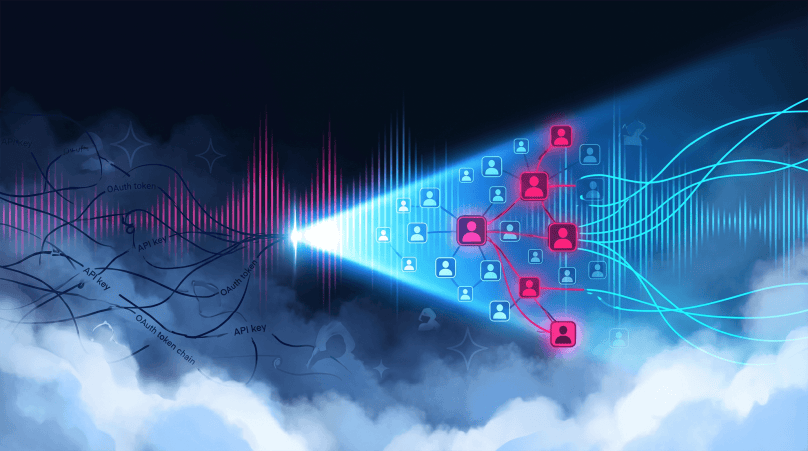 Orca Security: Securing Shadow AI: How to Detect Unapproved LLMs in Your Cloud
Orca Security outlines a detection framework for "shadow AI" — unsanctioned LLM usage via IDE extensions (Cursor), MCP servers, and embedded SaaS/CI-CD AI features that bypass traditional CASB/DLP tools because they ride on already-trusted OAuth tokens and API calls. The framework has three steps: mapping non-human identities and OAuth scope sprawl, auditing CI/CD pipelines and SaaS platforms for embedded AI (checklist includes scanning .env files, package manifests, GitHub Actions/GitLab CI/Jenkins steps, and outbound traffic to LLM endpoints), and assessing each tool by data exposure vs. write/action authority. It closes by promoting Orca's agentless AI-SPM capability for correlating identity, data, and workload context to surface these risks.
orca.securityarticlePublished and added 1 Jun 2026🛡️ Security- Orca Security: Gitea Container Registry Exposes Private Images to Unauthenticated Attackers
Orca Security describes a vulnerability in Gitea's built-in container registry that allowed unauthenticated attackers to access private container images. The issue highlights access-control gaps in self-hosted Git/CI platforms that bundle registry functionality, potentially exposing proprietary code and secrets baked into private images.
orca.securitywriteupPublished and added 27 May 2026🛡️ Security  Orca Security: Critical Unauthenticated RCE in Kopia Backup via SSH ProxyCommand Injection
Orca Security breaks down CVE-2026-45695 (CVSS 9.8), an unauthenticated RCE in the Kopia backup tool's HTTP server, affecting versions 0.22.3 and earlier. The flaw stems from Kopia's /api/v1/repo/exists endpoint splitting SFTP storage configuration fields on literal spaces without a proper tokenizer or quote handling, letting an attacker inject `-oProxyCommand=<cmd>` into the SSH command line when the server runs with --without-password and SFTP/external-SSH enabled — achieving code execution via a single crafted HTTP request. Fix is Kopia 0.23.0, which blocks starting with --insecure/--without-password on non-loopback interfaces; researcher Daniele Berardinelli reported it, tracked as GHSA-2q4c-3mrw-63c3.
orca.securityadvisoryPublished and added 26 May 2026🛡️ Security Orca Security: Critical Coder Signature Bypass Exposes Developer Keys and Tokens
Orca analysis of CVE-2026-46354 (CVSS 9.1) in the Coder remote development platform. azureidentity.Validate() checks that the PKCS#7 signer certificate chains to a trusted Azure CA but never verifies the signature on the envelope. An unauthenticated attacker can send a forged envelope, using a public Azure IMDS certificate and a known vmId, to POST /api/v2/workspaceagents/azure-instance-identity. This yields workspace agent session tokens, and through them Git SSH keys and OAuth tokens. The post lists the affected v2 and v1 versions, the patched releases (v2.33.3, v2.32.2, v2.31.12, v2.30.8, v2.29.13, v2.24.5) and the workaround of disabling Azure instance identity auth. Coder v1 has no patch.
orca.securityadvisoryPublished and added 22 May 2026🛡️ Security Orca Security: Critical Pre-Auth RCE in ChromaDB Threatens AI Infrastructure
CVE-2026-45829 (CVSS 10.0) is a pre-authentication remote code execution flaw in ChromaDB's Python FastAPI server, versions 1.0.0 through 1.5.8. The server processes user-controlled embedding function configuration before authentication checks, letting an attacker send a crafted collection-creation request referencing a malicious HuggingFace model with trust_remote_code enabled to force arbitrary Python code execution pre-auth. Discovered by researcher Azraelxuemo and later HiddenLayer (dubbed "ChromaToast Served Pre-Auth"); Shodan-based scanning found roughly 73% of internet-exposed ChromaDB instances still vulnerable, with fixes shipped in 1.5.9.
orca.securityadvisoryPublished and added 22 May 2026🛡️ Security Orca Security: CVE-2026-9082
Orca Security breaks down CVE-2026-9082, a critical unauthenticated SQL injection in Drupal core's database abstraction API affecting PostgreSQL-backed sites running versions 8.9.0 through 11.3.9. The flaw stems from insufficient query sanitization and can lead to full data exposure, privilege escalation, and in some configurations remote code execution; Drupal has shipped patched releases (e.g. 11.3.10, 10.6.9) and MySQL/MariaDB sites are unaffected by the SQLi itself but should still update for bundled Symfony/Twig fixes.
orca.securityadvisoryPublished and added 22 May 2026🛡️ Security Orca Security: AI Security Tools: How to Evaluate Them Across Every ML Attack Phase
Orca Security maps six AI security tools — Adversarial Robustness Toolbox (model robustness), Purple Llama (LLM prompt/code safety), NB Defense (notebook secret scanning), Garak (LLM jailbreak/prompt-injection probing), Privacy Meter (membership-inference privacy leakage), and Viper (post-exploitation lateral movement) — against the five MITRE ATLAS attack phases, arguing each covers only one layer and none evaluate cloud infrastructure misconfiguration (IAM, storage, network) around AI workloads. It defines eight evaluation criteria (attack-phase coverage, CI/CD integration, EU AI Act/NIST AI RMF compliance mapping, shadow AI visibility, attack-path correlation, adoption friction, false-positive rate, time-to-value) and closes by positioning Orca's agentless cloud CSPM to fill the infrastructure-layer gap around SageMaker IAM roles, training buckets, and inference endpoints.
orca.securityarticlePublished and added 21 May 2026🛡️ Security Orca Security: NIST AI Risk Management Framework (AI RMF) Explained
Orca Security's explainer breaks down NIST AI RMF 1.0 into its Govern, Map, Measure, and Manage functions and trustworthy-AI characteristics, covering companion materials (Playbook, Crosswalks, Roadmap, Use Cases) and how organizations adopt it incrementally starting from an AI inventory. It contrasts AI RMF with the NIST Cybersecurity Framework and the EU AI Act, then closes with a vendor section on how Orca's AI-SPM, CSPM, DSPM, and CIEM capabilities map technical inventory and monitoring evidence to the framework's four functions.
orca.securityarticlePublished and added 20 May 2026🛡️ Security Orca Security: GenAI Risks in Cloud Environments
Orca Security breaks down four GenAI-specific cloud asset classes that standard CSPM misses — training datasets, model artifacts, inference endpoints, and RAG vector databases — and shows how misconfigurations in each combine into full attack paths. It walks through a concrete chain (public S3 training bucket → data poisoning per MITRE ATLAS AML.T0020 → stolen SageMaker execution-role credentials via missing IMDSv2 → account-wide S3 read via overprivileged AmazonSageMakerFullAccess) and analyzes CVE-2024-34359 in Hugging Face's safetensors library as a storage-to-RCE path for SageMaker inference. It closes with concrete IAM/endpoint hardening steps and a pitch for Orca's attack-path correlation across role permissions, data sensitivity, and endpoint exposure.
orca.securityarticlePublished and added 18 May 2026🛡️ Security Orca Security: Critical Apache HTTP Server HTTP/2 Vulnerability Could Enable Remote Code Execution
Orca Security's write-up of CVE-2026-23918 (CVSS 8.8), a double-free memory corruption bug in Apache HTTP Server's mod_http2 stream cleanup logic. An unauthenticated attacker can trigger it by sending crafted HTTP/2 HEADERS frames followed by an early RST_STREAM with a non-zero error code. This causes heap corruption, crashes, and possibly remote code execution. Version 2.4.66 is affected and 2.4.67 fixes it. Public PoC details exist, but no in-the-wild exploitation had been reported. Disabling HTTP/2 is given as a temporary workaround.
orca.securityadvisoryPublished and added 8 May 2026🛡️ Security