 Hugging Face malware campaign returns to hijack GPUs for crypto mining
A campaign of 31 malicious Hugging Face repositories across seven accounts, found by Pluto Security, posed as small Qwen2 checkpoints and used trust_remote_code to run a cryptominer and reverse shell on GPU inference hosts. The top model reached 28,412 downloads and scanned clean, and a second wave returned within days of takedown. The article also covers a fake Solana starter kit on GitHub that installs NetSupport Manager via a PowerShell one-liner aimed at AI coding agents.
 bleepingcomputer.comarticleAdded 30 Oct 2026, published 29 Oct 2026🛡️ Security
 ADLC metrics: How to measure agentic development security | Endor Labs
ADLC metrics is an Endor Labs guide to measuring security in the agentic development lifecycle, where AI coding agents write much of the code. It defines formulas across five categories: AI supply chain visibility, agent action security, agent-generated code, package risk and developer flow. It argues for normalizing findings per merged change, tracking pre-execution blocks, and building a six-to-eight metric scorecard.
 endorlabs.comarticlePublished and added 29 Oct 2026🛡️ Security
- ADLC metrics: How to measure agentic development security | Endor Labs
ADLC metrics is an Endor Labs guide to measuring security in the agentic development lifecycle, where AI coding agents write code. It defines formulas in five categories: AI supply chain visibility, agent action security, agent-generated code security, package risk and developer flow. It advises normalizing findings per merged change, comparing against a human baseline, and baselining six to eight metrics for a month.
endorlabs.comarticlePublished and added 29 Oct 2026🧠 AI  How to evaluate ADLC security solutions: A buyer's checklist | Endor Labs
Buyer's checklist from Endor Labs for evaluating security tools in the agentic development lifecycle (ADLC), where AI coding agents write code and take actions such as package installs, CI edits and tool calls. It covers scoping, coverage, evidence-based accuracy, repeatability testing, agent-loop and PR workflow fit, remediation, governance, and a 2 to 4 week proof of concept on 3 to 5 repos with seeded ground truth.
endorlabs.comarticlePublished and added 28 Oct 2026🛡️ Security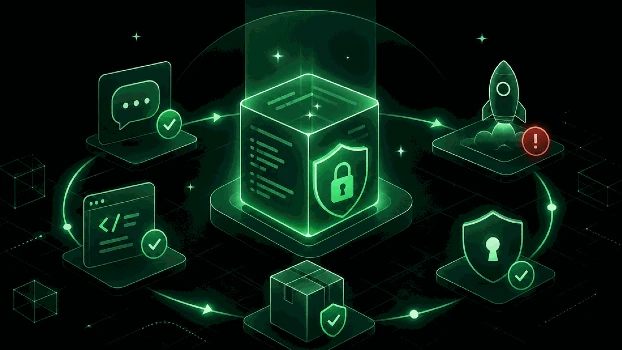 ADLC Security Best Practices for Teams Shipping with Coding Agents | Endor Labs
ADLC Security Best Practices is an Endor Labs guide to controlling what AI coding agents can access, run, install and ship. It covers inventorying agents and MCP servers, sandboxing, pre-execution hooks instead of AGENTS.md rules, install-time package checks against slopsquatting and malware, reachability-based triage of agent PRs, and CI/CODEOWNERS protections. A five-step worked example and coverage metrics are included.
endorlabs.comarticlePublished and added 23 Oct 2026🛡️ Security- Trail of Bits (@trailofbits) on X
Trail of Bits announces two open-source plugins, patching-bugs and regression-hunt, for AI coding agents that speed up bug patching. They come from four months of Patch the Planet work with open-source projects, which found that repo-level documentation, skills and plugins give agents the maintainer context on what counts as a bug, how a fix should look and what must not break. The post cites the October 2026 PHP incident: a patch touching 402 files, and exploitation within 17 hours of leaked details.
 x.comarticleAdded 23 Oct 2026, published 21 Oct 2026🧠 AI
 From GTA V on iPhone to Free Photoshop: This AI Tool Is Upending Software
Decrypt reports on REA (Reverse Engineer Anything), an open-source toolkit that uses MCP to connect AI coding agents such as Claude Code and Codex to reverse-engineering tools like Ghidra. It went from under 10,000 to over 100,000 GitHub stars in a week. The article describes AI-decompiled game ports and mashups, and ArtCraft, a set of Rust-built Photoshop-style apps that Brandon Thomas made with Claude Opus 5.5 as a clean-room rebuild. It also covers the copyright and takedown fallout (Activision, Bethesda) and what cheap agent-driven decompilation means for software protection.
 decrypt.coarticlePublished and added 12 Oct 2026🧠 AI
 Introducing AI Coding Agent Governance: Using Hooks to Bring Visibility to the ADLC | Endor Labs
Explains how lifecycle hooks in Claude Code (.claude/settings.json) and Cursor (.cursor/hooks.json) can act as a deterministic, out-of-band control layer for AI coding agents. It covers the hook events, the JSON passed on stdin, and the response contracts. Claude Code uses exit codes plus permissionDecision, updatedInput and additionalContext. Cursor uses stdout JSON with permission and userMessage. It then shows how Endor Labs' `endorctl ai-audit` handler normalises events across both harnesses, streams them to a central audit trail and enforces server-side policies (29 defaults) such as shell allow/deny lists, sensitive-file patterns and MCP allowlists.
endorlabs.comarticlePublished and added 12 Oct 2026🧠 AI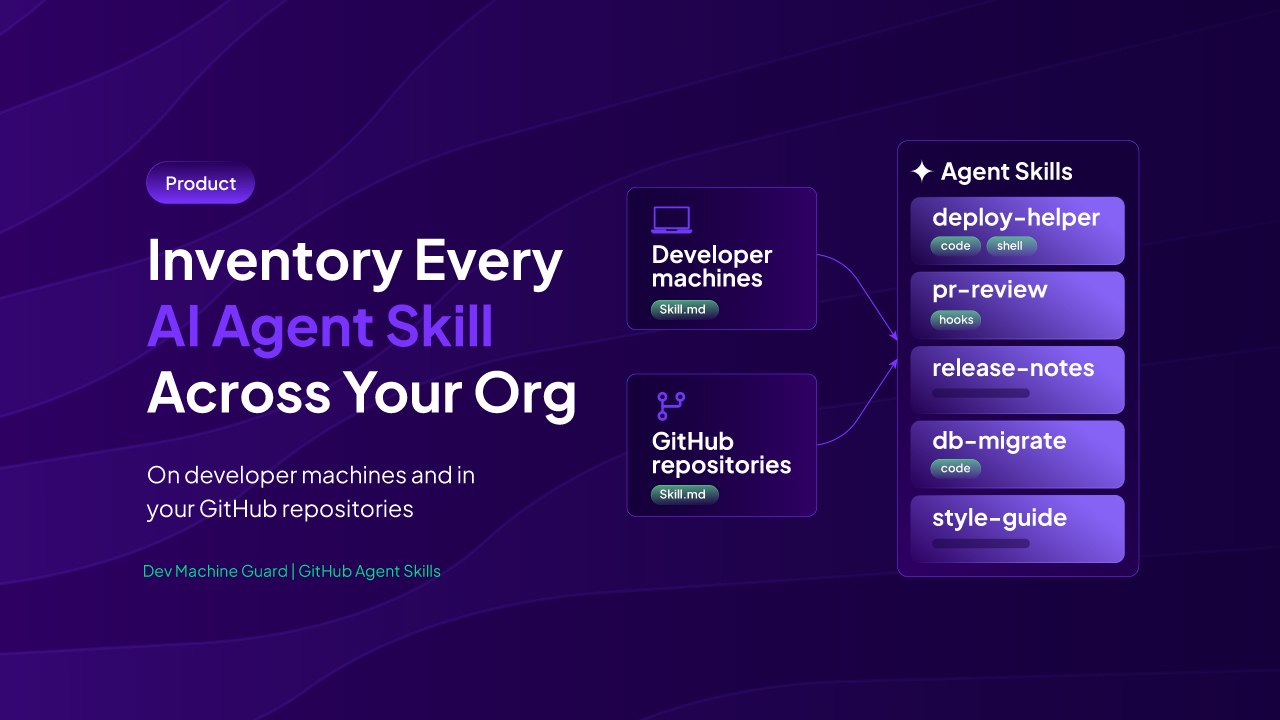 StepSecurity Now Inventories AI Agent Skills in Your GitHub Repositories and on Developer Machines
StepSecurity announces two new inventory features — Dev Machine Guard's Agent Skills page (scanning 18 AI coding agents' skill directories on developer machines) and a GitHub Agent Skills page (scanning default branches of org repos daily) — to track AI agent "skills" (SKILL.md folders with optional scripts/hooks) across an organization. The post frames skills as a supply-chain surface because they can execute shell commands, pre-approve tool permissions via allowed-tools frontmatter (bypassing Claude Code's workspace trust gate), and look like harmless Markdown documentation in PR review, citing the Miasma worm, s1ngularity, and the Cline v2.3.0 compromise as precedent for this attack class. It details inventory features like content-hash comparison across devices, provenance tracing via skills.sh/skills-lock.json, and filters for shell/hooks/code execution flags to prioritize review.
 stepsecurity.ioarticlePublished and added 8 Oct 2026🛡️ Security
 Introducing the Kotlin Benchmark for AI coding agents (JetBrains)
JetBrains introduces the Kotlin Benchmark, a SWE-bench-style evaluation suite of 105 repository-level engineering tasks drawn from real open-source Kotlin projects, where agents must read an issue, navigate a codebase, and produce a patch verified by containerized test execution. Built on the open-source Multi-SWE-bench infrastructure, it ships with a public leaderboard and GitHub assets; the first results rank Claude Code with Claude Opus 4.7 (85.71% resolved) ahead of JetBrains Junie with Opus 4.7 and Codex with GPT-5.5, both at 81.9%. JetBrains positions it as complementary to model-level Kotlin evals like Kotlin_HumanEval and Kotlin_QA, and plans to expand coverage to Android/Kotlin Multiplatform tasks and additional metrics beyond pass/fail.
 blog.jetbrains.comarticleAdded 4 Oct 2026🧠 AI
 Why AI Coding Agents Keep Writing Broken Access Control
Snyk argues AI coding agents reliably write broken access control (BOLA/IDOR, OWASP's top category since 2021) because the facts needed to add an ownership check — what an object belongs to, who may access it, where tenant boundaries sit — are tacit product knowledge that exists nowhere in the code or prompt an agent sees. It explains why SAST tools catch patterned sub-categories like path traversal or SSRF but structurally cannot catch CWE-639/862/863 (missing or incorrect authorization), since there's no bad pattern to match, and proposes reasoning over an assembled "application-context graph" of architecture, data flows and trust boundaries instead. It closes with a five-step team checklist (inventory ID-accepting endpoints, document ownership rules, add authorization-specific PR review, write cross-tenant tests, run deep contextual analysis) and pitches Snyk's Evo Agentic AppSec as the tool built around that approach.
 snyk.ioarticlePublished and added 1 Oct 2026🧠 AI
- Why AI Coding Agents Keep Writing Broken Access Control
Snyk explains why AI coding agents reliably ship broken object-level authorization (BOLA/IDOR) bugs: the ownership rule that would prevent them (e.g. "invoices belong to organizations") lives in the product's data model and team knowledge, not in the prompt or surrounding code, so the agent produces code that is correct for the stated task but lets any authenticated user access other tenants' objects. The piece maps the flaw to CWE-639/862/863, contrasts it with pattern-matchable classes like SSRF and path traversal that SAST handles well, and lays out five concrete team actions (endpoint inventory, documented ownership rules, explicit authz review questions, per-resource cross-tenant tests, and periodic deep contextual analysis), while pitching Snyk's "application-context graph" and Evo Agentic AppSec as the tool for the pattern-less gap.
snyk.ioarticlePublished and added 1 Oct 2026🛡️ Security  Malicious .git Configs Can Make Claude, Codex, Cursor, and Other AI Agents Run Attacker Code
Manifold Security (publishing as GitSpawn) found that a repository's own .git/config can set core.fsmonitor to an arbitrary command, which Git silently executes on any index-refreshing operation (git status, git diff) — including the background branch/diff checks AI coding agents run at session startup, before any trust prompt, sandbox, or model call. The technique, requiring only that a .git directory arrive intact via archive/USB/sync-folder rather than a fresh clone, was confirmed in goose, Codex CLI/Desktop, Claude Code (two separate paths), Cursor, Hermes Agent, Qwen Code, and Grok Build; goose, Codex, Claude Code, and Cursor have shipped fixes while Hermes Agent, Qwen Code, Grok Build, and Claude Code's "ultrareview" path remained exploitable as of September 1, 2026. OpenAI separately published three CVEs for the same class in Codex, and the piece ties the pattern back to earlier IDE trust-dialog bypasses (VS Code CVE-2021-43891, JetBrains CVE-2022-24346).
 thehackernews.comarticleAdded 26 Sep 2026🛡️ Security
 Agentjacking Attack Tricks AI Coding Agents Into Running Malicious Code
Researchers at Tenet Security disclosed Agentjacking, an attack abusing Sentry's public write-only DSN credential to inject crafted error events containing markdown-formatted malicious instructions. When a developer asks an AI coding agent to fix unresolved Sentry issues, the agent retrieves the poisoned event via the Sentry MCP server, cannot distinguish it from legitimate diagnostic guidance, and executes attacker-controlled code with the developer's full privileges. Tenet found over 2,388 organizations with exposed injectable DSNs and reported an 85 percent exploitation success rate in controlled tests; Sentry acknowledged the flaw but declined to fix it beyond filtering one specific payload string.
thehackernews.comarticleAdded 26 Sep 2026🛡️ Security When chat is the wrong UI
Burke Holland (GitHub) argues that chat is often the wrong interface for working with AI coding agents and introduces "canvas" — a feature in the GitHub Copilot app that spins up a small full-stack application with no browser chrome, which can call third-party APIs or run code locally while exchanging messages bidirectionally with the Copilot agent. He walks through concrete canvases: a playable Connect 4 game against the agent, a Winget package browser/installer, a SQLite query UI with IntelliSense, a Markdown-to-Windows-Live-Writer-style blog editor, and a full development-workflow automation canvas that removes the human from the loop between research, prototyping and review steps. The piece frames this as a general lesson for agent builders: build a reusable tool the agent and user can both interact with, rather than burning tokens asking the agent to perform every repetitive action through chat.
 github.blogarticleAdded 8 Oct 2026, published 24 Sep 2026🧠 AI
 Engineering a security harness for AI coding agents | Blog | Endor Labs
Endor Labs lays out a seven-question framework for building a 'security harness' around AI coding/security agents: defining task scope, engineering minimal sufficient evidence retrieval, tiered authority (Read→Recommend→Prepare→Publish→Enforce), hard enforcement gates before consequential actions, and operational controls for evaluation, failure containment, and versioned change management. It argues the model should never be the control plane — deterministic evidence and explicit approval boundaries must sit around it — and backs the evidence-architecture point with a benchmark showing a 91.7% token reduction (6.6M vs 79.5M) when agents receive deterministic security evidence instead of reconstructing it via tool loops.
endorlabs.comarticlePublished and added 22 Sep 2026🧠 AI- Engineering a security harness for AI coding agents | Blog | Endor Labs
Endor Labs engineering post arguing that prompts are not security controls and lays out a seven-question framework for building a "security harness" around AI coding/remediation agents: defining the job, minimizing evidence to authoritative facts, tiering authority (Read→Recommend→Prepare→Publish→Enforce), gating consequential actions on proven conditions, evaluating process/result/outcome with contestability, failing closed on interruption or attack, and versioning/owning the agent over time. It illustrates the approach with a controlled dependency-remediation workflow (upgrading Jinja2 with explicit stop-for-approval gates) and cites an internal benchmark where evidence-equipped agents used 91.7% fewer tokens (6.6M vs 79.5M) than agents that had to reconstruct security posture via tool-loop reconnaissance.
endorlabs.comarticlePublished and added 22 Sep 2026🛡️ Security 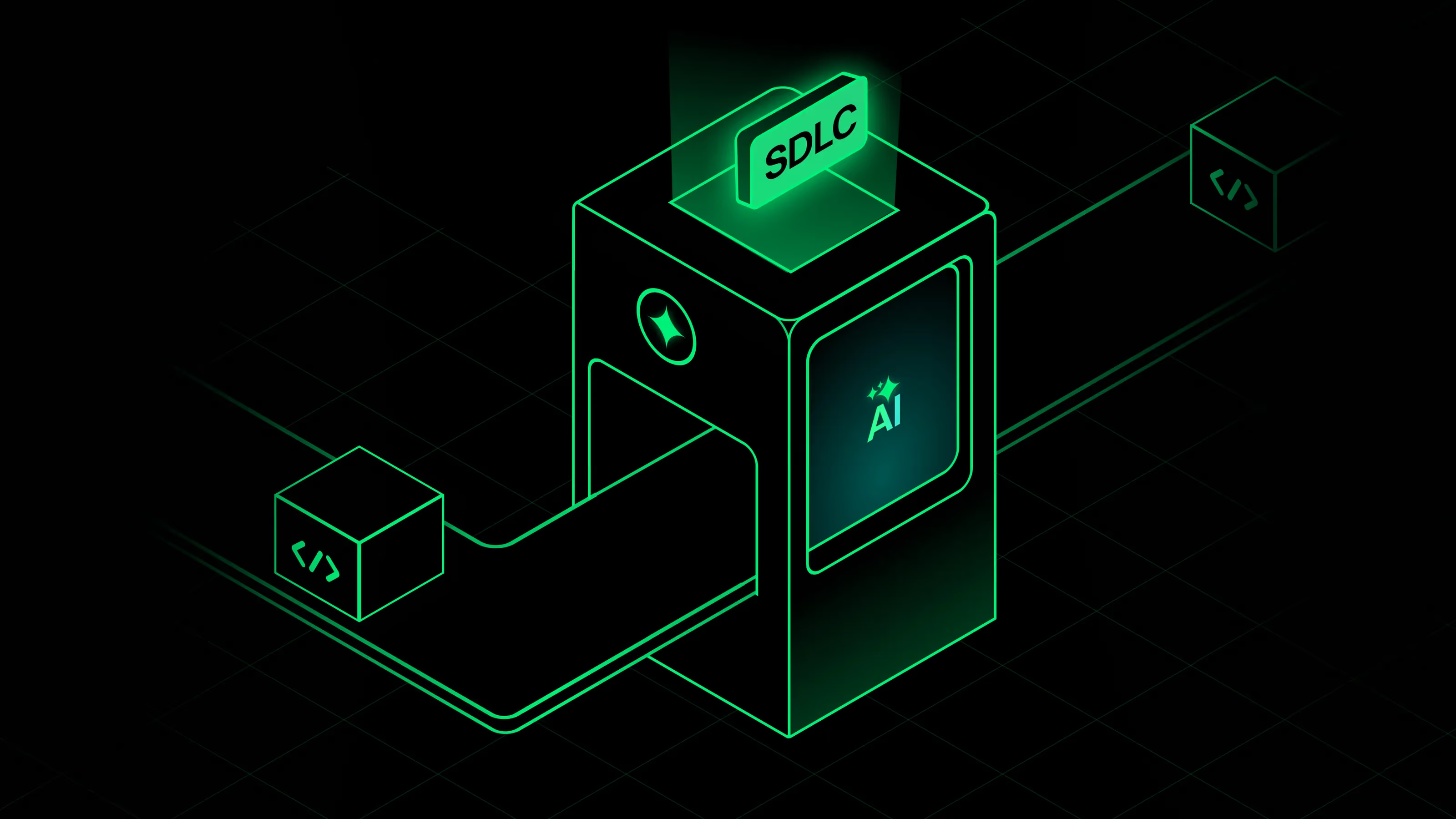 SolarWinds took a nation-state. The next attack just needs an LLM and $5. | Blog | Endor Labs
Endor Labs blog tracing an accelerating pattern of software supply-chain compromises from July 2025 through March 2026, culminating in the TeamPCP threat actor's cascading 30-day compromise of Aqua Security, Trivy, GitHub Actions, Docker Hub, npm, OpenVSX, and PyPI (including backdooring the 95M-download LiteLLM package). It argues AI is accelerating both offense (CVE-GENIE reproducing 51% of CVE exploits for $2.77 each) and the attack surface (the Cline prompt-injection-to-npm-token-theft chain, Nx's AI-review-evading payload), and calls for treating AI coding agents as privileged actors, pinning GitHub Actions to SHAs, and platform-level fixes like immutable tags and Sigstore/OIDC.
endorlabs.comarticlePublished and added 11 Sep 2026🛡️ Security Dev Machine Guard Now Supports Linux - StepSecurity
StepSecurity announces Linux support (Debian/RPM, .deb and .rpm packages) for Dev Machine Guard, its open-source developer-machine inventory and scanning engine, extending existing macOS/Windows coverage. The tool detects installed AI coding agents (Claude, Cursor, GitHub Copilot, Codex), IDE extensions from VS Code Marketplace and OpenVSX, MCP server configs, npm packages, and Linux system packages (rpm, dpkg, pacman, apk, snap, flatpak) via native mechanisms like systemd user timers and BIOS-serial device identity, and is explicitly framed as a response to incidents like the Shai-Hulud npm worm, s1ngularity/Nx compromise, and Mini Shai-Hulud/TanStack attacks. It ships in a free local-only Community mode and a paid Enterprise mode with centralized dashboard, policy enforcement, and dependency cooldown/alerting.
stepsecurity.ioarticleAdded 5 Sep 2026🛡️ Security Dev Machine Guard Now Supports Windows - StepSecurity
StepSecurity announces Windows 10/11 support (x64 and ARM64, Sigstore-signed with build provenance) for Dev Machine Guard, its open-source developer-endpoint scanner. It inventories AI coding agents, MCP server configs, IDE extensions from the VS Code Marketplace and OpenVSX, and global and per-project npm packages. This lets teams find which developer machines have a compromised package or extension after incidents like Shai-Hulud, s1ngularity and Mini Shai-Hulud. Windows detection uses %LOCALAPPDATA%, %PROGRAMFILES%, registry Uninstall keys and schtasks scheduling. Community mode runs fully locally, while enterprise mode reports to a dashboard with policy enforcement.
stepsecurity.ioarticleAdded 5 Sep 2026🛡️ Security- Agentic Development Security: How to Secure Code Your Agents Write | Blog | Endor Labs
Endor Labs blog post defining "agentic development security" — securing code, dependencies, and tool use when AI coding agents generate and merge code autonomously. It cites research showing 45% of LLM-generated code samples fail security tests (Veracode), 34% of AI-recommended dependency versions are hallucinated (Endor Labs), 82% of MCP implementations have path-traversal-prone file operations, and explains reachability analysis plus EPSS scoring as noise-reduction filters for prioritizing exploitable findings.
endorlabs.comarticleAdded 3 Sep 2026, published 2 Sep 2026🛡️ Security - The Secure Agentic Development Lifecycle (ADLC), Explained | Blog | Endor Labs
Endor Labs defines the "agentic development lifecycle" (ADLC) — the process by which AI coding agents autonomously plan, write, test, and ship code — and lays out where it introduces new security risk: insecure-by-default code, architectural design flaws that pass static analysis, hallucinated/unvetted dependencies, and a review bottleneck as agents outpace human reviewers. It cites benchmark data (62% of best-model BaxBench solutions insecure, only 10.5% of SWE-Agent/Claude 4 Sonnet solutions secure, only 1 in 5 AI-recommended dependency versions safe) and proposes a control stack — secure-generation prompting, security-aware multi-agent PR review, reachability-based prioritization, and automated remediation — mapped to NIST SP 800-218A, CSA's Agentic SDLC, and OWASP.
endorlabs.comarticleAdded 3 Sep 2026, published 2 Sep 2026🛡️ Security - AI Code Review: How to Actually Review Code an Agent Wrote | Blog | Endor Labs
Endor Labs explainer on "AI code review" as a discipline: pairing LLM reasoning with static analysis (call graphs, data flow) to catch security-relevant PR changes that AI coding agents introduce, alongside human reviewers. It cites research showing common AI-generated flaws (missing input validation CWE-20/89/78, hardcoded secrets CWE-798, broken auth CWE-306/284, hallucinated/insecure dependencies), Endor's finding that under 9.5% of vulnerabilities are reachable/exploitable, and a comparison of AI review against SAST, SCA, and secrets scanning, plus a rollout checklist referencing NIST SP 800-218A.
endorlabs.comarticleAdded 3 Sep 2026, published 2 Sep 2026🛡️ Security - Prompt Patterns That Make Coding Agents Write Safer Code | Blog | Endor Labs
Endor Labs breaks down prompt engineering patterns that reduce vulnerabilities in AI-generated code: a design-spec pattern that front-loads security requirements, naming specific CWEs to avoid (e.g. CWE-89, CWE-79, CWE-20), and a "secure-insecure diff" recursive self-critique loop, while warning that telling a model to role-play a security expert actually performs worse. It cites research showing these patterns cut vulnerability density by up to 56–77.5%, notes that repeated AI iteration can drift toward less-secure code, and flags that AI coding agents frequently suggest hallucinated or vulnerable dependencies (34% hallucinated per Endor's own dependency research), arguing prompts must be paired with SAST/SCA/secrets scanning and reachability-based prioritization.
endorlabs.comarticleAdded 3 Sep 2026, published 2 Sep 2026🛡️ Security - Prompt Injection Against Coding Agents: The Attack Surface Nobody Owns | Blog | Endor Labs
Endor Labs breaks down how indirect prompt injection compromises AI coding agents (Cursor, GitHub Copilot) via poisoned READMEs/rules files, malicious MCP servers, and web/issue content the agent reads with elevated trust and auto-approve permissions. Cites a study testing 314 payloads across 70 MITRE ATT&CK techniques showing up to 84% attack success, OWASP's MCP tool poisoning definition, Unit 42's real-world IDPI telemetry, and CVE-2025-52573 as a concrete command-injection-via-prompt-injection case in an MCP server.
endorlabs.comarticleAdded 3 Sep 2026, published 2 Sep 2026🛡️ Security - Application Security Monitoring for AI-Assisted Development | Blog | Endor Labs
Endor Labs blog post arguing that AI coding agents break the traditional scan-then-fix rhythm of application security because commit volume outpaces review queues, and proposes continuous monitoring of dependency drift, code reachability, and secret exposure instead of point-in-time scans. It distinguishes findings, vulnerabilities, and exploitable weaknesses, and recommends ranking by function-level reachability (Endor Labs claims up to 92% noise reduction) rather than raw CVSS severity, with fixes surfaced as PR comments rather than dashboard alerts.
endorlabs.comarticleAdded 3 Sep 2026, published 2 Sep 2026🛡️ Security 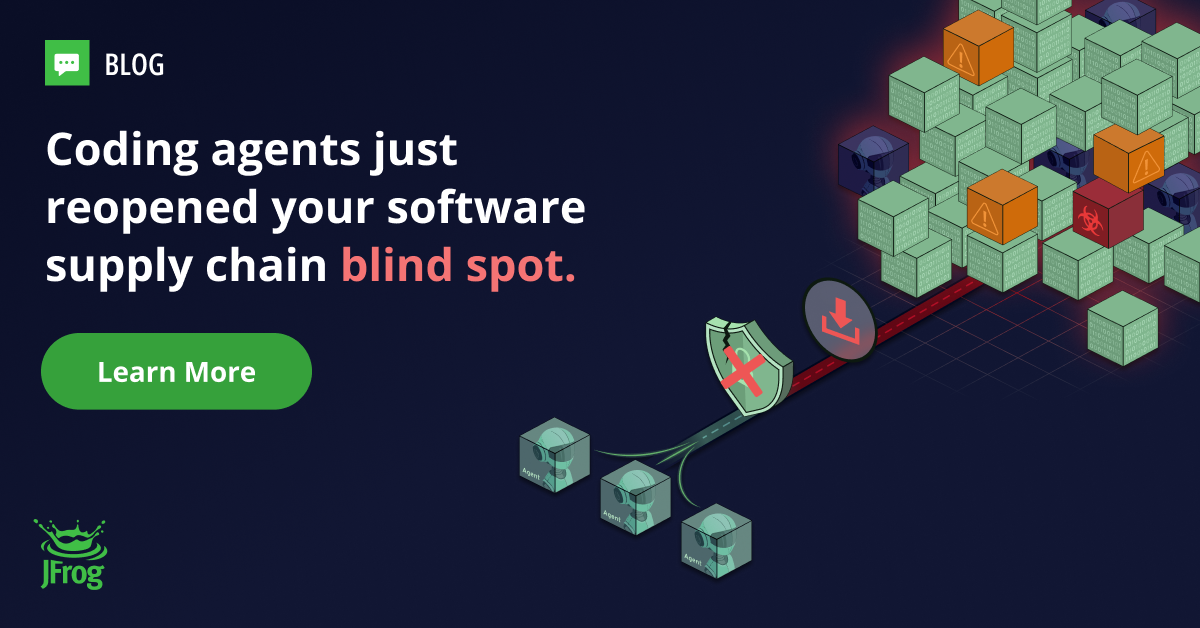 JFrog: Coding Agents Just Reopened Your Software Supply Chain Blind Spot
JFrog describes how AI coding agents like Cursor and Claude Code autonomously select and download dependencies directly from public registries (npm, PyPI, Maven, Go, Docker Hub, Helm, NuGet), bypassing organizational curation, scanning, and audit controls entirely. It cites JFrog's 2026 State of the Union data (451% surge in malicious npm packages, ~20% of AI package recommendations referencing non-existent "slopsquatted" packages) and announces Agent Package Resolution, a JFrog Artifactory feature that transparently routes agent-driven package installs through existing curation/Xray scanning policies via session steering, persistent package-manager config, and server-side enforcement.
 jfrog.comarticlePublished and added 25 Aug 2026🛡️ Security
 Nine AI coding agent incidents that ended with deleted data
A case-study roundup of nine documented incidents (June 2025–July 2026) where AI coding agents — Cursor (YOLO mode), Replit, Gemini CLI, Claude Code, Google Antigravity, Cursor Plan Mode, Kiro, and Opus 5/Claude Code with Prisma — destroyed local drives, git repos, a SaaS production database, and took an AWS service down for ~13 hours in one region. The piece categorizes failure mechanisms (unverified exit codes, shell-quoting/tilde-expansion bugs, constraint decay where acknowledged instructions are ignored, and permission inheritance bypassing approval gates) and argues smarter models won't fix the problem because the real gap is the missing control layer between agent intent and execution. It closes with concrete mitigations — scoped credentials, confined filesystems, read-after-write verification, command-level logging, and tested backups — before pitching the author's own agent-security product, Adversa AI.
 adversa.aiarticleAdded 8 Oct 2026, published 4 Aug 2026🧠 AI
 Introducing the Wiz Sensor for Developer Workstations to Protect Endpoints in the AI Era
Wiz announces a new endpoint sensor for developer workstations (Windows/macOS, private preview) that inventories packages, IDE extensions, AI coding agents, and MCP servers, and detects known/emerging supply chain attacks in real time. The post details three real-world campaigns that motivated it: Shai-Hulud (a self-propagating npm worm that ran TruffleHog via postinstall scripts to steal npm tokens and republish itself), the Axios backdoor (a compromised maintainer account injecting C2-calling code executed within 1.1 seconds of npm install), and s1ngularity (a compromised Nx build system/VS Code extension that harvested GitHub/npm/SSH/cloud credentials and weaponized local AI CLI tools like Claude and Gemini to exfiltrate filesystem data, leaking 1,000+ GitHub tokens and exposing 5,500 private repos).
 wiz.ioarticleAdded 3 Sep 2026, published 3 Aug 2026🛡️ Security
 Critical Security Controls for Governing AI Coding Agents | Blog | Endor Labs
Endor Labs analyzes the security risks of AI coding agents running on developer laptops with shell, filesystem, network access and the developer's own credentials, framing the threat as prompt-injection-driven abuse of legitimate agent capabilities (e.g., an agent tricked into exfiltrating .env via a malicious README). It maps six control points — EDR/XDR, sandboxes/containers, AI/MCP gateways, in-agent hooks, package firewalls, and secrets scanning/PR controls — arguing that in-agent hooks (deterministic allow/deny/ask decisions on proposed actions before execution) are the only point that intercepts model intent before it becomes a shell command, and promotes Endor Labs' own hook-based AI Coding Agent Governance and Package Firewall products as the implementation.
endorlabs.comarticleAdded 3 Sep 2026, published 31 Jul 2026🛡️ Security

Showing 30 of 36
Show more