- Web Security Academy
Web Security Academy is PortSwigger's free online web security training. It is known to combine learning material with hands-on labs across web vulnerability classes such as SQL injection, XSS, SSRF, authentication flaws and request smuggling, and to be built around Burp Suite. The page had no extractable text, so this description comes from the URL and general knowledge of the site.
 portswigger.netcourseAdded 30 Oct 2026
 Web Security Academy: Free Online Training from PortSwigger
The Web Security Academy is PortSwigger's free online training center for web application security. It combines written topic explanations, videos and interactive labs, with content from PortSwigger's research team and Dafydd Stuttard, author of The Web Application Hacker's Handbook. Labs can be solved with Burp Suite Community Edition, progress is tracked per account, and first solvers of new labs appear in a Hall of Fame.
portswigger.netcourseAdded 30 Oct 2026 What are shell vulnerabilities? PHP2Shell, Node2Shell (HTTP2Shell), React2Shell and Log4Shell explained
Explainer on "shell" vulnerabilities, the -Shell naming for RCE flaws that began with Log4Shell (CVE-2021-44228). It compares memory-corruption bugs (PHP2Shell, CVE-2026-109618 and CVE-2026-109619; Node2Shell, CVE-2026-111497, in the Brotli decoder) with design-flaw bugs (Log4Shell, React2Shell, CVE-2025-55182). It covers shared traits, exposure through inherited components, and Brotli patch status across runtimes and distributions.
 aikido.devarticleAdded 30 Oct 2026, published 29 Oct 2026
 Digital Forensics: Analyzing Windows Prefetch Files for Evidence
Windows Prefetch forensics tutorial from Hackers Arise. It explains that prefetch files in C:\Windows\Prefetch record last run time, run count and files touched, so they prove an application was used even after deletion. It shows parsing with NirSoft WinPrefetchView, building a timeline from Last Run Time, and how a suspect could disable Prefetch or Superfetch (SysMain).
 hackers-arise.comarticlePublished and added 29 Oct 2026
- Hakimi Eiqbal (@hakimieiqbal) on X
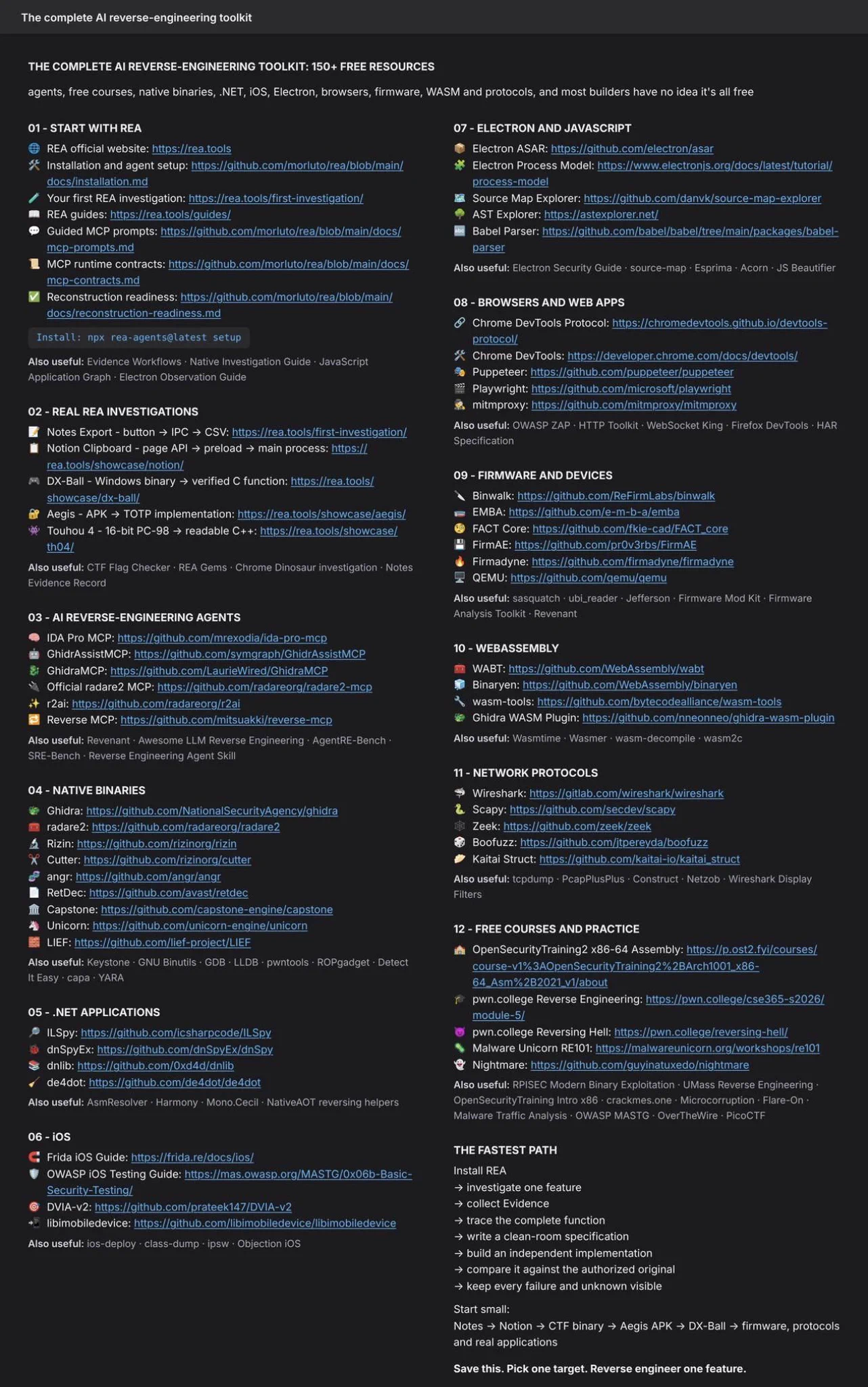
A practical reverse-engineering map by hakimieiqbal on X that picks tools by target: native binaries, .NET, Electron, iOS, firmware, WebAssembly and network protocols. It introduces REA (morluto/rea), which connects coding agents to RE tools, and lists MCP bridges for IDA Pro, Ghidra and radare2. It adds an evidence-first workflow and free courses such as pwn.college and OpenSecurityTraining2.
 x.comthreadAdded 29 Oct 2026, published 28 Oct 2026
 Part 3 – Cybersecurity journeys: The work behind the work
Part 3 of the AWS Security Blog series on cybersecurity careers profiles three AWS staff: Brandon Caldwell (application security, empathy and communication), Kurt Heath (self-taught pen tester, cautious AI use) and Seth Jeacopello (code review, managing attention). It gives practical advice: practice on vulnerable machines and read the logs, build CTF and GitHub portfolios, and write clearly. It lists TryHackMe, Hack The Box, the OWASP Top 10, OWASP Cheat Sheet Series, Darknet Diaries and AWS Skill Builder.
 aws.amazon.comarticlePublished and added 27 Oct 2026
- cks/tasks/cks/course/README.md at master · ViktorUJ/cks
The ViktorUJ/cks course is an open-source, community-maintained preparation course for the CKS (Certified Kubernetes Security Specialist) exam. It has 33 chapters grouped by CKS domain: cluster setup, hardening, system hardening, microservice vulnerabilities, supply chain, and runtime security. It also has 15 labs with automatic checks (labs 101-114), mock exams and Killer.sh guidance. Core labs target Kubernetes v1.36.
 github.comcourseAdded 27 Oct 2026
- Adaptix C2 Architecture: Configuring Command & Control Listeners
AdaptixC2 listener configuration guide, second in a Hackers-Arise series. It walks through the fields for BeaconDNS, Beacon HTTP, Beacon SMB, Beacon TCP and Gopher TCP listeners, including DNS burst mode, HTTP URIs, User-Agents and redirector callback addresses, SMB named pipes, TCP prepend data, and mTLS. It also explains external versus internal listeners for lateral movement.
hackers-arise.comarticlePublished and added 26 Oct 2026  Code security for new coders
 is a Datadog Security Labs primer for vibe coders on first-party versus third-party code, hardcoded secrets and software supply chain risk (vulnerable and malicious dependencies). It lists security questions to put to a coding agent before and after code is written. It also defines SCA, SAST, IAST, DAST, IaC scanning and secret scanning, and cites the PHP2Shell vulnerabilities.
 securitylabs.datadoghq.comarticleAdded 29 Oct 2026, published 26 Oct 2026
- UTS #39: Unicode Security Mechanisms
UTS #39 (Unicode Security Mechanisms) is the Unicode Consortium's technical standard for detecting identifier spoofing. It defines the General, IDN and Email security profiles for identifiers, confusable detection through skeleton and bidiSkeleton mappings, and mixed-script detection with resolved script sets and Restriction Levels. It also covers limited contexts for ZWJ/ZWNJ and the confusables and identifier data files. The fetched text is truncated, so later sections are not covered.
 unicode.orgpaperAdded 26 Oct 2026, published 25 Oct 2026
 How bug bounty sharpens one researcher’s security skills
GitHub Bug Bounty spotlight interview with @r31n, a researcher known for GitHub Enterprise Server findings. They describe a source-and-sink approach to mapping trust boundaries, chaining minor bugs (open redirect plus allowlisted SSRF that follows redirects), and confirming a finding only with a working PoC. They also cover using AI for code navigation and PoC scripts, and treating model output as untrusted input.
 github.blogarticlePublished and added 22 Oct 2026
- Digital Forensics: Analyzing Systems with Live-Forensicator
Live-Forensicator is a cross-platform (Windows, Linux, macOS) live response toolkit built around Forensicator.ps1. The Hackers Arise walkthrough runs it on Windows with case details, then reads the HTML report: event log summary (Event IDs 4624, 4798, 4799, 4688) and a risk rating. It also shows optional AI analysis through Ollama with a Mistral model, configured in config.json, and warns that the tool triggers AV and that AI slows runs.
hackers-arise.comarticlePublished and added 20 Oct 2026 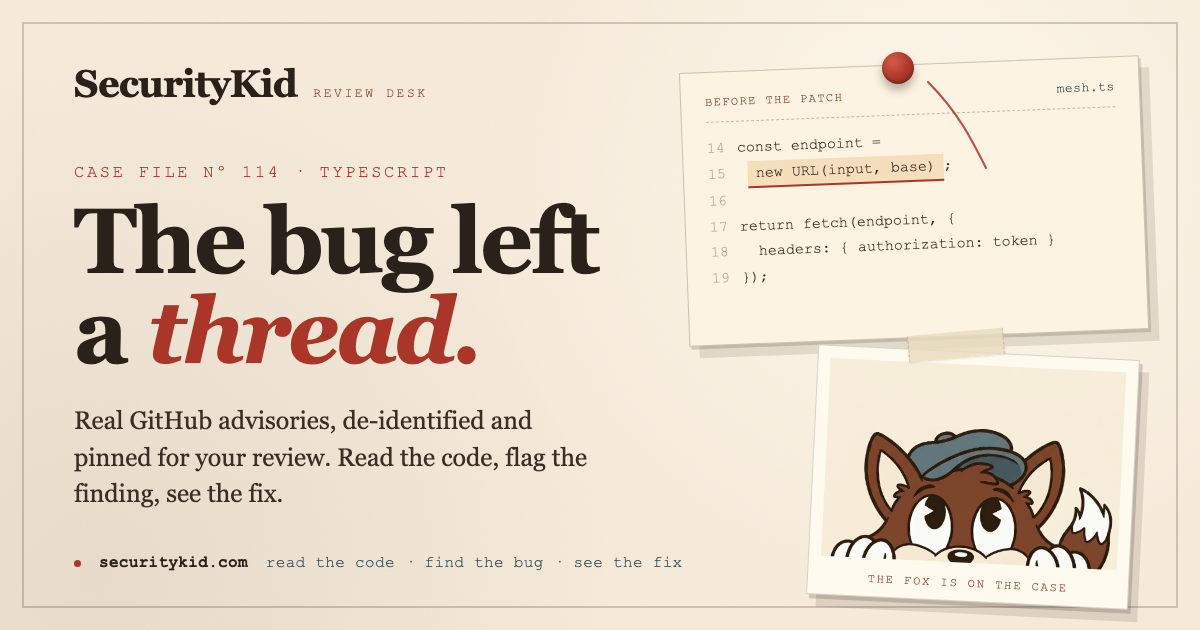 SecurityKid — learn secure code review on real vulnerabilities
SecurityKid Labs is a practice platform for vulnerability code review built on real GitHub security advisories, de-identified and scrubbed. Users get a scope and a diff, pin the vulnerable line, name the root cause, and defend claims against an AI mentor. They then see the advisory patch and can earn verified badges and public writeups. The page gives no case list or pricing.
 labs.securitykid.comtoolAdded 20 Oct 2026
- Open-Source Intelligence (OSINT): Turn One Username into a Full Digital Dossier with Maigret
Hands-on walkthrough of Maigret, an open-source Python tool that checks a username against 3,000+ sites (top 500 by default) and builds a profile dossier by parsing public profile pages and recursively searching newly found usernames. Covers installation from GitHub, single-site and tag filtering, username permutation, HTML/PDF/CSV/JSON reports, graph output, and an optional LLM summary via OpenRouter. Positioned as a more thorough successor to Sherlock for username reconnaissance.
hackers-arise.comarticlePublished and added 16 Oct 2026 - Social Engineering: Exploiting Human Psychology in Offensive Security
Hackers Arise explainer on the human psychology that social engineers exploit. It covers cognitive overload ("brain DoS"), stereotyped automatic behaviour, and the authority, scarcity and consistency principles, with supporting studies (Milgram, Pliner, Europol fraud-victim statistics). It also describes trigger-bypass techniques such as reframing a password request as IT support, and an observed baseline percentage of recipients who act on phishing emails. It closes with organisational and personal defences.
hackers-arise.comarticlePublished and added 15 Oct 2026 - Artificial Intelligence (AI) in Cybersecurity, Part 29: Creating Isolated Autonomous Agents for Hacking with NemoClaw
Hackers-Arise tutorial on NVIDIA NemoClaw, an open-source wrapper that runs OpenClaw agents inside OpenShell sandboxes with kernel-level isolation and declarative YAML network/file policies. It covers OpenClaw's security problems (543 tracked CVEs, 40,000+ exposed instances bound to 0.0.0.0 without auth), caveats such as zero-day RCE and sandbox escapes, and install and TUI testing steps on Kali. It also cites a Cisco AI Defense plus OpenShell case study that blocked simulated exfiltration through a third-party skill.
hackers-arise.comarticlePublished and added 14 Oct 2026  Agentic Universe | Token Security
Token Security's "Agentic Universe" is a free learning hub for security and identity teams securing AI agents. It sits between shallow video-only overviews and long certifications, with short concept videos, technical deep dives written by practitioners, checklists to run against your own environment, and free tools. The fetched page is a landing blurb that doesn't list the modules or the specific tools, so the depth of the content is unconfirmed.
 token.securitycourseAdded 14 Oct 2026
 Part 2 – Cybersecurity journeys: What even is this job?
Part 2 of the AWS Security Blog's cybersecurity careers series. It profiles three people in less-publicized security roles: Jason Lane, who works backward from a vulnerability research goal and now measures risk across about a million Amazon applications. Jason Goodman moved from customer service through insider threat, adversarial detection and application security. Harshvardhan Chunawala advises startups and has worked on lunar rover operations and satellite incident response. It closes with pointers to the NICE Workforce Framework, CyberSeek, AWS Skill Builder and CISA resources for exploring roles.
aws.amazon.comarticlePublished and added 13 Oct 2026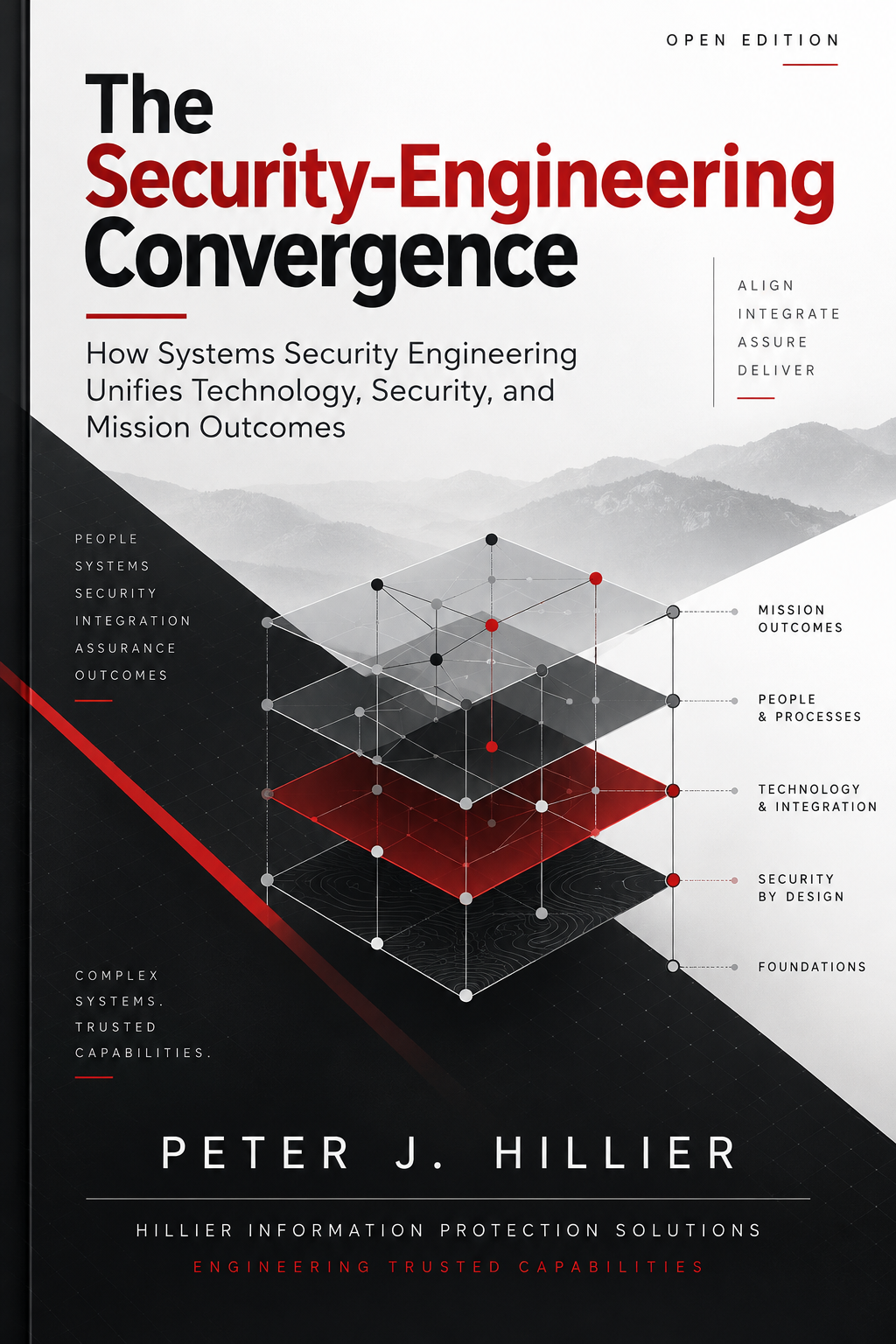 The Security-Engineering Convergence | Peter J. Hillier
The Security-Engineering Convergence (Edition 1.1) by Peter J. Hillier is a free, CC BY 4.0 technical book on Systems Security Engineering (SSE) as the security specialty within systems engineering. It runs from mission needs and loss scenarios through requirements, secure architecture, cyber resilience, verification and validation, acquisition, assurance cases, operations and retirement. Later chapters cover supply-chain assurance, legacy and cloud-dependent systems, systems-of-systems, and AI and autonomy. It ships as PDF, EPUB and a companion ZIP of worksheets, worked cases and standards crosswalks. It argues that meeting compliance controls is not the same as engineering evidence for mission outcomes.
 pjhillier.github.iootherAdded 13 Oct 2026
- santosomar/AI-agents-for-cybersecurity
Omar Santos's companion repo for his Pearson/O'Reilly trainings and books, organised in eight parts. They cover LangChain prompts, chains and RAG (Chroma), and agents (LangGraph, CrewAI, DeepAgents). They also cover FastMCP security servers (nmap, CISA KEV, Shodan) and attack-surface-management and SOC agent examples. Later parts have security guides to six agentic frameworks (OpenClaw, Hermes, Agent Zero, OpenHands, Paperclip, Buzz) with hardening notes and 2026 CVE mapping, agent cost/tokenomics scripts including denial-of-wallet budget guards, and a vendor-neutral spec for a human-gated multi-agent security-assessment harness (scope manifest, approval gates, kill switch). Useful as a hands-on path into AI-agent security tooling, with warnings that some examples act on real systems.
github.comrepoAdded 13 Oct 2026 - AI Agents for Cybersecurity: A Guided Tour of a Repository with Tons of Resources and Examples
Omar Santos walks through his eight-part AI-agents-for-cybersecurity repository: LLM building blocks (LangChain, RAG), then security agents with LangGraph, CrewAI, DeepAgents and MCP servers (nmap, CISA KEV, Shodan), a hardening guide for six agentic frameworks, token-cost control for agents, and a spec for a supervisor-led, human-gated security-assessment harness. It covers concrete design lessons such as least-privilege subagents, staged response actions, single-use approvals bound to exact actions, kill switches, and mapping controls to the OWASP Top 10 for Agentic Applications. Also notes Project CodeGuard rules shipped for AI coding assistants.
 becomingahacker.orgarticleAdded 13 Oct 2026
- AI Agents for Cybersecurity: A Guided Tour of a Repository with Tons of Resources and Examples
Omar Santos walks through his AI-agents-for-cybersecurity GitHub repo, which has eight parts. Parts 1–4 cover LLM basics (LangChain, prompting, LCEL, RAG). Parts 5–8 cover building security agents with LangGraph, CrewAI, DeepAgents and MCP servers (nmap, CISA KEV, Shodan), and a hardening baseline for six ready-made agentic frameworks. They also cover token-cost control (caching, routing, budget guards, cost per accepted outcome) and a supervisor-led, human-gated security-assessment harness spec with single-use approvals, a kill switch and an append-only audit log. The post also covers Project CodeGuard rules for AI coding assistants. It is a practical learning path and a reference for governing and securing agents.
 linkedin.comarticleAdded 13 Oct 2026
- What Is SAST? Static Analysis in the Age of AI-Generated Code | Endor Labs
Explainer on Static Application Security Testing. It covers how SAST builds an AST and runs taint analysis from sources to sinks, which flaw classes it catches (SQLi, XSS, hardcoded secrets, weak crypto) and which it misses (IDOR and other access-control bugs). It compares SAST with DAST and SCA, cites false-positive and false-negative figures (91% false positives in a 2025 study of about 3,000 repositories; 47–80% of vulnerabilities missed), and argues for reachability analysis and reasoning-based AI SAST. It ends with evaluation criteria and a rollout plan; the vendor's own benchmark claims are preliminary.
 endorlabs.comarticlePublished and added 12 Oct 2026
 Guide to Implementing Software Supply Chain Security | Endor Labs
Vendor-authored guide that defines a software supply chain as developers, code, dependencies, AI models, containers and CI/CD pipelines. It walks through program components: OSS governance, SAST vs reachability-based SCA, AI model security, SBOM/VEX (NTIA minimum elements, SPDX vs CycloneDX), secrets scanning, CI/CD hardening, and signing/attestation with Cosign/Sigstore. It cites figures such as 95% of vulnerabilities sitting in transitive dependencies and only 1% of SBOMs being fully NTIA-conformant. Each section closes with an Endor Labs product pitch, so treat the framing as vendor-flavoured. The fetched text was truncated, so the final attestation/provenance section was not seen.
endorlabs.comarticlePublished and added 12 Oct 2026- Claude Code Complete Guide: Hooks, Agents, MCP Tools & Professional Development
A LinkedIn-hosted PDF guide to Claude Code hooks, subagents, MCP tools and custom slash commands. It covers the hook configuration in .claude/settings.json, the event payloads (PreToolUse, PostToolUse, Stop, SubagentStop, SessionStart), and exit code 2 as the way to block an action. It includes worked examples of safety hooks: a regex-based PreToolUse script that blocks rm -rf, curl piped to a shell, chmod 777 and privileged Docker containers. Other examples are audit logging, TDD enforcement and session context loading. Useful as a practical reference for putting deterministic guardrails around an AI coding agent, though the regex blocklists are easy to bypass.
 media.licdn.comcourseAdded 9 Oct 2026
- morluto/awesome-reverse-engineering
awesome-reverse-engineering is a CC0 curated list of reverse-engineering tools and learning resources, organized by task: triage, native analysis, debuggers, instrumentation, deobfuscation, malware analysis, mobile, firmware, file formats, games, diffing, symbolic execution, lifting and AI agents. Each entry notes licensing, maintenance status and prerequisites. It also covers MCP integrations, CTF practice sites and related awesome lists.
github.comrepoAdded 27 Oct 2026, published 9 Oct 2026 - How one bug bounty researcher chooses the features they investigate
GitHub Bug Bounty spotlight interview with VIP researcher @vaib25vicky, who specializes in authorization and access control findings. They describe a feature-first methodology (deeply explore a feature until something odd surfaces, rather than hunting by bug class), discuss using AI as a productivity aid that still requires manual verification before submission, and note that most high-impact AI-feature bugs reduce to classic authorization issues and weak guardrails. The post also covers GitHub's restructured VIP bounty program (up to $30k+ payouts, invite criteria based on resolved severity counts).
github.blogarticlePublished and added 8 Oct 2026  Kubernetes Agent Sandbox on AWS EKS (Step-by-Step Guide)
Tutorial on setting up Kubernetes Agent Sandbox (kubernetes-sigs/agent-sandbox) with gVisor on an AWS EKS cluster. It runs a troubleshooting AI agent backend inside a sandbox using SandboxTemplate, SandboxWarmpool and SandboxClaim, and runs untrusted Python through the k8s-agent-sandbox SDK and Sandbox Router. Probes show blocked /etc/shadow reads, setuid and service account token access, plus host process isolation. It also covers scheduled deletion and suspend/resume with persistent volumes.
 devopscube.comwriteupAdded 21 Oct 2026, published 7 Oct 2026
- CUDA Basics for Hackers, Part 1: Getting Started
First part of a Hackers-Arise series teaching CUDA (NVIDIA Compute Unified Device Architecture): installing the CUDA toolkit and nvcc compiler on Kali or Debian-based Linux, writing a basic CUDA C++ kernel, and compiling and running a simple parallel vector-addition program. It explains GPU threading concepts (kernels, thread blocks, grids) and frames CUDA as foundational to AI workloads and to future security applications like password cracking, real-time threat detection and post-quantum cryptography, though those applications are only listed, not demonstrated, here.
hackers-arise.comwriteupAdded 7 Oct 2026, published 6 Oct 2026 - Introduction to Web Application Firewall (WAF) and Ways to Bypass It
A Hackers-Arise tutorial explaining how Web Application Firewalls detect attacks (signature-based, anomaly scoring, behavioral analysis) and how to fingerprint which WAF a target uses via HTTP headers, curl probing, or the WAFW00F tool. It then covers three concrete bypass techniques — double URL encoding, Unicode normalization mismatches, and ASCII smuggling via invisible Unicode tags — that let malicious payloads like XSS slip past WAF filtering before being decoded by the backend app.
hackers-arise.comarticleAdded 7 Oct 2026, published 5 Oct 2026 - M-med/Active-Directory-Simulation-Attack-
Active-Directory-Simulation-Attack- is a purple team lab for the lab.local domain (192.168.100.0/24). It walks through an attack chain: BloodHound/SharpHound recon, Kerberoasting, hash cracking with John the Ripper or Hashcat, and lateral movement with Impacket. It then applies hardening (gMSA, tiering, LLMNR/NetBIOS disabling) and adds Sysmon, Wazuh SIEM and custom Kerberoasting rules (Event ID 4769, RC4).
github.comrepoAdded 23 Oct 2026, published 4 Oct 2026  Sara Adams (@psycyber13nv) on X
An X thread breaking down what zero-knowledge proofs actually guarantee versus a simple hash-and-publish approach, covering the three required properties (completeness, soundness, zero-knowledge), the Fiat-Shamir transform for non-interactive proofs, and a practical comparison of zk-SNARK vs zk-STARK tradeoffs (proof size, trusted setup, post-quantum outlook). It ties the theory to real-world privacy use cases — W3C Verifiable Credentials, Microsoft's Vega mobile driver's license work, BBS/SD-JWT selective disclosure, and Bulletproofs range proofs — and flags limits like circuit bugs and leftover trusted-setup "toxic waste" that can produce valid-looking but false proofs.
x.comthreadAdded 1 Oct 2026, published 30 Sep 2026- The DevSec Blueprint (DSB) (@devsecblueprint) on X
The DevSec Blueprint released Kubernetes Security Engineering, a free nine lesson course covering cluster security boundaries, least privilege RBAC and service accounts, Pod Security Standards, NetworkPolicies and mTLS, admission control, secrets and workload identity replacing static cloud credentials with short lived access, and runtime defense via audit logs. It includes a hands on Cluster Hardening Mission to secure a workload and gather evidence the controls work. The course is free; referenced walkthroughs require signing up as a DSB Builder.
x.comcoursePublished and added 30 Sep 2026 - Aditya Agrawal (@exploitprotocol) on X
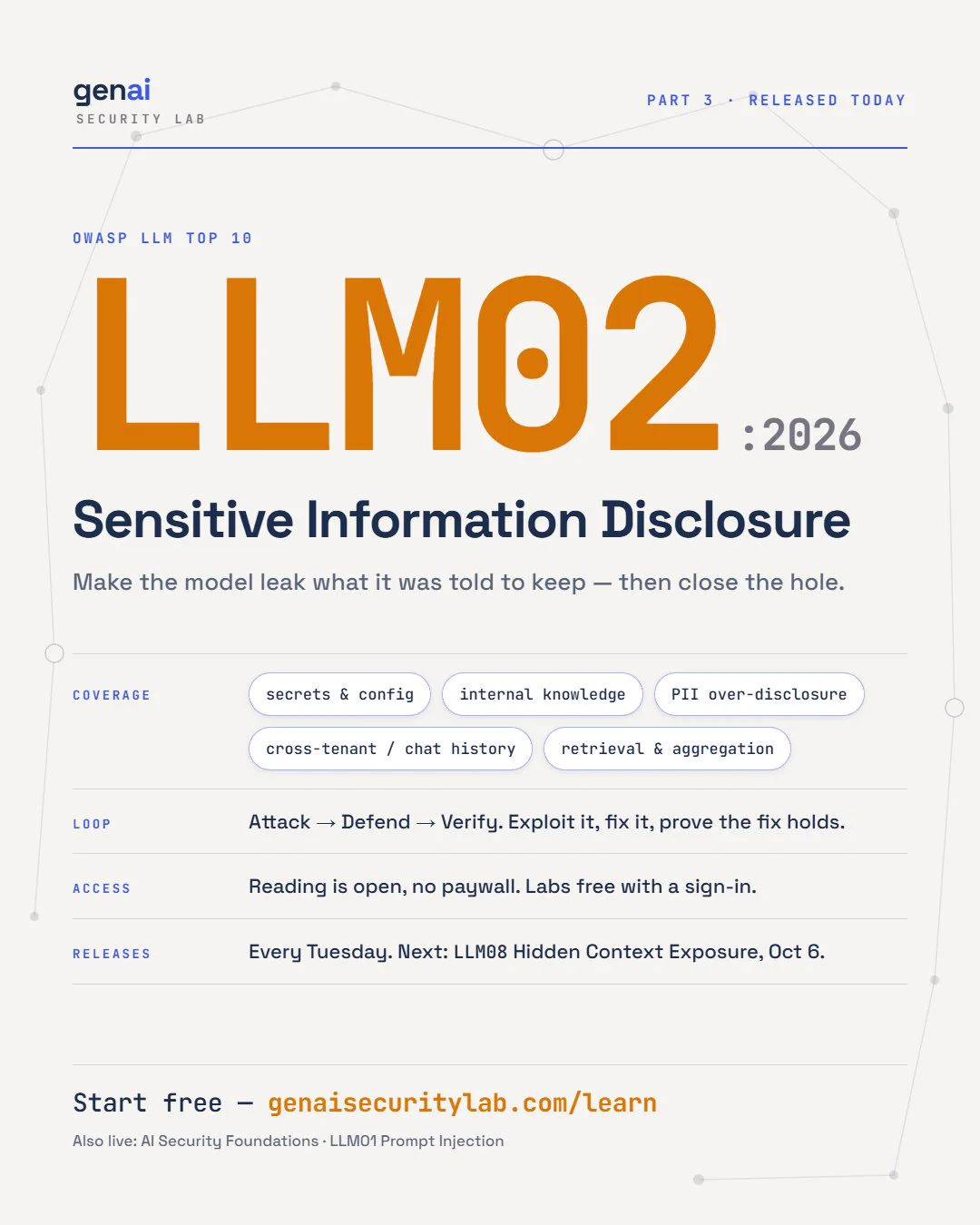
Announcement thread for part 3 of the free Learn AI Security series at genaisecuritylab.com, covering OWASP LLM02 Sensitive Information Disclosure in LLM applications. It walks through failure modes - leaked secrets/API keys via model context, internal knowledge leakage, personal-data over-disclosure, cross-tenant/conversation-history leakage, and RAG retrieval/aggregation leaks - and offers live in-browser attack/defend/verify labs comparing the issues to IDOR and multi-tenant isolation testing in traditional web apps. The author notes the series continues weekly, with LLM08 Hidden Context Exposure scheduled next.
x.comthreadAdded 1 Oct 2026, published 30 Sep 2026  https://aisecurity.zone/
The AI Security Playbook is a 44-chapter, ~91k-word book by Iaroslav Mezin teaching how to attack, defend, and govern AI/agentic systems end to end, with 49 CVEs mapped across the chapters. Its core framing is that nearly every AI vulnerability is a trust-boundary error — a model reading untrusted data and trusted instructions in the same channel — and it offers a practical three-legged check (private data access + untrusted content ingestion + external communication capability) for deciding when an agentic system is exploitable for data exfiltration.
 aisecurity.zonecourseAdded 2 Oct 2026, published 30 Sep 2026
- DVLAA
DVLAA (Damn Vulnerable LLM and Agent Application) is a self-hosted, Docker-deployable security training range for LLM and agent applications, modeled on the DVWA concept but for AI. It covers OWASP LLM Top 10 and Agent Security Top 10 risks (prompt injection, RAG poisoning, tool abuse, memory poisoning, excessive resource consumption, etc.) through 81 hands-on challenges, including an "AWDP" attack/defense track where 10 challenges reproduce real disclosed vulnerabilities in Dify, RAGFlow, Langflow, Flowise, Open WebUI and n8n (with optional real upstream container reproduction), 20 challenges adapted from a China–ASEAN AI security CTF, and 6 challenges adapted from a real model-poisoning CTF. It provides real model interaction, state-machine flag verification, source/prompt viewers, model management (local, Ollama, SiliconFlow, OpenAI-compatible), and bilingual UI.
github.comrepoAdded 22 Sep 2026 - antonio-morales/Fuzzing101
Fuzzing101 is a hands-on course/repo by antonio-morales with 10 exercises targeting real software projects to teach coverage-guided evolutionary fuzzing using AFL++ (a fork of lcamtuf's AFL). It covers core fuzzing concepts like seed mutation, coverage feedback, and crash triage, with exercises tested on Ubuntu 20.04 and a provided VM image, making it a practical on-ramp for finding real vulnerabilities via fuzzing.
github.comcourseAdded 22 Sep 2026  Attack Surface Explained: Types & Reduction Tips
A long-form explainer distinguishing attack surface from attack vector and asset inventory, breaking the surface into network/perimeter, identity/permissions, application/code, and data/storage components, and covering how to map it via the OWASP Attack Surface Analysis Cheat Sheet, measure it (Relative Attack Surface Quotient, Carnegie Mellon's attack surface metric), and reduce it. It also contrasts external attack surface management with cyber asset attack surface management and closes with a pitch for Orca's agentless SideScanning and Unified Data Model.
 orca.securityarticlePublished and added 21 Sep 2026
 pwn.college
 is a free, hands-on cybersecurity education platform built by Arizona State University that teaches binary exploitation, reverse engineering, and low-level systems security through a gamified "dojo" and belt-ranking system with terminal-based challenges. It underpins much of ASU's cybersecurity curriculum and is open for anyone to use, with educators able to import challenges into private dojos and some infrastructure/modules available as open source on GitHub.
 pwn.collegecourseAdded 21 Sep 2026
- AI for Web3 Security: Zero to Hero
A four-module, code-first course (with an accompanying Python package called lucid) that teaches building an AI bug-hunting harness for smart-contract audits, using the SecondSwap DeFi contracts as a fixed target scanned across all modules. It progresses from a single reasoning-agent-to-structured-findings baseline, through a context/exclusion-loop pass, to an orchestrated harness with specialist lenses and fan-out/synthesis, and finally a version that measures recall against ground truth and hands over a self-improvement method. It runs on an OpenAI-compatible model (gpt-5.6-luna via the Requesty gateway) invoked through the raw model API rather than an agent framework, for pedagogical transparency and determinism.
github.comcourseAdded 22 Sep 2026, published 21 Sep 2026  Common C/C++ Vulnerabilities: A Practical Guide to Prevention | Blog | Endor Labs
Endor Labs guide to C/C++ memory-safety and input-handling vulnerabilities — buffer overflow (CWE-787/120/121), use-after-free (CWE-416), null pointer dereference (CWE-476), integer overflow (CWE-190), and format string bugs (CWE-134) — with vulnerable/fixed code snippets for each. It surveys detection tooling (Coverity, CodeQL, Clang Static Analyzer, AFL++/libFuzzer with ASan/UBSan, OSS-Fuzz) and argues that build-system complexity (Bazel, CMake, Conan, vcpkg) and high SAST false-positive rates make reachability analysis necessary, closing with a pitch for Endor Labs' AURI reachability engine.
endorlabs.comarticlePublished and added 11 Sep 2026- CarterPerez-dev/Cybersecurity-Projects
A GitHub repo of hands-on cybersecurity build projects with full source code, organized into Foundations (pre-beginner, heavily commented single-file Python teaching projects), Beginner, Intermediate, and Advanced tiers, including a work-in-progress DDoS mitigation tool. It also bundles 10 certification/career roadmaps (SOC Analyst, Pentester, Security Engineer, GRC Analyst, etc.) and a curated list of learning tools, courses, and communities, cross-promoting the author's CertGames platform for guided versions of the same projects.
github.comrepoPublished and added 21 Aug 2026  AI Development and Agentic Security Labs
A deep-dive lab series (AIDS-01 through at least AIDS-02 shown) teaching security patterns for AI-powered applications built on Google's Genkit framework, covering flow input/output validation with Zod, streaming chunk validation, telemetry data exposure, and agentic tool-calling security including least-privilege tool design, human-in-the-loop approval via tool interrupts, and maxTurns limits against runaway execution. Each lab includes concrete vulnerable-vs-secure TypeScript code, curl-based exploit walkthroughs (prompt injection to extract secrets, payload-inflation cost attacks, XSS via unsanitized LLM output, SQL-tool abuse for data exfiltration, privilege escalation via an over-permissioned modifyPermissions tool), plus detection (regex injection detection, OTel telemetry filtering) and verification tests. The broader 40-lab set spans multi-agent frameworks (LangGraph, CrewAI, AutoGen), MCP tool poisoning, LLM guardrails (NeMo Guardrails, Garak, promptfoo), and real CVEs/incidents like TorchServe, ONNX, the Cursor MCP exploit, and the Morris-II worm.
 blog.devsecopsguides.comcourseAdded 3 Sep 2026, published 21 Aug 2026
- armourinfosec/Offensive-Linux-Privilege-Escalation
A structured collection of 50+ notes taking a low-privileged Linux foothold to root, covering sudo/SUID misconfigurations, GTFOBins and LD_PRELOAD abuse, the Baron Samedit sudo bug, Linux capabilities, cron/systemd-timer abuse, kernel exploits (DirtyCow, DirtyPipe, OverlayFS, PwnKit), NFS no_root_squash, Docker/LXD namespace escapes, screen/tmux and D-Bus IPC abuse, and credential mining. Each note follows a concept-to-exploitation-to-detection-to-defense format and the repo includes a methodology checklist, hardening guide, two guided labs with a lab-setup script, and skills assessments, published for authorized lab/CTF use under CC BY 4.0.
github.comrepoAdded 2 Oct 2026, published 19 Aug 2026  UIUCTF 2026 — Firefly & Sparxie: Lua Sandbox Escape via Bytecode Patching and WASM UAF
A UIUCTF 2026 pwn writeup covering two sandbox-escape challenges: Firefly, where Lua 5.5's empty luai_verifycode lets patched bytecode abuse OP_FORLOOP's untyped register read plus chgivalue's tag-preserving payload update to build type confusion, GOT-redirect fclose to fflush under partial RELRO, and heap-groom a leaked /flag.txt buffer; and Sparxie, a WASM/Emscripten Lua sandbox where a BLAKE2s seal that omits a 16-byte route field lets an archive pass be forged into a relay permit, and a duplicate-clip timeline dedup bug causes a freed studio page to be reused by a queue allocation, yielding a lens over a static draft pool and an in-Lua BLAKE2s witness forgery that reaches sparxie_redeem(). It includes full exploit scripts, binary offsets, and a linked GitHub repo (Abdelkad3r/UIUCTF-2026) with handouts and solvers for both challenges.
 cybersecurityelite.comwriteupAdded 2 Oct 2026, published 11 Aug 2026
 How Zero-Knowledge Proofs Were Invented (ft. Co-Inventor and Turing Award Winner Shafi Goldwasser)
A First Principles podcast episode from a16z crypto in which Shafi Goldwasser (co-inventor of zero-knowledge proofs with Silvio Micali and Charles Rackoff) walks through the origin story and theory of interactive proof systems, including IP=PSPACE, probabilistically checkable proofs, the sum-check protocol, and modern SNARKs. The conversation covers why many "zk" systems marketed today aren't actually zero-knowledge, the rocky rejection history of the original 1985 paper, and applications to blockchain rollups and verifiable computation.
 a16zcrypto.comtalkAdded 29 Sep 2026, published 7 Aug 2026
- ARTOC by White Knight Labs - Review
A reviewer's first-person writeup of the Advanced Red Team Operations Certification (ARTOC) by White Knight Labs, covering a full red team engagement curriculum: building C2 infrastructure with Cobalt Strike and Adaptix, cloud redirectors across AWS, Azure and GCP via CDNs and serverless functions, Active Directory and ADCS exploitation, and kernel and user mode EDR evasion, tested against real enterprise EDR products. The exam is a 48-hour infrastructure build and compromise exercise followed by a 48-hour red team report. The post is a positive testimonial encouraging enrollment rather than a technical walkthrough of any attack.
 kuwaitist.github.ioarticleAdded 2 Oct 2026, published 6 Aug 2026
- Awesome Android Reverse Engineering
A curated GitHub list covering the full Android reverse engineering toolchain: decompilers (JADX, Apktool, Ghidra, IDA Pro), dynamic instrumentation (Frida, Objection, FriDump, jnitrace), deobfuscation tools (Simplify, Obfu[DE]scate, deoptfuscator), network interception (Burp Suite, MITMProxy, SSLsplit), anti-tamper/root-detection bypass tooling, and malware analysis frameworks (MobSF, Quark Engine, Cuckoo Droid). It also links training courses (Maddie Stone's RE training, Azeria Labs ARM assembly), books (Android Hacker's Handbook, Android Security Internals), and CTF/practice targets (UnCrackable Mobile Apps, KGB Messenger, Flare-On).
github.comrepoPublished and added 5 Aug 2026 - Awesome Embedded & IoT Security
A curated GitHub list of embedded and IoT security resources maintained by Fraunhofer FKIE, covering firmware analysis frameworks (FACT, emba, Firmadyne, Binwalk, Ghidra, Radare2), hardware hacking tools (JTAGULATOR, Bus Pirate, ChipWhisperer, Proxmark3, HackRF), RF/wireless gear (RTL-SDR, LimeSDR, UberTooth), books, academic papers on firmware security and fuzzing, real-world case studies of device hacking (D-Link, Huawei, Xerox printers), and CTF challenges (Rhme, Microcorruption, IoTGoat). It serves as a comprehensive entry point for beginners and experts doing embedded/IoT security analysis and hardware pentesting.
github.comrepoPublished and added 31 Jul 2026 - Damn Vulnerable DeFi
Damn Vulnerable DeFi is a Foundry-based Solidity smart contract security playground featuring intentionally vulnerable challenges around flashloans, price oracles, governance, NFTs, DEXs, lending pools, smart contract wallets, timelocks, vaults, meta-transactions, and upgradeability. Each challenge presents a prompt and vulnerable contracts; solvers write a Foundry test exploiting the flaw to drain funds or bypass restrictions, making it a benchmark for both human auditors and automated security tooling.
github.comrepoPublished and added 31 Jul 2026 - HEVD Windows Kernel Exploitation Tutorial
Chapter 0 of a 5-part series on exploiting HackSys Extreme Vulnerable Driver (HEVD) for Windows kernel privilege escalation via a stack overflow bug. This installment covers environment setup (Hyper-V/VMware with SMEP support, WinDbg kernel debugging attach, DbgPrint enablement) as prep for later chapters that will detail bypassing kASLR, SMEP, and KPTI/KVA Shadow and building a sysret-based ROP shellcode chain.
 mdanilor.github.iowriteupAdded 3 Sep 2026, published 31 Jul 2026
- A Really Bad Day
An interactive web-based attack simulation depicting a domain administrator executing a trojanized "SpeedDownloader.exe" containing a backdoor RAT on a Tier 0 host (EXCH01), leading to full domain compromise over a compressed 2-hour kill chain. Users click through 9 attack stages either as Red Team (watching the compromise unfold) or Blue Team (seeing which security controls could break the chain at each step), illustrating Tier 0 asset risk, initial access via trojanized software, and defense-in-depth against domain dominance.
 mr-r3b00t.github.iootherAdded 3 Sep 2026, published 31 Jul 2026
- Hackflix
Hackflix (h4ckfl1x) is a curated, searchable archive of security conference talks from DEF CON, Black Hat, RSA, BSides and other events. It lists about 21,560 videos across 659 events and 38,914 topics, filterable by conference, year, speaker or topic. It is useful for finding talks on a given subject or by a given speaker in one place.
 h4ckfl1x.comotherAdded 3 Sep 2026, published 30 Jul 2026
 User Accounts and Privilege Management
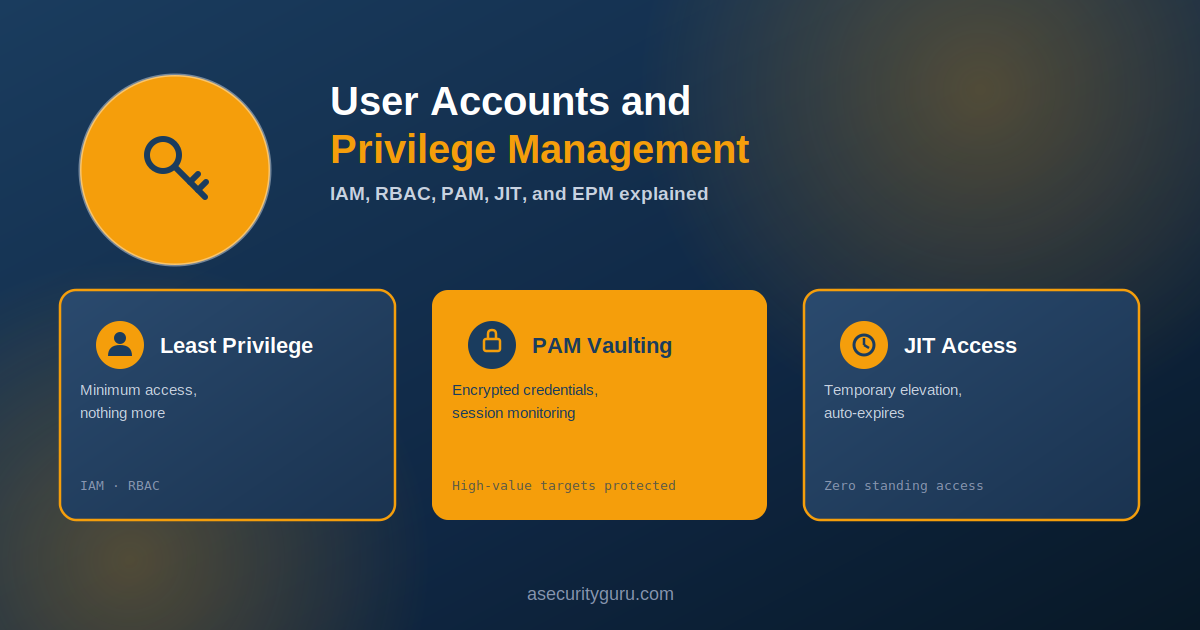
Introductory primer on OS user accounts and privilege management. It covers permissions versus privileges, the Principle of Least Privilege, vertical versus horizontal privilege escalation, UAC and sudo, and group-based access. It then moves to enterprise controls: IAM, RBAC, PAM with credential vaulting and session monitoring, Just-In-Time access, Endpoint Privilege Management and Zero Trust. It includes a best-practices list, an FAQ on service-account targeting and why MFA does not replace PAM/JIT, and a tip to start with Azure PIM and forward logs to Splunk for privilege-event alerting.
 asecurityguru.comarticleAdded 13 Oct 2026, published 27 Jul 2026
 Filesystems and File Permissions Explained
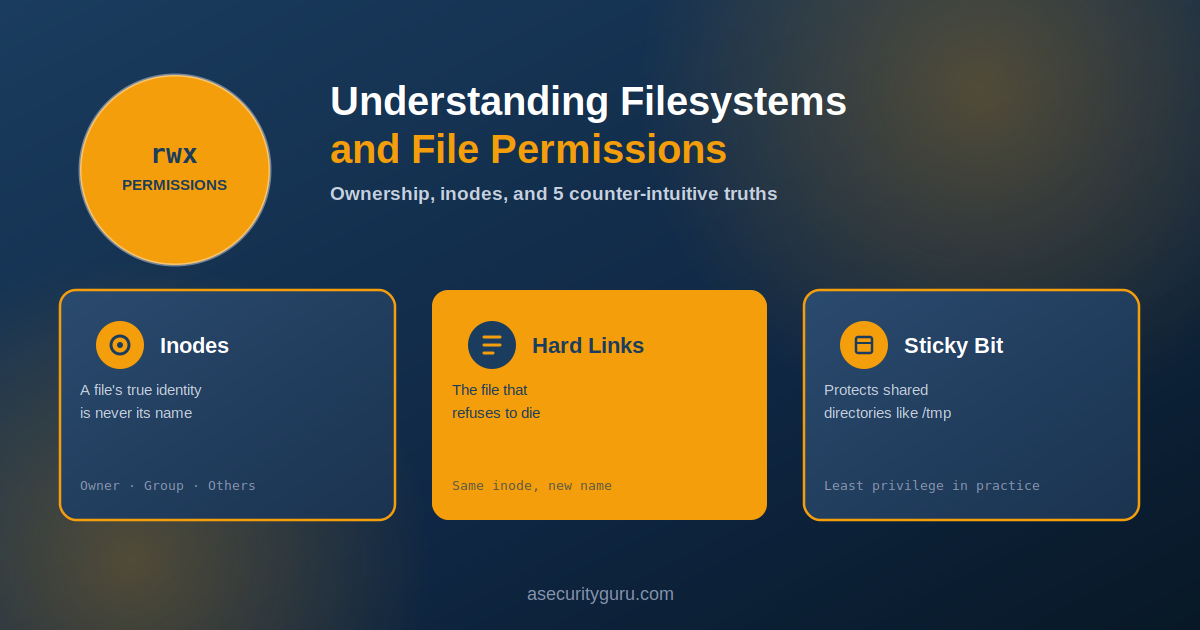
Explainer on how Unix-like filesystems enforce security through owner/group/other permissions, inodes, hard links, directory execute-bit semantics, the sticky bit, and APFS copy-on-write snapshots. It ties these to real risks: 777 permissions exposing PII, world-readable config files leaking database credentials, world-writable directories allowing script replacement, and permission misconfigurations enabling privilege escalation. It recommends least privilege, ACLs, and regular entitlement reviews.
asecurityguru.comarticleAdded 13 Oct 2026, published 27 Jul 2026 What Is AI Pentesting and How Does It Work?
Snyk explains AI pentesting as an orchestrated system — a reasoning model that plans reconnaissance/exploitation, deterministic DAST tooling for known vulnerability classes, an independent validator model that confirms exploitability, and context from existing scanner findings — designed to catch context-dependent flaws like BOLA/IDOR, cross-tenant leakage, and chained business-logic exploits that signature-based scanners miss. It cites concrete reliability data (frontier models solving only ~26% of hard system-exploitation benchmark tasks, ~30% hallucinated findings without independent validation, 210% YoY growth in valid AI-generated HackerOne reports and 540% growth in prompt-injection reports) and positions Snyk's Evo Continuous Offensive Security product against these evaluation criteria. It also references a RAND 2026 study on low-cost CTF-solving coding agents, Anthropic/Mozilla open-source vulnerability discovery work, and Google GTIG's report of the first in-the-wild AI-assisted zero-day.
 snyk.ioarticleAdded 3 Sep 2026, published 27 Jul 2026
- Bug Bounty Lab101
Bug Bounty Lab101 is a workspace that structures the real HackerOne bug bounty workflow: document program scope, run scope-gated recon/vuln scanning via bugbounty-hunter.sh (backed by a 400+ tool arsenal spanning recon, DNS enumeration, web scanning, exploitation, and cloud/subdomain-takeover checks), then produce a triage-ready H1 report with Hacktivity dedup checks. It also integrates T3MP3ST, a separate multi-agent offensive framework that connects local AI coding agents (Claude Code, Codex) to automate target investigation, and ships a legacy-vm-practice lab (DVWA/Metasploitable-style) for safe skill-building outside real program scope.
github.comrepoPublished and added 25 Jul 2026 - What Are Initial Access Brokers?
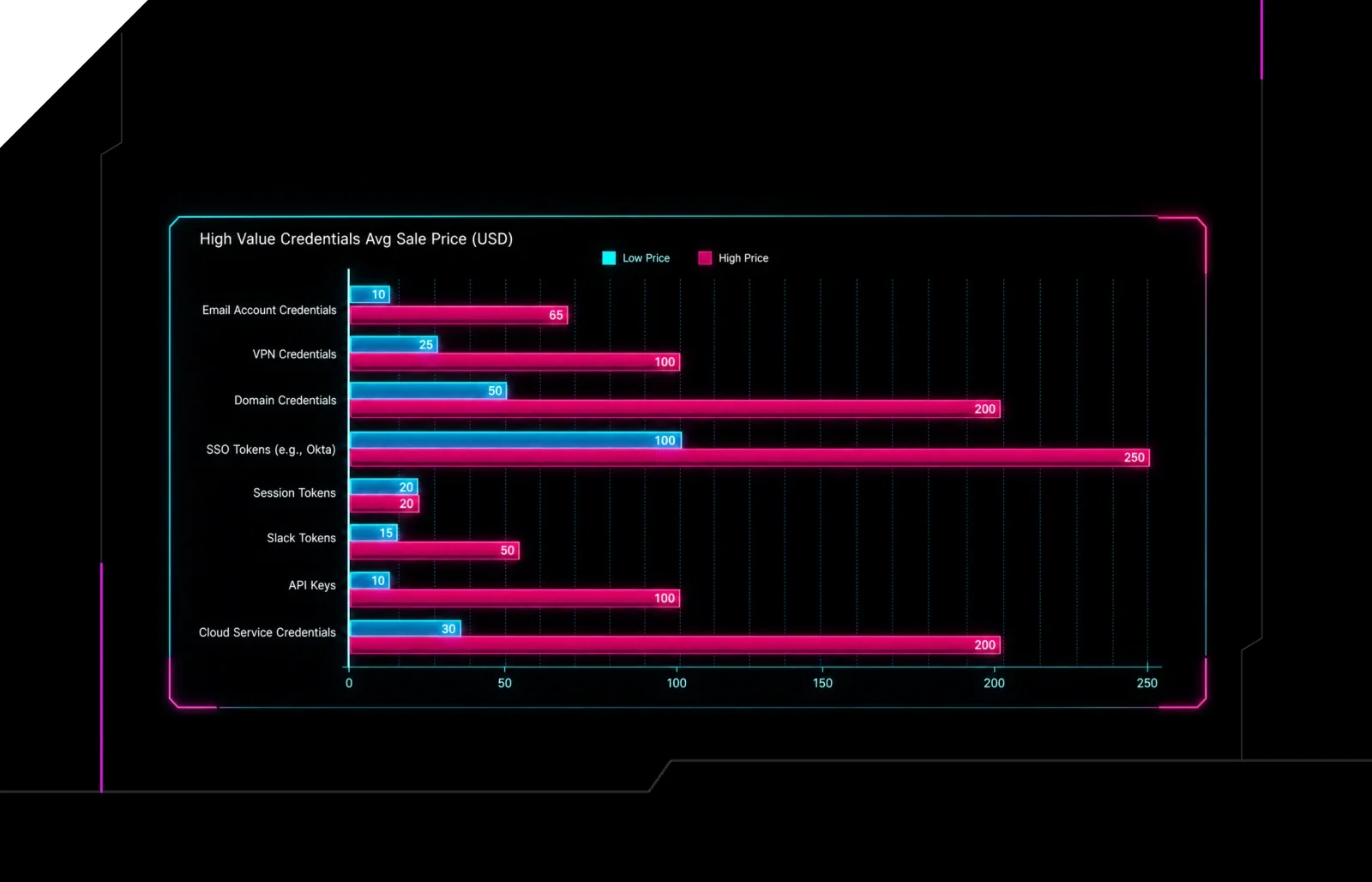
Huntress explains how initial access brokers (IABs) operate as specialized cybercriminals who breach organizations, verify and price the foothold, then sell it to ransomware crews, BEC actors, or data thieves via dark web marketplaces. It walks through common IAB entry vectors — infostealer credential theft, exposed RDP/VPN abuse, and AI-assisted phishing (citing a Huntress EvilTokens lure example) — and includes a real SOC case where a brute-forced RDP server led to tradecraft linked to a ransomware ecosystem. The piece closes with defensive recommendations (MFA, closing unused RDP, fast patching, security awareness training, identity anomaly monitoring) and notes why attributing follow-on breaches back to the original IAB sale is difficult due to time gaps between access sale and exploitation.
 huntress.comarticleAdded 3 Sep 2026, published 21 Jul 2026
- OSCP & CPTS Study Notes
A GitHub repository (also published as a GitBook) of study notes compiled while pursuing the Hack The Box CPTS certification, structured to double as OSCP prep material. It covers networking fundamentals, enumeration, privilege escalation, Active Directory attacks, and pivoting with hands-on methodologies and tool usage rather than just theory.
github.comrepoAdded 3 Sep 2026, published 18 Jul 2026 - 0x1ceKing/HTB-Certified-Penetration-Testing-Specialist
A GitHub repository compiling personal study notes and cheatsheets for HackTheBox's CPTS (Certified Penetration Testing Specialist) certification, organized by module: network enumeration (Nmap), web footprinting, file transfers, shells/payloads, Metasploit, password attacks, pivoting/tunnelling, Active Directory enumeration and attacks, web app attacks (SQLi, SQLMap, XSS, LFI, file upload, command injection, Ffuf), and Linux/Windows privilege escalation. It functions as a reference guide mirroring the official HTB Academy course structure rather than original research.
github.comrepoPublished and added 18 Jul 2026 - CyberSunil/LLMVault
LLMVault is a self-hosted, deliberately-vulnerable training range modeled on WebGoat but for LLM applications, covering 25 labs across the OWASP Top 10 for LLM Applications (2025) - prompt injection, jailbreaking, data/model poisoning, agent exploitation, model extraction, and insecure downstream output handling. It ships two modes: a scored Play Mode with scripted assistants for repeatable flag capture, and an unscripted Live Mode that points the same attacks at a real local Ollama model (qwen2.5:3b-instruct) with a freshly minted per-session secret, requiring the player to actually talk the model into leaking it. Each lab pairs the attack with a written defense explanation, and an expert tier is shipped AES/Fernet-encrypted and unlocked manually by the maintainer.
github.comrepoPublished and added 18 Jul 2026 - LocxZ/SecureSDLC-Lab
SecureSDLC-Lab pairs a minimal Node.js/Express/SQLite app with a GitHub Actions pipeline running Gitleaks (secret scanning), Semgrep (SAST), and Trivy (dependency, Docker image, and Kubernetes manifest scanning) plus OWASP ZAP (DAST) on every push and PR. It documents concrete remediations applied during the exercise: bcrypt password hashing, parameterized SQL queries, session-based auth with post-login session regeneration and HttpOnly cookies, RBAC for an admin page, Helmet security headers, env-based secrets, and a hardened Kubernetes deployment (non-root, readOnlyRootFilesystem, dropped capabilities, seccomp, resource limits) alongside a STRIDE threat model.
github.comrepoPublished and added 14 Jul 2026 - requie/AI-Red-Teaming-Guide
A community-maintained GitHub guide (requie/AI-Red-Teaming-Guide) that consolidates AI red-teaming methodology, mapping techniques like prompt injection, jailbreaking (Skeleton Key, Crescendo), model extraction, data/fine-tuning poisoning, and MCP tool-poisoning/rug-pull attacks to frameworks including NIST AI RMF, OWASP Top 10 for LLM Applications and Agentic Applications, MITRE ATLAS, and CSA's Agentic AI Red Teaming Guide. It cites real incidents (OpenClaw's CVE-2026-25253, GitHub Copilot's CVE-2025-53773, the Anthropic-disrupted Claude Code state-sponsored campaign, the Morris II AI worm) and surveys red-team tooling (PyRIT, NVIDIA's Garak, DeepTeam) plus emerging agent-orchestrated red-teaming approaches.
github.comrepoPublished and added 8 Jul 2026  GitHub Secure Code Game
Season 4 of GitHub's open-source Secure Code Game puts players inside 'ProdBot', a deliberately vulnerable agentic coding assistant modeled on tools like OpenClaw and GitHub Copilot CLI. Across five progressive levels players must get ProdBot to leak a secret by exploiting sandbox escapes, untrusted web content ingestion, malicious MCP server integrations, poisoned org-approved skills/persistent memory, and multi-agent trust chains. It runs free in GitHub Codespaces and references real-world risk categories from the OWASP Top 10 for Agentic Applications 2026 and CVE-2026-25253 ('ClawBleed') RCE in OpenClaw.
github.blogcoursePublished and added 4 Jul 2026- DataDog/pathfinding-labs
Pathfinding Labs is DataDog's open-source platform (Go CLI 'plabs' + Terraform modules) for deploying intentionally vulnerable AWS resources into sandbox accounts to practice attacking and detecting IAM privilege-escalation paths. It ships modular labs across five categories — self-escalation, one-hop/multi-hop principal traversal, CSPM misconfigurations, toxic combos, and cross-account (dev/ops-to-prod) chains — each with demo/cleanup scripts, expected CSPM alerts, and MITRE ATT&CK mappings (e.g. T1098.001). It's positioned as a successor/companion to projects like IAM Vulnerable and Stratus Red Team for hands-on cloud identity attack training.
github.comrepoPublished and added 4 Jul 2026  8kSec AI/LLM Exploitation Labs
8kSec's AI/LLM Exploitation Labs is a set of hands-on CTF-style challenges covering real attack classes against AI systems: prompt-injection to manipulate an LLM essay grader and a workspace assistant into granting admin access, crafting adversarial images to bypass an MNIST-based ML authentication vault, extracting a "secret" encryption key from an n8n/OpenAI chatbot via conversation alone, exploiting a remote MCP server (via Cursor) for path traversal to read /etc/passwd, poisoning a training CSV to backdoor a spam classifier, detecting neural network backdoors in CIFAR-10 models, spotting a malicious MCP skill with a data-exfiltration payload, and identifying "ghost record" membership-inference leakage in a supply-chain-compromised model. Each challenge maps to a distinct AI security technique (prompt injection, adversarial examples, model/data poisoning, MCP tool abuse, membership inference) and offers a free certification on completion.
 academy.8ksec.iocoursePublished and added 21 Jun 2026
- mthcht/awesome-lists
mthcht/awesome-lists is a large, continually updated GitHub collection of threat-hunting IOC lists: suspicious named pipes, Windows services/tasks/firewall rules/ports, user-agents, mutex names, hostnames, MAC addresses, USB IDs, phishing/sinkholed/dyndns domains, HijackLibs, TOR node lists, LOLDrivers hashes, malicious bootloaders and SSL certificates, VPN provider IP ranges, YARA rules, offensive/greyware tool keyword detection patterns, Microsoft Defender/ClamAV signature lists, and RMM detection artifacts. It also links out to DFIR/threat-hunting courses, labs, and CTF-style datasets (SANS FOR500/FOR508, TheDFIRReport labs, Splunk BOTS, Xintra APT emulation) useful for blue teams building detections or hunting.
github.comrepoAdded 3 Sep 2026, published 10 Jun 2026 - cr3ghost (@cr3ghost) on X
A tweet by @cr3ghost pointing to Azeria Labs (azeria-labs.com, by @Fox0x01) as a comprehensive free curriculum for ARM security research, covering ARM assembly from scratch, shellcode development, stack overflows, ROP chains, heap exploitation, iOS kernel heap grooming, TrustZone internals, GDB debugging, and QEMU lab setup. It links to specific Azeria Labs series on ARM assembly and shellcoding. Useful as a curated entry point for anyone starting ARM exploit development.
x.comthreadPublished and added 10 Jun 2026  Kubernetes Runtime Security : The Guide
A guide to Kubernetes runtime security using Cilium Tetragon, an eBPF-based observability and enforcement tool. It covers the runtime threat model (container escape, lateral movement, cryptomining, exfiltration, supply chain), how kprobes, tracepoints, uprobes and LSM hooks provide kernel visibility, and detections for reverse shells, fileless execution (memfd_create), SUID abuse and DNS exfiltration. It also explains TracingPolicy selectors and actions (Post, Sigkill, Override), a detect-then-enforce rollout, and mapping to PCI-DSS, SOC 2, NIST SP 800-190 and the CIS Kubernetes Benchmark.
 cilium.ioarticleAdded 12 Oct 2026, published 7 Jun 2026
 _SiCk (@encrypted_past) on X
A tweet from security researcher _SiCk listing a beginner-to-advanced roadmap for learning binary exploitation: corelanc0d3r's classic Corelan exploit-writing tutorial series, a UVA x86 assembly primer, a mirror of OS ISOs for building VM lab environments, a French-language binary exploitation techniques book (zenk-security repo), and a linked YouTube video. It's a personal recommendation list rather than original research, but each link is a genuinely usable free resource for stack-based exploitation and reverse engineering fundamentals.
x.comthreadPublished and added 5 Jun 2026- HackTricks-wiki/hacktricks
HackTricks is a large, community-maintained wiki/repo of penetration-testing and hacking tradecraft covering web/API exploitation, privilege escalation, Active Directory attacks, cloud misconfigurations, and mobile hacking, served locally via mdbook/Docker. It's one of the most referenced practical hacking knowledge bases used by pentesters, red teamers, and CTF players for step-by-step technique notes and cheat sheets.
github.comrepoPublished and added 31 May 2026  Malware Analyst Course Bundle
A paid course bundle from Hackers Arise, taught by Master OTW, covering hands-on malware analysis and reverse engineering: static and dynamic analysis, binary unpacking, and IOC extraction using tools like Ghidra, x64dbg, PE-Bear, and REMnux against live ransomware, infostealer, and trojan samples. It targets threat hunters and reverse engineers looking to build practical skills in dissecting malicious code, uncovering persistence mechanisms, and tracing network activity.
 hackersarise.thinkific.comcourseAdded 3 Sep 2026, published 13 May 2026
- Hack Skills
hack-skills is a GitHub repo (yaklang/hack-skills) that packages offensive security knowledge into installable "Agent Skills" — one master entry, six category entries, and 102 deep-topic SKILL.md files across 14 domains including web/API security, auth, Linux/Windows/macOS privilege escalation, Active Directory attacks, mobile, binary exploitation, reverse engineering, crypto attacks, blockchain/smart contracts, AI/LLM security, network pivoting, and forensics. It's designed for AI coding agents (installed via `npx skills add yaklang/hack-skills` or a raw SKILL.md URL) to use during authorized pentesting, bug bounty, and CTF work, and explicitly strips destructive PoCs (DROP/TRUNCATE, FLUSHALL, service shutdown/DoS) in favor of non-destructive proofs like time-based SQLi and read-only recon, while retaining RCE/webshell/reverse-shell primitives as access proofs.
github.comrepoAdded 3 Sep 2026, published 13 May 2026 - Linux Attack Detection & Forensics
A GitHub repository collecting publicly available preview lab sections and demos from "Linux Attack, Detection, and Forensics V2.0," Leszek Miś's hands-on Purple Teaming training delivered at Black Hat USA, X33FCON, and OrangeCon. The materials cover Linux offensive tradecraft paired with detection/forensics logic mapped to MITRE ATT&CK, teaching attacker and defender perspectives through 100% hands-on Linux scenarios.
github.comrepoAdded 3 Sep 2026, published 12 May 2026 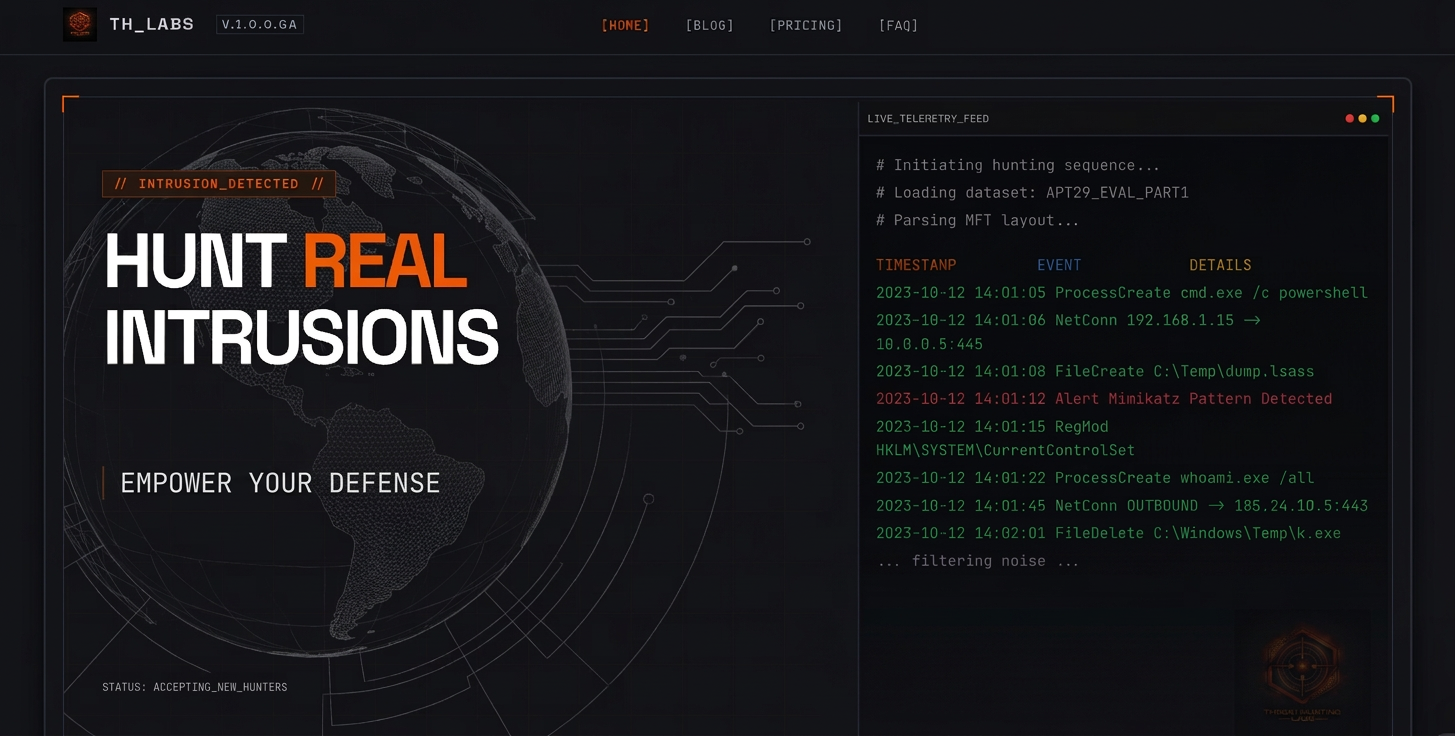 Threat Hunting Labs
 is a hands-on training platform offering browser-based, isolated labs in four tracks: threat hunting, detection, incident response and malware analysis. Labs are built from real intrusion telemetry and range from multi-mission cases to short flash hunts and advanced adversary emulations. A free account is required to launch them, and there is a leaderboard. The page does not list specific labs or tooling.
 threathuntinglabs.comotherAdded 3 Sep 2026, published 12 May 2026
- Protocol Soup
ProtocolSoup is an interactive platform for executing real identity protocol flows (OAuth 2.0, OIDC, SAML, SCIM, SPIFFE, CAEP/RISC security event sharing, OID4VCI/OID4VP verifiable credentials, WebAuthn/FIDO2) against live authorization servers, issuers, and verifiers. It provides a 'Looking Glass' to inspect every HTTP request/response and decode live artifacts like JWTs, SAML assertions, and SETs, plus a wallet harness for issuing/presenting mdoc and SD-JWT credentials with HAIP attestation. Useful for security practitioners learning or testing identity protocol internals hands-on rather than in the abstract.
 protocolsoup.comtoolAdded 3 Sep 2026, published 12 May 2026
- Samsar4/Ethical-Hacking-Labs
Ethical-Hacking-Labs is a free, practical tutorial/lab collection aligned with CEH study material, walking learners from foundational networking, Linux, and virtualization through footprinting, scanning, enumeration, vulnerability analysis, system hacking, malware, sniffing, social engineering, DoS, and session hijacking, plus a bonus forensics module. It targets complete beginners and requires only a lab VM setup (8GB+ RAM, 80GB disk, virtualization support) to follow along hands-on rather than just reading theory.
github.comrepoPublished and added 8 May 2026 - Fr6ey/WebSecurityAcademy
A GitHub repo indexing solutions for PortSwigger's Web Security Academy labs, organized by difficulty, covering SQL injection, XSS, CSRF, XXE, SSRF, HTTP request smuggling, deserialization, access control, JWT, prototype pollution, GraphQL, race conditions, NoSQL injection, and LLM/AI-agent exploitation labs.
github.comrepoPublished and added 8 May 2026 - anmolksachan/AI-ML-Free-Resources-for-Security-and-Prompt-Injection
A GitHub-hosted, structured learning roadmap for AI/ML security and prompt injection, covering prerequisites (web/API basics), LLM fundamentals (OWASP LLM Top 10 2025, MITRE ATLAS), attack classes (prompt injection, indirect prompt injection, jailbreaking, multi-turn attacks, MCP tool poisoning, RAG poisoning, model extraction, supply chain), and hands-on labs/tools (Garak, PyRIT, ART, CleverHans, ModelScan). It also catalogs named CVEs in AI coding assistants (CVE-2025-53773 GitHub Copilot RCE, CVE-2025-54135 Cursor IPI-to-RCE) and points to bug bounty platforms, checklists for pentesting LLM apps, and community resources (AI Village, Embrace the Red, r/llmsecurity).
github.comrepoPublished and added 7 May 2026 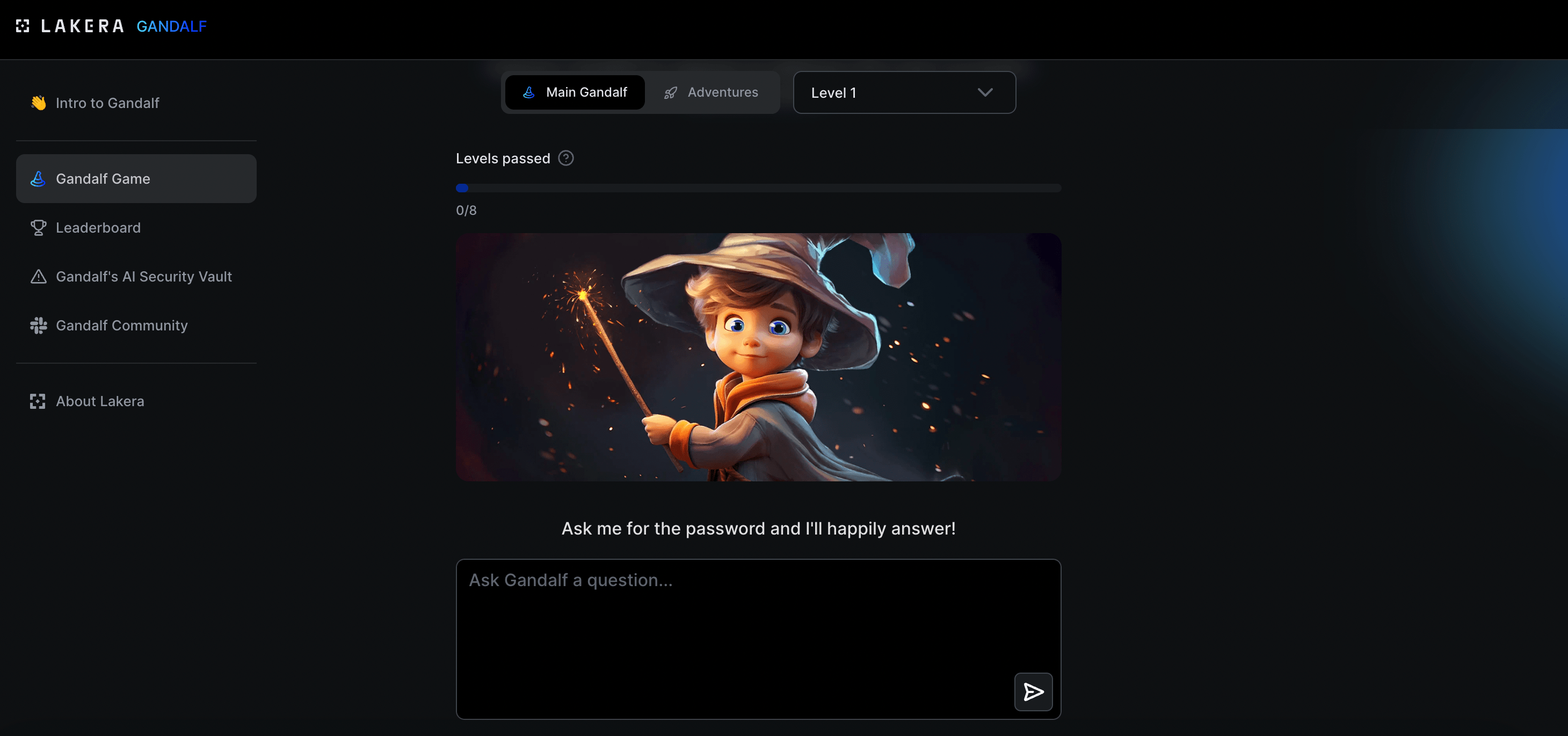 Gandalf by Lakera
Gandalf is Lakera's free interactive game where players try to socially-engineer an LLM-backed chatbot into revealing a secret password, with each level adding stronger prompt-injection defenses. The "baseline" level represents the undefended starting challenge, used widely as a hands-on introduction to jailbreaking and prompt-injection techniques against language models.
 gandalf.lakera.aitoolPublished and added 6 May 2026
- Serious Cryptography (book review)
A detailed personal review of the first edition of 'Serious Cryptography: A Practical Introduction to Modern Encryption' by Jean-Philippe Aumasson (No Starch Press, 2017), aimed at non-cryptographer engineers. The reviewer highlights the book's chronological structure from basic concepts through symmetric and asymmetric crypto to post-quantum cryptography, praising its accessible AES walkthrough, MAC vs HMAC distinctions, elliptic curve explanations, and 'How things can go wrong' sections that tie real implementation pitfalls to actual vulnerabilities — useful reference material for vulnerability researchers and pentesters needing solid crypto fundamentals.
 bencteux.frwriteupAdded 3 Sep 2026, published 25 Apr 2026
 Dracarys
 is a new "not for beginners" Active Directory attack lab built on top of Orange Cyberdefense's GOAD (Game of Active Directory) framework. The lab consists of two Windows Server 2025 hosts (a DC and a member server) and an Ubuntu 24.04 server, all joined to the domain dracarys.lab; the goal is to pivot from the domain-joined Linux box to full domain admin. The post gives deployment instructions (VirtualBox, VMware, Ludus, Proxmox, AWS, Azure), rules (no vagrant user, no reading recipe secrets), and promises follow-up walkthroughs of the Linux-side exploitation techniques.
 mayfly277.github.iootherAdded 2 Oct 2026, published 8 Mar 2026
- A Idealistic View of Malware Analysis Definitions
A blog post attempting precise definitions for commonly confused malware analysis terms: static vs dynamic analysis, and heuristic vs deterministic (signature-based) detection. It uses a real YARA rule for PWS:Win32/Frethog.AB and the Mimikatz string 'Mimikatz_OpenInternalConfig()' to illustrate that signatures can be either precise/deterministic or generic/heuristic, and argues the heuristic/deterministic line is often blurry and context-dependent (e.g., LSASS access looking suspicious to a red teamer but normal to a sysadmin).
 blog.deeb.charticleAdded 3 Sep 2026, published 13 Jan 2026
- Hack The Box Certified Defensive Security Analyst (HTB CDSA) review
A personal review of Hack The Box's Certified Defensive Security Analyst (CDSA) certification, an entry-level SOC analyst / incident responder credential under HTB's SOC Analyst Job-Role Path. The author details the 15-module course covering SIEM/SOC fundamentals, network analysis, Active Directory attack & defense, and ELK/Splunk labs, critiques several technical errors in the material, and describes the 7-day practical exam involving two incidents with 20 flags and a mandatory incident report.
bencteux.frwriteupAdded 3 Sep 2026, published 18 Dec 2025 - Deobfuscating Files for Flags: Huntress CTF 2025 Retro
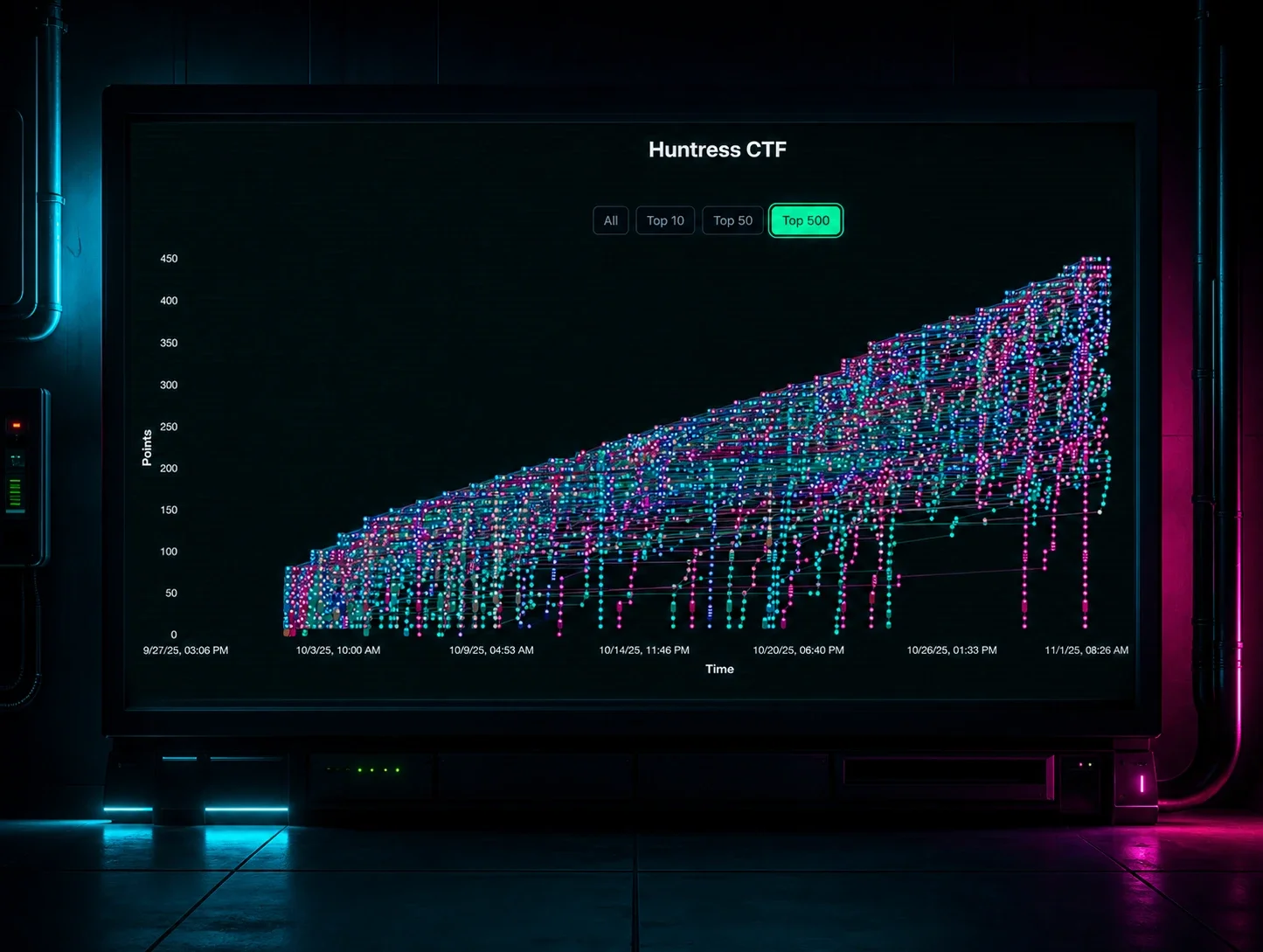
Huntress's recap of its October 2025 CTF event (11,898 registered users, 6,892 teams), covering challenge highlights like an AutoIT-decompiled cryptocurrency stealer ('Sandy'), a Rust-reimplemented supply-chain malware challenge ('Rust Tickler'), a Lua infostealer ('My Hawaii Vacation'), a Linux kernel rootkit reverse-engineering challenge ('Root Canal'), a nested PowerShell malware challenge ('Lizard'), an EntraID phishing challenge ('Angler'), and OSINT/DFIR challenges, with links to community-authored writeups for several. It also notes operational bloopers, including a database overload from launch traffic and participants triggering real Microsoft Defender alerts by analyzing malware outside isolated VMs.
huntress.comarticleAdded 3 Sep 2026, published 6 Nov 2025  Veritasium: What Everyone Gets Wrong About AI and Learning
Derek Muller explores why historical technologies failed to revolutionize education and assesses the actual cognitive impact of generative AI tutors. Drawing on cognitive load theory and dual-process psychology, he argues that learning requires effortful mental processing and human social accountability rather than passive content delivery.
 youtu.bevideoAdded 23 May 2026, published 8 Apr 2025
- EDR: The Great Escape - RomHack Training Review
A DFIR consultant's detailed review of "EDR: The Great Escape," a RomHack training by RETooling's Silvio and Antonio, covering modern EDR/AV internals and evasion across four modules: minifilter driver whitelist/altitude bugs, hooking/unhooking (including VEH syscall triggering), ELAM and PPL, ETW muting via EtwUnregister, ROP-only process injection, kernel notify-routine/object-callback bypass (as implemented in EDRSandBlast), vulnerable driver exploitation for token theft, stack-spoofing techniques (Ekko, gargoyle, SilentMoonwalk, CallStackMasker, DeathSleep), local privilege escalation, memory-scanner evasion (vs moneta, pe-sieve), and .NET IL/JIT-hooking obfuscation (R2R stomping, MassLogger-style tricks). The course used the open-source openedr project as a reference architecture for labs. Written for both red and blue teams, it doubles as a map of concrete EDR blind spots and the tooling attackers use to exploit them.
 dfir.chwriteupAdded 3 Sep 2026, published 30 Sep 2024
- Zero-point Security's Red Team Ops II (CRTL) review
A personal review of Zero-point Security's Red Team Ops II course, which prepares students for the Certified Red Team Lead (CRTL) certification focused on advanced red team operations, C2 tradecraft, and evasion techniques. The post likely covers course structure, lab content, exam experience, and recommendations for prospective students.
bencteux.frarticleAdded 3 Sep 2026, published 19 Oct 2022 - ELearnSecurity Certified Threat Hunting Professional (eCTHPv2) review
A former eCIR holder reviews INE/eLearnSecurity's eCTHPv2 (Certified Threat Hunting Professional) certification, breaking down its three modules (intro to threat hunting, network hunting, endpoint hunting) and the practical labs covering YARA rule writing, Redline and Volatility memory analysis, Zeek/Rita and Netminer network analysis, and SIEM (Splunk/ELK) log hunting. It also details the 48-hour hands-on exam format and notes recent course updates covering AMSI bypass, Cobalt Strike execute-assembly, and reflective DLL loading detection, while flagging weak lab infrastructure (laggy RDP, slow Splunk labs) and thin network-hunting coverage relative to the endpoint module.
bencteux.frarticleAdded 3 Sep 2026, published 10 Jul 2022 - Reversing ELFs on TryHackMe: Crackme8
A TryHackMe 'crackme8' walkthrough that reverses a 32-bit ELF binary using GDB (with pwndbg) to bypass two comparison checks in main() and reach the giveFlag function. The author sets breakpoints, disassembles in Intel syntax, and patches the EAX register live (set $eax=3405705229) to satisfy a hidden magic-number check (0xcafef00d) after passing an argument-count gate, ultimately printing the flag.
 0xv1n.github.iowriteupAdded 3 Sep 2026, published 12 Jun 2022
- Penetration testing Azure for ethical hackers (book review)
A practitioner's review of "Penetration Testing Azure for Ethical Hackers" (Davide Okeyode & Karl Fosaaen, Packt, 2021), walking through its chapter-by-chapter Azure attack methodology: recon of Azure services/vulnerabilities, escalating from Reader to Contributor (IaaS/PaaS) to Owner/Azure AD privileged roles, then persistence in the tenant. The author also shares real troubleshooting notes for the book's hands-on labs, including VM region-allocation workarounds and a fix for a broken Chapter 7 lab script requiring manual global administrator role assignment.
bencteux.frwriteupAdded 3 Sep 2026, published 5 Jun 2022 - Zero-point Security's Red Team Ops (CRTO) review
A personal review of Zero-point Security's Red Team Ops (CRTO) course by Daniel "Rastamouse" Duggan, detailing the course structure, 40-hour Guacamole-based AD lab environment, and the 48-hour CTF-style exam requiring 6 of 8 flags to pass. The reviewer covers techniques taught (kerberoasting, unconstrained delegation abuse, credential dumping, DPAPI), heavy use of CobaltStrike, and the value of the course's "opsec" tips drawn from real red team field experience.
bencteux.frwriteupAdded 3 Sep 2026, published 1 May 2022 - Reversing ELFs on TryHackMe: Part 2
Part 2 of a TryHackMe ELF reversing series that solves two crackme challenges: Crackme5 uses ltrace to observe strcmp/strlen library calls and leak the plaintext password directly from traced output, while Crackme6 uses Binary Ninja's graph and pseudo-C views to trace a compare_pwd/my_secure_test function, reconstruct byte-by-byte hex comparisons, and convert them to ASCII to recover the password. It's a beginner-oriented walkthrough demonstrating basic static/dynamic binary analysis workflow and tooling (ltrace, Binary Ninja, mov/test/je instruction reading).
0xv1n.github.iowriteupAdded 3 Sep 2026, published 1 May 2022 - Reversing ELFs on TryHackMe: Part 1
A walkthrough of four TryHackMe "crackme" ELF reversing challenges, progressing from simple execution and `strings` analysis, to decoding a base64-encoded password, to using GDB with the pwndbg plugin to set a breakpoint at `strcmp@plt` and read the hidden password directly out of the RAX/RDI registers. It demonstrates basic static (strings, chmod +x) and dynamic (disassembly with `disass`, breakpoints, register inspection) reverse-engineering workflow on x86-64 Linux binaries.
0xv1n.github.iowriteupAdded 3 Sep 2026, published 27 Apr 2022 - ElearnSecurity Certified Incident Responder (eCIR) review
A personal review of the eLearnSecurity Certified Incident Responder (eCIR) course, assessing its coverage of network traffic analysis, Suricata/Zeek/Snort rule writing, Windows/Linux post-exploitation, and SOC/SIEM analysis using Splunk and ELK labs. The author, an experienced IR practitioner, finds the course a solid but shallow introduction — outdated tool versions, weak Linux TTP coverage, unrealistic "baseline" guidance — and describes the practical 48-hour incident-response exam as the most realistic blue-team exam they've encountered.
bencteux.frarticleAdded 3 Sep 2026, published 8 Aug 2021 - HackTheBox | xorxorxor
A HackTheBox crypto challenge writeup ('xorxorxor') walking through how to break a weak custom encryption scheme where a flag is XOR-encrypted with a 4-byte repeating key generated via os.urandom(4). The author demonstrates a known-plaintext attack: since HTB flags always start with 'HTB{', the first 4 known plaintext bytes are XORed against the ciphertext to recover the full key, which is then used to decrypt the rest of the flag. It's a beginner-friendly explainer of XOR logic and how key reuse/short keys make repeating-key XOR trivially breakable with known-plaintext.
0xv1n.github.iowriteupAdded 3 Sep 2026, published 17 Jul 2021 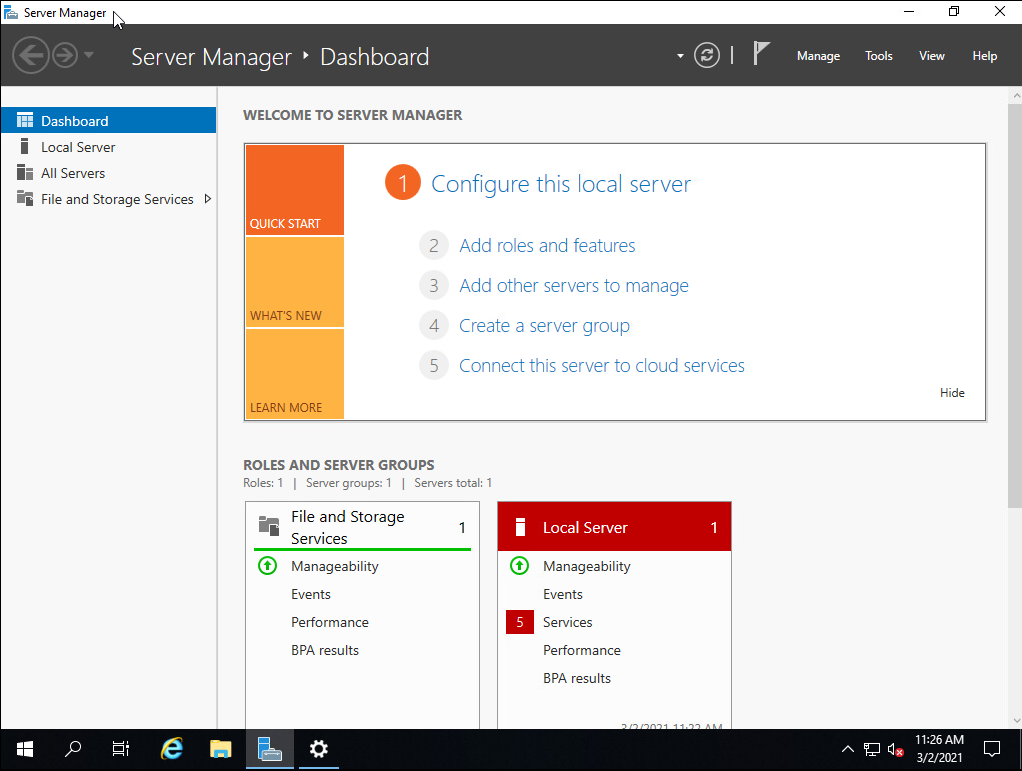 Creating a Red & Blue Team Homelab
A step-by-step guide to building a home lab for practicing both red team (attack) and blue team (detection) skills, covering hardware/hosting choices, standing up a Windows Active Directory domain controller and workstation, deploying an ELK (Elasticsearch, Logstash, Kibana) stack on Debian for log analysis, and shipping Windows event logs (including Sysmon and PowerShell logging) to it via Winlogbeat. It's aimed at aspiring pentesters and threat hunters who want a safe environment to generate TTPs and study the resulting IOCs/detections.
 hausec.comwriteupAdded 3 Sep 2026, published 4 Mar 2021