Skip to content

29 results for β€œPerplexity”

What you seeeverything
arxiv.orgpaper🧠 AI

Multi-Token Prediction Done Right

Soft Multi-Token Prediction (Soft-MTP) is a one-line change to multi-token prediction (MTP) pre-training. The authors show the MTP cross-entropy gradient splits exactly into a KL self-distillation term and a noisy residual, and a straight-through "KL gradient-recovery trick" keeps only the KL term. From 167M to 1.2B parameters it gives lower NTP perplexity, faster speculative decoding and higher zero-shot accuracy than standard MTP, with no added parameters or overhead.

LLMTransformer
DeepSeekMeta

research, trainingΒ· Added 30 Oct 2026, published 28 Oct 2026

securityweek.comarticleπŸ›‘οΈ Security

PHP2Shell Exploitation Moves From Probes to Working Shells

PHP2Shell exploitation (CVE-2026-109618, CVE-2026-109619) reached working shells on 24 October 2026, when Perplexity researcher Adel Karimi's honeypots (PHP 8.4.26, Apache mod_php, single worker) logged 35 shells across three servers. Attackers used a four-stage HTTP chain: memory exhaustion, memory leak, then shell command execution, matching a public PoC. No second-stage payload was seen, and CISA had not added the flaws to KEV as of 26 October.

PHPApache
CVE-2026-109618CVE-2026-109619PHP2Shell+4

Threat Intel, AppSecΒ· Published and added 26 Oct 2026

arxiv.orgpaper🧠 AI

MPQ: A Message-Passing View of Post-Training Quantization

MPQ (Message-Passing Quantization) is a post-training quantization method that treats row-wise PTQ as posterior inference over discrete codebooks. It keeps soft posteriors across weight blocks using vector approximate message passing, then refines a hard-decision initialization with exact block coordinate descent. Tested at 2-bit lattice and 3- and 4-bit scalar quantization on Llama, Qwen and Mistral models, it improves perplexity and zero-shot accuracy over GPTQ-style baselines.

GPTQLDLQvector approximate message passing+5
arXiv

research, inferenceΒ· Added 26 Oct 2026, published 23 Oct 2026

arxiv.orgpaper🧠 AI

BeNice! Closing Looping's Inference-Memory Gap via KV-Sharing

BeNice! is a post-training method for looped language models that broadcasts the final recurrence's KV-cache into the first recurrence, so one cache can serve all recurrences. It follows a first stage that uses stochastic depth in pretraining to induce contractive residual dynamics. It matches standard finetuning's unshared validation perplexity and composes with multi-latent attention, Kimi delta attention and fp8, mxfp8 and nvfp4 cache quantization. In simulated low-memory long-context inference it raises cache hit rates by up to 31.4% and throughput by up to 23.6%, and cuts p90 time-to-first-token by up to 83.6%.

Transformermulti-latent attentionKimi delta attention+3
BeNice!arXiv

research, inference, trainingΒ· Added 24 Oct 2026, published 22 Oct 2026

arxiv.orgpaper🧠 AI

Every Part Has Its Role: Part-of-Speech Effects in LLM Post-Training

Every Part Has Its Role studies concept augmentation in LLM post-training, where a target word is replaced by related alternatives in training sentences. It extends prior work from nouns to verbs and adjectives. Concept augmentation improves perplexity most consistently on news regardless of part of speech, while verbs give the most reliable downstream gains. CKA and linear probing show the largest gains do not match the largest representation changes.

LLM
arXiv

research, trainingΒ· Added 23 Oct 2026, published 21 Oct 2026

x.comthread🧠 AI

🚨 AI News | TestingCatalog (@testingcatalog) on X

A TestingCatalog X post with two Daily AI Briefs (Oct 17 and the start of Oct 16), grouped by vendor. Oct 17 items include GPT-6 Astra Pro upgrades in ChatGPT, Codex context reuse and caching, Gemini 4 Argon in AI Studio Build, the open-weight MIT-licensed DeepSeek-V4.1-Flash-1017, Claude Code Review going GA, Perplexity's open Decider v1.2 models (27B and 4B), NVIDIA's 4B looped Nemotron Labs Dory 1.0, Reflection's Apache-2.0 Beam, Cursor cloud-agent canvases and Tencent's Hy Memory 2.0. Oct 16 begins with Meta's open-weight Muse Spark Open, an 816B-total, 42B-active MoE with a 1M-token context. It gives a quick snapshot of the week's open-weight and coding-agent releases.

ChatGPTCodexGemini+7
TestingCatalogOpenAIGPT-6 Astra+15

models, coding-agentsΒ· Added 18 Oct 2026, published 17 Oct 2026

latent.spacearticle🧠 AI

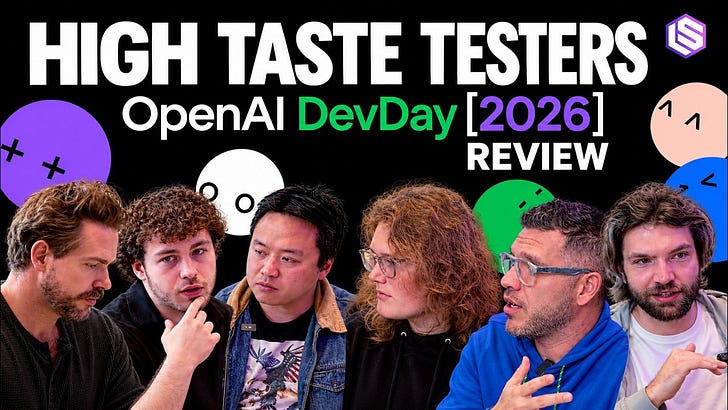
[AINews] High Taste Testers Ep. 1

AINews issue for 10/15–10/16/2026, covering Twitter and Reddit. It covers the open-weights releases Meta's Muse Spark Open (816B/42B-active MoE, AA Intelligence Index 39, custom license) and Reflection Beam 1.0 (501B/23B-active, Apache 2.0), plus NVIDIA Nemotron 3.5, StepFun Step 5 Preview and FLUX 3 Image Klein. It also covers Gemini 4 Argon, Haiku 5.5 pricing, "decision model" classifiers (Liquid d1-ultra, Perplexity pplx-decider), TPUv7/Vera Rubin/MI355X serving benchmarks, interpretability claims (Qwen3-32B neuron audit), agent research, eval-integrity and safety disclosures, and China export-control proposals. The page also announces a pilot video show, High Taste Testers Ep. 1.

Mixture of ExpertsvLLMSGLang+15
Latent SpaceMetaMuse+44

models, inference, evalsΒ· Published and added 17 Oct 2026

arxiv.orgpaper🧠 AI

FuTransformer: FP8 prefill and INT4 decode for Llama-style inference on Hopper

FuTransformer is a CUDA implementation of a Llama-style Transformer block for NVIDIA Hopper GPUs. It uses FP8 prefill with fused GEMM epilogues and INT4 weights plus an INT4 KV-cache copy for decode, with a block-diagonal Hadamard transform to cut cache quantization error. On one H100, prefill is up to 1.48x faster than compiled PyTorch FP8, and INT4 decode is 1.3-2.4x faster than the faster PyTorch baseline. Llama-3.1-8B decode takes 2.8 ms per step at batch one, versus 8.1 ms for compiled transformers. WikiText-2 perplexity rises from 6.24 to 7.23 with round-to-nearest INT4 weights, or 6.99 with GPTQ.

CUDAPyTorchTransformer+2
NVIDIACODALlama-3.1-8B+5

inference, researchΒ· Added 20 Oct 2026, published 16 Oct 2026

latent.spacearticle🧠 AI

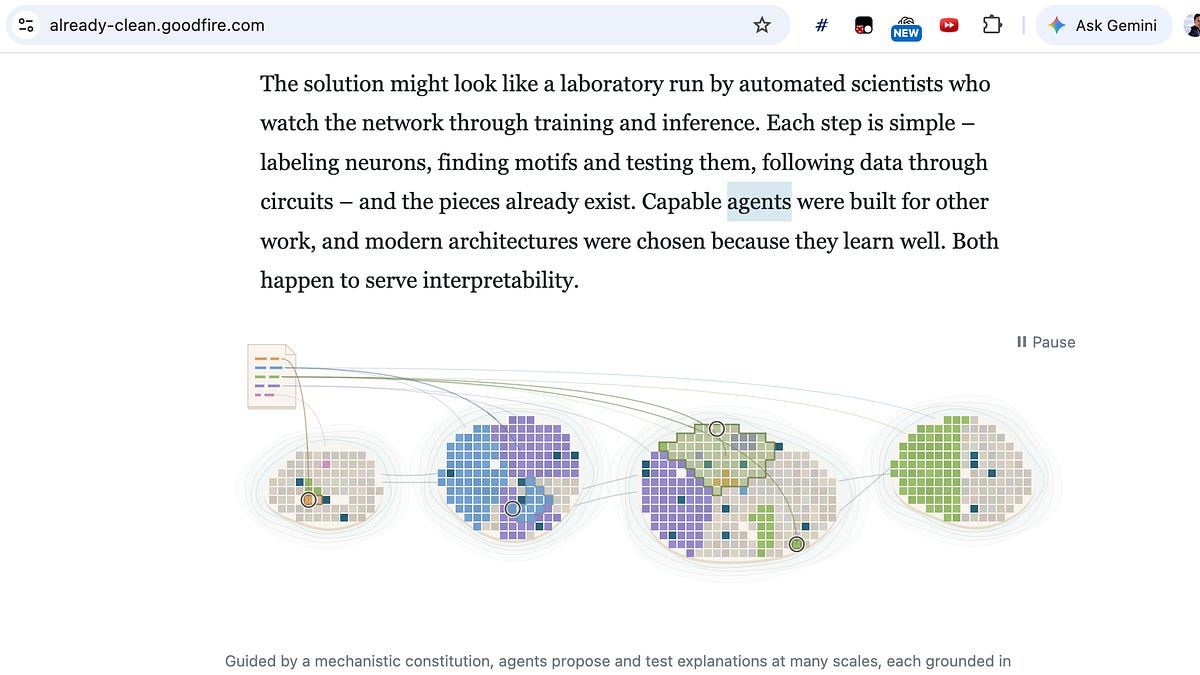
[AINews] Agents disprove Polysemanticity; greatly improve Interpretability & Alignment

The 10/14–10/15/2026 AINews issue. Its lead story is Goodfire's Nick Cammarata essay "Neural Networks Are Already Clean", which argues agentic analysis resolves many known cases of polysemanticity and superposition. Neel Nanda, Leo Gao and Jake Mendel push back. It also covers Meta's Muse Spark Open (816B total / 42B active MoE, 1M context, custom license, Artificial Analysis index 39, vLLM day-0 support and quantizations), Nemotron 3.5, MAI-Base-2 and Gemini 4 Argon evals. Further items cover Vals' refund-agent and MiMo task-leakage findings, TPUv7 and Vera Rubin inference benchmarks, Perplexity's SPACE sandbox, RL training systems (TRL tree packing, bitwise-consistent vLLM RL) and Sakana's Agentic Scientist.

Mixture of ExpertsvLLMllama.cpp+10
GoodfireNick CammarataNeel Nanda+44

ai-safety, models, researchΒ· Published and added 16 Oct 2026

latent.spacearticle🧠 AI

[AINews] TypeSafe/Jev at >$100M ARR, $7.5B valuation 3 weeks after launch

AINews issue for 10/8–10/9/2026 from Latent Space. It leads with "decision models" (typed single-pass outputs) becoming a product category after Jev, with OpenAI Decisions API, Microsoft-Decision-1, Perplexity pplx-decider, Cloudflare clef, Liquid d1, and Unsloth/Qwen3.5 training recipes. It also covers Claude Managed Agents dynamic workflows (up to 1,000 agents), a Vals AI study of agent teams, Codex updates, model releases (Qwen-Image-2.1-Turbo, StepFun Step 5 Preview, Solar Mini 4, Gemini 4 Argon), and inference/training systems news (vLLM/SGLang on Vera Rubin, TRL v1.15, DeepSeek stride weak spots).

vLLMSGLangTRL+17
Latent SpaceJevTypeSafe+35

models, agents, inferenceΒ· Published and added 10 Oct 2026

tldrsec.comarticleπŸ›‘οΈ Security

tl;dr sec #349 - Vulns & Exploits in the AI Era, Package Manager Sandboxing, Testing AI Sandboxes

Issue #349 of the tl;dr sec newsletter. It summarizes: Google Threat Intelligence Group data showing monthly CVE disclosures doubling (5,045 to 10,740) with exploitation tracking n-days; Andrew Nesbitt's survey of package manager install-time sandboxing (Homebrew 7.0.0, opam, SwiftPM, Cargo, pnpm); the Graphalgo malware campaign reaching Terraform providers and Go modules; and XBOW's role-mapping approach to finding IDORs. It also covers Turbo Intruder HTTP/3 support, Vercel's $1M Firecracker sandbox bounty, and Perplexity's test of AI agents escaping microVM sandboxes via DNS spoofing and shared-IP CDN gaps.

TerraformGoFirecracker+3
GraphalgoGoogle Threat Intelligence GroupIDOR+13

AI Security, Supply Chain, AppSecΒ· Added 15 Oct 2026, published 8 Oct 2026

decrypt.coarticle🧠 AI

Someone Scraped 5.6 Billion TikTok Videos and Put the Data on Hugging Face for Free

A developer using the handle "hashfunction" published a 460GB Hugging Face dataset of metadata (captions, hashtags, sound IDs, engagement counts, AI-generation flags) for roughly 5.6 billion public TikTok videos spanning July 2014 to October 2026, released under CC BY-NC 4.0. The data was reportedly pulled from TikTok's private mobile API using spoofed device identities and TLS handshakes rather than TikTok's official, application-gated Research Tools, in apparent violation of TikTok's terms of service; commercial access, creator profiles, daily updates, and the $1,699 scraper source code are sold via datasocial.ai. The piece situates this alongside other scraped TikTok-metadata dumps on Hugging Face and ongoing litigation (Reddit v. Perplexity/SerpApi) over large-scale AI training-data scraping.

Hugging Face
TikTokhashfunctiondatasocial.ai+4

training, ai-policyΒ· Published and added 6 Oct 2026

decrypt.coarticleπŸ›‘οΈ Security

Someone Scraped 5.6 Billion TikTok Videos and Put the Data on Hugging Face for Free

Decrypt reports that a developer going by "hashfunction," operating under the datasocial account, published a 460GB Parquet dataset of metadata for ~5.6 billion public TikTok videos (captions, hashtags, sound IDs, engagement counts, AI-generated flags) on Hugging Face under CC BY-NC 4.0. The data was obtained by hitting TikTok's private mobile API using generated Android device identities, reverse-engineered request signatures, and a spoofed TLS handshake, bypassing the ToS clause that bars automated scraping; datasocial.ai sells the scraper's source code for $1,699 and offers commercial access, creator profiles, and daily updates. The piece situates this against TikTok's gated official Research Tools and the ongoing Reddit v. Perplexity/SerpApi scraping lawsuit.

TikTokHugging FaceAndroid+1
hashfunctiondatasocial.aiReddit+4

Offensive SecurityΒ· Published and added 6 Oct 2026

almostimplemented.github.iowriteup🧠 AI

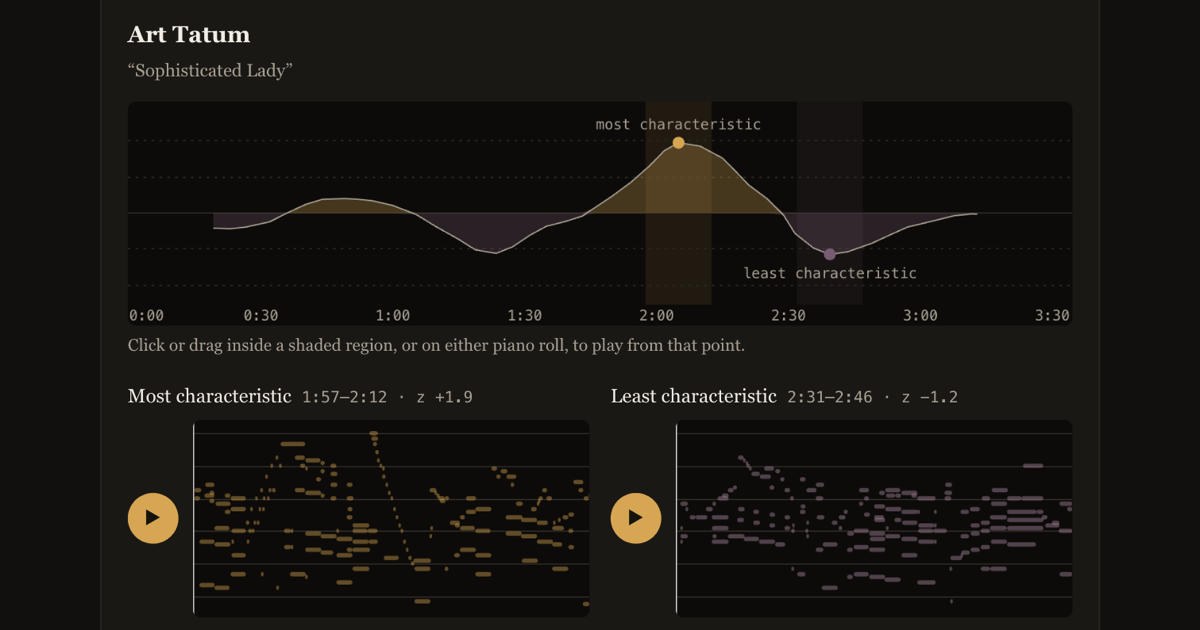
Learning Jazz Pianist Style with Cross-Attention Conditioning

An ISMIR 2026 (Abu Dhabi) research project that fine-tunes Aria, a transformer pretrained on piano MIDI, on solo recordings from twelve jazz pianists in the PiJAMA dataset, adding a gated cross-attention layer that conditions generation on a learned per-pianist embedding. Because standard held-out perplexity is nearly blind to style (the next note is predictable regardless of pianist), the authors instead measure style transfer by sliding a pianist classifier over freely generated continuations: conditioned continuations are attributed to the intended pianist 70% of the time versus 37% unconditioned, and a classifier trained only on generated music identifies real recordings with 95% accuracy. The page is an interactive demo with audio examples, blindfold listening tests, and per-pianist results (e.g. 96% attribution for Hank Jones/Dick Hyman vs 29% for Cedar Walton), alongside a link to the full paper with ablations on mismatch conditioning and memorization checks.

TransformerMIDI
AriaPiJAMAISMIR 2026+8

multimodal, trainingΒ· Added 6 Oct 2026, published 5 Oct 2026

arxiv.orgpaper🧠 AI

Towards Looped Models Done Right, Part II: Rethinking at Fixed Points

This paper studies looped language models β€” architectures that reuse a shared block of layers recurrently β€” and argues that as recurrent hidden states approach fixed points, the specific path taken to reach them matters less, enabling several efficiency tricks: truncated backpropagation through time during training, terminal key-value (KV) cache sharing across loop iterations for faster decoding, a distilled student model that prefills up to 1.79x faster, and RL policy gradients computed from saved rollout states that run 2x faster than backpropagating through the full trajectory. To make these fixed points reliable, the authors replace fixed-depth training with a learned depth prior (regularized with an entropy term to stay broad, improving on Huginn's fixed broad prior) and introduce orthogonal input injection, which removes the component of the injected input that the hidden state could otherwise amplify or cancel. Across model scales from 100M to 1.6B parameters, both changes lower perplexity, and at 1.6B the learned prior with a 3x smaller KV cache matches the downstream performance of full-cache fixed-depth training.

Huginn

research, training, inferenceΒ· Added 6 Oct 2026, published 5 Oct 2026

latent.spacearticle🧠 AI

[AINews] not much happened today

Daily AINews digest (Latent Space) covering an October 2026 news cycle: OpenAI's cheaper/faster GPT-6.1 Sol and Anthropic's Claude Sonnet 5.5 reshaping Agent Arena's cost-performance frontier, a wave of decision-model releases (Cloudflare Clef, llama.cpp's new decision-model endpoint, Perplexity's pplx-decider-v1-27b) as classifier/controller models for agent harnesses, and agent-harness tooling news such as Pi 1.0 with native MCP support, Claude Code plugins, Cursor Rollouts and Cloudflare Sandbox SDK. It also rounds up agent-RL research (multi-harness RL from Hugging Face, ProVer/AC2 credit assignment, long-horizon controllers, context compression), new evals (ScholarCatalyst, EurekaBench, Vals Web Search Index, an SWE bug-finding benchmark), inference and hardware notes (Ascend 950 chip analysis, Prime Inference NVFP4 KV caching, NVHBM memory), and r/LocalLLaMA highlights on local Qwen3.8-27B inference and MTP speculative decoding in llama.cpp.

Model Context ProtocolClaude Codellama.cpp+9
GPT-6.1 SolGPT-6 SolGPT-6 Astra+41

agents, evals, models, inferenceΒ· Published and added 3 Oct 2026

decrypt.coarticle🧠 AI

Meta Pushes Back on Claim That Muse AI Read a User's Messages Without Consent

News report on a dispute over Meta's Muse personal AI agent, launched Sept. 8 and built in Meta Superintelligence Labs. Inc. columnist Jason Aten says Muse synced his Mac Messages database even though Full Disk Access was off, and that Muse falsely said it only saw notification banners. Meta's Andy Stone and David Singleton reply that the Messages integration is opt-in, needing both macOS Full Disk Access and the Muse Messages connector. The article also covers a separate claim that Muse gave a user's home address to a Facebook Marketplace buyer, Amazon blocking Muse, and the Amazon v. Perplexity Comet injunction. It shows how agent permission layers can fail or be disputed.

MusemacOSFull Disk Access+2
MetaMuse SparkAndy Stone+7

agents, ai-policyΒ· Published and added 1 Oct 2026

bughunters.google.comwriteupπŸ›‘οΈ Security

https://bughunters.google.com/blog/pagebreak-real-world-findings?utm_source=tldrsec.com&utm_medium=newsletter&utm_campaign=tl-dr-sec-348-google-s-pagebreak-scanner-perplexity-s-agent-security-tool-defending-agentically

Google's Product Security team describes three high-severity bugs found by PageBreak, an internal LLM-agent scanner that validates findings by running payloads against live environments. The cases are cache poisoning on apis.google.com (an unkeyed `extra_path` injected into cached JS), XSS on admin.google.com where the agent bypassed the `sig` check by getting the authorize endpoint to sign a `javascript:` URI, and a UXSS in the Tag Assistant extension via a weak `onConnectExternal` origin check and nonce exfiltration. It shows what agentic, deterministically verified scanning can find in well-reviewed targets.

ChromeTag AssistantGoogle Tag Manager+2
PageBreakcache poisoningXSS+4

AppSec, AI SecurityΒ· Added 2 Oct 2026, published 1 Oct 2026

tldrsec.comarticleπŸ›‘οΈ Security

[tl;dr sec] #348 - Google's PageBreak Scanner, Perplexity's Agent Security Tool, Defending Agentically

tl;dr sec #348 is a weekly security newsletter issue. It summarises Google's PageBreak agent (500+ XSS bugs found since November 2025, validated deterministically), Perplexity's open-source Numbat agent-security tool (52 CEL rules), and SpecterOps' CiliumHound. It also covers Scaleway IAM attack paths, the NCSC essay on defending agentically, Julien Vehent on detection fidelity, and Wiz's Scan for Good.

PageBreakNumbatCiliumHound+3
XSSVolt TyphoonRed Agent+6

AI Security, AppSec, Blue Team & DetectionΒ· Added 30 Oct 2026, published 1 Oct 2026

jorgegarciaherrero.compaperπŸ›‘οΈ Security

A Privacy Analysis of Web and Mobile Conversational AI Agents [pdf]

A Proceedings on Privacy Enhancing Technologies paper by IMDEA Networks researchers systematically analyzes the web (via instrumented Chrome/CDP) and Android (via Androguard static analysis plus dynamic instrumentation on a Pixel 3a) clients of nine conversational AI services β€” ChatGPT, Claude, Grok, DeepSeek, Gemini, Perplexity, Microsoft Copilot, Mistral's Le Chat, and Meta AI. They find every service embeds at least one third-party advertising/tracking service (44 third parties total), that 6/9 web and 3/8 Android clients leak conversation titles, prompts, or screenshots to trackers alongside persistent identifiers, and that several providers expose entire conversations via publicly accessible permalinks lacking access controls. The paper evaluates how consent choices, subscription tiers, and access-control settings shape this exposure and analyzes the practices against GDPR and the ePrivacy Directive, following responsible disclosure to providers and EU DPAs.

ChatGPTClaudeGrok+3
GDPRePrivacy DirectiveAndroid Advertising ID+2

AI Security, Mobile Security, AppSecΒ· Added 2 Oct 2026, published 29 Sep 2026

latent.spacearticle🧠 AI

[AINews] Opus 5.5 is good at explainer videos

Daily AINews digest (Latent Space) covering the week's AI developments: Claude Opus 5.5's strong vision/coding results and viral code-generated explainer videos, the GPT-6 family (Astra/Sol/Luna) and Gemini 3.8 Flash releases, and Xiaomi's open MiMo-V2.6-Pro. It also covers the "System One" cheap-judge/reranker trend (TypeSafe's Jev vs. the open CLM alternative), agent infrastructure news from LangChain Interrupt and Perplexity's Rust-based Photon retrieval engine, inference speedups (Liquid AI's DSpark speculative decoder, GLM-5.3 on AMD MI355X), and research highlights including Harness-Zero agent-distillation, DeepMind's XYEval on sycophantic agent failure, a single-neuron safety-refusal bypass, and Sakana AI's RSI Lab with JΓΌrgen Schmidhuber.

LangChainvLLMSGLang+11
Claude Opus 5.5GPT-6 AstraGPT-6 Sol+31

models, evals, researchΒ· Published and added 29 Sep 2026

latent.spacearticle🧠 AI

[AINews] The Future of Latent Space

The daily AINews digest from Latent Space rounds up a heavy week in AI: Claude Opus 5.5 topping SimpleBench and Terminal-Bench-Science, the GPT-6 family (Astra/Sol/Luna), Gemini 3.8 Flash, and Xiaomi's open-weight MiMo-V2.6-Pro; TypeSafe's Jev system-one decision model (and open alternatives like CLM) for cheap structured judgments; agent-infra launches from LangChain Interrupt and Perplexity's Rust retrieval engine Photon; inference speedups like Liquid AI's DSpark speculative decoder and GLM-5.3 on AMD MI355X; and research on harness distillation, agent failure modes, and autonomous-science efforts led by Sakana AI's RSI Lab with Jurgen Schmidhuber.

LangChainvLLMSGLang+11
Claude Opus 5.5GPT-6 AstraGPT-6 Sol+34

models, agents, researchΒ· Added 29 Sep 2026, published 25 Sep 2026

arxiv.orgpaper🧠 AI

Accelerating Sharded Data Parallelism at Scale with Federated Learning

This paper introduces FL+FSDP and FL+HSDP, hybrid algorithms interleaving sharded data parallelism with FedAvg-style federated aggregation to reduce communication overhead when training foundation models across large, heterogeneous GPU clusters. Decoupling large data-parallel deployments into smaller, loosely-coupled federation groups bounds global batch size growth and cuts inter-group traffic. A Llama3.1 8B pre-training run on 512 A100 GPUs shows up to 8.04x faster data processing and 4.48x lower evaluation perplexity than standard FSDP/HSDP under identical hyperparameters.

FSDPHSDPFedAvg
Llama3.1 8BGianluca Mittone

research, trainingΒ· Added 22 Sep 2026, published 17 Sep 2026

github.comrepo🧠 AI

AnotiaWang/awesome-decision-models

A community-maintained GitHub list cataloging "decision models" (also called System One models): small/fast models that take a state plus caller-declared questions (Noul/true-false, Choice/multi-option, Score/rubric) and return a probability per answer in one forward pass, rather than generating text. It tracks the originating TypeSafe AI Jev model and its /v1/systemone API alongside competing hosted models (Upstage Solar Decide, Liquid AI's d1, OpenAI's Decisions API, Inception's Mercury Decide, Respan's Span-01), dozens of open-weight fine-tunes (Cloudflare's Clef, Perplexity's pplx-decider, AWS Strands Decider, Together AI's Tev1, and many Qwen3.5-based community models), zero-training logit-reading approaches, local runtimes (Ollama, Ollaya, llama.cpp-based servers), SDKs across a dozen languages, and a very long list of agent/coding-tool/MCP integrations (browser agents, code review, routing, game-playing demos) that use these models for fast, typed, in-the-loop decisions. The page is truncated at 40k of ~51k characters, so later sections (further toys, demos, and possibly benchmarks) are not reflected here.

Qwen3.5Qwen3.8-27Bllama.cpp+15
TypeSafe AIJevJevBench+33

models, mcp, agentsΒ· Added 2 Oct 2026, published 17 Sep 2026

interconnects.aiarticle🧠 AI

Open-Source AI & Open Models Reading List

A continuously updated reading list from Nathan Lambert's Interconnects curating the best writing on open-weight AI models, organized into Foundation (why companies release open models, the open/closed gradient, safety-vs-openness debates), US-China Competition (the ATOM Project, China's structural advantages, corporate adoption of Chinese models by DoorDash/Airbnb/Cursor/Harvey/Perplexity/Thomson Reuters), and Technical Details (the open-closed performance gap per SemiAnalysis and Epoch AI, cyber-misuse risk, and the 2026 distillation controversy including the paper on stealing reasoning traces from proprietary LLM APIs). It links dozens of primary sources β€” policy essays, lab statements (Zuckerberg, Thinking Machines Lab), technical reports (Pythia, OLMo, OLMo 2/3), and data trackers (Artificial Analysis, Interconnects Adoption Dashboard) β€” making it a comprehensive entry point for understanding the open-model ecosystem.

Nathan LambertInterconnectsKevin Xu+39

ai-policy, training, modelsΒ· Added 29 Sep 2026, published 11 Sep 2026

github.comrepoπŸ›‘οΈ Security

Numbat

Numbat is a Go-based, single-binary endpoint agent from Perplexity AI that gives visibility into AI coding-agent activity (Claude Code, Codex, OpenClaw, and other CLI/IDE/gateway agents) by capturing events through local hooks, OTLP/HTTP logs, and on-disk session artifacts. It normalizes activity into one event model, evaluates it with a local CEL rule engine (including multi-step sequence rules like secret-read-then-egress), and can optionally block matched actions via synchronous pre-action hooks (deny/monitor decisions), with case bundles and SHA-256 manifests for forensic reconstruction. Example built-in rules detect cloud-metadata SSRF requests (169.254.169.254) and credential-exfiltration chains, mapped to MITRE ATT&CK technique tags.

Claude CodeCodexOpenClaw+2
T1048T1552T1567

AI Security, Blue Team & DetectionΒ· Published and added 5 Sep 2026

magazine.sebastianraschka.comarticle🧠 AI

Building an AI Text Detector From Scratch

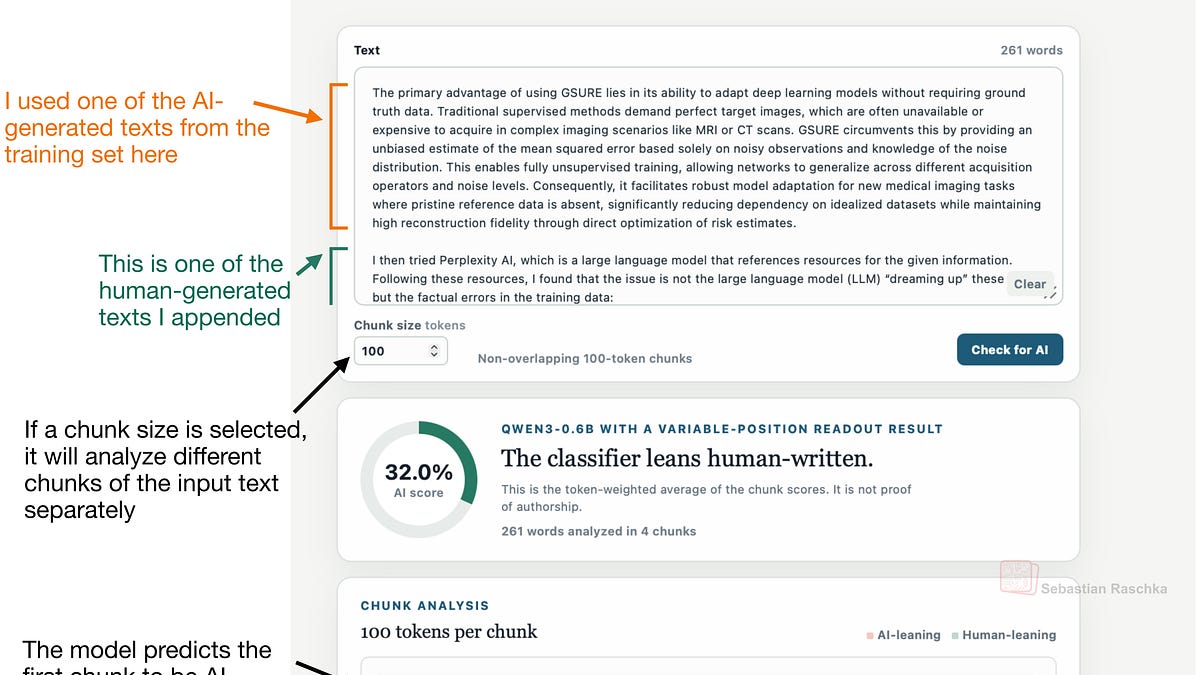
Sebastian Raschka walks through building an AI-text detector from scratch, similar to Pangram-style models behind Substack's new AI-detection UI feature, by fine-tuning a DistilBERT classifier that outputs a 0-100 AI-generated probability score. He then uses that classifier as a verifier/reward signal to train a small language model (SLM) to produce text that evades the detector, framing the whole project as a case study in building scorers/verifiers for LLM applications beyond math/code reasoning tasks. The piece covers detector approaches broadly (supervised classifiers, perturbation-based tests, perplexity, watermarking) before diving into the DistilBERT fine-tuning implementation.

DistilBERT
Sebastian RaschkaSubstackPangram+1

training, evalsΒ· Added 29 Sep 2026, published 15 Aug 2026

github.comrepoπŸ›‘οΈ Security

System Prompts Leaks

A community-maintained repository that archives leaked or extracted system prompts β€” the hidden instructions given to LLM chatbots before user input β€” captured verbatim from products including Claude/Claude Code, ChatGPT/Codex, Gemini, Grok, Cursor, Copilot, Perplexity, Meta AI, Mistral, DeepSeek, GLM, and others. It serves as a reference corpus for studying system prompt design, extraction techniques, and the system prompt leakage risk class, and is updated regularly as new prompts are exfiltrated from newer model releases.

ClaudeChatGPTGemini+3

AI SecurityΒ· Added 3 Sep 2026, published 3 Aug 2026

github.comrepoπŸ›‘οΈ Security

asgeirtj/system_prompts_leaks

This GitHub repository collects verbatim leaked/extracted system prompts β€” the hidden instructions and guardrails β€” from a wide range of AI products including Claude.ai, Claude Code, ChatGPT, Codex, Gemini, Grok, Perplexity, Microsoft Copilot, Cursor, Meta AI, Mistral, Kimi, DeepSeek, GLM, Qwen and others. It is updated regularly as new prompts are captured, and serves as reference material for AI red-teamers and researchers studying how vendors constrain model behavior and how those constraints can be extracted or bypassed.

ClaudeChatGPTGemini+3

AI SecurityΒ· Published and added 3 Aug 2026